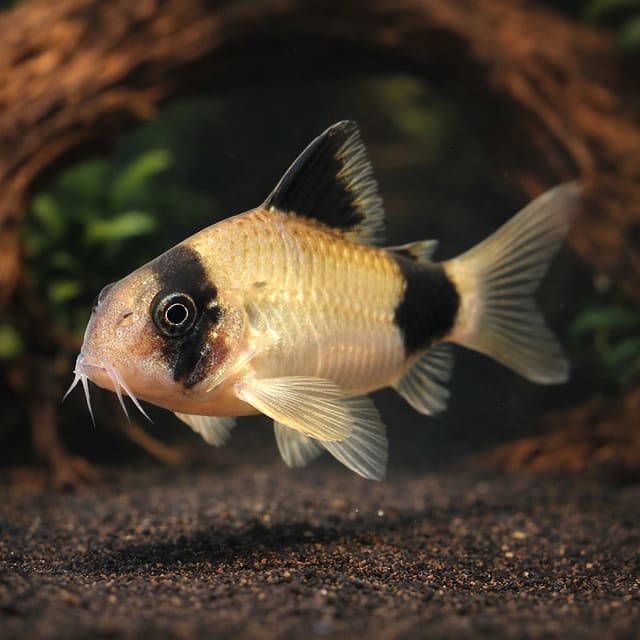
Panda Cory Catfish (Corydoras panda)
22–25°C · pH 6–7.4
From £8.69Some sizes on sale

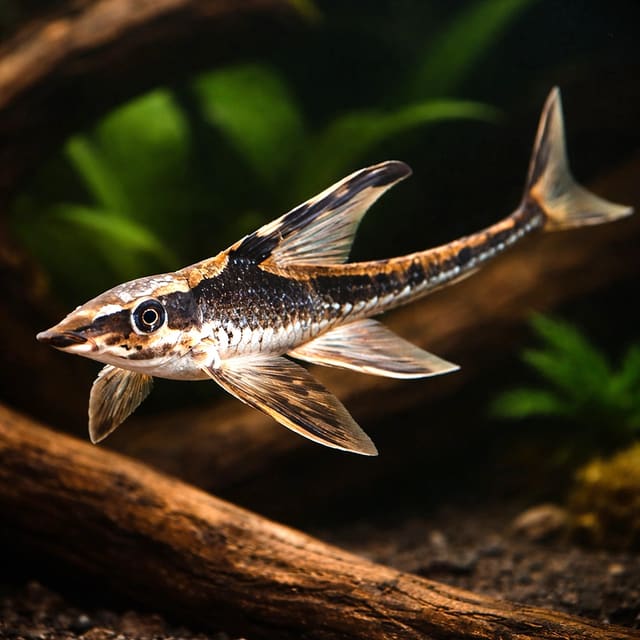
Golden Whiptail Catfish (Sturisomatichthys aureus): one unsexed fish in the selected 6–8 cm or XL grade. Plan a mature aquarium at least 120 cm long.
Adult size is the maximum length this species reaches at full maturity (scientific sources). The livestock you receive will be younger and smaller — pick a size above for the actual shipping size. Product-photo provenance and any image-specific limitations are stated on the listing.
Sturisomatichthys aureus
Confirm your email, then we’ll send an availability message for this exact item if it returns within 180 days.
This request is only for this product—no newsletter or other promotions. A mail-provider retry may very rarely duplicate the same availability message. Unconfirmed addresses are removed after 48 hours. See our privacy policy.
Golden Whiptail Catfish (Sturisomatichthys aureus): one unsexed fish in the selected 6–8 cm or XL grade. Plan a mature aquarium at least 120 cm long.
Adult size is the maximum length this species reaches at full maturity (scientific sources). The livestock you receive will be younger and smaller — pick a size above for the actual shipping size. Product-photo provenance and any image-specific limitations are stated on the listing.
Maintain these water conditions for optimal health and vibrant colors
Golden Whiptail Catfish (Sturisomatichthys aureus) is a South American loricariid for a mature, well-filtered freshwater aquarium. Each purchase supplies one live fish. You can choose the 6–8 cm grade or the supplier's XL grade; XL has no verified centimetre range. The size you select is the size supplied, not the adult size. FishBase records a maximum of 20 cm standard length, measured without the tail fin, so provide a long-term aquarium before choosing a smaller fish.
The most useful first decision is whether the aquarium has a stable biological filter, a base at least 120 cm long, suitable grazing and resting surfaces, and fish that will allow the newcomer to feed. FishBase states a 120 cm minimum aquarium length for this species. It does not state a species-specific litre minimum or group size. A narrow or crowded 120 cm aquarium can still be a poor home if the fish cannot rest and feed undisturbed.
Sex is guaranteed only when the selected option explicitly states male or female. This Golden Whiptail Catfish listing has no sex-guaranteed option. One purchase is not a pair, and two purchases do not establish a male-female combination. Choose the quantity your prepared aquarium can support, and watch how individuals behave after introduction.
| Suits | Does not suit |
|---|---|
| A mature aquarium at least 120 cm long with steady filtration and feeding space. | The aquarium is new, short, crowded or still showing ammonia or nitrite. |
| You can place food where the whiptail can reach it and observe feeding. | Established residents take every sinking food before it settles. |
| You can maintain measured, stable water and provide a safe fallback tank. | Large or aggressive residents may chase or injure a slender bottom-dweller. |
If you already have bottom-dwelling fish, plan where each animal will rest and how each will receive food. A second food drop can help, but only if you can see this whiptail feed and remove leftovers. Compare the actual footprint, not merely the printed litre capacity. A tank can have ample water yet little free surface once large wood, plants and other fish occupy it.
Before dispatch, decide where this fish will spend its first days of observation. Quarantine gives you a better chance to see breathing, skin condition and food intake before introducing it to a busy display. Keep the same careful water preparation in quarantine: a smaller tank is no excuse for unstable temperature or an immature filter.
Golden Whiptail and Giant Whip are trade names, and older aquarium records use the name Sturisoma aureum. The accepted scientific name in FishBase is Sturisomatichthys aureus. The two names help connect older trade records with current taxonomy; they do not mean that two different fish are being supplied. Keep the accepted name with your purchase record if you compare scientific care information later.
FishBase places the species in the Magdalena, San Jorge and Cesar river basins of Colombia. That is a species distribution, not a certificate that the individual fish offered here came from a particular river, locality or wild population. No origin, sex or breeding lineage is promised for this retail offer. If those details are essential to a breeding or biotope project, seek stock with explicit individual documentation.
The name “golden” refers to the trade appearance and the species epithet. Living animals vary in shade and pattern with age, lighting and condition. A gallery image cannot verify the colour, size, sex or identity of the individual dispatched. Choose by the scientific identity and selected size grade rather than using an image to predict the individual fish.
FishBase gives 20.0 cm standard length for male or unsexed Sturisomatichthys aureus. Standard length ends at the base of the tail, so the trailing tail filaments can add to the visual span. The 6–8 cm option is a dispatch grade, not a small adult form. XL is a supplier grade without a number; do not assume it equals 20 cm or is mature.
FishBase's minimum aquarium length is 120 cm. Use that as the species-specific length starting point and consider width, water volume and the current occupants as well. Use the 120 cm length with enough width and water volume for the entire adult community. OATA's 80-litre example applies to smaller catfish groups and should not be transferred to a fish whose recorded standard length reaches 20 cm. A longer, broader aquarium gives more separate resting and feeding places than a short deep tank of similar volume.
Think about the fish at adult size: can it turn around without scraping hardscape, reach a resting surface without being crowded, and feed without repeated disturbance? Leave clear routes around wood and plants. Measure the actual aquarium and check that the filter and maintenance routine suit the whole stock, not only the newly bought fish. A long tank is a starting condition, not a guarantee of social compatibility.
Set up and mature the filter before any live fish arrives. The RSPCA explains that a biological filter supports bacteria that convert toxic ammonia first to nitrite and then to nitrate. OATA's broad catfish care sheet says ammonia and nitrite should both be zero. If either is detectable, investigate filtration, feeding and stocking before adding this whiptail.
Provide stable circulation, surface movement and places where the fish can rest out of a strong current. The reviewed species record does not prescribe a precise flow rate, so judge the layout by oxygenation, waste movement and the fish's ability to settle. Keep the filter intake safe for the selected size grade and avoid creating a trap behind wood or equipment. A 6–8 cm arrival needs enough shelter to settle while still being easy to observe.
Work through the first tropical tank guide if you are preparing a new system, then allow the filter to mature fully. A new aquarium should not be tested by buying a live whiptail. Record normal temperature and water tests for several days before ordering so a sudden change is easier to spot.
FishBase records 25–29°C, pH 6.0–8.0 and 5–19 dH for the species in its environmental summary. These are recorded environmental values, not a proven everyday aquarium optimum. OATA's catfish sheet gives broad group guidance of 22–27°C, pH 6.0–8.0 and 4–18 dGH; it explicitly advises checking the particular species. The temperature ranges overlap at 25–27°C, which can guide discussion with an experienced retailer, but that overlap is an inference rather than a demonstrated optimum.
Choose stable prepared water rather than aiming for an edge of a range. Test the aquarium and tap water, note how they vary after water changes, and use a reliable thermometer. Fish respond poorly to abrupt shifts even when both readings fall inside a broad published span. If source water needs treatment, establish a repeatable method before the fish is ordered.
OATA says nitrate should not exceed 20 mg per litre above the normal tap-water level. This is a relative limit, so measure tap water as well as the aquarium. OATA also strongly recommends a partial water change of 25% at least once every week. Use dechlorinated replacement water at a similar temperature and track ammonia, nitrite and nitrate between changes.
The water chemistry guide explains common tests; the water matcher can help compare measured values with the published ranges. Keep the sources' scope attached to any number you record.
A whiptail needs accessible places to rest and feed. Use smooth wood, broad plant leaves or stable hardscape surfaces, while leaving open space to move between them. Wood is useful for cover and natural surface growth, but wood alone does not supply a complete diet. Arrange several resting spots rather than one piece dominated by an established resident.
Check that edges are smooth and that narrow gaps will not trap a growing fish or its tail. Fix heavy pieces so they cannot shift during maintenance. Sand or smooth fine substrate makes it easier to keep the bottom clean and to spot leftover sinking food. If plants are used for cover, leave enough space to observe the whiptail's body condition and breathing.
OATA says many catfish appreciate wood, pots or caves, but its advice covers a broad and diverse group. Observe the particular fish and adjust the layout if it spends all its time exposed to harassment or cannot reach food. A hidden fish is not automatically a healthy fish; regular quiet observation is part of the setup.
Keep the biological filter running continuously and maintain good surface movement. The RSPCA describes filtration as vital to removing waste and supporting the bacteria that process ammonia. OATA also recommends checking filters for blockages and avoiding tap-water rinses of biological media because chlorine or chloramine can harm those bacteria. Rinse media gently in removed aquarium water when needed, and avoid replacing all established media together.
Place the outlet so waste does not accumulate behind wood while leaving a quieter resting zone. FishBase notes facultative air-breathing for the genus, but that does not make low oxygen or neglected filtration acceptable. If the fish repeatedly visits the surface or breathes rapidly, check water temperature, oxygenation, ammonia, nitrite and filter operation at once. Watch all residents, because a single species' behaviour is not a complete water test.
Clear water can still contain invisible toxic waste. Test at least weekly as OATA advises, and more often after changes to stock, feeding or equipment. Remove decaying food and plant matter promptly. A modest feeding plan and accessible maintenance paths help the filter do its job.
FishBase's aquarium note says this species feeds on plants and roots. The broad OATA catfish sheet warns that catfish are not simply scavengers and should receive appropriate sinking food. Do not rely on incidental algae or leftover flakes. Offer a suitable complete sinking food and observe that the whiptail actually reaches it. Vegetable foods can provide variety, but no reviewed species source specifies an exact recipe or protein percentage, so avoid treating a single ingredient as a complete diet.
Place food in a calm area near a familiar resting surface. If faster fish intercept it, use another feeding point or feed when the aquarium is quieter. A fish that remains hidden while food disappears may be underfed even though plenty was put into the tank. Check body condition over time and change the feeding method before a slender fish becomes visibly weak.
OATA advises giving catfish only what they can eat within a few minutes, while allowing up to 30 minutes for some grazing species. Apply that as broad group guidance, remove leftovers and monitor the effect on water tests. Natural biofilm on mature surfaces may encourage grazing, but do not count it as the whole ration. Feed the selected 6–8 cm grade pieces it can handle.
Choose a complete sinking food suited to a grazing loricariid and offer a small amount at a predictable time. Watch from a distance until the fish settles; some fish feed more confidently when the busiest tank mates have quietened. Place a second small portion at another point if one resident monopolises the first. The goal is individual access without leaving excess food to decay.
Vegetable pieces should be clean and appropriately sized. Remove any uneaten portion before it softens and degrades the water. If a new food is ignored, try a different presentation in a safe place before assuming the fish needs a large quantity. Observe its abdomen and overall condition alongside behaviour, rather than judging nutrition from algae growth on the glass.
Do not use the whiptail as a substitute for aquarium maintenance. Algae is controlled through light, nutrients, cleaning and stocking decisions. The fish needs its own planned ration even in a tank with visible algae; conversely, a spotless aquarium can still support it when suitable food is provided deliberately.
Prepare a separate mature aquarium for observation before the fish arrives. It should hold stable, measured water and have a secure resting place. Simplicity helps you see the fish, its food access and waste, but it should not be an exposed bare box that leaves a shy animal stressed. Use separate equipment where practical and avoid transferring water or wet tools into the established display without cleaning.
Watch breathing, body condition and feeding over the first days. If the selected 6–8 cm fish struggles with food size or strong current, correct that before introducing it to competition. A fixed number of days is less informative than a stable pattern of feeding and normal behaviour. Check water tests after the new biological load is added to quarantine.
When moving into the main aquarium, identify a resting surface and a clear route to food. Observe the response of residents closely. If an established fish guards the entire bottom, change the plan rather than hoping the newcomer will eventually win space. Keep the quarantine or fallback tank mature until compatibility is clear.
Be at the delivery address to receive the live-fish parcel and open it promptly. The current delivery and Live Arrival Guarantee policy describes insulated packing, a licensed live-animal courier and the evidence needed if there is a problem. The policy advises floating the sealed bag for 20–30 minutes for temperature adjustment, then transferring the fish carefully without pouring bag water into the aquarium.
Give the fish access to cover. Do not expect instant feeding in the first minutes. Once settled, offer a small suitable sinking food and confirm it can reach it. Continue to check respiration, posture and how residents react. A whiptail lying quietly on a surface can be normal, but rapid breathing, repeated harassment or inability to hold position calls for immediate water and equipment checks.
If the fish arrives in poor condition, preserve the policy's required evidence: a continuous video beginning with the sealed parcel and showing the fish in its sealed bag, together with the order number. Contact the store promptly under the current terms. Claims handling is separate from the care steps that protect the animal after arrival.
In the first few days, watch for normal breathing, stable resting positions and actual food intake. A fish may explore after lights dim, so observe at different times without repeatedly disturbing it. Note where it rests and whether it can use more than one surface. Check the skin, fins and long tail for damage after any chase or contact with hardscape.
Test ammonia and nitrite after the new fish increases the system's waste load. Keep feeding modest, remove leftovers and check that flow has not fallen behind wood or clogged media. If another fish rushes every sinking food, change feeding location or timing rather than scattering more food everywhere. The important measure is whether this individual eats.
Keep the separate mature accommodation ready. Compatibility that appears calm on arrival day can change when residents reclaim territory or when the newcomer begins feeding openly. Act on sustained exclusion rather than waiting for a serious injury. Continue normal water changes with matched, dechlorinated water so the fish's first week is as stable as possible.
OATA strongly recommends a partial water change of 25% at least once every week for catfish and testing at least weekly for ammonia and nitrite. Its nitrate guidance is no more than 20 mg per litre above tap water. Use those as broad group welfare checks, then adjust the aquarium's practical schedule to its real stock and test results. Replace water at a similar temperature and chemistry, and condition it to remove chlorine or chloramine.
Remove food trapped under wood, trim decaying plant matter and keep filter inlets clear. Rinse biological media gently in removed tank water when needed. Do not clean every filter stage at once or substitute a new cartridge for the mature filter without a plan to preserve biological activity.
Observe body condition periodically under similar lighting. A slow-feeding fish can lose weight gradually even when it appears at the front of the tank. Record changes in feeding, resting place and interactions. Reassess the aquarium as the whiptail approaches adult length; furniture, residents and the fish's own reach may change the usable space.
OATA stresses that catfish differ greatly in temperament and compatibility, so a general “catfish community” label is not enough. For this Golden Whiptail, start by checking whether proposed companions share suitable measured water, leave resting space and allow access to sinking food. Peaceful fish can still outcompete a quieter bottom-dweller if they rush every tablet.
Avoid large predatory fish, persistently aggressive cichlids and residents that chase or scrape a slender catfish. Do not assume that every pleco or bottom feeder is suitable merely because it lives at the same level. Observe the actual adults together and keep a mature alternative aquarium ready if the new fish is repeatedly displaced or injured. Tank mates must be chosen for the finished adult group, not only the current juvenile sizes.
Browse the catfish and pleco collection if you are comparing aquarium directions. Other catfish listings are shopping alternatives, not automatic companions. Read their adult sizes and group requirements independently before considering shared housing.
One fish can be planned as an individual. One purchased fish can be planned as an individual; two purchased fish are not a sexed pair. If keeping several, provide enough length, separate resting positions and more than one feeding place. Watch whether any fish is prevented from using preferred surfaces or reaching food.
Do not apply OATA's “at least five” statement for shoaling Corydoras to this species. The same broad care sheet says some catfish prefer to live alone, showing why its general examples cannot set a whiptail group number. Ask for species-specific advice when planning a multi-fish display, and be prepared to separate incompatible individuals.
Sex cannot be inferred from the selected grade, from a gallery image or from the purchase quantity. If breeding is the goal, source explicitly sexed and documented animals and prepare suitable rearing space. The current offer does not promise those details.
A newcomer may spend time under wood while it settles. The concern is a pattern: it never reaches food, breathes abnormally, shows damaged skin or fins, or is repeatedly driven from every resting place. Record what happens at feeding time as well as during daylight. Some aggression occurs when food lands or lights change, so one quiet observation is not enough.
Check ammonia, nitrite, temperature and filter flow promptly if behaviour changes. OATA lists erratic swimming, unusual hiding, rapid or slow gill movement, spots, lost scales, body-condition change and reduced feeding as signs that deserve attention. These observations do not identify a disease by themselves. Correct any environmental problem and seek experienced fish-health advice when signs persist or worsen.
Make a separation decision early when a fish cannot feed or rest. A floating box with the aggressor in view may not solve sustained harassment. Use a mature, heated aquarium with matching water so the affected fish can recover without a sudden chemistry shift.
FishBase records Sturisomatichthys aureus to 20 cm standard length, excluding the tail fin. The 6–8 cm offer is a dispatch grade, so prepare adult space from the start.
FishBase gives a minimum aquarium length of 120 cm. It provides no species-specific litre figure; choose enough width and volume for the adult fish and its companions.
One purchase supplies one unsexed Golden Whiptail Catfish. If keeping several, provide separate resting and feeding places and watch their interactions.
It is best for a keeper with a mature filtered aquarium who can maintain stable water, observe feeding and manage community pressure. It is a poor choice for a new uncycled tank.
FishBase notes plant and root feeding in aquaria. Give an appropriate complete sinking food and observe that the fish eats; tank algae and leftovers alone are not a reliable diet.
FishBase records 25–29°C and pH 6.0–8.0 as species environmental values. OATA's broad catfish guide gives 22–27°C and pH 6.0–8.0. Keep measured water stable and seek species advice for a particular setup.
It is not offered as an aggressive community fish. Still watch the individual: repeated chasing, fin damage or exclusion from food means the combination needs changing.
Choose calm fish that share suitable water and leave the whiptail room and access to sinking food. Avoid large predators, persistently aggressive fish and residents that monopolise its food.
Tropical Fish Co describes insulated packing and a licensed live-animal courier in its delivery policy. Be present to receive the parcel and follow the current acclimation and Live Arrival Guarantee instructions.
FishBase covers the accepted name, Colombian range, recorded standard length and environmental values. The OATA freshwater catfish care sheet provides broad UK group guidance for water, maintenance and introduction. The RSPCA aquarium guidance explains filtration and water stability. Read group guidance as group guidance; it does not give a species-specific optimum or a promise about an individual fish.
No reviews for this item yet. Bought one? Honest reviews only, good or bad.
What customers say about ordering from us
I have a small group of long finned mountain minnows. So was delighted to be able to order ten of this variety to increase the genetics in my tank . The ones I recieved are healthy but it’s to early to give a verdict on wether they are of a long finned type since they are small currently.
Gordon Walker · 23 Sept 2026
100% success travel and "installation". Pleased with quality of purchase. The Siamese fighter a bit "shy" so have not yet seen him at his best yet but looking good. Happy customer. GG
George E Garratt · 21 Sept 2026
Reviews of our shop, collected by Judge.me, an independent third-party review collector. Newest first.