Moderate
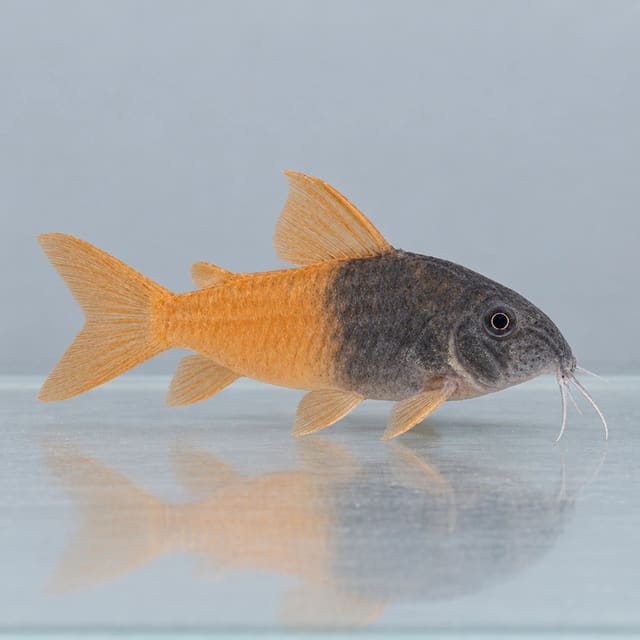
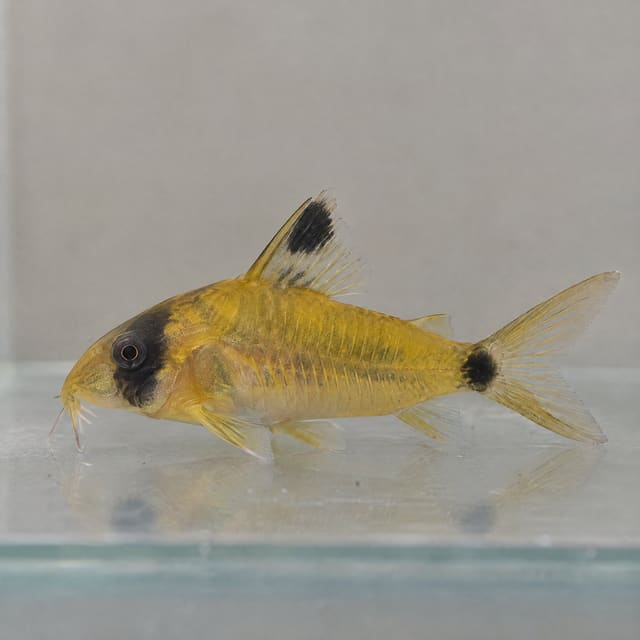
Corydoras CW102 Gold Bow Cory (Hoplisoma sp. CW102)
22–26°C · pH 6–7.2
£33.49
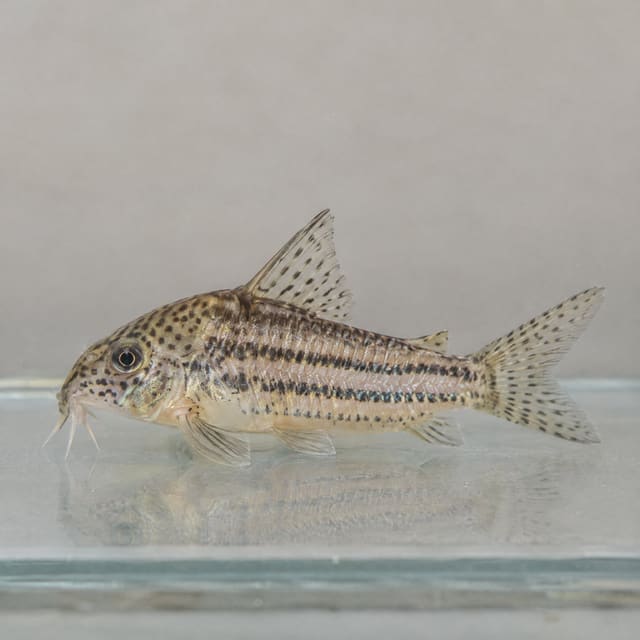
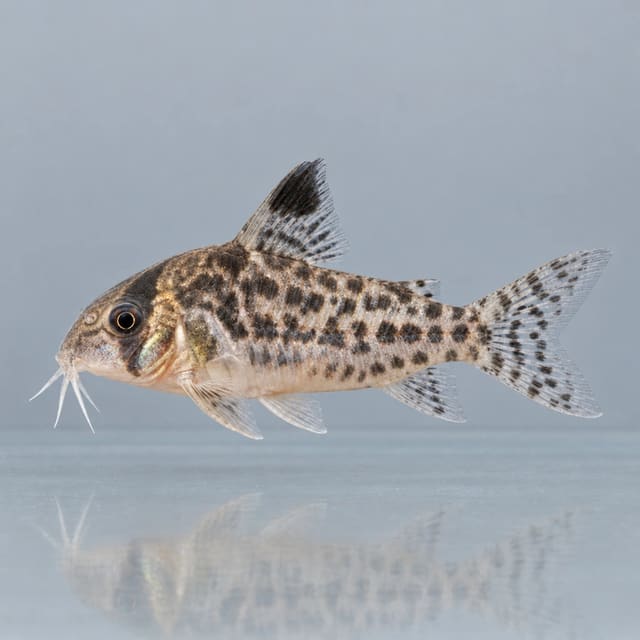
Corydoras cruziensis, the Santa Cruz Cory (C012, now Hoplisoma cruziense), is a small spotted armoured catfish from the Madeira basin in Bolivia that stays under about 5 cm. It is a peaceful, slightly timid shoaling cory for a planted aquarium with fine sand and an 80 × 30 cm base at 23–25.5°C. Sold individually as one live fish.
Hoplisoma cruziense
Quantity discounts are pricing offers, not a group-size recommendation. Check the full care guidance and your existing animals before choosing a quantity.
Corydoras cruziensis, the Santa Cruz Cory (C012, now Hoplisoma cruziense), is a small spotted armoured catfish from the Madeira basin in Bolivia that stays under about 5 cm. It is a peaceful, slightly timid shoaling cory for a planted aquarium with fine sand and an 80 × 30 cm base at 23–25.5°C. Sold individually as one live fish.
Identify the exact cory catfish before choosing care. Our starting policy for many common medium species is six compatible conspecifics, a mature 60 x 30 cm aquarium of about 60 litres, smooth fine sand and measured species-appropriate water.
Read the full care guidance when planning conditions for your aquarium.
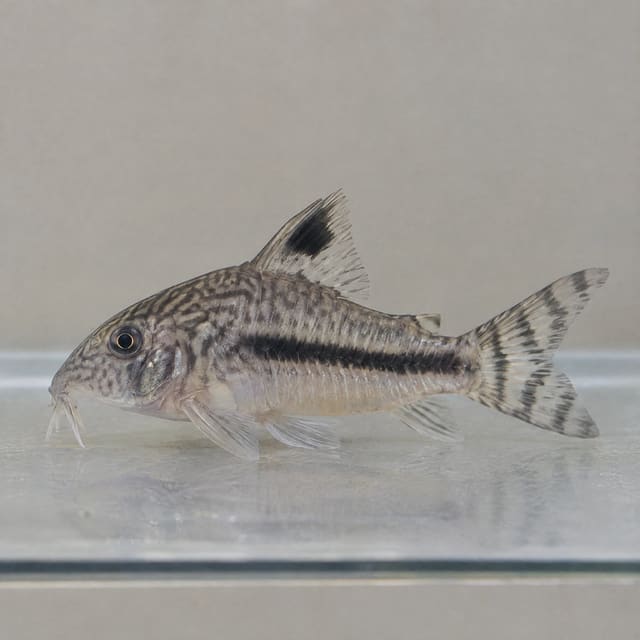
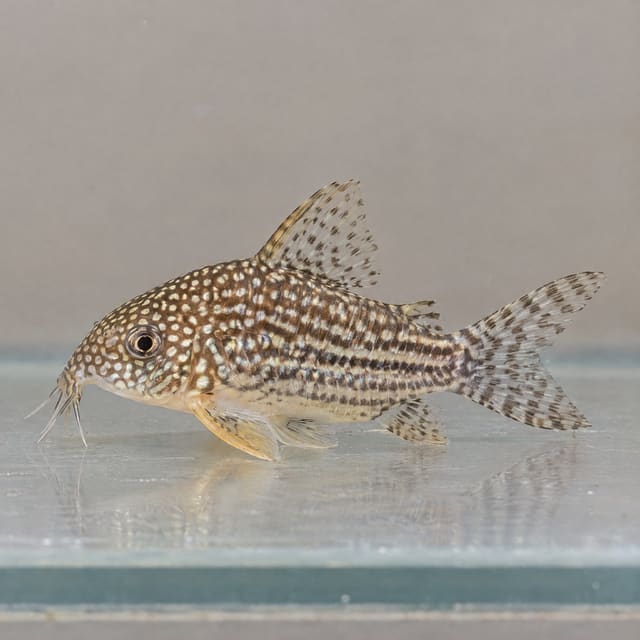
Corydoras cruziensis is a small, spotted armoured catfish from Bolivia, known in the hobby as C012 or C12 and as the Santa Cruz Cory. Its sandy-beige body is covered with rows of round dark spots, a dark band runs through the eye, and the dorsal fin and tail carry neat rows of spots too. Adults stay under about 5 cm, so a group fits a modest planted aquarium, where it spends the day sifting the sand with its barbels in a busy little shoal.
Knaack described the species in 2002 from Guarayos in Bolivia's Santa Cruz Department, at an elevation of 215 metres, and named it after that department. Planet Catfish places it in the Madeira River basin in Bolivia, and Seriously Fish adds that the range is unclear but may include the Mamoré and Beni drainages. ScotCat lists it from the Santa Cruz and Beni Departments, while an early Practical Fishkeeping report describes it as widely distributed.
| Name | What it means |
|---|---|
| Corydoras cruziensis | The name it was described under in 2002, still the one most shops and books use |
| Hoplisoma cruziense | The current name since the 2024 split of Corydoras, used by Seriously Fish, Planet Catfish and ScotCat |
| C012 / C12 | The code it carried before it was named; ScotCat gives C012, Practical Fishkeeping C12 |
| Santa Cruz Cory | The common name used by Seriously Fish, Planet Catfish and FishBase |
| Cruziensis Cory | A shop name taken from the species name |
The change of genus comes from a large study by Dias and colleagues published in 2024. Seriously Fish explains that it split Corydoras into five genera; ScotCat adds that this species belongs to lineage 9, the short-snouted corys whose type species is C. punctatus, which now carries the old name Hoplisoma. The fish and its care are unchanged. Browse more corys in our corydoras shop and the wider South American catfish category.
Planet Catfish compares it with the Spotted Cory, Corydoras punctatus, a species found only in Suriname. The Santa Cruz Cory has fewer, larger body spots, and the spots along the join between the upper and lower body plates may run together into an irregular broken stripe; Practical Fishkeeping adds that it is smaller, with more clearly defined spots. ScotCat says it is very similar to Hoplisoma copei from Peru, and that the two are difficult to tell apart. Other spotted corys, such as the Julii Cory, can look similar at a glance, so buy from a named, coded batch rather than a mixed "spotted cory" tank.
One purchase supplies one live Santa Cruz Cory at the standard size offered on this listing. It is a shoaling fish that feels secure only in company, so order the whole group at once and let it settle together. Young fish are smaller than the adult sizes below.
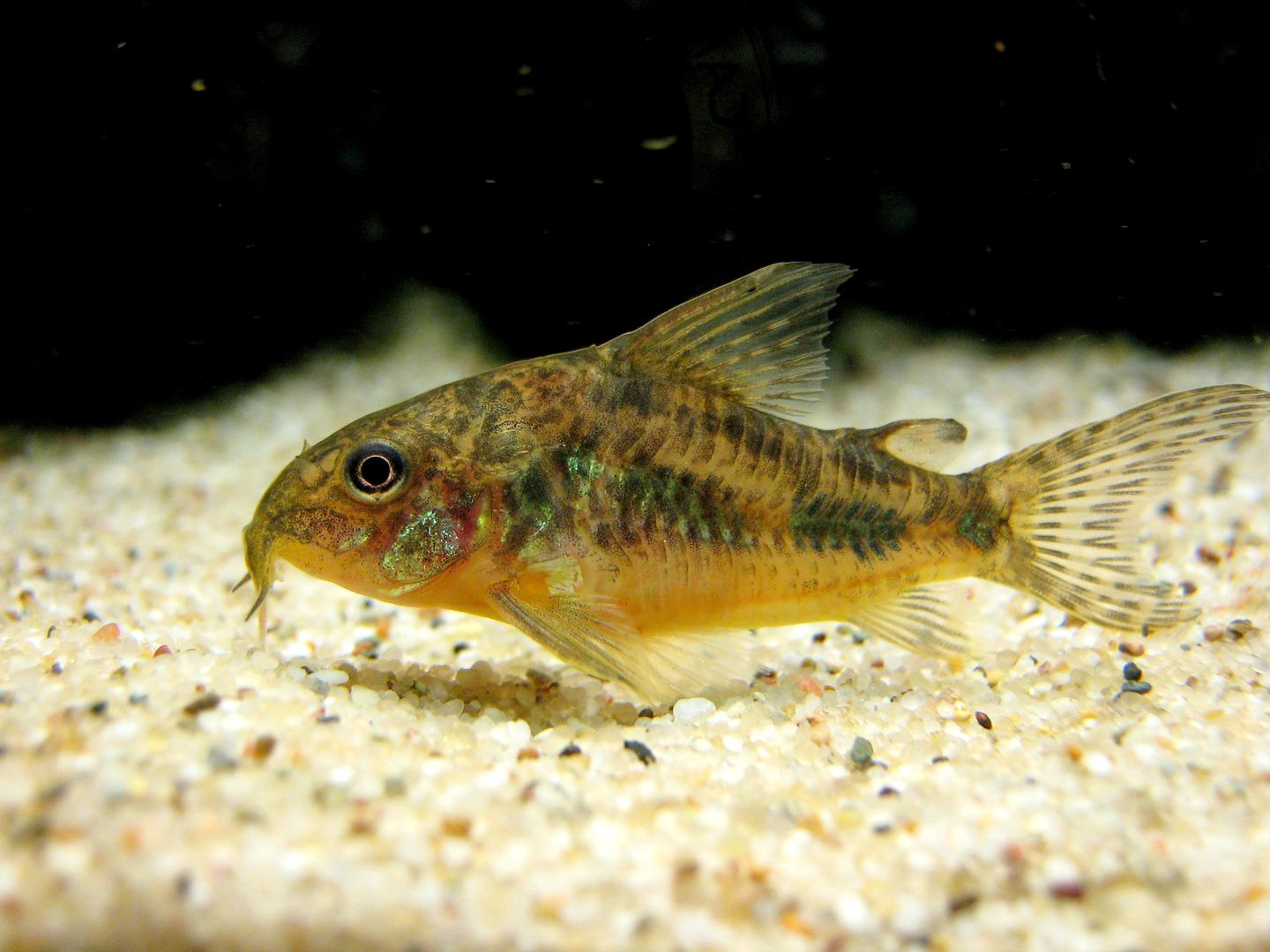
Sex is not specified. Planet Catfish describes females as a little larger and heavier, with rounded, fan-shaped pelvic fins, while males have slightly pointed ones; Practical Fishkeeping gives size as the only clear guide. These differences show only in adults. The photographs show the species; the number and size of spots vary between individuals, so expect some difference from the pictures.
Read our delivery and Live Arrival Guarantee information before ordering, and make sure the aquarium is fully cycled and at temperature when the fish arrive.
Seriously Fish gives a minimum base of 80 × 30 cm, about 72 litres, for this species, and OATA's catfish guidance gives at least 80 litres for a shoal of corydoras. Practical Fishkeeping notes that the fish is small and needs little space, but floor area, not height, decides how many corys an aquarium can hold, because all of them feed on the same sand.
A longer tank lets the group spread out and forage naturally, and gives timid fish room to keep away from busier neighbours. Our stocking calculator helps you check that the shoal and its tank mates fit the aquarium you have.
Practical Fishkeeping recommends a well-planted aquarium with a fine, smooth-grained substrate, a few rocks and bogwood, and Planet Catfish agrees that fine, smooth sand matters most, with other décor relatively unimportant. Seriously Fish adds that some cover should be provided for security. A quiet planted tank with a soft sand floor, a piece of wood and a few smooth stones suits this timid little cory well.
Plants also help the shoal feel safe: a group that can retreat under leaves comes out to feed more readily. Our range of planted tank fish includes many small species that share this kind of set-up.
The published values differ, partly because the species is known from few places. The safest target is where they overlap.
| Source | Temperature | pH | Hardness |
|---|---|---|---|
| Seriously Fish | 20–28°C | 6.0–8.5 | 2–12 dGH |
| Planet Catfish | 22.5–25.5°C | 6.0–7.2 | not given |
| ScotCat | 23–26°C | 6.0–7.2 | not given |
| Practical Fishkeeping | not given | 5.5–7.0 | 2–12 dGH |
Aim for 23–25.5°C and pH 6.0–7.0, with soft to moderately hard water of 2–12 dGH. Practical Fishkeeping calls the species fairly tolerant of water conditions but says soft, acidic water is ideal. Hardness in UK tap water differs widely between regions, so test it, or check your water company's report, before deciding whether to blend in softer water, and make changes slowly. Our water matcher shows whether your water and your other fish fit this range, and our guide to aquarium pH explains how to read and adjust it.
Temperature, pH and hardness can sit anywhere in the range above. Waste readings cannot: OATA's limits are zero ammonia, zero nitrite and nitrate no more than 20 mg per litre above your tap water. Small bottom-dwellers live closest to the waste that settles in the sand, so test weekly and more often in the weeks after new fish arrive.
Choose a filter rated for the aquarium volume, with a gentle outlet that keeps the surface moving without sweeping small fish across the floor. FishBase and Seriously Fish note that the species is a facultative air breather, so an occasional dart to the surface is normal; keep a gap below the lid so the fish can always reach air.
Practical Fishkeeping says that in the wild the species eats small insect larvae, shrimps and crustaceans, and in the aquarium takes crushed flake, tablets and small frozen foods, with small live foods such as brine shrimp, grindal worm, cyclops and sifted daphnia to keep it in top condition. Planet Catfish and ScotCat confirm that tablet, granular and flake foods are accepted, along with bloodworm and other worms.
OATA advises feeding once a day and giving only what the fish eat within a few minutes. Make sure food reaches the bottom: in a busy community tank, faster fish can take everything before a timid shoal of corys gets a share.
OATA recommends double-bagging catfish, because the spines can pierce a bag. Turn off the aquarium lights, float the sealed bag for 10 minutes, then add small amounts of tank water over up to 20 minutes before releasing the fish, keeping the bag water out of the aquarium. Our guide to acclimatising new fish goes through each stage. Seriously Fish warns that the stiff pectoral spines can give a painful sting, so avoid handling the fish by hand.
| When | What to check |
|---|---|
| Day 1 | Lights off or low, no food. Count the shoal once it has settled. |
| Days 2–3 | Offer a small sinking meal and check that every fish comes out to feed. |
| Days 4–5 | Test ammonia and nitrite; both must still read zero. |
| Day 7 | Normal 25% water change; check fins, barbels and body condition. |
A settled group of Santa Cruz Corys forages together over the sand and rests in a loose cluster. OATA's warning signs include clamped fins, flicking against décor, hanging at the surface, rapid breathing, white spots and loss of appetite. Planet Catfish describes the species as slightly timid, so a shoal that stays hidden for long after the first week is a sign that something in the tank needs to change.
| Observation | Action |
|---|---|
| Shoal hiding all day after week one | Check for boisterous tank mates and add cover; make sure the group is at least six. |
| Worn or shortened barbels | Check the substrate and nitrate; replace rough gravel with fine sand. |
| Thin fish while others are well fed | Feed after lights dim or use more sinking food so the corys get a share. |
| White spots or clamped fins | Test the water first, then treat; see our white spot treatment guide. |
Planet Catfish calls the Santa Cruz Cory a small, peaceful and slightly timid species that should not be kept with boisterous or aggressive fish, and suggests small tetras or small cyprinids as ideal tank mates. ScotCat agrees that it is very peaceful and suits small to medium tank mates such as tetras, rasboras and danios, or a species tank for breeding.
| Suits | Avoid |
|---|---|
| Small tetras such as the Ember Tetra and Green Neon Tetra | Boisterous or aggressive fish, as Planet Catfish warns |
| Small rasboras such as the Glowlight Rasbora | Large cichlids and other fish big enough to swallow a 5 cm cory |
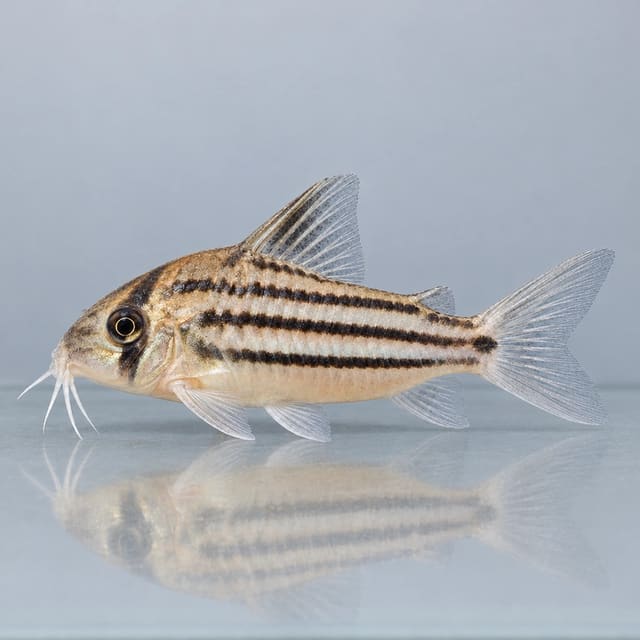
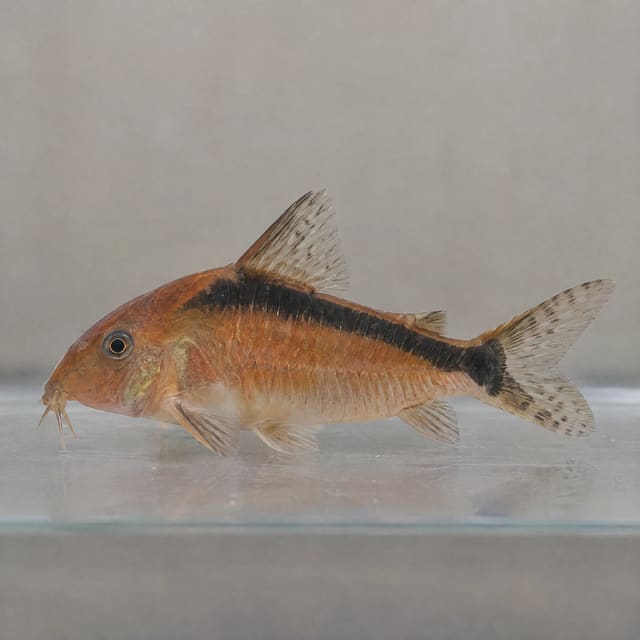
| Other small, peaceful corys such as the Three-Stripe Cory, if the floor has room | Fast, greedy bottom feeders that take all the sinking food |
Our tank mates checker works through these questions for you, and our corydoras care guide covers the family's general needs.
The Santa Cruz Cory has been bred in aquariums: Practical Fishkeeping reports spawnings in the UK and Germany, and Planet Catfish holds breeding reports from keepers. ScotCat suggests a species tank for anyone who wants to breed it, which keeps eggs and fry away from tank mates. Our sources do not publish a spawning method, so a written record of your water values, temperature and foods would help other keepers. FishBase and ScotCat list the species as Data Deficient on the IUCN Red List, which makes aquarium-bred stock all the more worthwhile.
Yes. Dias and colleagues split the old genus Corydoras in 2024 and placed this species in Hoplisoma, changing the ending to cruziense. Seriously Fish, Planet Catfish, ScotCat and FishBase all file the old name Corydoras cruziensis as the same fish.
It is the C-number the fish was given before it had a scientific name. ScotCat notes that C012 was assigned before Knaack described the species in 2002, and Practical Fishkeeping records that it was known in the hobby as C12.
It is small. Planet Catfish and FishBase give 43 mm standard length, Practical Fishkeeping 45 mm and Seriously Fish 50 mm; ScotCat gives males 4.0 cm and females 4.5 cm.
Keep at least six. ScotCat says they do better in a group of at least six, and Seriously Fish gives a minimum of four to six. One purchase is one fish, so order the whole group together.
Seriously Fish gives a minimum base of 80 × 30 cm, about 72 litres, and OATA gives at least 80 litres for a shoal of corydoras. A longer tank gives the group more sand to forage.
Aim for 23–25.5°C and pH 6.0–7.0, the band the sources share, with soft to moderately hard water of 2–12 dGH. Practical Fishkeeping calls it fairly tolerant but says soft, acidic water is ideal.
Planet Catfish and Practical Fishkeeping say it looks like Corydoras punctatus, a species only found in Suriname, but has fewer, larger spots, and the spots along the join of the upper and lower body plates may form a broken stripe.
Yes. Practical Fishkeeping reports aquarium spawnings in the UK and Germany, and Planet Catfish holds breeding reports from keepers. ScotCat suggests a species tank for breeding.
No reviews for this item yet. Bought one? Honest reviews only, good or bad.
What customers say about ordering from us
Easy website plenty of info on fish your buying great to pick a time slot
TRACEY DURRANT · 7 Oct 2026
Got some lovely fish thank you
Kevin Mackie · 7 Oct 2026
Reviews of our shop, collected by Judge.me, an independent third-party review collector. Newest first.
Moved by UK carriers licensed to handle live animals
Hand-packed with oxygen bags, poly box, heat pack
Email photos the same day; an optional unboxing video helps us review problems faster — claim terms apply
Klarna & PayPal Pay in 3 at checkout