Easy
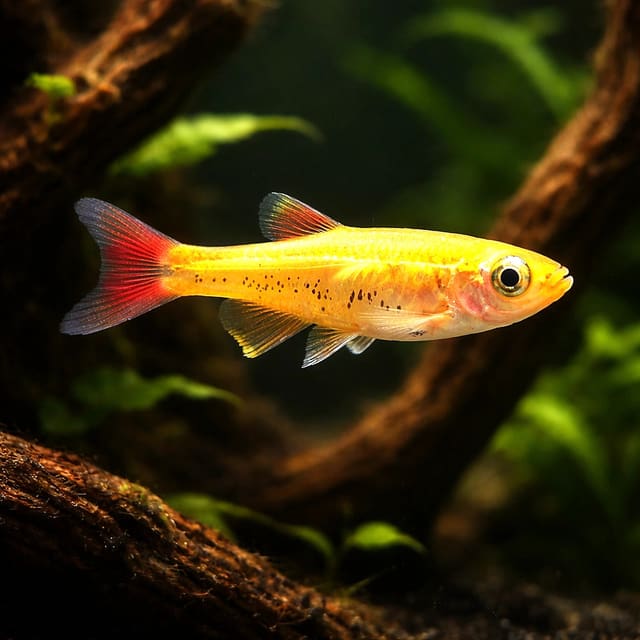
Gold White Cloud Mountain Minnow (Tanichthys albonubes) – 2–3cm Sizes
14–22°C · pH 6–8.5 · 54L
£2.99
The Glowlight Rasbora (Trigonostigma hengeli) is a freshwater fish in the family Danionidae from Sumatra and Borneo, Indonesia, that reaches 3 cm standard length. Seriously Fish recommends keeping at least 8–10 together at 23–28°C, pH 5.0–7.5 and 1–10 dGH in a mature, peaceful community. Sold individually.
This scientific adult reference is not the dispatch grade. Standard length excludes the tail; total length includes it. Use the size picker for the supplied grade.
Trigonostigma hengeli
Save when buying multiple fish. Each quantity is one fish; sex and pair formation are not guaranteed unless the selected variant explicitly states them.
Minimum of 2 per order.
The Glowlight Rasbora (Trigonostigma hengeli) is a freshwater fish in the family Danionidae from Sumatra and Borneo, Indonesia, that reaches 3 cm standard length. Seriously Fish recommends keeping at least 8–10 together at 23–28°C, pH 5.0–7.5 and 1–10 dGH in a mature, peaceful community. Sold individually.
This scientific adult reference is not the dispatch grade. Standard length excludes the tail; total length includes it. Use the size picker for the supplied grade.
Maintain these water conditions for optimal health and vibrant colors
Glowlight Rasbora, Trigonostigma hengeli, is a small freshwater shoaling fish from Sumatra and Borneo in Indonesia. FishBase lists it in the family Danionidae and gives a maximum length of 3 cm standard length. Its small adult size makes careful group and community planning more important, not less: this fish should live with others of its own kind and must not be treated as a solitary decoration.
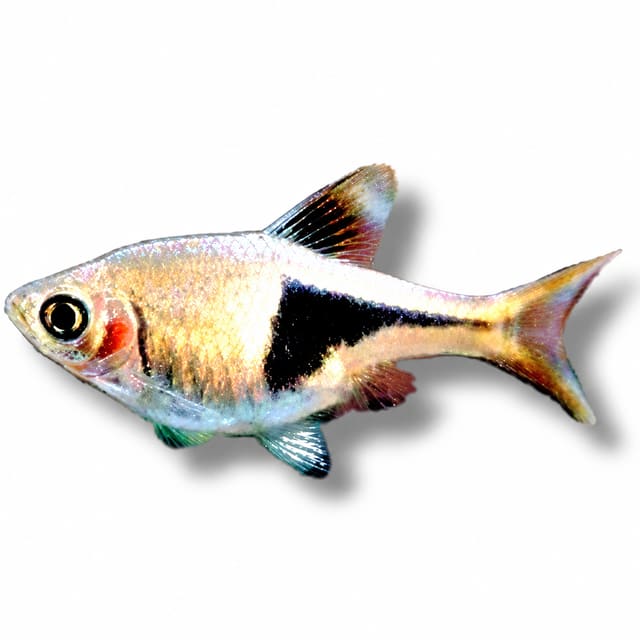
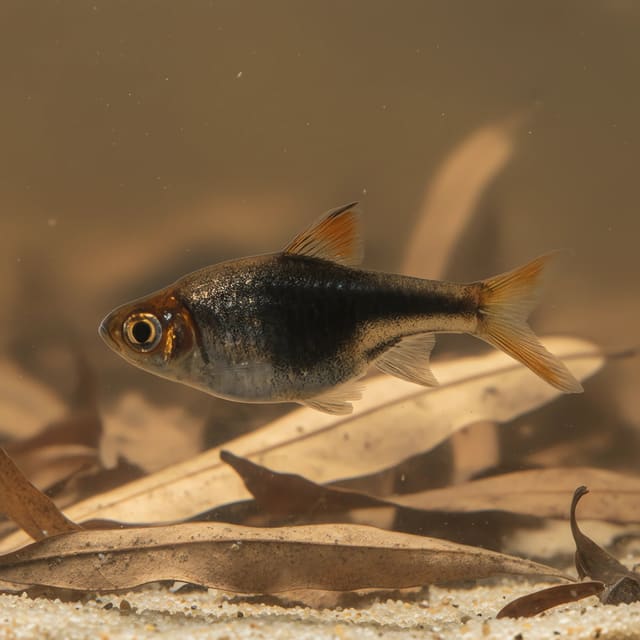
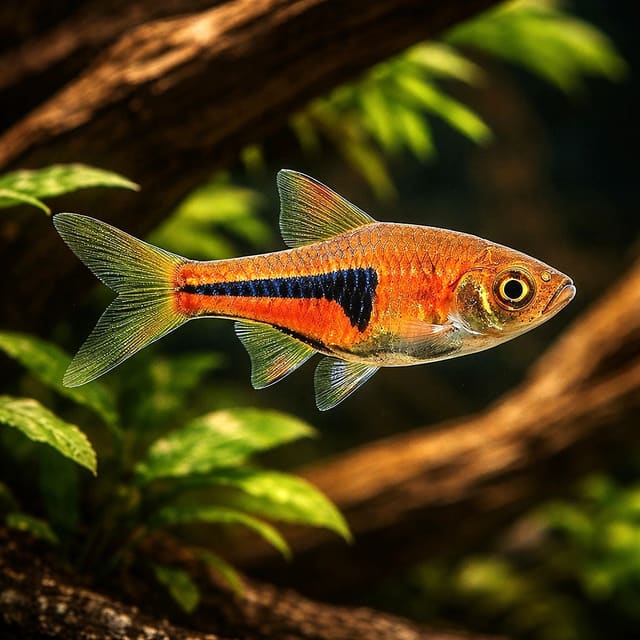
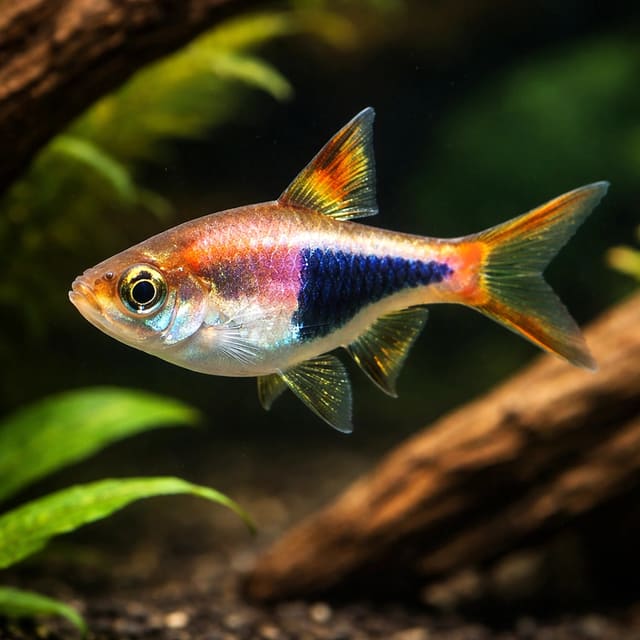
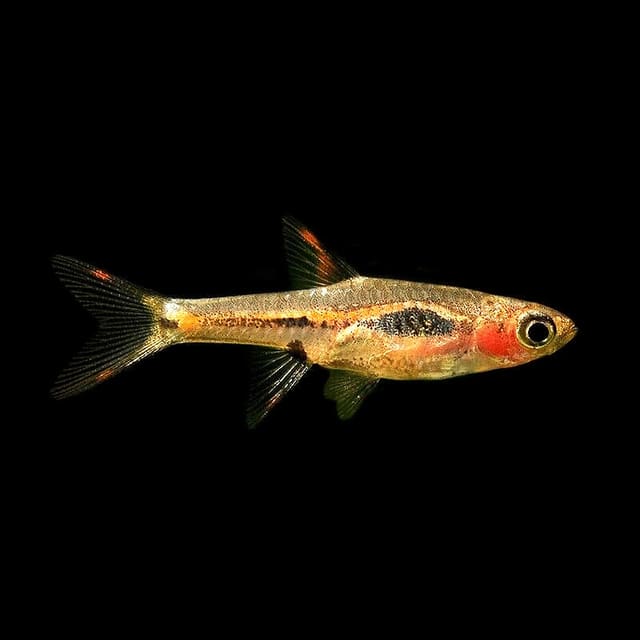
The body is relatively slender and greyish or nearly colourless, with bright orange pigmentation bordering the upper and front edges of the darker rear marking. This pattern distinguishes it from the deeper-bodied Harlequin Rasbora and the more copper-coloured Lambchop Rasbora. Compare the complete body shape and marking rather than relying on colour intensity alone.
Choose this rasbora when you can provide a mature, filtered tropical aquarium, stable water, a proper shoal and small foods. Its peaceful behaviour suits a carefully planned community, but its modest size means every companion must be screened for predation risk, boisterous behaviour, feeding competition and water requirements.
| Suits | Not suited to |
|---|---|
| A mature, filtered tropical aquarium | An immature or unfiltered aquarium |
| A group of at least 8–10 of its own kind | Solitary keeping or an undersized group |
| A peaceful community with screened companions | Boisterous fish or fish capable of swallowing a 3 cm rasbora |
| Open swimming space with planted or shaded cover | A layout without room for the shoal to move |
| Small dried, live and frozen foods | Food too large for this small fish to swallow |
Use the Rasboras and Danios collection to compare this species with other small shoaling fish. Similar collection placement does not make two species automatic tank mates; assess their adult size, water, behaviour and social needs separately.
Each purchase supplies one animal. Plan the finished aquarium around the 3 cm maximum standard length and the space needed by the whole shoal.
Sex is guaranteed only when the selected option explicitly states male or female. This Glowlight Rasbora listing has no sex-guaranteed option.
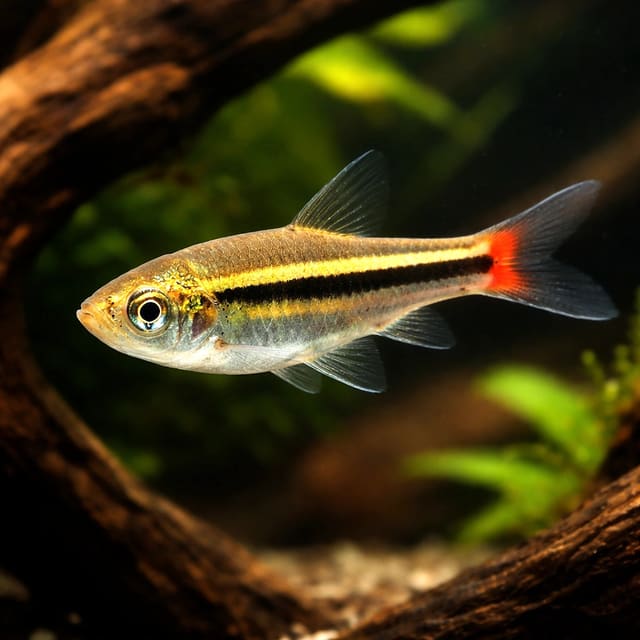
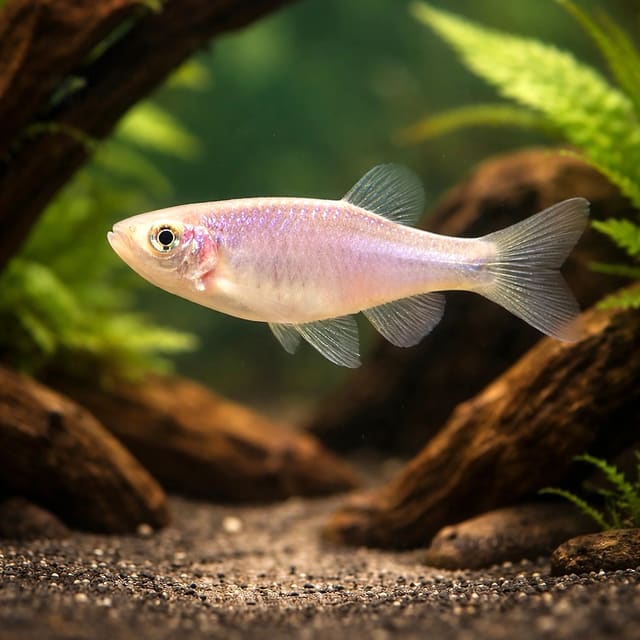
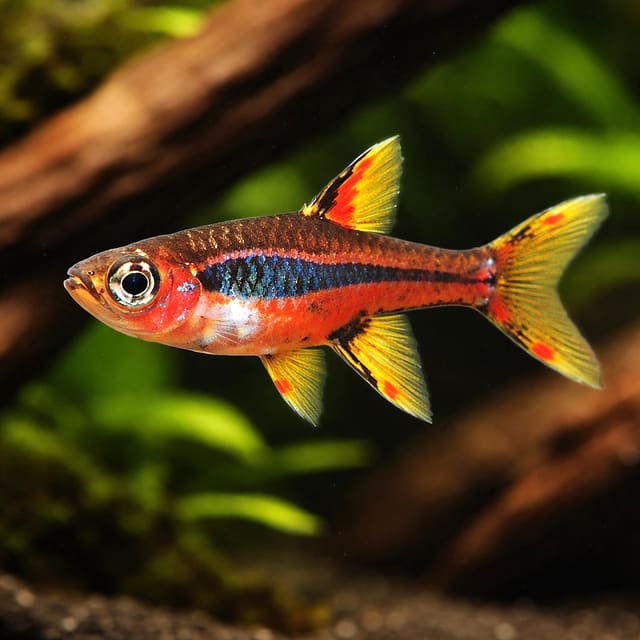
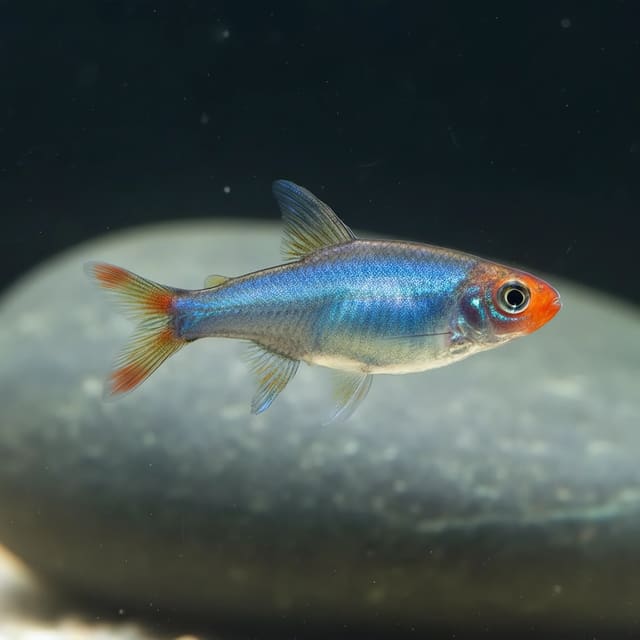
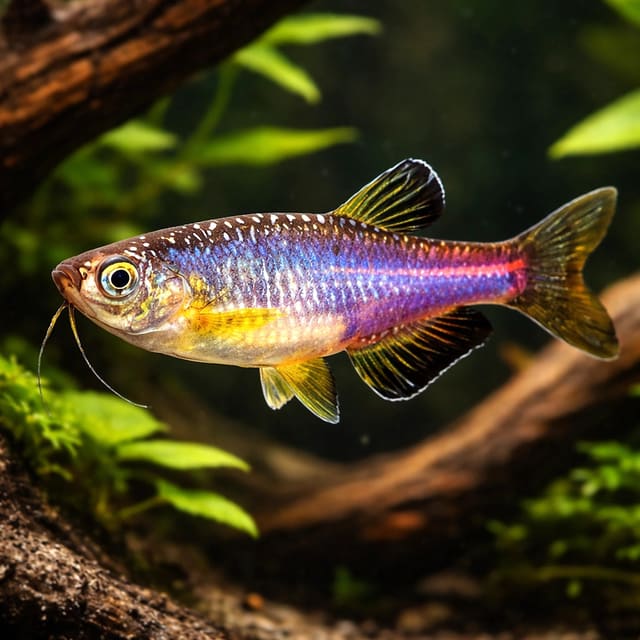
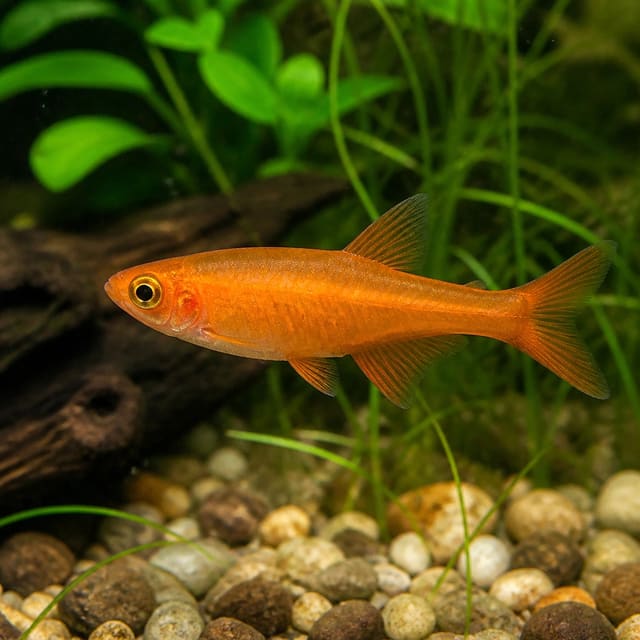
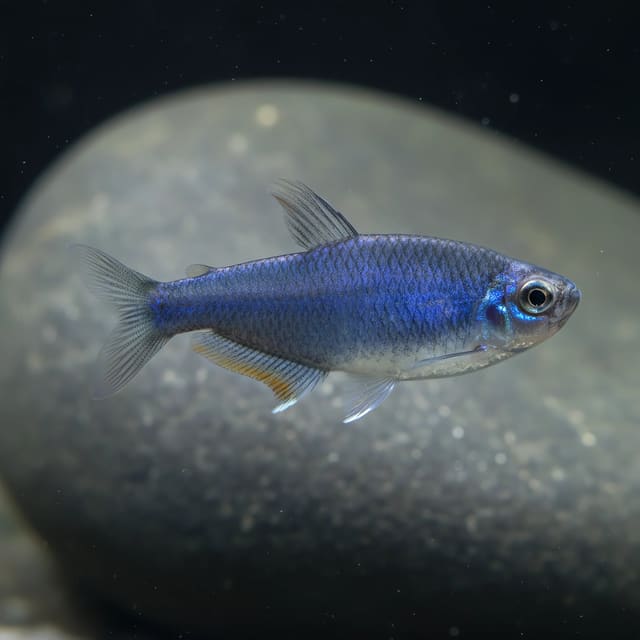
Some gallery images are representative, based on reference photographs of this species, and none shows the exact animal supplied, so colours can look slightly different from the live animal.
The Seriously Fish species profile gives 23–28°C, pH 5.0–7.5 and hardness of 1–10 dGH for aquarium care. It recommends a base of at least 60 × 30 cm, equivalent to about 54 litres, because this fish should be maintained in numbers. These dimensions are a smallest-considered baseline rather than a promise that every community will fit into the same volume.
| Plan | Apply it this way |
|---|---|
| Smallest aquarium baseline | About 54 litres with a 60 × 30 cm base or equivalent |
| Temperature | Maintain 23–28°C without abrupt changes |
| pH | Keep within 5.0–7.5 and stable |
| Hardness | Keep within 1–10 dGH |
| Group | Plan at least 8–10 fish together |
A mixed aquarium may need more space than the baseline once the adult dimensions, group requirements and swimming areas of every species are added. A longer footprint gives the shoal more useful movement than extra height alone. Leave room for open swimming while retaining planted or shaded places where the fish can settle away from bright light and activity.
Set up and mature the aquarium before introducing the shoal. A working biological filter supports bacteria that process toxic ammonia into nitrite and then nitrate. New fish increase waste and feeding, so the filter must already be operating effectively rather than being expected to mature around them.
For a first setup, follow our guide to preparing and maturing a tropical aquarium before choosing an introduction date. Confirm that ammonia and nitrite remain at zero, the temperature is stable and the filter continues to run normally. Add aquarium livestock gradually because each increase in feeding and waste requires the bacterial population to adjust.
For an aquarium of about 54 litres, the species profile gives a turnover of four to five times the volume each hour. That corresponds to approximately 215–270 litres per hour. Use the manufacturer’s rated flow as a starting point, then account for media, pipework and gradual blockage. Arrange the outlet so the aquarium is oxygenated without forcing the shoal to fight a strong current continuously.
| Equipment decision | Practical check |
|---|---|
| Filter | Use a well-established biological filter with suitable flow |
| Heater | Hold the aquarium steadily within 23–28°C |
| Thermometer | Check the actual water temperature rather than relying on the heater dial |
| Layout | Preserve open swimming space across the 60 × 30 cm baseline footprint |
| Population | Size the system for the complete shoal and all adult companions |
The same profile estimates roughly 75–100 W of heating for a 54-litre aquarium when the room is around 20°C. Room temperature, tank position and equipment design affect the heater required, so choose equipment suited to the actual aquarium and monitor the result. Stable operation matters more than repeatedly adjusting controls in response to a single reading.
Run the planned equipment together and judge the aquarium as a complete system. Confirm that the filter outlet still moves water after the media is installed, the heater holds the chosen temperature and the layout leaves a continuous swimming route. Test ammonia and nitrite on the normal maintenance schedule rather than relying on clear-looking water.
If filter flow falls below the intended level, inspect it for blockage before adding the shoal. If temperature moves outside 23–28°C, resolve the equipment or room-temperature cause first. These checks separate an aquarium that merely contains water from one prepared to support the extra waste and oxygen demand created by a complete social group.
Maintain the species within 23–28°C, pH 5.0–7.5 and 1–10 dGH. Test the aquarium and replacement water rather than estimating chemistry from appearance. Our water chemistry guide explains what the main values mean and why trends matter.
OATA’s group-level rasbora guidance calls for zero ammonia, zero nitrite and nitrate no more than 20 mg per litre above the normal tap-water level. Apply those waste limits alongside the aquarium ranges given for T. hengeli.
| Test result | Response |
|---|---|
| Ammonia above zero | Pause further stocking and address filtration, waste and feeding |
| Nitrite above zero | Treat it as a water-quality problem and reduce further biological load |
| Nitrate rising quickly | Review portions, stocking, maintenance and the tap-water baseline |
| pH outside 5.0–7.5 | Choose a sustainable water plan before introducing the fish |
| Hardness outside 1–10 dGH | Compare source and aquarium water before making gradual, controlled changes |
The RSPCA explains why a properly maintained filter is vital: fish produce toxic ammonia, and beneficial bacteria convert it first to toxic nitrite and then to safer nitrate. Preserve those bacteria during maintenance. If filter media needs cleaning, rinse it lightly in aquarium water removed during a water change rather than under the tap.
Check filters for blockages and changes in flow. A clear-looking aquarium can still have harmful dissolved waste, while a stable test trend shows whether the filter and maintenance routine are coping. Test at least weekly and again after a population increase, a feeding change or a disruption to filtration.
Record the tap-water nitrate baseline beside the aquarium result. For example, if tap water measures 10 mg per litre nitrate, the OATA ceiling is 30 mg per litre in the aquarium because the increase must not exceed 20 mg per litre. If the next weekly result moves towards that ceiling, review feeding and maintenance before the value crosses it.
Apply the same trend method to temperature, pH and hardness. A value within range is useful only when it remains suitable through normal maintenance. Compare readings taken under similar conditions, note water changes and investigate a repeated shift instead of trying to correct every small movement immediately.
Arrange the aquarium with both security and open movement in mind. A soft sandy substrate, roots and branches can create a natural-looking setting, while planted or shaded areas give the shoal places to retreat. Keep a clear route through the middle rather than filling the entire footprint with hardscape.
Décor is flexible, but this rasbora tends to show stronger colour in a well-furnished aquarium with a darker substrate. Wood and plants can form shaded areas without enclosing every swimming lane. Use smooth, aquarium-safe materials and position them so maintenance remains practical.
| Feature | Purpose |
|---|---|
| Dark substrate | Provides a subdued visual background |
| Plants and wood | Create cover and shaded areas |
| Open midwater | Allows the shoal to move together |
| Gentle current | Supports water movement without pushing the group continuously |
| Leaf litter | Adds a natural appearance and supports microbial growth as it decomposes |
Dried beech, oak or Ketapang almond leaves may be used to emphasise a natural arrangement. Decomposing leaves encourage beneficial microbe colonies that can serve as a secondary food source for fry, while released tannins help simulate a blackwater setting. Leaves may be left to break down or removed and replaced every few weeks.
Leaf litter is an optional furnishing choice, not a substitute for filtration or maintenance. Continue testing the water, removing excess waste and preserving swimming space. If the layout traps debris where it cannot be reached, simplify it. If the group spends most of its time exposed and withdrawn, increase sheltered areas without closing the central route.
Look across the 60 × 30 cm baseline footprint before filling the aquarium. The group should be able to move through open midwater without weaving around every branch, while cover remains close enough to create shaded choices. A practical arrangement often places denser planting and wood towards the back or sides and leaves a connected central route.
After planting, check that the filter still circulates water through the aquarium and that leaf litter has not gathered against the intake. During maintenance, remove trapped solid waste from reachable areas without dismantling all cover at once. As plants grow, thin them selectively so the aquarium continues to provide both shelter and usable horizontal space.
In nature, this fish probably acts as a micropredator, taking small insects, worms, crustaceans and other zooplankton. In the aquarium it accepts good-quality dried flakes and granules, supported by appropriately small live or frozen foods such as bloodworm, Daphnia and Artemia.
OATA’s rasbora guidance recommends feeding only what the fish can consume within a few minutes, once a day. Portion control protects water quality because uneaten food breaks down and adds toxic waste. Start with a modest amount distributed across the shoal, then adjust according to how quickly it is eaten and whether every fish gets access.
| Food choice | How to use it |
|---|---|
| Fine flake | Offer particles small enough to take immediately |
| Small granules | Use as a reliable dried component of the diet |
| Daphnia | Add as small live or frozen variety |
| Bloodworm | Select suitably small items and use alongside dried food |
| Artemia | Offer in a size the fish can swallow |
Watch the entire group during the meal. If confident fish take everything from one point, spread the food across a wider area. If particles are repeatedly taken and spat out, choose a smaller grade. Remove obvious uneaten food and reduce the next portion rather than feeding again immediately.
Body condition and water tests provide useful feedback. A fish that approaches food but remains thin may be missing suitable particles or losing out to faster companions. Uneaten residue, rising nitrate or repeated ammonia and nitrite problems indicate that portions, stocking or filtration need attention. Correct access and portion size before adding extra foods.
Begin with a small dried-food portion that can be spread across the group. If every particle disappears immediately but quieter fish receive none, change the distribution before increasing the quantity. If food remains after a few minutes, remove the excess and offer less at the next daily feed.
Use live or frozen bloodworm, Daphnia or Artemia as variety alongside good-quality flakes or granules, not as a reason to extend the feeding period. Check that each item is small enough to swallow. When a food is repeatedly rejected or spat out, replace it with a finer option rather than allowing unsuitable pieces to settle and break down.
Prepare the full social plan before the fish arrive. Confirm that the aquarium can accommodate at least 8–10 Glowlight Rasboras together, that the filter is mature and that ammonia and nitrite are zero. Check temperature, pH and hardness against the intended 23–28°C, pH 5.0–7.5 and 1–10 dGH range.
Follow the current delivery, receiving and Live Arrival Guarantee policy for the parcel and introduction process. Read it before the delivery day so the aquarium, tests and receiving arrangements are ready.
| Checkpoint | Action |
|---|---|
| Before arrival | Confirm stable temperature, zero ammonia and zero nitrite |
| During introduction | Follow the receiving steps and minimise unnecessary disturbance |
| First observations | Check swimming, breathing, fins, scales and group behaviour |
| First feeding | Use a small portion of appropriately sized food and watch access |
| After stocking | Test water regularly while the biological load settles |
Additions should be planned slowly because extra fish and food increase the demand on beneficial filter bacteria. Do not use a single zero reading as the only sign of readiness; look for stable results from an established system. Pause further additions if ammonia or nitrite becomes detectable.
Healthy fish should have clear, bright eyes, intact scales, undamaged fins and swimming behaviour appropriate to the group. Look at all individuals rather than judging only the most visible fish. A quiet member may receive less food or experience pressure from a companion even when the shoal appears active overall.
Keep a simple note of water readings and significant behaviour changes. This makes it easier to connect a problem with a population increase, feeding change, filter blockage or maintenance event rather than reacting to one isolated observation.
After introducing the group, concentrate on whether the aquarium remains stable under the new load. Test ammonia and nitrite regularly, keep feeding measured and avoid adding another species simply because the first readings are zero. Beneficial bacteria must respond to the extra fish and food over time.
During the first observations, compare individuals within the shoal. Check that each fish swims in control, breathes at a similar rate and can reach appropriately sized food. If one fish is consistently excluded, review cover, food distribution and companion behaviour. If the whole group changes at the same time, test the water and inspect equipment before treating the issue as an individual problem.
OATA strongly recommends a 25% partial water change at least once a week for rasboras. Use a siphon to remove solid waste from accessible areas, then treat replacement tap water with a conditioner that removes chlorine or chloramine before it enters the aquarium. Match replacement water carefully enough to avoid abrupt temperature or chemistry changes.
Test ammonia and nitrite at least weekly and keep both at zero. Track nitrate against the tap-water baseline, keeping the aquarium no more than 20 mg per litre above that normal level. Increase testing when fish are added, feeding changes or filter performance declines.
| Routine task | Decision rule |
|---|---|
| Observe the shoal | Check behaviour and breathing before feeding |
| Feed | Once daily, with only a few minutes’ worth of food |
| Test water | At least weekly and after changes to stocking or filtration |
| Change water | Change 25% at least once a week |
| Inspect the filter | Check for blockages and reduced flow |
| Clean filter media | Rinse lightly in removed aquarium water when cleaning is needed |
Do not rinse established biological media under the tap, because chlorine or chloramine may kill beneficial bacteria. Avoid cleaning every component aggressively at the same time. Preserve enough mature media to continue processing waste.
Use the shoal’s behaviour as an additional prompt, not a replacement for testing. Surface hanging, bottom sitting, erratic swimming, hiding or altered breathing should trigger an immediate equipment and water check. A normal result from one test does not rule out a blockage, temperature change or social problem.
Consistency makes changes easier to interpret. Record temperature and test results on the same schedule, note maintenance work and watch the direction of the trend. A gradual increase in nitrate or decline in flow can then be corrected before it is accompanied by visible distress.
Observe the shoal before disturbing the aquarium, then record temperature and water-test results. Siphon accessible waste while changing 25% of the water at least once a week, condition the replacement tap water and refill without creating an abrupt change. Inspect filter flow after the work is complete.
Clean filter media only when needed, using the aquarium water removed during that water change. Keeping observation, testing, water replacement and filter inspection in a repeatable order reduces missed tasks and makes later changes easier to explain. If nitrate climbs faster than usual, compare the record with feeding, stocking and filter flow before changing several parts of the routine together.
Observe the fish every day and learn the group’s normal swimming, feeding and spacing. Individual variation is expected, but a clear change in behaviour, breathing, colour, body condition or appetite deserves attention. Start by checking water quality and equipment because environmental problems may affect several fish at the same time.
| What you see | What to do first |
|---|---|
| Hanging at the surface | Check temperature, filter flow, ammonia and nitrite |
| Sitting on the bottom | Compare the fish with the group and test the water |
| Erratic swimming | Look for a whole-tank cause and immediate hazards |
| Faster or slower gill movement | Check water quality and oxygenating flow promptly |
| Reduced appetite | Confirm food size, access, body condition and water results |
| New spots or fluffy growth | Seek informed fish-health guidance before choosing treatment |
Other warning signs include loss of fins or scales, ulcers, bumps, marked darkening or paling, increased hiding and an unexplained gain or loss of body condition. Note whether one fish or the whole shoal is affected and whether the change followed maintenance, a new addition or altered feeding.
If a health change persists, speak to our team, an aquatic veterinarian or another suitably experienced fish-health professional. Give them the aquarium volume, complete stocking, temperature, pH, hardness, ammonia, nitrite and nitrate results, plus a clear description of the change. These details support a more focused response than selecting a medicine from one symptom.
Continue maintaining stable, clean water while guidance is sought. Do not combine treatments casually or let concern about colour distract from breathing, balance, appetite and water quality. Those practical observations provide the clearest early warning that the fish or aquarium needs attention.
This is a very peaceful community fish, but compatibility depends on more than a peaceful label. Compare adult size, temperature, pH, hardness, swimming level, social requirements and feeding behaviour before combining species. The Glowlight Rasbora’s 3 cm maximum length must remain central to the decision.
Seriously Fish names other small cyprinids, tetras, livebearers, dwarf cichlids, catfishes and loaches as potential community categories. Each candidate still needs an individual assessment. A member of one of these categories may grow too large, need different water or feed too forcefully.
| Question | Decision |
|---|---|
| Could the companion swallow a 3 cm fish? | Avoid the combination |
| Does it share 23–28°C? | Continue only if the long-term ranges overlap |
| Does it share pH 5.0–7.5 and 1–10 dGH? | Use the actual aquarium values, not a generic community label |
| Is it boisterous or forceful at food? | Avoid the combination because rasboras do not appreciate boisterous tank mates |
| Can every social species have its proper group? | Count complete groups before judging space |
Use our water matcher to compare measured aquarium water with the stated ranges. A chemistry match is only one part of the decision; it does not assess predation, harassment, feeding speed or whether the aquarium has room for several shoals.
Named companion categories are starting points rather than guarantees. Behaviour varies between species and individuals, and the final stocking level affects every interaction. Our team can assess a proposed community when given the aquarium dimensions, water results, current inhabitants and planned group sizes.
Begin with the companion’s adult size, not its dispatch size. If it could swallow a 3 cm fish, stop there and avoid the pairing. If predation is not a concern, compare the complete temperature, pH and hardness ranges with the actual aquarium. Overlap must support both species over the long term.
Next, count the full social groups and assess feeding. A fish may still be unsuitable if its group leaves too little swimming space or if it repeatedly takes the rasboras’ food. Introduce only a combination that passes every stage, then observe whether the shoal continues to swim, feed and use cover normally.
Plan the Glowlight Rasboras as one complete shoal before adding secondary groups. Keeping at least 8–10 helps reduce nervousness and produces more natural group behaviour. Several incomplete shoals are a poorer use of space than one adequately sized social group.
Use the 54-litre, 60 × 30 cm baseline for the rasboras themselves, then increase the plan when other fish add adult body mass, territory, swimming demand or feeding pressure. Bottom-dwelling fish still contribute waste and need floor space even when they occupy a different level.
Rasboras generally do not appreciate boisterous companions. Avoid a combination that causes persistent hiding, an inability to reach food or repeated separation from the group. Check cover, swimming space, group size and the behaviour of every other species.
A relaxed shoal may spread through the aquarium rather than remaining tightly packed at all times. Judge social success by controlled swimming, normal feeding and the absence of repeated harassment. Tight grouping combined with hiding or rapid breathing should prompt a water and compatibility check.
Add future inhabitants gradually and retest the water after each population increase. Stop before the aquarium depends on perfect feeding and maintenance to remain stable. A resilient community has enough filtration, swimming room and maintenance capacity to keep ammonia and nitrite at zero while every social fish retains an adequate group.
FishBase records a maximum adult length of 3 cm standard length for the Glowlight Rasbora. Plan the aquarium around that adult size and the space required by the complete shoal.
Use a mature, filtered aquarium with a base of at least 60 × 30 cm or equivalent, about 54 litres, plus open swimming space and planted or shaded cover.
Keep at least 8–10 Glowlight Rasboras together. Seriously Fish says adequate numbers reduce nervousness and create a more natural-looking display.
The Glowlight Rasbora suits an attentive newer keeper who can prepare a mature, filtered aquarium, maintain 23–28°C and stable water, keep a complete shoal and feed small portions once a day.
Feed good-quality fine flakes or small granules, with suitably small live or frozen bloodworm, Daphnia or Artemia. Offer only what the group consumes within a few minutes once a day.
Seriously Fish gives 23–28°C, pH 5.0–7.5 and hardness of 1–10 dGH for aquarium care, with zero ammonia and zero nitrite maintained through filtration and routine testing.
Seriously Fish describes the Glowlight Rasbora as very peaceful. Screen every companion for calm behaviour and feeding pressure, and avoid boisterous tank mates.
Seriously Fish names individually screened small cyprinids, tetras, livebearers, dwarf cichlids, catfishes and loaches as possible community categories. Avoid any companion capable of swallowing a 3 cm Glowlight Rasbora or behaving boisterously towards it.
Someone must be present to receive the fish. Float the bag for 20–30 minutes before release, and never pour the bag water into the aquarium. For a Live Arrival Guarantee claim, email hello@tropicalfishco.co.uk on the day of delivery with your order number, the affected animals and quantities, and clear photos of the problem and packaging. An unboxing video is optional. Do not delay necessary animal care to film or wait for our reply. Our team reviews the evidence under the current claim terms.
No reviews for this item yet. Bought one? Honest reviews only, good or bad.
What customers say about ordering from us
Easy website plenty of info on fish your buying great to pick a time slot
TRACEY DURRANT · 7 Oct 2026
Got some lovely fish thank you
Kevin Mackie · 7 Oct 2026
Reviews of our shop, collected by Judge.me, an independent third-party review collector. Newest first.