−13%
Moderate
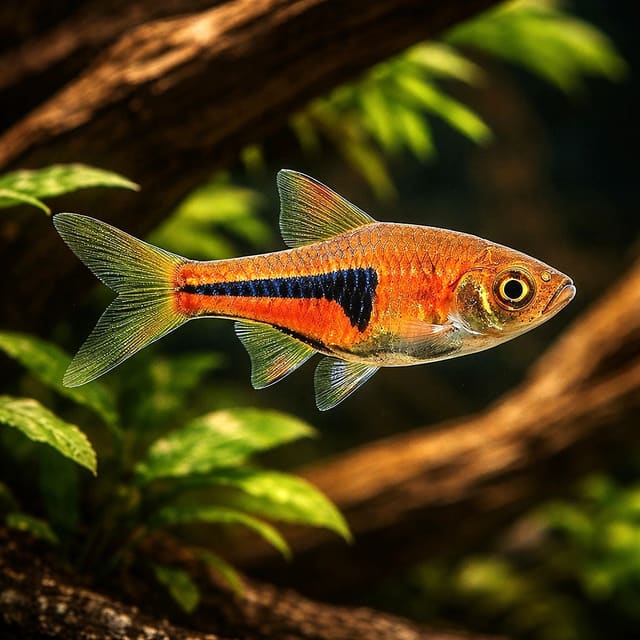
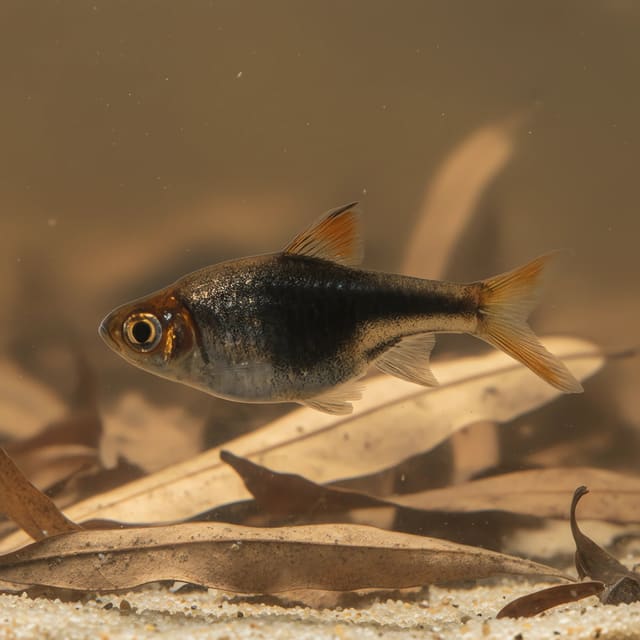
Black Harlequin Rasbora (Trigonostigma heteromorpha)
22–25°C · pH 5–7 · 60L
£3.47£3.99

Add elegant Scissortail Rasboras to your tropical tank. Peaceful, active and moderate care, ideal for community setups. Check the current size options and livestock delivery terms.
Adult size is the maximum length this species reaches at full maturity (scientific sources). The livestock you receive will be younger and smaller — pick a size above for the actual shipping size. Product-photo provenance and any image-specific limitations are stated on the listing.
Rasbora trilineata
Shoaling fish: kept in a group they feel safer, stay calmer and show their best colour.
Minimum of 2 per order.
Add elegant Scissortail Rasboras to your tropical tank. Peaceful, active and moderate care, ideal for community setups. Check the current size options and livestock delivery terms.
Adult size is the maximum length this species reaches at full maturity (scientific sources). The livestock you receive will be younger and smaller — pick a size above for the actual shipping size. Product-photo provenance and any image-specific limitations are stated on the listing.
Maintain these water conditions for optimal health and vibrant colors
If you want a lively shoal that fills the middle of a larger aquarium with constant movement, the Scissortail Rasbora is a striking choice for a spacious aquarium. Rasbora trilineata is a peaceful Southeast Asian cyprinid known for its forked tail and distinctive "scissoring" swimming action that gives the species its common name. Adults can reach around 15 cm, so this is not a tiny nano rasbora; it is a bigger, faster schooling fish that really shines in spacious community aquariums. With a lifespan of around 5 years, easy day-to-day care, and a calm temperament, these fish are popular with aquarists who want active display fish without the aggression seen in some larger species.
The Scissortail Rasbora belongs to the carp and minnow family, a huge group that also includes danios, barbs, and many classic community fish. In the aquarium hobby, rasboras are valued for peaceful behaviour and strong schooling instinct. While many keepers know smaller species such as rasbora heteromorpha, Rasbora trilineata stands out as a larger, more open-water swimmer suited to roomy community tanks.
The natural scissortail rasboras habitat is found across parts of Southeast Asia, especially Borneo, Malaysia, and Sumatra. In the wild, these fish live in rivers, streams, floodplains, and gently moving waters where there is room to swim in groups. Their native environment usually includes soft to moderately hard water, submerged roots, marginal vegetation, and seasonal leaf litter. Because they are active midwater fish, they tend to occupy open swimming lanes rather than hiding all day in dense cover.
What matters most for Rasbora trilineata is not exact river replication, but creating a tank with open swimming space, gentle current, and a sense of safety. That is why larger planted aquariums with wood, stems, and shaded edges work so well.
Mimicking the natural habitat improves colour, confidence, and schooling. Planting the back and sides while leaving the centre open gives the shoal cover and swimming room.
The biggest mistake people make with this species is treating it like a small rasbora. Scissortail rasboras tank size matters a lot because these fish are fast, active swimmers that can grow to around 15 cm. The realistic scissortail rasboras minimum tank size is 200 litres, and bigger is better if you want a full shoal. A long tank footprint is more useful than a tall one because it gives the group room to move naturally. If you are wondering how many Scissortails to keep, aim for at least 8, though 10-12 is even better in larger aquariums. A larger group gives these social fish more confidence.
For a proper scissortail rasboras tank setup, start with 200 litres for a small group and increase volume if you want mixed community stocking. The ideal scissortail rasboras aquarium setup includes long open water, strong oxygenation, and steady filtration. Because these fish are constantly in motion, they create more waste than their peaceful nature suggests. A mature filter and regular maintenance are essential.
Stable conditions are more important than chasing extreme softness. Keep scissortail rasboras temperature between 23 and 28°C, with scissortail rasboras water temperature around 24-26°C being a very safe everyday target. pH should sit between 6.0 and 7.5, and hardness around 5-15 dGH works well. These values overlap with many popular community species, which is one reason they are among the best rasbora for community tank layouts.
Use a reliable external or high-capacity internal filter that gives gentle to moderate flow. In nature, these fish are used to moving water, but they do not need a torrent. A spray bar can spread current evenly while preserving midwater swimming room. Pair the setup with a dependable aquarium heater and thermometer to keep temperatures stable.
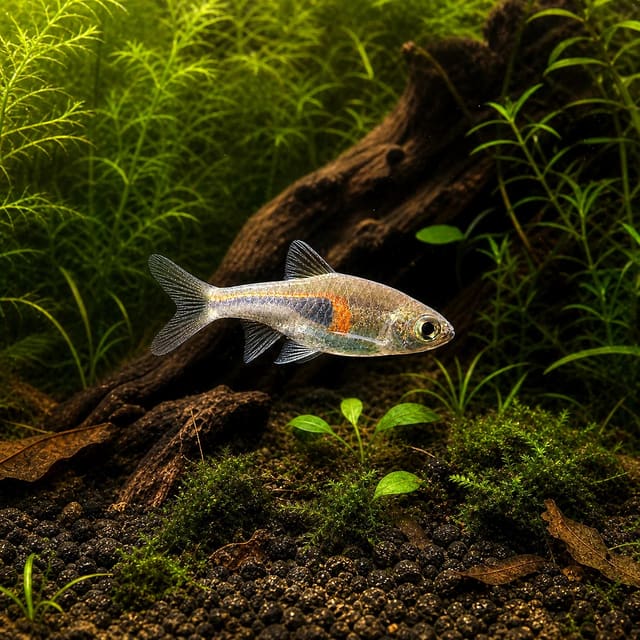
Dark sand or fine gravel helps the fish feel secure and makes the silver body and black-edged tail stand out. For planting, choose hardy species along the edges and background, leaving the centre open. For planting, fine-leaved stems, floating plants, and broad-leaved cover all work. Java fern, Cryptocoryne, Vallisneria, Limnophila, and floating Salvinia are excellent choices. If you enjoy active shoals weaving through greenery, scissortail rasboras in planted tank displays are especially attractive.
Cycle the aquarium and confirm the filter handles ammonia and nitrite before adding fish. A fully matured filter is one of the best ways to prevent early losses, stress, and appetite issues in newly imported shoaling species.
Scissortails need more swimming room than many smaller rasboras. Plan a long, open swimming area for the group.
The natural scissortail rasboras diet is omnivorous. In the wild they take small insects, tiny crustaceans, organic debris, and plant matter. In the aquarium they adapt easily to quality flakes, micro pellets, frozen foods, and occasional live foods. A good scissortail rasboras feeding guide should focus on variety rather than one single food. Because they are active swimmers, they benefit from regular but controlled feeding.
Feed a quality tropical flake or small granule once or twice daily. Choose foods that stay in the water column long enough for the shoal to intercept them. This species is not fussy, but better staple foods produce better finnage and stronger body condition.
Supplement 2-4 times per week with frozen daphnia, cyclops, bloodworm, or brine shrimp. These foods encourage stronger colour and natural feeding response. Keep the Scissortail diet varied and size each portion to what the shoal will eat promptly.
Very small shrimp fry may be eaten if they fit in the mouth. Adult ornamental shrimp are usually safer with tiny rasboras than with larger Scissortails. Protect shrimp young if breeding them is the aim.
For Scissortail fry, start with infusoria or very fine powdered fry food, then move to newly hatched brine shrimp as they grow.
| Time | Food | Amount |
|---|---|---|
| Morning | Quality tropical flake or micro pellet | Only what the shoal clears in 60-90 seconds |
| Evening | Frozen daphnia, brine shrimp, or bloodworm | Small portion, 2-4 times weekly |
Overfeeding causes ammonia spikes, cloudy water, and filter stress. If food is reaching the substrate uneaten every day, reduce portions. Poor water quality can also suppress appetite.
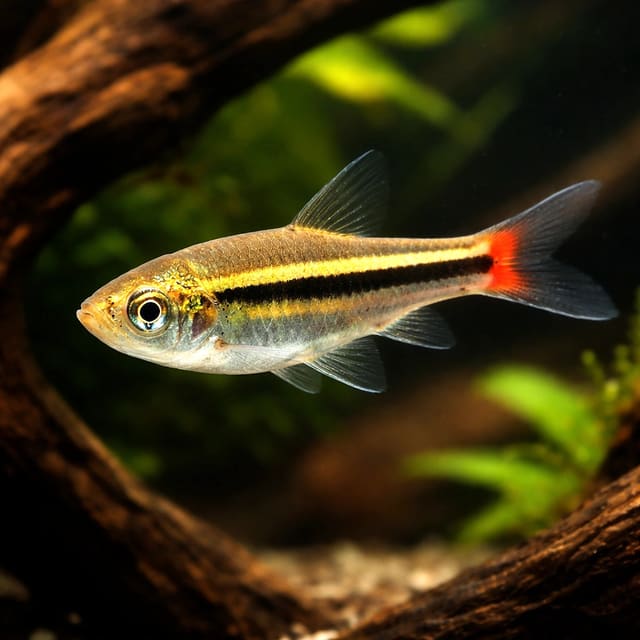
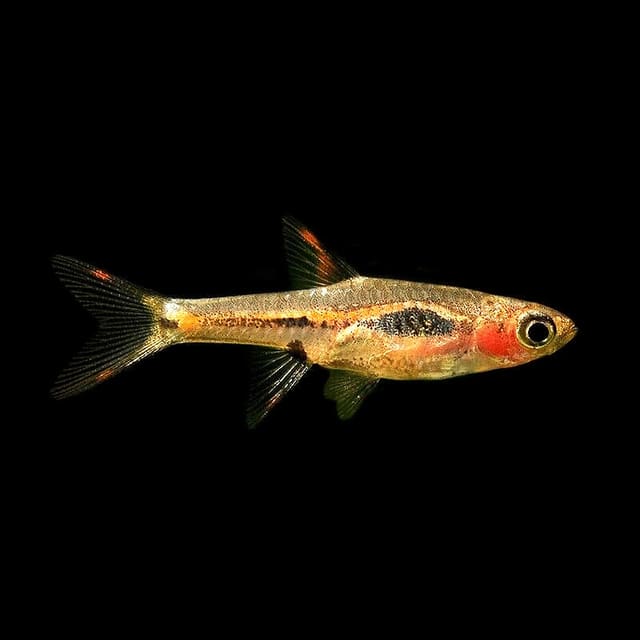
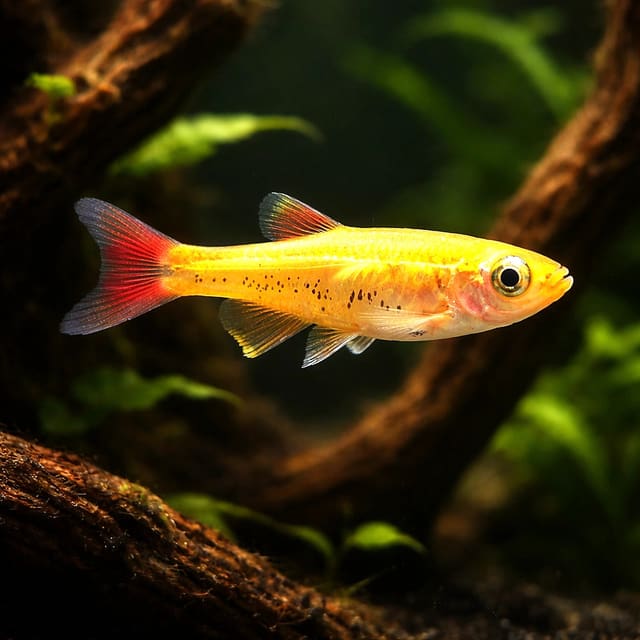
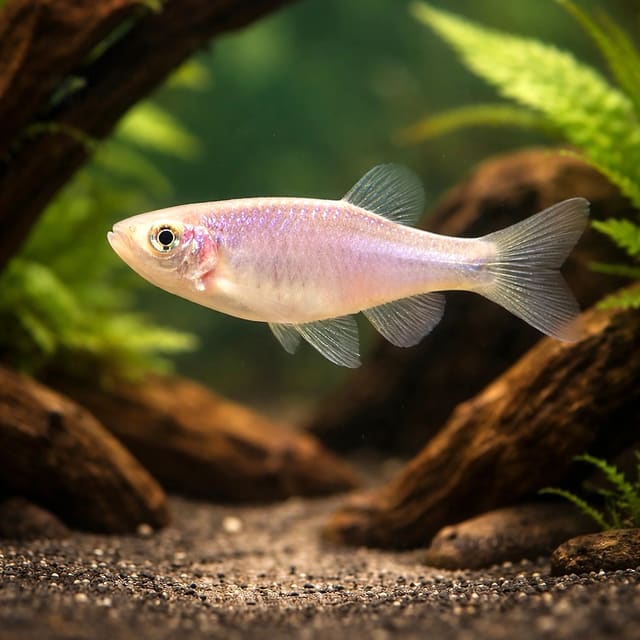
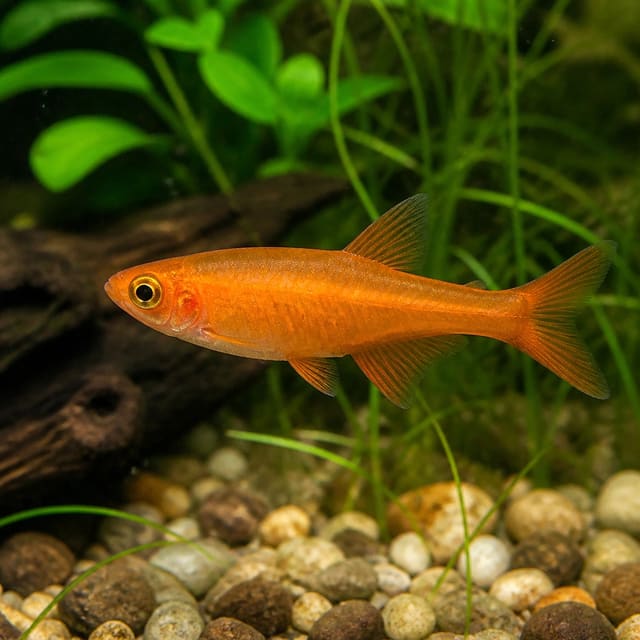
The Scissortail Rasbora is a sleek, streamlined silver fish with a deeply forked tail marked by black and pale bands. The body often shows a subtle reflective sheen, and the tail pattern becomes more obvious as the fish turns in open water. The species is named for the way the caudal fin flicks back and forth, creating a scissor-like motion that is especially noticeable in a healthy shoal. The scissortail rasbora max size of around 15 cm makes it much larger than many people expect from a rasbora.
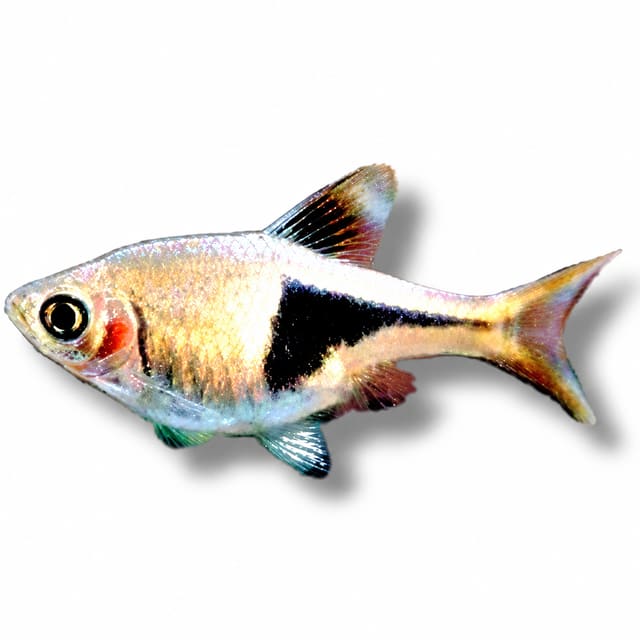
Scissortails are slim-bodied, peaceful, schooling cyprinids built for constant movement rather than territorial displays. Scissortails are silver and black rather than the copper-orange of Harlequin Rasboras. Their appeal is motion, contrast, and group effect rather than a single bold body patch.
Sexing adults is possible but subtle. In general, females are slightly fuller-bodied when mature, while males may appear slimmer and more streamlined. The best clue in many groups is body fullness rather than brighter colour, so male and female Scissortails can be difficult to distinguish. In a properly maintained display, scissortail rasboras in planted tank arrangements often show the best contrast because dark backgrounds and green plants make the tail pattern stand out.
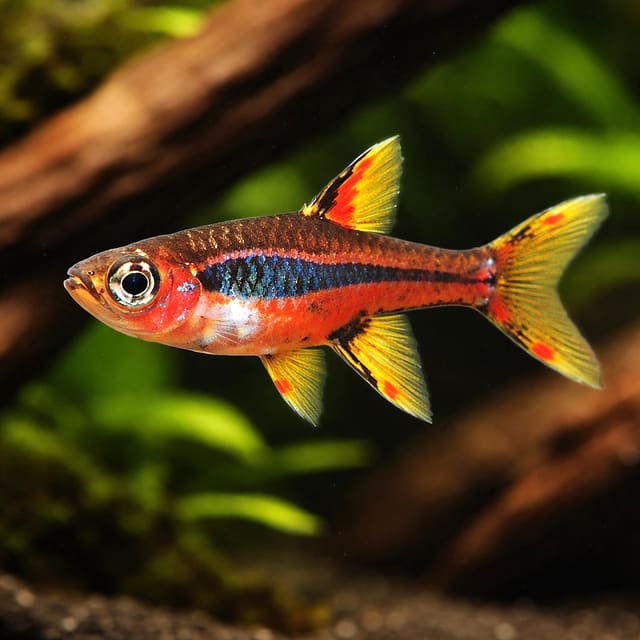
Compared with Scissortails, Harlequins are smaller, deeper-bodied, and more triangular in pattern. Scissortails are longer, faster, and visually more streamlined. That difference matters when choosing between a compact planted tank and a larger open-water community aquarium.
Scissortails are among the easiest larger rasboras to place in a peaceful community. They are not predators in the classic sense, and they are not usually fin nippers, but their size and speed mean they should be housed with fish that enjoy similar conditions and are not easily intimidated. Scissortails are generally peaceful. Scissortails are peaceful, but they are energetic enough to unsettle very shy nano species if the tank is too small.
Choose peaceful, similarly active community fish only where the aquarium is spacious and water needs overlap. Avoid overcrowding a Scissortail shoal.
Choose peaceful tank mates that can live with the Scissortails' size, open-water activity and water conditions. Slow or very shy fish may be unsettled by the shoal, and goldfish have different temperature needs. Avoid assuming that advice for smaller rasboras transfers to this larger species.
Scissortails are schooling fish. Scissortails feel safer in numbers. If the group scatters or hides, check group size, stress, layout and tank mates.
| Species | Compatible? | Notes |
|---|---|---|
| Gold Longfin Leopard Danio | ✅ Yes | Active, peaceful, and suited to larger community tanks |
| Albino Sky Blue Guppy | ⚠️ Caution | Possible in roomy tanks; avoid overcrowding and parameter mismatch |
| Gold Giant Gourami | ❌ Avoid | Becomes far too large for a peaceful Scissortail community |
For invertebrates, judge compatibility against the Scissortail's adult size rather than a smaller rasbora's reputation. Scissortails are larger, so adult shrimp may survive in dense cover, but shrimplets are at risk. That makes them less ideal for dedicated shrimp breeding tanks.
Always quarantine new arrivals for 2-4 weeks before adding them to a community aquarium. This reduces the risk of introducing white spot, bacterial infections, or internal parasites to an established shoal.
Scissortail rasboras breeding is considered moderate rather than easy. They are egg scatterers, and while adults may condition well in captivity, successful spawning and fry rearing usually need a separate breeding setup. A quiet, dimly lit breeding tank with fine plants and stable water gives eggs and fry a better chance.
Use a separate aquarium with soft, slightly acidic water, gentle filtration, and fine-leaved plants or spawning mops. Keep temperature toward the warmer end of the normal range, around 26-28°C. For Scissortails, a stable warm setting often helps trigger breeding readiness.
Condition adults with varied frozen and live foods for 1-2 weeks. Females become fuller with eggs, while males may chase more actively. This is where knowing scissortail rasboras male vs female becomes useful. Spawning usually happens among plants, and eggs are scattered rather than carefully guarded.
Remove adults after spawning because they may eat eggs. Scissortail eggs are small, clear to slightly translucent adhesive eggs that can be hard to spot on plants or mops. Fry need very small foods at first, then newly hatched brine shrimp as they grow. Growth is steady but not especially fast.
Are they simple to breed? Compared with livebearers, no. Compared with some delicate egg scatterers, they are manageable. A dedicated setup and patience are needed.
Use a bare-bottom breeding tank with a mesh or marbles beneath the spawning area. This lets eggs fall out of reach of the adults and can noticeably improve hatch rates in egg-scattering cyprinids.
Comparison matters because many aquarists love rasboras but do not realise how different their tank needs can be. A Scissortail is not just a bigger Harlequin; it is a different style of fish with different space needs and visual impact. If you want a larger, open-water shoal, Scissortails are excellent. If you want a smaller planted display, other rasboras may fit better. Browse the rasbora and danio collection to compare suitable species.
| Feature | Scissortail Rasbora | Harlequin Rasbora |
|---|---|---|
| Max Size | 15 cm | About 5 cm |
| Care Level | Easy to moderate | Easy |
| Temperature | 23-28°C | 23-28°C |
| Best For | Large active community tanks | Smaller planted community tanks |
| Feature | Scissortail Rasbora | Neon Tetra |
|---|---|---|
| Swimming Style | Fast, open-water shoaling | Tighter, smaller shoals |
| Tank Size Need | Large footprint essential | Smaller tanks possible |
| Visual Appeal | Tail action and group movement | Blue-red body colour |
| Community Role | Midwater feature shoal | Compact colour accent |
| Best For | Long aquariums | Mixed smaller communities |
The choice depends on tank space and the kind of shoal you want. Choose Scissortails if you want motion, size, and a more dramatic midwater presence. Choose ember tetras or neons if you need a smaller fish for a modest tank. Smaller rasboras suit a different tank footprint; plan around the actual adult size and swimming style of the fish you choose.
Good scissortail rasboras health starts with clean, stable water and correct group size. Healthy fish swim actively in midwater, feed eagerly, hold fins open, and show no clamped posture, flashing, or gasping. Because they are schooling fish, a lone or stressed individual often looks pale and hangs back from the group. That is usually an early warning sign.
The most common scissortail rasboras diseases in aquariums are the same ones seen in many imported community fish: white spot, bacterial fin damage, and stress-related wasting. Observe a new shoal closely after transport and introduction. Most outbreaks begin after transport stress, sudden temperature swings, or poor quarantine practice.
White spot appears as tiny salt-like dots on the body and fins. Bacterial issues may show as frayed fins, ulcers, or cloudy patches. Similar-looking symptoms can have different causes, so identify the problem carefully before treating.
Start with water testing, increased aeration, and a 25-30% water change if symptoms appear. Isolate affected fish where possible. Raise temperature only if the diagnosis supports it and all tank mates can tolerate the change. Use medications appropriate for community fish, and always read compatibility notes if shrimp or snails are present.
NEVER use copper-based medications in tanks containing shrimp or other sensitive invertebrates. Copper can be lethal even at low doses, and many mixed community keepers overlook this when treating white spot.
Prevention is much easier than cure. Stable temperature, low nitrate, varied diet, and enough companions all lower stress. A sufficiently sized shoal can help these social fish settle.
Yes, Scissortails are strongly social and should always be kept in groups. Their most attractive behaviour appears when they are housed as a shoal in a long aquarium with open swimming space. They spend most of their time in the middle level, turning together and flashing tail markings as they change direction. This is the behaviour that makes them such a rewarding display fish.
They are active rather than shy, but they still need security. If the tank is too bare, the group may become jumpy. If the group is too small, individuals may hide or lose confidence. Observe group behaviour alongside water quality and tank layout. Schooling is a sign of comfort, not just instinct.
In a settled aquarium, expect constant cruising, quick feeding response, and occasional chase behaviour that is social rather than aggressive. Scissortail rasboras with other fish generally work well when companions are peaceful and similarly active. This species is one of the most enjoyable choices for keepers who want visible daytime behaviour rather than a fish that hides in plants all day.
Scissortails are active, peaceful shoaling fish for mature tropical community tanks. Check the live size selector, plan for the adult fish and review current delivery terms for your address.
If you are comparing larger shoaling fish, this species is an excellent step up from smaller shoaling fish once you have a 200-litre or larger aquarium ready. Choose an available size only when the aquarium and shoal plan are ready.
No reviews for this item yet. Bought one? Honest reviews only, good or bad.
What customers say about ordering from us
I have a small group of long finned mountain minnows. So was delighted to be able to order ten of this variety to increase the genetics in my tank . The ones I recieved are healthy but it’s to early to give a verdict on wether they are of a long finned type since they are small currently.
Gordon Walker · 23 Sept 2026
100% success travel and "installation". Pleased with quality of purchase. The Siamese fighter a bit "shy" so have not yet seen him at his best yet but looking good. Happy customer. GG
George E Garratt · 21 Sept 2026
Reviews of our shop, collected by Judge.me, an independent third-party review collector. Newest first.