Easy
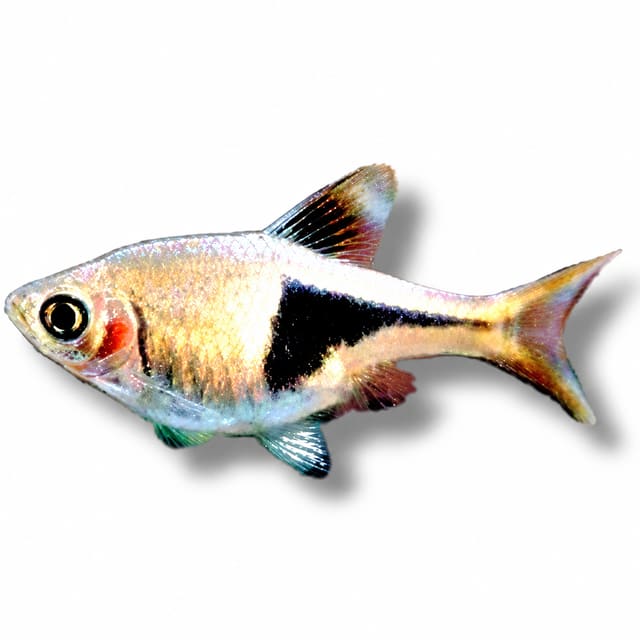
Harlequin (Rasbora heteromorpha)
21–28°C · pH 5–7.5 · 54L
£2.99

The Rosy Danio (Danio roseus) is a peaceful danio-family freshwater fish from the Mekong basin in Thailand, Laos and Myanmar that reaches 3.8 cm standard length. It suits keepers with a covered 90 × 30 cm aquarium who can keep at least 8–10 together at 18–25°C and pH 6.0–7.5. Sold individually in sizes from 2–2.5 cm to 3.5–5 cm.
Adult size is the maximum length this species reaches at full maturity (scientific sources). The livestock you receive will be younger and smaller — pick a size above for the actual shipping size. Product-photo provenance and any image-specific limitations are stated on the listing.
Danio roseus
Shoaling fish: kept in a group they feel safer, stay calmer and show their best colour.
Minimum of 2 per order.
The Rosy Danio (Danio roseus) is a peaceful danio-family freshwater fish from the Mekong basin in Thailand, Laos and Myanmar that reaches 3.8 cm standard length. It suits keepers with a covered 90 × 30 cm aquarium who can keep at least 8–10 together at 18–25°C and pH 6.0–7.5. Sold individually in sizes from 2–2.5 cm to 3.5–5 cm.
Adult size is the maximum length this species reaches at full maturity (scientific sources). The livestock you receive will be younger and smaller — pick a size above for the actual shipping size. Product-photo provenance and any image-specific limitations are stated on the listing.
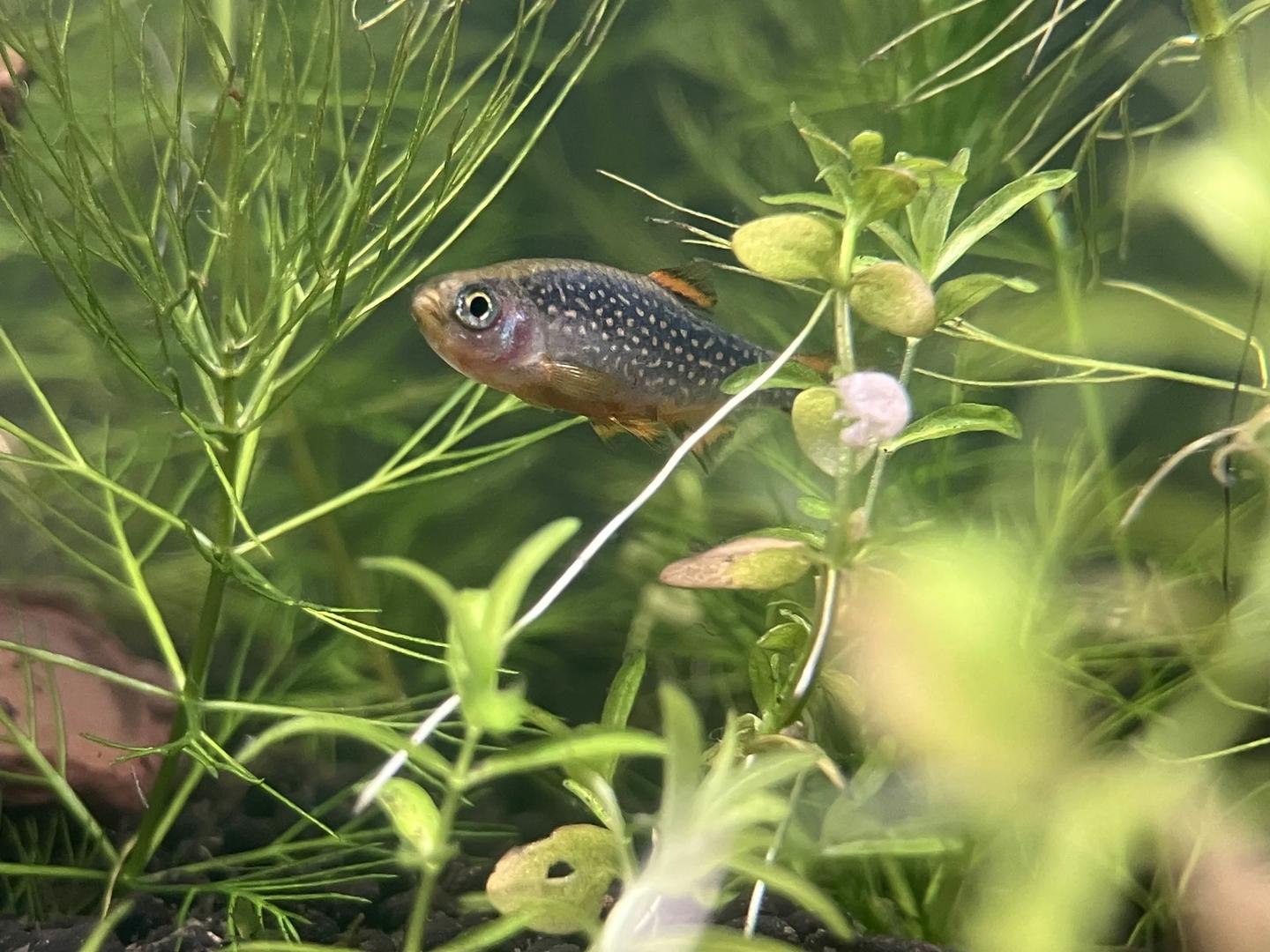
Plan a mature, densely planted aquarium with at least a 45 × 30 cm base for a social group. Use 20–26°C, pH 6.5–7.5 and 5–15 dGH as published screening ranges, then hold a stable value inside the overlap for every animal in the tank.
Maintain these water conditions for optimal health and vibrant colors
Rosy Danio is Danio roseus, a peaceful, active freshwater fish in the danio family Danionidae. FishBase lists its distribution across the Mekong basin in Thailand, Laos and Myanmar and records a maximum of 3.8 cm standard length. It suits a keeper who wants lively schooling movement and can provide a mature, covered community aquarium with enough horizontal room for at least 8–10 fish.
Plan the aquarium around the complete adult group rather than body length alone. The Seriously Fish species page gives a different length reference of 5.5 cm standard length and sets a smallest base of 90 × 30 cm, equivalent to about 81 litres. Use that footprint when planning swimming space while retaining the FishBase maximum of 3.8 cm as the adult-size figure throughout this profile.
We rate the care level as easy when the aquarium is already mature, filtered and large enough for the complete group. The essential work is straightforward but cannot be skipped: hold stable water within 18–25°C, pH 6.0–7.5 and 2–15 dGH; keep ammonia and nitrite at zero; use a tightly fitting cover; and make sure every fish feeds.
| Decision | Planning figure |
|---|---|
| Social group | At least 8–10 specimens |
| Smallest base | 90 × 30 cm or equivalent |
| Approximate volume | About 81 litres |
| Routine temperature | 18–25°C |
| Water chemistry | pH 6.0–7.5; 2–15 dGH |
| Adult size | 3.8 cm standard length |
| Suits | Not suited to |
|---|---|
| Mature, filtered aquariums with a 90 × 30 cm base | Small aquariums without room for at least 8–10 fish |
| Planted community layouts with open swimming space | Uncovered aquariums with gaps through which danios can jump |
| Peaceful communities sharing 18–25°C and pH 6.0–7.5 | Timid fish stressed by constant danio activity |
| Keepers able to test and maintain water every week | Unfiltered or biologically immature aquariums |
A tall aquarium with the same litre label may offer less horizontal swimming room. Mixed communities also need capacity for every adult resident, so the 81-litre figure is a starting point for the Rosy Danio group rather than a universal stocking allowance.
Each unit supplies one Rosy Danio. The live size selector shows 2–2.5 cm, 2.5–3 cm and 3.5–5 cm sizes; select the required size and set the quantity to the number of fish you intend to keep.
The size you select is the size supplied, not the adult size. The selected measurement describes the fish at dispatch and does not reduce the adult aquarium footprint, stocking allowance or social-group requirement. Even the smallest fish needs an aquarium planned for at least 8–10 Rosy Danios and a base of at least 90 × 30 cm.
Sex is guaranteed only when the selected option explicitly states male or female. This Rosy Danio listing has no sex-guaranteed option.
Seriously Fish notes that females tend to grow larger and become deeper-bodied, particularly when gravid, but appearance must not be treated as a sex promise. Build the group without depending on a particular sex ratio.
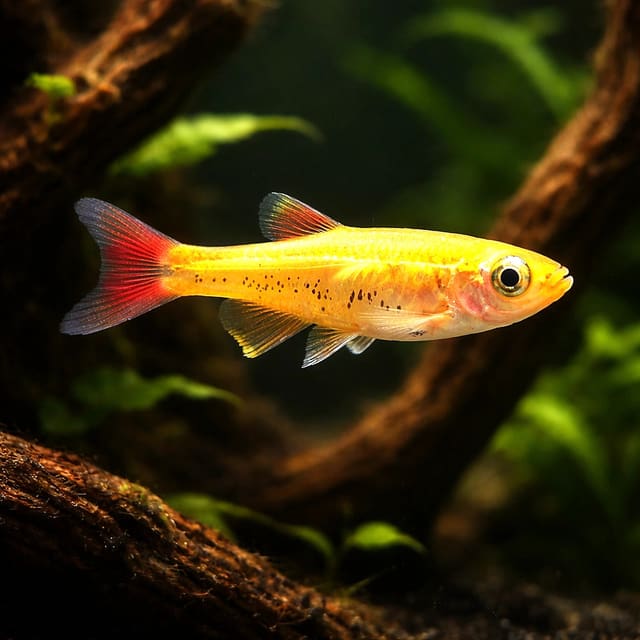
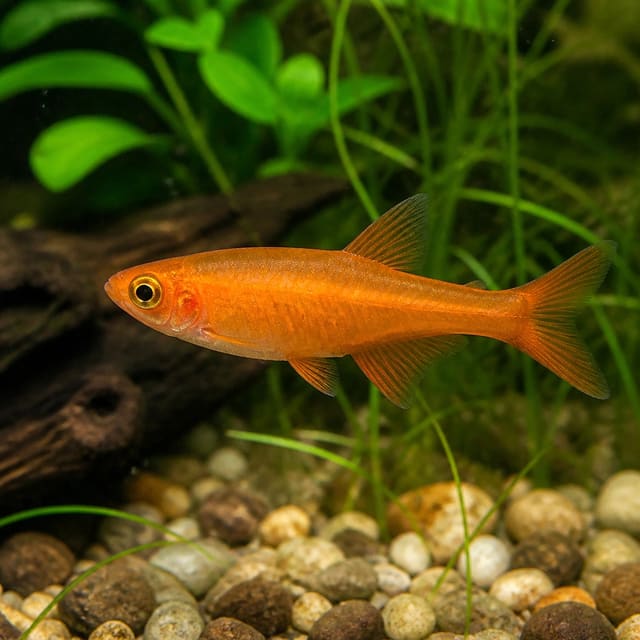
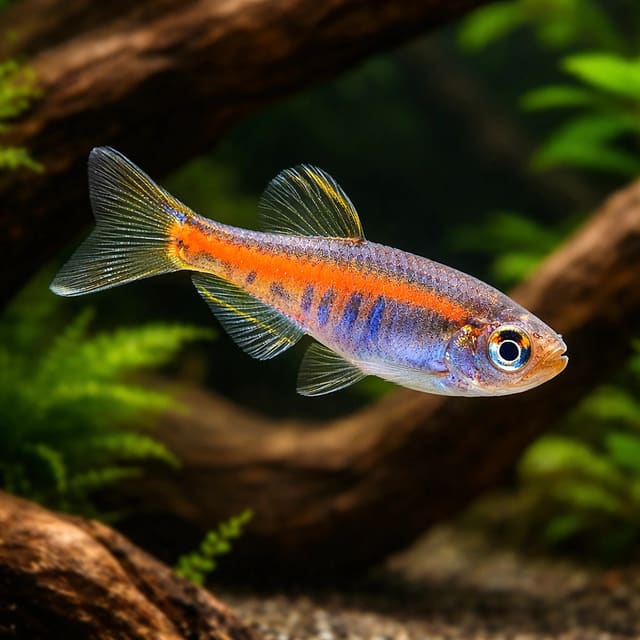
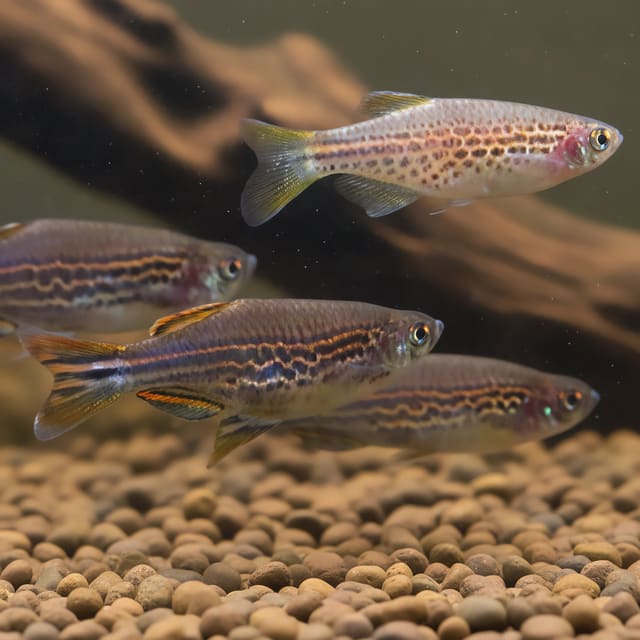
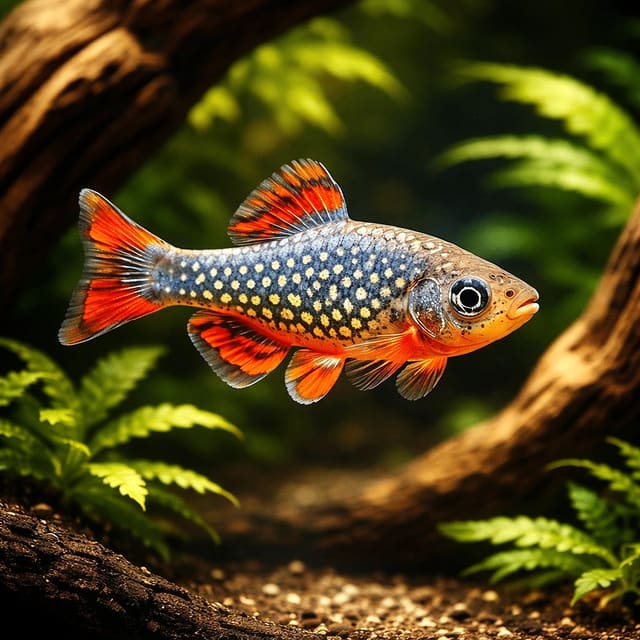
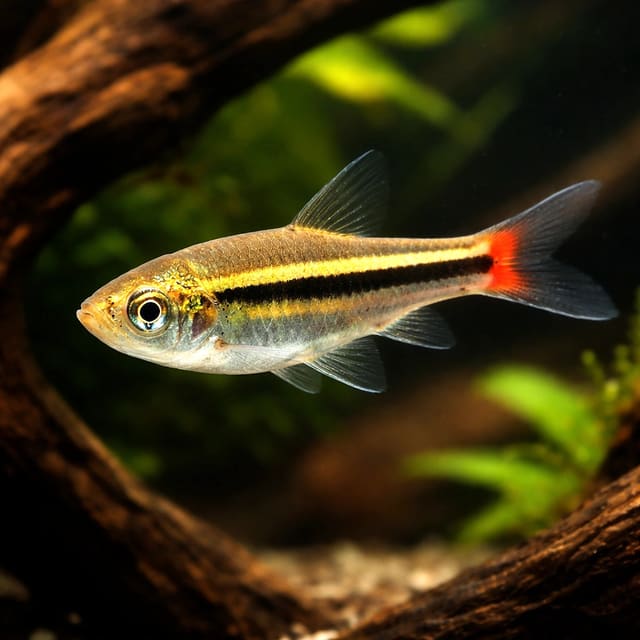
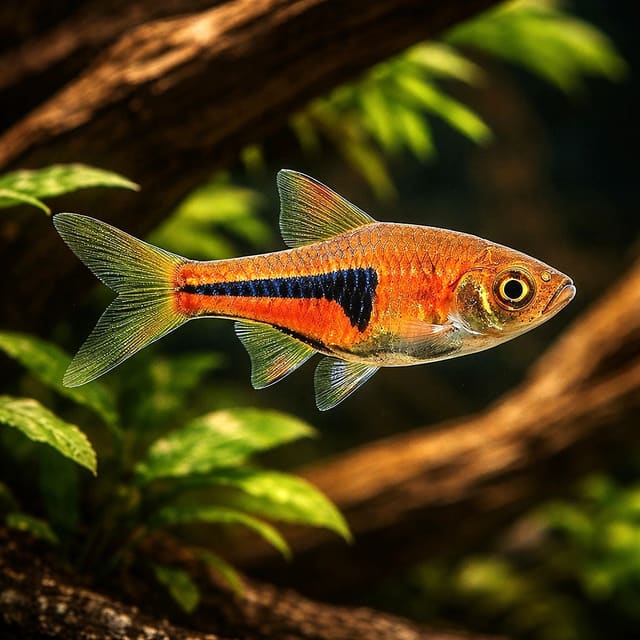
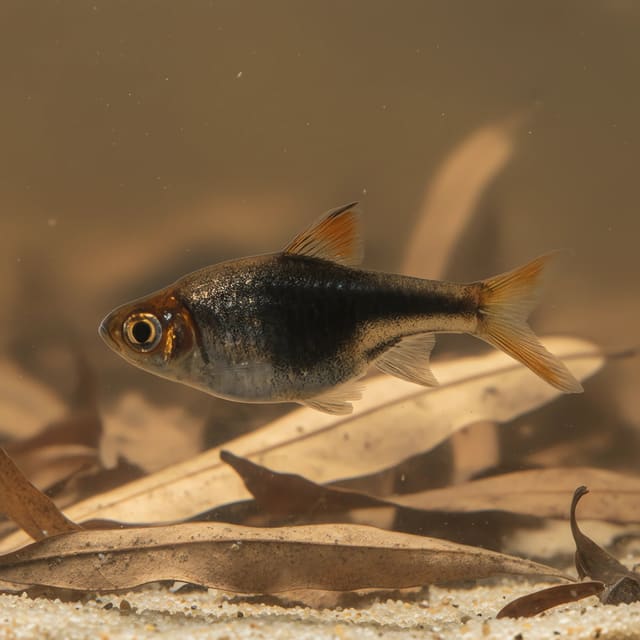
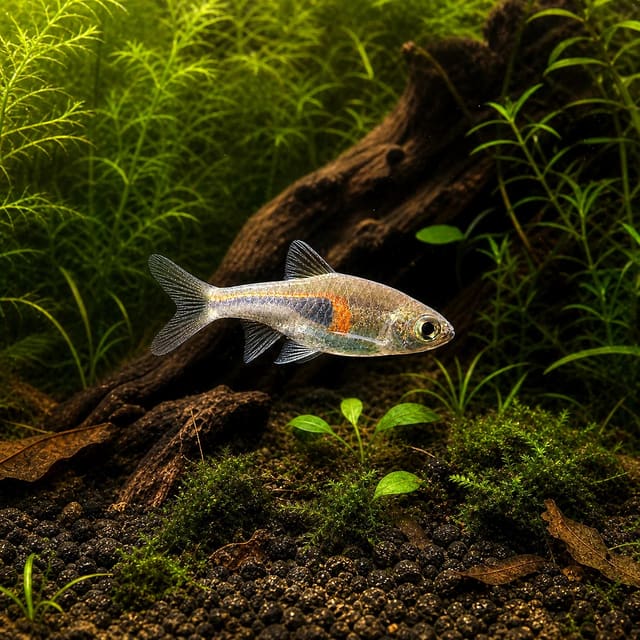
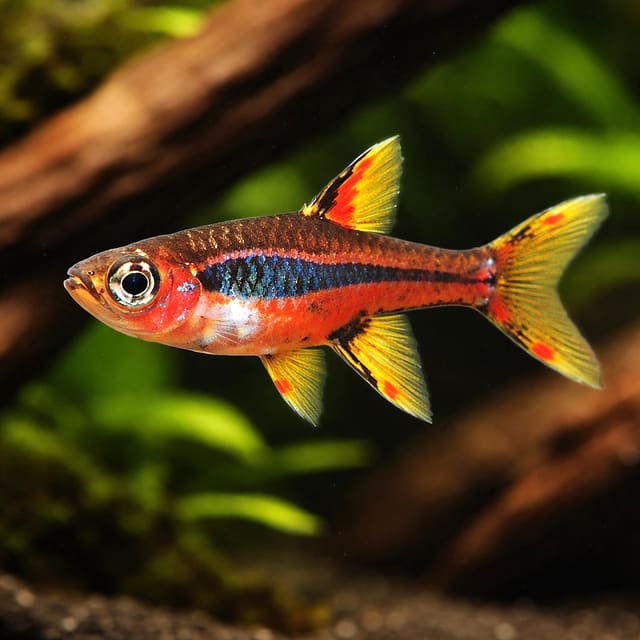
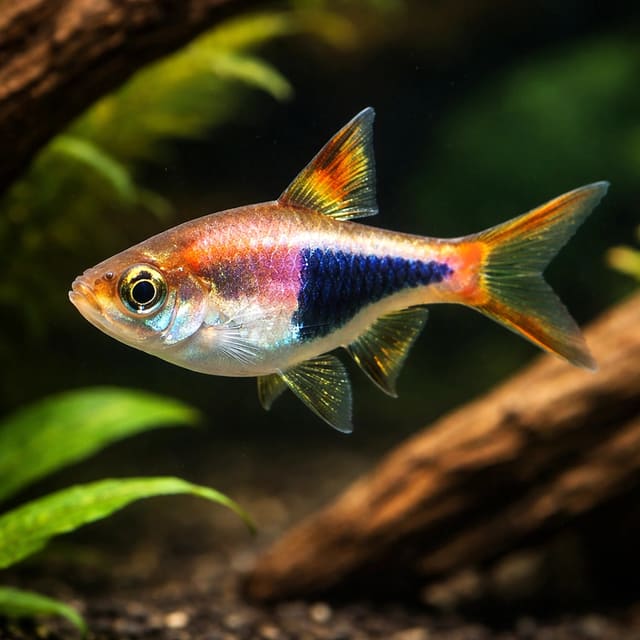
The gallery images are representative, based on reference photographs of this species, so colours can look slightly different from the live animal.
If you are comparing this danio with other choices, browse the rasbora and danio collection and assess each animal by its own adult size, group requirement and water range. Read the delivery and Live Arrival Guarantee policy before the delivery date so someone is ready to receive the parcel and follow the arrival procedure.
Count the aquarium’s existing adult residents before setting the quantity. Ten Rosy Danios in an 81-litre planning aquarium do not automatically leave room for ten further tank mates; decor, swimming room, filter capacity and the needs of the complete community still determine final stocking.
Start with an aquarium base of at least 90 × 30 cm or an equivalent footprint, with about 81 litres as the associated planning volume. Horizontal room matters because Rosy Danios are active schooling fish. A taller aquarium does not replace useful length if its base is shorter, and hardscape should not consume the open area needed by the complete group.
Fit a very tight cover before the fish arrive. Members of this genus are accomplished jumpers and can pass through surprisingly small gaps. Check spaces around cables, pipework, filter returns and feeding openings rather than judging the lid only from the centre. Close every opening through which a small fish could pass with aquarium-safe fittings.
| Zone | Purpose |
|---|---|
| Open swimming area | Gives the shoal uninterrupted horizontal movement |
| Planted margins | Provide cover without filling the whole footprint |
| Hardscape area | Adds structure with rocks, gravel, roots or branches |
| Calmer edge | Offers relief from the strongest filter return |
| Secure surface | Prevents escape through lid and equipment gaps |
A heavily planted arrangement with a darker substrate can show the fish effectively, while sparse decor may make their colour appear paler. Plants are useful for cover and presentation, but colour alone is not a health measurement. Keep enough open water to see whether each fish swims, feeds and holds condition normally.
A river- or stream-inspired layout can use variably sized rocks, gravel, water-worn boulders, driftwood roots and branches. Plants attached to decor can preserve more open substrate than dense planting across the whole base. Position every item securely and leave access to areas where solid waste settles.
Use a powerhead or filter outlet only to create controlled circulation. Avoid torrent-like conditions because small danios tend to occupy calmer stretches and marginal zones. Watch the complete group after adjusting an outlet: the layout should provide movement without forcing every fish to work continuously against the strongest current.
The finished aquarium should combine security with visibility. Cover around the margins lets nervous fish move away from disturbance, while the open centre allows the keeper to count the group and notice changes in swimming, appetite or body condition.
Use a fully established biological filter before introducing Rosy Danios. RSPCA aquarium guidance explains that fish release toxic ammonia, which beneficial filter bacteria convert first to toxic nitrite and then to safer nitrate. A filter is life-support equipment rather than an optional way to make the water look clear.
If this is a new aquarium, follow our first tropical tank guide and mature the system before livestock arrives. Clear water alone does not show that the biological filter can process waste. Test ammonia and nitrite and proceed only when both remain at zero under the aquarium’s planned routine.
For an aquarium of about 81 litres, Seriously Fish uses a turnover of four to five times the volume each hour and points to a filter rated around 325–405 litres per hour. Position the outlet so it circulates the aquarium without turning the open swimming zone into a torrent.
Stocking too quickly can cause new tank syndrome when nitrifying bacteria cannot process the increased waste. The social requirement does not make an immature filter safe; prepare biological capacity for the intended group before purchase rather than using the fish to mature the aquarium.
Keep open access to the filter intake, outlet and media chamber. Check for blockages as part of routine maintenance, but do not leave the aquarium without circulation for unnecessary periods. The filter must support both waste processing and useful movement through the decorated footprint.
Judge filtration by measured water quality and fish behaviour together. Surface hanging, rapid breathing or erratic swimming requires an immediate water test even when the equipment appears to be running.
Keep Rosy Danios within 18–25°C, pH 6.0–7.5 and 2–15 dGH. These are species-level aquarium ranges from Seriously Fish. Choose a stable point inside them that also suits every other aquarium resident; the lower and upper limits are boundaries for screening, not a reason to move repeatedly between the extremes.
OATA’s broader danio guidance gives 17–27°C, pH 6.5–8.0, 4–12 dGH and 3–10 dKH for the group, with ammonia and nitrite at zero and nitrate no more than 20 mg per litre above the normal tap-water level. For this animal, use the narrower 18–25°C and pH 6.0–7.5 species ranges while retaining those water-quality limits and weekly monitoring habits.
Our aquarium water chemistry guide explains what the principal measurements mean. Enter measured values into the water matcher when comparing this range with a planned aquarium.
Temperature decisions should be based on aquarium water rather than an assumption about the room. Seriously Fish estimates roughly 50 W of heating for an 81-litre setup when the room is around 20°C, but heater demand changes with the aquarium and its surroundings. The keeper’s task is to hold the water steadily inside 18–25°C.
Treat replacement tap water with a suitable conditioner to remove chlorine or chloramine before it enters the aquarium. Regular measurement, stable operation and a mature biological filter protect the fish more reliably than reacting to a single reading in isolation.
Rosy Danios are likely to prey chiefly on insects and their larvae in nature. In an aquarium they accept most foods, so use one or two good-quality dried products as the staple and add regular meals of suitably small live or frozen food. Seriously Fish names bloodworm, Daphnia and Artemia as suitable examples for colour and condition.
Follow OATA’s danio schedule by feeding once a day and offering only what the group can eat within a few minutes. This gives a clear observation period: remain at the aquarium, watch food enter the swimming zone and confirm that every fish participates. Food added is not the same as food eaten by each individual.
| Part of the routine | Action |
|---|---|
| Daily staple | Offer a quality flake, granule or another suitably small dried food |
| Regular variety | Add small live or frozen Daphnia, bloodworm or Artemia |
| Observation | Check that every fish approaches and swallows food |
| Portion limit | Stop at the amount eaten within a few minutes |
| Next feed | Reduce the next portion if uneaten food remains |
Match particle size to the fish being fed, particularly when caring for one of the smaller dispatch sizes. A piece that remains too large to swallow does not become useful simply because it stays in the aquarium. Use small portions distributed where the group can reach them, then judge the next feed from appetite, body condition and uneaten food.
Overfeeding adds waste that decomposes and can contribute to toxic water conditions. If food remains after the normal feeding period, reduce the next portion and check ammonia, nitrite and the nitrate trend. Do not compensate for one fish missing food by repeatedly adding food to the whole aquarium; first observe whether activity, competition or a health change is preventing that fish from feeding.
A community aquarium adds another decision. Watch the Rosy Danios rather than assuming a general community ration reaches them. Tank mates with a different feeding pace may consume food first, so the combination works only when every resident can obtain an appropriate share without excessive waste.
Prepare the aquarium before the Rosy Danios arrive. Confirm that its base is at least 90 × 30 cm, the cover closes every escape gap, the filter is mature and the chosen water point lies inside 18–25°C, pH 6.0–7.5 and 2–15 dGH. Ammonia and nitrite must both read zero before fish are introduced.
OATA advises increasing aquarium stocking slowly because the beneficial bacteria in the filter must adjust when fish waste and feeding increase. Do not add further livestock while the biological filter is adjusting to this group.
| Checkpoint | What to do |
|---|---|
| Before release | Confirm the aquarium temperature and recheck the cover |
| First feeding | Offer a small appropriate portion and watch each fish |
| Every day | Count the group and compare swimming, breathing and appetite |
| After any concern | Test the water before making further changes |
| End of week | Complete the scheduled tests and partial water change |
Healthy fish should show clear, bright eyes, intact scales and undamaged fins, without ulceration or abnormal growths. Learn how the new group normally moves and feeds so that a fish hanging at the surface, sitting on the bottom, swimming erratically or hiding more than usual stands out as a change.
The first feed is an assessment, not a reason for a large ration. Offer food that the selected size can swallow. Reduced appetite may accompany a wider problem, so pair feeding observations with water tests and a check of breathing, colour, fins and body condition.
A successful introduction means stable readings, normal breathing, intact bodies and consistent access to food across the first week. Delay further stocking until the aquarium continues to hold ammonia and nitrite at zero under the new routine.
Carry out a 25% partial water change at least once every week. In an aquarium holding about 81 litres, 25% is approximately 20 litres. The working volume will be lower where substrate and decor displace water, so use the calculation as a practical starting point and keep the routine consistent.
Use a siphon to remove solid waste from the gravel or sand while taking out the old water. Treat replacement tap water with conditioner before adding it so chlorine or chloramine does not harm the fish or the beneficial bacteria supporting the biological filter.
Tap water may contain chlorine or chloramine that can damage the beneficial bacterial population. Cleaning filter media in removed aquarium water reduces that risk. The goal is to clear obstructing debris without stripping away the biological process that converts ammonia and nitrite.
During the first month, keep the weekly results together so trends are visible. A single acceptable reading should not replace the next scheduled test. Repeated zero ammonia and nitrite readings, a controlled nitrate trend and steady fish behaviour show that the aquarium is coping with the group’s waste and feeding.
Use maintenance to inspect escape points as well. Lids and cable gaps can shift during feeding, water changes and filter cleaning. Close them before leaving the aquarium, then confirm that circulation has restarted and the outlet still creates useful movement without torrent-like flow.
If a result differs from the aquarium’s usual pattern, pause further stocking and identify the cause. Water changes, filter checks and reduced excess feeding address husbandry problems directly; do not use medicine as a substitute for correcting the environment.
Observe each Rosy Danio for changes in swimming, colour, temperament, breathing, appearance, body condition and feeding. OATA identifies warning signs including hanging at the surface, sitting on the bottom, erratic swimming, unusual hiding, faster or slower gill movement, white spots, fluffy growths, damaged fins or scales, ulcers, weight change and reduced interest in food.
Start with measurements whenever behaviour or appearance changes. Test temperature, ammonia, nitrite, nitrate and pH, then note recent additions, maintenance, feeding, appetite and which animals are affected. Similar outward signs can accompany different problems, so one symptom should not trigger a guessed treatment.
| Observation | First response |
|---|---|
| Surface hanging or rapid breathing | Test the water immediately and inspect circulation |
| Reduced feeding | Check water, feeding access, breathing and body condition |
| Erratic swimming | Measure water values and review recent changes |
| Spots, growths or ulcers | Record the signs and seek guidance before treatment |
| Several fish affected | Review the shared environment without delay |
If ammonia or nitrite is above zero, treat the reading as a water-quality problem and pause further stocking. Check filter operation and blockages, review recent feeding and additions, and carry out the appropriate maintenance without rinsing filter media under the tap.
When one fish stops eating, watch whether it approaches food and whether other residents prevent access. Compare its breathing, colour, fins, scales and body condition with the rest of the group. Avoid adding repeated extra portions because uneaten food creates more waste without solving the cause.
If signs persist or worsen, test the water again and contact us for further guidance. Keep the latest readings, the timing of recent additions or maintenance and a clear description of the changes ready so the next decision can be based on the aquarium’s actual conditions.
Continue daily observation after the immediate problem appears to settle. Restored appetite, normal breathing and stable swimming should accompany zero ammonia and nitrite; an equipment display or clear-looking water should not replace those checks.
Rosy Danios are very peaceful fish and can suit a well-furnished community aquarium. Seriously Fish names other small cyprinids, tetras, livebearers, rainbowfish, anabantoids, catfish and loaches as possible community groups. Treat those categories as starting points for assessment, not automatic approval for every species within them.
Check each proposed tank mate by adult size, water overlap, activity, feeding pace, behaviour and the space used by the complete adult community. The chosen combination must share a stable point within the Rosy Danio range of 18–25°C, pH 6.0–7.5 and 2–15 dGH. It must also fit the aquarium after the danio group and decor are included.
| Question | Pass condition |
|---|---|
| Do the water ranges overlap? | One stable temperature, pH and hardness suits every resident |
| Does the aquarium fit all adults? | The 90 × 30 cm Rosy Danio base remains only the starting point |
| Will activity levels work? | Other fish remain comfortable around constant danio swimming |
| Can every fish eat? | Feeding pace and food placement give all residents access |
| Does the layout still work? | Cover and open swimming room remain after all residents are included |
OATA warns that constant danio swimming may stress more timid species. Watch the actual residents after introduction rather than relying only on a species label. Increased hiding, reduced feeding, rapid breathing or a fish remaining away from its normal area calls for water tests and a reassessment of the combination.
Do not transfer numbers between superficially similar fish. Apply the Rosy Danio’s own 90 × 30 cm base, 18–25°C range and group of at least 8–10 when planning this community, then screen every other species against its own adult requirements.
Individual behaviour and aquarium layouts vary, so uncertainty remains with any new mixed community. Make the first combination conservative, observe feeding and stress signals, and reassess promptly if the planned match does not work in practice.
Keep Rosy Danios in a group of at least 8–10 specimens. Planning ten or more follows the upper end of that minimum range. A single fish, pair or small handful does not meet the species guidance and may leave the fish more nervous.
Larger groups can create a more natural-looking display and help the fish appear less nervous, but “more” is not permission to overcrowd the aquarium. Every additional fish adds waste, feeding demand and competition for swimming room. Increase the group only when the base, filtration and complete adult stocking remain suitable.
Male Rosy Danios may show their strongest colours while competing for female attention within a decent-sized group. That observation describes social display, not a method for guaranteeing sex. Use the explicit wording of the selected size only when deciding whether a sex is promised.
Watch individuals within the group. The overall shoal can look active while one fish is excluded from food, hides more than usual or breathes differently. Count the fish during feeding, check that each animal approaches food and respond to persistent changes with water tests and a review of the aquarium.
If the group is nervous, reassess group number, cover, flow, water quality and nearby activity together. Dense planting around the margins can offer security, but it should not reduce the open swimming area below what the full group needs. Add further fish only after confirming that the aquarium has sufficient space and biological capacity.
It reaches a recorded maximum of 3.8 cm standard length according to FishBase. Plan its space around the complete group and a base of at least 90 × 30 cm.
Use a base of at least 90 × 30 cm, equivalent to about 81 litres, with a mature filter, planting, open swimming room and a tightly fitting cover.
Seriously Fish says to keep at least 8–10 specimens together. Plan ten or more only when the aquarium, filtration and complete adult stocking can support the larger group.
Seriously Fish describes it as hardy and ideal for beginners, and we rate its care level as easy when the aquarium is mature, filtered, covered and large enough for the full group.
Feed a good-quality dried staple once daily and regularly add small live or frozen foods such as Daphnia, bloodworm or Artemia. Offer only what the group eats within a few minutes.
Keep it at 18–25°C, pH 6.0–7.5 and 2–15 dGH; Seriously Fish gives these as its species-level aquarium ranges. Keep ammonia and nitrite at zero.
It is described as very peaceful. Screen tank mates for shared water needs and activity levels, and watch whether constant danio swimming causes timid residents to hide or feed less.
Seriously Fish names other small cyprinids, tetras, livebearers, rainbowfish, anabantoids, catfish and loaches as possible community groups. Each species must share its water range and fit the complete adult aquarium.
Someone must be present to receive it. Film every delivery continuously from the sealed parcel as it is opened, showing the animal still in the bag; float the bag for 20–30 minutes, then release the fish without pouring the bag water into the aquarium.
No reviews for this item yet. Bought one? Honest reviews only, good or bad.
What customers say about ordering from us
I have a small group of long finned mountain minnows. So was delighted to be able to order ten of this variety to increase the genetics in my tank . The ones I recieved are healthy but it’s to early to give a verdict on wether they are of a long finned type since they are small currently.
Gordon Walker · 23 Sept 2026
100% success travel and "installation". Pleased with quality of purchase. The Siamese fighter a bit "shy" so have not yet seen him at his best yet but looking good. Happy customer. GG
George E Garratt · 21 Sept 2026
Reviews of our shop, collected by Judge.me, an independent third-party review collector. Newest first.