Easy
Harlequin (Rasbora heteromorpha)
21–28°C · pH 5–7.5 · 54L
£2.99
The Vietnamese minnow (Tanichthys micagemmae) is a peaceful mountain minnow from the River Ben Hai area of Viet Nam that reaches 2.3 cm SL. It suits mature community aquariums with a base of at least 45 × 30 cm; Seriously Fish recommends 18–23°C, pH 6.5–7.5, 2–8 dGH and a group of at least 10. Sold individually in sizes from 1.5–2 cm to 2–2.5 cm.
Adult size is the maximum length this species reaches at full maturity (scientific sources). The livestock you receive will be younger and smaller — pick a size above for the actual shipping size. Product-photo provenance and any image-specific limitations are stated on the listing.
Tanichthys micagemmae
Shoaling fish: kept in a group they feel safer, stay calmer and show their best colour.
Minimum of 2 per order.
The Vietnamese minnow (Tanichthys micagemmae) is a peaceful mountain minnow from the River Ben Hai area of Viet Nam that reaches 2.3 cm SL. It suits mature community aquariums with a base of at least 45 × 30 cm; Seriously Fish recommends 18–23°C, pH 6.5–7.5, 2–8 dGH and a group of at least 10. Sold individually in sizes from 1.5–2 cm to 2–2.5 cm.
Adult size is the maximum length this species reaches at full maturity (scientific sources). The livestock you receive will be younger and smaller — pick a size above for the actual shipping size. Product-photo provenance and any image-specific limitations are stated on the listing.
Maintain these water conditions for optimal health and vibrant colors
The Vietnamese minnow (Tanichthys micagemmae) is a tiny freshwater mountain minnow from the River Ben Hai area of Viet Nam that reaches 2.3 cm standard length. It suits a keeper who wants a peaceful, active group in a planted community or stream-inspired aquarium and is prepared to protect a very small fish from oversized or boisterous companions.
FishBase records Tanichthys micagemmae in the family Tanichthyidae and places it in the River Ben Hai area of Viet Nam. The wild habitat is described as a wide, shallow stream with a fast current and sandy bottom. That background supports an aquarium with clean water, useful circulation and room for the group to swim, rather than a cramped arrangement filled edge to edge with décor.
FishBase records a maximum of 2.3 cm standard length for male or unsexed fish. A specialist aquarium profile uses 3 cm standard length as its planning reference, so allow a modest margin when judging space, food size and potential companions. The extra planning margin is more useful than treating a dispatch measurement as the final size.
This is a schooling species rather than a solitary centrepiece. A group of at least 10 helps the fish behave with greater confidence and creates the natural group display for which the species is kept. Its peaceful temperament makes it a community candidate, but its tiny adult dimensions must remain the first compatibility test.
Trade names include Vietnamese minnow, cardinal minnow, royal white cloud and dwarf cardinal. The scientific name is the clearest identity because white-cloud wording can also be used around related minnows. You can compare this fish with others in our rasboras and danios collection, while checking each candidate’s adult size and water needs separately.
One purchase supplies one animal of the size chosen on the live selector. The selector carries the labels “1.5–2 cm” and “2–2.5 cm”; use it to choose the dispatch size shown for your order rather than relying on a size written elsewhere on the page.
The size you select is the size supplied, not the adult size. A 1.5–2 cm fish therefore needs the same adult-space, group and compatibility planning as a 2–2.5 cm fish. The smaller label does not describe a separate miniature form, and neither label changes the species’ long-term care range.
Sex is guaranteed only when the selected option explicitly states male or female. This Tanichthys micagemmae listing has no sex-guaranteed option.
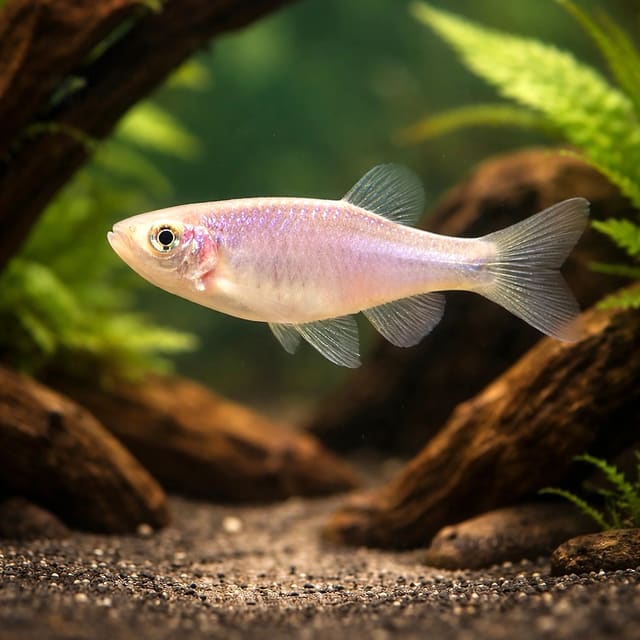
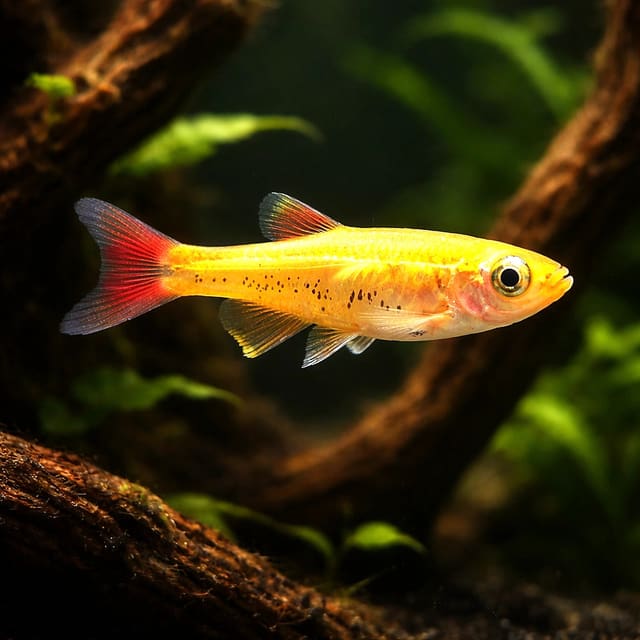
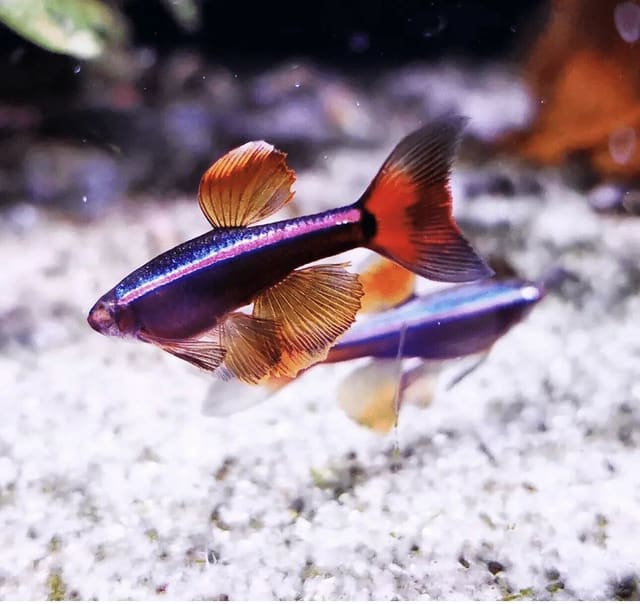
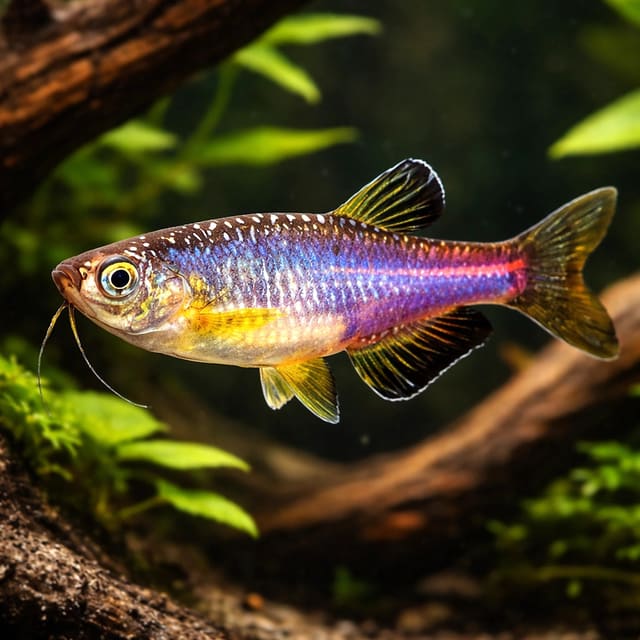
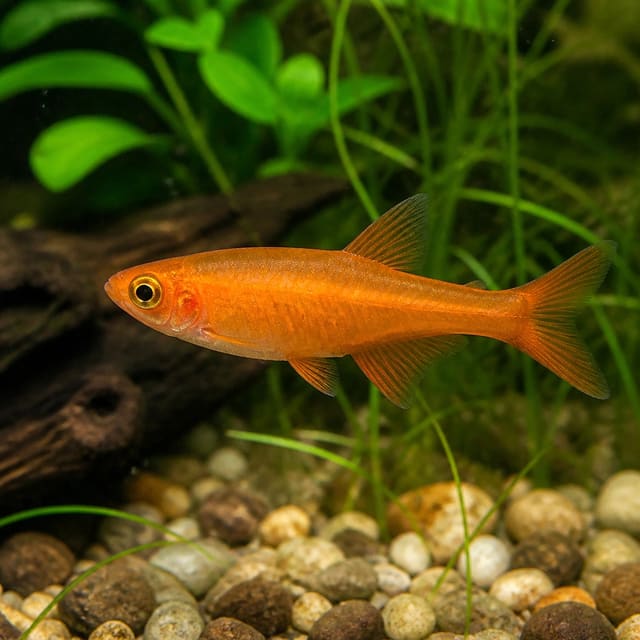
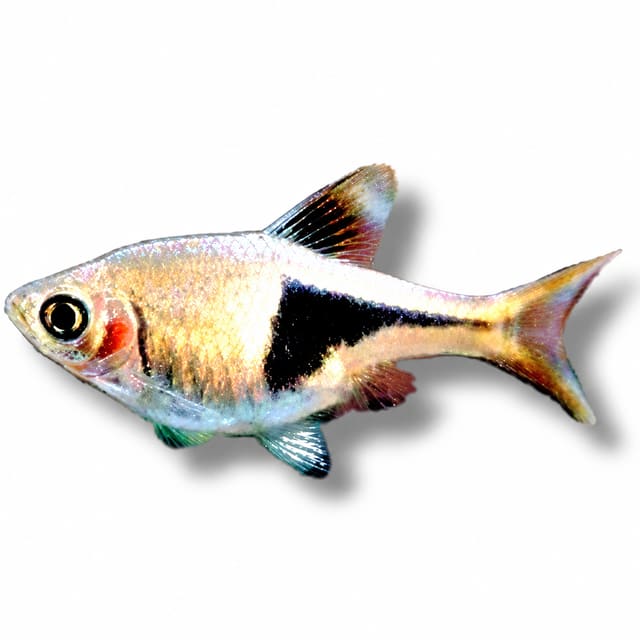
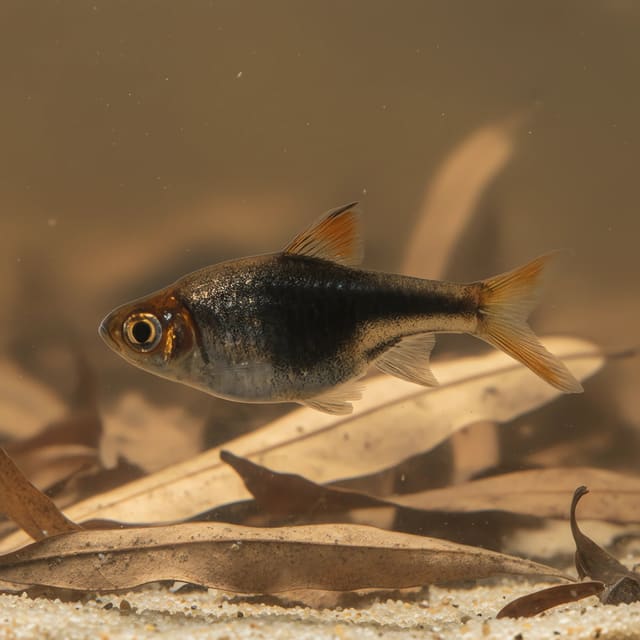
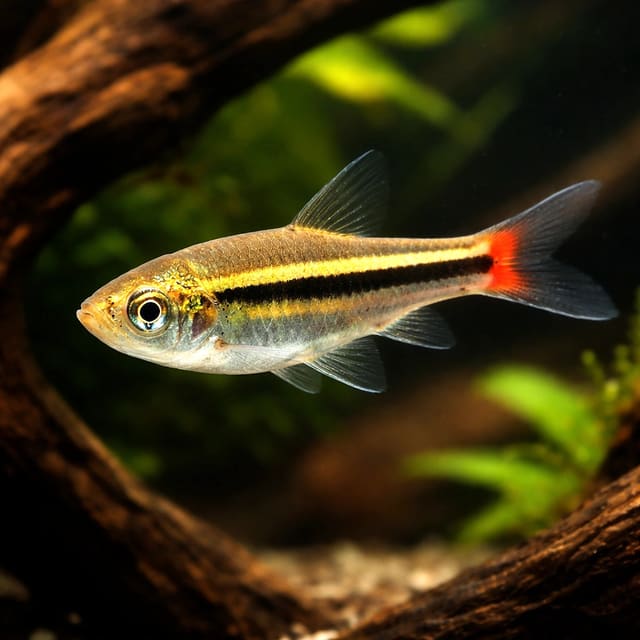
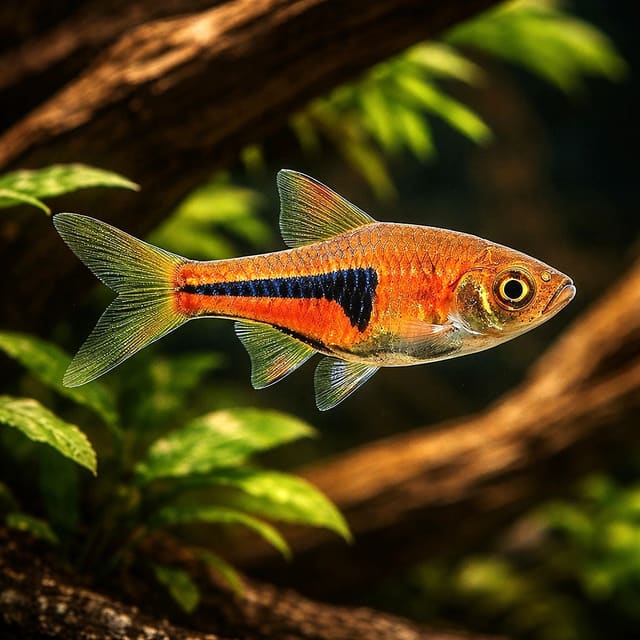
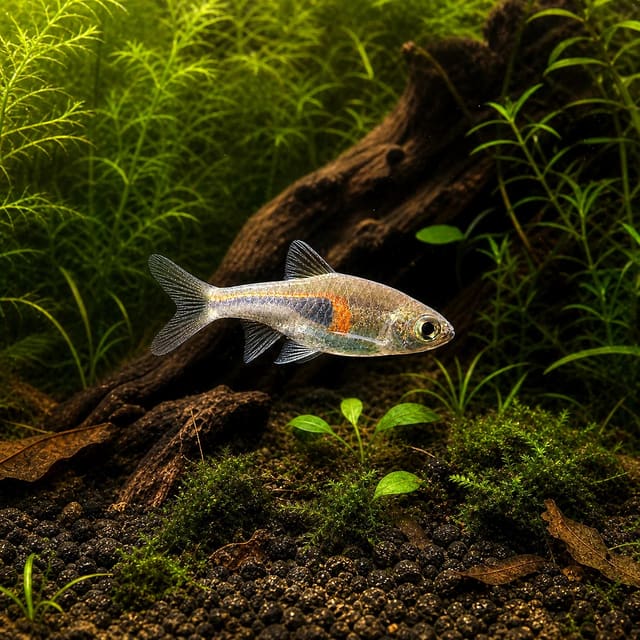
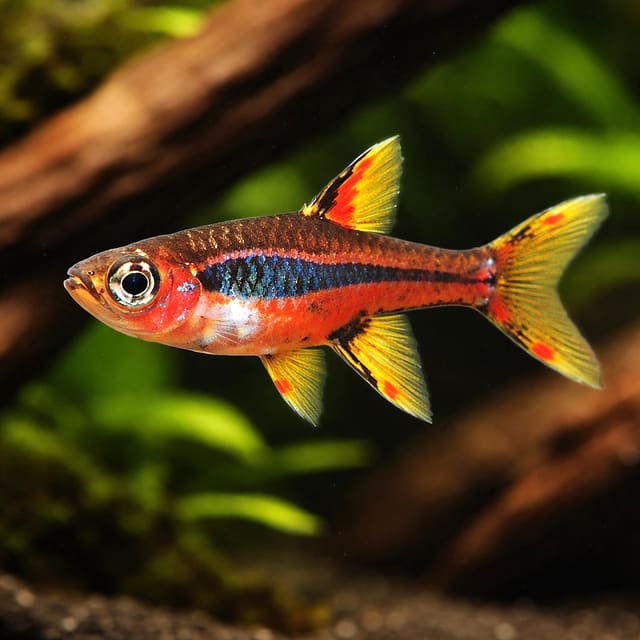
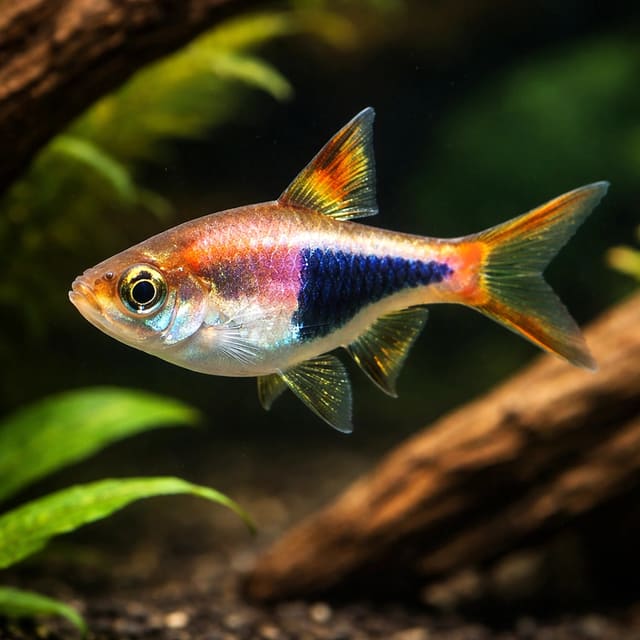
The gallery images are representative, based on reference photographs of this species, so colours can look slightly different from the live animal.
The Seriously Fish species account recommends minimum base dimensions of 45 × 30 cm or an equivalent footprint, corresponding to approximately 41 litres. It also recommends 18–23°C, pH 6.5–7.5, hardness of 2–8 dGH and a group of at least 10. These are the practical aquarium values around which to plan the purchase.
| Decision | Planning point |
|---|---|
| Sold unit | One animal per purchase |
| Size choices | 1.5–2 cm or 2–2.5 cm at dispatch |
| Adult length | 2.3 cm standard length |
| Minimum footprint | 45 × 30 cm or equivalent |
| Approximate volume | About 41 litres |
| Social plan | At least 10 of its own species |
| Routine temperature | 18–23°C |
| Suits | Not suited to |
|---|---|
| A peaceful group of at least 10 | Solitary or undersized-group keeping |
| A mature aquarium with a 45 × 30 cm minimum base | An aquarium without the required footprint |
| Planted community or stream-style layouts | Much larger or more boisterous tankmates |
| Water kept at 18–23°C, pH 6.5–7.5 and 2–8 dGH | Water outside the stated aquarium ranges |
Choose the aquarium and total group before choosing a dispatch size. A mature, filtered aquarium must accommodate the whole intended group after growth, with open swimming room left between plants and hardscape. If the aquarium cannot meet the footprint, water range and group requirement together, select a different species rather than reducing the school.
Start with a base measuring at least 45 × 30 cm or an equivalent footprint. The corresponding reference volume is approximately 41 litres, but litres alone do not describe whether a tiny schooling fish has enough horizontal room. A tall aquarium with a restricted base is not automatically equivalent to the stated footprint.
Arrange the aquarium so the group can move together through an open central or front area. Keep plants and hardscape concentrated around the back, ends or selected edges instead of forming a solid barrier across the tank. This gives the fish both visible swimming room and nearby cover.
The choice of décor is flexible, so prioritise safe placement and usable space over recreating a rigid scene. A heavily planted arrangement with a dark substrate tends to show the fish well, while roots, branches and floating plants add cover. The wild stream has a sandy bottom and fast current, but an aquarium does not need to reproduce every wild condition at full intensity.
Provide a degree of water movement without turning the entire footprint into a forceful current. The species can do well in a hill-stream-style arrangement, yet its aquarium filtration does not need to be especially strong. Position the return so water circulates through the tank while plants or hardscape create quieter areas nearby.
Watch the group once introduced. Fish should be able to hold position, cross the open area and use planted cover without being pinned into one zone by the filter return. If every fish continually gathers in the only sheltered corner, reassess the direction or distribution of flow while preserving effective filtration.
Use 18–23°C for routine aquarium care. FishBase records 18–27°C for the wild environment, while Seriously Fish recommends the narrower 18–23°C aquarium range; keep the aquarium within 18–23°C rather than extending routine care to the wider environmental maximum.
Maintain pH between 6.5 and 7.5 and general hardness between 2 and 8 dGH. Softer water within that hardness range is preferable. Measure the aquarium rather than assuming an unheated or heated label tells you its actual temperature. An unheated arrangement is suitable only when repeated readings remain within 18–23°C.
OATA’s danio and white-cloud guidance is broad group guidance: ammonia and nitrite should each remain at zero mg/l, while nitrate should not exceed 20 mg/l above the normal tap-water level. These readings show whether biological filtration and maintenance are keeping pace with fish waste and feeding.
| Test | Working target |
|---|---|
| Temperature | 18–23°C |
| pH | 6.5–7.5 |
| General hardness | 2–8 dGH |
| Ammonia | Zero mg/l |
| Nitrite | Zero mg/l |
| Nitrate | No more than 20 mg/l above tap water |
For example, an aquarium at 21°C, pH 7.0 and 6 dGH sits within all three routine ranges. A reading of pH 7.8 or 10 dGH falls outside the species plan even though it may fit broader community-fish guidance. Compare the full set of measurements rather than accepting a match on temperature alone.
Our water chemistry guide explains what the measurements mean. Enter the readings themselves into the water matcher to compare your aquarium with the stated ranges. Retest after maintenance or equipment changes so decisions are based on the aquarium’s present condition.
A working biological filter is essential before the fish enter the aquarium. RSPCA aquarium guidance explains that fish release toxic ammonia, which filter bacteria convert first into nitrite and then into the safer nitrate. The filter must therefore be established and maintained as a biological system, not treated merely as a device that catches visible debris.
Prepare and mature the aquarium in advance, using our first tropical tank guide as the setup sequence. Before introducing fish, confirm that ammonia and nitrite both read zero mg/l and that temperature, pH and hardness sit inside the species range.
For an aquarium of approximately 41 litres, the specialist species account uses four to five turnovers per hour as a planning reference. That corresponds to roughly 165–205 litres per hour. Treat the rating as a starting point because the actual flow through media and around décor can differ from the number printed for a filter.
| Filter decision | What to check |
|---|---|
| Biological readiness | Ammonia and nitrite are both zero mg/l |
| Planning turnover | Four to five aquarium volumes per hour |
| 41-litre example | Approximately 165–205 litres per hour |
| Flow pattern | Circulation with accessible calmer areas |
| Ongoing function | No blockages or sharp loss of flow |
Do not compensate for an immature filter by relying on a powerful pump. Flow moves water, whereas established bacteria process ammonia and nitrite. The aquarium needs both biological capacity and a flow pattern the fish can use comfortably.
Plan stocking around the complete group and the filter’s ability to handle the resulting waste. OATA advises increasing aquarium populations carefully because bacterial capacity must rise when fish numbers and feeding increase. For a schooling species, that planning should happen before purchase so the fish are not left as an isolated individual while the aquarium catches up.
Make a 25% partial water change at least once every week. Use a siphon to remove solid waste from the substrate where needed, and treat replacement tap water with a suitable conditioner before it enters the aquarium so chlorine or chloramine does not damage fish or filter bacteria.
Test the water at least weekly rather than judging cleanliness only by appearance. Clear water can still contain ammonia or nitrite, while a nitrate trend can show that waste is accumulating before fish behaviour changes. Record the result so you can compare one week with the next.
Separate routine cleaning from attempts to make every surface sterile. The useful bacterial population lives in the filter media, so preserving it matters more than making the media look new. Light cleaning in removed aquarium water clears obstructing debris while limiting bacterial loss.
| Checkpoint | Decision |
|---|---|
| Every week | Test ammonia, nitrite, nitrate, pH and temperature |
| Water-change day | Make a 25% water change and siphon waste |
| After filter cleaning | Confirm normal flow and recheck water quality |
| After added feeding | Watch nitrate and uneaten-food trends |
| Before more fish | Confirm ammonia and nitrite remain at zero mg/l |
If ammonia or nitrite rises above zero, pause further stocking and restore safe water quality before increasing the biological load. If nitrate approaches more than 20 mg/l above the tap-water baseline, review water-change effectiveness, waste removal and feeding quantity. These checks turn maintenance into measured decisions rather than a fixed ritual disconnected from the aquarium.
In nature, Tanichthys micagemmae is considered a micropredator that takes small insects, worms, crustaceans and other zooplankton. In the aquarium, use foods small enough for this tiny fish to take readily and vary the diet across suitable dried, live and frozen choices.
Offer a good-quality flake or fine granule as the routine dried food. At least some dried food should contain plant or algal content. Add appropriately small live or frozen foods such as Daphnia, bloodworm or Artemia to provide the variety described for the species.
Feed once a day and offer only what the fish can eat within a few minutes. Watch the whole group rather than dropping in an unmeasured pinch and walking away. Food should remain accessible to the tiny fish, and the portion should finish without a layer of leftovers settling among plants or substrate.
| Feeding choice | Practical use |
|---|---|
| Quality flake | Crush or select a size the fish can take |
| Fine granules | Use as a measured dried-food option |
| Daphnia | Offer as a small live or frozen food |
| Bloodworm | Select pieces appropriate to the fish’s size |
| Artemia | Use as another live, frozen or freeze-dried choice |
If food remains after a few minutes, remove what you can and reduce the next portion. Uneaten food breaks down and adds waste, increasing pressure on water quality. A larger portion is not a substitute for dietary variety.
Use body condition, feeding interest and weekly water tests together when refining portions. Reduced interest in food can be an early health warning, while persistent leftovers point to excess quantity or unsuitable food size. Keep the once-daily schedule steady and change one feeding variable at a time so the response is clear.
Before delivery, have the mature aquarium running within 18–23°C, pH 6.5–7.5 and 2–8 dGH. OATA’s group guidance also calls for ammonia and nitrite at zero mg/l before fish are introduced.
Follow the current delivery and Live Arrival Guarantee policy for the full delivery terms.
The first decision after release is whether the fish can swim normally and use both open water and nearby cover. OATA advises watching swimming, breathing, colour, condition and feeding so you can learn the group’s normal pattern and recognise continuing changes.
| Time | Checkpoint |
|---|---|
| On arrival | Normal filter operation and water inside the target range |
| First day | Swimming, breathing, colour and obvious physical condition |
| First feeds | Interest in appropriately small food and no persistent leftovers |
| During the week | Ammonia and nitrite remain at zero mg/l |
| End of week | Group uses the planned swimming and cover areas |
Learn the group’s normal pattern by watching it briefly each day. Individual fish can vary, so compare changes in swimming, breathing, colour, temperament, condition and feeding rather than relying on a single fixed pose as the definition of health.
| If you see this | Do this first |
|---|---|
| Hanging at the surface or sitting on the bottom | Test temperature, ammonia, nitrite and nitrate |
| Erratic swimming | Check water quality and the filter’s flow pattern |
| Faster or slower gill movement | Test water promptly and compare the whole group |
| Darker or paler colour | Review water readings and recent environmental changes |
| More hiding or changed aggression | Check group size, companions and usable cover |
| Reduced food intake | Check food size, portion history and water quality |
| White spots or fluffy growths | Record what is visible and test the aquarium |
| Fin, scale or body damage | Inspect companions and aquarium furnishings |
| Weight gain or loss | Review feeding and compare other health signs |
Water testing comes first because ammonia and nitrite are toxic and because filter performance can change after stocking, excess feeding, a blockage or disruptive cleaning. Confirm whether the problem affects one fish or several, and note when it began. That distinction helps separate an individual injury from an aquarium-wide change.
Do not respond to every colour or position change by adding products to the water. Start with measured conditions, correct the husbandry issue you can identify and avoid stacking several changes at once. If worrying signs continue after testing, contact us with the readings and a clear description of swimming, breathing, appearance and feeding.
Plan for at least 10 Tanichthys micagemmae. It is a schooling fish by nature, and maintaining the recommended number makes individuals less nervous while producing a more natural group display. Treat 10 as the social starting point, not as a claim that every 41-litre aquarium can accept additional fish beyond that group.
One purchase supplies one animal, so set the purchase quantity according to the group you are building. If fish of this species already live in the aquarium, count the intended final group while also checking the aquarium’s footprint, filtration capacity and existing biological load.
| Question | Decision rule |
|---|---|
| Is the group large enough? | Plan at least 10 of its own species |
| Is the footprint suitable? | Use at least 45 × 30 cm or equivalent |
| Can the filter cope? | Ammonia and nitrite must remain at zero mg/l |
| Is there swimming room? | Keep an open route beside planted cover |
| Can more fish be added? | Judge the whole community and biological load |
A group requirement does not cancel normal stocking limits. For example, an aquarium containing several established community fish may have the right footprint but insufficient capacity for 10 more animals. Conversely, a lightly stocked tank may have enough litres but an unsuitable narrow base. Both dimensions and current stocking matter.
Avoid buying a single fish as a substitute for a group. OATA notes that shoaling minnows can become stressed when kept singly or in groups that are too small, while the species account sets the preferred number at 10 or more. If the aquarium cannot accommodate that social plan, choose an animal whose normal behaviour fits solitary or smaller-group keeping.
This species is very peaceful and can live in a well-maintained community aquarium, but it does not do well with much larger or more boisterous tankmates. Avoid those combinations even when both fish are commonly described as community animals. The tiny adult size makes scale and behaviour more important than a broad community label.
The species account describes combinations with other small cyprinids, tetras, livebearers, dwarf cichlids, catfishes and loaches. In stream-style aquariums, smaller species of Danio, Devario, Garra and loaches are also mentioned. These are candidate groups, not universal approvals for every member.
| Screen | Pass condition |
|---|---|
| Adult size | The companion will not overwhelm or prey on a fish reaching 2.3 cm SL |
| Temperament | Peaceful behaviour without sustained boisterous pressure |
| Temperature | Routine needs overlap 18–23°C |
| pH | Routine needs overlap 6.5–7.5 |
| Hardness | Routine needs overlap 2–8 dGH |
| Space use | The combined community leaves group swimming room |
| Filtration | The added load can be maintained at zero ammonia and nitrite |
A companion absent from the named groups is not automatically unsuitable, and a named group is not automatically safe. Compare the exact animal’s adult size, activity and water range. Where behaviour varies among individuals or species, allow for that uncertainty rather than relying on the category name.
For a stocking and compatibility assessment, ask us with the aquarium dimensions, measured temperature, pH and hardness, current livestock and intended group size. Those details allow a meaningful comparison with the species’ requirements.
FishBase records Tanichthys micagemmae at a maximum of 2.3 cm standard length for male or unsexed fish.
Use a mature, filtered aquarium with a base of at least 45 × 30 cm or equivalent, corresponding to approximately 41 litres. Leave open swimming room beside planted cover and provide a degree of water movement.
Keep Tanichthys micagemmae in a group of at least 10. Seriously Fish describes it as a schooling species and says this number makes individuals less nervous while creating a more natural display.
Tanichthys micagemmae can suit beginners who can mature and maintain a filtered aquarium, keep ammonia and nitrite at zero mg/l, provide a group of at least 10 and hold the required water conditions steadily.
Feed Tanichthys micagemmae appropriately small quality flake or fine granules once a day, offering only what the group eats within a few minutes. Add small live or frozen Daphnia, bloodworm or Artemia for variety.
Seriously Fish recommends 18–23°C, pH 6.5–7.5 and 2–8 dGH for this species. Keep ammonia and nitrite at zero mg/l; OATA’s group guidance says nitrate should not exceed 20 mg/l above the normal tap-water level.
Tanichthys micagemmae is described as very peaceful. Keep it away from much larger or more boisterous tankmates, and assess each companion’s adult size, activity and water requirements.
Candidate companions include other small cyprinids, tetras, livebearers, dwarf cichlids, catfishes and loaches. In a stream-style aquarium, smaller Danio, Devario, Garra and loach species may also suit, but every candidate must overlap 18–23°C, pH 6.5–7.5 and 2–8 dGH and must not overwhelm this tiny fish.
Have someone present to receive it, and film every delivery continuously from the sealed parcel as it is opened, showing the fish still inside the sealed bag before anything is disturbed. Float the bag for 20–30 minutes before release, and never pour the bag water into the aquarium.
No reviews for this item yet. Bought one? Honest reviews only, good or bad.
What customers say about ordering from us
Easy website plenty of info on fish your buying great to pick a time slot
TRACEY DURRANT · 7 Oct 2026
Got some lovely fish thank you
Kevin Mackie · 7 Oct 2026
Reviews of our shop, collected by Judge.me, an independent third-party review collector. Newest first.