Moderate
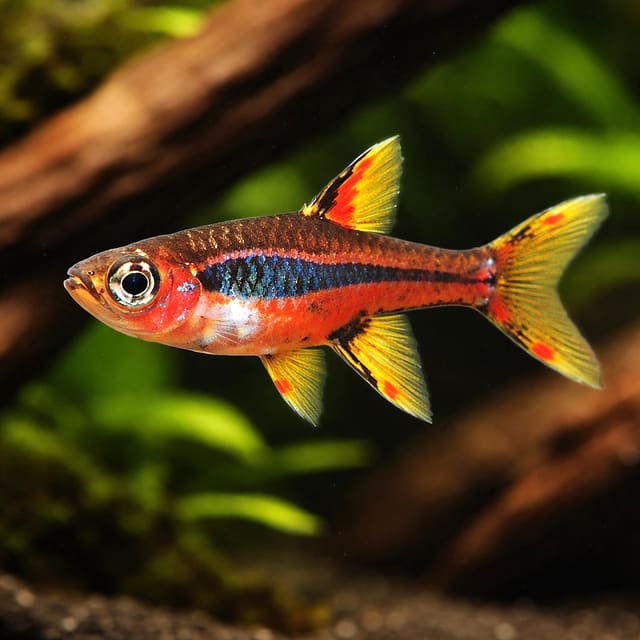
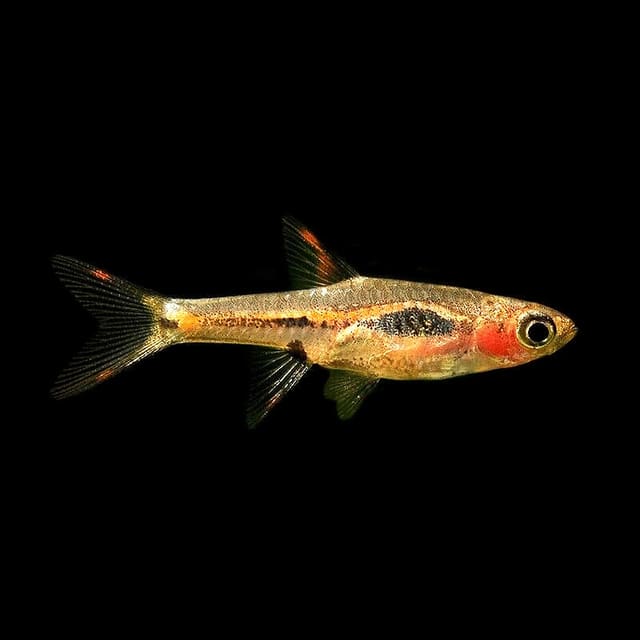
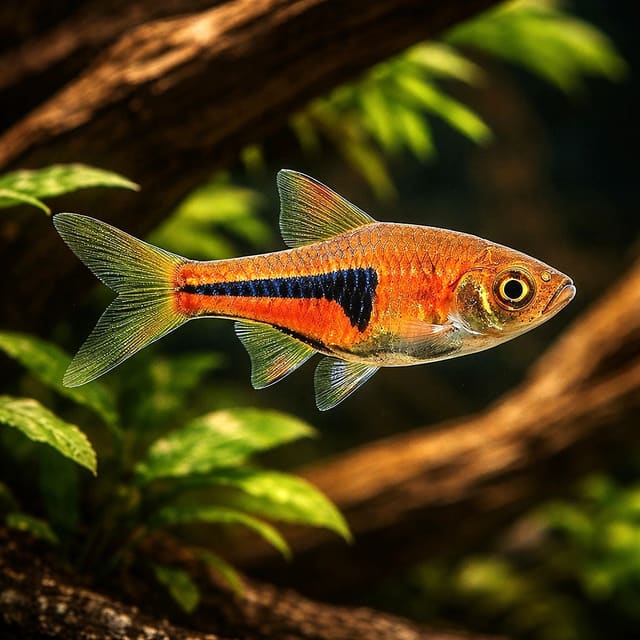
Least Rasbora (Boraras urophthalmoides)
22–28°C · pH 5–7.5 · 40L
£2.99

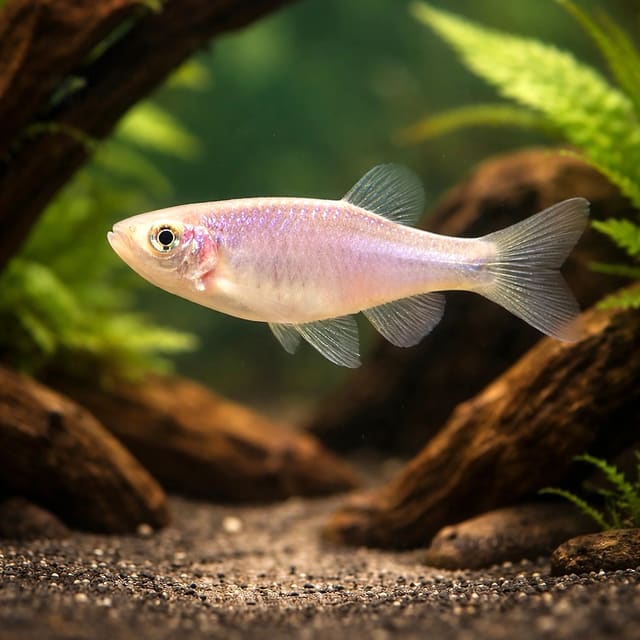
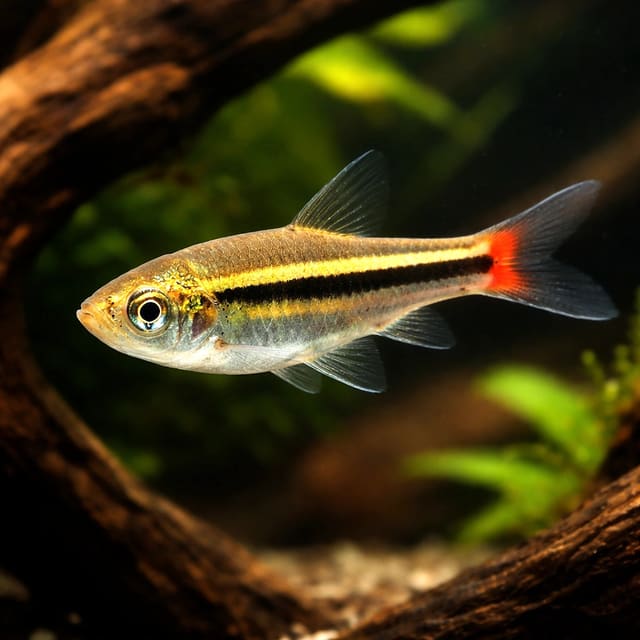
The Gold White Cloud Mountain Minnow (Tanichthys albonubes) is a mountain minnow from China and Viet Nam that reaches 4 cm. It suits a peaceful, cooler aquarium; Seriously Fish advises 10 or more, 14–22°C, pH 6.0–8.5 and a 60 × 30 cm minimum base. Sold individually in 2–2.5 cm and 3 cm sizes.
Adult size is the maximum length this species reaches at full maturity (scientific sources). The livestock you receive will be younger and smaller — pick a size above for the actual shipping size. Product-photo provenance and any image-specific limitations are stated on the listing.
Tanichthys albonubes
Shoaling fish: kept in a group they feel safer, stay calmer and show their best colour.
Minimum of 2 per order.
The Gold White Cloud Mountain Minnow (Tanichthys albonubes) is a mountain minnow from China and Viet Nam that reaches 4 cm. It suits a peaceful, cooler aquarium; Seriously Fish advises 10 or more, 14–22°C, pH 6.0–8.5 and a 60 × 30 cm minimum base. Sold individually in 2–2.5 cm and 3 cm sizes.
Adult size is the maximum length this species reaches at full maturity (scientific sources). The livestock you receive will be younger and smaller — pick a size above for the actual shipping size. Product-photo provenance and any image-specific limitations are stated on the listing.
Maintain these water conditions for optimal health and vibrant colors
The Gold White Cloud Mountain Minnow is a golden ornamental strain of Tanichthys albonubes, a freshwater mountain minnow in the family Tanichthyidae. It is native to China and Viet Nam and reaches a recorded maximum length of 4 cm. This peaceful schooling fish suits a keeper who can provide a proper group, stable cooler water and companions sharing its temperature range.
Its golden form changes the appearance rather than the care requirements. Plan for a long enough aquarium base, planting and cover, some water movement, a varied small-food diet and a temperature below that used for many warmer community aquariums.
One purchase supplies one fish in the selected 2–2.5 cm or 3 cm size. The size you select is the size supplied, not the adult size. Increase the quantity to build the intended school rather than planning this species as a solitary fish.
Sex is guaranteed only when the selected option explicitly states male or female. This Gold White Cloud Mountain Minnow listing has no sex-guaranteed option.
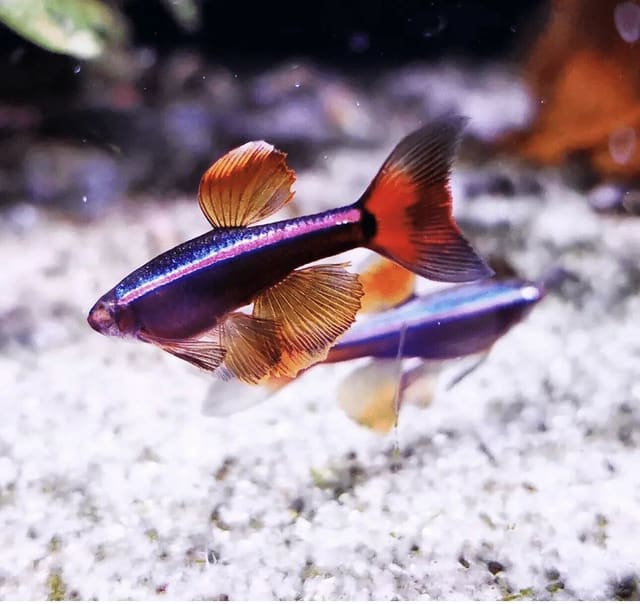
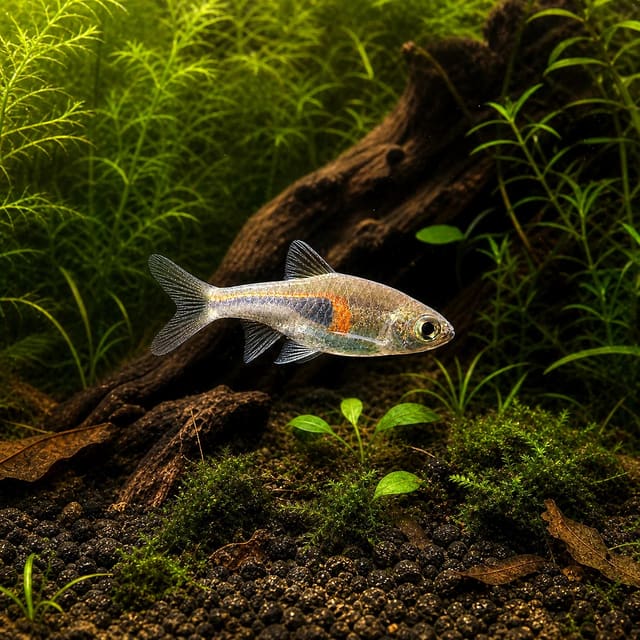
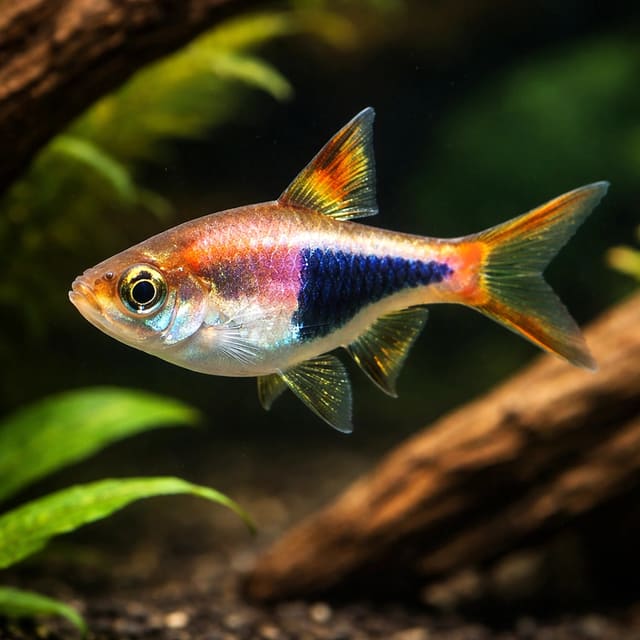
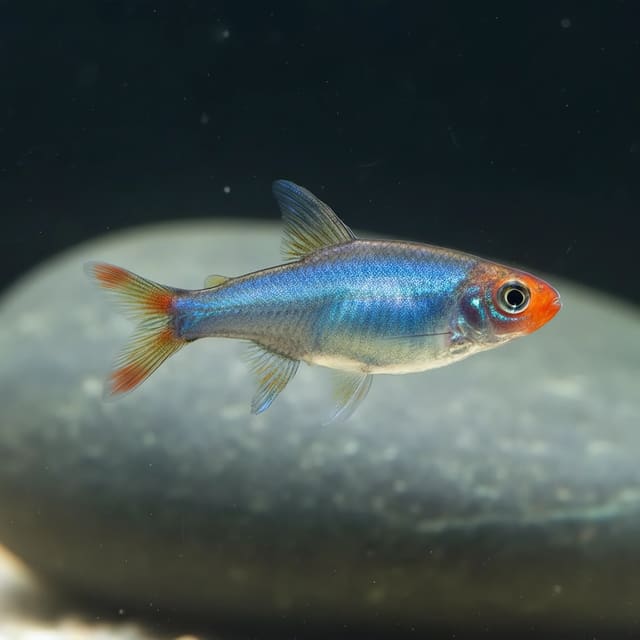
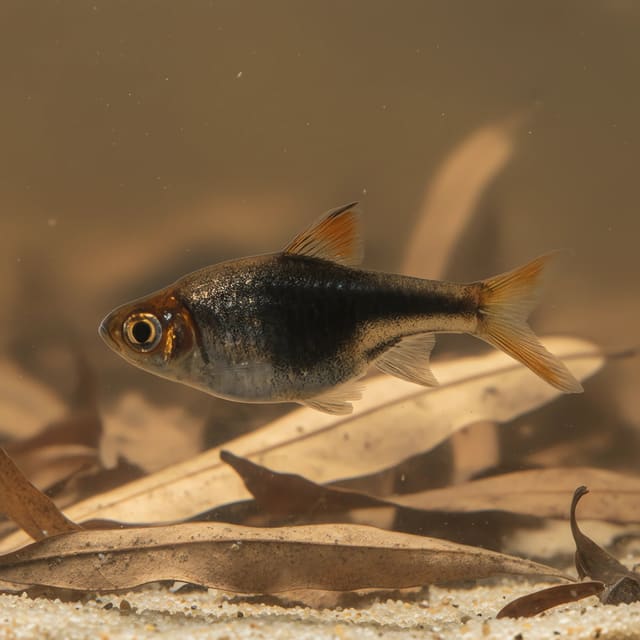
These representative gallery images have been digitally enhanced for presentation, so colours can look slightly different from the live animal.
| Suits | Not suited to |
|---|---|
| A group of 10 or more in a peaceful aquarium | Solitary keeping or an undersized group |
| A cooler aquarium maintained within 14–22°C | A community requiring permanently warmer water |
| A planted aquarium with a 60 × 30 cm minimum base | An aquarium without enough base space for the school |
| Peaceful companions sharing its water conditions | Goldfish, because larger specimens can eat minnows |
Use the live size selector to choose between the 2–2.5 cm and 3 cm sizes rather than relying on a picture for scale. For related browsing, see our rasboras and danios collection. Packing, arrival and guarantee terms are set out in our delivery and Live Arrival Guarantee policy.
FishBase records a maximum total length of 4 cm for Tanichthys albonubes and places it in the mountain-minnow family Tanichthyidae. It is a freshwater fish recorded from China and Viet Nam. Treat 4 cm as a maximum recorded length rather than a promise that every individual will finish at exactly that measurement.
Dispatch size helps you choose the animal supplied; it does not reduce the aquarium space, group or filtration needed as the fish grows.
For aquarium planning, Seriously Fish recommends minimum base dimensions of 60 × 30 cm or an equivalent footprint, representing roughly 54 litres. Its aquarium range is 14–22°C, pH 6.0–8.5 and hardness 5–20 dGH, and it recommends a school of 10 or more.
| Requirement | Planning value |
|---|---|
| Recorded maximum length | Up to 4 cm total length |
| Aquarium base | At least 60 × 30 cm or equivalent |
| Approximate volume | About 54 litres for that base size |
| Group | Ideally 10 or more |
| Temperature | 14–22°C |
| pH | 6.0–8.5 |
| General hardness | 5–20 dGH |
A simple worked example is a planned group of ten in an aquarium measuring at least 60 × 30 cm at the base. Since each purchase supplies one fish, that group requires ten fish in the chosen dispatch size. A larger community must leave room for this school and every other species after adult size, activity and filtration demand are considered.
Measure the aquarium base as well as checking the nominal litre figure. Two aquariums with similar volumes can have different proportions, while this active school benefits from the stated horizontal footprint. Choose the permanent aquarium first, then choose the dispatch size.
Start with an aquarium offering at least a 60 × 30 cm base and roughly 54 litres. Décor is flexible, but a heavily planted arrangement with a dark substrate tends to show the golden fish clearly. Floating plants, driftwood roots or branches and leaf litter can add cover and a more natural feel.
Planting should create security without compromising the aquarium’s usable base and water volume. Check that roots, branches and other décor are stable before the fish enters the aquarium. The finished layout must still allow you to reach the substrate, inspect the animals and maintain the filter.
Filtration need not be especially strong, although this fish appreciates some water movement and can suit a stream-style arrangement. For an aquarium of about 54 litres, the species guidance gives a turnover of four to five times the aquarium volume each hour. That calculation produces a nominal flow of about 215–270 litres per hour:
| Calculation | Result |
|---|---|
| 54 litres × 4 | 216 litres per hour |
| 54 litres × 5 | 270 litres per hour |
| Practical rated range | About 215–270 litres per hour |
Rated flow is a selection guide rather than a reason to create a harsh current. Décor, filter media and normal use can influence how that flow feels inside the aquarium. Watch whether the school can hold position and move throughout the tank without being confined to sheltered corners.
The biological function of the filter is essential. The RSPCA explains that beneficial filter bacteria convert toxic ammonia to nitrite and then to the safer nitrate. This process requires a well-set-up and maintained filter; running water alone is not a substitute for biological maturation.
Prepare the system before choosing an introduction date. Our first aquarium guide explains how to set up and mature the filter before livestock enters. The practical goal is a stable, filtered aquarium that can keep ammonia and nitrite at zero after the planned group is fed.
Keep the aquarium at 14–22°C, with pH between 6.0 and 8.5 and general hardness between 5 and 20 dGH. Measure the aquarium itself rather than assuming that room temperature or tap-water reputation describes the conditions the fish experiences.
An unheated indoor aquarium can work when the room keeps the water steadily inside 14–22°C. In a colder room, heating may be needed to prevent the aquarium falling below the range. In a warm or well-insulated home, monitor summer temperatures because permanent exposure to warmer conditions is likely to shorten the fish’s life.
pH and hardness describe the character of the water. Ammonia, nitrite and nitrate show how the aquarium is handling waste. A pH inside range does not compensate for detectable ammonia or nitrite, so check both groups of values when assessing the system.
OATA’s broad danio and white-cloud guidance sets ammonia at zero mg per litre, nitrite at zero mg per litre and nitrate at no more than 20 mg per litre above the normal tap-water level. It also gives 17–23°C for white cloud mountain minnows; for this animal, use the species aquarium range of 14–22°C.
| Test | Decision point |
|---|---|
| Temperature | Keep between 14°C and 22°C |
| pH | Keep between 6.0 and 8.5 |
| Hardness | Keep between 5 and 20 dGH |
| Ammonia | Maintain at zero mg/l |
| Nitrite | Maintain at zero mg/l |
| Nitrate | No more than 20 mg/l above tap water |
Use our water chemistry guide to understand what each test measures. Once you have measured results, the water matcher can help compare them with the stated aquarium range. Base the decision on measured values and stability rather than trying to alter water without knowing its starting point.
Plan an ideal group of at least ten Gold White Cloud Mountain Minnows. Schooling numbers reduce nervousness and produce a more natural display, while solitary fish or groups that are too small may become stressed. Count this species as its own group when planning the aquarium rather than treating unrelated community fish as substitutes.
One purchase supplies one fish, so the basket quantity must match the number intended. The live selector identifies the dispatch size. Group size and aquarium capacity remain separate decisions: choosing smaller animals does not make an undersized permanent group or aquarium appropriate.
| Starting position | Planning decision |
|---|---|
| No existing group | Plan space and filtration for at least ten before ordering. |
| Six already present | Four additional animals would bring the species group to ten. |
| Eight already present | Two additional animals would bring the species group to ten. |
| Ten or more present | Check remaining aquarium and filter capacity before increasing the group. |
Arithmetic alone is not a stocking assessment. Confirm the aquarium base, actual volume, temperature, filter maturity, existing livestock and measured water quality. A 60 × 30 cm base and roughly 54 litres form the species starting point, not an automatic allowance for unlimited additional fish.
Additions should be gradual because the beneficial bacteria in a mature filter must adjust when livestock and feeding increase. A large jump in waste production can exceed the biological filter’s capacity and produce harmful ammonia or nitrite. If the intended school cannot be introduced in one safe step, keep every stage consistent with animal welfare and complete the group without leaving a very small school as the long-term arrangement.
For a stocking and compatibility assessment, send us the aquarium dimensions, volume, temperature, pH, hardness, ammonia, nitrite, nitrate, filter details and full livestock list. Those measurements allow the proposed group to be assessed as part of the whole aquarium rather than by litre count alone.
Prepare the aquarium and filter before the fish arrives. The system should already be running within 14–22°C, pH 6.0–8.5 and 5–20 dGH, with ammonia and nitrite both measuring zero mg per litre. Confirm those conditions with tests rather than relying on the age of the aquarium alone.
Increase the aquarium population slowly. Every added fish and every additional meal increases the waste the biological filter must process. If the beneficial bacterial population cannot keep pace, ammonia and nitrite can rise and cause new tank syndrome.
During introduction, keep the transfer organised. Avoid adding other livestock at the same time when that would create a large, unmeasured increase in waste. The useful checkpoint is not simply that the fish has entered the aquarium, but that the filter continues to hold ammonia and nitrite at zero after normal feeding resumes.
| Checkpoint | Action |
|---|---|
| Before introduction | Record temperature, pH, hardness, ammonia, nitrite and nitrate. |
| At each feed | Check that the fish show interest and finish the portion within a few minutes. |
| During swimming | Look for surface hanging, bottom sitting, erratic movement or unusual hiding. |
| If behaviour changes | Test water quality immediately before choosing the next response. |
Stable water, a mature biological filter and controlled stocking matter more than rushing the introduction. Keep feeding modest while observing how the aquarium responds to the increased population.
Feed once each day, offering only what the school can eat within a few minutes. This limit provides a practical portion guide while reducing the uneaten food that can break down and add toxic waste to the water.
Wild Tanichthys albonubes feed on small insects, worms, crustaceans and other zooplankton. In the aquarium, use good-quality dried flakes or small granules as prepared foods, alongside suitably small live or frozen foods such as Daphnia, bloodworm and Artemia.
Include some dried food with plant or algal content. That instruction does not make this fish an algae-control animal; it describes part of a varied omnivorous aquarium diet. Choose particle sizes that the 2–2.5 cm or 3 cm dispatch-size fish can take readily.
| Food type | How to use it |
|---|---|
| Quality flake | Crush to a size the fish can take and use as a prepared food. |
| Small granules | Choose particles eaten readily within the short feeding period. |
| Daphnia | Use a suitably small live or frozen option for variety. |
| Bloodworm | Offer appropriately sized pieces as part of the mixed diet. |
| Artemia | Use live, frozen or suitable dried forms alongside prepared foods. |
| Plant or algal content | Include this in at least some of the dried food. |
Observe the whole school while feeding. If food remains after a few minutes, the portion was too large; reduce the next meal. If only the quickest fish eat, distribute a small portion across more than one point while keeping the total within what the group finishes promptly.
A reduced appetite is a health warning rather than a reason to keep adding different foods. Check swimming, breathing, body condition and water quality when feeding behaviour changes. Ammonia or nitrite must remain at zero mg per litre, because extra food cannot correct a water-quality problem and may increase the waste load.
Keep the routine consistent: one modest meal each day, varied across appropriate prepared, live or frozen foods. This approach supports condition and colour without turning variety into overfeeding.
Carry out a 25% partial water change at least once every week. Use a siphon to remove solid waste from the substrate where needed, and treat replacement tap water with a conditioner that removes chlorine or chloramine before it enters the aquarium.
Test the aquarium at least weekly. Ammonia and nitrite should both remain at zero mg per litre, while nitrate should not rise more than 20 mg per litre above the normal tap-water level. Test the tap water as the comparison point for that nitrate calculation.
Do not run established biological media under the tap. Chlorine or chloramine may kill beneficial bacteria, reducing the filter’s ability to convert ammonia and nitrite. Cleaning in removed aquarium water limits that loss while allowing accumulated debris to be loosened.
| Result | Immediate decision |
|---|---|
| Ammonia above zero | Treat it as a water-quality warning and review waste, feeding and filter function. |
| Nitrite above zero | Treat it as a water-quality warning and check biological filtration. |
| Nitrate rising too far | Review water-change performance against the tap-water baseline. |
| Reduced filter flow | Check for blockages and clean media gently when required. |
A larger aquarium generally changes more slowly than a small one, but volume does not replace weekly care. Consistent testing and maintenance show whether the system is actually supporting the group after feeding and stocking changes.
Learn the group’s usual swimming, feeding and hiding patterns so changes are easy to recognise. Individual fish vary, but a clear departure from normal behaviour or appearance is a reason to test the aquarium rather than waiting for several signs to appear.
| What you notice | What to do first |
|---|---|
| Hanging at the surface | Test temperature, ammonia and nitrite and check filter operation. |
| Sitting on the bottom | Compare the behaviour with the rest of the school and test the water. |
| Erratic swimming | Check water values and whether the flow is preventing normal movement. |
| Darker or paler colour | Review water quality, group behaviour and recent aquarium changes. |
| Unusual hiding | Check group size, companions and measured water conditions. |
| Faster or slower gill movement | Test the water promptly and inspect filter flow. |
| White spots or fluffy growths | Record the appearance and seek health guidance before choosing a treatment. |
| Damaged fins or missing scales | Inspect companions, décor and the affected fish closely. |
| Weight or condition change | Review feeding intake and compare the fish with the group. |
| Reduced interest in food | Check water quality before offering more food. |
Water testing is the first response because ammonia and nitrite are toxic and should both remain at zero mg per litre. Confirm temperature, pH, hardness and nitrate as well, then check whether the filter is blocked or whether stocking and feeding recently increased.
Do not choose a disease treatment from one vague sign. Similar behaviour can accompany several different problems, while an unnecessary treatment does not correct poor water quality or an unsuitable temperature. Record what changed, when it began and which fish are affected.
If the signs persist or the fish’s condition is declining, contact us for health guidance with the test results, aquarium size, temperature, livestock list and a clear description of the change. Those details make the next decision more useful than a symptom name on its own.
Gold White Cloud Mountain Minnows are peaceful community fish when their temperature needs are respected. Start every compatibility decision with the 14–22°C aquarium range, then compare adult size, temperament, activity, feeding behaviour, group requirements and the space needed by both species.
A shared temperature must work as a routine range, not as a brief tolerance at one edge. A companion that needs permanently warmer water does not pass the screen, because keeping the minnows above their advised range for long periods is likely to shorten their lives.
| Check | Pass condition |
|---|---|
| Temperature | Both species can be maintained within the same stable part of 14–22°C. |
| Adult size and feeding | The companion is not expected to treat a small minnow as food. |
| Temperament | The companion is peaceful enough for a calm community. |
| Space and social needs | The aquarium supports 10+ minnows and the other species at adult size. |
Avoid keeping them with goldfish. This pairing is sometimes suggested while both fish are small, but larger goldfish can eat minnows. Goldfish therefore have a direct exclusion rather than merely needing extra observation.
Stream-style candidates can include suitable species from genera such as Danio, Devario and Garra, as well as many loaches, provided the particular animal passes every check above. Comparable temperature is necessary, but it is not a blanket approval for every species or aquarium.
For combinations outside those examples, the outcome depends on the particular species, adult sizes, group numbers and aquarium. Use an individual stocking assessment rather than a universal tank-mate label. The useful details are the aquarium dimensions and volume, measured water, filter, established livestock and intended group sizes.
Assess the complete aquarium rather than comparing two names in isolation. A peaceful candidate can still be a poor fit if it needs warmer water, occupies space required by the minnow school or increases the waste load beyond the mature filter’s capacity.
| Proposed arrangement | Decision |
|---|---|
| Community maintained at 24°C | Do not add this fish; 24°C is above its 14–22°C aquarium range. |
| Goldfish aquarium | Avoid the pairing because larger goldfish can eat minnows. |
| Peaceful fish maintained at 18–20°C | The temperature check passes; continue with adult size, behaviour, space and group checks. |
| Stream-style community at 20°C | Check each candidate individually, then confirm that flow and footprint suit every resident. |
| Six Gold White Clouds plus another species | Plan the minnow group towards 10+ before using remaining capacity for another species. |
Do not use the 4 cm maximum length as the only compatibility test. A similarly sized fish may need a different temperature or social arrangement, while a larger peaceful animal still requires assessment of feeding behaviour and space. Names such as community fish describe a broad role rather than guaranteeing a particular pairing.
Group capacity comes before decorative variety. Ten minnows represent the ideal starting school, and the aquarium must provide at least a 60 × 30 cm base or equivalent with roughly 54 litres before another species is considered. In a mixed aquarium, increase space according to the full adult population rather than squeezing several minimum plans into one volume.
Observe the community during swimming and feeding. Unusual hiding, colour changes, damaged fins, reduced appetite or a change in body condition can signal that the arrangement needs attention. Begin by testing water and reviewing behaviour, group numbers and recent stocking changes.
A pairing that passes the initial screen still depends on continued husbandry. Keep temperature stable, maintain ammonia and nitrite at zero, feed portions that disappear within a few minutes and preserve the minnow school as a proper social group.
The Gold White Cloud Mountain Minnow reaches a recorded maximum total length of 4 cm. Plan its permanent aquarium around that adult figure rather than its 2–2.5 cm or 3 cm dispatch size.
Seriously Fish advises a minimum 60 × 30 cm base or equivalent for Tanichthys albonubes, representing roughly 54 litres, with planting, cover, a mature filter and some water movement.
Keep Gold White Cloud Mountain Minnows in a school of ideally 10 or more. Solitary fish or undersized groups may become nervous or stressed.
This fish can suit a beginner who provides a mature filtered aquarium, a group of 10 or more, stable 14–22°C water and weekly testing and maintenance.
Feed a Gold White Cloud Mountain Minnow one small daily meal eaten within a few minutes, using quality flakes or granules plus suitably small Daphnia, bloodworm or Artemia.
Seriously Fish advises 14–22°C, pH 6.0–8.5 and 5–20 dGH for Tanichthys albonubes. Keep ammonia and nitrite at zero mg/l.
The Gold White Cloud Mountain Minnow is a very peaceful schooling fish. Keep 10 or more and choose peaceful companions that share its cooler water conditions and leave enough space for the full school.
This fish can share a stream-style aquarium with suitable species from Danio, Devario and Garra, as well as many loaches, when each species shares 14–22°C and passes the adult-size, temperament, space and feeding checks. Avoid goldfish because larger specimens can eat minnows.
Someone must be present to receive the parcel. Film every delivery continuously from the sealed parcel as it is opened, showing the fish still inside the sealed bag; then float the bag for 20–30 minutes before releasing the fish, and never pour the bag water into the aquarium.
No reviews for this item yet. Bought one? Honest reviews only, good or bad.
What customers say about ordering from us
I have a small group of long finned mountain minnows. So was delighted to be able to order ten of this variety to increase the genetics in my tank . The ones I recieved are healthy but it’s to early to give a verdict on wether they are of a long finned type since they are small currently.
Gordon Walker · 23 Sept 2026
100% success travel and "installation". Pleased with quality of purchase. The Siamese fighter a bit "shy" so have not yet seen him at his best yet but looking good. Happy customer. GG
George E Garratt · 21 Sept 2026
Reviews of our shop, collected by Judge.me, an independent third-party review collector. Newest first.