Easy
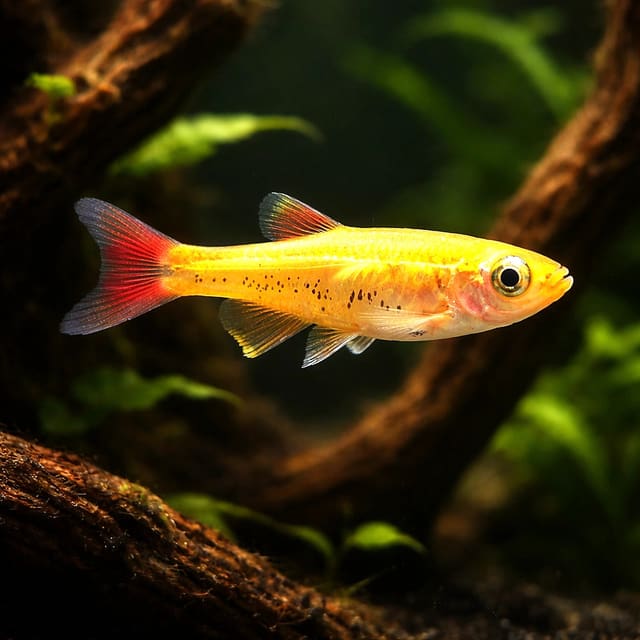
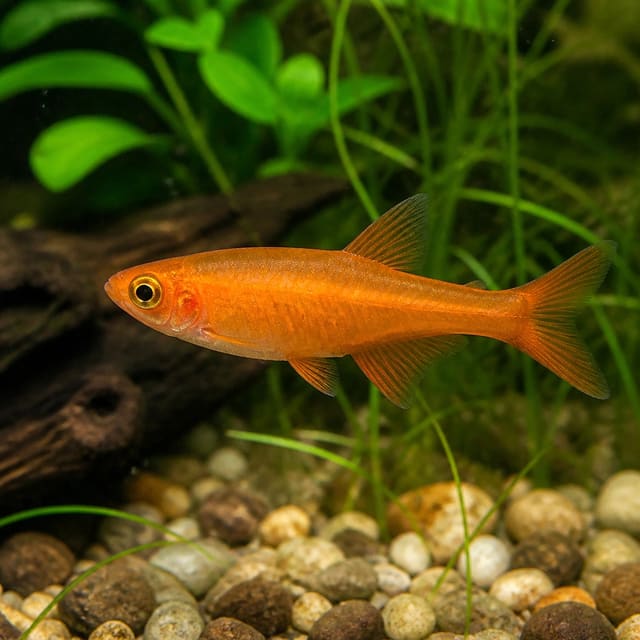
Rosy Danio (Danio roseus) – 2–5cm Size Grades
18–25°C · pH 6–7.5 · 81L
£2.99

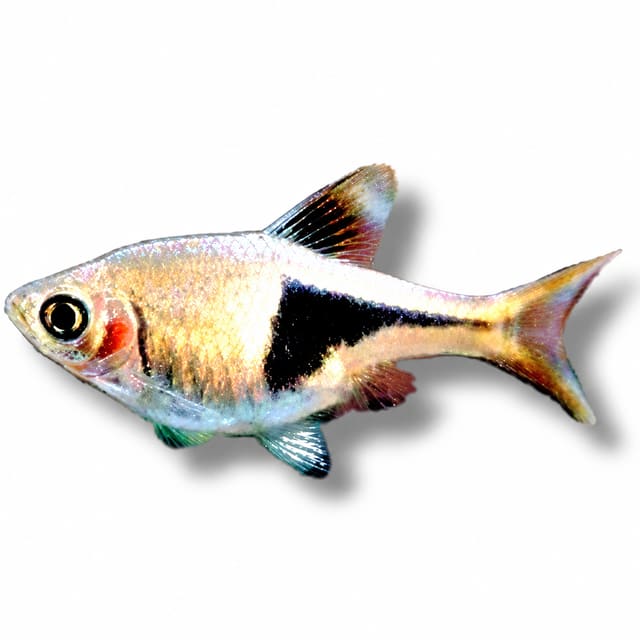
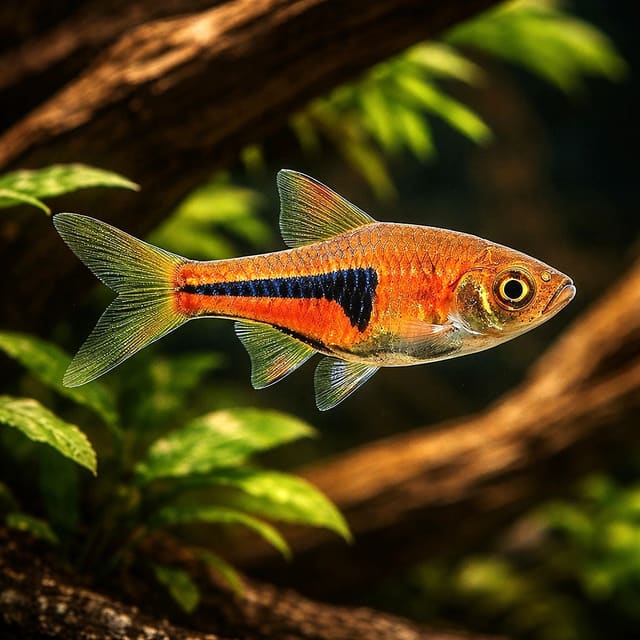
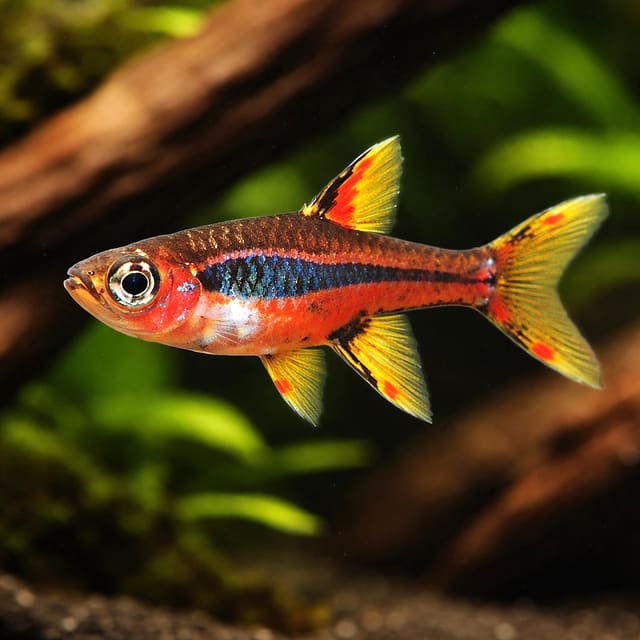
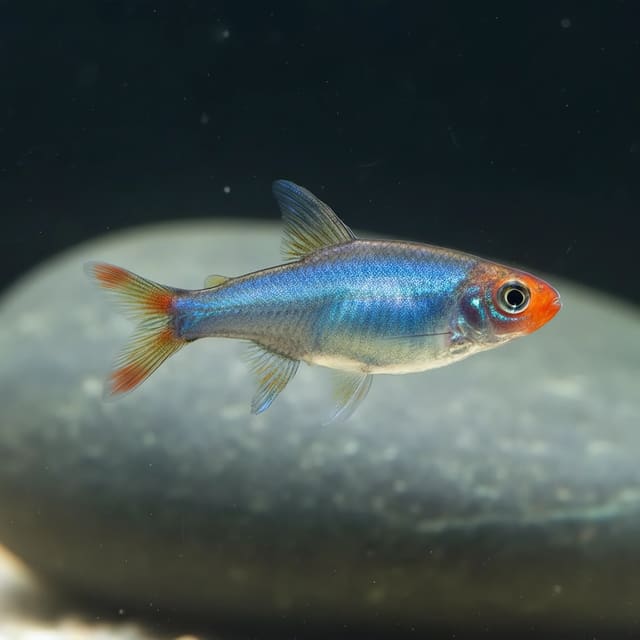
Harlequin (Trigonostigma heteromorpha; Rasbora heteromorpha) is a peaceful 5 cm shoaling fish for a well-maintained community aquarium. One purchase supplies one animal in the selected dispatch size; plan a group in at least about 54 litres with a 60 × 30 cm base at 21–28°C.
Adult size is the maximum length this species reaches at full maturity (scientific sources). The livestock you receive will be younger and smaller — pick a size above for the actual shipping size. Product-photo provenance and any image-specific limitations are stated on the listing.
Rasbora heteromorpha
Shoaling fish: kept in a group they feel safer, stay calmer and show their best colour.
Minimum of 2 per order.
Harlequin (Trigonostigma heteromorpha; Rasbora heteromorpha) is a peaceful 5 cm shoaling fish for a well-maintained community aquarium. One purchase supplies one animal in the selected dispatch size; plan a group in at least about 54 litres with a 60 × 30 cm base at 21–28°C.
Adult size is the maximum length this species reaches at full maturity (scientific sources). The livestock you receive will be younger and smaller — pick a size above for the actual shipping size. Product-photo provenance and any image-specific limitations are stated on the listing.
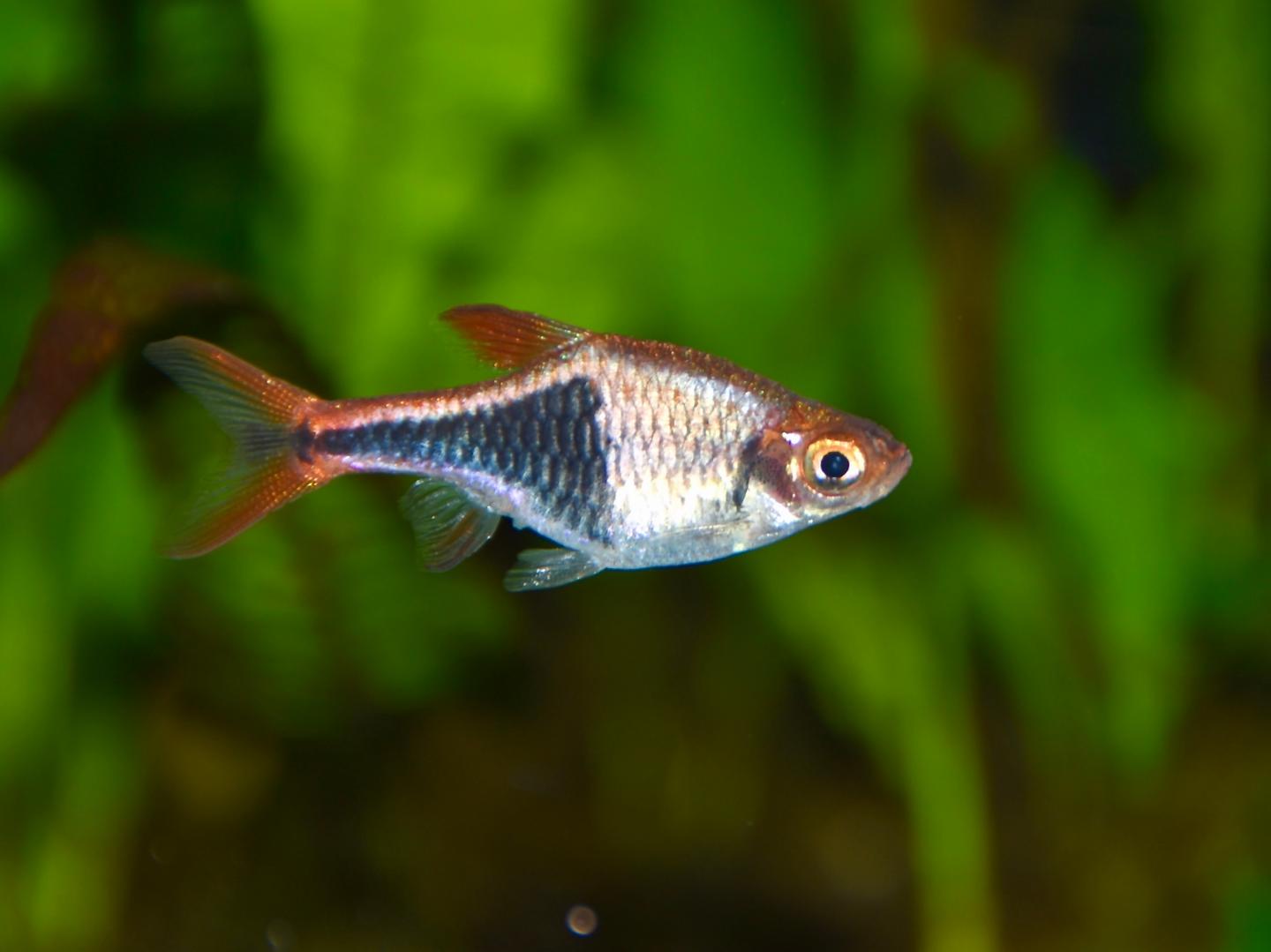
Our conservative starting policy is a mature, filtered aquarium at least 60 cm long and about 60 litres, eight or more fish, and measured water screened against 22-25 °C, pH 5-7 and 5-12 dGH.
Maintain these water conditions for optimal health and vibrant colors
Harlequin (Trigonostigma heteromorpha) is a small freshwater fish suited to a calm, well-maintained community aquarium. Its social behaviour, peaceful temperament and manageable adult dimensions make it a practical choice for a keeper who can provide a proper group, stable water and uninterrupted swimming space. This is also a suitable first community species for a newcomer prepared to mature the aquarium before introducing fish and maintain it every week.
FishBase lists Trigonostigma heteromorpha as the accepted name and treats Rasbora heteromorpha as a synonym. It places the species in Danionidae and records a maximum length of 5 cm total length for male or unsexed fish. Use that 5 cm maximum when planning adult stocking: the selected dispatch grade describes the animal sent, not the space it will eventually require.
The natural distribution recorded by FishBase covers the Malay Peninsula, including Peninsular Malaysia and Singapore, and Indonesia. It is a tropical, benthopelagic freshwater fish. Its recorded environmental values are 22–25°C, pH 5.0–7.0 and 5–12 dH; aquarium husbandry guidance is broader and is set out in the care sections below.
| Decision | Planning point |
|---|---|
| Adult dimensions | Plan around a recorded maximum of 5 cm total length. |
| Social need | Keep a group rather than one animal on its own. |
| Aquarium footprint | Use at least a 60 × 30 cm base or an equivalent footprint. |
| Water | Use the aquarium range of 21–28°C, pH 5.0–7.5 and 1–12 dGH. |
| Community | Choose calm companions that cannot treat a 5 cm fish as prey. |
Seriously Fish describes the Harlequin as very peaceful and recommends it for newcomers to fishkeeping. That suitability depends on providing the group, footprint, biological filtration and regular maintenance described here; it is not a reason to place the fish in a new or undersized aquarium.
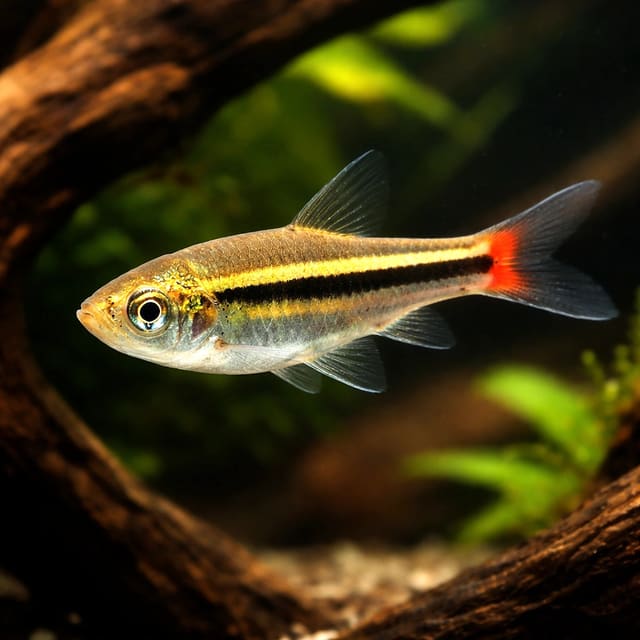
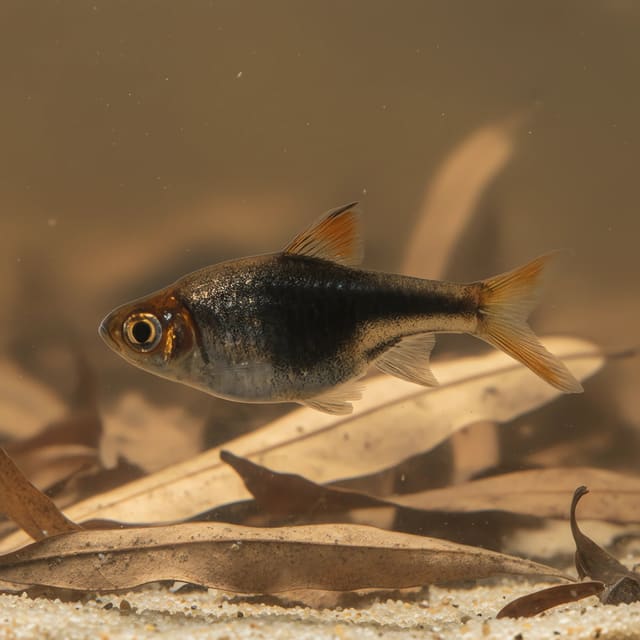
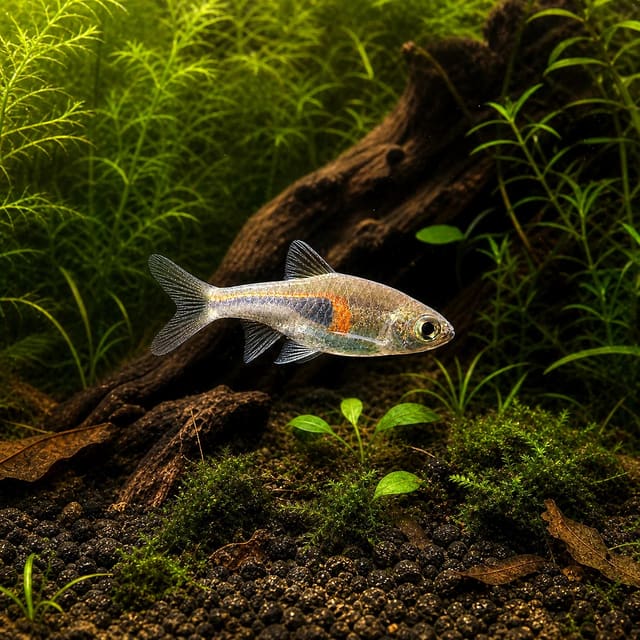
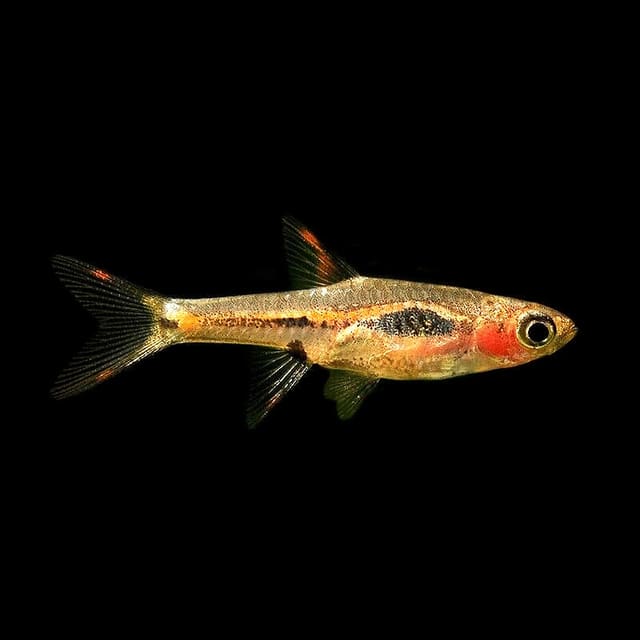
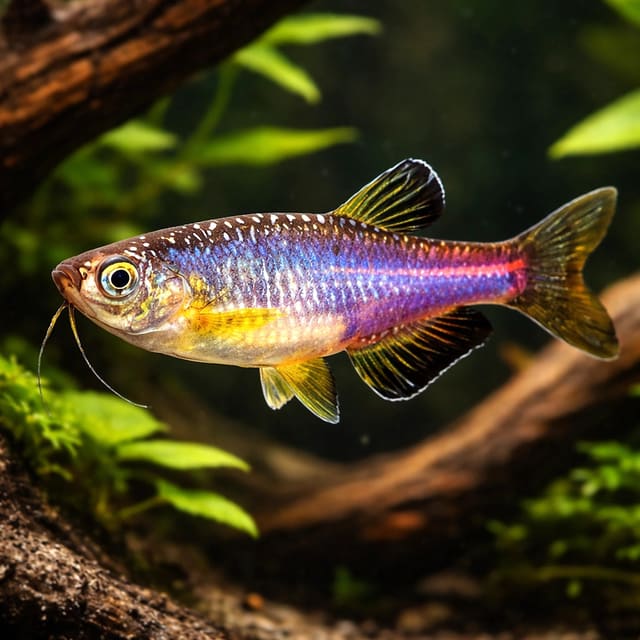
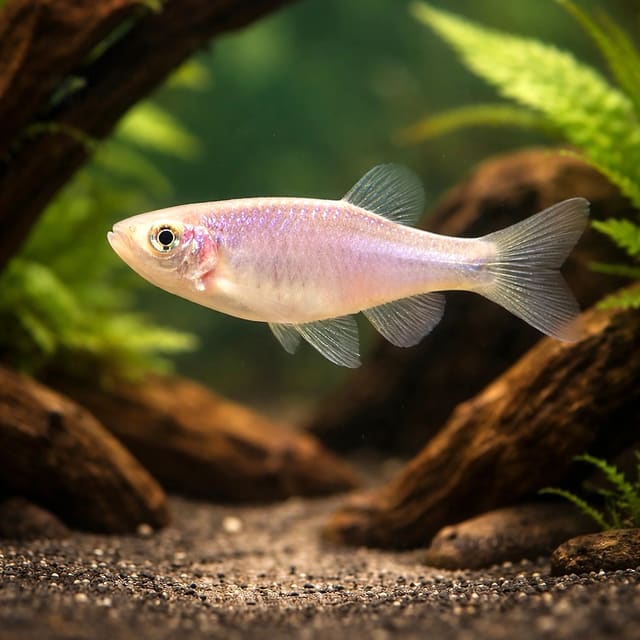
Some gallery images have been digitally enhanced to improve image quality. They show the listed type of animal rather than guaranteeing the exact markings of the individual supplied, so natural colour and pattern can vary.
Reference: reviewed public source.
One purchase quantity supplies one animal of the selected option. The size you select is the size supplied, not the adult size. Use the live size selector to see the options that can be chosen when ordering, then set the purchase quantity to the number of animals required for your planned group.
The size selector grades are 1.2–1.5 cm, 1.5–1.9 cm, 2 cm, 2.5–3 cm, over 3 cm and XXL. XXL is a named grade rather than a numeric adult-size promise. Every grade represents a dispatch size, while the aquarium must be planned around the recorded maximum of 5 cm total length.
Do not use a small dispatch grade to justify a smaller aquarium or heavier stocking. A 1.2–1.5 cm animal still needs an adult plan based on a 5 cm fish, and several small arrivals still increase the waste load handled by the biological filter. Add livestock gradually so the beneficial bacterial population can adjust as feeding and waste increase.
Sex is guaranteed only when the selected option explicitly states male or female. This Harlequin listing has no sex-guaranteed option.
Before ordering, confirm the aquarium has a base of at least 60 × 30 cm or an equivalent footprint, a volume of about 54 litres or more, a mature filter and water within 21–28°C, pH 5.0–7.5 and 1–12 dGH. The tank also needs room for a group and any existing residents once every fish reaches its adult size.
Browse the rasboras and danios collection when comparing social freshwater fish, but assess each animal by its own adult size, water range and temperament. For dispatch days, packing, claims and the Live Arrival Guarantee, read our delivery and live-arrival policy before completing the order.
| Suits | Not suited to |
|---|---|
| Stable aquarium water maintained at 21–28°C and pH 5.0–7.5 | Water outside 21–28°C and pH 5.0–7.5 |
| Calm community fish matched for adult size, water requirements and aquarium space | Boisterous tank mates |
Start with a base measuring at least 60 × 30 cm or an equivalent footprint and a volume of approximately 54 litres. Seriously Fish describes that as the smallest aquarium to consider because this fish should be maintained in numbers. A longer or larger aquarium gives the group more usable swimming room and leaves more capacity for carefully screened community companions.
OATA’s rasbora sheet gives a group of at least five as broad guidance for rasboras, with more being better; use five as the minimum planning point for Harlequins and increase the group only when the aquarium’s footprint, filter capacity and existing population allow it. Keeping too few rasboras may cause stress, so a single specimen is not an appropriate long-term plan.
A 54-litre aquarium with the required base is a starting point for the Harlequin group, not an automatic allowance for additional species. An aquarium with the same volume but an unusually narrow or short base may offer less useful horizontal space. Conversely, a larger footprint can make it easier to separate planted shelter from open swimming areas, but it does not remove the need to control stocking and water quality.
For an empty aquarium, plan the full adult community before purchasing the first animal. For an established aquarium, treat any new group as an increase in biological load. Add fish slowly and continue testing after each addition rather than filling every planned place at once.
| If this applies | Make this decision |
|---|---|
| Base is under 60 × 30 cm | Choose a different aquarium plan. |
| Only one or two Harlequins fit | Do not use that stocking plan. |
| Existing residents fill the swimming area | Do not add another group. |
| The aquarium exceeds the minimum | Assess filtration and total adult stocking before increasing the group. |
Maintain the aquarium at 21–28°C, pH 5.0–7.5 and 1–12 dGH. These are the species aquarium ranges given by Seriously Fish. They describe workable limits rather than a reason to make frequent adjustments, so choose a stable point that also suits every other resident and avoid repeatedly moving the values around.
Test the aquarium rather than relying on assumptions about local tap water. Our water chemistry guide explains the values to measure, while the water matcher helps compare measured results with the Harlequin ranges. Record the readings so gradual movement can be recognised before it becomes a sudden problem.
| Reading | Action |
|---|---|
| Temperature: 21–28°C | Keep the chosen point stable and compatible with the whole community. |
| pH: 5.0–7.5 | Use a measured value within the range; avoid abrupt corrections. |
| General hardness: 1–12 dGH | Confirm the source and aquarium water both fit the planned community. |
| Ammonia: 0 mg/l | Do not add fish when ammonia is detectable. |
| Nitrite: 0 mg/l | Do not add fish when nitrite is detectable. |
| Nitrate | Keep it no more than 20 mg/l above the normal tap-water level. |
Temperature, pH and hardness must work together. A prospective tank mate that fits the temperature range but requires water outside pH 5.0–7.5 or 1–12 dGH is not a sound match. The same rule applies in reverse: shared chemistry does not make an aggressive, boisterous or predatory animal suitable.
Use treated replacement water during maintenance. Tap-water conditioner is required where chlorine or chloramine is present, because either can damage fish and the beneficial bacteria in the filter. Prepare the replacement water before it enters the aquarium and avoid a maintenance routine that causes abrupt changes in temperature or chemistry.
If a reading moves outside the working range, first check the test method and compare the aquarium with its usual result. Then look for a blocked filter, excess food, accumulated waste or an overly rapid increase in livestock. Correct the cause steadily; chasing individual readings with repeated large interventions can create further instability.
Use a mature biological filter in every Harlequin aquarium. The RSPCA explains that biological filtration supports beneficial bacteria that convert toxic ammonia to toxic nitrite and then to the safer nitrate. That process protects the fish only when the filter is established, maintained and sized for the aquarium’s livestock load.
For an aquarium of about 54 litres, Seriously Fish gives a turnover of four to five times the volume per hour. That corresponds to a filter flow rating of approximately 215–270 litres per hour. Treat the rating as a selection guide: media condition, blockages and the aquarium layout can affect the actual circulation.
| Equipment decision | Starting point |
|---|---|
| Filter turnover | Four to five times the aquarium volume each hour. |
| About 54 litres | Look around the 215–270 litres-per-hour rating range. |
| Heater for about 54 litres | Seriously Fish suggests roughly 75–100 W when the room is around 20°C. |
| Temperature control | Use the heater to hold a stable point within 21–28°C. |
A filter rating is not permission to overstock. Biological capacity depends on a living bacterial population, and that population needs time to grow when more fish and food are added. Introduce livestock gradually and monitor ammonia and nitrite rather than assuming that a powerful pump has made the aquarium safe.
Prepare and mature the system before the group arrives. Our first tropical aquarium guide covers the setup sequence. The decisive checkpoints are a working filter, stable temperature and test results showing 0 mg/l ammonia and 0 mg/l nitrite.
Check the filter for blockages during weekly maintenance. If its media needs cleaning, do not run it under the tap. Rinse it lightly in water removed from the aquarium. Chlorine or chloramine may kill the bacteria the media is meant to support.
Watch the fish and the water after any equipment change. Hanging at the surface, unusual bottom-sitting, erratic swimming or altered breathing requires prompt water testing. Also confirm that the filter is running, the heater is maintaining the selected temperature and circulation has not been restricted by debris.
Create a well-furnished aquarium while preserving clear swimming room for the group. Seriously Fish notes that décor is not especially critical, but Harlequins tend to show better colour in a furnished setup with a dark substrate. OATA also recommends plant cover and open swimming space for rasboras, so arrange shelter around usable water rather than filling the whole base with ornaments.
Dried leaf litter can add another layer of cover and help create a blackwater-style display. Seriously Fish names beech, oak and Ketapang almond leaves as suitable choices. As leaves decompose, beneficial microbial colonies can develop and provide a secondary food source for fry. Tannins and other compounds released during decomposition also help simulate blackwater conditions.
Leaves may be left to break down fully or removed and replaced every few weeks. Whichever approach you choose, inspect them during maintenance and siphon unwanted accumulated waste. Add leaf litter deliberately rather than allowing it to smother the substrate, block a filter intake or occupy the group’s main swimming area.
| If you see this | Change the layout this way |
|---|---|
| Little open water | Move dense décor towards the back or sides. |
| No sheltered area | Add plants, wood or suitable ornaments. |
| Debris collecting behind wood | Create access for siphoning and circulation. |
| Filter flow is obstructed | Reposition leaves, plants or branches. |
A furnished aquarium supports confidence, but décor cannot compensate for an undersized footprint, unsuitable water or too small a group. Make the footprint and stocking decisions first, then use substrate, plants, wood and leaf litter to create a practical balance between shelter and swimming room.
Feed a varied diet built around good-quality flakes or granules, supplemented with small live or frozen foods. Wild stomach analyses reported by Seriously Fish show that Harlequins act as micropredators, feeding on small insects, worms, crustaceans and other zooplankton. In an aquarium, regular variety supports condition and colour.
Suitable live or frozen foods include bloodworm, Daphnia and Artemia. Use pieces that the fish can take readily and distribute the portion so the group has a fair chance to feed. A good-quality dried food remains the practical staple, while the live or frozen items add variety.
| Part of the meal | How to use it |
|---|---|
| Dried staple | Offer a good-quality flake or granule. |
| Live or frozen variety | Rotate small Daphnia, bloodworm or Artemia. |
| Portion limit | Give only what the fish consume within a few minutes. |
| Frequency | Feed once each day. |
Watch the whole group during the meal. Food should be eaten within a few minutes rather than sinking into décor or remaining on the substrate. If food is left, reduce the next portion and remove accessible waste during maintenance. Uneaten food breaks down and adds waste to the water, increasing the pressure on the biological filter.
Use feeding response as a daily observation point. Reduced intake or a loss of interest in food can accompany stress or declining health. If one animal is consistently missing food, check whether faster residents are taking the whole portion, whether the food is an appropriate size and whether the group is showing any wider change in swimming, breathing, colour or condition.
Do not respond to poor appetite by repeatedly adding different foods in large amounts. Test ammonia and nitrite, confirm the temperature is stable and observe whether other fish are affected. A water-quality or equipment problem needs correction at its cause; extra food can make the waste load worse.
Variety means rotating suitable foods, not serving several full portions at once. A simple pattern is a quality dried staple on most days with an appropriately small live or frozen item used regularly in place of, or as part of, the controlled daily allowance.
Introduce Harlequins only after the aquarium is mature, filtered and stable. Confirm ammonia and nitrite are both 0 mg/l, the temperature is holding within 21–28°C, and pH and hardness fit the species range. Make these checks before the fish are added rather than relying on the aquarium’s age or appearance.
Stock the aquarium gradually. Every increase in fish and feeding increases the demand placed on the filter’s beneficial bacteria. Adding too much livestock too quickly can lead to new tank syndrome, in which the bacterial population cannot process the increased waste and ammonia or nitrite rises to harmful levels.
A normal introduction plan does not end when the fish enter the aquarium. Observe clear, bright eyes, intact scales, undamaged fins and appropriate swimming. Also look for surface hanging, bottom-sitting, erratic movement, unusually fast or slow gill-cover movement, increased hiding or reduced interest in food.
Do not add more fish merely because the first group appears settled. Stable behaviour must be supported by stable test results. Ammonia and nitrite should remain at 0 mg/l, and nitrate should be controlled through regular partial water changes.
If a reading changes after introduction, pause further stocking. Check for uneaten food, equipment failure, a blocked filter or an increase in waste. Correct the cause and wait for stable conditions before reconsidering the next addition.
For an existing community, complete the compatibility screen before introduction. The aquarium must have room for the Harlequin group at 5 cm each, calm companions, shared water requirements and an established biological filter able to process the extra load.
At least once every week, carry out a partial water change of 25%. Use a siphon to remove solid waste from the substrate and from accessible spaces around wood, plants and leaf litter. This routine removes accumulated waste while giving you a regular opportunity to inspect the aquarium and its equipment.
Keep ammonia at 0 mg/l and nitrite at 0 mg/l. OATA advises that nitrate should not exceed 20 mg/l above the normal tap-water level. Testing both the aquarium and source water helps distinguish nitrate entering with replacement water from nitrate accumulating through feeding and fish waste.
Clean filter media only when its condition or reduced flow requires attention. If the media needs cleaning, do not run it under the tap. Rinse it lightly in water removed during the partial change. This limits the loss of beneficial bacteria.
| Maintenance finding | Response |
|---|---|
| Uneaten food | Remove it and reduce the next portion. |
| Reduced filter flow | Check for blockages and rinse media gently if needed. |
| Detectable ammonia or nitrite | Pause stocking, check filtration and address the waste load. |
| Nitrate rising between changes | Review feeding, stocking and waste removal. |
| Repeated chemistry swings | Compare source water and maintenance methods. |
A larger water change is not a substitute for diagnosing a repeated problem. If ammonia, nitrite or nitrate control is poor, examine stocking, feeding, filter performance and trapped waste. Weekly records make patterns easier to recognise than isolated test results.
Finish by confirming the heater and filter have restarted and the temperature is returning to the chosen stable point. Observe the group after maintenance so equipment interruptions or unusual behaviour are noticed promptly.
Learn the group’s normal appearance, swimming, breathing and feeding response. Daily familiarity makes a change easier to recognise, while weekly testing helps connect behaviour with water quality and equipment performance.
| Change | First response |
|---|---|
| Hanging at the surface | Test the water and check filter operation promptly. |
| Sitting on the bottom | Check water quality, temperature and the wider group. |
| Erratic swimming | Test ammonia and nitrite and inspect the aquarium for hazards. |
| Faster or slower breathing | Check water readings and equipment without delay. |
| Darker or paler colour | Look for water changes, stress and altered behaviour. |
| More hiding than usual | Assess companions, group size and shelter. |
| Reduced feeding | Test the water and observe whether all fish are affected. |
| White spots or fluffy growths | Separate observation from guesswork and seek fish-health guidance. |
| Damaged fins or missing scales | Inspect décor and watch interactions between residents. |
| Weight gain or loss | Review feeding and obtain suitable health advice. |
Start with measured conditions rather than treatment. Confirm ammonia and nitrite are 0 mg/l, check temperature, inspect the filter and review recent additions or changes. Correcting a water-quality or equipment problem is an immediate husbandry action and may prevent further deterioration.
Do not increase food when appetite falls unless observation shows that the normal portion is simply being taken by faster fish. Extra uneaten food increases waste and can worsen ammonia or nitrite problems.
Changes affecting several residents at the same time make an aquarium-wide issue more likely, so check water and equipment first. A problem affecting one fish still requires prompt attention, but the same water checks help exclude a shared environmental cause.
If a health change persists, worsens or involves visible lesions, abnormal growths, substantial weight change or difficult breathing, contact us for appropriate next steps. Avoid selecting medication from a symptom alone, especially in a mixed aquarium where other fish, plants or invertebrates may respond differently.
Harlequins are very peaceful fish suited to a well-maintained community aquarium. Seriously Fish lists other small cyprinids, tetras, livebearers, dwarf cichlids, catfishes and loaches among the broad types that may be considered. Those categories are starting points rather than automatic approvals: each proposed species still needs to pass the adult-size, temperament, water and space checks.
Shared water values are necessary but not sufficient. A candidate can fit the temperature and pH yet fail because it is predatory, territorial, excessively active or too large for the footprint. Conversely, a peaceful small fish is still unsuitable if its water requirements sit outside the aquarium’s stable range.
| Candidate description | Decision |
|---|---|
| Calm, appropriately sized and water-matched | Consider it after checking total adult stocking. |
| Boisterous at feeding or in open water | Avoid the combination. |
| Large enough to swallow a 5 cm fish | Reject the plan. |
| Requires chemistry outside the Harlequin range | Choose a different companion. |
| Suitable on paper but temperament varies | Plan observation and a safe separation option. |
Give compatibility decisions to the exact animals involved rather than relying only on a common category name. Temperament, adult dimensions and space use can differ among closely related fish. Ask us for a stocking and compatibility assessment when you can provide the aquarium dimensions, water readings, filter, existing livestock and proposed quantities.
Build the community around the aquarium’s real limits. Start with the Harlequin group, reserve its 60 × 30 cm minimum footprint and about 54 litres, then add the adult requirements of every proposed companion. The minimum Harlequin setup is not spare capacity for an unrestricted mixed community.
Suppose a candidate fish is peaceful and remains small. First compare its temperature, pH and hardness needs with 21–28°C, pH 5.0–7.5 and 1–12 dGH. If the ranges overlap, choose a stable point suitable for both. Next compare adult sizes and behaviour: the candidate must not be able to eat a 5 cm fish, monopolise food or dominate the open swimming area. Finally, calculate whether both social groups fit once fully grown.
A second candidate may share the same water range but be highly active or boisterous. That match fails the temperament screen even though the chemistry appears suitable. A third may be calm but require water outside the Harlequin range; that match fails the water screen. Passing one check never cancels a failure in another.
| Planning question | Evidence to gather |
|---|---|
| Will the water suit both? | Measured temperature, pH and dGH plus each species’ aquarium range. |
| Will either fish be prey? | Adult dimensions and feeding behaviour. |
| Will the aquarium feel crowded? | Base dimensions, adult stocking and swimming zones. |
| Will every social fish have its group? | Required group sizes and planned quantities. |
| Can the filter support the load? | Maturity, performance and stable ammonia and nitrite results. |
Introduce one planned addition at a time. This gives the biological filter time to adapt and makes behavioural changes easier to attribute. Pause if ammonia or nitrite becomes detectable, feeding access changes, the Harlequins hide more than usual or swimming becomes erratic.
Use plants, wood and shelter to reduce exposure, but do not use décor to force incompatible fish together. A layout can create resting areas and visual separation; it cannot make a predatory, boisterous or water-mismatched species safe.
Compatibility remains an active decision after introduction. A combination that appears workable from adult size and water values must also allow every Harlequin to swim, feed and use shelter normally. Observe the whole group rather than judging the aquarium by the most confident animal.
A small amount of movement between open water and cover is not enough to diagnose a compatibility problem. Look for a sustained change from the group’s usual behaviour, then combine observation with water tests. Detectable ammonia or nitrite can cause distress that resembles social pressure, while actual harassment can coexist with acceptable chemistry.
| If you observe | Do this |
|---|---|
| The whole aquarium behaves unusually | Test water and inspect equipment first. |
| Harlequins miss repeated meals | Review companion activity and feeding access. |
| One resident pursues the group | Separate the animals safely and reassess the match. |
| Fins or scales become damaged | Inspect interactions and décor promptly. |
| The group hides persistently | Check water, group size, shelter and boisterous companions. |
Do not solve crowding by reducing the Harlequins below the minimum group plan. If the aquarium cannot support the social needs of every resident, change the stocking plan instead. The long-term goal is a calm community in which the Harlequin group has adequate numbers, clear swimming space, stable water and reliable access to food.
It is a peaceful freshwater shoaling fish in Danionidae. FishBase treats Rasbora heteromorpha as a synonym and records a maximum of 5 cm total length.
One purchase quantity supplies one animal of the selected option. Set the quantity to the number required for the planned group.
The dispatch sizes are 1.2–1.5 cm, 1.5–1.9 cm, 2 cm, 2.5–3 cm, over 3 cm and XXL. Check the live selector when ordering.
Use at least about 54 litres with a base of 60 × 30 cm or an equivalent footprint, mature biological filtration, shelter and open swimming space.
Keep it in a group rather than alone. OATA’s rasbora guidance gives at least five as the group minimum, with more considered only when space and filtration allow.
Maintain 21–28°C, pH 5.0–7.5 and 1–12 dGH, with ammonia and nitrite at 0 mg/l. Keep the chosen values stable.
Feed a good-quality flake or granule once daily, using only what is eaten within a few minutes. Add small Daphnia, bloodworm or Artemia for variety.
Before introduction, confirm the aquarium is mature, ammonia and nitrite are 0 mg/l, the temperature is stable within 21–28°C and the filter is operating correctly.
Choose calm companions with overlapping water needs that cannot eat a 5 cm fish. Avoid boisterous tank mates and check total adult stocking before mixing species.
No reviews for this item yet. Bought one? Honest reviews only, good or bad.
What customers say about ordering from us
I have a small group of long finned mountain minnows. So was delighted to be able to order ten of this variety to increase the genetics in my tank . The ones I recieved are healthy but it’s to early to give a verdict on wether they are of a long finned type since they are small currently.
Gordon Walker · 23 Sept 2026
100% success travel and "installation". Pleased with quality of purchase. The Siamese fighter a bit "shy" so have not yet seen him at his best yet but looking good. Happy customer. GG
George E Garratt · 21 Sept 2026
Reviews of our shop, collected by Judge.me, an independent third-party review collector. Newest first.