Easy
Harlequin (Rasbora heteromorpha)
21–28°C · pH 5–7.5 · 54L
£2.99

The Black Harlequin Rasbora (Trigonostigma heteromorpha) is a freshwater danionid rasbora from the Malay Peninsula, Singapore, northern Sumatra and nearby Sumatran islands that reaches 5 cm total length. It suits a prepared keeper who can maintain eight or more in a mature, filtered aquarium at least 60 cm long and about 60 litres; the Tropical Fish Co care guide uses 22–25°C, pH 5.0–7.0 and 5–12 dGH. Sold individually in sizes from 1.8–2 cm to 3 cm.
Adult size is the maximum length this species reaches at full maturity (scientific sources). The livestock you receive will be younger and smaller — pick a size above for the actual shipping size. Product-photo provenance and any image-specific limitations are stated on the listing.
Trigonostigma heteromorpha
Shoaling fish: kept in a group they feel safer, stay calmer and show their best colour.
Minimum of 2 per order.
The Black Harlequin Rasbora (Trigonostigma heteromorpha) is a freshwater danionid rasbora from the Malay Peninsula, Singapore, northern Sumatra and nearby Sumatran islands that reaches 5 cm total length. It suits a prepared keeper who can maintain eight or more in a mature, filtered aquarium at least 60 cm long and about 60 litres; the Tropical Fish Co care guide uses 22–25°C, pH 5.0–7.0 and 5–12 dGH. Sold individually in sizes from 1.8–2 cm to 3 cm.
Adult size is the maximum length this species reaches at full maturity (scientific sources). The livestock you receive will be younger and smaller — pick a size above for the actual shipping size. Product-photo provenance and any image-specific limitations are stated on the listing.
Our conservative starting policy is a mature, filtered aquarium at least 60 cm long and about 60 litres, eight or more fish, and measured water screened against 22-25 °C, pH 5-7 and 5-12 dGH.
Maintain these water conditions for optimal health and vibrant colors
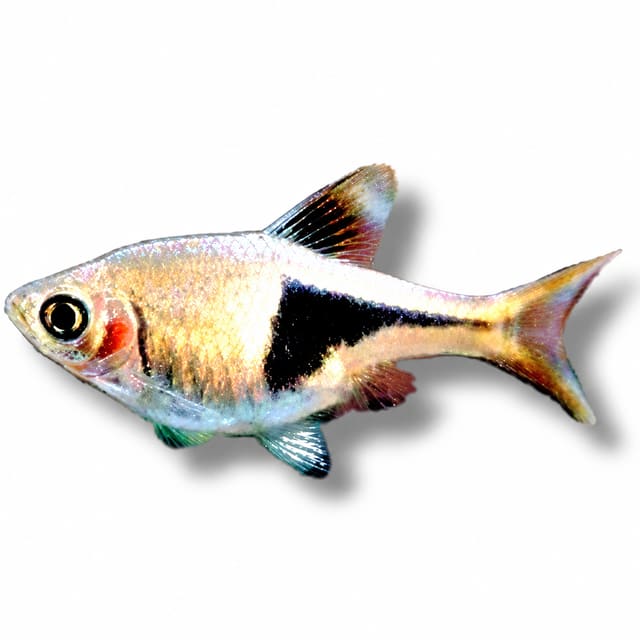
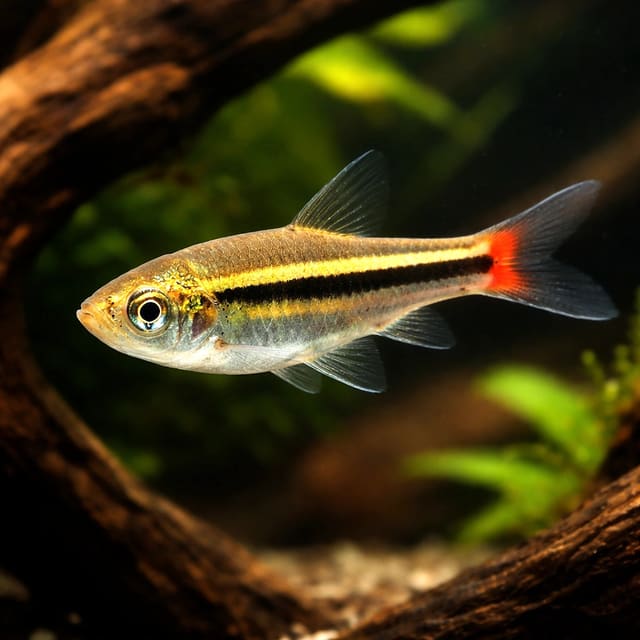
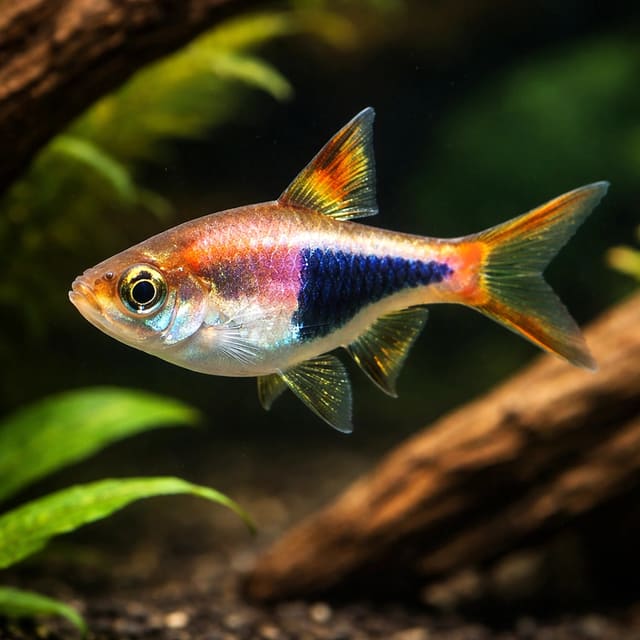
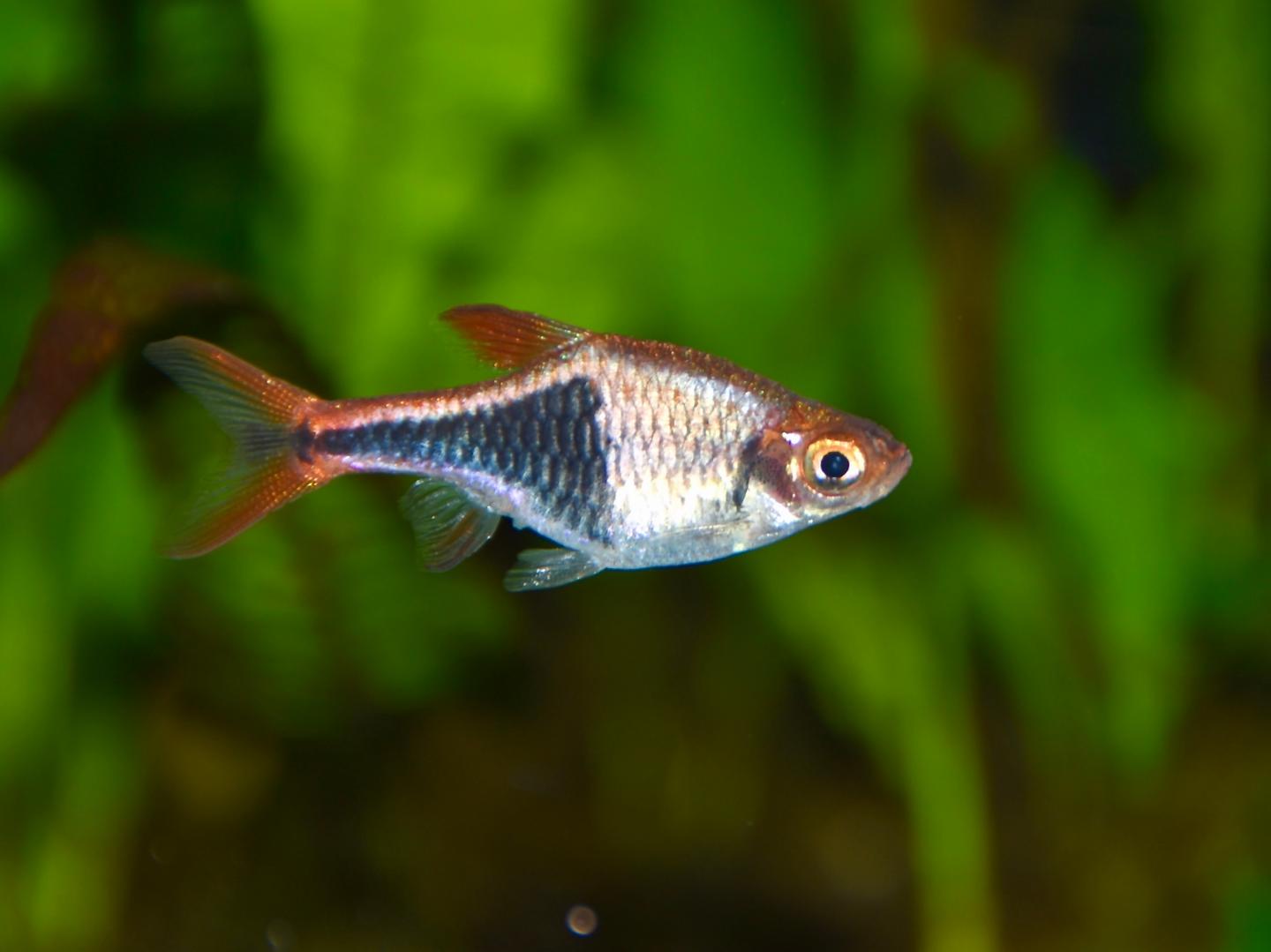
The Black Harlequin Rasbora is a selectively bred dark form of Trigonostigma heteromorpha, a freshwater danionid rasbora from the Malay Peninsula, Singapore, northern Sumatra and nearby Sumatran islands. It reaches a maximum recorded 5.0 cm total length and is a peaceful shoaling fish for prepared keepers who can provide a mature, filtered aquarium, a proper group and carefully screened companions. Its deep body and broad, wedge-like flank marking retain the familiar harlequin outline, while the darker ornamental colour gives the group a strong presence against plants, pale sand or subdued surroundings. It is a danionid rasbora rather than a tetra.
FishBase records Trigonostigma heteromorpha in the family Danionidae, with a maximum of 5.0 cm total length. Total length includes the tail fin, so treat 5 cm as a planning maximum rather than a promise that every individual will reach exactly that measurement. Seriously Fish separately records 45 mm standard length.
The current genus is also recognised by Eschmeyer’s Catalog of Fishes. Older books may use Rasbora heteromorpha, reflecting its earlier classification before the genus was revised. That historical combination still refers to the harlequin rasbora, but Trigonostigma heteromorpha is the scientific name to use when checking care and compatibility.
In nature, FishBase associates the species with forest streams and peat-swamp habitat. Its wild food includes worms, crustaceans and insects, while groups exceeding 100 fish have been observed in primary peat swamps. These natural-history details explain the value of social company, cover and suitably small animal-based foods without turning a home aquarium into a claimed replica of the wild habitat.
A taxonomic study of harlequin rasboras separates T. heteromorpha from the similar T. truncata. Identification should therefore use the scientific name and several physical characters together, not colour alone. The black form remains T. heteromorpha and receives the same care as the standard form.
One purchase quantity supplies one Black Harlequin Rasbora in the option selected. The size labels are “3 cm”, “2,5 cm” and “1.8-2 cm”; use the live size selector to see which label can be chosen when ordering. Set the purchase quantity to match the group you have planned.
The size you select is the size supplied, not the adult size. These labels describe dispatch size, while aquarium planning must allow for a maximum recorded total length of 5 cm. For example, selecting a 2,5 cm fish does not halve its eventual swimming-space requirement. The aquarium, filtration and social plan must already be suitable for the full group at adult size.
| Suits | Not suited to |
|---|---|
| A mature, filtered aquarium at least 60 cm long and about 60 litres | A bowl, unfiltered container or short unstable nano aquarium |
| A planned group of at least eight where total capacity allows | Keeping one fish, a pair or an incomplete token shoal |
| A peaceful community with every companion screened carefully | Boisterous, predatory, persistently fin-nipping or highly territorial companions |
| A keeper prepared to test water and maintain stable conditions | An aquarium judged ready from elapsed time alone |
Sex is guaranteed only when the selected option explicitly states male or female. This Black Harlequin Rasbora listing has no sex-guaranteed option.
Mature females are often fuller-bodied and mature males may be slimmer or more intensely coloured, but feeding, condition, age, viewing angle and ornamental strain can produce similar appearances. A 2026 comparative study of pectoral-fin breeding tubercles reported small tubercles in examined male T. heteromorpha; that close-examination research is not a reliable way to assign the sex of every retail fish from a photograph.
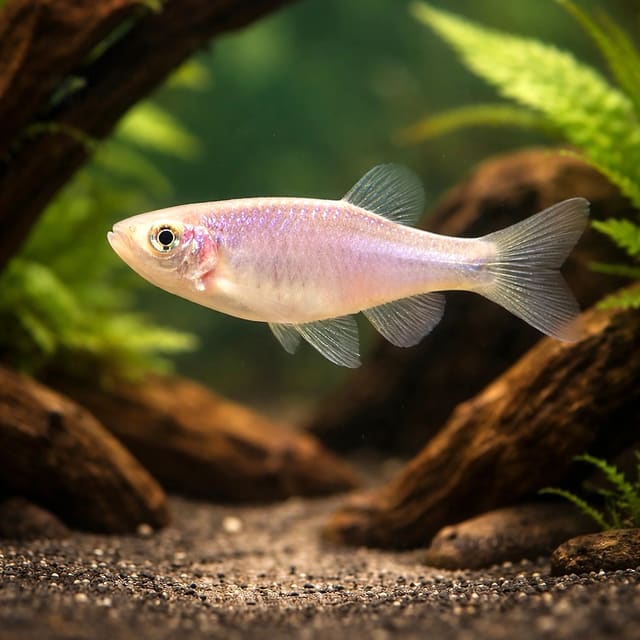
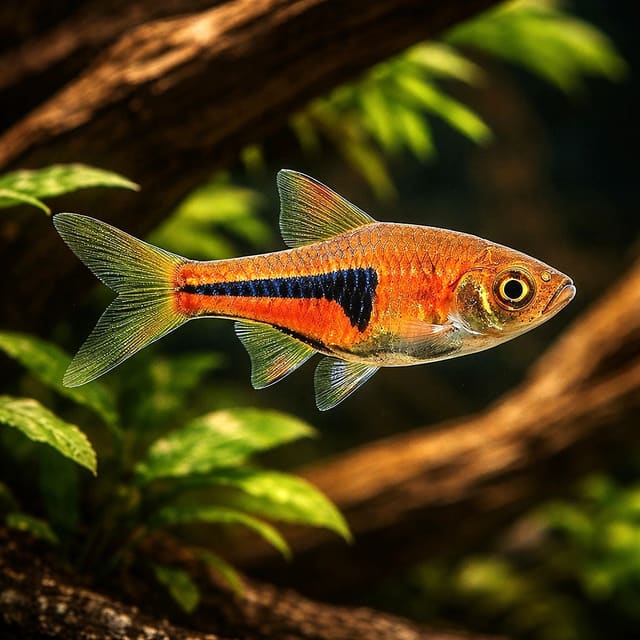
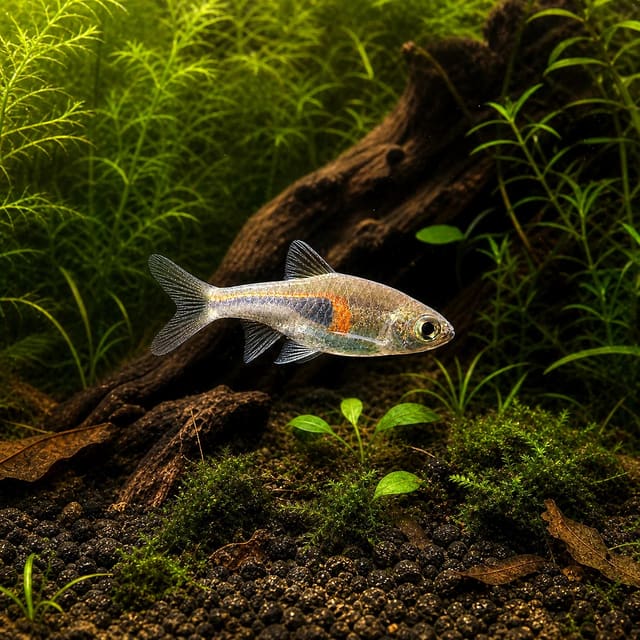
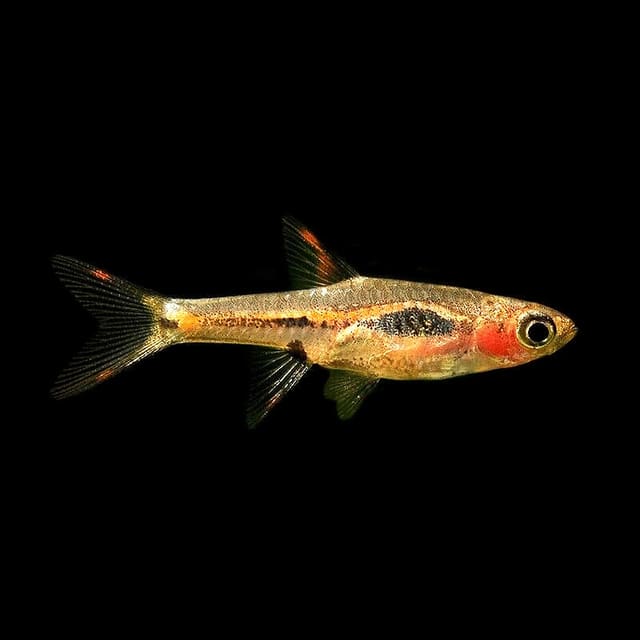
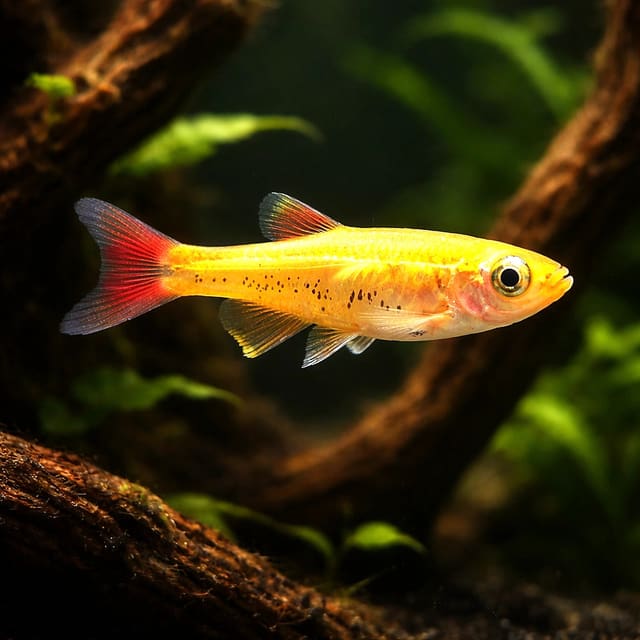
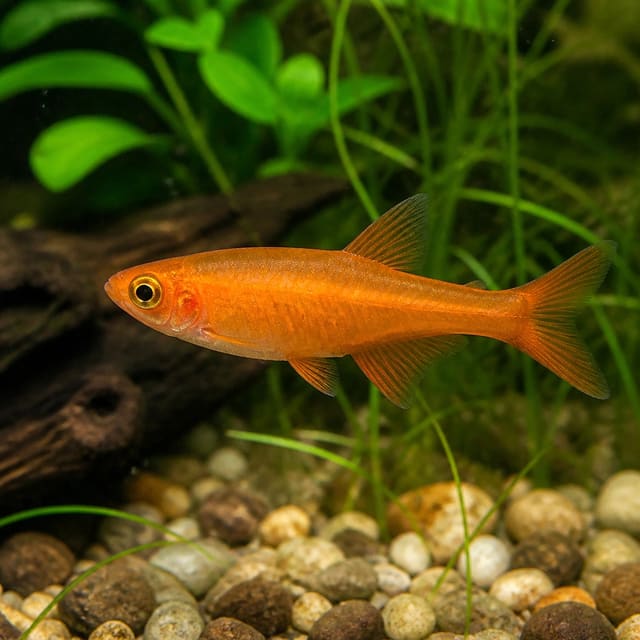
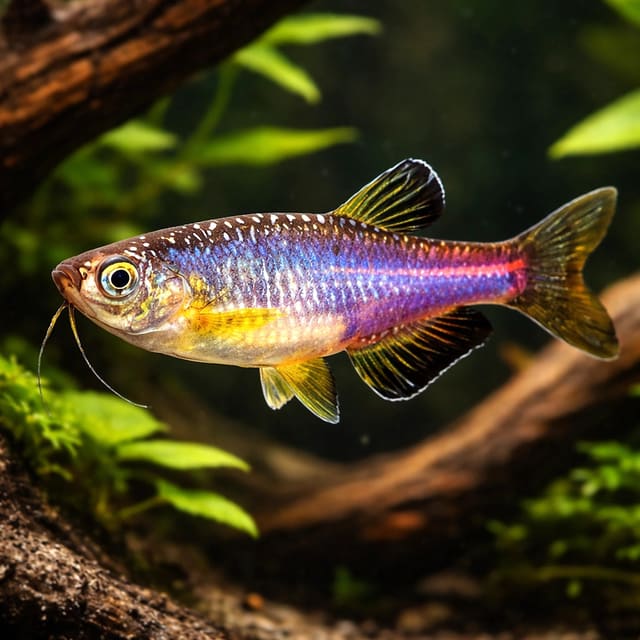
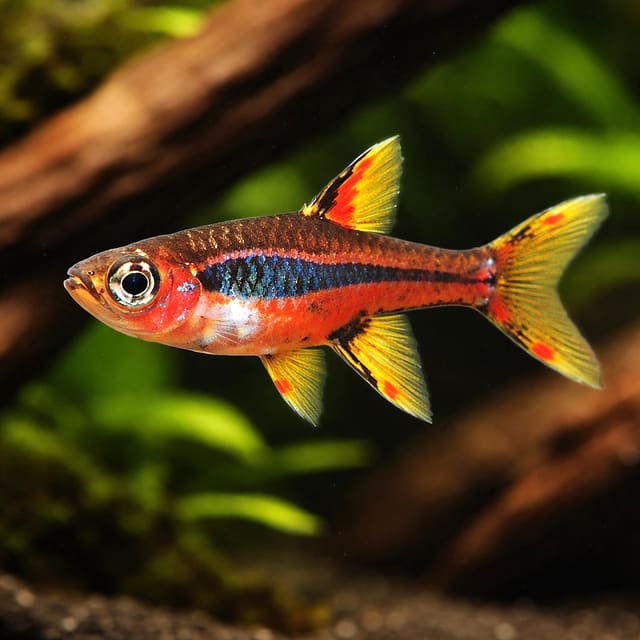
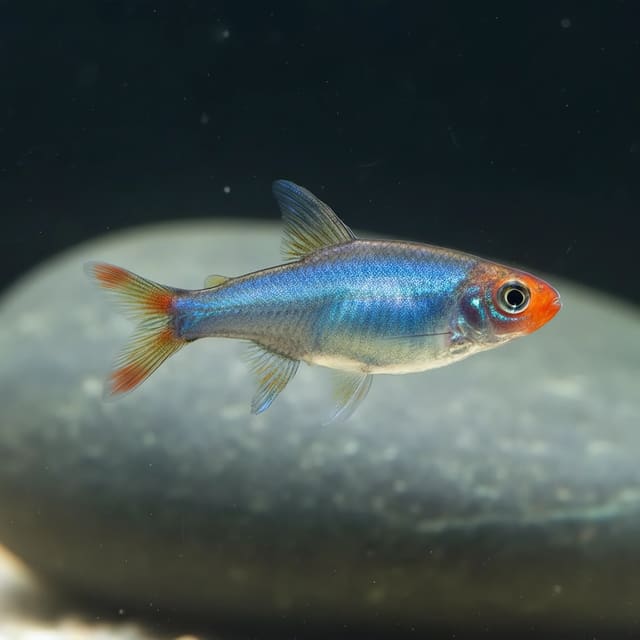
The gallery images are representative of this type of animal rather than photographs of the exact animal supplied, so colours can look slightly different from the live animal.
If you are comparing related fish rather than building one social group, browse the rasbora and danio collection. Different species should not be combined merely because their names or body shapes look similar.
Our conservative starting policy is a mature, filtered aquarium at least 60 cm long and about 60 litres for eight or more Black Harlequin Rasboras. The 60 cm length gives the group a useful horizontal swimming lane, while the volume provides a practical starting capacity for stable filtration. Eight is our capacity-conditioned house minimum; a larger group needs proportionately more usable swimming room, filtration and feeding access.
Use 22–25°C, pH 5.0–7.0 and 5–12 dGH as the routine water screen. Measure the aquarium rather than relying on a heater dial, a tap-water description or the number of weeks it has been running. Temperature, pH and hardness should also be compared with the fish’s holding water so that any necessary change can be made gradually.
| Starting decision | House screen |
|---|---|
| Aquarium | At least 60 cm long and about 60 litres |
| Group | Eight or more, subject to total capacity |
| Temperature | 22–25°C |
| pH | 5.0–7.0 |
| General hardness | 5–12 dGH |
| Adult planning size | Up to 5 cm total length |
We rate this fish as intermediate. Its peaceful temperament and willingness to accept prepared food are approachable, but successful care still depends on measured water, a mature biological filter, a correctly sized group and thoughtful compatibility screening. A small fish is not automatically suitable for an uncycled nano aquarium.
The complete Harlequin Rasbora Care Guide explains how those figures form a conservative starting screen. Aquarium shape, decor, filter maturity, existing occupants and summer temperature all affect real capacity. A nominal 60-litre tank can still be unsuitable if hardscape removes the swimming lane or companions already use most of its space.
This form suits a keeper who will test regularly, maintain one proper shoal and respond to behaviour rather than treating a peaceful label as a guarantee. It should not be kept alone, in a bowl, without filtration or in a community assembled from names alone.
Start with a mature aquarium at least 60 cm long and about 60 litres. Seriously Fish gives a 60 × 30 cm base and approximately 54 litres as the smallest species-level arrangement it considers for a group. Our house policy rounds that planning volume up to about 60 litres for eight fish before companions. Use the greater capacity when decor, internal equipment or other animals reduce usable space.
A calendar cannot establish filter maturity. Add livestock only after testing repeatedly shows zero ammonia and zero nitrite under the aquarium’s normal operating conditions. Beneficial bacteria in the filter process ammonia into nitrite and then nitrate; adding a full fish population faster than that bacterial community can respond risks toxic waste accumulation.
If this is your first setup, follow the sequence in our guide to prepare and mature a tropical aquarium before livestock arrives. Install the filter, heater where needed, substrate and decor before the fish are due. Leave access around the filter intake, outlet and heater so that each can be inspected without dismantling the aquascape.
A worked example makes the capacity decision clearer. A tank sold as roughly 60 litres may hold less water after substrate and decor. If a large structure divides the 60 cm length into two short pockets, the nominal volume does not restore one continuous swimming lane. Rework the layout or choose a larger aquarium before adding the shoal.
Add the intended group together after any quarantine period where practical. Repeatedly adding one or two fish creates repeated introductions and repeated increases in biological load. If the aquarium cannot support eight adults and their waste, choose a different stocking plan rather than beginning with an undersized group.
Use 22–25°C, pH 5.0–7.0 and 5–12 dGH as the routine aquarium screen. FishBase gives those values for Trigonostigma heteromorpha, and our house policy uses the same narrower range. Seriously Fish gives wider species guidance of 21–28°C, pH 5.0–7.5 and 1–12 dGH, but the conservative screen above is the one to use for routine planning.
OATA’s rasbora guidance gives 22–27°C, pH 6.5–8.0 and 4–12 dGH for the group. For this fish, keep the routine values within the species screen: 22–25°C, pH 5.0–7.0 and 5–12 dGH. OATA also calls for zero ammonia, zero nitrite and nitrate no more than 20 mg per litre above the normal tap-water level.
There is no single UK tap-water type. Hardness and alkalinity vary by area, and household treatment can alter the water again. Our water chemistry guide explains what pH, GH and KH measure, while the water matcher helps compare your measured aquarium values with the routine screen.
A reading inside the range is one checkpoint, not permission to ignore behaviour, filtration or rapid change. For example, pH 6.8 sits inside the screen, but moving fish abruptly from water with very different hardness can still create avoidable stress. Compare the complete set of readings and reduce the size and speed of any transition.
Use a thermostatically controlled aquarium heater unless repeated measurements show that the aquarium remains within 22–25°C throughout the year. Check the water rather than trusting the heater dial. During warm weather, monitor the maximum temperature, breathing and surface movement because a heater cannot cool an overheated aquarium.
A working biological filter is essential. The RSPCA’s general aquarium-welfare guidance explains that fish release toxic ammonia, which beneficial filter bacteria convert first to toxic nitrite and then to safer nitrate. Plants may assist an aquarium, but planting alone does not replace mature filtration or testing.
OATA recommends a 25% partial water change at least once a week for rasboras, together with water testing at least weekly. Treat that as a starting routine and respond to measured results, stocking and feeding. Condition replacement tap water to remove chlorine or chloramine before it enters the aquarium, and bring it close enough to the aquarium conditions to avoid a sudden temperature or chemistry shift.
If ammonia or nitrite is detected, reduce feeding, look for dead material or filter failure, and use water changes to protect the fish while addressing the cause. Do not add more livestock until both return to zero and remain there. Nitrate should be considered against the tap-water baseline as well as the aquarium result.
Check intakes and media for blockage, particularly after plant trimming or leaf decomposition. When rinsing is needed, swish the media lightly in water removed from the aquarium. Do not run it under the tap because any chlorine or chloramine present may kill the beneficial bacterial population established in the media.
A drop in filter flow is a maintenance signal, but replacing all media at once can remove much of the biological community. Preserve mature media wherever possible and change only the component that genuinely requires replacement. Keep enough surface movement for gas exchange without directing one concentrated jet across the entire swimming lane.
The most useful first-month pattern is stable readings, steady filter flow, normal group movement and prompt feeding. If nitrate rises faster each week, leftovers recur or fish compete at one feeding point, reduce the cause or increase appropriate capacity rather than relying on a larger water change to conceal a crowded plan.
Arrange cover around the sides and rear while keeping a clear horizontal midwater lane. Plants, wood and other aquarium-safe structures can break sight lines and give unsettled fish somewhere to withdraw, but the group must still be able to spread, turn and reach food without pushing through dense hardscape.
| Layout feature | Decision |
|---|---|
| Open lane | Keep one continuous route across most of the aquarium length |
| Plant cover | Place shelter mainly around the rear and sides |
| Filter outlet | Create surface movement without a concentrated midwater jet |
| Filter intake | Protect it where a small fish could be trapped |
| Lighting | Use a consistent day-and-night pattern with shaded areas |
Seriously Fish notes that the species often displays well in a furnished aquarium with a dark substrate, soft sand, wood, shade and leaf litter. Those are optional design tools rather than fixed requirements. Pale sand can also work when plants and structures provide sufficient cover. Judge the result by swimming, feeding and shelter use instead of treating stronger colour as the sole welfare test.
Dried beech, oak or Ketapang almond leaves may be used as aquarium botanicals. Decomposition can support microbial growth, and released tannins can create a darker-water appearance. Use clean aquarium-safe material from a traceable source, add it cautiously and continue testing because botanicals may affect pH, oxygen demand and maintenance. Remove or replace leaves if decomposition overwhelms the chosen routine.
Broad leaves have a natural-history connection: this species attaches eggs to the underside of broad leaves or similar structures. That biology does not require every display aquarium to become a breeding setup, and a fish swimming beneath a leaf is not proof of spawning.
Observe how the finished group uses the layout. Persistent bunching behind one object may point to harsh flow, exposed surroundings or unsuitable companions. Fish spread across the open lane and retreating briefly to cover when disturbed is a more useful layout check than whether they form one tight formation all day.
Wild Trigonostigma heteromorpha feed on worms, small crustaceans and insects. In the aquarium, use a reputable, suitably small complete fish food as the staple. Fine flakes or small granules can work when each particle is easy to swallow, and appropriately sourced small frozen or cultured live foods such as Daphnia, bloodworm or Artemia can add safe variety.
OATA advises feeding rasboras once a day with only what they consume within a few minutes. Use that group guidance as the starting schedule, then adjust portion size from body condition, feeding response, leftovers and water results. A complete food’s label can guide preparation, but the whole group must be observed because one fast fish eating well does not show that every individual has eaten.
A practical portion check is simple. If food remains after the group has stopped feeding, the portion was too large or the particle size was unsuitable. If one fish repeatedly misses food while others finish it, spreading the same total portion over a wider area may solve the access problem without increasing waste.
Do not collect live food from an unknown pond because it may introduce contaminants, parasites or unwanted organisms. Use appropriately sourced aquarium foods and keep frozen food handled according to its storage instructions.
Overfeeding affects more than body condition. Uneaten food decomposes and adds to the waste that the filter must process, which can raise ammonia, nitrite or nitrate when biological capacity is exceeded. Sudden appetite loss combined with isolation, rapid breathing, balance change or unusual colour calls for immediate observation and water testing rather than a richer meal.
Prepare and test the aquarium before dispatch. Someone must be ready to receive live fish so that the parcel is not left unattended. Read the delivery and Live Arrival Guarantee policy before the delivery window, including the reporting requirements that apply if there is a serious concern.
Compare the holding-water and aquarium measurements before dispatch so that large chemistry differences can be planned for in advance.
Persistent isolation, gasping, clamped fins, white spots, fluffy growths, wounds, swelling, weight loss, erratic swimming or appetite loss are warning signs rather than diagnoses. The RSPCA’s pet-fish health guidance supports prompt attention to changes in behaviour and appearance. Test water first, then check heater operation, filter flow, oxygenation, recent cleaning, new animals and aggression.
Quarantine in a separate mature system is the safer introduction route. The MSD Veterinary Manual gives at least 30 days as professional biosecurity guidance, with longer periods where circumstances require. Use dedicated equipment so water and nets do not move between systems.
Avoid treating undiagnosed signs with a generic salt, heat or medicine dose. If a health change persists after water and equipment checks, contact us and use the OATA fish-vet directory where veterinary help is needed.
Black Harlequin Rasboras are generally peaceful, but compatibility depends on the exact animals and aquarium. Screen each proposed companion by adult body size, mouth size, measured water, temperament, territory, social-group requirement, swimming level, feeding speed and the total space left after every group is counted.
| Compatibility check | Decision rule |
|---|---|
| Adult and mouth size | Avoid fish capable of swallowing a rasbora planned at up to 5 cm total length |
| Temperament | Avoid persistent fin-nippers, highly territorial fish and boisterous companions |
| Water | Use companions whose routine values overlap 22–25°C, pH 5.0–7.0 and 5–12 dGH |
| Social needs | Allow a complete group for every shoaling species rather than token numbers |
| Feeding | Confirm every rasbora can reach suitably small food |
| Space | Preserve the 60 cm swimming lane and increase capacity for companions |
Seriously Fish describes the species as peaceful and suitable for well-maintained community aquariums, including combinations with various small cyprinids, tetras, livebearers, dwarf cichlids, catfishes and loaches. Those are broad categories, not universal recommendations. Temperature, adult size and behaviour vary within each category, so assess the exact species rather than relying on the group name.
Observe the combination after introduction and whenever fish mature, territories change or the aquascape is rearranged. Repeated stalking, chasing, torn fins, hiding, missed meals or one group being displaced from its normal swimming area means the plan needs intervention. Use the mature separation option before injury or prolonged food loss develops.
For a mixed stocking proposal, contact us with the aquarium dimensions, measured water, filtration and the exact species and numbers already present. A useful assessment cannot be made from litres or a generic community label alone.
A betta and a Black Harlequin Rasbora group may coexist, but individual bettas vary. The aquarium must provide enough surface territory for the betta, a clear midwater lane for at least eight rasboras, visual cover, compatible measured water and fair feeding access. A mature backup aquarium is part of the plan rather than an afterthought.
Do not choose a betta solely because it was calm in another aquarium. Its response can change with tank shape, cover, neighbours and territory. Likewise, adding a larger rasbora group does not compensate for insufficient space or persistent aggression.
Shrimp require a different risk assessment. Adult Amano shrimp or larger adult Neocaridina may coexist with the fish, but small shrimp and shrimplets may be eaten. Wild harlequin rasboras consume small crustaceans, so plants and moss should be treated as cover rather than a survival guarantee. No fish should be described as completely shrimp-safe.
Compare the shrimp’s mineral requirements with the rasbora screen of pH 5.0–7.0 and 5–12 dGH before combining them. A water value that suits the fish at the softer end may not suit every shrimp, particularly where successful moulting depends on an appropriate mineral balance.
Feeding also matters in either pairing. A surface-feeding companion may take food before it reaches the rasboras, while sinking shrimp food can create leftovers if portions are excessive. Place suitable food where each animal can reach it, then confirm access by watching rather than increasing the total blindly.
Keep at least eight Black Harlequin Rasboras under our house policy, provided the aquarium has enough total capacity. FishBase gives five or more as an aquarium reference floor, while OATA says rasboras should be kept in groups of at least five and that more is better. Eight is the more conservative starting decision for this listing.
A larger group may produce more natural social interaction, but “more is better” stops when swimming room, filtration or feeding access deteriorates. Do not fill every remaining litre with more fish simply because the species is social. Increase aquarium capacity as the group and community grow.
| What you see | What to check |
|---|---|
| One fish isolated persistently | Water, injury, disease signs, aggression and feeding access |
| Group packed behind decor | Flow, lighting, disturbance and threatening companions |
| Repeated chasing | Space, group structure, feeding competition and territorial neighbours |
| One fish missing meals | Particle size, food distribution and faster companions |
| Normal spreading and regrouping | Continue observing alongside regular water tests |
Harlequin rasboras do not have to hold one tight formation throughout the day. Grouping may change with feeding, disturbance, lighting and perceived risk. Judge the aquarium from the complete pattern: whether fish can swim freely, regroup, feed, rest and use cover without persistent displacement.
Avoid dividing limited capacity among several incomplete shoals merely to add variety. One complete group with compatible companions is easier to feed and observe than several token groups competing for the same midwater lane. When increasing numbers, consider the additional biological load and add only at a pace the mature filter can support.
Keep a separation plan ready even in a peaceful community. Behaviour can change as fish mature or other occupants enter breeding condition, and early separation is preferable to waiting for torn fins, weight loss or prolonged hiding.
FishBase records a maximum of 5.0 cm total length for Trigonostigma heteromorpha; plan the aquarium around 5 cm without assuming every fish will reach exactly that length.
Start with a mature, filtered aquarium at least 60 cm long and about 60 litres for eight fish under the Tropical Fish Co care guide, then increase capacity for companions, a larger group or decor that reduces the swimming lane.
Keep at least eight where total capacity allows under the Tropical Fish Co care guide; FishBase gives five or more as its aquarium reference floor.
Seriously Fish recommends the species to newcomers, while Tropical Fish Co rates it intermediate because care still requires a mature filter, regular testing, a proper group and carefully screened companions.
Feed a suitably small complete flake or granule once daily in an amount consumed within a few minutes, with small appropriately sourced frozen or cultured live foods such as Daphnia, bloodworm or Artemia used as variety; FishBase records worms, crustaceans and insects in its wild diet.
Keep it at 22–25°C, pH 5.0–7.0 and 5–12 dGH; FishBase gives these values for Trigonostigma heteromorpha, and the Tropical Fish Co care guide uses the same routine screen.
Seriously Fish describes it as very peaceful, but cramped space, an inadequate group, feeding competition or unsuitable companions can still cause chasing and stress; avoid persistent fin-nippers, boisterous fish and highly territorial species.
Seriously Fish names other small cyprinids, tetras, livebearers, dwarf cichlids, catfishes and loaches as possible community categories, but screen every exact species by adult and mouth size, measured water, temperament, social needs, feeding pace and total space; adult shrimp may coexist, while small shrimp and shrimplets may be eaten.
The Tropical Fish Co delivery policy requires someone to be present to receive the parcel. Film every delivery continuously from the sealed parcel as it is opened, showing the fish still inside the sealed bag; then float the bag for 20–30 minutes and never pour the bag water into the aquarium.
No reviews for this item yet. Bought one? Honest reviews only, good or bad.
What customers say about ordering from us
I have a small group of long finned mountain minnows. So was delighted to be able to order ten of this variety to increase the genetics in my tank . The ones I recieved are healthy but it’s to early to give a verdict on wether they are of a long finned type since they are small currently.
Gordon Walker · 23 Sept 2026
100% success travel and "installation". Pleased with quality of purchase. The Siamese fighter a bit "shy" so have not yet seen him at his best yet but looking good. Happy customer. GG
George E Garratt · 21 Sept 2026
Reviews of our shop, collected by Judge.me, an independent third-party review collector. Newest first.