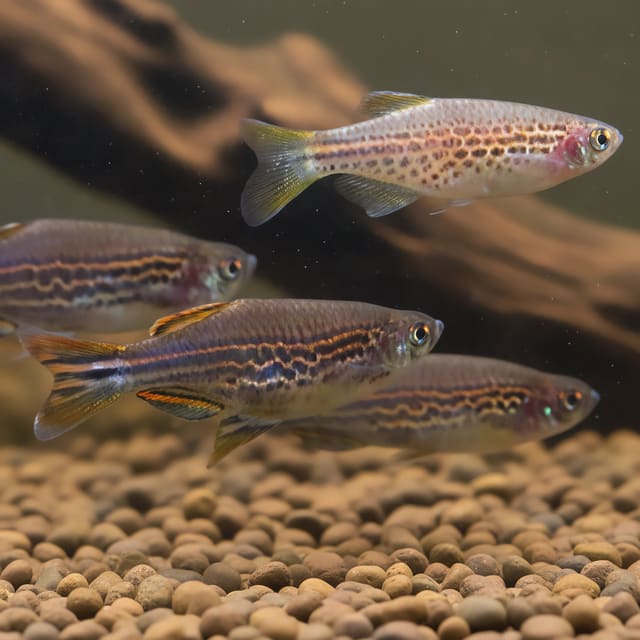
10 × Emerald Dwarf Danios (Danio erythromicron)
21–25°C · pH 6.5–7
£40.99

The Neon Green Rasbora (Microdevario kubotai) is a danio-family freshwater fish from Thailand reaching 1.9 cm standard length. It suits keepers able to maintain at least 8–10 fish at 22–27°C, pH 6.5–7.0 and 4–10 dGH, the overlap of Seriously Fish species guidance and OATA rasbora guidance. Sold as a pack of ten live fish.
Adult size is the maximum length this species reaches at full maturity (scientific sources). The livestock you receive will be younger and smaller. Product-photo provenance and any image-specific limitations are stated on the listing.
Microdevario kubotai
The Neon Green Rasbora (Microdevario kubotai) is a danio-family freshwater fish from Thailand reaching 1.9 cm standard length. It suits keepers able to maintain at least 8–10 fish at 22–27°C, pH 6.5–7.0 and 4–10 dGH, the overlap of Seriously Fish species guidance and OATA rasbora guidance. Sold as a pack of ten live fish.
Adult size is the maximum length this species reaches at full maturity (scientific sources). The livestock you receive will be younger and smaller. Product-photo provenance and any image-specific limitations are stated on the listing.
Maintain these water conditions for optimal health and vibrant colors
The Neon Green Rasbora (Microdevario kubotai) is a tiny freshwater schooling fish in the danio family from Thailand, reaching a recorded maximum of 1.9 cm standard length. FishBase identifies it as a member of Danionidae. It is also traded as the green neon rasbora, yellow neon rasbora, Kubotai’s microrasbora and kubotai rasbora.
This fish suits a keeper prepared to mature the biological filter before introduction, provide a planted or stream-influenced layout, feed appropriately small foods and maintain a full school. Its peaceful nature does not make it suitable for every community: companions must be comparably sized, calm and comfortable within the same water range.
| Suits | Not suited to |
|---|---|
| A biologically mature planted or stream-influenced aquarium | A biologically immature setup |
| A school of at least 8–10 fish | Keeping singly or in an undersized group |
| Calm, comparably sized companions sharing the same conditions | Boisterous tank mates |
| An aquarium with a base of at least 60 × 30 cm | An aquarium below the stated footprint |
Ten fish meet the recommendation to keep at least 8–10 together. The group creates a lively display without relying on a large-bodied centrepiece fish, but its very small adult size makes aquarium stability and careful companion selection essential.
Seriously Fish gives species-level aquarium guidance of 20–27°C, pH 6.0–7.0 and 1–10 dGH, together with a base of at least 60 × 30 cm and a volume of about 54 litres. OATA’s broad rasbora guidance narrows routine conditions to 22–27°C, pH 6.5–7.0 and 4–10 dGH. Use those narrower values for routine aquarium care while remaining inside the species range.
| Decision | Plan |
|---|---|
| Adult size | FishBase records a maximum of 1.9 cm standard length |
| Aquarium footprint | At least 60 × 30 cm |
| Approximate volume | About 54 litres |
| School size | At least 8–10 fish; this pack contains ten |
| Routine temperature | 22–27°C |
| Routine pH | 6.5–7.0 |
| Routine hardness | 4–10 dGH |
One purchase supplies a pack of ten fish. This pack is counted by fish, and the aquarium must be planned around the species’ adult dimensions rather than the size seen on arrival.
Sex is guaranteed only when the selected option explicitly states male or female. This 10 × Neon Green Rasboras listing has no sex-guaranteed option. Mature females tend to be deeper-bodied and noticeably larger than the more compact, intensely coloured males, but these tendencies do not change the terms of this pack.
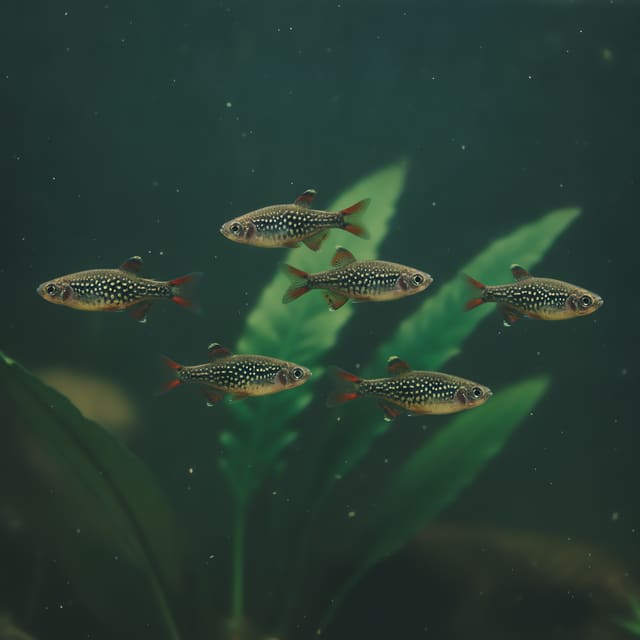
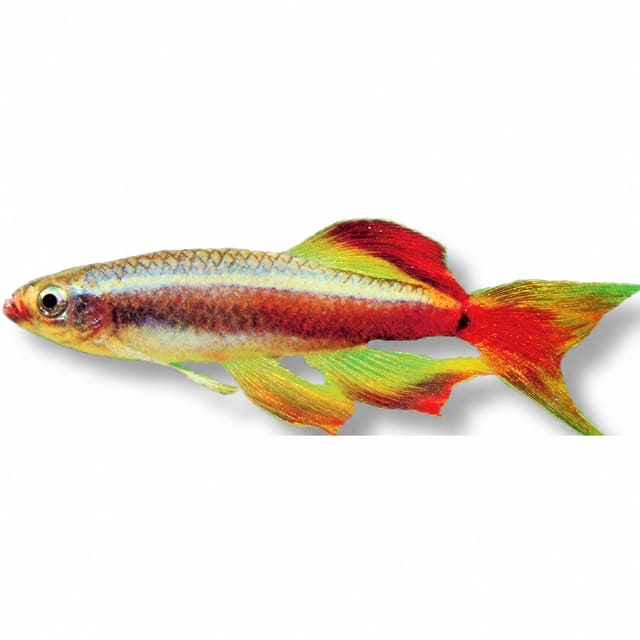
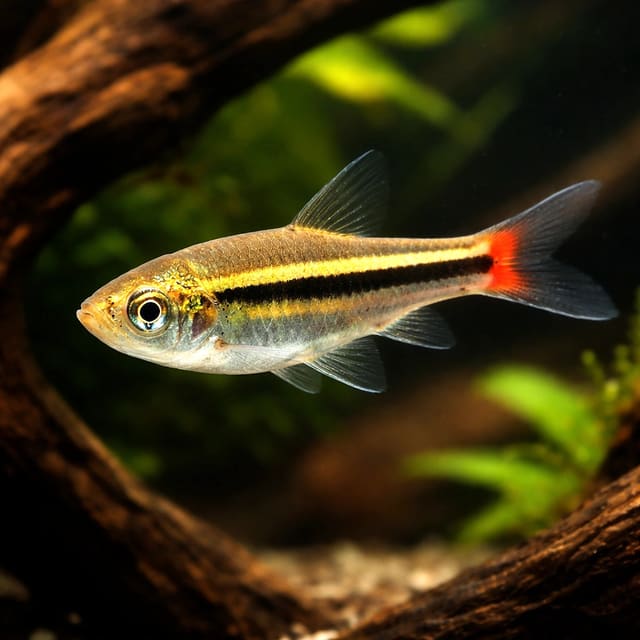
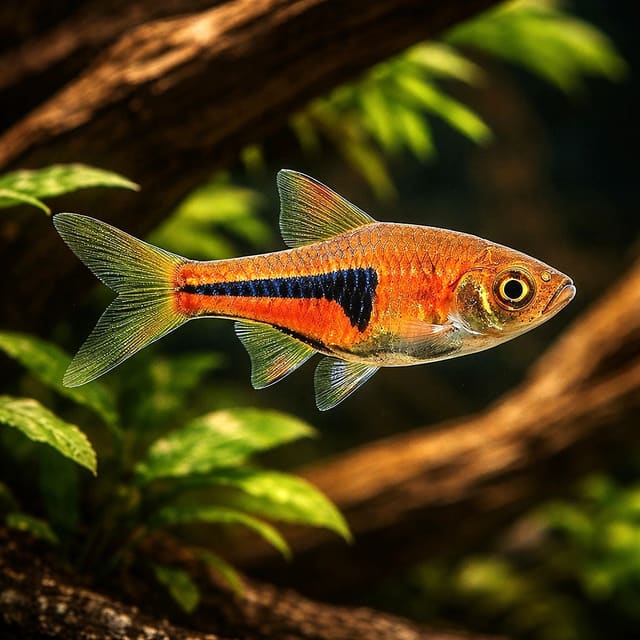
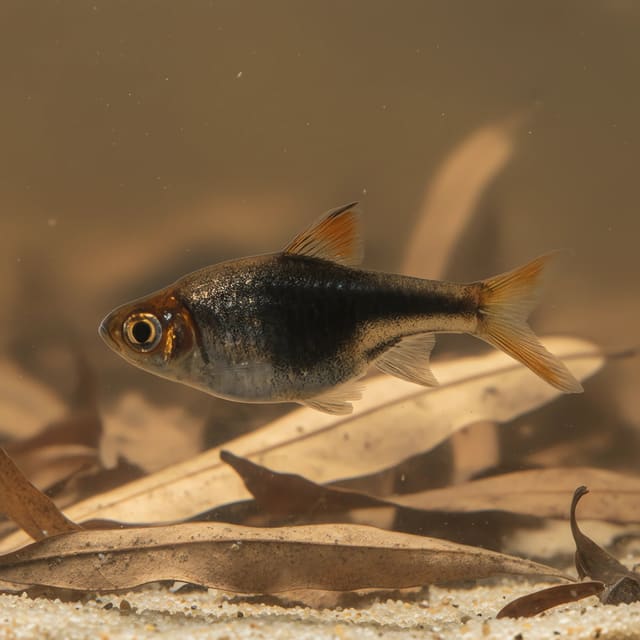
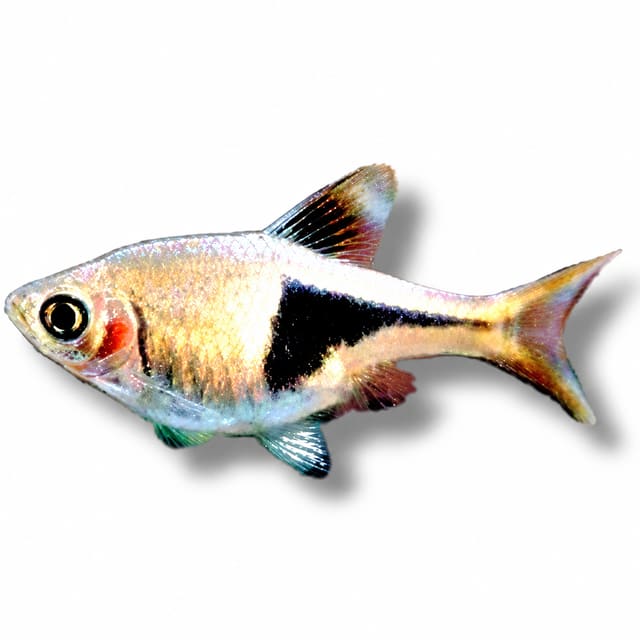
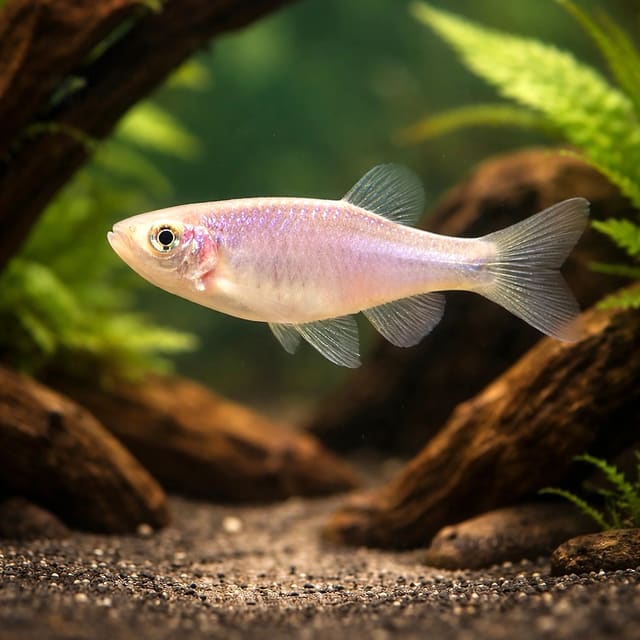
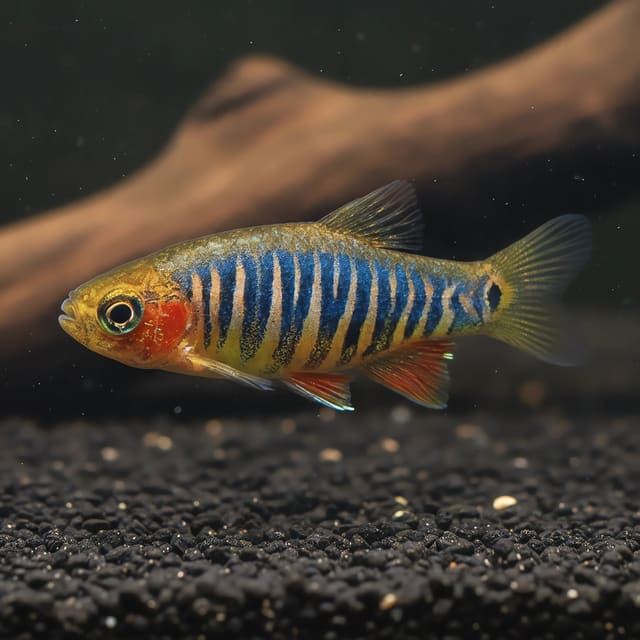
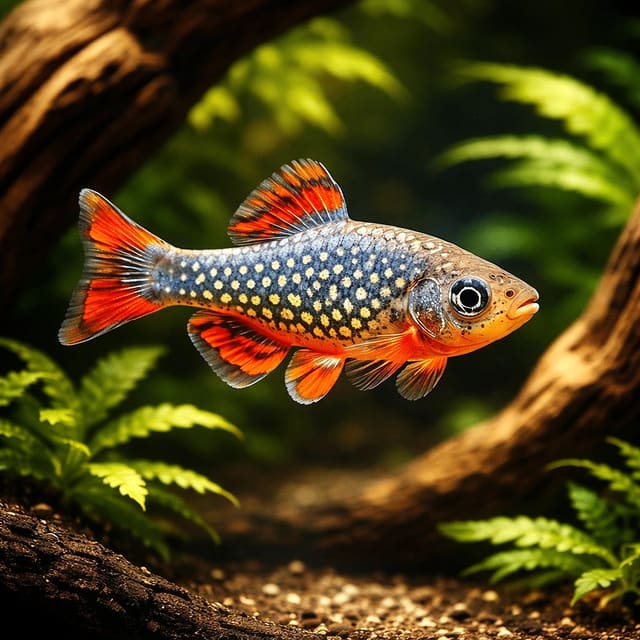
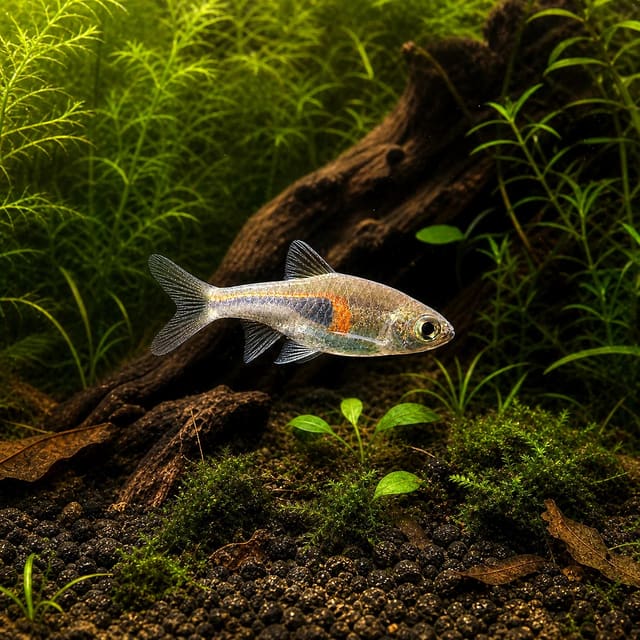
The gallery images are representative of this type of animal rather than photographs of the exact animal supplied, so colours can look slightly different from the live animal.
A litre figure alone can hide an unsuitable shape. Start with a base measuring at least 60 × 30 cm, then check that its working volume is around 54 litres after allowing for substrate and décor. A taller aquarium with a smaller base does not meet the stated footprint merely because its nominal volume is similar.
The fish’s small body does not justify an immature or cramped nano aquarium. Running-water biology, schooling behaviour and sensitivity to unstable conditions all make usable swimming length and established filtration important. A longer base lets the ten fish move as a group while plants and décor create sheltered areas around the edges.
A suitable aquarium meets all four tests: sufficient footprint, a mature biological filter, water within the routine range and companions screened for size and temperament. Passing only one test is not enough. For example, a 54-litre aquarium with unstable ammonia is unsuitable, while a mature aquarium with boisterous tank mates also fails the compatibility screen.
Never add this species to a biologically immature aquarium. Stable water conditions are particularly important for a fish associated with running water, and a newly installed filter needs time to develop the bacterial population that processes fish waste. Prepare the aquarium before choosing an introduction date; our first tropical aquarium guide explains the preparation sequence.
The RSPCA explains why biological filtration is vital: fish release toxic ammonia, bacteria convert it to toxic nitrite, and another bacterial stage converts nitrite to safer nitrate. A filter running for a few days is not automatically mature. Test the aquarium and proceed only when ammonia and nitrite remain at zero under the aquarium’s normal conditions.
For an aquarium of about 54 litres, Seriously Fish recommends turnover of four to five times the aquarium volume each hour. That equates to approximately 215–270 litres per hour. Compare the filter’s stated flow with the aquarium’s real working volume, then account for the reduction that occurs as media collects debris.
| Equipment check | Target |
|---|---|
| Biological filter | Established and maintained before the fish arrive |
| Ammonia | 0 mg/l |
| Nitrite | 0 mg/l |
| Turnover at 54 litres | About 215–270 litres per hour |
| Heater at 54 litres | Roughly 50–75 W when the room is around 20°C |
Filter choice is not just a flow calculation. It must hold enough biological media, run continuously and remain accessible for routine blockage checks. Arrange the outlet so the aquarium has circulation without removing all sheltered water around plants and wood.
Add livestock gradually whenever the aquarium population changes. More animals and more food increase waste, and the bacterial population must adjust to that higher load. Test after a stocking change rather than assuming that a previously stable aquarium will remain unchanged.
A planted arrangement with a darker substrate gives Neon Green Rasboras cover and helps their markings remain visually distinct. Sparsely decorated aquariums can leave them looking washed out, so use planting and hardscape to create security without filling every part of the swimming area.
| Layout | Useful features |
|---|---|
| Planted aquarium | Darker substrate, planted margins and an open route through the middle |
| Stream-inspired aquarium | Mixed rocks and gravel, water-worn boulders, driftwood branches and attached plants |
A stream-influenced arrangement can use Microsorum, Bolbitis or Anubias attached to décor. These examples come from the species guidance and allow the substrate to remain open in selected areas. Position rocks and wood securely so routine cleaning cannot undermine them.
Keep the 60 × 30 cm footprint usable. Dense cover around every surface may look attractive but can fragment the school’s swimming route. A practical layout places shelter along the rear and sides while leaving connected open water through the centre.
The species naturally inhabits running water, but the aquarium still needs zones where the fish can choose how much flow to enter. Use the recommended four-to-five-times-hourly turnover as the equipment benchmark, then watch whether the whole group can hold position and feed without being swept continuously into one end.
If the fish remain compressed behind one object whenever the filter runs, first check the outlet direction and whether décor can diffuse the flow. If debris settles everywhere and surface movement is absent, check for a blocked intake or a large reduction in output. Make one change at a time and observe the whole school before changing the arrangement again.
Substrate colour is an aesthetic and behavioural planning choice rather than a substitute for water quality. Darker décor may improve the display, but only established filtration, testing and maintenance control nitrogenous waste.
Set routine conditions at 22–27°C, pH 6.5–7.0 and 4–10 dGH. These values are the overlap of the Seriously Fish species parameters and OATA’s rasbora ranges. Stability within this overlap is more useful than repeatedly adjusting the aquarium towards a single point.
Use our water chemistry guide to understand each measurement, then compare your readings with the range through the aquarium water matcher. Measure the source water as well as the aquarium, because a water change can shift pH or hardness when the two differ.
| Reading | Routine action range |
|---|---|
| Temperature | 22–27°C |
| pH | 6.5–7.0 |
| General hardness | 4–10 dGH |
| Ammonia | 0 mg/l |
| Nitrite | 0 mg/l |
| Nitrate | Up to 20 mg/l above the normal tap-water level |
A single acceptable pH reading does not cancel out detectable ammonia. Likewise, a suitable temperature does not compensate for nitrite. Read the figures together and delay any introduction whenever ammonia or nitrite is detectable.
Suppose the aquarium measures 25°C, pH 6.8 and 6 dGH: all three sit inside the routine range. If ammonia and nitrite are also zero, the chemistry passes the stated checks. By contrast, 25°C and pH 6.8 with measurable nitrite require action before fish are added, even though the temperature and pH look suitable.
Do not make several large adjustments at once. Establish the source-water baseline, decide whether it naturally fits the range and use consistent replacement water. Repeatedly altering temperature, pH and hardness together makes it harder to identify why the fish or filter react.
Record weekly readings with the date and any maintenance completed. A short log reveals gradual movement that a single test can miss, such as nitrate rising faster after a population or feeding change.
Change 30–50% of the aquarium volume each week. Seriously Fish treats that weekly range as mandatory for this species. OATA’s broader rasbora guidance recommends a 25% partial water change at least once every week. For a working volume of 54 litres, 30% is about 16 litres and 50% is 27 litres.
Never clean biological filter media under the tap. Chlorine or chloramine may damage the bacterial population established in that media. When cleaning is necessary, rinse it lightly in aquarium water removed during the water change.
Check the filter for blocked intakes and reduced output every week, but do not strip-clean all media on a fixed timetable. A slight stain is not the same as a blockage. Clean only enough to restore flow while retaining the established biological media.
If tests show ammonia or nitrite above zero, treat the result as urgent. Check whether the filter has stopped, become blocked or was recently over-cleaned; reduce further stocking pressure and continue testing. Uneaten food and a rapid population increase can also raise the waste load beyond what the bacterial population can process.
| Observation | First check |
|---|---|
| Reduced filter output | Intake and media blockages |
| Detectable ammonia | Filter operation, feeding and recent stocking |
| Rapid nitrate rise | Waste removal, feeding amount and water-change volume |
| Temperature change | Heater operation and replacement-water temperature |
Consistency is the aim. A measured weekly routine protects the school more effectively than occasional large clean-outs followed by long periods without testing.
In nature, Neon Green Rasboras are thought to feed on small invertebrates, algae and other zooplankton. In the aquarium they accept dried food of a suitable size, but most of the diet should consist of small live and frozen fare such as Daphnia and Artemia.
Choose pieces the fish can take immediately. A nutritionally suitable food is still a poor choice if pieces are too large or sink beyond the school before they can feed. Break suitable dried food down when necessary and distribute it where the group is swimming.
| Food role | Supported choices |
|---|---|
| Main emphasis | Small live or frozen Daphnia and Artemia |
| Dried component | Quality dried food in a suitably small form |
| Additional dried choices | Freeze-dried Artemia or Daphnia |
For the feeding schedule, OATA’s rasbora guidance recommends one meal per day and only as much as the fish consume within a few minutes. Start with a small amount, watch the whole school and stop adding food once interest falls or pieces begin to remain uneaten.
Do not judge the meal by the boldest individuals. Watch the edges of the school for fish that approach food but repeatedly miss it, remain apart or are unable to take the particle size. Adjust where the food enters the aquarium rather than adding a large second portion.
Remove uneaten food when practical. Food left to decay adds to the filter’s waste load and can contribute to rising ammonia, nitrite or nitrate. If residue repeatedly remains after a few minutes, reduce the next portion instead of relying on the water change to correct overfeeding.
A useful feeding check combines behaviour and water results. The fish should show interest, take the food and return to normal schooling, while weekly tests remain at zero ammonia and zero nitrite. A rising waste reading means the feeding and filtration balance needs attention even when the fish still appear eager.
Prepare and test the mature aquarium before the parcel arrives. Keep it running at 22–27°C, pH 6.5–7.0 and 4–10 dGH, with ammonia and nitrite at 0 mg/l. Confirm that the heater and filter are operating before beginning the arrival procedure.
Follow the current delivery and Live Arrival Guarantee policy. Someone must be present to receive the parcel, and every delivery should be filmed continuously from the sealed parcel onward.
Keep the ten fish together as their new school rather than splitting the pack between different aquariums. Stock the aquarium gradually when other livestock are involved. Adding this ten-fish pack increases both feeding and waste, so the biological filter must adjust to the new load. Avoid combining their introduction with several other livestock additions on the same day.
Test ammonia and nitrite after the population change and continue the established weekly record. Both readings should remain at zero. Check that every fish can join the group, hold position in the flow and reach suitably small food.
| Checkpoint | What to confirm |
|---|---|
| Before arrival | Filter and heater operating normally |
| After release | The school can swim without being pinned by flow |
| At feeding | Food particles are small enough and all areas of the group can feed |
| After stocking | Ammonia and nitrite remain at 0 mg/l |
If a water result changes, address filtration, stocking pressure and uneaten food before making unrelated alterations to décor or chemistry. One controlled correction is easier to assess than several simultaneous changes.
Learn the school’s normal appearance, feeding response and swimming pattern. Individual fish vary slightly, so the most useful warning is a clear change from the behaviour regularly seen in your aquarium.
| Change | Immediate action |
|---|---|
| Hanging at the surface, sitting on the bottom or erratic swimming | Test temperature, ammonia, nitrite and nitrate; check filter flow |
| Faster or slower gill movement | Test water and inspect filter operation |
| Darker or paler colour | Check water results, group behaviour and recent changes |
| More hiding or altered temperament | Review companions, school cohesion and aquarium disturbance |
| White spots, fluffy growths, damaged fins or missing scales | Record what is visible and test the water promptly |
| Reduced feeding or body condition | Confirm particle size, access to food and water quality |
Start with water testing because ammonia and nitrite are toxic and can change after filter disruption, overfeeding or a sudden rise in livestock. Confirm that the filter is running before assuming the change has another cause.
Do not turn an observation into a diagnosis from appearance alone. Several different problems can produce hiding, colour loss or reduced feeding. Note when the change began, whether all ten fish are affected and what maintenance, food or livestock change happened beforehand.
If behaviour or appearance remains abnormal after the immediate water and equipment checks, contact us with the readings, aquarium volume, temperature, recent changes and a clear description of what each affected fish is doing. Those details make the next decision more precise than a symptom name alone.
Continue the normal 30–50% weekly water-change routine unless an urgent water result requires a more immediate response. Treat replacement water with conditioner and protect the filter bacteria by rinsing media only in removed aquarium water.
Neon Green Rasboras are schooling fish. In nature they typically occur in groups of 20–50, while aquarium guidance recommends at least 8–10. This pack contains ten and therefore forms the recommended minimum aquarium school without needing extra individuals to reach that threshold.
Maintaining a decent number makes the fish less nervous and produces a more natural-looking display. Males may show stronger colour while competing with one another for female attention, but that social behaviour does not mean the pack has a guaranteed sex ratio.
A school is not simply ten fish occupying the same volume. They need a connected swimming route within the base of at least 60 × 30 cm, plus cover that does not divide the aquarium into isolated pockets. Arrange planting and hardscape so the fish can move between open water and shelter without squeezing through a narrow gap.
Do not divide the pack into pairs or very small groups between aquariums. OATA notes that rasboras kept singly or in groups that are too small often become stressed, while the species guidance specifically links stronger numbers with reduced nervousness.
| Social decision | Instruction |
|---|---|
| Minimum school | Keep at least 8–10 together |
| This pack | Ten fish supplied as one school |
| Wild grouping | Typically 20–50 individuals |
| Splitting the pack | Keep the ten together rather than making undersized groups |
A larger group can be considered only after checking aquarium footprint, filtration capacity and the effect on the total livestock load. The fact that the fish are small does not remove the need to plan for additional waste and swimming space.
This species is very peaceful and is best maintained alone or with comparably sized fish that enjoy similar conditions. Avoid boisterous tank mates: even without direct aggression, fast or forceful fish can prevent a tiny school from using open water and reaching food comfortably.
Seriously Fish names Boraras micros, Boraras naevus, Trigonostigma heteromorpha, Trigonostigma espei, Acanthocobitis zonalternans, Acanthopsoides species and Pangio species as examples of companions. Each still needs its own group, space and water requirements checked before introduction.
| Assessment | Decision |
|---|---|
| Comparably sized, calm fish with overlapping conditions | Suitable candidate after the full aquarium is assessed |
| Dario or smaller Betta species | Use caution; the species account presents these as possibilities rather than firm recommendations |
| Boisterous fish | Avoid |
| Species outside the named examples | Assess adult size, temperament, food competition and water overlap individually |
No companion name creates a universal guarantee because aquarium dimensions, group sizes and individual behaviour alter the result. Ask us for a stocking assessment when you can share the aquarium’s working volume, base dimensions, water readings, filtration and complete livestock plan.
The Neon Green Rasbora reaches a recorded adult maximum of 1.9 cm standard length.
Microdevario kubotai needs a biologically mature aquarium with a base of at least 60 × 30 cm and a volume of about 54 litres.
Keep at least 8–10 Neon Green Rasboras together; this ten-fish pack should remain together as one school.
OATA describes rasboras generally as easy to keep, but Neon Green Rasboras need a biologically mature aquarium, stable water and a 30–50% water change every week.
Feed Microdevario kubotai suitably small dried food alongside a diet based mainly on small live or frozen fare such as Daphnia and Artemia, once daily in an amount eaten within a few minutes.
Keep Neon Green Rasboras at 22–27°C, pH 6.5–7.0 and 4–10 dGH, the overlap of Seriously Fish species guidance and OATA rasbora guidance.
This fish is described as very peaceful, but avoid boisterous tank mates and confirm that every companion is calm, comparably sized and suited to the same water conditions.
Seriously Fish names Boraras micros, Boraras naevus, Trigonostigma heteromorpha, Trigonostigma espei, Acanthocobitis zonalternans, Acanthopsoides species and Pangio species as companions; assess their group, space and water needs before mixing them.
Be present to receive the parcel, start filming continuously while it is still sealed, show it being opened with the fish still inside the sealed bag, float the bag for 20–30 minutes, then release the fish without pouring the bag water into the aquarium.
No reviews for this item yet. Bought one? Honest reviews only, good or bad.
What customers say about ordering from us
I have a small group of long finned mountain minnows. So was delighted to be able to order ten of this variety to increase the genetics in my tank . The ones I recieved are healthy but it’s to early to give a verdict on wether they are of a long finned type since they are small currently.
Gordon Walker · 23 Sept 2026
100% success travel and "installation". Pleased with quality of purchase. The Siamese fighter a bit "shy" so have not yet seen him at his best yet but looking good. Happy customer. GG
George E Garratt · 21 Sept 2026
Reviews of our shop, collected by Judge.me, an independent third-party review collector. Newest first.