Easy
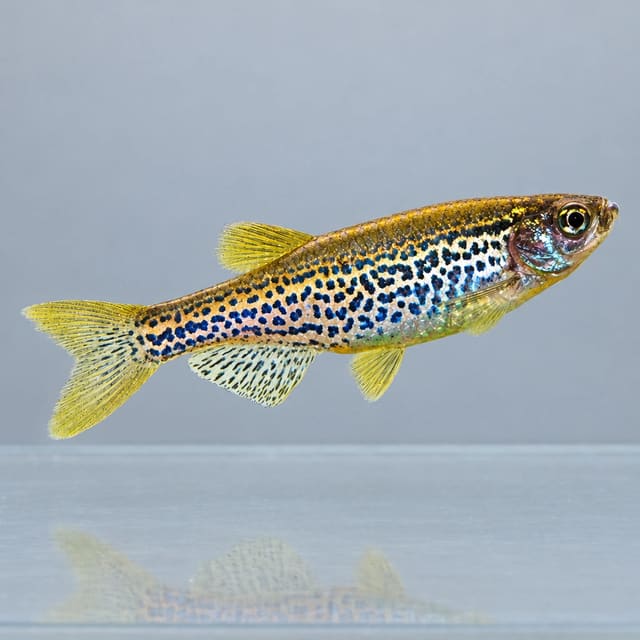
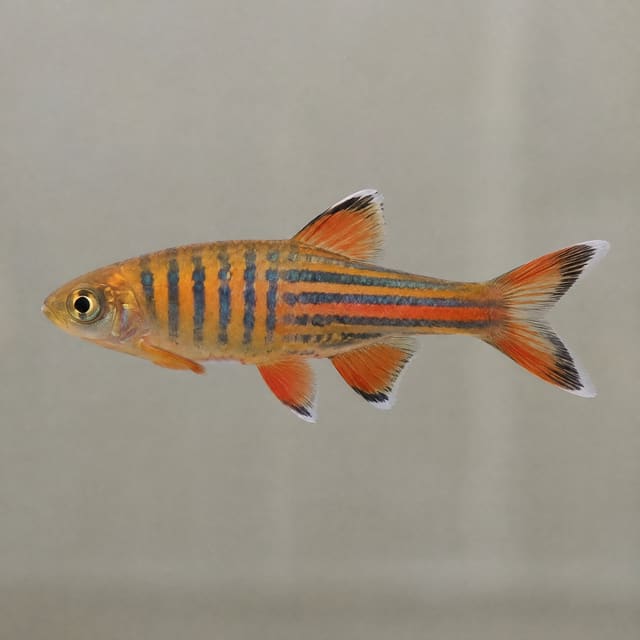
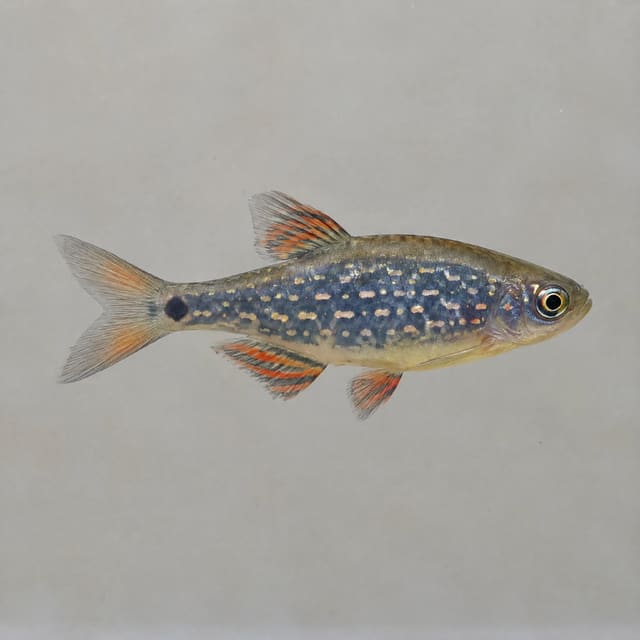
Burmese Spotted Gold Danio (Danio tinwini)
18–26°C · pH 6.5–7.5
£6.19
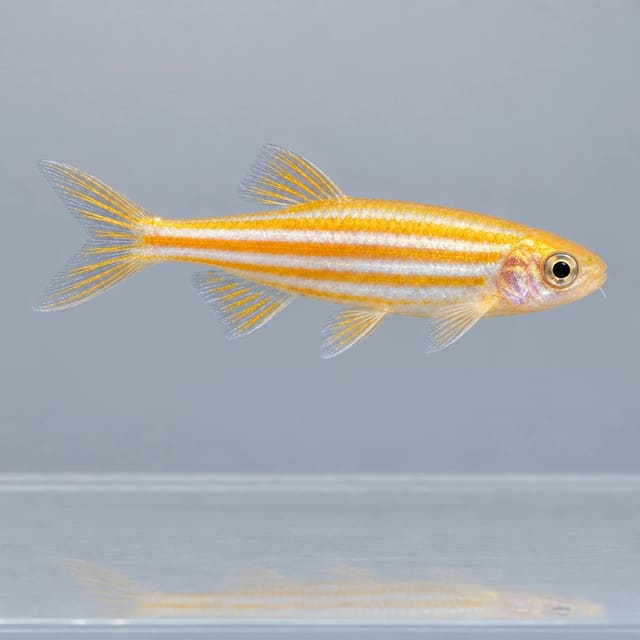
The Longfin Golden Zebra Danio is an aquarium-bred form of Danio rerio with a pale, pearly body, soft gold stripes and long, flowing fins. Keep a peaceful shoal of eight to ten or more in a long aquarium (90 × 30 cm base or more) at 18–25°C with gentle flow and no fin-nippers. Sold individually as one live fish, medium size.
Danio rerio
Quantity discounts are pricing offers, not a group-size recommendation. Check the full care guidance and your existing animals before choosing a quantity.
The Longfin Golden Zebra Danio is an aquarium-bred form of Danio rerio with a pale, pearly body, soft gold stripes and long, flowing fins. Keep a peaceful shoal of eight to ten or more in a long aquarium (90 × 30 cm base or more) at 18–25°C with gentle flow and no fin-nippers. Sold individually as one live fish, medium size.
Read the full care guidance when planning conditions for your aquarium.
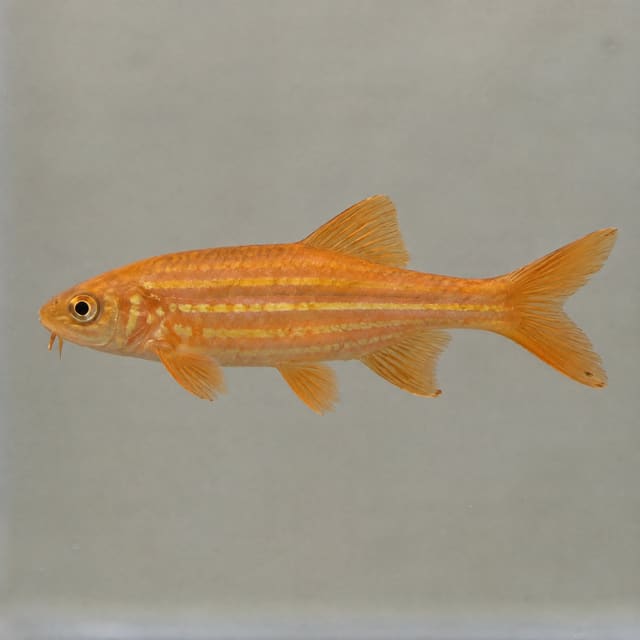
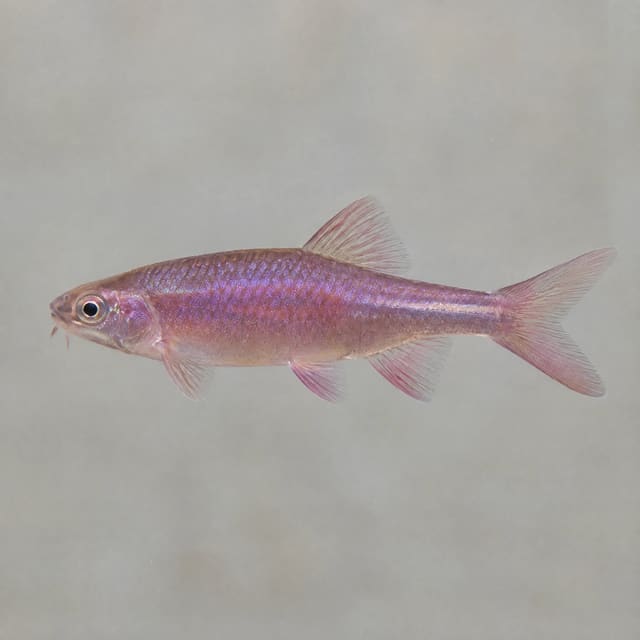
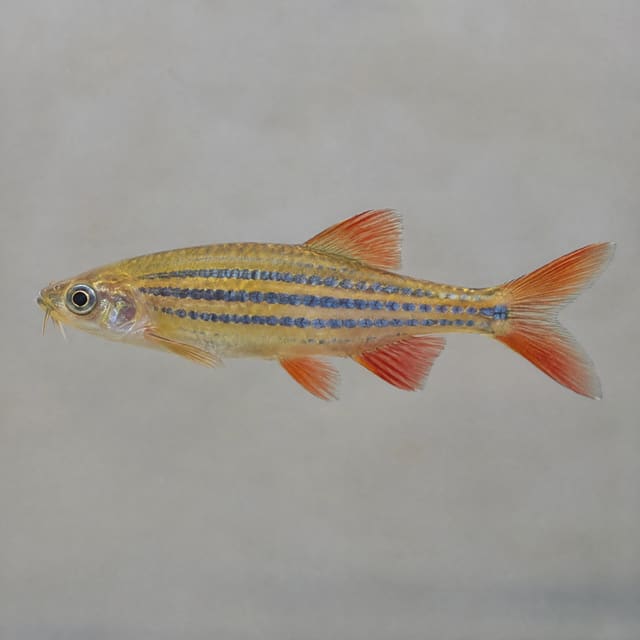
The longfin golden zebra danio is an aquarium-bred form of the zebra danio, Danio rerio, that combines two changes from the wild fish. Its body is pale and pearly with soft gold stripes instead of the dark blue-and-gold pattern, and its dorsal, anal, pelvic and tail fins grow long and trailing. It is the same species as the classic striped zebra danio and needs the same basic care, with a few extra precautions for those long fins.
Wild Danio rerio live in slow and still waters such as flooded pools and rice paddies in South Asia; Seriously Fish names India, Bangladesh and possibly Bhutan, while FishBase also lists Pakistan, Nepal and Myanmar. FishBase places the species in the family Danionidae; Seriously Fish and OATA still use the older family Cyprinidae. The longfin golden form does not occur in the wild: every fish is captive-bred.
| Suits | Not suited to |
|---|---|
| A shoal of eight to ten or more in a long tank | Keeping one or two on their own |
| Gentle to moderate flow | Strong currents that push long fins around |
| Peaceful companions with no taste for fins | Tiger barbs and other fin-nipping fish |
| Smooth décor and soft-leaved plants | Sharp rock, rough ornaments and spiky plastic plants |
| 18–25°C, including cooler rooms with a heater on standby | Tanks held above 25°C all year |
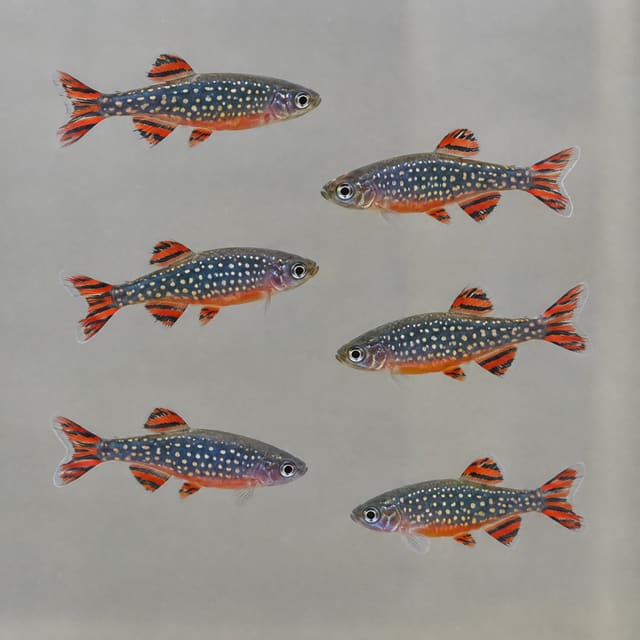
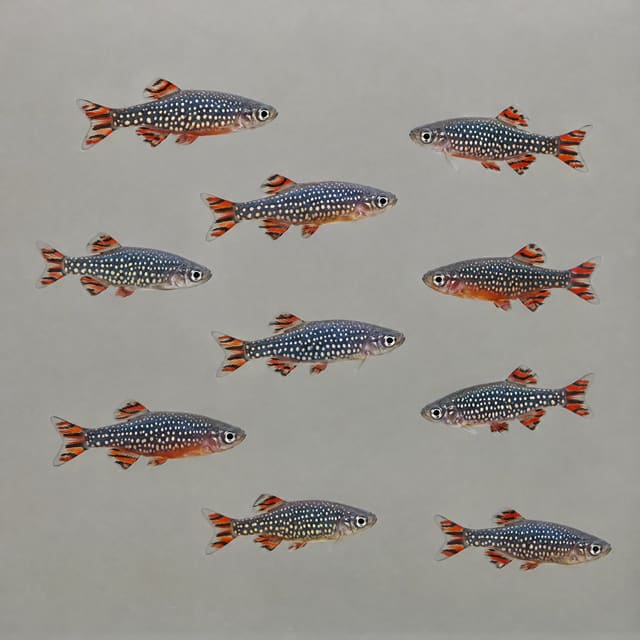
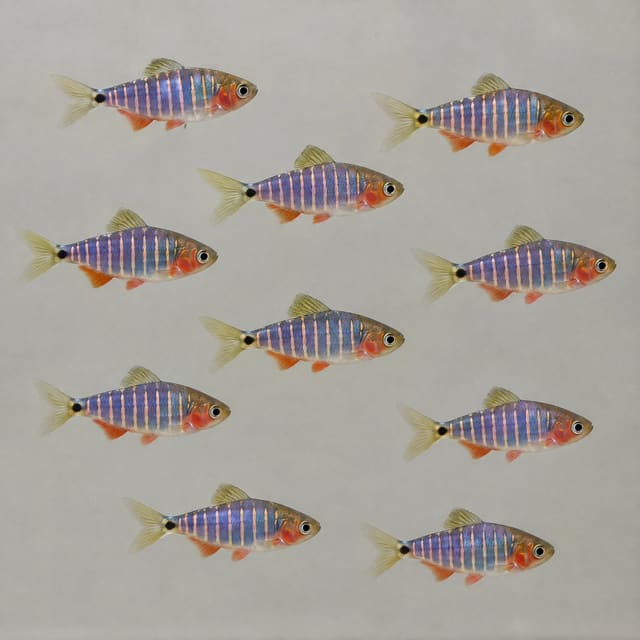
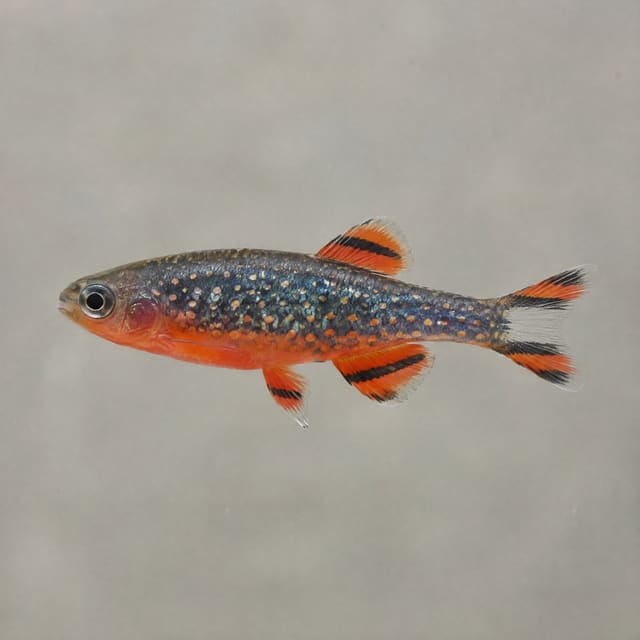
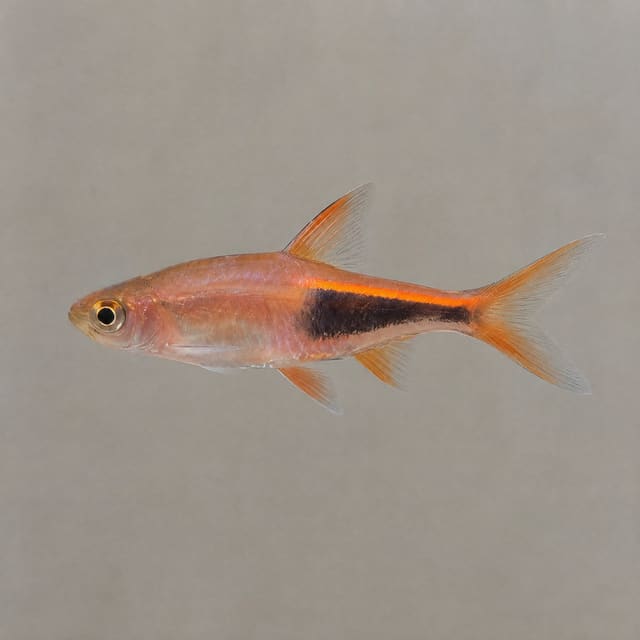
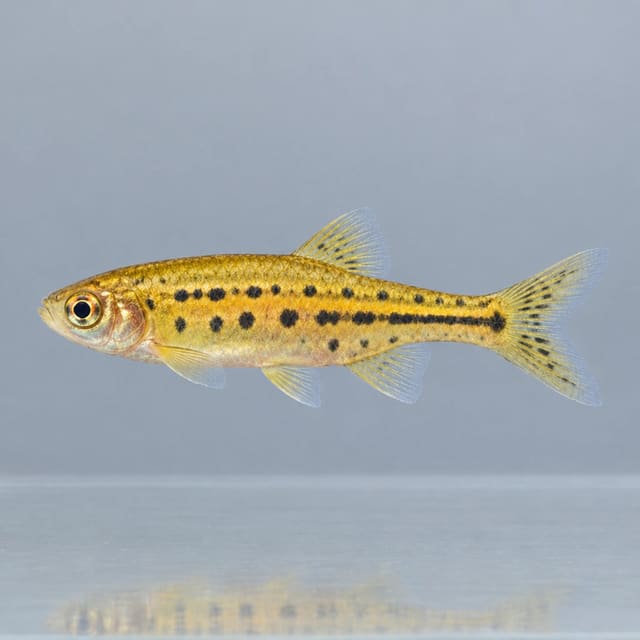
Compare it with the other forms in our rasboras and danios range, or see every Danio species and form we list. Some gallery images are representative and none shows the exact fish supplied.
One purchase quantity supplies one live longfin golden zebra danio in medium size. Sex is not specified. Colour and fin length vary from fish to fish, so the photographs show the form, not the individual you will receive.
Medium is the size supplied, not the adult size. Plan for an adult body of about 5 cm standard length, the figure Seriously Fish and OATA give; FishBase records 3.8 cm. Standard length is measured without the tail, so the long fins add noticeably to the overall length.
Mature females are usually rounder-bellied, a little larger and slightly paler than males (Seriously Fish). Check our delivery and Live Arrival Guarantee details and have the aquarium mature before ordering.
Zebra danios swim almost constantly, so length matters more than height. Seriously Fish recommends a base of at least 90 × 30 cm, about 81 litres, for even a small group. OATA suggests at least 120 litres for danios of 5 cm and over, and FishBase gives a minimum tank length of 60 cm. We use Seriously Fish’s 90 × 30 cm base as the practical minimum and go larger when other fish share the tank.
OATA recommends a moderate current for oxygen, and Seriously Fish says the species appreciates some water movement without needing strong filtration. For this form, aim the outlet along the back glass or spread it with a spray bar, so the shoal can choose between livelier and calmer water. Our aquarium stocking calculator helps you check that the final community fits. Fit a cover, because startled danios can jump.
Seriously Fish suggests a heavily planted tank with a dark substrate, floating plants and driftwood to diffuse the light; the golden colour stands out especially well against dark sand. For a longfin form, the extra rule is to keep everything smooth: long fins catch and tear on sharp rock edges, rough ornaments and stiff plastic plants.
| Area | Purpose |
|---|---|
| Open lane along the front | Room for the shoal to swim without brushing décor |
| Soft-leaved live plants at the sides and back | Cover that will not snag fins |
| Floating plants over part of the surface | Softer light and a calmer upper layer |
| Dark, rounded sand or fine gravel | Contrast for the pale gold body; nothing sharp to rest on |
| Smooth wood or rounded stones | Structure without edges |
Leave the main swimming lane clear so the shoal can move end to end. If you are choosing plants for the first time, our beginner’s guide to live plants lists hardy, soft-leaved species.
The longfin golden zebra danio has the same water needs as the wild species. Wild zebra danios cope with remarkable extremes, which is why the species is so hardy, but aquarium fish do best in stable water inside the ranges below.
| Reading | Range we use | What the sources say |
|---|---|---|
| Temperature | 18–25°C | Seriously Fish 18–25°C; OATA 17–27°C for danios; FishBase 18–24°C |
| pH | 6.0–8.0 | Seriously Fish and FishBase 6.0–8.0; OATA 6.5–8.0 |
| General hardness | 5–20 dGH | Seriously Fish 5–20 dGH; FishBase 5–19 dH; OATA 4–12°dH |
| Carbonate hardness | 3–10°dKH | OATA |
| Ammonia and nitrite | 0 mg/l | OATA |
| Nitrate | No more than 20 mg/l above your tap water | OATA |
Many UK tap supplies fall inside this pH range, so adjusting it is rarely necessary; test yours first, because stability matters more than an exact figure. If you are unsure what the readings mean, our water chemistry guide explains each one. A heater is not always needed in a warm room, but fit one if the tank falls below 18°C.
Clean water is the best protection for long fins, because damaged fin edges heal slowly and can become infected in dirty water. OATA recommends a 25% water change at least once a week, weekly testing, tap-water conditioner on all new water, and rinsing filter media in removed tank water rather than under the tap.
Seriously Fish suggests a filter rated at four to five turnovers an hour for this species. With a longfin form, choose the lower end of that range or spread the outflow, so the filter does its biological work without turning the tank into a racecourse.
Wild zebra danios are micropredators that eat small crustaceans, insect larvae and other invertebrates (Seriously Fish; FishBase). In the aquarium they take dried food readily. Long fins can make this form slower at mealtimes than short-finned fish, so make sure every fish gets a share when a mixed shoal or faster companions are present.
Uneaten food breaks down into ammonia, which is especially unwelcome when you are trying to keep fins in good condition, so remove leftovers after a few minutes.
Add the fish only to a mature, cycled aquarium with ammonia and nitrite at zero. Use the floating-bag method OATA recommends, release the fish with the lights off and do not leave them in the transport bag longer than necessary.
| Checkpoint | What to do |
|---|---|
| Before arrival | Confirm ammonia and nitrite at 0 mg/l and the temperature in range |
| On arrival | Float the bags, release with the lights off, and leave the shoal to settle |
| Next day | Feed a small meal and check that every fish eats |
| Daily | Look closely at fin edges, colour and breathing |
| End of week one | Retest and do the normal 25% water change |
OATA describes healthy danios as having clear, bright eyes, undamaged fins, intact scales, normal swimming and steady breathing. For a longfin form, look for fins carried open and edges that are clean rather than ragged, whitened or shrinking. Ragged, receding edges are a common sign of fin rot, which our fin rot guide explains. Seriously Fish also warns that mass-bred zebra danios can carry neon tetra disease, “skinny disease” (Pseudoloma neurofilia) and Flavobacterium columnare, so separate any fish that wastes away despite eating.
Seriously Fish recommends groups of at least eight to ten zebra danios: larger groups are less nervous and more colourful, as males compete for females. OATA’s minimum is five, and it warns that danios kept singly or in small groups often become stressed. Browse our other shoaling and schooling fish if you are planning a tank around groups.
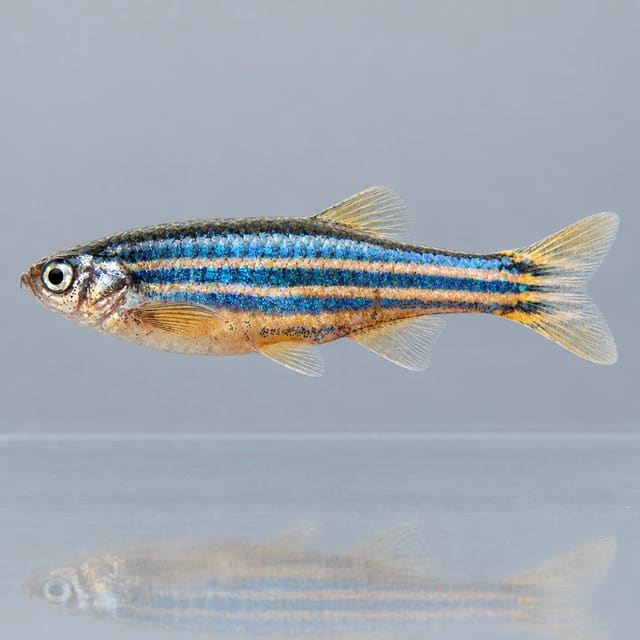
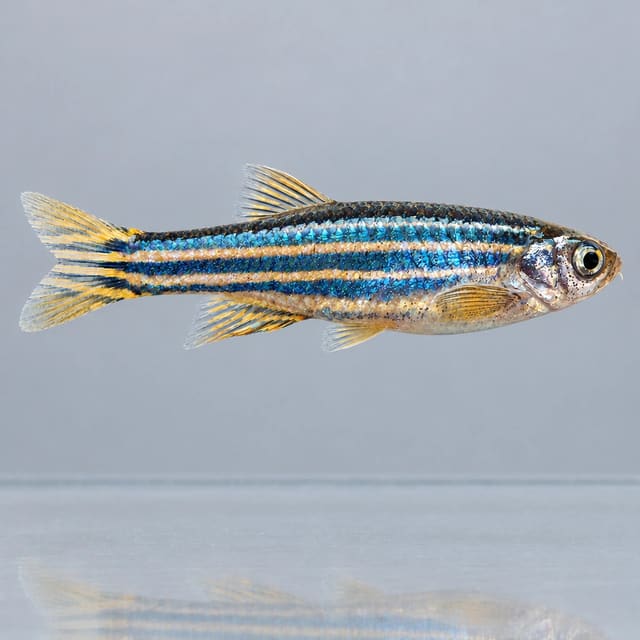
Because the striped, leopard, golden and long-finned zebra danios are all Danio rerio, they can be kept together as one shoal. Mixing forms lets you build a large group with a varied look; just count them all together when you plan the space and the filter.
Seriously Fish describes the zebra danio as very peaceful and compatible with other small cyprinids, tetras, livebearers, rainbowfish, anabantoids, catfish and loaches. Long fins add one firm rule: keep this form away from fish known to nip fins. That rule is general fishkeeping practice for long-finned forms rather than a statement from the species profiles.
| Suits | Avoid |
|---|---|
| Other peaceful danios, rasboras and White Cloud Mountain Minnows | Tiger barbs and other fin-nipping species |
| Calm tetras, livebearers and rainbowfish that share 18–25°C | Goldfish and fish large enough to eat a danio |
| Corydoras and small loaches on the bottom | Fast, boisterous fish that outcompete it at feeding time |
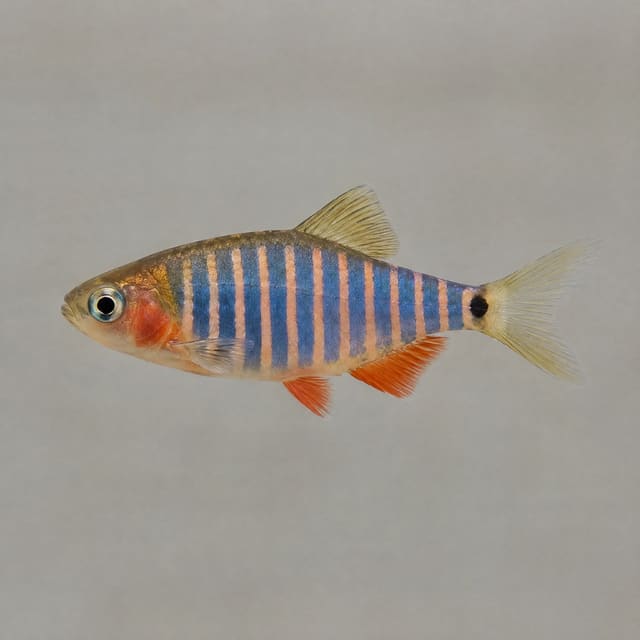
Good matches in our range are the Longfin White Cloud Mountain Minnow and the Gold White Cloud Mountain Minnow, which share the same cool temperatures and a similar long-finned or golden look, and the Pearl Danio and Kerr’s Blue Danio for a varied danio community. Our tank mates tool checks a planned mix before you buy.
Seriously Fish describes the golden zebra danio forms as leucistic rather than albino: the colour is reduced, not removed. Laboratory research on a zebrafish mutant also called “golden” shows how this can happen. Lamason and colleagues (2005) found that golden zebrafish carry a change in a gene called slc24a5, and that their pigment cells are thinner and contain fewer, smaller and paler melanin granules. The same gene affects skin colour in people. Whether every golden line in the aquarium trade carries this exact mutation has not been documented, so treat it as background rather than a guarantee.
The long fins are better understood. Stewart and colleagues (2021) studied the classic dominant “longfin” mutation, which they note was originally found by tropical fish hobbyists. One copy of the gene is enough to give long fins. The mutation switches on a potassium-channel gene, kcnh2a, in the fin tissue, which extends the period during which fins grow; long-finned fish do not switch to growing their fins in proportion to the body as they mature, so the fins end up far longer than normal. The widely used laboratory strain “Tüpfel long fin” carries this mutation together with the leopard pattern. In practical terms, long-finned parents usually pass the trait to many of their young, even when crossed with short-finned fish.
Yes. It is an aquarium-bred colour and fin form of Danio rerio, and its care is the same, with extra attention to gentle flow and fin-safe tank mates.
At least eight to ten, as Seriously Fish recommends; OATA’s minimum for danios is five. It is calmer and more colourful in a group, and it can shoal with striped and leopard zebra danios.
Medium is the size supplied, not the adult size. Plan for about 5 cm standard length, the Seriously Fish and OATA figure; the long fins add to that overall length.
No. Seriously Fish describes the golden forms as leucistic rather than albino: the dark pigment is reduced, not missing.
It is better not to. Long fins attract fin-nipping fish such as tiger barbs, so choose peaceful tank mates.
Keep it at 18–25°C (Seriously Fish) in an aquarium with a base of at least 90 × 30 cm, about 81 litres, with gentle to moderate flow.
A good flake or small granule once a day, with daphnia, brine shrimp or bloodworm a few times a week. Spread the food so the slower long-finned fish get their share.
Research by Stewart and colleagues (2021) shows that the dominant longfin mutation keeps the fins growing for longer than normal. One copy of the gene is enough.
No reviews for this item yet. Bought one? Honest reviews only, good or bad.
What customers say about ordering from us
Easy website plenty of info on fish your buying great to pick a time slot
TRACEY DURRANT · 7 Oct 2026
Got some lovely fish thank you
Kevin Mackie · 7 Oct 2026
Reviews of our shop, collected by Judge.me, an independent third-party review collector. Newest first.
Moved by UK carriers licensed to handle live animals
Hand-packed with oxygen bags, poly box, heat pack
Email photos the same day; an optional unboxing video helps us review problems faster — claim terms apply
Klarna & PayPal Pay in 3 at checkout