Fin Rot in Fish: Signs, First Aid & UK Treatment

Direct answer: “fin rot” describes progressive loss of fin tissue; it does not identify one organism or one treatment. First photograph the margin, count how many fish are affected, test ammonia and nitrite, verify the normal temperature for the exact species, check oxygen and filter flow, and stop any continuing bite, sharp edge or intake injury. If the tissue keeps retreating, reaches the fin base or body, or the fish is otherwise unwell, contact an aquatics-capable vet promptly.
The RSPCA distinguishes wasting fin tissue from an accidental tear and advises checking water quality first[1]. Veterinary guidance goes further: the aquarium history, water analysis and appropriate diagnostic tests matter because different environmental and infectious problems can look similar[3].
Do not automatically raise the temperature, add salt, mix medicines or give a guessed half dose. Those shortcuts in the former article have been removed. Treatment must fit the likely cause, exact fish, other animals, actual water volume and current UK product label.
Commercial disclosure: Tropical Fish Co sells aquarium treatments and livestock. This article owns the diagnosis-and-safety decision. It does not prescribe a product, imply that stock is current or turn a health concern into a sales recommendation.
Is it fin rot, an injury or something else?
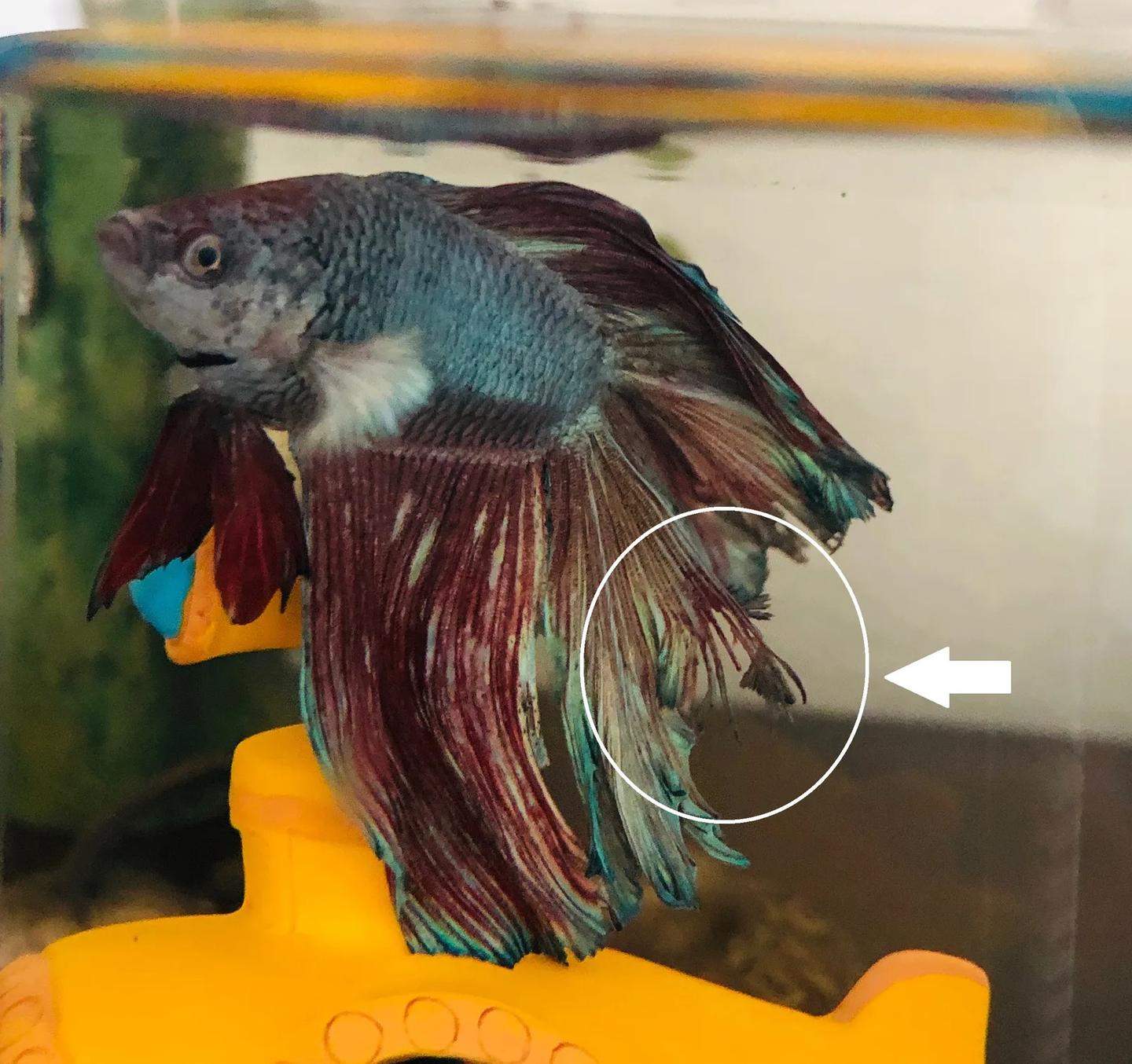
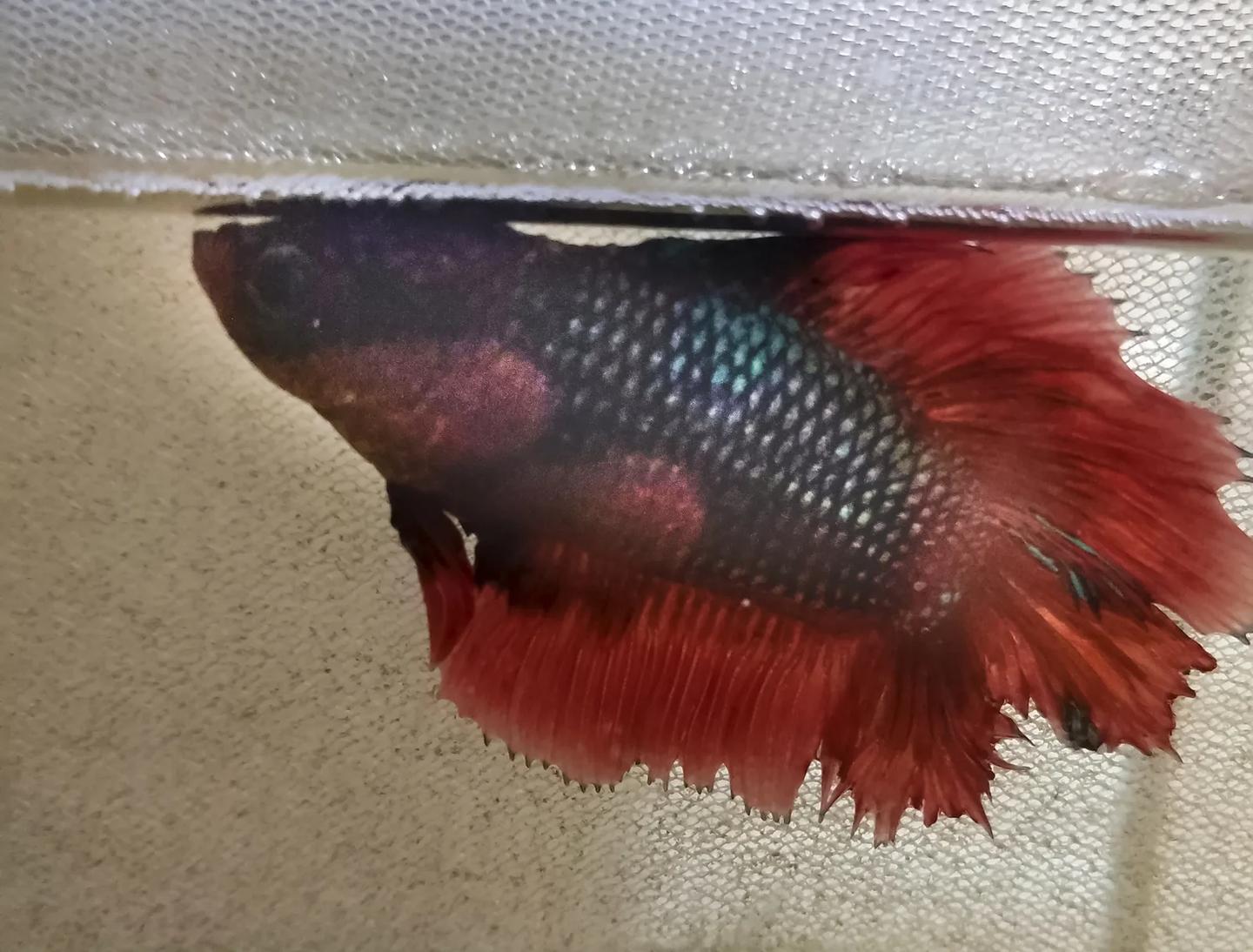
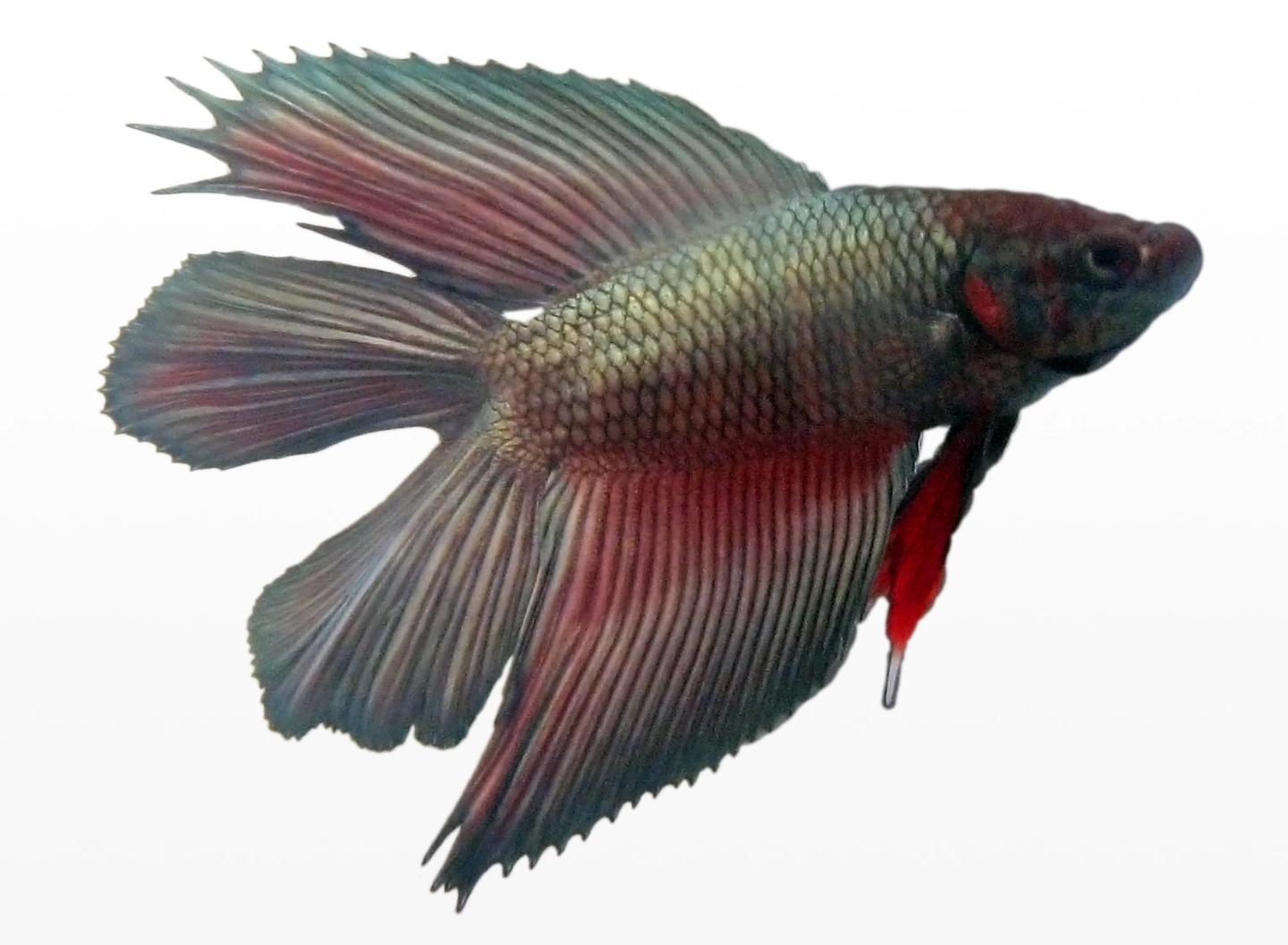
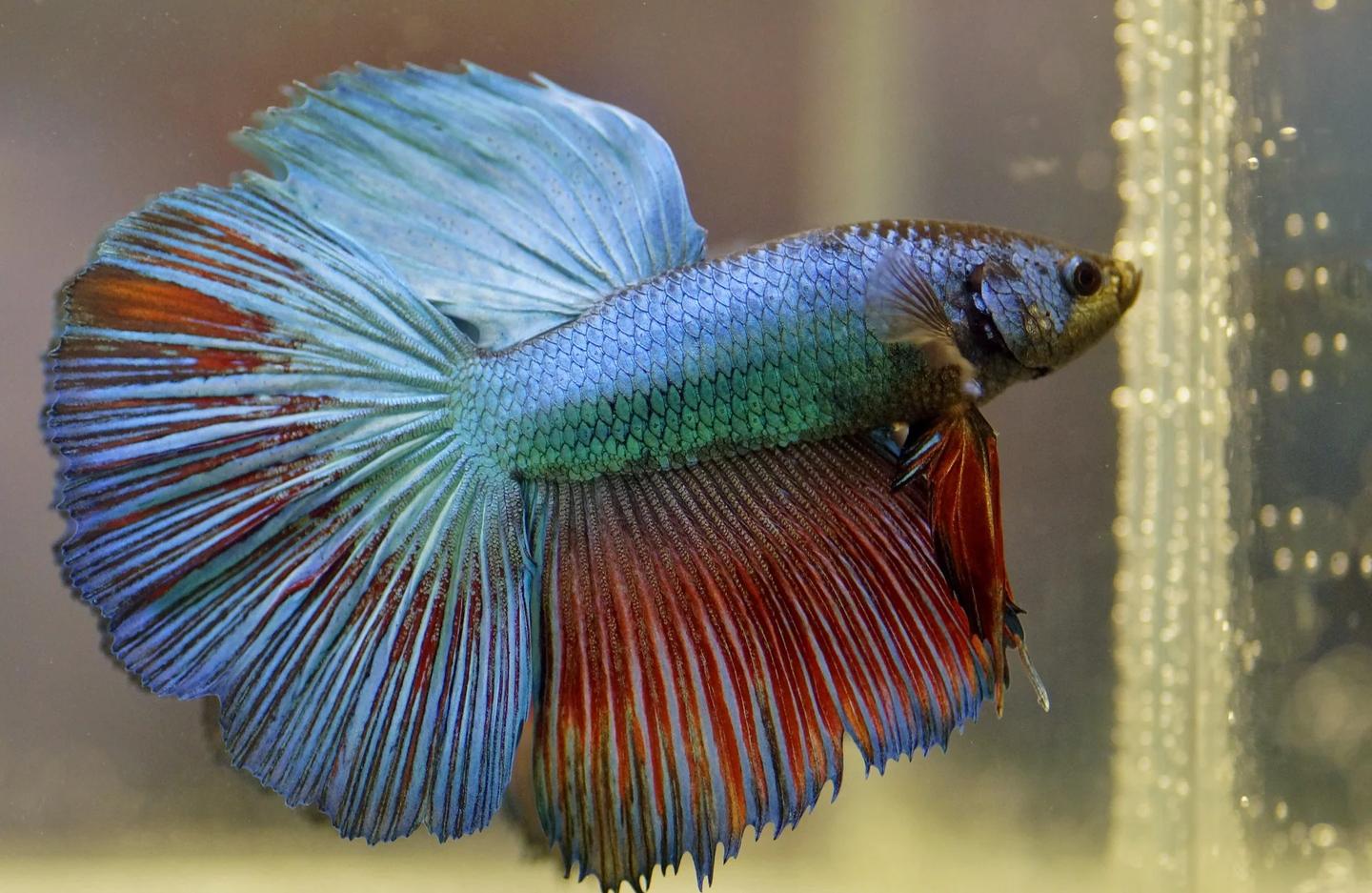
Use the fish's change over time rather than one dramatic photograph. Fin shape varies by species, sex and domestic strain. A Crowntail Betta, for example, naturally has separated rays; a healthy fin does not have one universal outline.
| What you can observe | What it may mean | Safer next step |
|---|---|---|
| An edge is receding or new tissue is disappearing between dated photographs | Active fin erosion is more likely | Test the system now, stop trauma and seek qualified help if progression continues |
| One clean split or missing piece remains stable | Collision, décor, filter intake or biting may be responsible | Remove the hazard, monitor daily and investigate any inflammation or continued loss |
| Cotton-like tufts sit on damaged tissue | Water mould may be present, often as a secondary problem | Do not call every white edge “fungus”; obtain diagnosis and choose a labelled treatment |
| Red streaks, bleeding, swelling, ulcers or damage at the fin base/body appear | A deeper or systemic problem is possible | Escalate promptly to an aquatic/exotics-capable veterinary practice |
| Fins are clamped but tissue is intact | A non-specific stress or illness sign | Check breathing, appetite, temperature, water, aggression and other signs |
| Several fish change together | Shared water, toxin, oxygen, husbandry or infectious exposure is possible | Treat the aquarium as a system problem and seek help; do not dose one fish blindly |
The RSPCA describes cotton-like growth as a different presentation and warns that gasping can signal poor oxygen or water quality[1]. Merck's veterinary review documents overlapping bacterial syndromes and explains that identifying an organism can require culture, with susceptibility testing guiding antimicrobial choice[4]. A home photograph cannot perform that work.
First response: record, test and stabilise
Do these in order before buying a medicine:
- Take clear photographs. Photograph both sides from the same angle and keep the original date. Mark which fin and edge changed.
- Count affected animals. Record species, appetite, breathing, swimming, colour, faeces, wounds and any deaths.
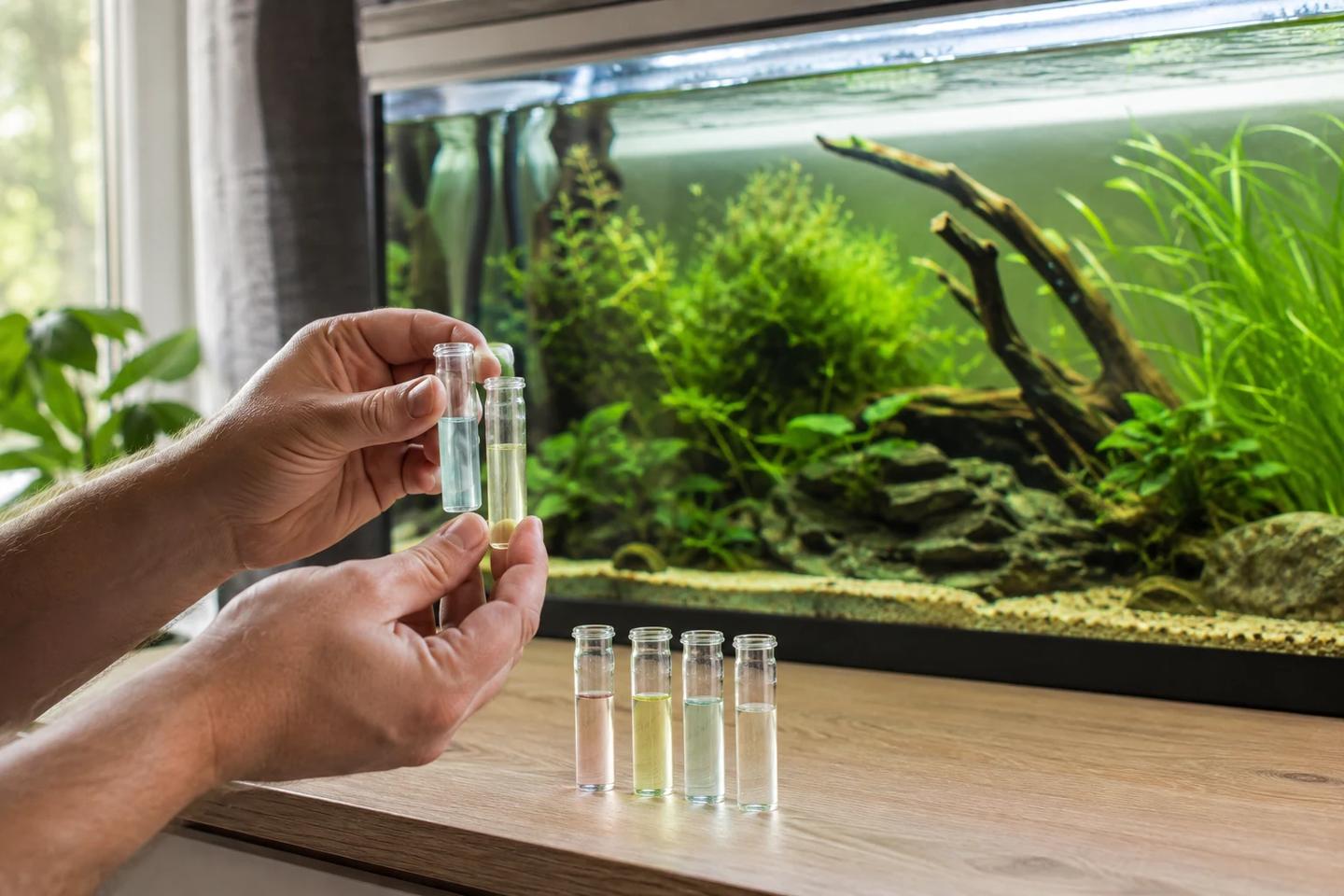
- Test the aquarium. Measure ammonia, nitrite, nitrate trend, pH and temperature. Note oxygen or gasping concerns and check filter flow.
- List recent changes. Include new fish, transport, netting, filter cleaning, power cuts, treatments, décor, bullying, feeding changes and dead livestock.
- Correct measured hazards. Use conditioned replacement water closely matched for temperature. Retest rather than assuming a clear tank is safe.
- Stop continuing trauma. Remove or guard the exact hazard and separate an aggressor only into a suitable, mature system.
The RSPCA gives 0 mg/L ammonia and 0 mg/L nitrite as the safe readings and says that replacement water must be dechlorinated and temperature-matched[2]. The size and frequency of an emergency water change should respond to the reading, fish condition and how closely the new water can be matched. Do not replace an ammonia problem with chlorine, temperature or pH shock.
If fish are gasping, collapsing, dying or showing a sudden group-wide change, increase surface agitation where appropriate, check equipment and water immediately, and seek urgent help. Do not wait for the fin to look worse.
What causes progressive fin erosion?
“Fin rot” is often presented online as one germ attacking an otherwise normal fish. The evidence is less simple.
Veterinary sources associate bacterial disease outbreaks with poor water quality, organic loading, hypoxia, handling and transport, marked temperature changes, crowding, stress and trauma[4]. Damaged tissue can then be colonised, while different bacteria may create similar outward signs. Water mould can also colonise previously injured or infected tissue, so a white area does not automatically prove a primary fungal disease[6].
Common investigation branches include:
- water quality: detectable ammonia or nitrite, unstable pH, accumulated waste or disrupted filtration;
- oxygen and temperature: inadequate gas exchange, equipment failure, or water outside the species' stable range;
- physical injury: rough handling, a sharp ornament, exposed equipment or an unsafe filter intake;
- social damage: repeated biting, chasing or trapping by another fish;
- infectious disease: bacterial, water-mould or other disease requiring proper differentiation; and
- more than one factor: an injury or stressor followed by opportunistic infection.
The former page's “60% / 20% / 10% / 5% / 5%” cause breakdown had no dataset behind it and has been removed. Your aquarium history is evidence; invented population percentages are not.
When home observation is reasonable—and when it is not
A stable, clean-looking tear in an otherwise active fish with normal repeated water results may be observed closely after the hazard is removed. Photograph it daily and confirm that the edge is not retreating.
Seek prompt aquatic-veterinary help when any of these apply:
- tissue loss continues between photographs;
- damage approaches the fin base or spreads onto the body;
- the margin is bleeding, swollen, ulcerated or markedly inflamed;
- the fish stops eating, breathes abnormally, cannot swim normally or becomes very lethargic;
- more than one fish is affected, or any fish has died;
- the aquarium contains a species for which the proposed treatment is not clearly labelled;
- a previous course failed, the diagnosis is uncertain or medicines have already been mixed; or
- a valuable or large fish may need sampling, culture or another clinical procedure.
The RCVS directory can be filtered for practices treating aquatics; confirm that the practice can assess your species and problem before travelling[9]. Bring the timeline, photographs, water-test results, aquarium volume, livestock list, recent changes and every product already used. MSD's veterinary guidance treats that history as central to diagnosis[3].
Choosing a fin rot treatment in the UK
There is no evidence-backed “best bottle” for every frayed fin. Start with the exact current label, not a brand name copied from an old forum post.
Before using any aquarium medicine, verify:
- the product is lawful for sale and use where you live;
- the indication on the label matches the suspected problem;
- the target includes your type of aquarium and fish;
- you know the actual water volume after substrate, décor and the air gap;
- the dose, interval and complete course are read from the current pack;
- every warning for invertebrates, plants, filtration, oxygen, UV and other medicines is checked;
- the product is in date and has been stored correctly; and
- you have a stop-and-escalate plan if the fish worsens or the course fails.
Great Britain permits some aquarium products through the Veterinary Medicines Regulations' Schedule 6 small-pet exemption. Those products must carry specific information and an exemption statement; antibiotics are not included in that exemption[7]. Separately, the VMD Product Information Database publishes current information for authorised veterinary medicines[8]. “Exempt”, “authorised” and “sold in a pet shop” are not interchangeable claims about efficacy against every possible organism.
The 2025 peer-reviewed review found major evidence gaps for many ornamental-fish products, including no relevant studies for several familiar brands in its defined database search[5]. This is why the old automatic recommendation for eSHa 2000, Myxazin or another named bottle has been removed. A current label can support lawful use; it cannot turn an uncertain visual sign into a laboratory diagnosis.
Why the common shortcuts can make things worse
| Shortcut | Why this guide rejects it |
|---|---|
| “Raise every tank to 26–28°C” | Species ranges differ; fish physiology and pathogen growth both change with temperature, and warmer water carries less oxygen. Correct an out-of-range temperature, not an internet number. |
| “Add one tablespoon of salt per 20 L” | Salt exposure depends on species, concentration, duration and water; evidence for bacterial fin disease is limited, and plants or other livestock may be affected. |
| “Use half dose for tetras, plecos or sensitive fish” | A guessed half dose may be ineffective or harmful. Use a product whose exact label supports the animal and dose, or seek qualified advice. |
| “Combine salt and two medicines” | Interactions and total stress become harder to predict. Never mix treatments unless the current labels or a veterinary plan explicitly permit it. |
| “Remove carbon for seven days” | Filter-media instructions are product-specific. Removing chemical media may be required for one course and wrong for another; never remove biological filtration by mistake. |
| “Continue a few extra days to be safe” | Extending or stopping early both depart from the evaluated label. Complete exactly the stated course and escalate a failure. |
| “Move the fish into any spare container” | An uncycled, unheated or poorly oxygenated tub can create a second emergency. A hospital system must itself be suitable and monitored. |
MSD notes that fish temperature affects physiology and immunity, but the optimal range varies by species and extremes can suppress immune response[3]. The ornamental-treatment review found little evidence that salt dips treat bacterial disease and clear gaps around long-term salt exposure; it also reports plant sensitivity[5]. That does not mean salt never has a veterinary use. It means there is no truthful universal household recipe.
Main tank or hospital tank?
Isolation can protect a fish from aggression and allow closer observation, but it is not automatically safer. A suitable hospital aquarium needs conditioned water, stable species-appropriate temperature, adequate oxygen, secure containment and biologically supported waste control. It must be measured and tested like the display tank.
Treating the main aquarium exposes every fish, invertebrate, plant and microbial community. Treating separately adds capture and transfer stress. Decide from:
- whether the problem affects one fish or the whole system;
- whether aggression or an equipment hazard continues in the display;
- whether the medicine is compatible with every resident;
- whether a genuinely mature, suitable isolation system is available; and
- the product label or veterinary direction.
Use dedicated nets and siphons where disease is suspected. Do not share wet equipment between aquariums and call it quarantine. Do not sterilise or discard established biological media unless a qualified disease-control plan requires it.
Betta, goldfish, tetra and catfish considerations
The diagnosis process stays the same, but the unsafe shortcuts differ.
Betta: long fins make damage easy to notice, but fin shape, self-biting, décor, intake injury, current and infection can overlap. Cold water is not proven to be the UK's “number one cause”, and heating above the checked range is not a cure. Verify stable normal temperature and gentle safe flow.
Goldfish: do not apply a tropical-fish temperature recipe. Check oxygen, stocking, waste load, filtration and the fish's normal range. Body ulcers, bleeding or group disease need prompt professional assessment.
Tetras and other small shoaling fish: several fish changing together can indicate a shared system or infectious problem. Do not under-dose a random medicine because the fish is small; the product concentration is based on treated water volume and label conditions, not a guess from body size.
Catfish, loaches, shrimp and snails: reduced scales or invertebrate physiology can change treatment risk, but “always half dose” is not a safe replacement for a compatible label. If the current label does not explicitly cover the aquarium, do not experiment.
How to tell whether the fish is improving
Track function and progression, not just colour. Useful observations include:
- the fin edge stops retreating in like-for-like photographs;
- no new redness, swelling, ulceration or body involvement appears;
- breathing, posture, swimming and appetite return toward that fish's normal pattern;
- other fish remain unaffected; and
- repeated water tests stay safe and stable.
New fin tissue can be pale or translucent, but colour alone is not proof that an infection has cleared. Some teleost fish have remarkable regenerative ability: controlled zebrafish research explains the wound epithelium and blastema that rebuild an amputated caudal fin[10]. Those laboratory observations do not promise that a Betta, tetra or goldfish with infection or deep fin-base damage will recover in “4–8 weeks”. The old fixed timeline has been removed.
Finish a labelled course exactly as directed. If loss continues, the fish worsens or no meaningful response appears by the product's stated reassessment point, seek veterinary help rather than stacking another treatment on top.
Prevention after the immediate problem
Preventing repeat damage is more useful than keeping a medicine cabinet ready for blind dosing.
- Maintain mature biological filtration and test rather than judging water by clarity.
- Keep ammonia and nitrite at zero; investigate any detectable result.
- Match temperature and water changes to the exact species and avoid abrupt swings.
- Stock for adult size, social behaviour, oxygen and filtration—not a litres-per-fish formula.
- Inspect ornaments, lids, intakes and equipment for real contact hazards.
- Observe feeding, breathing, posture and fins every day.
- Use a separate biosecure quarantine process for new arrivals.
- Keep dated notes and photographs so change can be measured.
- Avoid routine prophylactic medicines and disinfect wet equipment between systems.
- Resolve persistent chasing or biting instead of repeatedly treating the wound it creates.
Veterinary evidence emphasises environmental management before targeted therapy and discourages medication without diagnostic support because it can contribute to resistance and other complications[3]. The peer-reviewed ornamental-fish review documents antimicrobial-resistance concerns and the limited evidence behind many common treatments[5].
What to record for a vet or experienced adviser
Copy this case record before making the call:
- exact species or best-supported identity;
- number and size of fish, and which are affected;
- aquarium inner dimensions and estimated actual water volume;
- ammonia, nitrite, nitrate, pH and temperature with dates and test method;
- breathing, appetite, swimming and social changes;
- dated photographs of both sides and the changing margin;
- filter, heater, aeration and recent maintenance;
- new livestock, plants, food, décor or equipment;
- every medicine, conditioner, salt or chemical used, with dose and time; and
- losses, symptom onset and whether progression is continuing.
Use the tank-volume calculator to estimate treatment water from inner dimensions, then read the water chemistry guide and filtration guide. These tools organise evidence; they do not diagnose a fish.
Before you browse treatments
Only after the diagnosis and compatibility checks should you compare the current water care and treatment range. Read the exact live label and availability on the product page. A product being listed does not mean it suits your fish, invertebrates, plants, filter or suspected condition.
For species context, use the Betta guide, Guppy guide, Neon Tetra guide or Comet Goldfish guide without copying a medicine dose between them.
How this guide was checked
The Tropical Fish Co Editorial Team rebuilt this page on 5 September 2026. UK welfare guidance supplies the water-quality and escalation boundaries; current veterinary references supply diagnosis, culture, targeted-treatment and temperature cautions; GOV.UK and the VMD supply the medicine-law distinction; the RCVS supplies the UK aquatics-practice route; and peer-reviewed research supplies the treatment-evidence and regeneration limits.
UK mobile Search Console evidence showed 306 Web impressions and zero clicks over the latest complete 28 days, with demand centred on “fin rot”, “how to treat fin rot”, “what causes fin rot”, Betta treatment and visual identification. Google Images showed 57 impressions and zero clicks. A single UK-mobile SERP check also showed product-led results and an AI answer built largely from retailers, video and forum material. Those observations shaped a clearer title, real comparison photographs and a safer decision flow; competitors and AI summaries were not treated as medical authorities.
If a source or instruction appears wrong, use the correction box below. That is editorial feedback—not a lead or ecommerce conversion. For this site, add-to-cart and checkout are diagnostic shopping steps; purchase and revenue are the final ecommerce outcomes.
Compare reported fin loss, injury and a source-labelled fin form
Frequently asked questions
Sources & further reading
Material factual claims cite the sources below; store policy and cautious inference are labelled in the article. Sources are grouped by type so you can judge their weight at a glance.
Peer-reviewed study (2)
- [5]Larcombe, E., Alexander, M. E., Snellgrove, D., Henriquez, F. L. & Sloman, K. A. (2025). Current disease treatments for the ornamental pet fish trade and their associated problems. Reviews in Aquaculture. View source
Peer-reviewed review of ornamental-fish diseases, treatment evidence gaps, antimicrobial resistance and salt evidence; it does not validate a universal home dose.
- [10]Pfefferli, C. & Jaźwińska, A. (2015). The art of fin regeneration in zebrafish. Regeneration. View source
Open peer-reviewed review showing teleost fin-regeneration biology in experimental zebrafish; its laboratory timings are not a promise for an infected pet fish.
University extension (1)
- [6]Francis-Floyd, R.. Introduction to fish health management. University of Florida IFAS Extension. View source
University veterinary extension guidance on case history, water quality, infectious versus non-infectious disease and specialist diagnosis; US product examples are not used here.
Veterinary reference (2)
- [3]Petty, B. D., Francis-Floyd, R. & Yanong, R. P. E.. Management of aquarium fish. MSD Veterinary Manual. View source
Professional veterinary guidance on history, water analysis, diagnosis, targeted treatment, measured water volume, temperature biology and biosecurity; US drug rules and doses are not transplanted into this UK guide.
- [4]Petty, B. D., Francis-Floyd, R. & Yanong, R. P. E.. Bacterial diseases of fish. Merck Veterinary Manual. View source
Veterinary evidence on stressors, overlapping bacterial presentations, culture and susceptibility testing, progressive ulceration and targeted antimicrobial decisions.
Animal-welfare charity (2)
- [1]Royal Society for the Prevention of Cruelty to Animals. Pet fish health. RSPCA. View source
UK welfare guidance distinguishing fin-tissue loss from accidental tears, prioritising water tests and recommending specialist fish-vet help; it is not a remote diagnosis or dosing source.
- [2]Royal Society for the Prevention of Cruelty to Animals. Choosing an aquarium for pet fish. RSPCA. View source
UK guidance on filtration, zero ammonia and nitrite, conditioned temperature-matched replacement water, oxygen and species-specific temperature.
Government / regulatory (2)
- [7]Veterinary Medicines Directorate. Exemption from authorisation for medicines for small pet animals. GOV.UK. View source
Current Great Britain context for Schedule 6 aquarium medicines, required labels and the exclusion of antibiotics; it does not endorse a particular product.
- [8]Veterinary Medicines Directorate. Product Information Database. Veterinary Medicines Directorate. View source
Current official database for authorised veterinary medicines and their product information; Schedule 6 exempt products follow a different route.
Reference source (1)
- [9]Royal College of Veterinary Surgeons. Find a veterinary practice treating aquatics. RCVS. View source
Current UK practice directory filtered to aquatics; users should confirm that a practice can assess the species and problem before travelling.
Spotted something that needs a fix?
Fishkeeping moves fast and we want every guide spot-on. If you think something here is wrong, out of date, or could be clearer, tell us — our team reads every message and updates the page.
Suggest an editRelated care guides
Aquarium Water Parameters: What to Test and Why
There is no universal set of perfect freshwater aquarium parameters. Identify the animals, learn what the test and unit actually report, establish your local source-water baseline, and compare repeat measurements. In an established aquarium, a confirmed ammonia or nitrite detection needs investigation; pH, GH, KH, temperature and nitrate decisions depend on the species, life stage and whole system.
How to Set Up a Tropical Fish Tank: 10 Safe Steps
Choose the intended fish before the aquarium, place the tank on a suitable level support, install a filter and thermostatic heater, condition and test the water, then complete a fishless cycle. Add fish only after the chosen maturation process reaches its defined endpoint and repeated tests show zero ammonia and zero nitrite; elapsed days alone do not prove readiness.
Betta Fish Care Guide: Siamese Fighting Fish
For one typical domestic Betta splendens, start with at least 20 litres, a mature filter, thermostatic heater, separate thermometer, gentle flow, a secure lid with surface access, and plants or refuges. Keep one male per aquarium.