
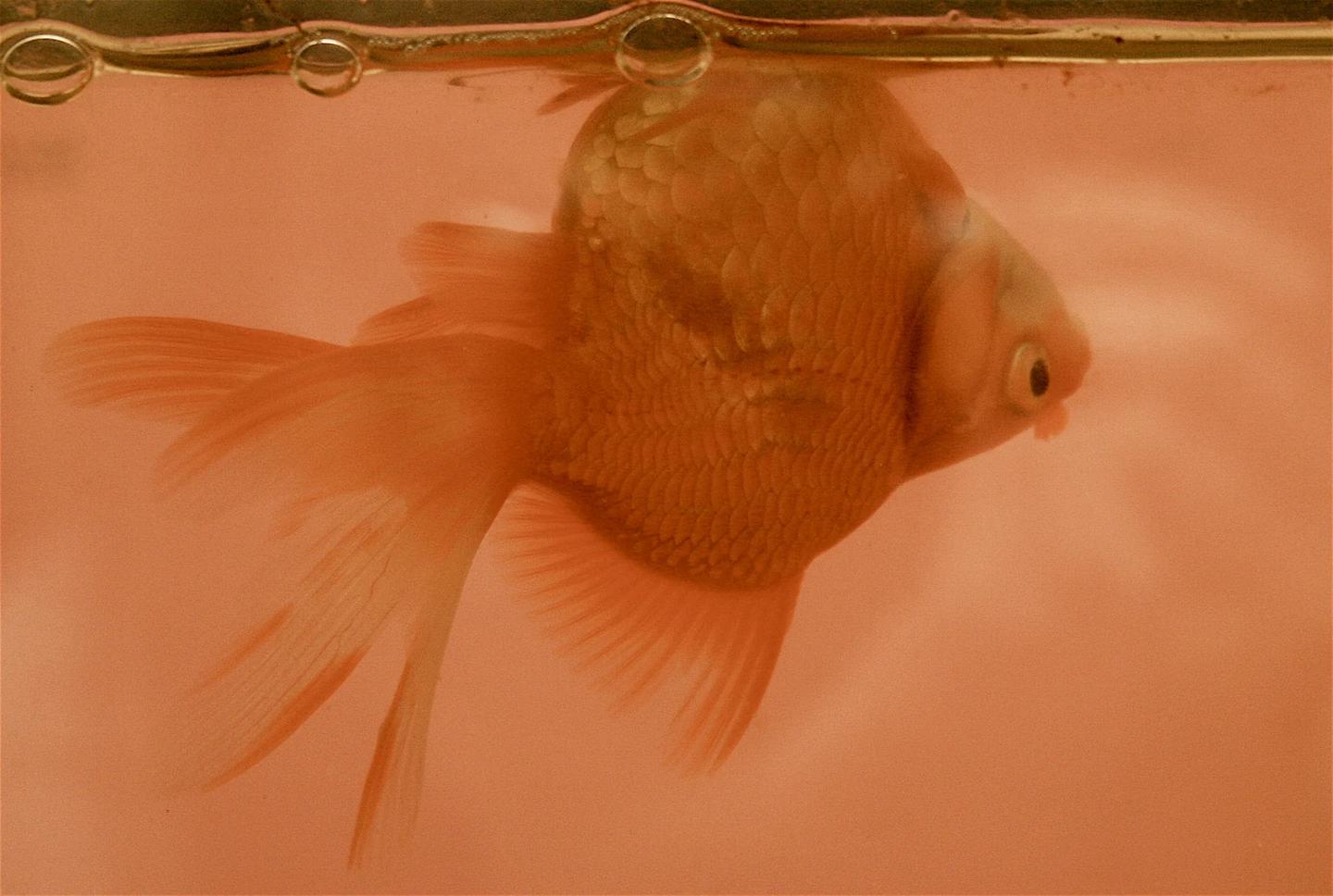
Why Is My Fish Swimming Sideways? Urgent Checks

A fish swimming sideways is showing an abnormal orientation—not one diagnosis. Start with the shared environment: test ammonia and nitrite, confirm the actual temperature, check filtration and water movement, and watch breathing. Note whether one fish or several changed and whether the fish can right itself, feed and avoid injury. Do not automatically add heat, salt, peas or antibiotics.
The RSPCA lists swimming to one side as a poor-health sign and advises checking water quality first. It also notes an important exception: some catfish normally swim upside down. The useful question is therefore not only “Is this fish sideways?” but “Is this a new or impaired posture for this species and this individual?” [1]
The first ten minutes: check danger before naming a disease
- Look at every fish. One affected individual can suggest injury or an individual disorder. Several fish changing suddenly makes oxygen, temperature, toxic exposure, equipment failure or another shared cause more urgent.
- Watch the gills and surface. Repeated gasping, very fast breathing, flared gills, collapse or multiple fish gathering at an outlet or surface can indicate an oxygen or water emergency. Labyrinth fish may visit the surface normally, so compare with their usual pattern.
- Test, do not guess. Measure ammonia and nitrite with a suitable kit and record the numbers. The RSPCA's aquarium guidance says both should be zero; any detectable result needs investigation and a careful, dechlorinated, temperature-matched correction that avoids another abrupt swing. [2]
- Read the thermometer and inspect equipment. Confirm the heater, filter, air pump and circulation are operating. Do not raise a tank to an internet target: a safe range is species-specific, and warm water carries less dissolved oxygen.
- Remove an obvious immediate hazard safely. Stop an active contaminant source, exposed electrical fault or physical trap without chasing or handling the fish unnecessarily. Do not dismantle mature filtration during an emergency.
- Record evidence. Film 20–30 seconds from the side and above if possible. Write down species, onset, last normal behaviour, food, recent additions, maintenance, products used and the exact water results.
Seek prompt veterinary help when
- the fish cannot right itself, repeatedly rolls or cannot reach food without distress;
- breathing is laboured, the fish collapses, bleeds, has an obvious wound or becomes trapped at the surface or filter;
- there is marked swelling, protruding scales, a mass, spinal bend, eye change or sudden loss of function;
- several fish change at once, or deaths begin;
- a recent medicine, cleaning product, spray, metal, electrical or temperature incident may be involved; or
- the sign persists, worsens or remains unexplained after measured environmental problems are stabilised.
The Fish Veterinary Society directory lists UK practices willing to see pet fish; telephone first to confirm species capability, urgency, transport advice and whether the practice wants a separate water sample. The RCVS Find a Vet service provides a second official route. [8] [9]
“Swim bladder disorder” describes a problem—not its cause
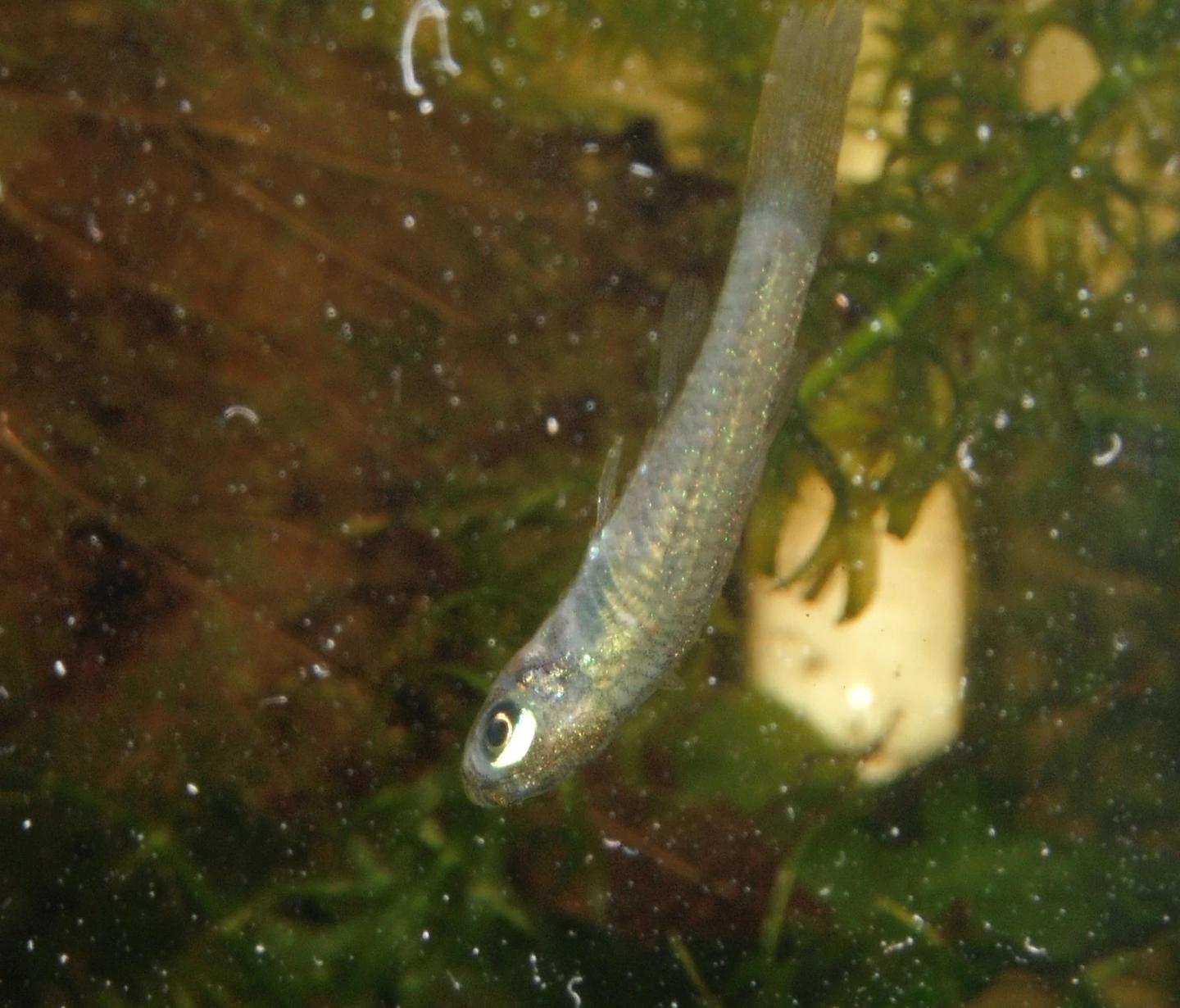
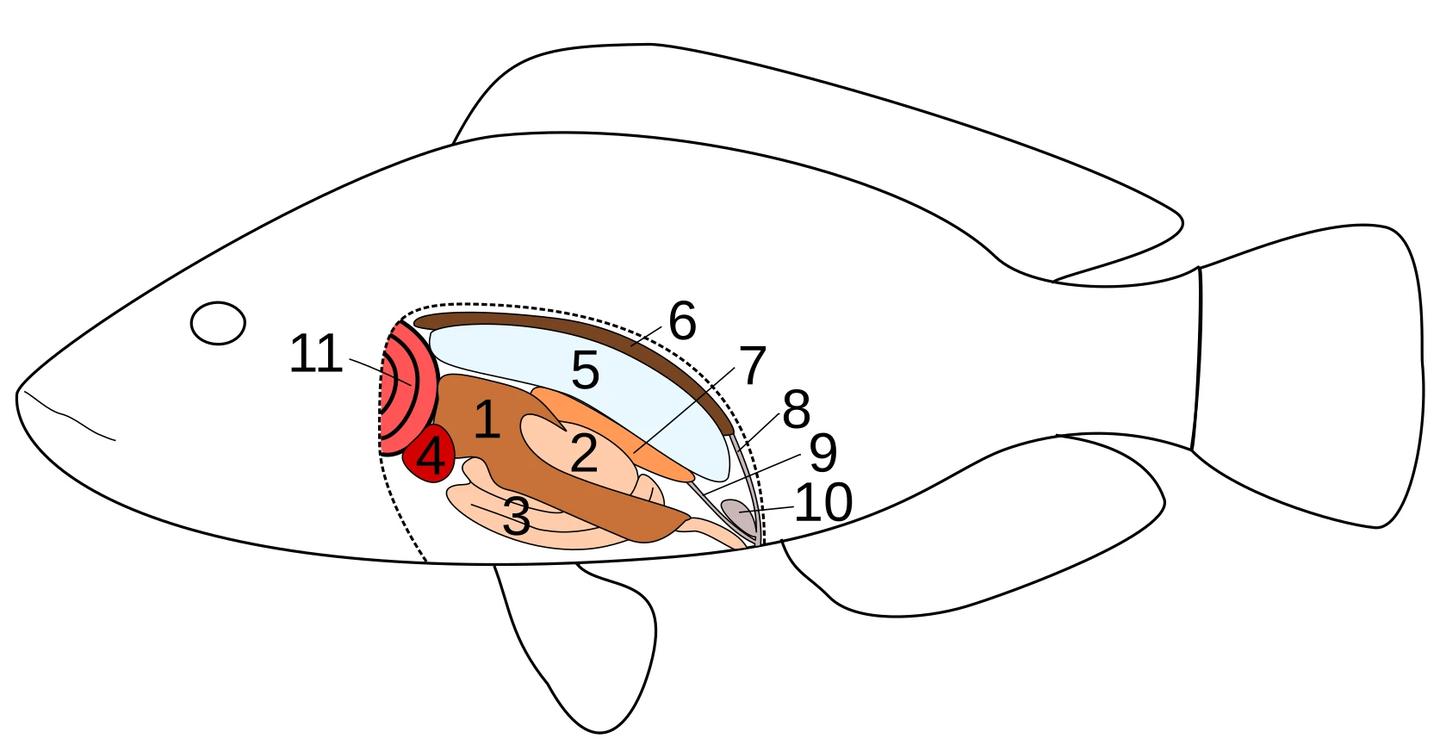
Many bony fish use a gas bladder, also called a swim bladder, to regulate buoyancy. Its construction is not identical across fish: some species retain a connection between the gas bladder and digestive tract, while others do not, and chamber number varies. That anatomy is why one feeding or pressure explanation cannot be copied across every goldfish, betta, tetra, catfish, cichlid and marine species. [3]
“Swim bladder disorder” is often used as an umbrella description for abnormal buoyancy. It does not tell you whether the bladder is overinflated, underinflated, displaced, fluid-filled, inflamed, compressed or entirely normal while another system causes weakness or loss of balance.
A peer-reviewed series of nine koi used radiography or ultrasound, bacteriology, antimicrobial-susceptibility testing and sometimes histology. The cases included deformation or displacement, fluid, chronic inflammation and different bacterial findings. This is valuable proof that proper cases can differ; it is not evidence that the same percentages or antibiotic apply to all aquarium fish. [5]
Another small koi study found reduced gas volume in negatively buoyant fish and fluid in some bladders using computed tomography. Again, that supports imaging as a diagnostic tool—not a home diagnosis from body position. [6]
What can make a fish float or swim on one side?
| Possible group | Clues worth recording—not proof | Safest next decision |
|---|---|---|
| Low oxygen or failed circulation | Gasping, several fish affected, power or pump failure, warm water | Restore appropriate aeration or flow, test the water and escalate rapidly if breathing does not settle |
| Ammonia, nitrite, chlorine or another exposure | Sudden multi-fish behaviour, recent water change, new product, lethargy, dark or irritated gills | Test and identify the exposure; make controlled dechlorinated corrections and preserve a water sample |
| Temperature failure or abrupt change | Heater or thermostat fault, recent move or water change, activity change | Measure the actual temperature and return gradually to the confirmed species range |
| Physical injury or spinal problem | Collision, aggression, entrapment, bent body, wound, one fish affected | Remove the hazard, minimise handling and seek examination; do not force the fish upright |
| Digestive, feeding or nutritional factor | Timing after food, changed diet, distension or abnormal faeces | Record the diet and timing; do not assume constipation or impose one fast/pea rule on every species |
| Gas-bladder structural or functional disorder | Persistent positive or negative buoyancy, rolling, head-up or head-down posture | Veterinary history and examination; imaging may be required to distinguish gas, fluid, displacement or another lesion |
| Infection or inflammation | Appetite loss, redness, ulcers, swelling, other systemic signs | Diagnosis-led treatment; do not jump from a number of days to an antibiotic |
| Neurological, toxic, reproductive or mass-related disease | Spinning, poor coordination, asymmetry, egg retention, progressive swelling or other new signs | Prompt aquatics-capable veterinary assessment and targeted testing |
MSD's environmental table links low oxygen, temperature failure, gas supersaturation, ammonia, nitrite, chlorine and other hazards with abnormal behaviour, buoyancy signs or mortality. That is why water and equipment come before a confident organ label. [4]
Unsafe shortcuts to avoid
Do not prescribe a three-day fast to every fish
Species, age, body condition, normal diet and suspected cause matter. A recently overfed fancy goldfish, a thin tetra, a herbivore, a fry and a fish with systemic disease do not present the same nutritional question. Record the last feeds and seek a cause-specific plan. There is no evidence-backed universal fast length for “a fish on its side”.
Peas are not a diagnostic test or universal cure
A cooked pea cannot prove constipation, repair an injury, correct oxygen shortage or identify a gas-bladder lesion. Some fish are poorly matched to that food. Do not let an internet remedy delay water testing, a species-appropriate diet review or veterinary help.
Do not add a fixed Epsom-salt or aquarium-salt dose
Magnesium sulphate and sodium chloride are different substances, but neither distinction makes a generic dose appropriate. Suitability varies with species, plants, invertebrates, water chemistry, system and actual diagnosis. If a current labelled product is appropriate, follow its target-species, contraindication, interaction, dose and disposal directions exactly.
Do not raise every aquarium to 27–28°C
Temperature influences fish metabolism, immune function, pathogens and dissolved oxygen. MSD notes that the optimum range varies by species and that temperature extremes can inhibit immune function. Correct a measured equipment failure gradually to that species' established range; do not turn “warmer” into a universal treatment. [3]
Do not switch to antibiotics after an arbitrary number of days
Time without improvement does not diagnose bacteria. Great Britain's small-pet-medicine exemption explicitly excludes antibiotics and medicines for conditions requiring precise veterinary diagnosis. MSD discourages prophylactic medicine without diagnostic testing because it can contribute to resistance and complications. [7] [3]
Never invent a “half dose” for a small or sensitive fish. It may be ineffective while still causing adverse effects, and the product may be unsuitable in the first place. Do not stack medicines, pierce or vent a fish, construct a restraint sling or follow a home euthanasia recipe from this page. Those decisions can injure the animal and require qualified, case-specific welfare advice.
Supportive care while arranging advice
Supportive care means reducing avoidable stress while preserving evidence—not treating blindly.
- Keep lighting and disturbance modest while maintaining normal observation.
- Maintain stable conditions within the verified range for the species; avoid abrupt pH, hardness, salinity or temperature changes.
- Protect mature biological filtration and oxygenation. Do not clean every filter component or replace all media during a water problem.
- Prevent the fish being pinned to an intake or battered by excessive flow, but do not remove necessary circulation from the whole tank.
- Separate the fish only when isolation can provide fully matched, cycled, heated and aerated water and the move itself is justified. A small uncycled container can worsen the problem.
- Do not force-feed, squeeze, massage, puncture or repeatedly handle the fish.
- Preserve packaging and exact names of any food, conditioner, medication or household product recently used.
If a vet asks for samples, follow that practice's directions. MSD notes that fish cases benefit from a detailed history and that a separate aquarium-water sample can be diagnostically useful; transport requirements matter. [3]
Species and posture change the interpretation
Goldfish and short-bodied varieties
Fancy goldfish can have body shapes that alter internal space and buoyancy mechanics, but “fancy” does not equal one permanent diagnosis. Environmental, dietary, infectious, injury and structural causes still need separation. A photograph of a Ryukin at the surface cannot tell whether another reader's goldfish has the same problem.
Bettas and gouramis
Labyrinth fish normally take air at the surface. That does not make persistent rolling, inability to submerge, collapse or a newly tilted posture normal. Compare the complete behaviour with the individual's baseline and test the water.
Tetras and other small shoaling fish
A single tetra leaving the shoal or losing orientation can deteriorate quickly. If several small fish change together, treat the shared environment as urgent. Avoid translating a goldfish feeding anecdote into a tetra treatment.
Catfish
Some catfish normally swim inverted, as the RSPCA notes. Confirm the species and whether the posture is habitual. A normally inverted fish that suddenly cannot control depth, stops feeding or shows breathing or skin changes still needs investigation. [1]
Marine fish
This page is not a marine treatment protocol. Marine species, salinity systems and causes differ, and many reef inhabitants are sensitive to products used elsewhere. Use marine-qualified veterinary and system-specific advice.
Can the problem spread to other fish?
The sideways posture does not spread. The underlying cause might. A heater fault, low oxygen, ammonia, chlorine or contaminant can affect every animal sharing the water. Some infectious causes can also move between fish or systems. Conversely, injury, a mass or an individual anatomical problem may affect one fish only.
Until the cause is clearer, avoid moving wet nets, siphons, plants or water between aquariums. Wash hands and use dedicated equipment where practical. Do not medicate every fish merely because they share a tank; first identify whether the exposure is environmental, infectious or individual.
What a fish vet may investigate
A useful consultation begins with the timeline, number and species affected, aquarium volume and design, stocking, new additions, quarantine history, water results, feeding and everything already administered. Depending on the case, a professional may examine the fish and water, use microscopy or culture, or recommend radiography, ultrasound or other imaging.
Those tools answer questions a web page cannot: Is the gas bladder displaced, fluid-filled or reduced in volume? Is there a spinal injury, mass, reproductive problem, inflammation or another organ abnormality? Is an organism present, and which treatment is actually justified? [5] [6]
Recovery and humane decisions
There is no honest “most fish recover in a week” promise. Prognosis depends on the species, actual cause, duration, severity, water environment and whether the fish can breathe, right itself and feed. Improvement after an environmental correction is useful information but does not retrospectively prove a named disease.
If the fish cannot maintain basic function or appears to be suffering, contact an aquatics-capable vet promptly for welfare assessment. This guide deliberately does not provide a generic clove-oil, anaesthetic or physical euthanasia recipe: species, product concentration, induction and confirmation of death are professional welfare decisions.
Preventing another episode
- Keep ammonia and nitrite at zero and investigate any detectable reading.
- Match temperature, water chemistry, current and oxygenation to the species rather than a generic “tropical” setting.
- Feed a varied, species-appropriate diet in portions supported by body condition and observed consumption; remove uneaten food.
- Avoid fixed weekly fasting rules unless they genuinely suit the species and care plan.
- Protect fish from sharp décor, intake hazards, aggression and abrupt handling.
- Quarantine new livestock and avoid sharing wet equipment between systems.
- Keep a simple log of water tests, maintenance, additions, foods and unusual behaviour; a trend is more useful than memory during an emergency.
What this guide corrected
The previous page claimed sideways swimming was “almost always” swim bladder disorder, assigned unsupported percentages to causes, prescribed a three-day fast, peas, Epsom salt and 27–28°C heat, then told readers to switch to antibiotics after a fixed delay. It also suggested half-dosing, DIY slings and searching for a home euthanasia method, and promised recovery timelines without evidence.
Those claims are removed. This page sells no medicine and includes no Product or Offer schema. Tropical Fish Co sells aquatic livestock, but urgent welfare intent must not be distorted into a stock or sales prompt. Purchase and revenue are the final ecommerce outcomes; add-to-cart and checkout are diagnostic funnel events. Forms, feedback, email and newsletter actions are not leads or conversions.
Related aquarium health guides
Compare an abnormal posture and locate the gas bladder
Frequently asked questions
Browse our UK live-fish range
From this article straight into the catalogue.
Beginner Fish
The best tropical fish for beginners UK — hand-picked easy-care species that thrive with minimal fuss. Perfect starter community tank candidates.
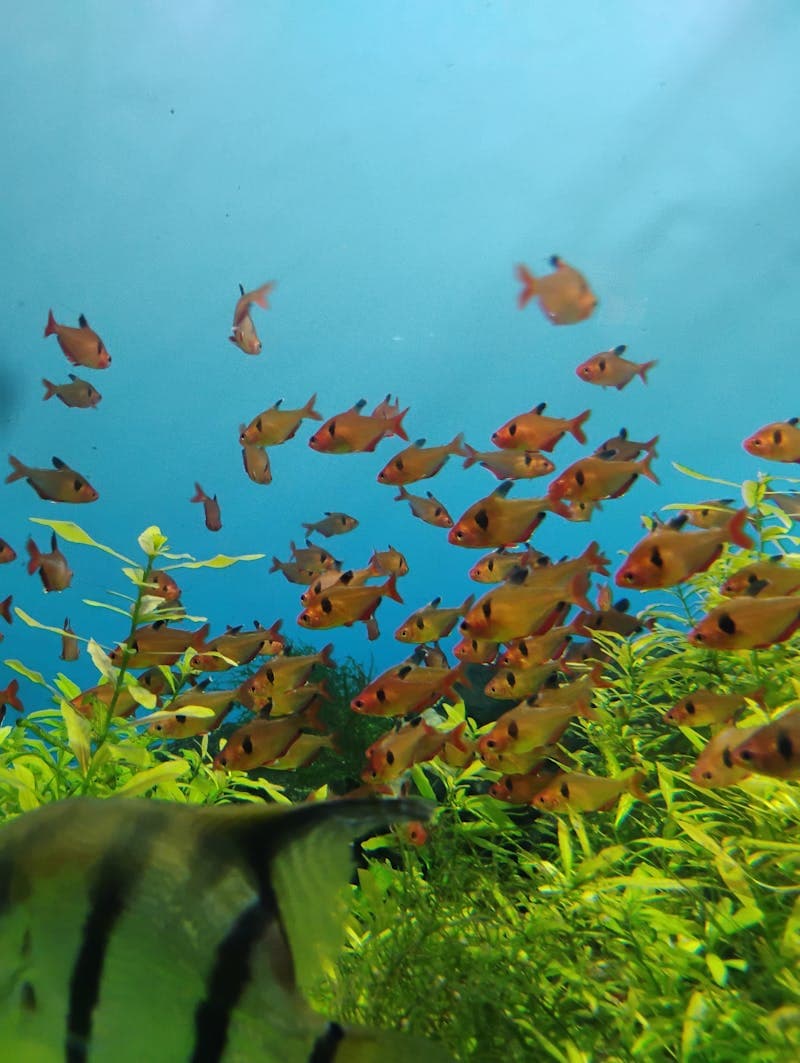
Community Tank Fish
Peaceful tetras, rasboras, corydoras, platies and gouramis chosen to live together — temperament, adult size and water range per listing so the mix works.
Tetras
Premium Tetras for sale UK — Cardinal, Ember, Black Neon, Rummy Nose, Serpae, Diamond, Glowlight and more. Peaceful community schoolers.
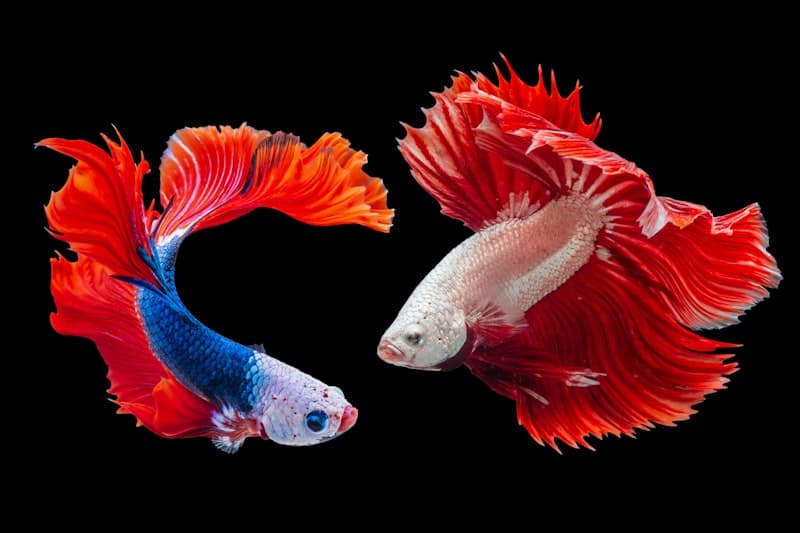
Betta Fish
Halfmoon, plakat, koi, giant and wild-type Betta splendens, males and females, tail type and size stated per listing. Bagged singly, live arrival covered.
Guppy
Fancy guppies bred for colour — Moscow, Cobra, Dumbo ear and Endler lines as males, females or pairs. Hardy in UK tap water; arrive alive or replaced.
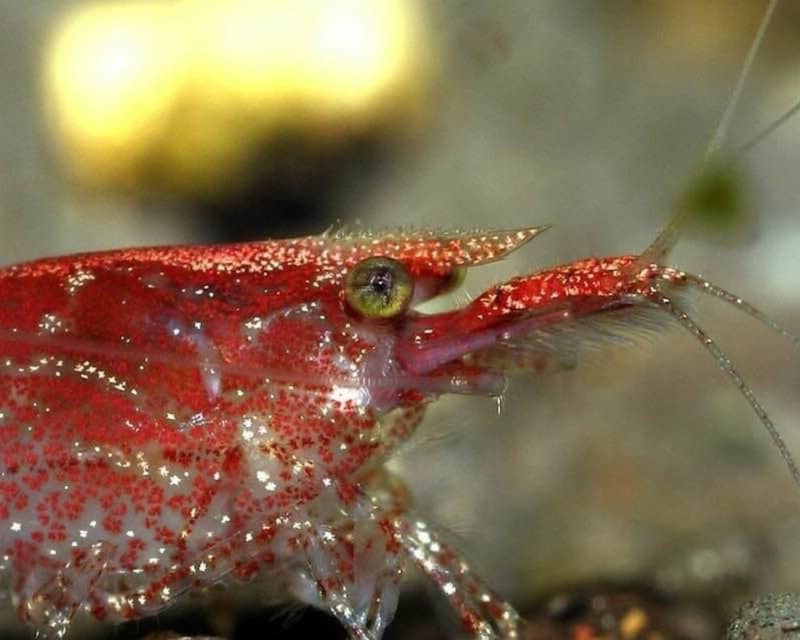
Cherry Shrimp
Red, blue, yellow, black and Rili cherry shrimp (Neocaridina) graded per listing, with mature-tank and water guidance so a new colony settles and breeds.
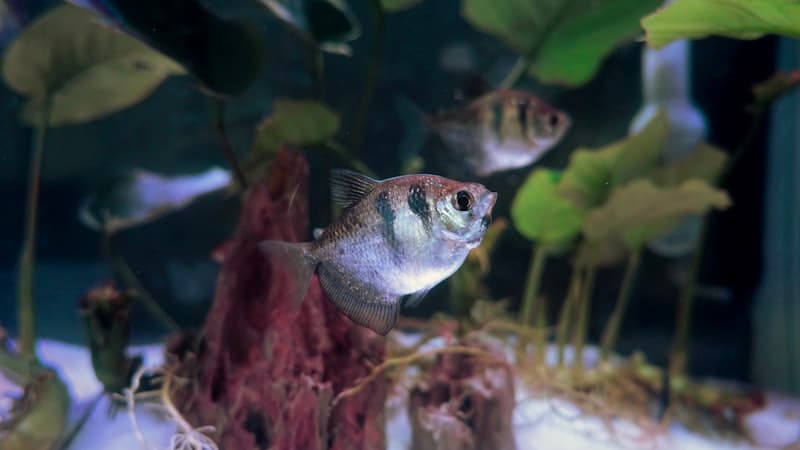
Corydoras
Shop current Corydoras catfish listings in the UK. Compare scientific identity, size and sale unit, with price and availability shown per product.
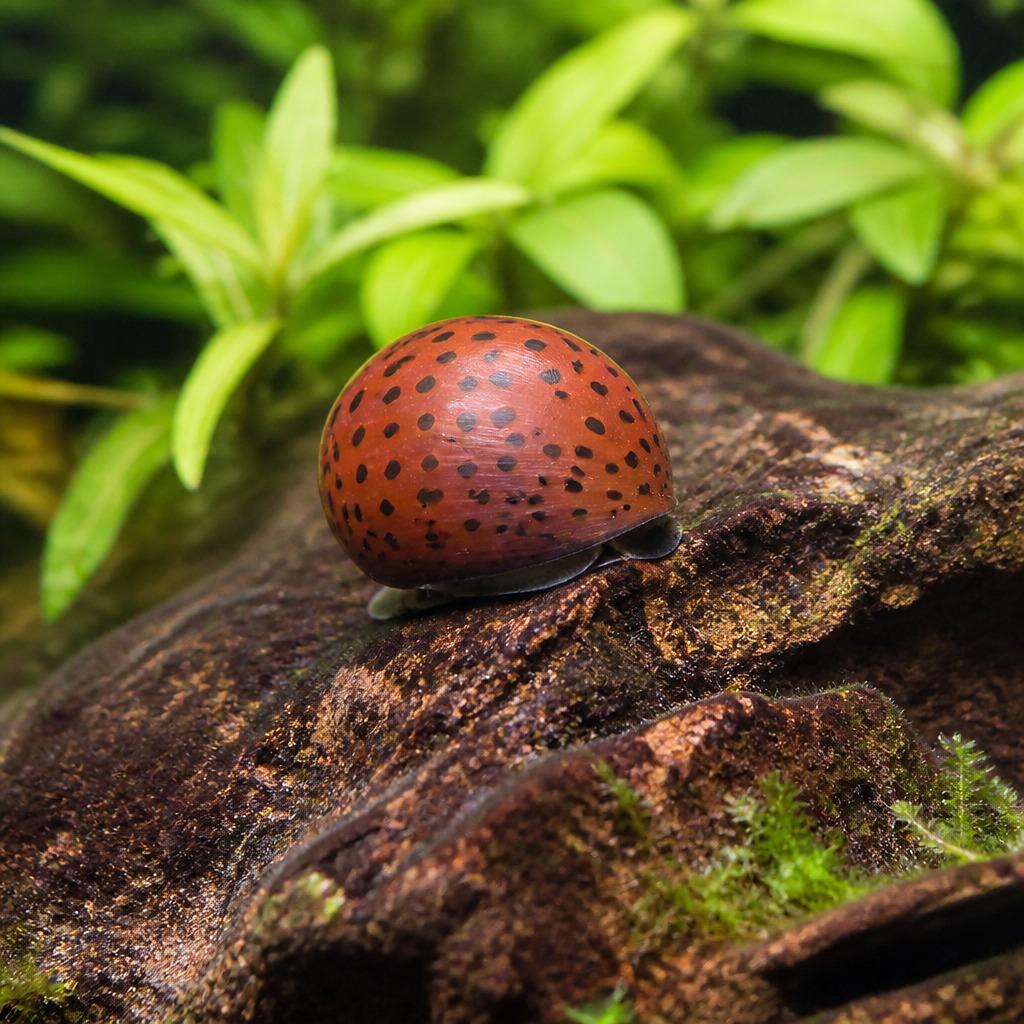
Freshwater Snails
Shop freshwater aquarium snails in the UK. Compare current species, adult size, water needs, diet, breeding risk, compatibility, prices and availability.
Sources & further reading
Material factual claims cite the sources below; store policy and cautious inference are labelled in the article. Sources are grouped by type so you can judge their weight at a glance.
Veterinary reference (2)
- [3]Petty, B. D., Francis-Floyd, R. & Yanong, R. P. E. (2022). Management of Aquarium Fish. MSD Veterinary Manual. View source
Veterinary evidence for gas-bladder variation, the diagnostic history, water assessment, targeted treatment and why prophylactic medicines without diagnosis are discouraged. Published in May 2022 and last updated in June 2026.
- [4]MSD Veterinary Manual editorial team (2023). Common Environmental Hazards for Fish. MSD Veterinary Manual. View source
Differential evidence connecting hypoxia, temperature failure, gas supersaturation, ammonia, nitrite, chlorine and other environmental hazards with abnormal behaviour, buoyancy signs or mortality. The containing MSD article was fully reviewed in May 2023 and last updated in June 2026.
Reference source (2)
- [1]Royal Society for the Prevention of Cruelty to Animals (2026). Pet Fish Health. RSPCA. View source
UK welfare guidance identifying swimming to one side as a poor-health sign, noting the normal upside-down-catfish exception, prioritising water checks and directing diagnosis and treatment questions to a specialist fish vet.
- [2]Royal Society for the Prevention of Cruelty to Animals (2026). Creating a Good Environment for Fish. RSPCA. View source
UK welfare guidance for testing ammonia and nitrite, keeping both at zero, stable temperature and correcting aquarium conditions without abrupt changes.
Reference source (2)
- [5]Sirri, R. et al. (2020). Swim Bladder Disorders in Koi Carp (Cyprinus carpio). Animals. DOI: 10.3390/ani10111974. View source
Nine-koi case series using imaging, bacteriology, susceptibility testing and histology. It demonstrates heterogeneous pathology and diagnostic methods but cannot define prevalence, cause or home treatment for all pet fish.
- [6]Pees, M., Pees, K. & Kiefer, I. (2010). The use of computed tomography for assessment of the swim bladder in koi carp (Cyprinus carpio). Veterinary Radiology & Ultrasound. DOI: 10.1111/j.1740-8261.2009.01662.x. View source
Small koi study showing that CT can distinguish reduced gas volume and fluid in affected swim bladders; it is diagnostic-method evidence, not a universal aquarium protocol.
Reference source (1)
- [7]Veterinary Medicines Directorate (2015). Exemption from authorisation for medicines for small pet animals. GOV.UK. View source
Current Great Britain medicine context: antibiotics and conditions requiring precise veterinary diagnosis are outside the small-pet exemption, while exempt-product labels must state indications, contraindications, interactions and dosage. Published in June 2015 and last updated in April 2026.
Reference source (1)
- [8]Fish Veterinary Society (2026). Find a Vet. Fish Veterinary Society. View source
Reviewed directory of UK veterinary practices willing to treat pet fish; confirm species capability, availability, transport and any water-sample request with the practice.
Reference source (1)
- [9]Royal College of Veterinary Surgeons (2026). Find a Vet. RCVS. View source
Official UK route for checking veterinary practices and professionals. A register entry does not by itself prove fish expertise; ask the practice first.
Spotted something that needs a fix?
Fishkeeping moves fast and we want every guide spot-on. If you think something here is wrong, out of date, or could be clearer, tell us — our team reads every message and updates the page.
Suggest an editRelated care guides
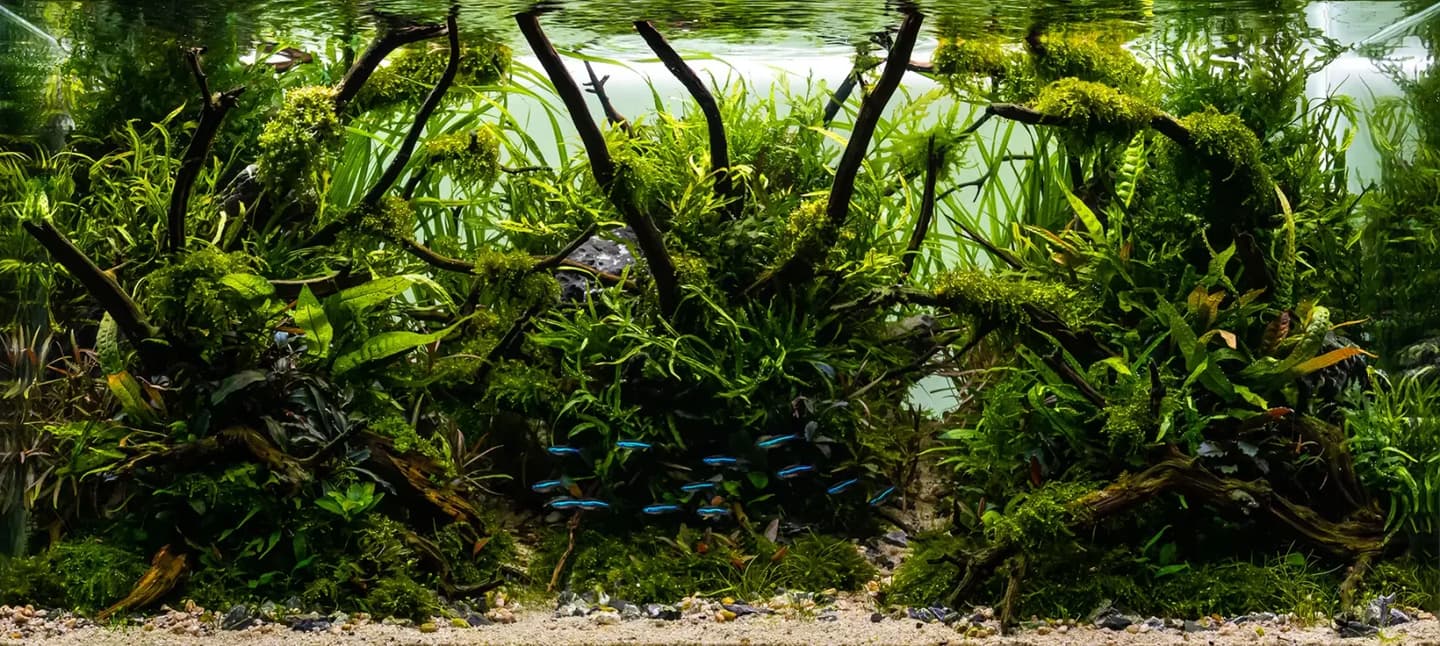
How to Set Up a Tropical Fish Tank: 10 Safe Steps
Choose the intended fish before the aquarium, place the tank on a suitable level support, install a filter and thermostatic heater, condition and test the water, then complete a fishless cycle. Add fish only after the chosen maturation process reaches its defined endpoint and repeated tests show zero ammonia and zero nitrite; elapsed days alone do not prove readiness.
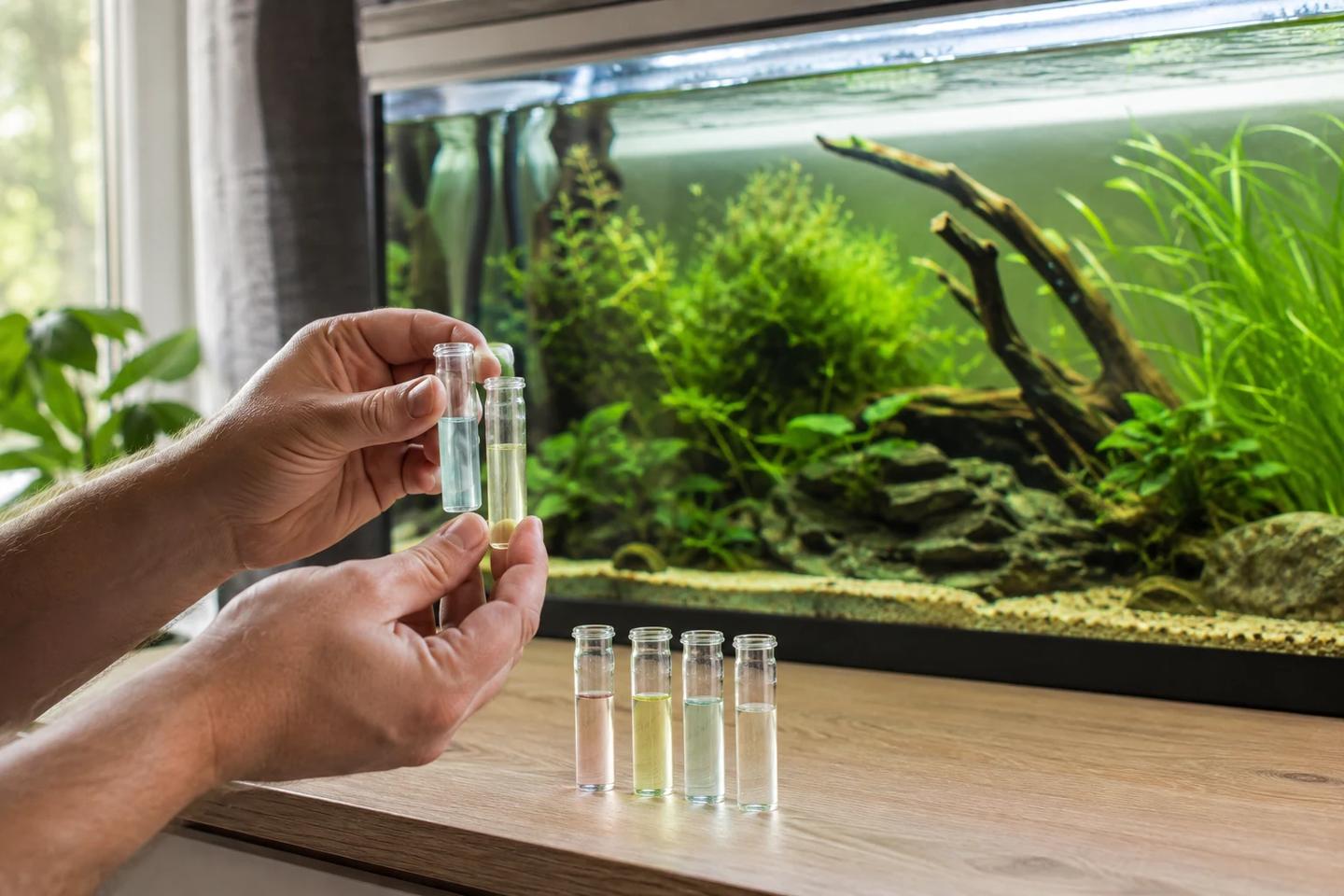
Aquarium Water Parameters: What to Test and Why
There is no universal set of perfect freshwater aquarium parameters. Identify the animals, learn what the test and unit actually report, establish your local source-water baseline, and compare repeat measurements. In an established aquarium, a confirmed ammonia or nitrite detection needs investigation; pH, GH, KH, temperature and nitrate decisions depend on the species, life stage and whole system.
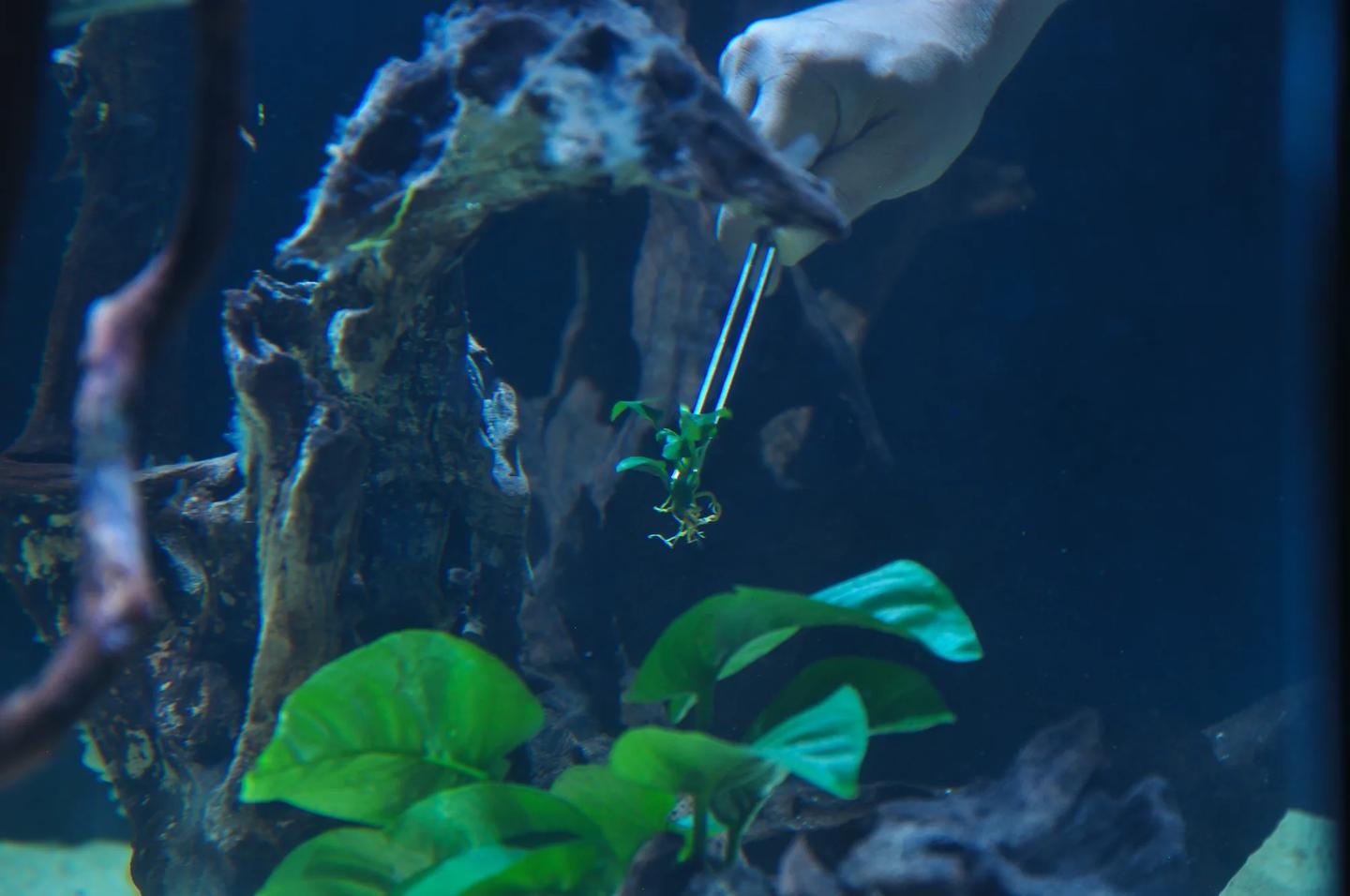
Live Aquarium Plants for Beginners: 7 Easy Picks
For a first low-tech planted aquarium, start with one or two correctly labelled lower-demand species, match their mature size to the tank, keep the rhizomes of Java fern and Anubias above the substrate, and change only one lighting or feeding variable at a time.