Easy
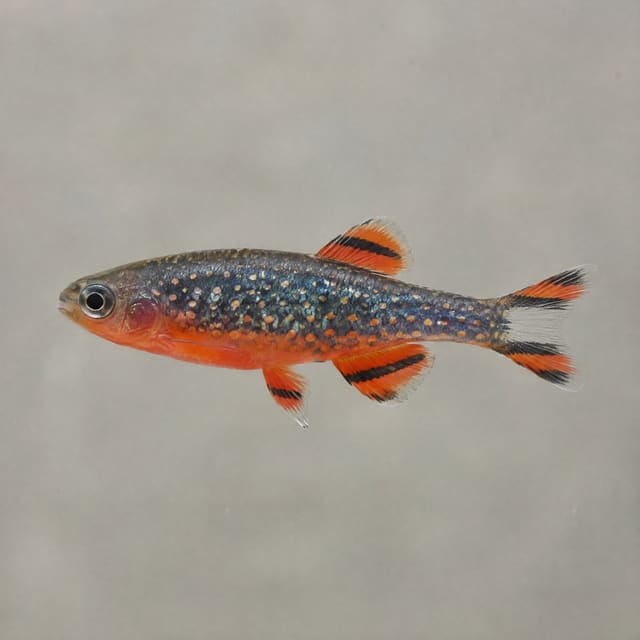
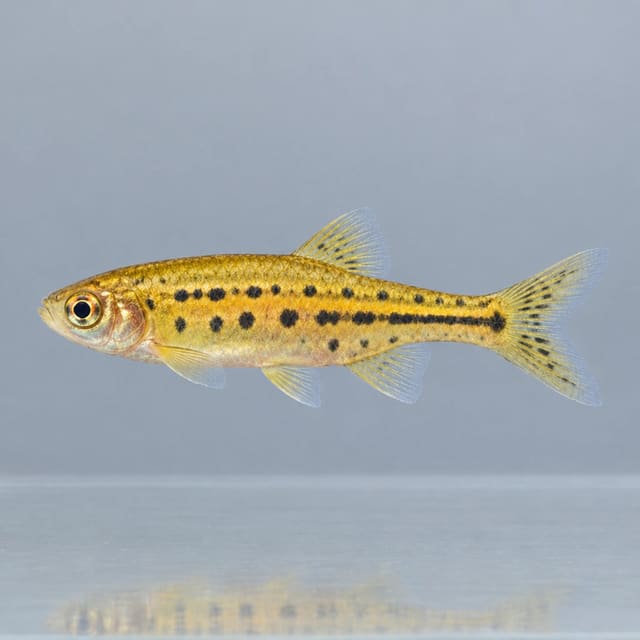
Burmese Spotted Gold Danio (Danio tinwini)
18–26°C · pH 6.5–7.5
£6.19
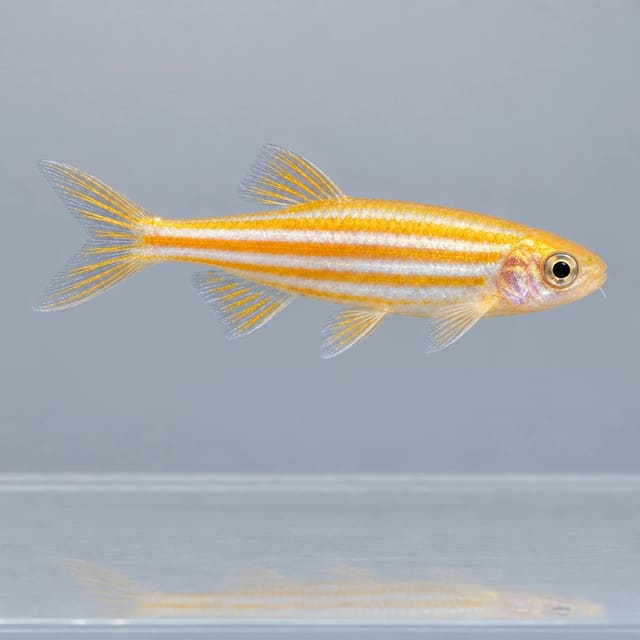
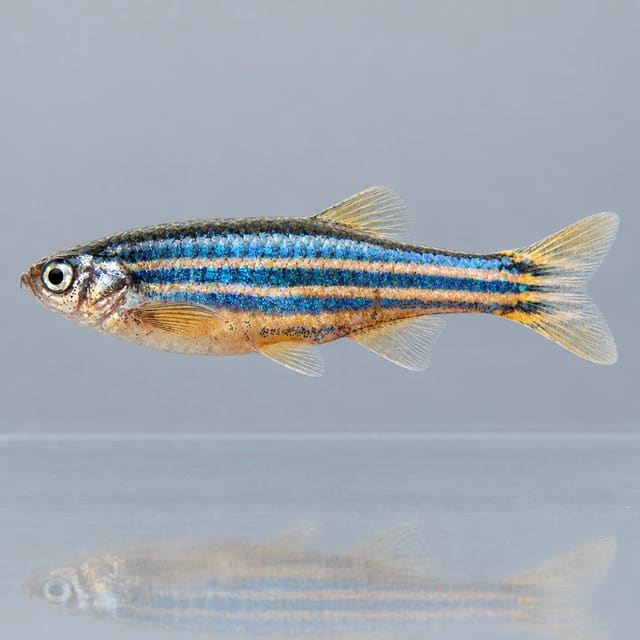
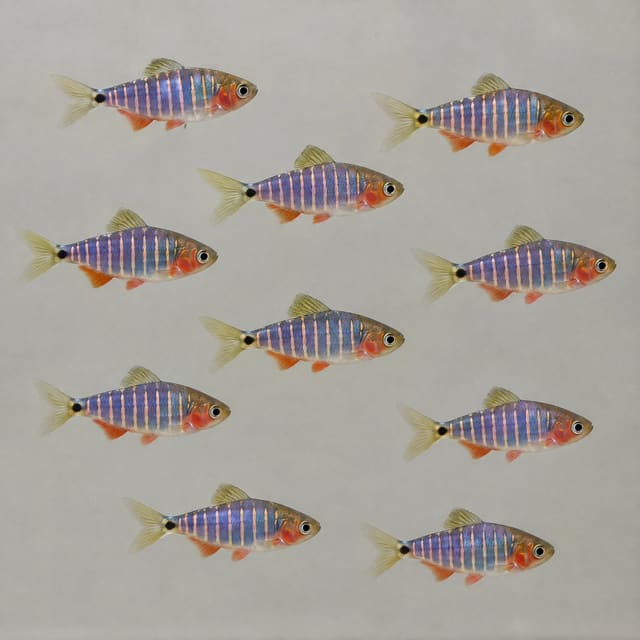
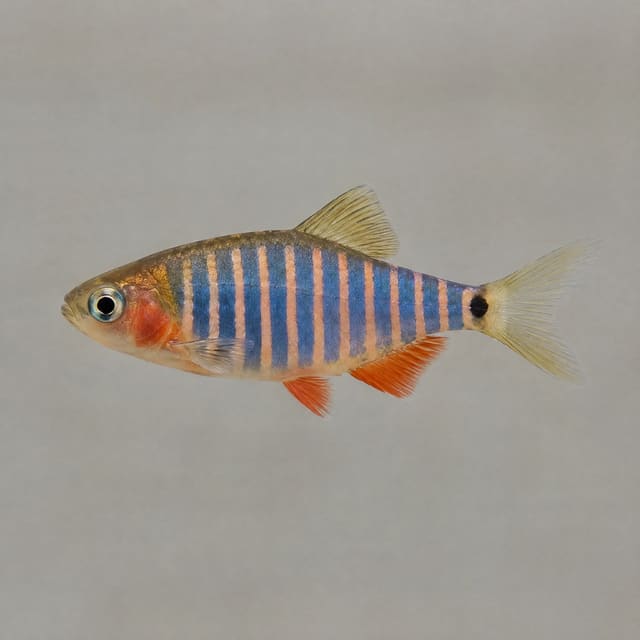
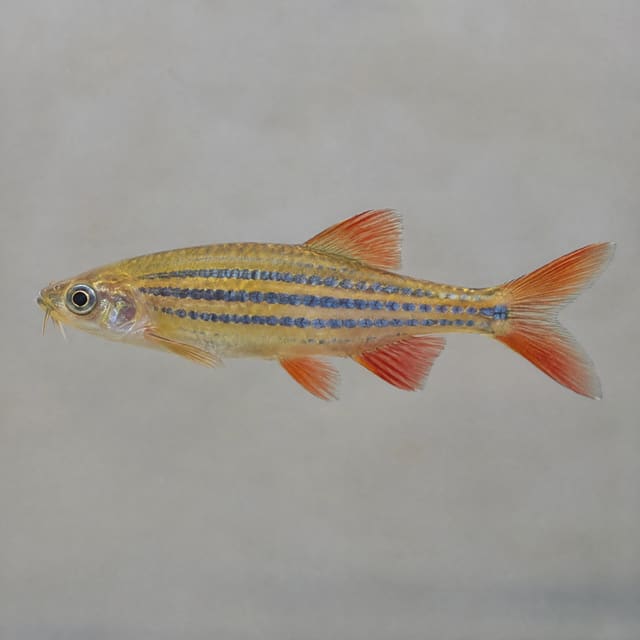
The Zebra Danio (Danio rerio) is a hardy, fast-swimming shoaling fish from South Asia with five blue stripes on a gold body, reaching about 5 cm. Keep at least eight to ten in a long aquarium (90 × 30 cm base or more) at 18–25°C with open swimming space and planted edges. Sold individually as one live fish.
Danio rerio
Quantity discounts are pricing offers, not a group-size recommendation. Check the full care guidance and your existing animals before choosing a quantity.
Minimum of 2 per order.
The Zebra Danio (Danio rerio) is a hardy, fast-swimming shoaling fish from South Asia with five blue stripes on a gold body, reaching about 5 cm. Keep at least eight to ten in a long aquarium (90 × 30 cm base or more) at 18–25°C with open swimming space and planted edges. Sold individually as one live fish.
Read the full care guidance when planning conditions for your aquarium.
The zebra danio, Danio rerio, is the original blue-and-gold striped danio: five even, dark blue stripes run from behind the gill cover to the end of the tail, separated by pale gold bands. Hamilton described it in 1822 from the Kosi River, a tributary of the Ganges, and older books call it Brachydanio rerio. It is also sold as the zebrafish, striped danio or simply zebra. Few aquarium fish are better known: Practical Fishkeeping counts more than 5,000 scientists in over 450 laboratories who work with the species.
FishBase places Danio in the family Danionidae, while Seriously Fish and OATA still list it under Cyprinidae, the older and wider carp family. Wild zebra danios come from South Asia. Seriously Fish says current knowledge points to India, Bangladesh and possibly Bhutan, and that older records from Pakistan, Nepal and Myanmar may be misidentified similar species; FishBase still lists those countries. The IUCN assesses the species as Least Concern.
| Suits | Not suited to |
|---|---|
| A shoal of eight to ten or more | Keeping one or two on their own |
| A long aquarium with a base of 90 × 30 cm or more | A bowl, or a small, tall, narrow tank |
| Water at 18–25°C, including cooler rooms | Tanks held above 25°C all year |
| A busy community of peaceful, robust fish | Very timid or slow fish that dislike active neighbours |
| Most UK tap water within pH 6.0–8.0 | Unstable water that swings between tests |
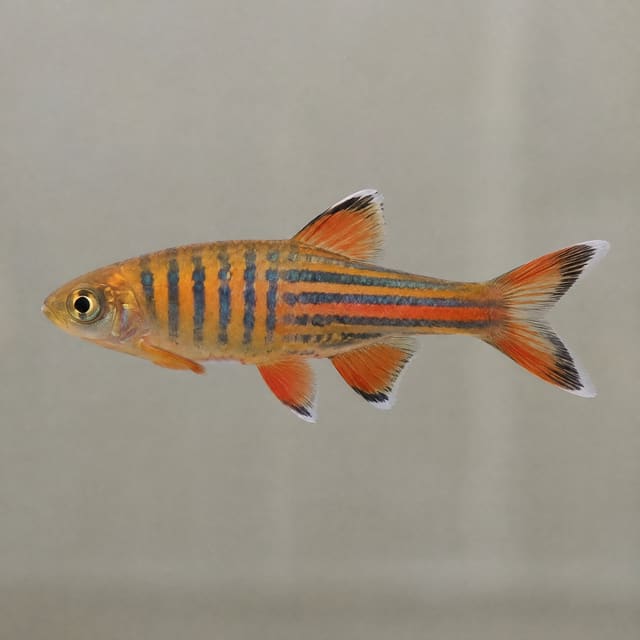
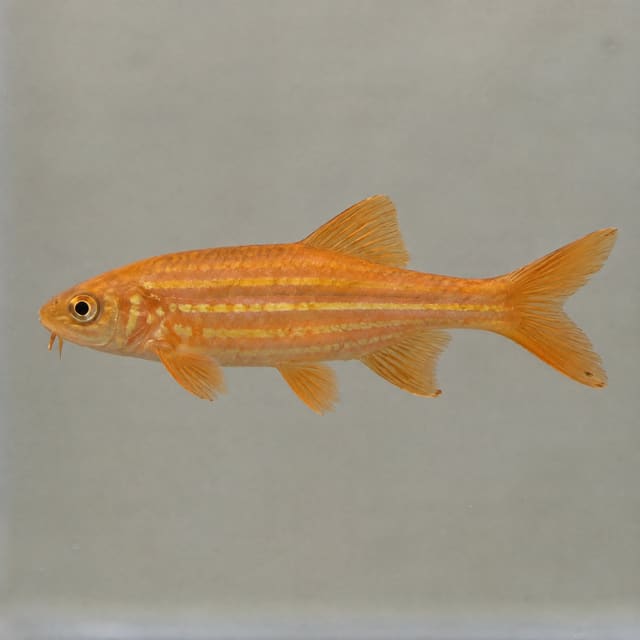
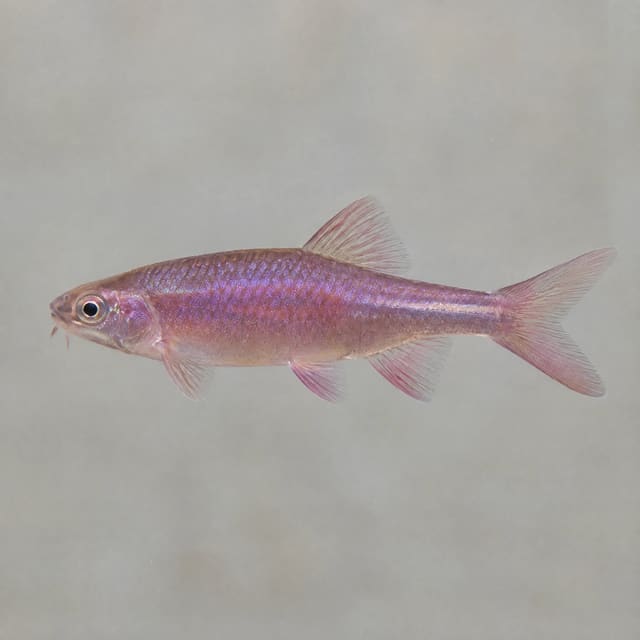
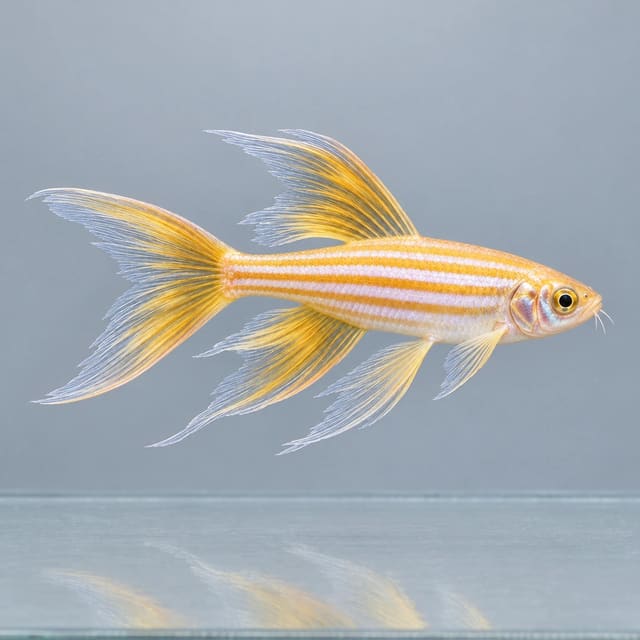
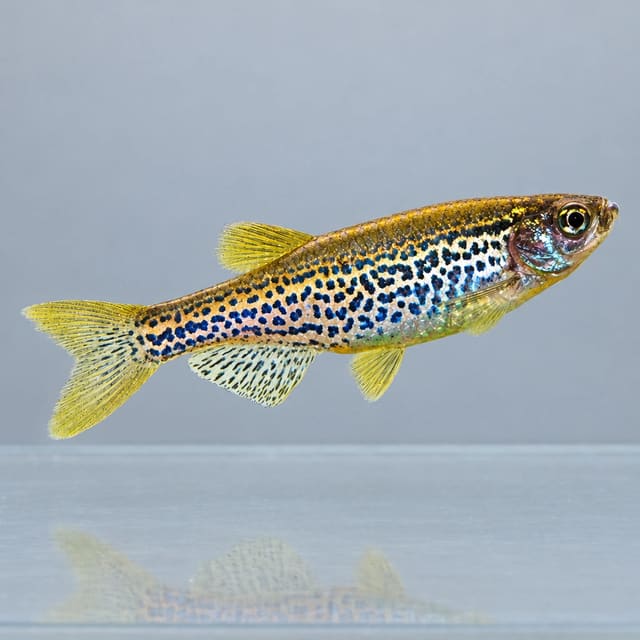
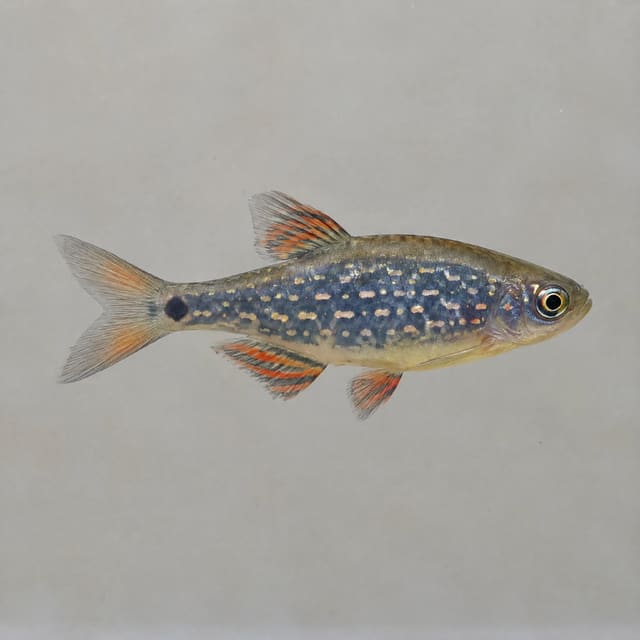
This listing is the classic striped form. The leopard, long-finned and golden zebra danios are the same species with the same care. Compare it with the rest of our rasboras and danios, or browse every Danio species we stock. Some gallery images are representative and none shows the exact fish supplied.
One purchase quantity supplies one live zebra danio in our single standard size. Sex is not specified. Zebra danios are shoaling fish, so choose the quantity for the whole group you plan to keep, not for one fish.
Seriously Fish notes that mature females are usually rounder-bellied, a little larger and slightly less colourful than males, and that the differences are clearest at spawning time. Plan the shoal without relying on a particular mix of males and females.
Prepare the aquarium for the whole group before you order, and check our delivery and Live Arrival Guarantee terms for dispatch days.
Seriously Fish gives a maximum of 5 cm standard length (measured without the tail), OATA says most danios reach about 5 cm, and FishBase records 3.8 cm standard length. Plan for fish of about 5 cm.
The sources also differ on tank size. Seriously Fish recommends a base of at least 90 × 30 cm, about 81 litres, because the species is so active; OATA suggests at least 45 litres for a small shoal of the smaller danios and at least 120 litres for danios of 5 cm and over; FishBase gives a minimum tank length of 60 cm. We follow Seriously Fish’s 90 × 30 cm base as the practical minimum for a group of eight to ten, and go larger when other fish share the tank.
Our stocking calculator checks a planned community against your tank size before you buy. Fit a cover as well, because startled danios can jump, and leave the tank lights on a regular day-and-night timer.
Seriously Fish describes the décor as “not especially critical”, but notes that colour shows best in a heavily planted tank with a dark substrate, and suggests floating plants and driftwood roots or branches to diffuse the light. Practical Fishkeeping adds that wild zebra danios favour turbid water with limited visibility, and that laboratory fish prefer darker areas.
| Area | Purpose |
|---|---|
| Open lane along the front and middle | Room for the shoal to swim, chase and feed together |
| Planted sides and back | Cover and sight-breaks for nervous fish |
| Floating plants over part of the surface | Softer light and shade |
| Dark sand or gravel | Shows off the blue and gold stripes |
| Roots or branches | Structure and a more natural look |
Gentle to moderate water movement is enough. Practical Fishkeeping points out that the zebra danio’s restlessness is often misread as a need for fast water, whereas wild fish live mostly in slow or still water; OATA recommends a moderate current for oxygen. If you are new to live plants, our easy live plants guide lists hardy choices that suit a danio tank.
The zebra danio is famously adaptable. Seriously Fish reports native water reaching 24.6–38.6°C in July, and Practical Fishkeeping describes wild fish found from 6°C to 39°C and in water from pH 5.1 to 8.2. Those extremes show what the species survives in the wild; they are not targets for an aquarium. Keep it stable inside the ranges below.
| Reading | Range we use | What the sources say |
|---|---|---|
| Temperature | 18–25°C | Seriously Fish 18–25°C; OATA 17–27°C for danios in general; FishBase 18–24°C |
| pH | 6.0–8.0 | Seriously Fish and FishBase 6.0–8.0; OATA 6.5–8.0 |
| General hardness | 5–20 dGH | Seriously Fish 5–20 dGH; FishBase 5–19 dH; OATA 4–12°dH |
| Ammonia | 0 mg/l | OATA |
| Nitrite | 0 mg/l | OATA |
| Nitrate | No more than 20 mg/l above your tap water | OATA |
Seriously Fish and OATA both say a heater is not always needed. If your room falls below 18°C at night or in winter, fit a thermostatic heater and set it within the range, checking with a separate thermometer. Compare your tap water with these values in our water matcher rather than adjusting chemistry blindly: stability matters more than hitting one exact number.
Seriously Fish suggests a filter rated at four to five turnovers an hour, which for an 81-litre aquarium is about 325–405 litres per hour, and a heater of about 50 W where the room sits around 20°C. The filter’s real job is biological: its bacteria convert toxic ammonia into nitrite and then into the less harmful nitrate, so it must run all the time.
A new aquarium must be cycled before the shoal arrives. OATA warns that adding too many fish too quickly causes ammonia and nitrite spikes, sometimes called new tank syndrome; our guide to the fish tank nitrogen cycle explains how to mature a filter. Clear water is not proof of safe water, so keep testing.
In the wild, zebra danios are micropredators. Seriously Fish lists small aquatic crustaceans, other invertebrates and mosquito larvae, and FishBase adds worms and insect larvae. In the aquarium they are unfussy and take a good dried food readily; OATA describes danios as omnivorous.
Zebra danios feed fast at the surface and in midwater. If you keep slow bottom-dwelling fish with them, give those fish their own sinking food so the danios do not take it all. A sudden loss of appetite in the shoal is a warning sign: test the water before changing the food.
Introduce the fish only to a mature, cycled aquarium with ammonia and nitrite at zero. OATA recommends the floating-bag method of acclimatisation and warns against leaving fish in the transport bag for long; our guide to acclimatising new fish walks through it.
| Checkpoint | What to do |
|---|---|
| Before arrival | Test the water and confirm the space for the whole shoal |
| On arrival | Float the bags, then release the fish with the tank lights off |
| First feed | Offer a small portion the next day and check that every fish eats |
| Every day | Compare swimming, breathing and colour with the day before |
| End of week one | Retest ammonia and nitrite, then do the normal water change |
OATA describes healthy danios as having clear, bright eyes, undamaged fins, intact scales, normal swimming and steady breathing. Watch for hanging at the surface, sitting on the bottom, erratic swimming, colour change, white spots or fluffy growths, and loss of appetite.
Seriously Fish warns about three problems seen in mass-bred zebra danios: neon tetra disease, a microsporidian infection that is essentially untreatable once advanced; “skinny disease” caused by Pseudoloma neurofilia; and Flavobacterium columnare infections, which can look similar. A fish that keeps losing weight despite eating, or develops pale patches, should be separated and assessed, and the rest of the shoal watched closely.
Seriously Fish describes the zebra danio as a schooling species to be kept in groups of at least eight to ten. In larger groups the fish are less nervous and more colourful, as males compete for the attention of females. OATA puts its minimum at five and warns that danios kept singly or in small groups often become stressed. Browse other schooling fish if you plan a tank built around shoals.
Chasing within the shoal is normal display behaviour, especially between males. Act if one fish is persistently singled out and cannot feed or rest; more cover and a larger group usually spread the attention.
Seriously Fish calls the zebra danio very peaceful and compatible with other small cyprinids, tetras, livebearers, rainbowfish, anabantoids (gouramis and their relatives), catfish and loaches, provided adult sizes and water needs match. OATA adds that the danios’ constant activity can stress timid species, and Practical Fishkeeping notes that goldfish have eaten young danios.
| Suits | Avoid |
|---|---|
| Other danios, small barbs and rasboras | Goldfish and other fish large enough to swallow a danio |
| Robust tetras, livebearers and rainbowfish that share 18–25°C | Species that need water much warmer than 25°C |
| Corydoras, small loaches and other bottom dwellers | Very shy or slow fish that are unsettled by busy neighbours |
Good companions in our range include the Pearl Danio, Kerr’s Blue Danio and Rosy Danio, and, for a cooler tank, White Cloud Mountain Minnows. Our tank mates tool checks the mix for you.
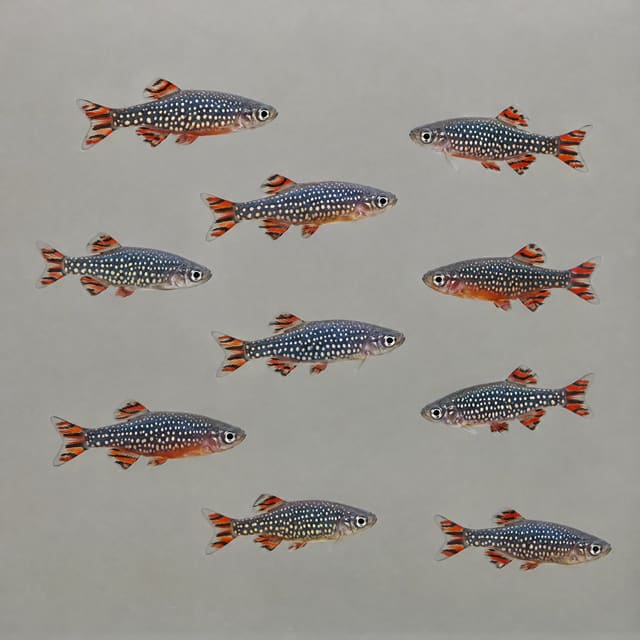
The leopard danio is a spotted form of the same species. Seriously Fish explains that it was once described as Brachydanio frankei but is a spontaneous mutation that also occurs in the wild. Long-finned, golden and “Russian long-fin blue” forms are bred for aquariums; the golden forms are leucistic, not albino. GloFish are transgenic zebra danios: Seriously Fish notes that they are illegal to buy, sell or keep in the European Union, and Practical Fishkeeping says genetically modified livestock may not be imported into the UK. We do not sell them.
Zebra danios scatter their eggs and give no parental care, and the adults eat any eggs they find. Seriously Fish suggests a small, dimly lit spawning tank with mesh, plastic grass matting or Java moss on the base so the eggs fall out of reach, slightly acidic to neutral water at the warm end of the range, and a well-conditioned pair, which usually spawn the following morning. Remove the adults afterwards.
Seriously Fish gives an incubation time of 24–36 hours, while the standard laboratory staging work by Kimmel and colleagues (1995) places hatching between 48 and 72 hours after fertilisation, and OATA simply says the eggs hatch in a couple of days. Either way, Seriously Fish notes that the fry become free-swimming a few days after hatching. Feed the fry infusoria-grade food first, then brine shrimp nauplii or microworm. FishBase reports that domesticated zebra danios live 3.5 years on average, and the oldest recorded reached 5.5 years.
At least eight to ten, as Seriously Fish recommends; OATA’s minimum for danios is five. Larger groups are calmer and show better colour.
Not always. Seriously Fish gives 18–25°C and OATA 17–27°C for danios, so a warm room may be enough. Fit a thermostatic heater if your room falls below 18°C.
We recommend a base of at least 90 × 30 cm, about 81 litres, for a shoal, following Seriously Fish. OATA suggests at least 120 litres for danios of 5 cm or more, and FishBase gives a 60 cm minimum length.
About 5 cm standard length, according to Seriously Fish and OATA. FishBase records a maximum of 3.8 cm standard length.
Yes. The leopard danio is a spotted form of Danio rerio that also occurs in the wild. It was once described separately as Brachydanio frankei.
A good-quality flake or small granule every day, with small live or frozen foods such as daphnia, brine shrimp and bloodworm. Feed once a day, only what they finish in a few minutes.
Peaceful community fish that share 18–25°C: other danios, small barbs and rasboras, tetras, livebearers, rainbowfish, gouramis, catfish and loaches. Avoid goldfish and any fish large enough to eat them.
FishBase reports an average of 3.5 years for domesticated zebra danios, with the oldest recorded at 5.5 years.
No. GloFish are transgenic zebra danios. Seriously Fish notes they are illegal to buy, sell or keep in the European Union, and Practical Fishkeeping says genetically modified livestock may not be imported into the UK.
No reviews for this item yet. Bought one? Honest reviews only, good or bad.
What customers say about ordering from us
Easy website plenty of info on fish your buying great to pick a time slot
TRACEY DURRANT · 7 Oct 2026
Got some lovely fish thank you
Kevin Mackie · 7 Oct 2026
Reviews of our shop, collected by Judge.me, an independent third-party review collector. Newest first.
Moved by UK carriers licensed to handle live animals
Hand-packed with oxygen bags, poly box, heat pack
Email photos the same day; an optional unboxing video helps us review problems faster — claim terms apply
Klarna & PayPal Pay in 3 at checkout