Easy
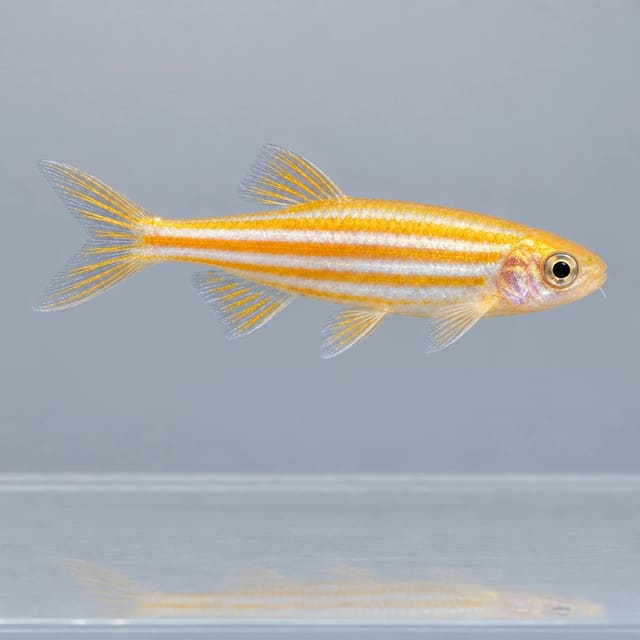
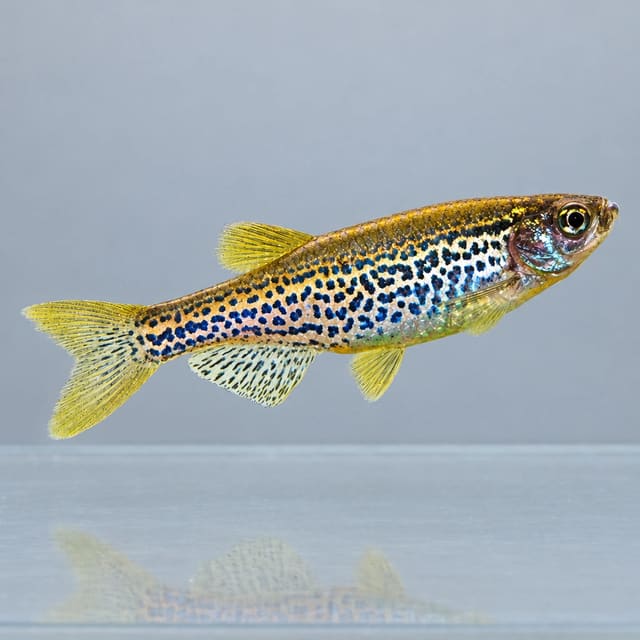
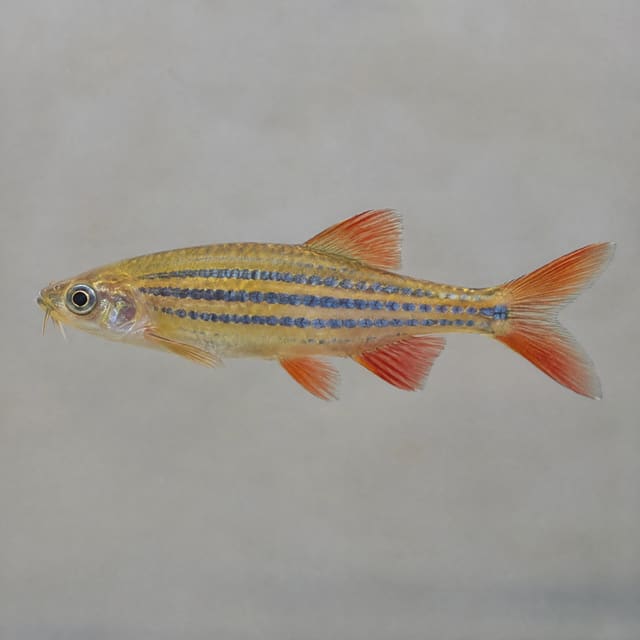
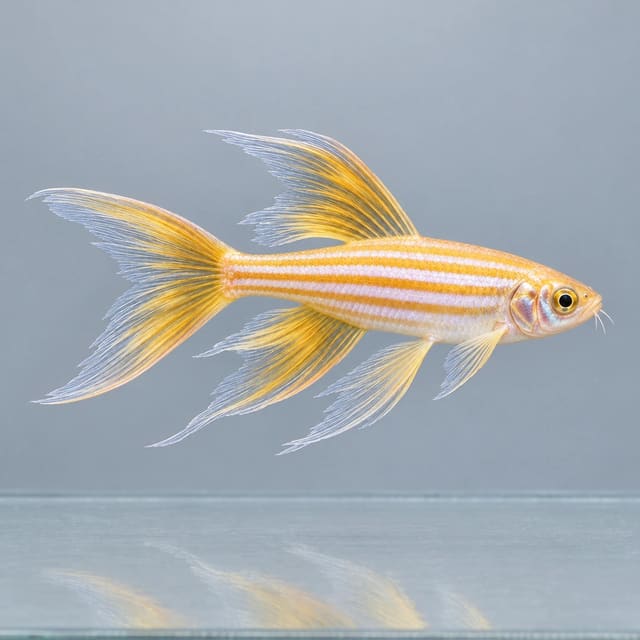
Longfin Golden Zebra Danio (Danio rerio)
18–25°C · pH 6–8
£6.49
Assorted Danios are a random selection of small, hardy Danio species and colour forms, chosen from what is available. Danios are peaceful, fast-swimming shoaling fish for a long aquarium (90 × 30 cm base or more) at 18–25°C, kept in a group of eight to ten or more. Sold individually; the fish you receive is picked at random.
Danio spp.
Quantity discounts are pricing offers, not a group-size recommendation. Check the full care guidance and your existing animals before choosing a quantity.
Minimum of 2 per order.
Assorted Danios are a random selection of small, hardy Danio species and colour forms, chosen from what is available. Danios are peaceful, fast-swimming shoaling fish for a long aquarium (90 × 30 cm base or more) at 18–25°C, kept in a group of eight to ten or more. Sold individually; the fish you receive is picked at random.
Read the full care guidance when planning conditions for your aquarium.
Assorted Danios are a random selection of small Danio species and colour forms, picked from the danios available when your order is packed. Danios are slim, fast, peaceful shoaling fish from South and Southeast Asia, and a group brings constant movement to the upper and middle water of a community aquarium. FishBase now places them in the family Danionidae; older books and many care sites still list them under Cyprinidae, the carp and barb family.
The common small danios are genuinely small. Seriously Fish gives the zebra danio a maximum of 5 cm standard length and the pearl and rosy danios 5.5 cm, while FishBase records the zebra danio at 3.8 cm. A mix of assorted danios is a good, economical way to start a busy shoal if you are happy not to choose the exact fish.
| Suits | Not suited to |
|---|---|
| A shoal of eight or more | One or two fish kept alone |
| A long aquarium with a base of at least 90 × 30 cm | A small bowl or a tall, narrow tank |
| A peaceful community kept at 18–25°C | Large predatory fish, or a tank kept at 27°C or warmer |
| A buyer happy with a random mix | A buyer who needs one particular species or colour |
| A busy, colourful community display | A breeding project (choose one named species instead) |
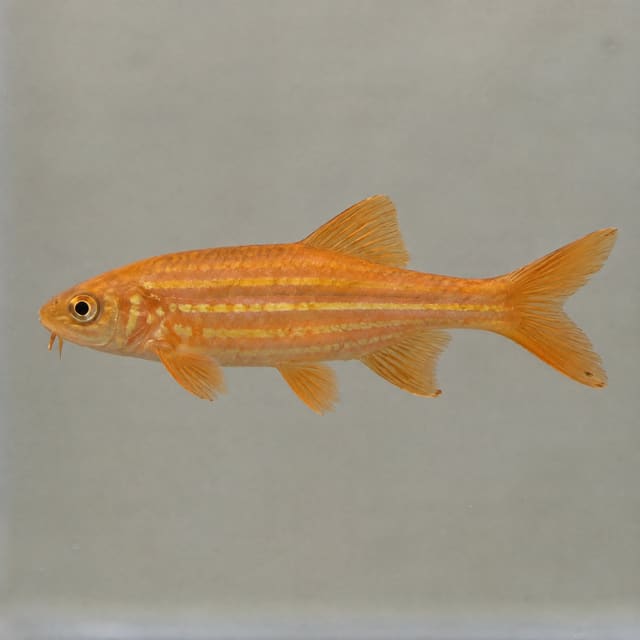
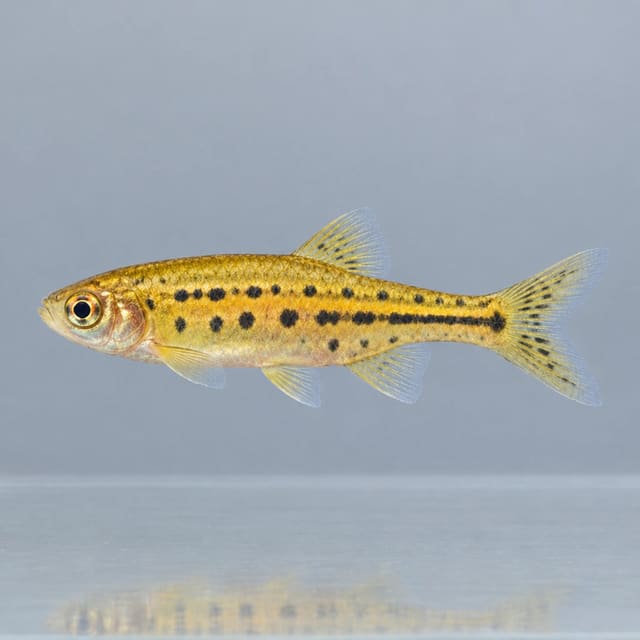
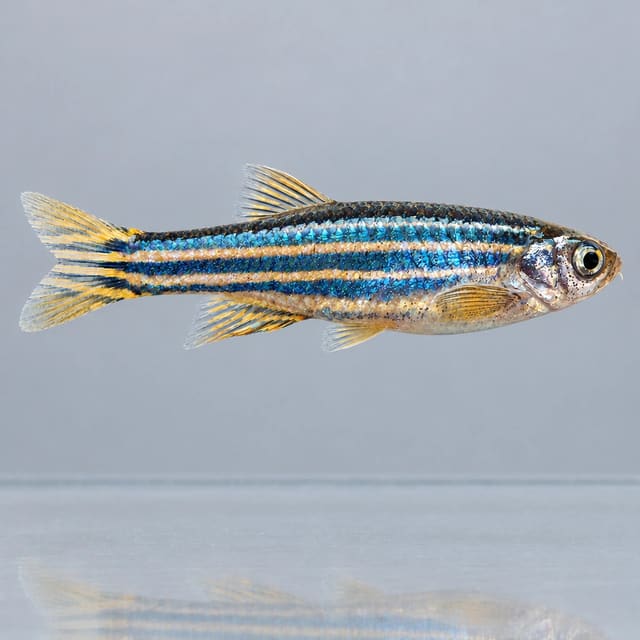
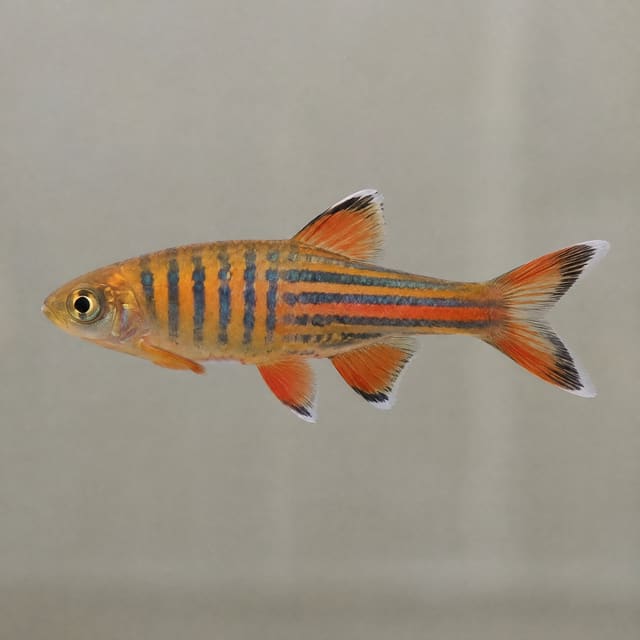
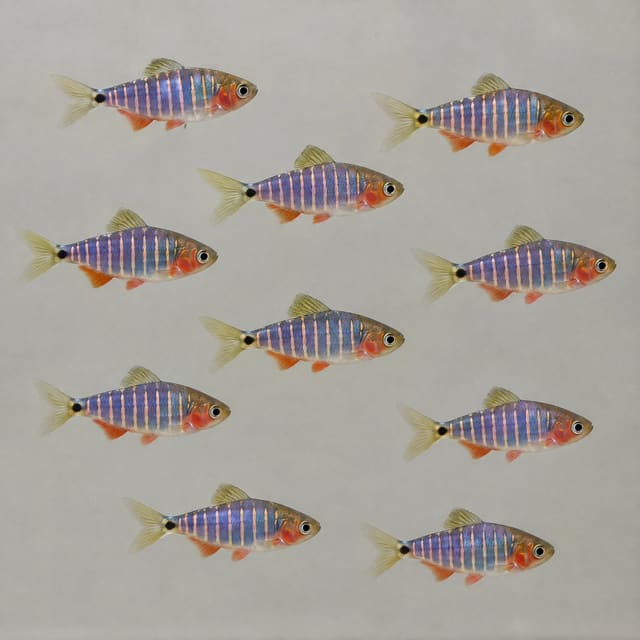
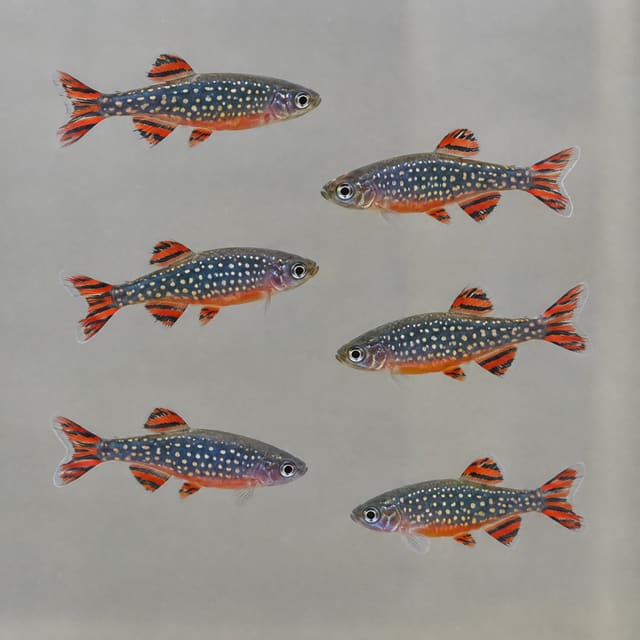
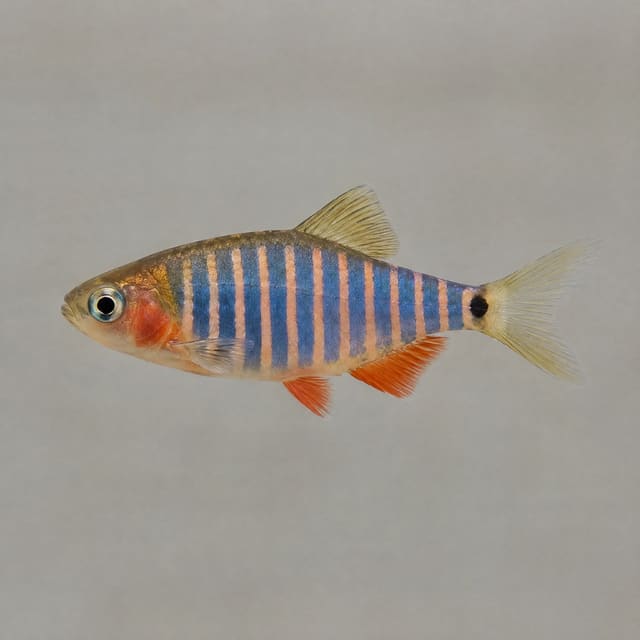
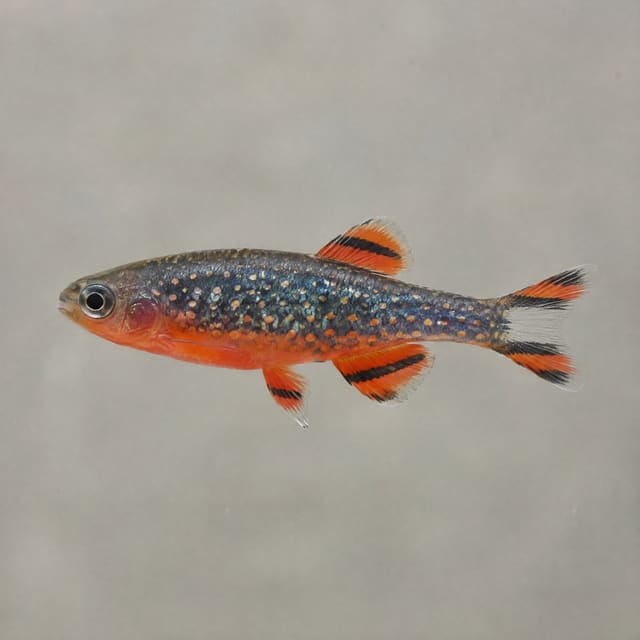
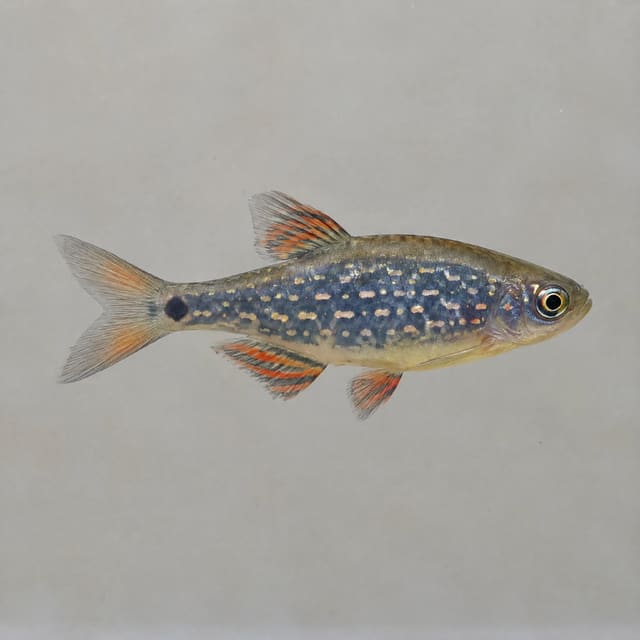
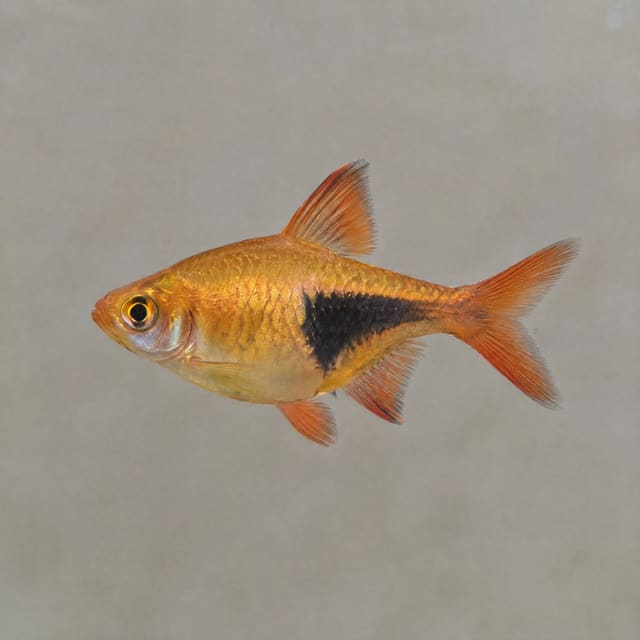
Browse our rasboras and danios or go straight to the Danio genus category to compare named species. Our photographs show a typical striped danio for illustration, not the fish you will receive.
One purchase quantity supplies one live danio in a medium size grade, picked at random. Species, colour and pattern vary between fish and between orders, and you cannot choose them. The sex is not specified. Seriously Fish notes that mature females of these species are usually rounder-bellied, slightly less colourful and a little larger than males, but this is not something we can select for in a random mix.
If you want one particular look, buy a named fish instead, such as the Pearl Danio, Kerr's Blue Danio, Rosy Danio or Glowlight Danio.
Before you order, prepare the aquarium for the whole shoal and read our delivery and live arrival terms. The delivery day is not the right time to find that the planned shoal does not fit.
We cannot say which species will be in a given selection, but the small danios most often traded in the UK are close relatives with similar care. The table uses each species' Seriously Fish profile, so you can see how alike, and how slightly different, they are.
| Danio | Max. standard length | Temperature | pH | Hardness | Minimum base |
|---|---|---|---|---|---|
| Zebra danio, D. rerio | 5 cm | 18–25°C | 6.0–8.0 | 5–20 dGH | 90 × 30 cm |
| Pearl danio, D. albolineatus | 5.5 cm | 16–25°C | 6.0–8.0 | 1–20 dGH | 90 × 30 cm |
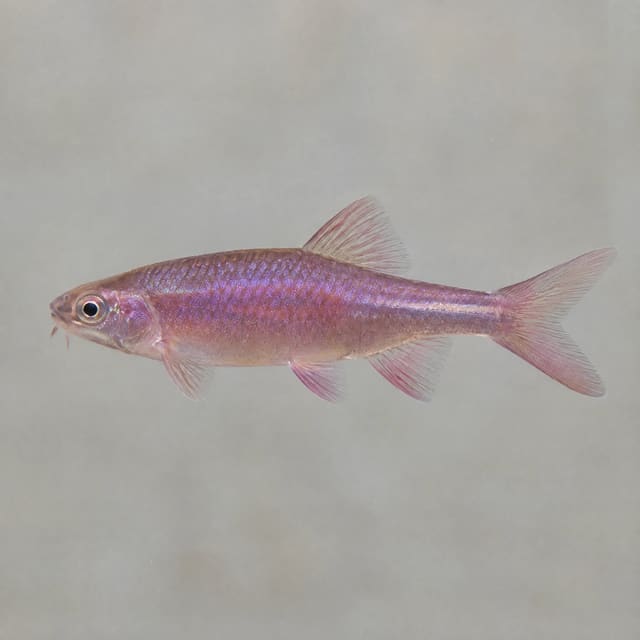
| Rosy danio, D. roseus | 5.5 cm | 18–25°C | 6.0–7.5 | 2–15 dGH | 90 × 30 cm |
| Kerr's danio, D. kerri | 4.5 cm | 18–26°C | 6.5–7.5 | 2–12 dGH | 80 × 30 cm |
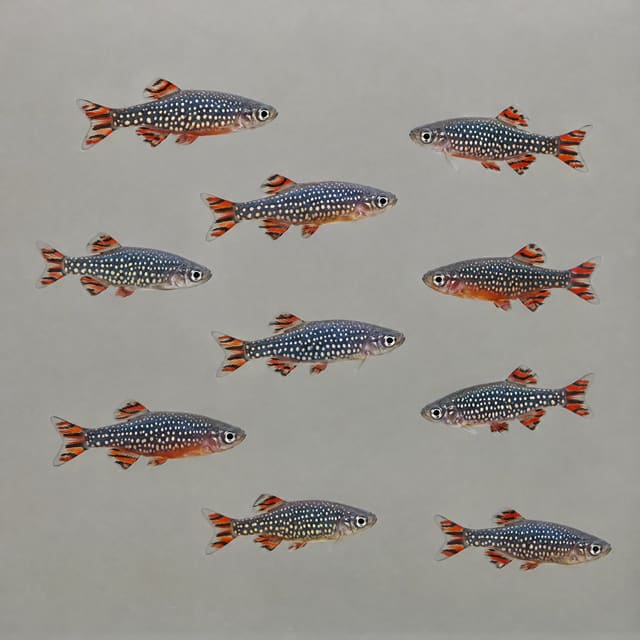
| Glowlight danio, D. choprae | 3 cm | 16–26°C | 6.0–8.0 | 1–12 dGH | 80 × 30 cm |
Zebra danios also come in ornamental forms. Seriously Fish describes the spotted leopard danio as a natural mutation of the striped form, and lists golden and long-finned varieties, all with the same care as the wild type.
Giant danios belong to a different genus, Devario, and are not what this listing is for. Seriously Fish gives the giant danio Devario malabaricus 8 cm and a minimum base of 120 × 45 cm. If you would like one, our Giant Danio is sold separately with its own care notes.
Seriously Fish gives a minimum base of 90 × 30 cm, about 81 litres, for the zebra, pearl and rosy danios, and 80 × 30 cm for Kerr's and glowlight danios. With a random mix, plan for the larger figure. OATA gives at least 45 litres for a small shoal of the smaller species and at least 120 litres for larger danios of 5 cm or more; the length of the tank matters more than its height, because danios swim fast and constantly from end to end.
Our stocking calculator helps you check the full community, and our guide to setting up a first tropical aquarium explains how to prepare and mature the tank before fish arrive.
Seriously Fish says décor is not critical, but danios show better colour in a well-planted aquarium with a dark substrate, and floating plants and driftwood help to soften the light. They appreciate some water movement, though the filtration does not need to be strong.
| Area | Purpose |
|---|---|
| Open lane along the front and centre | Room for the shoal to race and display |
| Planted sides and back | Shelter and resting places without blocking the swimming lane |
| A few floating plants | Softens bright light, which helps colour |
| Gentle current near the outflow | Danios like to swim into moving water |
| Dark sand or fine gravel | Better contrast and colour |
Keep the aquarium covered, as you would for any active surface-swimming fish, and leave space at the back for a siphon so you can reach waste during water changes.
Because you will not know exactly which species you receive, use the overlap of their ranges. Across the five species in the table, Seriously Fish's ranges overlap at 18–25°C, pH 6.5–7.5 and about 5–12 dGH. OATA's general danio guidance is a little wider: 17–27°C, pH 6.5–8.0, 4–12°dH general hardness and 3–10°dKH carbonate hardness.
UK tap water varies widely by region, from soft to very hard, so test yours and compare it with our water matcher. If your water runs a little above pH 7.5, Seriously Fish allows the zebra and pearl danio up to pH 8.0 and OATA gives 6.5–8.0 for danios generally; a stable reading matters more than chasing an exact number with chemicals.
| Reading | Action point |
|---|---|
| Temperature | Keep 18–25°C |
| pH | Keep 6.5–7.5 for a mixed group |
| General hardness | About 5–12 dGH |
| Ammonia | Maintain at zero mg/l |
| Nitrite | Maintain at zero mg/l |
| Nitrate | No more than 20 mg/l above your normal tap-water level |
OATA sets the ammonia, nitrite and nitrate limits in its danio care sheet. In its guide to unheated aquaria, OATA says some danios, such as zebra and leopard danios, can live without a heater in an indoor aquarium, and advises asking about other species. With a random mix, the safe approach is a heater set to hold the tank at 18°C or above when the room is cold.
An active shoal needs clean, well-oxygenated water. Use a mature biological filter sized for the whole community, and direct the outflow along the length of the tank so the danios have a current to swim into while the planted ends stay calmer.
In the wild, danios are micropredators that eat small crustaceans and insects such as mosquito larvae. In the aquarium they accept most foods. Seriously Fish recommends a good dried food with small live or frozen foods such as Daphnia, brine shrimp and bloodworm, and OATA advises feeding once a day, only what the fish finish within a few minutes.
Watch every fish at feeding time. In a mixed shoal the smallest species, such as glowlight danios, can lose out to bigger, bolder zebra or pearl danios, so a wider scatter of smaller food helps everyone feed.
Before introducing danios, confirm that the filter is mature, ammonia and nitrite read zero, and the temperature is 18–25°C. OATA recommends switching off the aquarium lights, floating the sealed bag for 10 minutes, then adding small amounts of tank water to the bag over up to 20 minutes before releasing the fish with as little bag water as possible. Throw the bag water away.
| Checkpoint | What to do |
|---|---|
| Before arrival | Test the water and confirm space for the whole shoal |
| Arrival | Acclimatise with the lights off and a quiet room |
| First feed | A small portion the next day; check every fish eats |
| Every day | Compare swimming, breathing, colour and fins with the day before |
| End of week | Retest ammonia and nitrite, then do the normal water change |
Our step-by-step guide to acclimatising new fish covers the method in more detail. Add new fish to an existing community gradually, and retest after each addition.
Healthy danios have clear, bright eyes, undamaged fins and scales, steady breathing and constant, purposeful swimming. Seriously Fish notes that the zebra danio has been mass-produced for so long that inbreeding is widespread, and it lists neon tetra disease (for which there is no effective treatment), columnaris (Flavobacterium columnare) and microsporidiosis, sometimes called "skinny disease", among the problems seen in the species. Buying from healthy stock and keeping a mature, clean aquarium are the best protection.
| If you see | Do this |
|---|---|
| Hanging at the surface or rapid breathing | Test ammonia, nitrite and temperature at once |
| Clamped fins, flicking or shimmying | Test the water and look for white spots or parasites |
| White spots or fluffy growths | Test the water and seek fish-health advice |
| One fish growing thin while others feed | Remove it to a separate tank if you can and seek advice |
| Constant hiding or loss of colour | Check the shoal size, tank mates and water quality |
Our guide to white spot treatment explains one of the commonest problems in new community fish. Do not diagnose a disease from one sign alone: test the water first and note any recent change.
Seriously Fish says each of these danios should be kept in a group of at least eight to ten, and that males compete for females and show their best colours in a group. OATA gives a minimum of five and says more is better, warning that danios kept singly or in too small a group often become stressed.
A mixed group of danios makes a busy, colourful display. The shoal recommendations are written per species, though, so if you want a tight, uniform shoal, build it from one named species.
Danios are egg-scattering spawners with no parental care, and adults eat their own eggs. Seriously Fish describes breeding zebra danios in a small, dimly lit tank with mesh or fine-leaved plants such as Java moss to protect the eggs, with the adults removed after spawning; the eggs hatch in 24–36 hours. It also warns that pearl danios have been crossed with rosy danios by commercial breeders. With a random mix you cannot be sure which fish are which species, so for breeding, buy one named species.
Seriously Fish describes the common small danios as very peaceful and lists other small cyprinids, tetras, livebearers, rainbowfish, gouramis and other labyrinth fish, catfish and loaches as suitable companions. OATA adds that their constant activity can stress timid fish, and that larger goldfish may eat small fish like these.
| Suits | Avoid |
|---|---|
| Cool-tolerant small fish such as White Cloud Mountain Minnows | Large predatory fish that can swallow a danio |
| Peaceful bottom fish such as Bronze Corydoras | Larger goldfish, which may eat small fish |
| Other small peaceful cyprinids, tetras, livebearers and rainbowfish | Very slow, shy or long-finned fish that are easily stressed |
| Gouramis and catfish that like 18–25°C | Fish that need water warmer than 25°C |
Our tank mates checker lets you test a combination before you buy, and our White Cloud Mountain Minnow guide covers one of the best cool-water partners for danios.
No. Assorted Danios are picked at random from the small danio species and colour forms available, so species, colour and pattern vary. To choose a particular kind, buy a named danio instead.
Seriously Fish recommends at least eight to ten for each of the common small danios, and OATA says at least five, with more being better. Each purchase quantity supplies one fish, so order eight or more for a shoal.
Plan for a long aquarium with a base of at least 90 × 30 cm, about 81 litres, which is the Seriously Fish minimum for zebra, pearl and rosy danios. OATA gives at least 45 litres for a small shoal of the smallest species.
The common small danios suit 18–25°C. OATA says some, such as zebra and leopard danios, can live in an unheated indoor aquarium, but with a random mix use a heater whenever the room drops below 18°C.
Aim for 18–25°C, pH 6.5–7.5 and about 5–12 dGH, where the Seriously Fish ranges of the common small species overlap. Keep ammonia and nitrite at zero and nitrate no more than 20 mg/l above your tap water.
Yes. They share similar needs and are very peaceful. Seriously Fish group advice is given per species, so a shoal of one named species gives the most natural display, and anyone planning to breed should keep species apart.
Almost anything of the right size. Feed a good flake or small granule once a day, only what the shoal clears in a few minutes, and add small live or frozen foods such as Daphnia, brine shrimp and bloodworm.
Yes, they are among the hardiest community fish, provided the aquarium is mature, long enough for an active shoal, and kept clean with weekly testing and partial water changes.
No reviews for this item yet. Bought one? Honest reviews only, good or bad.
What customers say about ordering from us
Easy website plenty of info on fish your buying great to pick a time slot
TRACEY DURRANT · 7 Oct 2026
Got some lovely fish thank you
Kevin Mackie · 7 Oct 2026
Reviews of our shop, collected by Judge.me, an independent third-party review collector. Newest first.
Moved by UK carriers licensed to handle live animals
Hand-packed with oxygen bags, poly box, heat pack
Email photos the same day; an optional unboxing video helps us review problems faster — claim terms apply
Klarna & PayPal Pay in 3 at checkout