Easy
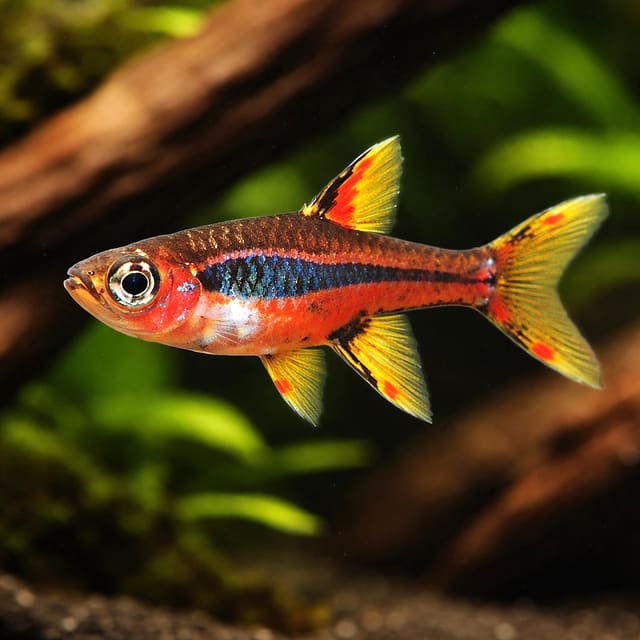
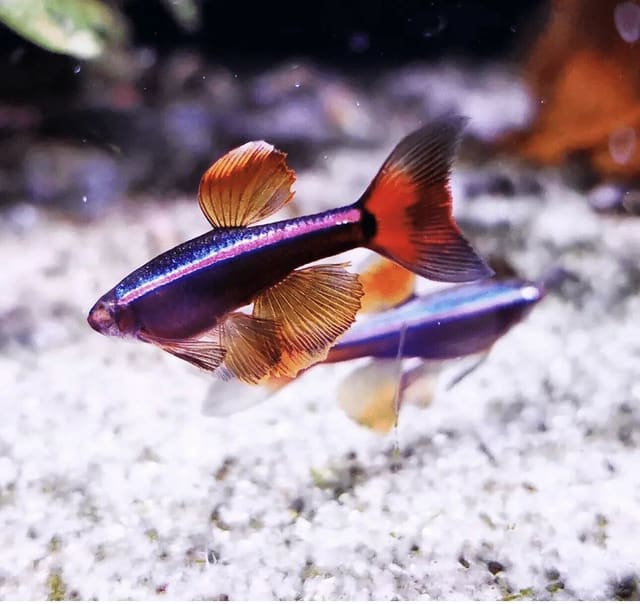
Harlequin (Rasbora heteromorpha)
21–28°C · pH 5–7.5 · 54L
£2.99

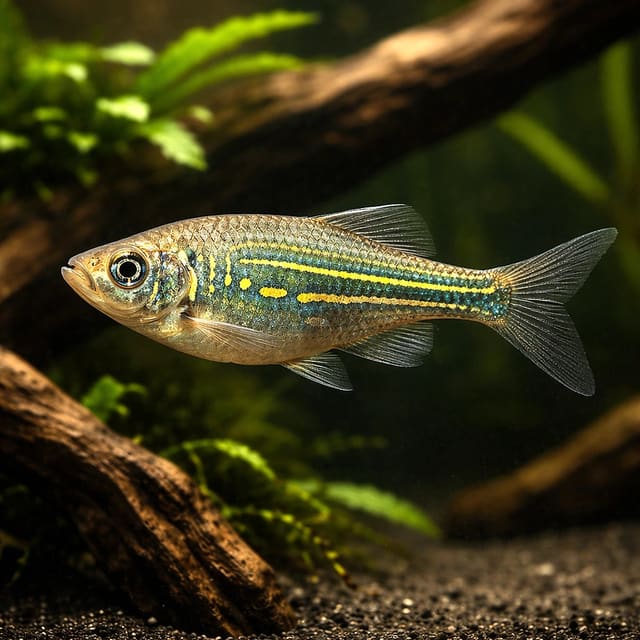
The Glowlight Danio (Danio choprai) is a freshwater danio from the Irrawaddy in northern Myanmar that reaches 3.1 cm standard length. It suits prepared keepers who can provide at least eight fish, a covered aquarium of about 72 litres with an 80 × 30 cm base, and stable water at 16–26°C and pH 6.0–8.0. Sold individually in dispatch sizes from 1 cm to 2–3 cm.
Adult size is the maximum length this species reaches at full maturity (scientific sources). The livestock you receive will be younger and smaller — pick a size above for the actual shipping size. Product-photo provenance and any image-specific limitations are stated on the listing.
Danio choprai
Save when buying multiple fish. Each quantity is one fish; sex and pair formation are not guaranteed unless the selected variant explicitly states them.
Minimum of 2 per order.
The Glowlight Danio (Danio choprai) is a freshwater danio from the Irrawaddy in northern Myanmar that reaches 3.1 cm standard length. It suits prepared keepers who can provide at least eight fish, a covered aquarium of about 72 litres with an 80 × 30 cm base, and stable water at 16–26°C and pH 6.0–8.0. Sold individually in dispatch sizes from 1 cm to 2–3 cm.
Adult size is the maximum length this species reaches at full maturity (scientific sources). The livestock you receive will be younger and smaller — pick a size above for the actual shipping size. Product-photo provenance and any image-specific limitations are stated on the listing.
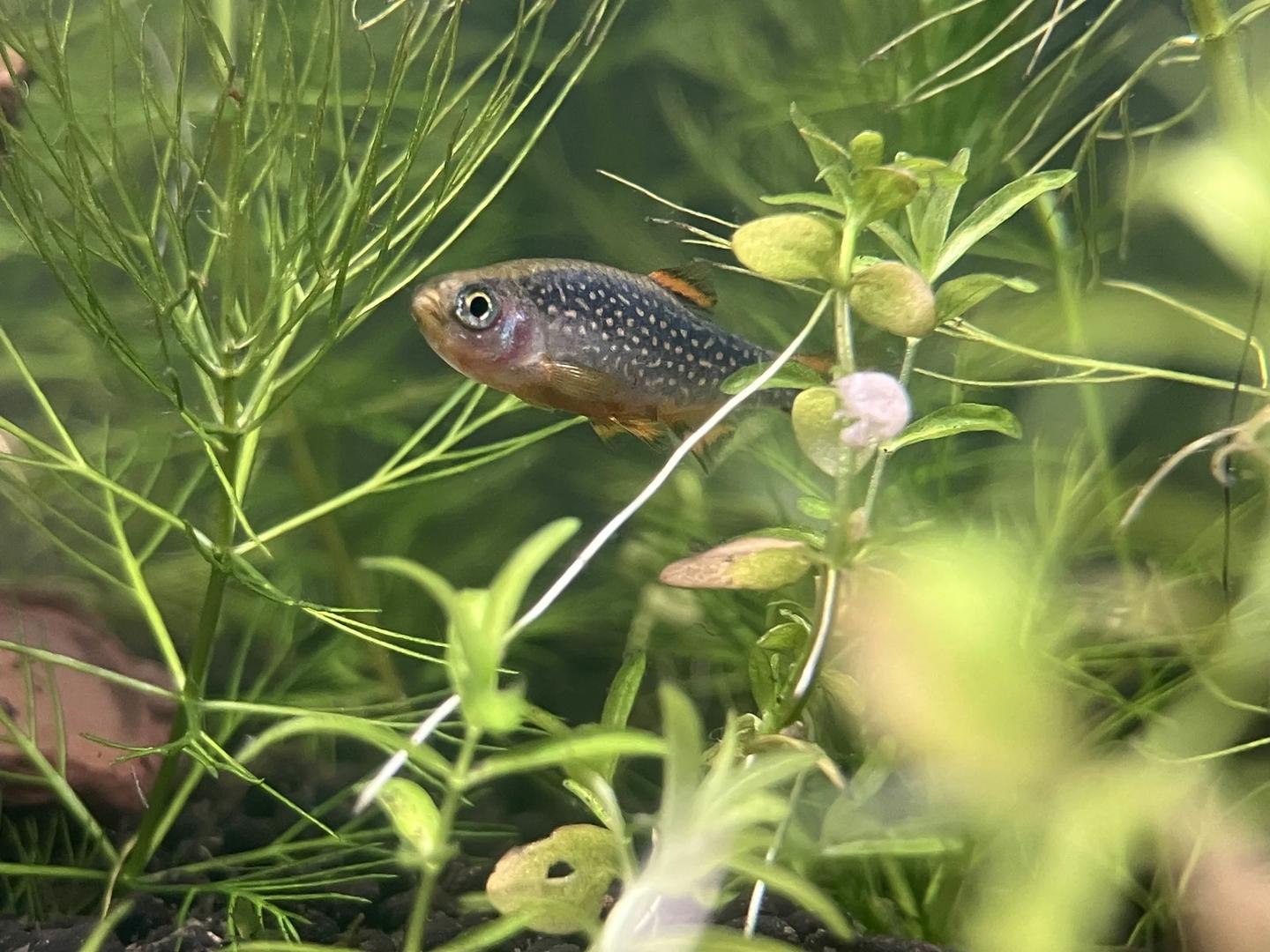
Plan a mature, densely planted aquarium with at least a 45 × 30 cm base for a social group. Use 20–26°C, pH 6.5–7.5 and 5–15 dGH as published screening ranges, then hold a stable value inside the overlap for every animal in the tank.
Maintain these water conditions for optimal health and vibrant colors
The Glowlight Danio (Danio choprai) is a small freshwater danio from the Irrawaddy in northern Myanmar that reaches 3.1 cm standard length. It suits a prepared keeper who can provide a proper social group, a long swimming area and stable aquarium conditions. This generally peaceful species can live in a well-furnished community, but its constant movement means the aquarium must be planned around activity as well as body length.
FishBase records this tropical, benthopelagic danio from northern Myanmar and gives a maximum recorded length of 3.1 cm standard length. FishBase now lists it as Danio choprae and treats Danio choprai as a synonym. It places the species in the family Danionidae and assesses it as Least Concern.
Small body size does not make this a fish for a cramped container. The decisive question is whether the aquarium offers enough horizontal room for a continuously moving group. A rectangular base of at least 80 × 30 cm gives the fish a practical swimming route while leaving space for plants, wood or rocks around the margins.
OATA describes danios broadly as active shoaling fish and popular starter fish, but success still depends on preparing the aquarium before introducing livestock. A working biological filter, suitable water, a secure cover and enough members of the same species are essential parts of that preparation.
| Suits | Not suited to |
|---|---|
| Keepers able to maintain at least eight fish | A planned solitary display |
| Covered aquariums with an 80 × 30 cm or larger base | Cramped aquariums without sufficient horizontal swimming room |
| Well-furnished communities with carefully screened residents | Communities containing very timid fish stressed by constant activity |
| Stable water within 16–26°C, pH 6.0–8.0 and 1–12 dGH | Residents whose water requirements do not overlap |
One purchase supplies one animal in the size selected. The live size selector carries 1 cm and 2–3 cm choices, so set the quantity to the number of individual fish required rather than expecting a pair or ready-made group.
The size you select is the size supplied, not the adult size. Plan the permanent aquarium around a maximum recorded length of 3.1 cm standard length, the activity of the whole group and the space taken by every other resident. The smaller dispatch measurement never reduces the adult swimming-space requirement.
The species profile recommends a group of at least 8–10 specimens. For a new group, begin with no fewer than eight and aim for ten where the aquarium can support them. One individual can join a suitable established group, but one should not be planned as a solitary display fish.
Sex is guaranteed only when the selected option explicitly states male or female. This Glowlight Danio listing has no sex-guaranteed option.
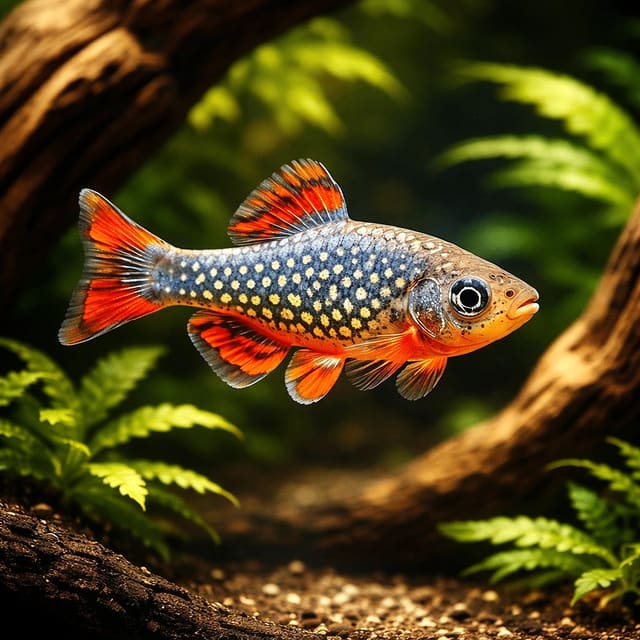
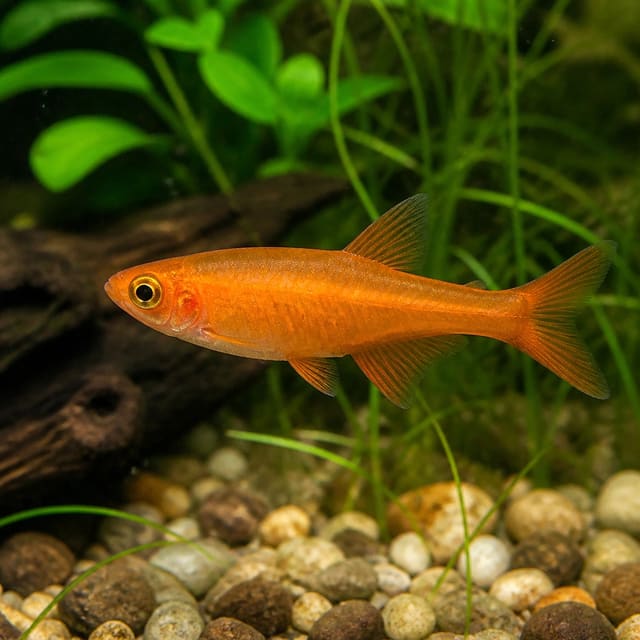
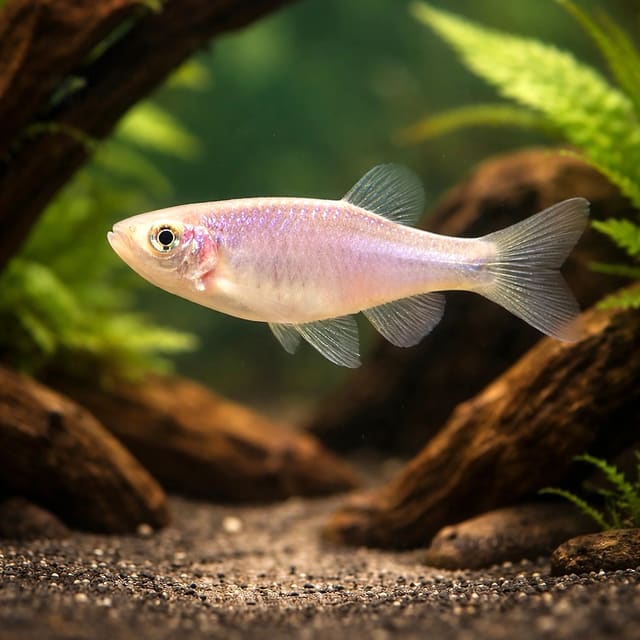
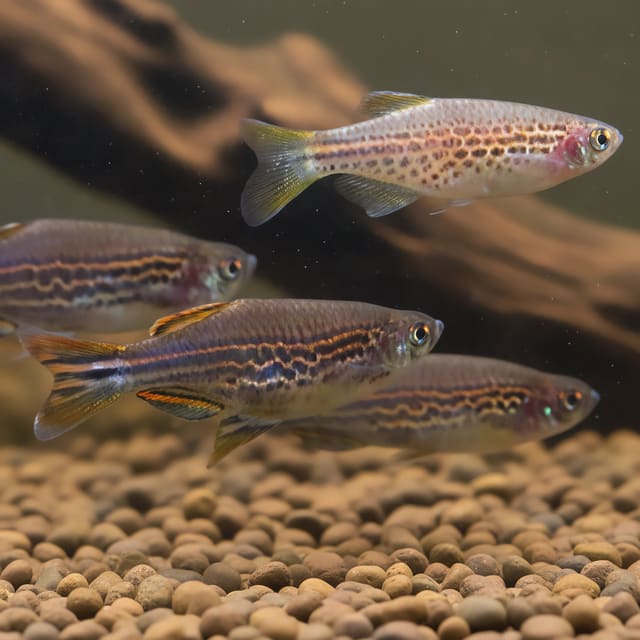
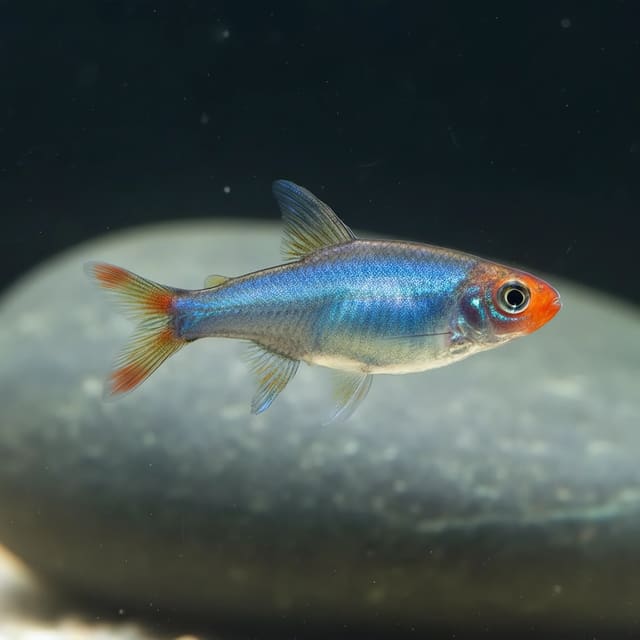
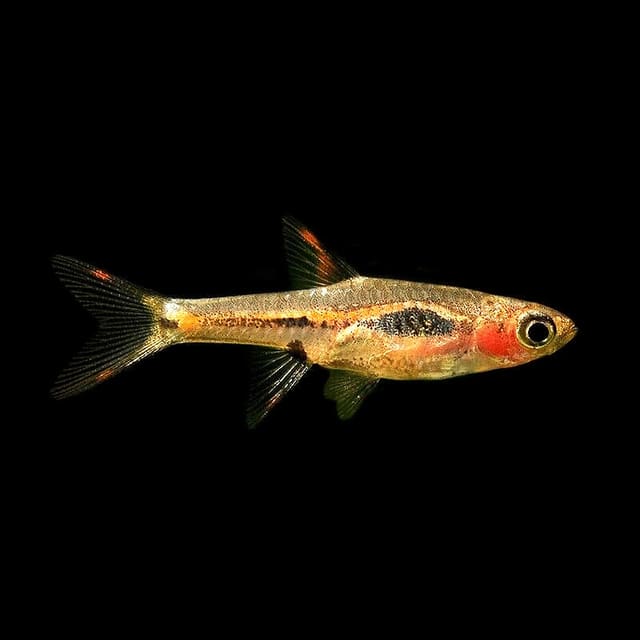
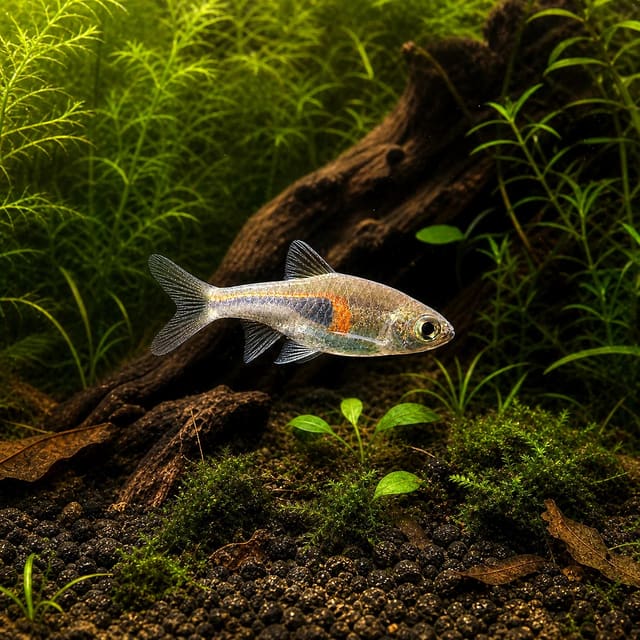
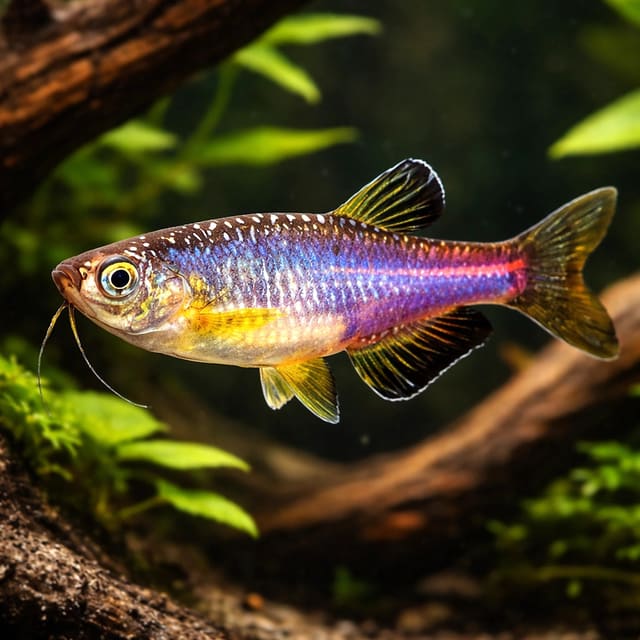
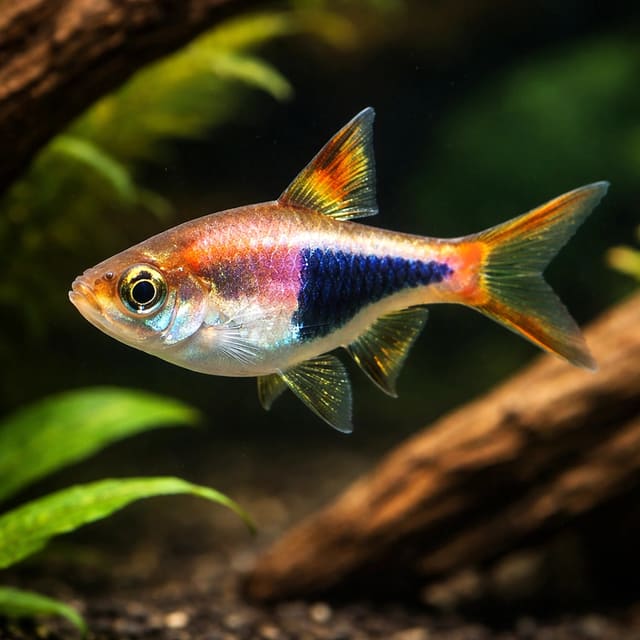
The gallery images are representative, based on reference photographs of this species, so colours can look slightly different from the live animal.
| Size or quantity | What it means |
|---|---|
| 1 cm | One animal in the selected dispatch size |
| 2–3 cm | One animal in the selected dispatch-size band |
| Quantity eight | Eight individual animals in the selected size |
| Quantity ten | Ten individual animals in the selected size |
Do not use the dispatch measurement to estimate sex, maturity, origin or final colour. Select by the aquarium already prepared for the complete group, including its adult space, filtration and water requirements.
The Seriously Fish species profile gives an aquarium base of 80 × 30 cm or larger for this active fish, with an approximate volume of 72 litres. Its routine aquarium range is 16–26°C, pH 6.0–8.0 and hardness of 1–12 dGH.
Those outer limits are not targets to move between. Choose stable values inside all three ranges and compare them with the needs of every intended resident. If another species needs conditions outside the overlap, do not combine the two merely because both are described as peaceful.
| Measure | Planning value |
|---|---|
| Maximum recorded length | 3.1 cm standard length |
| Aquarium base | At least 80 × 30 cm |
| Approximate volume | About 72 litres |
| Temperature | 16–26°C |
| pH | 6.0–8.0 |
| General hardness | 1–12 dGH |
| Social group | At least eight; aim for ten where space permits |
A tank can meet the volume figure while offering a poor shape for swimming. Give priority to the stated base dimensions, then account for the space displaced by rocks, wood and dense planting. Preserve a clear route rather than filling the entire middle of the aquarium with décor.
Water compatibility must be checked with measurements rather than appearance. Test the aquarium and compare the results with the stated range using the Water Parameter Matcher. Where the values overlap, keep them steady instead of repeatedly adjusting towards a single decimal.
Start with a base of at least 80 × 30 cm and an approximate volume of 72 litres. These dimensions are required for the species because it is active, even though its recorded adult length is small. Increase the aquarium plan when other fish, substantial décor or a larger Glowlight Danio group will share the same water.
A heavily planted arrangement with a darker substrate can provide an effective setting. A flowing-river or stream-style layout is another supported option, using variably sized rocks and gravel with larger water-worn stones. Hardy plants such as Microsorum, Bolbitis or Anubias can be attached to wood or rock instead of occupying the swimming lane.
Additional filter outlets or powerheads may provide flow, but torrent-like conditions should be avoided. Small danionins occupy calmer stretches and marginal zones in nature, so arrange circulation across the aquarium rather than forcing the group to remain in one harsh jet.
Members of this genus are accomplished jumpers and can pass through surprisingly small gaps. Inspect the cover after every maintenance session, especially where cables, hoses or filter returns enter. Replace the lid correctly before restarting normal activity around the aquarium.
If décor leaves only a short route, simplify the centre rather than relying on the litre figure alone. The aquarium should let the whole group swim, turn and move between cover and open water without being confined to narrow pockets.
Maintain a stable temperature from 16–26°C, pH from 6.0–8.0 and general hardness from 1–12 dGH. Measure the aquarium rather than assuming that tap water, room temperature or clear-looking water is suitable. The water chemistry guide explains what the principal test results mean and why they matter.
Choose a point within the range that also suits every companion. For example, a measured temperature of 24°C falls inside 16–26°C, but it is useful only when the other residents can also be kept at 24°C. Apply the same overlap test to pH and hardness.
OATA’s general danio guidance gives zero mg per litre for ammonia, zero mg per litre for nitrite and nitrate no more than 20 mg per litre above the normal tap-water level for the group. Use those waste limits alongside the decisions made from this fish’s aquarium range.
| Test result | Decision |
|---|---|
| Ammonia 0 mg/l | Maintain filtration and the established routine |
| Ammonia above 0 mg/l | Treat it as a water-quality problem and act promptly |
| Nitrite 0 mg/l | Maintain filtration and continue testing |
| Nitrite above 0 mg/l | Treat it as toxic and correct the cause promptly |
| Rising nitrate | Compare it with tap water and review waste removal |
Test at least once each week and whenever behaviour changes. A sudden shift in swimming, breathing, colour or feeding should trigger water tests before any treatment is considered. Record the measurements so gradual changes are easier to recognise.
Replace water with conditioned tap water and avoid abrupt changes in temperature or chemistry. Weekly measurements are most useful when they lead to consistent action: remove waste, maintain the filter, keep stocking controlled and correct a measured problem rather than chasing a theoretical perfect value.
A well set up and maintained biological filter is essential. The RSPCA explains that fish release toxic ammonia; filter bacteria convert it to nitrite, which is also toxic, and then to the safer nitrate. The aquarium must therefore be prepared around a functioning bacterial population rather than clear water alone.
If this is your first aquarium, complete the steps in our first tropical tank guide before introducing livestock. Adding fish before the filter can process their waste risks ammonia and nitrite rising faster than the bacterial population can respond.
For an aquarium of about 72 litres, the species profile uses a turnover of four to five times the aquarium volume per hour and points to a filter rated around 290–360 litres per hour. Ratings are a planning reference: décor, media loading and blockages can affect the movement seen in the aquarium.
When media needs cleaning, rinse it lightly in aquarium water removed during a partial water change. Do not rinse it under the tap because chlorine or chloramine may kill beneficial bacteria. Avoid replacing all established media at the same time.
Increase livestock numbers slowly. OATA warns that stocking too quickly can create new tank syndrome when the biological filter cannot process the extra waste and feeding load. A social species still needs its proper group, so prepare enough mature filtration for that group rather than using prolonged solitary keeping as a cycling method.
In nature, the Glowlight Danio is thought to prey chiefly on insects and their larvae. In the aquarium it accepts most foods. Use a good-quality dried product as the staple and supplement it regularly with small live or frozen foods such as bloodworm, Daphnia and Artemia.
OATA’s feeding schedule for danios is once a day, giving only what the fish can eat within a few minutes. This creates a clear portion test: if food remains after the group has stopped feeding, reduce the next portion rather than allowing leftovers to break down.
| Food decision | Action |
|---|---|
| Dried staple | Choose a good-quality flake or granule small enough to be eaten |
| Live or frozen variety | Offer small bloodworm, Daphnia or Artemia regularly |
| One fish misses food | Spread the portion so every part of the group has access |
| Food remains | Remove it and reduce the next portion |
| Interest in food falls | Test water and compare other changes in behaviour or appearance |
Observe actual feeding rather than relying on the amount added. A group may gather rapidly at one point while a less confident individual remains behind. Distributing an appropriately sized portion gives each fish a better opportunity to eat within the short feeding period.
Do not compensate for missed meals by adding a large quantity at once. Overfeeding leaves organic waste that can contribute to deteriorating water conditions. Keep the routine simple: one measured daily feed, a suitable staple, regular small live or frozen variety and prompt removal of leftovers.
Body condition and feeding response are useful daily checks. A reduced intake, loss of interest or noticeable change in weight belongs with the other warning signs in the health routine. Test ammonia and nitrite and review competition before changing foods repeatedly.
Carry out a partial water change of 25% at least once every week. Use a siphon to remove solid waste from the substrate, especially where food and debris collect around stones, wood or dense planting. Treat replacement tap water with conditioner before it enters the aquarium.
A stable routine lets you compare one week with the next. If nitrate rises more quickly, waste accumulates sooner or the filter blocks repeatedly, review feeding and total stocking rather than treating each symptom as an isolated event.
| Change noticed | First response |
|---|---|
| Surface hanging or unusual bottom sitting | Test water and check filter operation |
| Erratic swimming | Check water, flow and interactions within the aquarium |
| Faster or slower gill movement | Test water promptly and observe the whole group |
| Darker or paler colour | Compare behaviour, feeding and recent aquarium changes |
| White spots, fluffy growths or damaged fins | Record the signs and seek experienced aquatic health guidance |
| Reduced feeding | Check food size, competition and water results |
Different problems may share similar outward signs. Test the environment first, document what changed and speak to an aquatic veterinarian or experienced aquatic retailer when the cause remains unclear. Do not select treatment from one symptom alone.
Prepare the complete aquarium and social plan before the fish arrives. Confirm that the base measures at least 80 × 30 cm, the volume is about 72 litres or more, the cover closes securely and the biological filter is operating. Test ammonia and nitrite and proceed only when both measure zero mg per litre.
Read the current delivery and Live Arrival Guarantee policy before the delivery date.
After introduction, observe swimming behaviour, breathing, colour, condition and response to food. Check whether all members can use the open route and move into calmer planted or structured areas. Investigate persistent isolation, erratic swimming, surface hanging or reduced feeding through water tests and observation.
Continue the once-daily feeding limit and remove uneaten food. Add other livestock only slowly because every increase in fish numbers and feeding requires the filter’s bacterial population to process more waste. Do not use one apparently normal test as a reason to complete several stocking changes at once.
Carry out a 25% partial water change at least once each week and test the water at least weekly. Compare results over time rather than waiting for visible deterioration. Check filter flow, the secure cover and waste accumulation around the layout during every maintenance session.
By the end of the first month, the useful measure is consistency: zero ammonia, zero nitrite, controlled nitrate, steady feeding and normal movement across the group. If those conditions are not holding, pause further additions and correct the aquarium routine.
The Glowlight Danio is a schooling species and should be kept in a group of at least 8–10 specimens. For practical planning, begin with no fewer than eight and aim for ten where the aquarium’s dimensions, filtration and total stocking permit. A lone fish should not be the intended permanent arrangement.
OATA’s broader danio guidance gives at least five, with more being better, and warns that danios kept singly or in groups that are too small often become stressed. Use the species profile’s higher figure for this fish, so five should not be the target for a new Glowlight Danio group.
| Situation | Decision |
|---|---|
| Starting a new group | Select at least eight individuals |
| Space supports ten | Aim for ten rather than stopping at the lower threshold |
| Adding to an established group | Count the residents and selected individuals together |
| Aquarium is below 80 × 30 cm | Prepare a larger aquarium rather than reducing the social group |
| Community is heavily stocked | Assess total waste, space and water overlap before adding fish |
Adding more members cannot repair inadequate swimming room or an immature filter. Work from both requirements at once: provide the social number and provide an aquarium capable of supporting it. If the aquarium cannot hold at least eight with an appropriate safety margin, choose a different plan rather than keeping this species alone.
Normal activity can be lively. Judge welfare through the complete pattern: whether fish feed, maintain condition, use the aquarium and show steady breathing. Persistent isolation, loss of appetite, damage or an abrupt change in swimming needs investigation through group size, water tests, layout and community interactions.
This species is generally very peaceful and can live in a well-furnished community, but no category is an automatic match. Screen each exact companion for temperature, pH, hardness, adult space, flow, feeding pace and behaviour before combining it with an active danio group.
The species profile identifies other small cyprinids, tetras, livebearers, rainbowfish, anabantoids, catfish and loaches as possible community categories. Treat these as candidates for individual checking rather than universal tank-mate promises. Species within the same category can differ substantially in size, behaviour and water needs.
OATA warns that active danios may stress more timid species. Use caution where a resident depends on a very quiet aquarium or withdraws from food when surrounded by fast swimmers. Peaceful temperament alone does not settle that decision because activity can cause pressure without direct aggression.
| Candidate | Screening rule |
|---|---|
| Other small cyprinids | Compare water, adult space and swimming pace |
| Tetras or livebearers | Check exact temperature, chemistry and feeding behaviour |
| Rainbowfish or anabantoids | Assess adult dimensions, activity and flow needs |
| Catfish or loaches | Include their footprint, water range and feeding requirements |
| Very timid fish | Use caution because constant movement may cause stress |
Browse the rasboras and danios collection to compare identities, then assess each animal separately. Where behaviour between two exact species remains uncertain, base the decision on the more demanding water, space and activity requirement.
A Glowlight Danio reaches 3.1 cm standard length according to FishBase. Standard length excludes the tail, and its active swimming still requires a base of at least 80 × 30 cm.
Use a covered aquarium with a base of at least 80 × 30 cm and an approximate volume of 72 litres or more. Preserve open swimming room and provide planted or structured margins with calmer areas away from the strongest flow.
Keep at least eight Glowlight Danios and aim for ten where the aquarium dimensions, filtration and total stocking permit. This is a schooling species and should not be planned as a solitary fish.
A Glowlight Danio can suit a prepared beginner who has a mature filtered aquarium, a secure cover, an 80 × 30 cm or larger base and room for at least eight fish. The keeper must test the water and complete regular maintenance.
Feed a Glowlight Danio a good-quality dried staple once a day in an amount eaten within a few minutes. Regularly supplement it with small live or frozen bloodworm, Daphnia or Artemia.
Keep it at 16–26°C, pH 6.0–8.0 and 1–12 dGH. These are the species aquarium values from Seriously Fish; choose stable conditions that also suit every companion.
It is generally very peaceful, but its constant activity may stress more timid fish. Plan around its swimming pace, maintain a group of at least eight and investigate persistent chasing, isolation or fin damage.
Other small cyprinids, tetras, livebearers, rainbowfish, anabantoids, catfish and loaches are possible after exact checks. Match temperature, pH, hardness, adult space, flow and feeding pace, and use caution with very timid fish.
Someone must be present to receive it. Film every delivery continuously from the sealed parcel as it is opened, with the fish still in the sealed bag; float the bag for 20–30 minutes, then release the fish without pouring bag water into the aquarium.
No reviews for this item yet. Bought one? Honest reviews only, good or bad.
What customers say about ordering from us
I have a small group of long finned mountain minnows. So was delighted to be able to order ten of this variety to increase the genetics in my tank . The ones I recieved are healthy but it’s to early to give a verdict on wether they are of a long finned type since they are small currently.
Gordon Walker · 23 Sept 2026
100% success travel and "installation". Pleased with quality of purchase. The Siamese fighter a bit "shy" so have not yet seen him at his best yet but looking good. Happy customer. GG
George E Garratt · 21 Sept 2026
Reviews of our shop, collected by Judge.me, an independent third-party review collector. Newest first.