Easy
Orange Giant Danio (Danio malabaricus)
18–25°C · pH 6.5–8 · 243L
£9.99
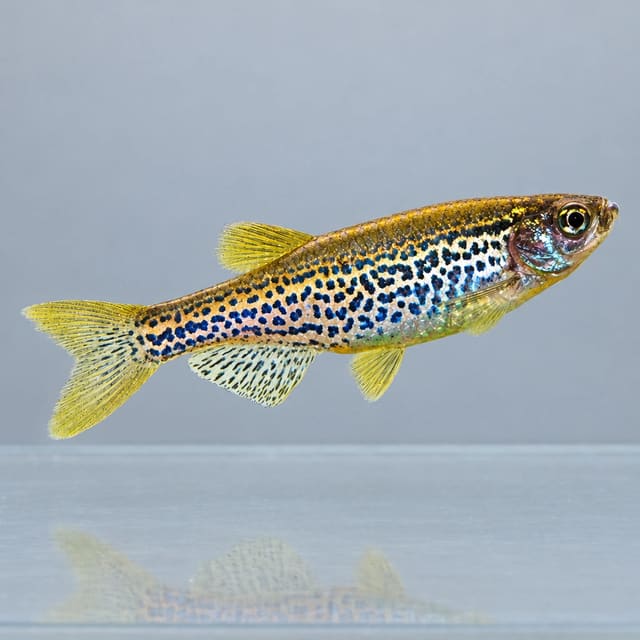
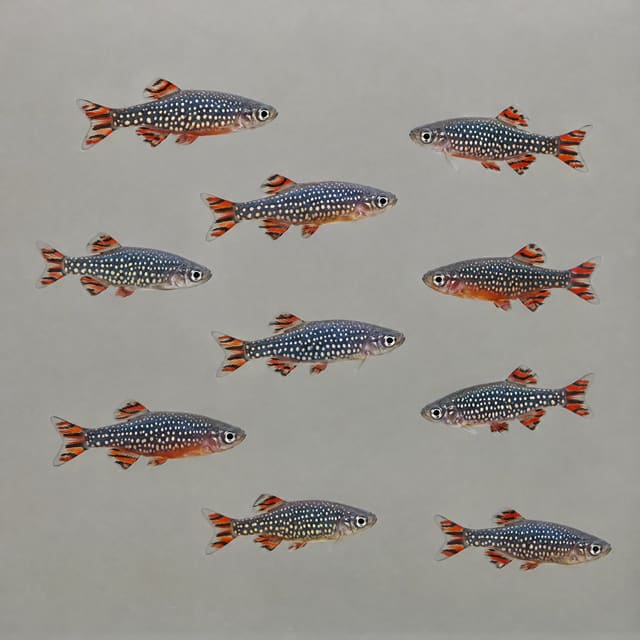
The Burmese Spotted Gold Danio is Danio tinwini, a tiny golden danio from northern Myanmar with rows of dark spots and spotted fins, also sold as Danio sp. 'Burma' or the gold ring danio. It reaches about 3 cm and suits a planted aquarium with a base of 45 × 30 cm or more, kept as a shoal of eight to ten. One live fish per purchase.
Danio tinwini
Quantity discounts are pricing offers, not a group-size recommendation. Check the full care guidance and your existing animals before choosing a quantity.
The Burmese Spotted Gold Danio is Danio tinwini, a tiny golden danio from northern Myanmar with rows of dark spots and spotted fins, also sold as Danio sp. 'Burma' or the gold ring danio. It reaches about 3 cm and suits a planted aquarium with a base of 45 × 30 cm or more, kept as a shoal of eight to ten. One live fish per purchase.
Read the full care guidance when planning conditions for your aquarium.
The Burmese Spotted Gold Danio is Danio tinwini, a tiny schooling fish from northern Myanmar with a golden body, rows of dark spots and spotted fins. Seriously Fish lists the trade names it has been sold under, including "Danio sp. Burma", "spotted", "gold ring", "fire ring" and TW02, and it may also appear as Brachydanio tinwini. Kullander and Fang described it scientifically in 2009.
It is known only from the Mogaung Chaung, a tributary of the Irrawaddy (Ayeyarwady) River in Kachin State. Little is recorded about its habitat, and Seriously Fish presumes it lives in the slower edges of well-oxygenated streams and small rivers. It is one of the smallest danios: Seriously Fish gives a maximum of 30 mm standard length, and FishBase records 2.2 cm for males and 2.6 cm for females, measured without the tail.
| Species | Key features (Seriously Fish) |
|---|---|
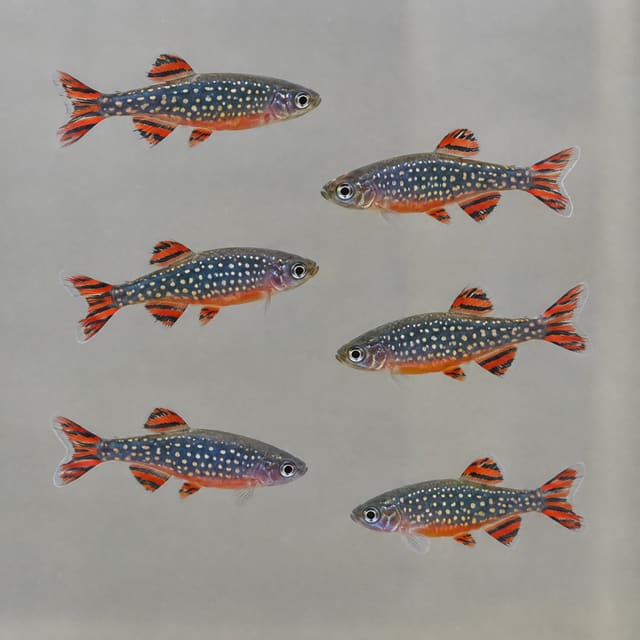
| Danio tinwini (this fish) | Spotted dorsal, anal and tail fins; the main stripe broken into a row of spots |
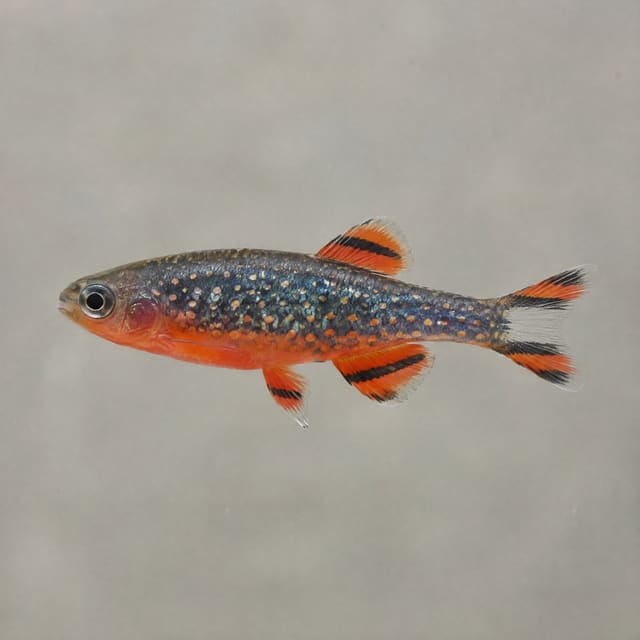
| Danio kyathit | Striped rather than spotted fins |
| Danio nigrofasciatus (dwarf spotted danio) | Fins mostly striped rather than spotted, although its anal fin is spotted; up to 40 mm standard length |
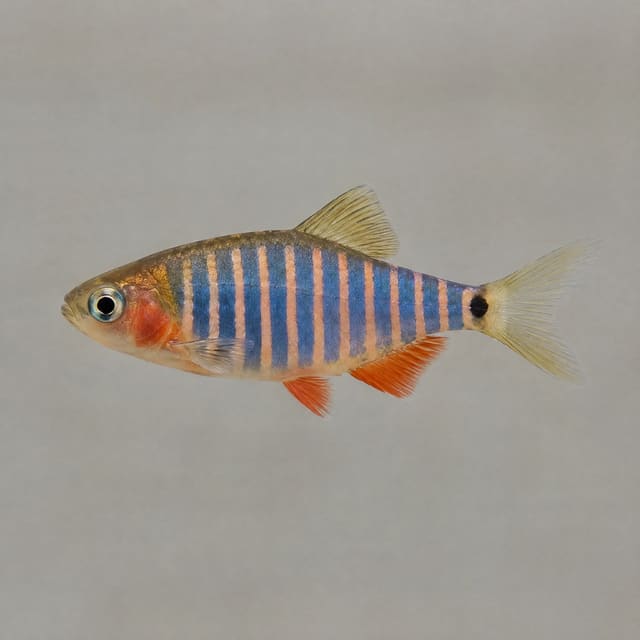
| Danio aesculapii | Six or seven brown vertical bars on the front of the body, then two rows of small spots |
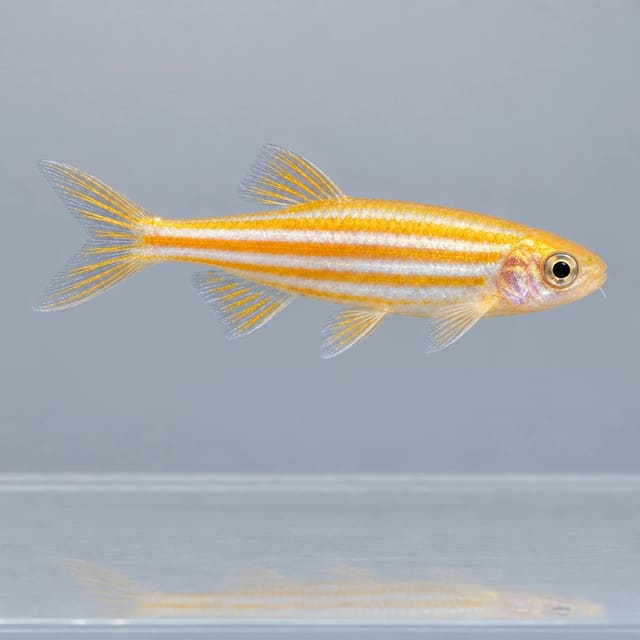
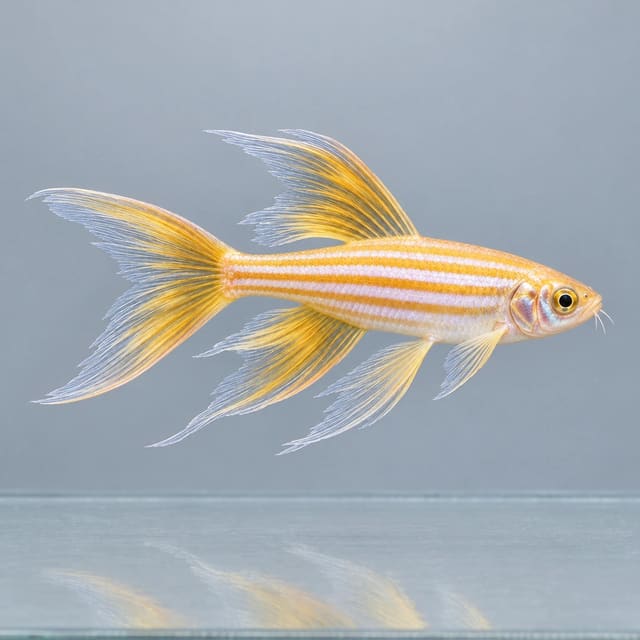
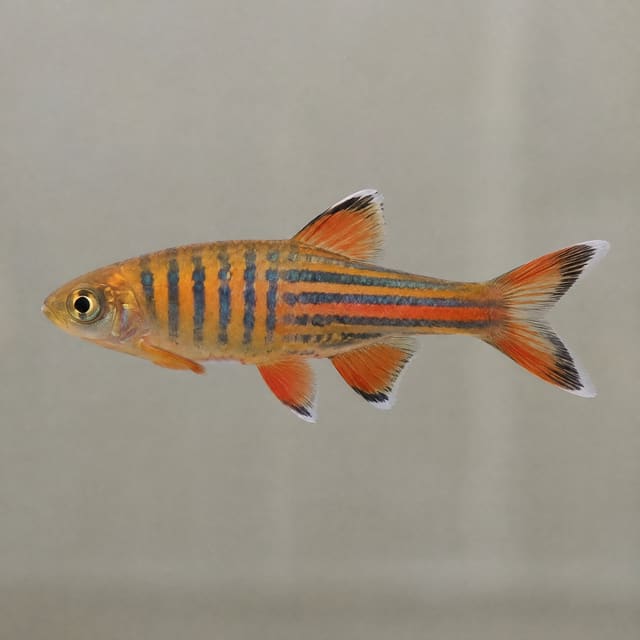
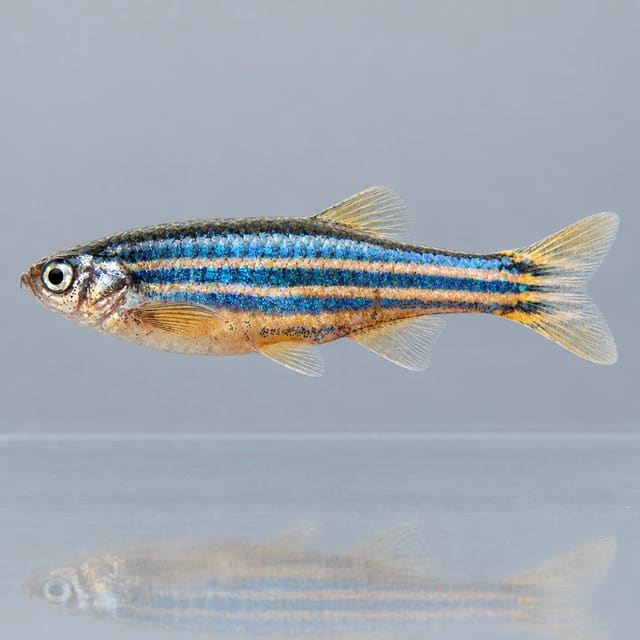
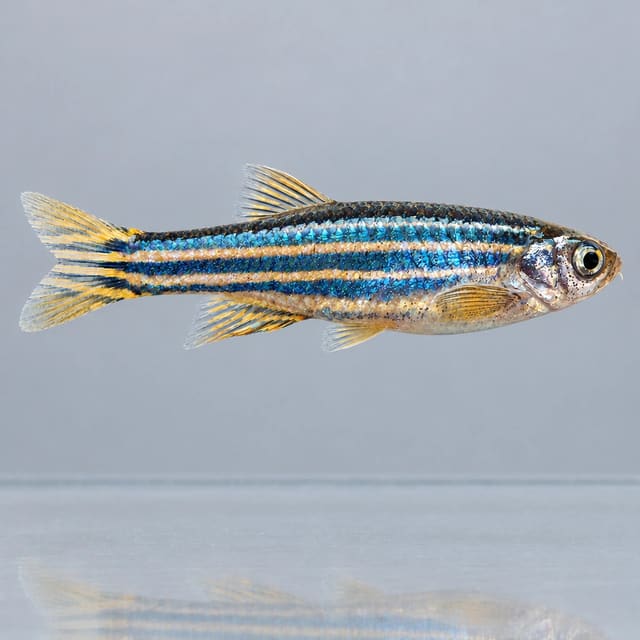
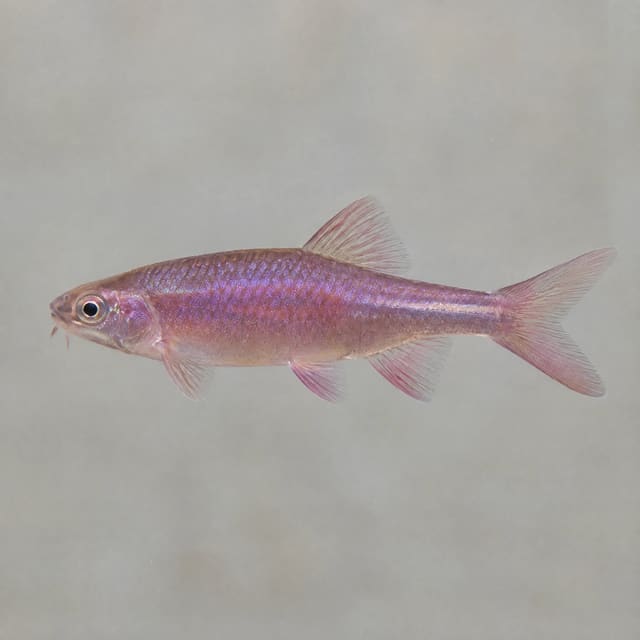
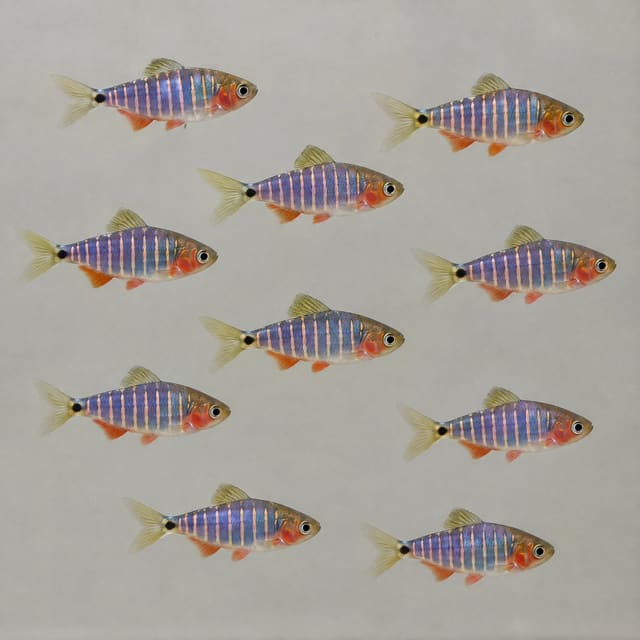
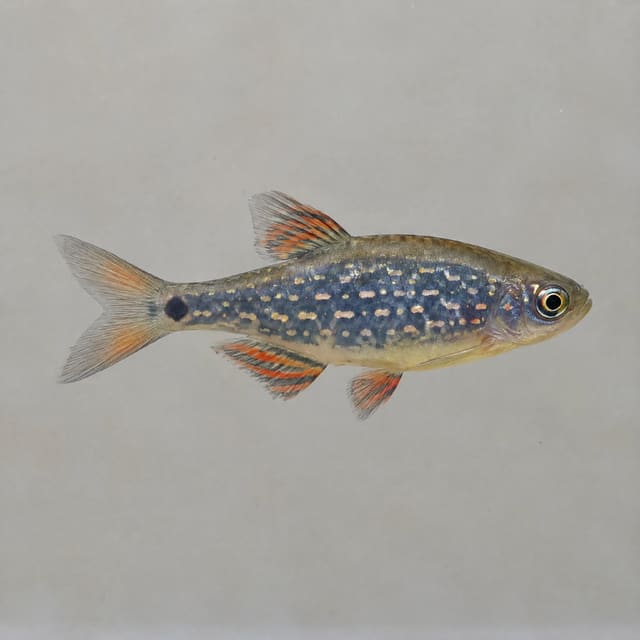
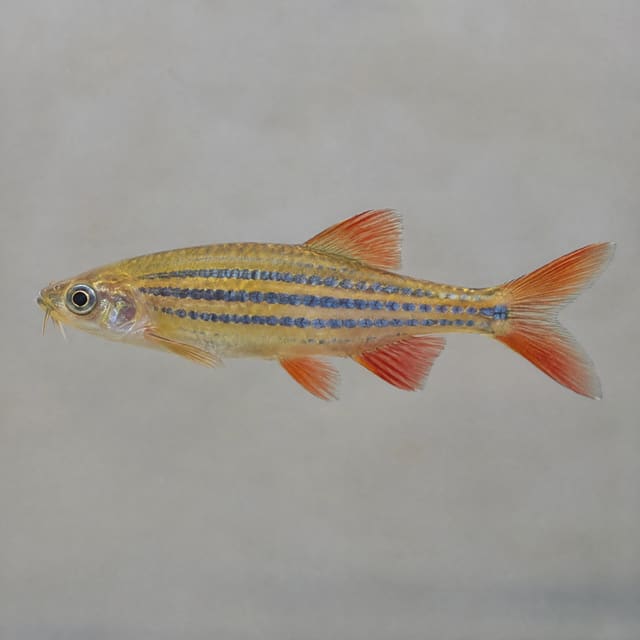
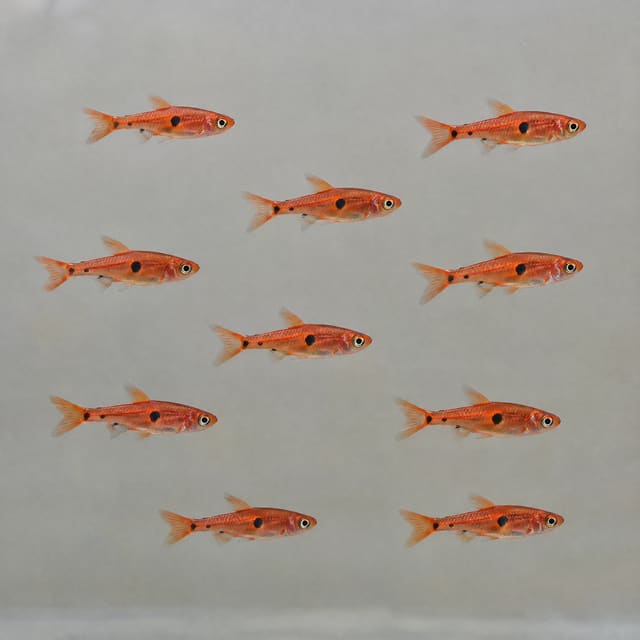
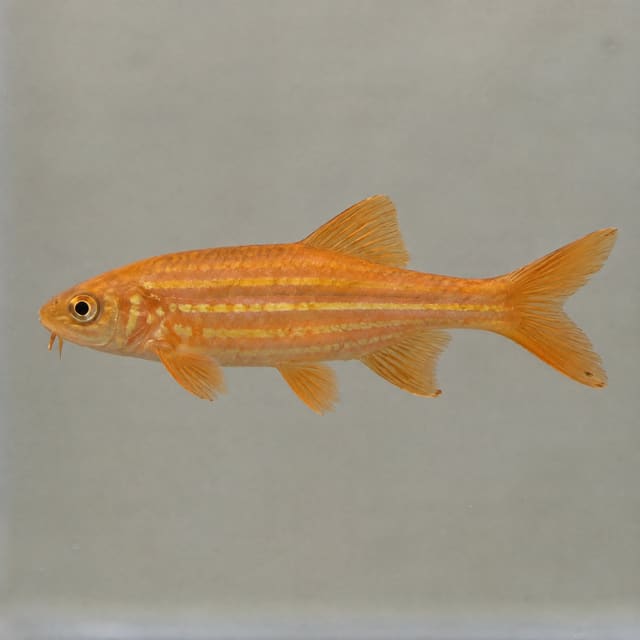
These look-alikes all come from Myanmar and are easily mixed up when small. The gallery images are representative, prepared from a reference photograph, and do not show the exact fish supplied; spot pattern and gold tone vary between fish.
| Suits | Not suited to |
|---|---|
| A shoal of eight to ten or more | Keeping one or two fish |
| A planted aquarium with a base of at least 45 × 30 cm | An open tank with no lid |
| Peaceful tank mates of similar size | Fish large enough to swallow a 3 cm danio |
| Stable water at 18–26°C and pH 6.5–7.5 | An aquarium that swings in temperature |
One purchase quantity supplies one live Burmese Spotted Gold Danio in the standard size offered. It is a schooling species, so order the whole shoal at once: Seriously Fish recommends at least eight to ten, and says a larger group makes the fish less nervous and lets the males show their best colours.
Sex is not specified. Mature females are rounder-bellied and slightly larger than males, which is easiest to see when they are in spawning condition and the males intensify in colour. Plan the shoal without counting on a particular ratio of males to females.
Check our current delivery and Live Arrival Guarantee policy before ordering, and have the aquarium mature and ready for the whole group on the delivery day.
Seriously Fish gives a minimum base of 45 × 30 cm, about 41 litres, for a group, and OATA suggests at least 45 litres for a small shoal of the smaller danios. These are minimums. Danios swim constantly, so length matters more than height, and a longer tank gives a shoal of ten more room to move and keeps water conditions more stable.
The fish's small size makes it suitable for a nano or small community aquarium, but not for a bowl or an unfiltered container: OATA treats a filter as essential for any tank size. Our stocking calculator checks how many small fish your tank can hold, and our nano tank fish range shows other species for small aquariums.
Seriously Fish recommends a well-planted aquarium with a darker substrate, laid out like a flowing stream with rocks, gravel and driftwood. Flow should be moderate, not a torrent. Hardy plants such as Java fern (Microsorum), Bolbitis and Anubias grow well attached to wood and stone and give the shoal cover without crowding the swimming space.
This danio jumps, so Seriously Fish advises a very tight lid. Close every gap around cables and filter pipes; a 3 cm fish can escape through a surprisingly small hole.
| Area | Purpose |
|---|---|
| Open water along the front | Room for the shoal to swim and feed together |
| Planted sides and back | Cover that settles nervous fish |
| Rocks and driftwood | Stream-like structure and broken sight lines |
| Dark gravel or sand | The darker base Seriously Fish recommends |
Keep a gap between the plants and the front glass so that you can watch the shoal and reach the substrate with a siphon. Trim fast plants before they close the open swimming lane.
Seriously Fish gives 18–26°C, pH 6.5–7.5 and 1–5 dGH for this species, but also notes that it has no special water chemistry needs in a community aquarium. OATA's general danio range is 17–27°C, pH 6.5–8.0 and 4–12 dGH. The sources disagree on hardness, so aim for stable water inside the shared temperature and pH band rather than chasing a very low hardness.
| Value | Seriously Fish (D. tinwini) | OATA (danios) | Target |
|---|---|---|---|
| Temperature | 18–26°C | 17–27°C | 18–26°C, kept steady |
| pH | 6.5–7.5 | 6.5–8.0 | 6.5–7.5 |
| General hardness | 1–5 dGH | 4–12 dGH | Soft to moderate; avoid sudden changes |
OATA notes that danios often need no heater in a centrally heated home, but some do. Use a heater with a thermostat if the room can fall below 18°C, and keep the tank out of direct sun so it does not overheat in summer. UK tap water ranges from soft to very hard depending on where you live; our water matcher compares your supply with this fish.
| Reading | Target |
|---|---|
| Ammonia | Zero mg/l |
| Nitrite | Zero mg/l |
| Nitrate | No more than 20 mg/l above your tap water |
These limits come from OATA's danio care sheet. Test them weekly, and more often while the tank is new or after adding fish.
Choose a filter that gives the moderate current and oxygen this stream fish likes without blasting a 3 cm fish around the tank. Cover the intake with a fine sponge so that small fish cannot be drawn in.
Small, regular changes keep temperature and hardness steady, which suits this fish better than occasional large changes.
In the wild it is presumed to eat mainly insects and their larvae. In the aquarium Seriously Fish describes it as largely unfussy: feed a good-quality dried staple and add small live and frozen foods such as bloodworm, Daphnia and Artemia. Choose food small enough for a fish with a very small mouth: crushed flake, micro-granules and baby brine shrimp suit it better than large pellets.
Confirm a mature filter, zero ammonia and nitrite, and a steady temperature within 18–26°C before the fish arrive. Use OATA's floating bag method: dim the lights, float the sealed bag for about 10 minutes, add small amounts of tank water to the bag over up to 20 minutes, then release the fish while keeping the bag water out. Our step-by-step acclimatisation guide explains each stage.
| Checkpoint | What to do |
|---|---|
| Before introduction | Test the water and check the lid has no gaps |
| First feeding | Offer a very small portion of fine food |
| Every day | Count the shoal and check swimming, breathing and colour |
| After stocking | Retest ammonia and nitrite |
| End of week | Full test and a 25% water change |
New fish often stay close to the plants at first. A shoal that swims openly together and feeds eagerly is settling well.
OATA describes healthy danios as having clear, bright eyes, undamaged fins and scales, no lesions or bumps, normal swimming and steady breathing. Learn what your shoal looks like when all is well, so that changes stand out.
| If you see | Do this |
|---|---|
| Clamped fins, flicking against objects or shaking | Test the water at once and review recent changes |
| Hanging at the surface or sitting on the bottom | Check ammonia, nitrite, temperature and oxygen |
| White spots or fluffy growths | Test the water and seek fish-health advice |
| Colour fading across the shoal | Check water quality, group size and cover |
| Reduced appetite | Check food size, water readings and temperature |
Do not treat on a guess. Record the readings and what you saw, and contact us with them if the problem continues.
Seriously Fish describes it as generally peaceful and suited to a community aquarium, provided its small adult size is considered. OATA adds that the constant activity of danios can stress very timid species, and warns against keeping danios with larger goldfish, which may eat them.
| Suits | Avoid |
|---|---|
| Small, peaceful schooling fish of similar size | Any fish large enough to swallow a 3 cm danio |
| Small, peaceful bottom-dwellers | Larger goldfish |
| Fish that share 18–26°C and pH 6.5–7.5 | Very shy, slow fish that dislike busy tank mates |
Good companions to consider from our range include the Neon Green Rasbora, another tiny schooling fish. If you like small Myanmar danios, compare it with the Orange Finned Danio, the Hikari Danio, the Celestial Pearl Danio and the Emerald Dwarf Danio; our Celestial Pearl Danio care guide covers a similar small-danio set-up. Browse more in our rasboras and danios, the danios, rasboras and minnows category, all Danio species and our guide to small tropical fish. Check every companion's adult size and water range before mixing.
It is an egg-scattering spawner that shows no parental care. Fry may appear in a dense, mature planted tank, but Seriously Fish says a controlled set-up produces far more. Use separate, dimly lit containers with mesh or matting over the base so the eggs fall out of the adults' reach, very soft, slightly acidic to neutral water, a temperature near the top of the range, and adults conditioned on live and frozen foods.
The eggs hatch in about 24–36 hours. Feed the fry on Paramecium or a very fine dry food of 5–50 microns at first, then move them on to Artemia nauplii as they grow.
Yes. Seriously Fish lists "Danio sp. Burma", "spotted" and "gold ring" among the trade names used for Danio tinwini, described scientifically in 2009 from northern Myanmar.
It is a very small danio. Seriously Fish gives a maximum of 30 mm standard length, and FishBase records 2.2 cm for males and 2.6 cm for females, measured without the tail.
At least eight to ten. It is a schooling fish, and a larger group is less nervous and lets the males show their best colours.
Seriously Fish gives a minimum base of 45 × 30 cm, about 41 litres, and OATA suggests at least 45 litres for a small shoal of the smaller danios. A longer tank gives more swimming room.
Seriously Fish gives 18–26°C. OATA notes that danios often need no heater in a centrally heated home, but use one if the room can fall below 18°C, and keep the temperature steady.
Seriously Fish lists 1–5 dGH but also says it has no special water chemistry needs in a community tank, and OATA gives 4–12 dGH for danios generally. Stable water at pH 6.5–7.5 matters more than chasing a number.
A good small flake or micro-granule every day, plus small live or frozen foods such as bloodworm, Daphnia and Artemia. Offer only what the shoal finishes within a few minutes, once a day.
Yes, it is peaceful, but choose tank mates that suit its tiny adult size. Avoid fish big enough to eat it, including larger goldfish, and very timid fish that its constant activity might stress.
No reviews for this item yet. Bought one? Honest reviews only, good or bad.
What customers say about ordering from us
Easy website plenty of info on fish your buying great to pick a time slot
TRACEY DURRANT · 7 Oct 2026
Got some lovely fish thank you
Kevin Mackie · 7 Oct 2026
Reviews of our shop, collected by Judge.me, an independent third-party review collector. Newest first.
Moved by UK carriers licensed to handle live animals
Hand-packed with oxygen bags, poly box, heat pack
Email photos the same day; an optional unboxing video helps us review problems faster — claim terms apply
Klarna & PayPal Pay in 3 at checkout