Easy
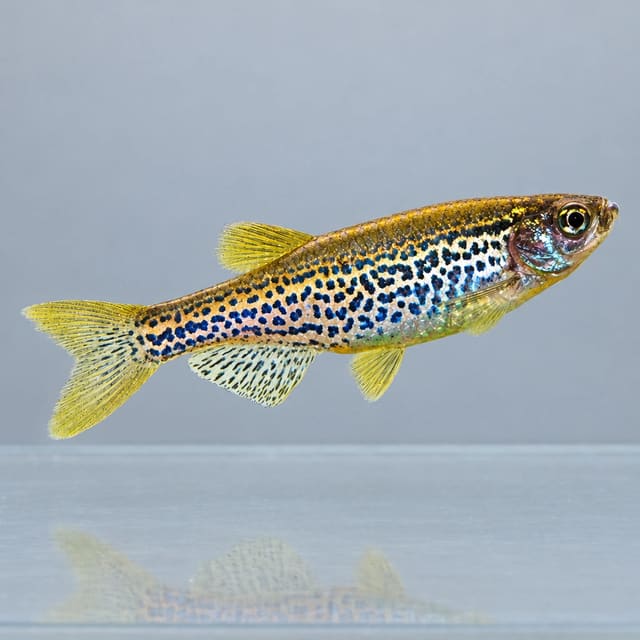
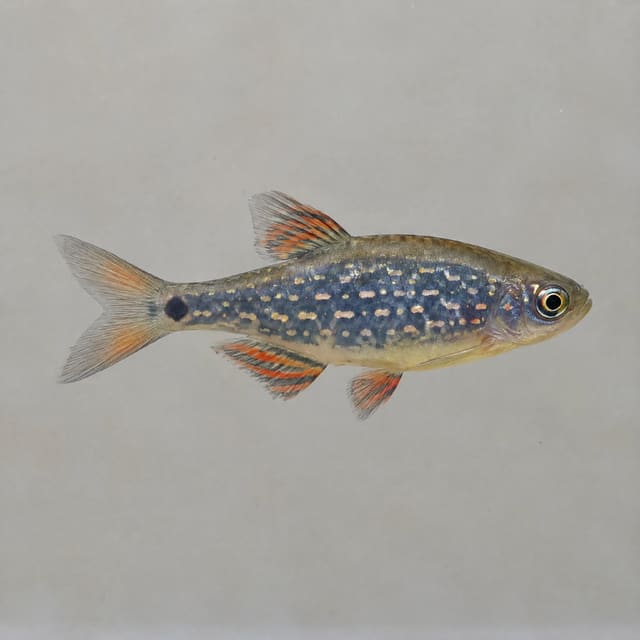
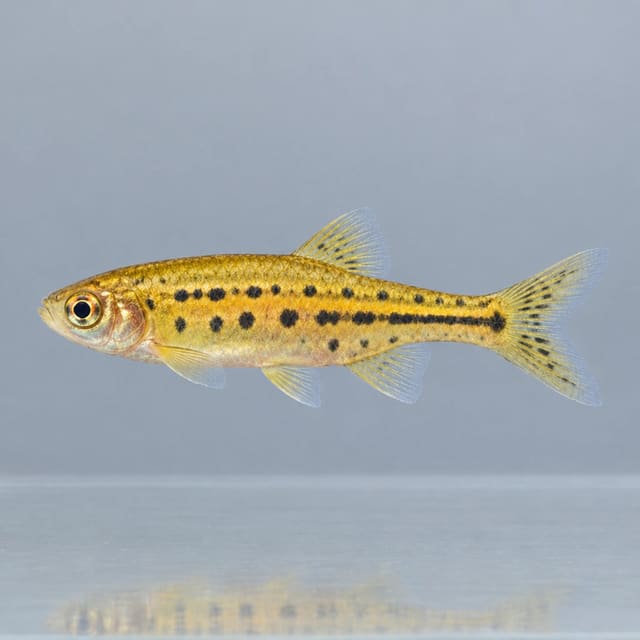
Burmese Spotted Gold Danio (Danio tinwini)
18–26°C · pH 6.5–7.5
£6.19
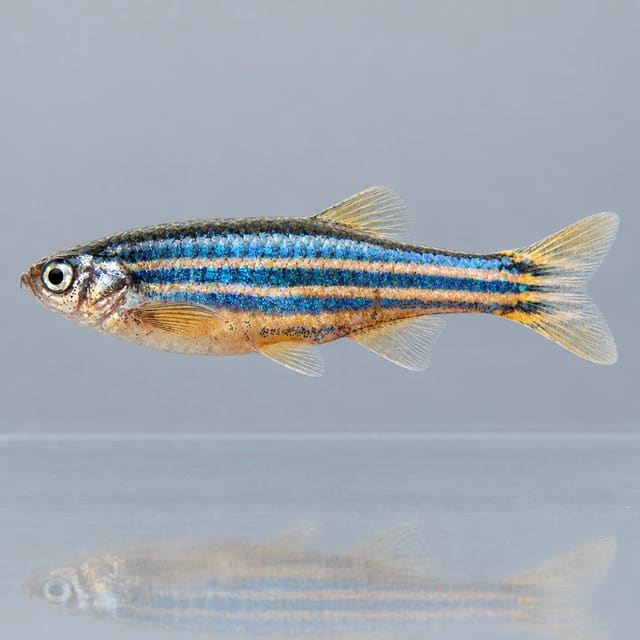
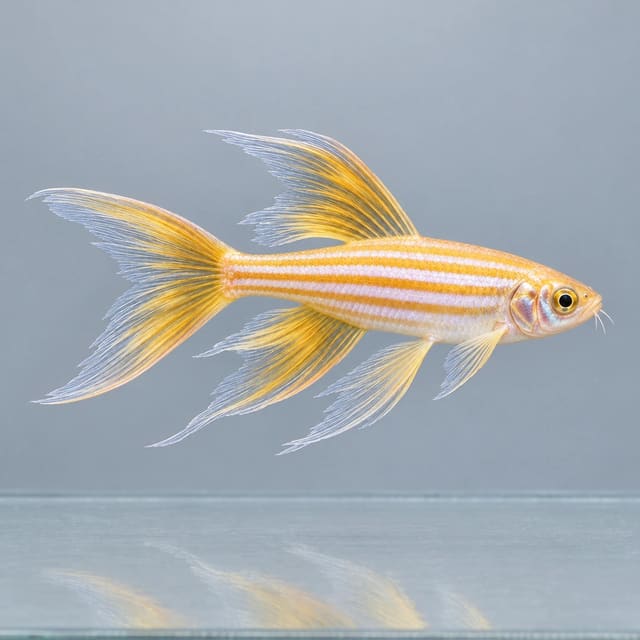
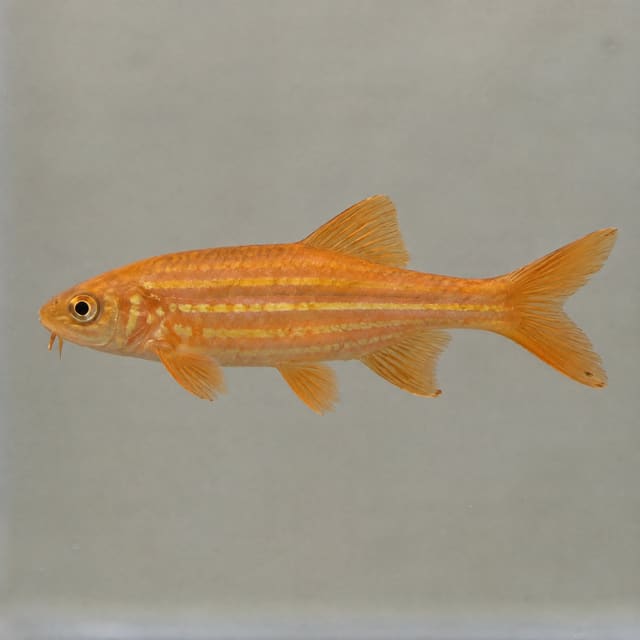
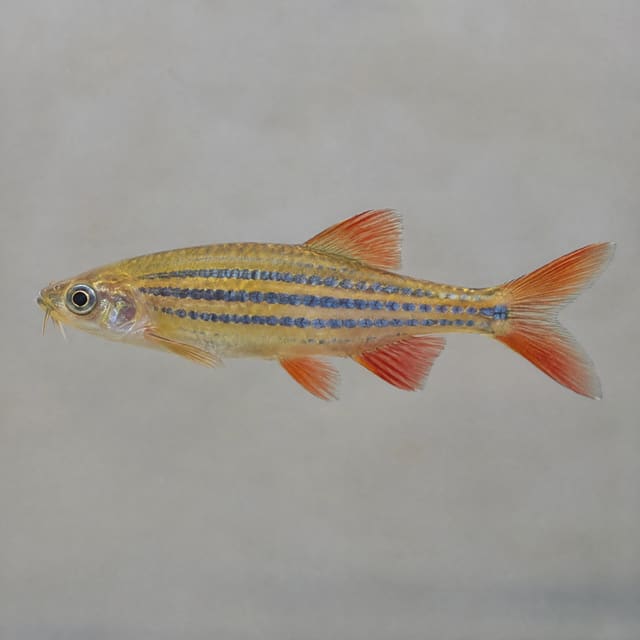
The Golden Zebra Danio is a gold colour form of the zebra danio (Danio rerio), with bright gold stripes on a pale, pearly body. It is a hardy, very peaceful shoaling fish for a long community aquarium (90 × 30 cm base or more) at 18–25°C, kept in a group of eight to ten or more. Sold individually as one live fish in a small size.
Danio rerio
Quantity discounts are pricing offers, not a group-size recommendation. Check the full care guidance and your existing animals before choosing a quantity.
The Golden Zebra Danio is a gold colour form of the zebra danio (Danio rerio), with bright gold stripes on a pale, pearly body. It is a hardy, very peaceful shoaling fish for a long community aquarium (90 × 30 cm base or more) at 18–25°C, kept in a group of eight to ten or more. Sold individually as one live fish in a small size.
Read the full care guidance when planning conditions for your aquarium.
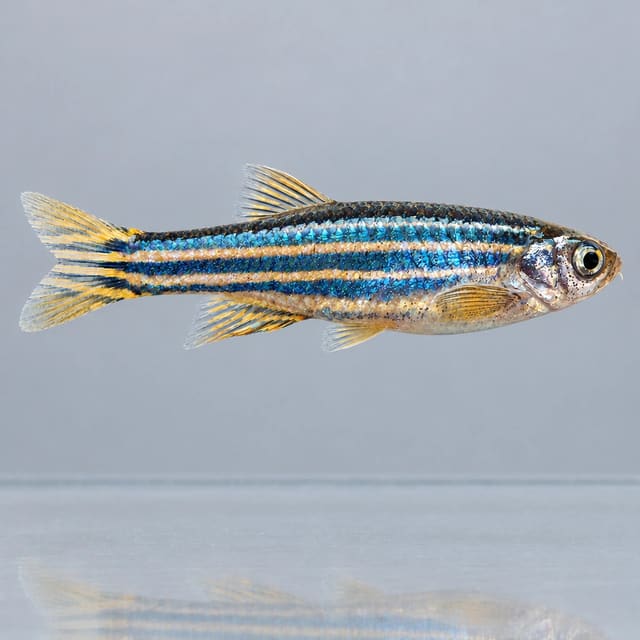
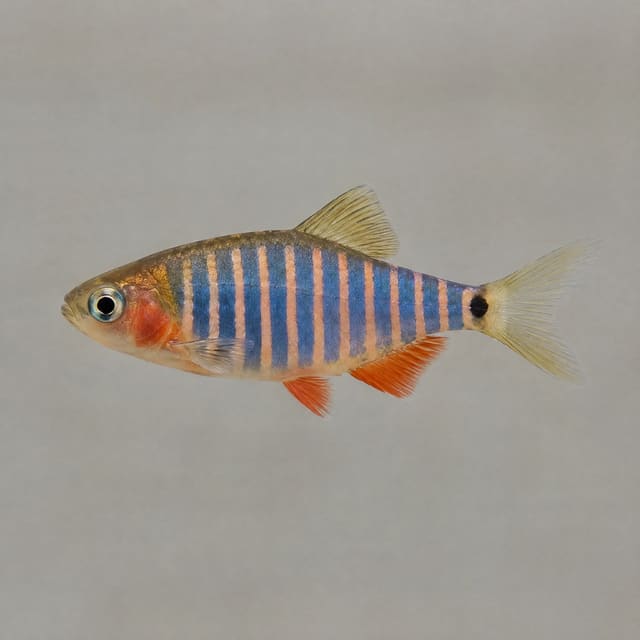
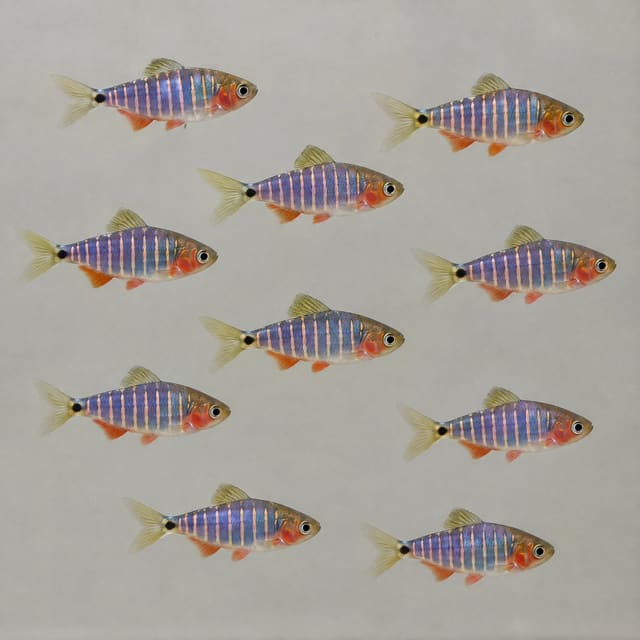
The Golden Zebra Danio is a gold colour form of the zebra danio, Danio rerio, a small, fast-swimming freshwater fish from South Asia. In place of the wild fish's dark blue stripes, the golden form shows bright gold to orange stripes on a pale, pearly body, so a shoal flashes warm colour as it moves through open water. It is the same species as the striped zebra danio and needs exactly the same care.
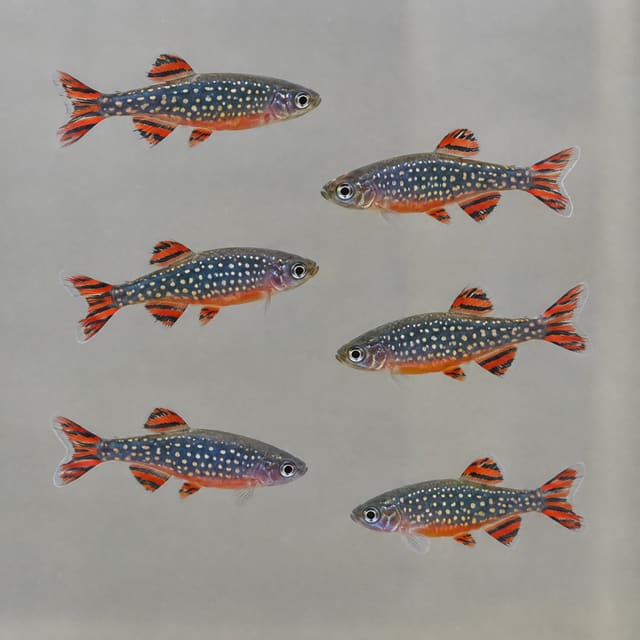
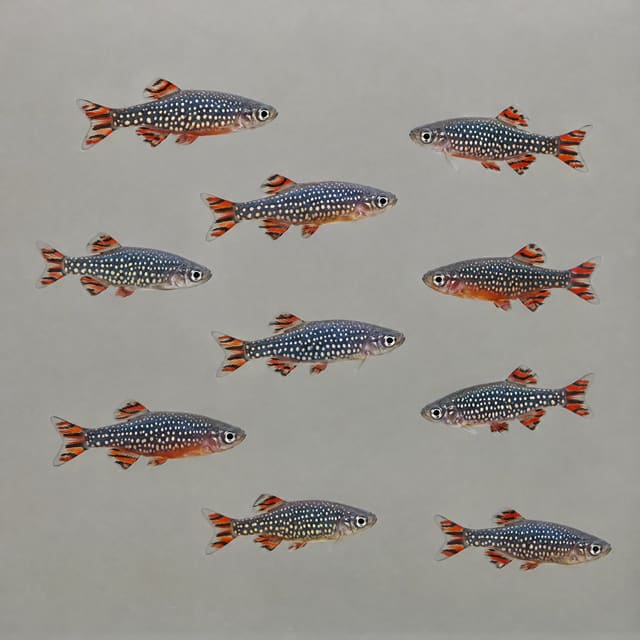
You will also see it sold as the gold zebra danio, golden danio or gold zebrafish. Older labels use Brachydanio rerio: the Seriously Fish species profile explains that the genus name has moved between Brachydanio and Danio, and that the Catalog of Fishes and FishBase keep it in Danio. The spotted "leopard danio" is another form of the same species, once described as Brachydanio frankei and now known to be a spontaneous mutation of the striped fish.
Seriously Fish describes the golden forms as leucistic rather than albino, which is why the eyes stay dark. This is a conventionally bred colour form, not a GloFish: GloFish are transgenic fish carrying fluorescent proteins from a jellyfish or a coral, and Seriously Fish notes that they are illegal to buy, sell or own in the European Union.
| Feature | What to look for |
|---|---|
| Body | Slim and torpedo-shaped, slightly flattened from side to side |
| Stripes | Five horizontal stripes that run to the end of the tail fin; gold to orange on a pearly ground in this form |
| Anal fin | Striped, like the body |
| Barbels | Two pairs of short barbels: one pair reaching the front of the eye, the other about the middle of the gill cover |
| Lateral line | Absent, so there is no visible row of pored scales along the side |
These points come from the FishBase species summary. Wild zebra danios live in streams, canals, ditches, ponds and rice fields. A 2007 survey summarised by Seriously Fish found them at 28 sites in north-eastern India; at half of them the water was slow-moving or still, usually clear, over silt and among vegetation. Adults spend the dry months in permanent streams and move into flooded areas to spawn during the June to September monsoon.
One purchase supplies one live Golden Zebra Danio in our Small size. Small is the youngest size we offer for this fish. It is a supplied size, not the adult size, so plan the aquarium for fully grown fish. Choose the quantity in the basket to build a group in one delivery.
Sex is not selected. Mature females are usually rounder-bellied, slightly larger and a little less colourful than males, and the difference is clearest in spawning condition, when males colour up to compete for females. Each fish varies slightly in shade and stripe width, so the photographs show the colour form rather than the individual fish you will receive.
Prepare the tank for the whole group before you order, and read our delivery information for dispatch days and arrival terms. To compare this fish with other small shoaling species, browse our rasboras and danios or the wider schooling fish range.
The published adult sizes differ. Seriously Fish gives a maximum of 50 mm standard length (measured to the base of the tail), while FishBase lists 3.8 cm standard length. Plan for the larger figure: about 5 cm of body, plus the tail.
| Source | Adult size | Aquarium guidance | Group |
|---|---|---|---|
| Seriously Fish | 50 mm SL | Base of at least 90 × 30 cm (about 81 litres) | 8–10 or more |
| FishBase | 3.8 cm SL | At least 60 cm long | 5 or more |
| OATA | Not given | At least 45 litres for a small shoal of smaller danios; 120 litres for danios over 5 cm | At least 5 |
We follow the Seriously Fish base of 90 × 30 cm because the zebra danio is constantly on the move, and the length of the tank matters more than its height. A tall, narrow tank holding the same number of litres gives a shoal far less swimming room. Our tank volume calculator converts your tank's dimensions into litres.
Zebra danios are not short-lived for their size. FishBase reports that domesticated zebrafish live on average 3.5 years, with the oldest reaching 5.5 years, so set the tank up as a long-term home rather than a temporary one.
Seriously Fish says décor is not critical for this species, but colour shows best in a heavily planted tank with a dark substrate, and floating plants and driftwood soften the light and give a more natural look. OATA recommends gravel or sand, live or artificial plants and ornaments for cover, open swimming space and a moderate current.
| Area | Purpose |
|---|---|
| Open lane along the front and middle | Room for the shoal to swim and feed together |
| Planted back and sides | Cover and broken sight lines without blocking the swimming lane |
| Floating plants over part of the surface | Diffused light, which helps a shoal settle |
| Dark sand or gravel | Makes the gold stripes stand out |
Leave part of the surface open so food can be spread out and every fish can reach it. OATA lists a secure lid as optional but recommended for danios; with a fish this fast and active, we suggest you fit one. Hardy plants that cope with a busy community tank are covered in our live plants guide.
The zebra danio tolerates a wide range of water, which is one reason it suits so many community tanks. The three sources we checked give slightly different ranges:
| Value | Seriously Fish | FishBase | OATA (danios) |
|---|---|---|---|
| Temperature | 18–25°C | 18–24°C | 17–27°C |
| pH | 6.0–8.0 | 6.0–8.0 | 6.5–8.0 |
| General hardness | 5–20 dGH | 5–19 dH | 4–12 °dH |
| Carbonate hardness | Not given | Not given | 3–10 °dKH |
All three overlap at 18–24°C, pH 6.5–8.0 and roughly 5–12 dGH. UK tap water ranges from soft to very hard depending on where you live, so test yours or look up your water company's quality report before you buy. Our water matcher shows which fish suit the water you already have, and our water chemistry guide explains pH and hardness in plain terms.
Seriously Fish notes that a heater may not always be needed. In practice, many UK rooms drop below 18°C on winter nights, so most keepers will want a thermostatic heater to hold the temperature steady in the low 20s. Our tropical fish temperature guide explains how to choose and set one.
Temperature, pH and hardness describe the habitat; ammonia, nitrite and nitrate measure waste. The habitat values can sit anywhere inside the range, but the waste readings have fixed targets: OATA gives zero ammonia, zero nitrite and nitrate no more than 20 mg per litre above your tap water level. A fish kept at the perfect temperature in water containing ammonia is still at risk, so treat the two groups of readings as separate checks.
Seriously Fish says filtration does not need to be strong, but zebra danios appreciate some water movement, and it suggests a filter that turns the tank volume over four to five times an hour. OATA treats a filter as essential and recommends rinsing filter media in water removed from the tank, never under the tap, so the beneficial bacteria survive. Our guide to aquarium filtration covers filter types and sizing.
A mature filter is what turns fish waste into less harmful nitrate. If your tank is new, read how the nitrogen cycle works before you add any fish.
In the wild, the zebra danio is a micropredator. Seriously Fish lists aquatic crustaceans and insects such as mosquito larvae, and FishBase adds worms and insect larvae. In the aquarium it accepts almost anything; Seriously Fish recommends a good-quality dried food alongside small live or frozen foods such as Daphnia, Artemia (brine shrimp) and bloodworm.
OATA advises feeding once a day and giving only what the fish eat within a few minutes, because uneaten food breaks down into toxic waste.
Before any fish arrive, OATA says ammonia and nitrite should both read zero and the tank should be the right size. Add fish gradually, because the bacteria in the filter need time to grow with each addition; adding many fish to an immature tank causes what OATA calls new tank syndrome. Our first tropical tank guide takes you through setting up and maturing a tank.
Our article on how to acclimate new fish explains each step in more detail. OATA then advises watching the fish and the water closely through the first week:
| When | Check | Action |
|---|---|---|
| Day 1 | Fish swimming and exploring | Keep the lights off for the rest of the day |
| Days 2–4 | Ammonia and nitrite | If either is above zero, change some water and feed less |
| Day 7 | Full water test and behaviour | Move to the normal weekly routine if every reading is on target |
OATA lists the signs of a healthy fish as clear, bright eyes, undamaged fins, intact scales, no ulcers or bumps, normal swimming and steady breathing. Warning signs include clamped fins, flicking against objects, shimmying, white spots or fluffy growths, hanging at the surface or sitting on the bottom, a change in colour, hiding more than usual, faster or slower gill movement and a reduced appetite.
| Observation | First action |
|---|---|
| Several fish gasping or hanging at the surface | Test ammonia and nitrite at once and change water if either is above zero |
| White spots like grains of salt | Read our white spot guide before treating |
| Split or frayed fins | Check water quality and tank mates, then see our fin rot guide |
| One fish thin, with a curved spine | Separate it from the shoal and seek advice (see below) |
Seriously Fish highlights some problems specific to zebra danios. Microsporidiosis caused by Pseudoloma neurofilia attacks the nervous system and can cause wasting and a curved spine, which is why it is nicknamed "skinny disease". Neon tetra disease, caused by Pleistophora hyphessobryconis, is essentially untreatable once advanced, and the bacterium Flavobacterium columnare can cause similar-looking symptoms. Mass production has also led to some inbreeding and body deformities. If a fish shows these signs, remove it from the shoal and ask a vet who treats fish for advice.
Seriously Fish describes the zebra danio as very peaceful and suggests other small cyprinids, tetras, livebearers, rainbowfishes, anabantoids (gouramis and their relatives), catfish and loaches as companions, while reminding keepers to allow for its small adult size. OATA adds that a danio's constant activity may stress more timid species.
| Suits | Avoid |
|---|---|
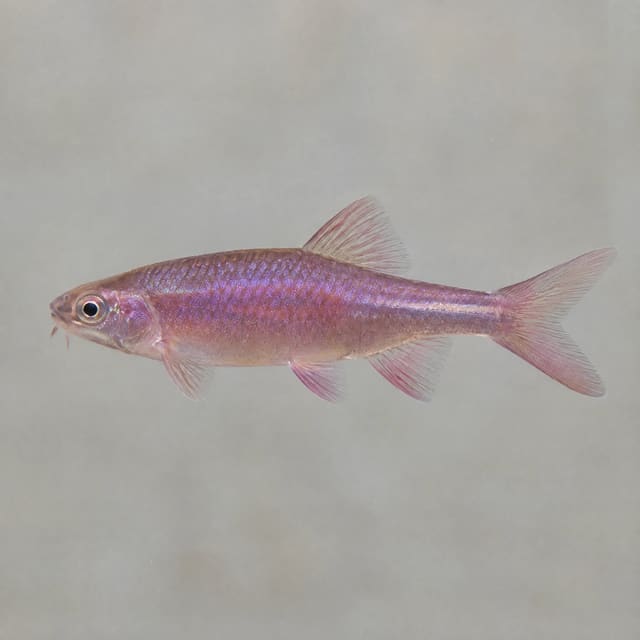
| Other danios of a similar size, such as the Pearl Danio, Kerr's Blue Danio and Rosy Danio | Fish large enough to swallow a small danio |
| Gold White Cloud Mountain Minnows, which OATA gives a cooler 17–23°C range that overlaps with the danio's | Very slow, timid species that constant activity may stress |
| Peaceful tetras, livebearers, rainbowfish, gouramis, catfish and loaches that share the temperature range | Fish that need water warmer than 25°C all year |
Check any mix with our tank mates tool. You can also browse every danio we stock on the Danio category page and the wider danios, rasboras and Tanichthys category. For another hardy cool-water shoaling fish, read our White Cloud Mountain Minnow guide.
Zebra danios scatter their eggs and give no parental care, and Seriously Fish calls them an excellent choice for a first attempt at breeding. In a dense, mature planted tank some fry may survive without help, but the adults eat eggs, so a separate set-up produces far more young. FishBase notes that the eggs are released a few at a time after energetic chasing and settle freely without sticking to anything.
No. It is a gold colour form of Danio rerio, so its size, water needs, diet and behaviour match the striped zebra danio.
Neither. Seriously Fish describes golden zebra danios as leucistic rather than albino, so the eyes stay dark, and this is a conventionally bred colour form, not a transgenic GloFish.
At least five according to OATA, and eight to ten or more according to Seriously Fish. Larger groups are calmer and show more natural behaviour.
Seriously Fish gives up to 50 mm standard length and FishBase 3.8 cm. Plan for about 5 cm of body plus the tail.
We recommend a base of at least 90 × 30 cm (about 81 litres), the Seriously Fish minimum, because the shoal swims constantly.
Its range is 18–25°C. Many UK rooms fall below that on winter nights, so most keepers use a thermostatic heater to keep the temperature steady.
A good dried food once a day, with small live or frozen foods such as daphnia, brine shrimp and bloodworm, giving only what is eaten within a few minutes.
Peaceful small community fish that share its temperature range, such as other danios, White Cloud Mountain Minnows, tetras, livebearers, rainbowfish, gouramis, catfish and loaches. Avoid fish big enough to eat it.
One live fish in our Small size, the youngest size we sell. It is a supplied size, not the adult size.
No reviews for this item yet. Bought one? Honest reviews only, good or bad.
What customers say about ordering from us
Easy website plenty of info on fish your buying great to pick a time slot
TRACEY DURRANT · 7 Oct 2026
Got some lovely fish thank you
Kevin Mackie · 7 Oct 2026
Reviews of our shop, collected by Judge.me, an independent third-party review collector. Newest first.
Moved by UK carriers licensed to handle live animals
Hand-packed with oxygen bags, poly box, heat pack
Email photos the same day; an optional unboxing video helps us review problems faster — claim terms apply
Klarna & PayPal Pay in 3 at checkout