Easy
Gold White Cloud Mountain Minnow (Tanichthys albonubes) – 2–3cm Sizes
14–22°C · pH 6–8.5 · 54L
£2.99

Longfin White Cloud Mountain Minnow is a cool-water, social Tanichthys albonubes form. Plan 45L/60 cm+, 17-23 C and at least five; one unsexed fish per quantity.
Adult size is the maximum length this species reaches at full maturity (scientific sources). The livestock you receive will be younger and smaller — pick a size above for the actual shipping size. Product-photo provenance and any image-specific limitations are stated on the listing.
Tanichthys albonubes
Shoaling fish: kept in a group they feel safer, stay calmer and show their best colour.
Minimum of 2 per order.
Longfin White Cloud Mountain Minnow is a cool-water, social Tanichthys albonubes form. Plan 45L/60 cm+, 17-23 C and at least five; one unsexed fish per quantity.
Adult size is the maximum length this species reaches at full maturity (scientific sources). The livestock you receive will be younger and smaller — pick a size above for the actual shipping size. Product-photo provenance and any image-specific limitations are stated on the listing.
Maintain these water conditions for optimal health and vibrant colors
Longfin White Cloud Mountain Minnow is the flowing-fin aquarium form of Tanichthys albonubes, a small, active and social freshwater fish best kept in a cool, well-oxygenated aquarium. The extended fins give mature fish a more graceful outline than the standard form, while the familiar pale lateral sheen and red-toned fin markings can become especially attractive in a planted display. It is a practical choice for a keeper who wants an energetic shoal without maintaining the warmer temperatures required by many tropical community fish.
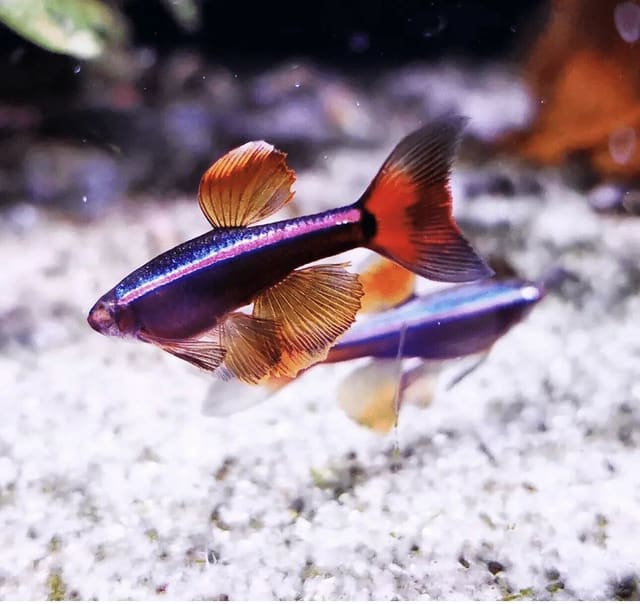
This is still a group-living species, not a decorative fish to keep alone. Plan for at least five, with eight or more preferred when the aquarium has enough swimming length, filtration and maintenance capacity. Select the live size option and then the quantity you need. One quantity means one unsexed fish; the gallery image showing two fish is illustrative and does not promise a pair, two fish or an established group.
| Care point | Evidence-led recommendation |
|---|---|
| Common name | Longfin White Cloud Mountain Minnow |
| Scientific identity | Tanichthys albonubes, domestic long-fin form |
| Family | Tanichthyidae |
| Adult size plan | About 4-5 cm; extended fins add visual length but do not make it a large fish |
| Care level | Easy to moderate in a mature, cycled and stable aquarium |
| Temperament | Peaceful, active and social; keep in a proper group |
| Group size | At least five; eight or more is preferred where capacity allows |
| Minimum aquarium | At least 45 litres and 60 cm long for a small shoal; 60 litres or more is a better practical target |
| Temperature | 17-23°C, kept stable |
| pH | 6.5-8.0 as a conservative UK care range |
| General hardness | 4-12 dGH as the conservative OATA range |
| Ammonia and nitrite | 0 mg/l at all times |
| Diet | Omnivorous: quality flake, small granules or micro-pellets with suitable frozen or live foods for variety |
| Sale unit | One unsexed fish per selected quantity |
This is a domestic long-fin form of the White Cloud Mountain Minnow, Tanichthys albonubes. Long-fin refers to selectively maintained extended finnage within aquarium stock. It is not a separate wild species.
Current nomenclatural references recognise Tanichthys as a valid genus in Tanichthyidae, with T. albonubes as its type species.
Wild populations assigned historically to the T. albonubes complex show meaningful geographic and genetic diversity. Peer-reviewed work has proposed cryptic species among wild populations, which makes unsupported locality claims even less appropriate. This captive trade fish is sold under the supplied T. albonubes identity; it is not represented as wild collected, locality pure or genetically assigned to a particular population.
Use the size selector for the options currently available. The displayed stock and price belong to the selected option and can change independently, so this description does not freeze either value into text. The listed size bands are approximate for living fish, not a millimetre-perfect promise. A fish may sit slightly above or below the stated band because body length, fin extension, age and natural variation do not fit a rigid manufactured measurement.
| Choice | What it means | Planning point |
|---|---|---|
| Smaller size option | A younger or smaller fish with more growth and fin development still ahead | Choose companions of a safe size and make sure the fish can reach food without competition |
| Larger size option | More immediate visual presence and usually more developed finnage | It still needs a proper group, swimming length and gradual acclimation |
| Quantity one | One unsexed fish from the selected size option | It is not a pair, six fish or a complete shoal |
| Multiple quantities | The number of individual fish shown in the basket | Check that the mature aquarium supports the whole group before ordering |
The first listed size may be unavailable while another option remains in stock. Read the live selector rather than assuming that the first photograph, first size or lowest displayed price describes every variant. If you are replacing a lost member of an established group, compare body size carefully and consider quarantine before introducing the new fish.
This minnow suits a keeper who can provide a cycled aquarium, stable cool-to-temperate water, a real social group and regular testing. It works especially well in a planted 60 cm or longer aquarium where open swimming lanes are balanced with cover. The activity level makes a small display feel lively, while the long fins add detail without changing the species into a slow ornamental centrepiece.
It can be a sensible early species for a prepared beginner, but “hardy” should never mean expendable or suitable for an uncycled tank. A mature filter is essential. Ammonia and nitrite must read zero before the fish arrives. The keeper also needs a plan for temperature during both winter cold spells and summer heat, because a heater-free aquarium is only safe when the room stays inside the fish's range.
This is not the right choice for a warm 26-28°C community, a bowl, a tiny cube, an outdoor container exposed to UK weather without a seasonal management plan, or a tank dominated by fin nippers and predators. Use our White Cloud Mountain Minnow guide when you want broader species context, and compare the cool-water fish collection when planning a lower-temperature aquarium.
OATA recommends at least 45 litres for a small shoal of the smaller danio and White Cloud types. FishBase also records a 60 cm minimum aquarium length. Those measures describe a welfare floor, not an invitation to fill every litre. These fish are small but active, and they use horizontal space continuously. A longer aquarium gives the group room to move, display and separate without colliding with decor.
For most homes, 60 litres or more is the more forgiving target. Extra water volume slows temperature and chemistry changes, gives the filter more margin and makes it easier to keep eight or more fish. Increase volume and length again when adding another species, keeping a larger shoal or building a heavily planted layout that reduces open water. Check a proposed aquarium with the tank volume calculator, but use dimensions and behaviour alongside the litre result.
| Aquarium plan | Assessment | Why |
|---|---|---|
| Under 45 litres | Not recommended for the permanent group | Limited swimming length and less stable temperature and water quality |
| 45 litres, 60 cm long | Minimum for a carefully managed small shoal | Meets the evidence-led floor but leaves limited margin for companions |
| 60-80 litres | Better practical starting point | Supports a fuller group, more stable water and a balanced planted layout |
| Larger long aquarium | Best for a larger shoal or compatible community | More swimming room, visual separation and maintenance capacity |
| Tall narrow aquarium | Less useful than a longer tank of similar volume | The fish benefit more from horizontal swimming length than extra height |
White Clouds are social fish. OATA advises at least five and notes that more is better; FishBase likewise records groups of five or more. The store recommendation is eight or more where the aquarium can support them. A fuller group usually gives more confident open-water activity and a wider range of harmless displaying behaviour, while a lone fish or a pair can become withdrawn and stressed.
A social group does not move as one tight formation every minute. Settled fish may spread through the open water, regroup when startled and display to one another. Males in breeding condition can become brighter and may perform short chases or fin displays. That activity should be brief and distributed, not one fish being relentlessly pinned in a corner or prevented from feeding.
Group size cannot be separated from tank size. Adding more fish to solve nervous behaviour only works when filtration, swimming space and maintenance also scale up. Observe whether every fish can feed, rest and move normally. If one individual stays isolated, clamps its fins or loses condition, test the water and review health and social pressure rather than dismissing it as a quiet personality.
A stable 17-23°C is the conservative working range from OATA, with FishBase recording 18-22°C. This is cooler than many fish sold from tropical systems. A heater is not automatically required if the room keeps the aquarium reliably inside that range, but “unheated” does not mean uncontrolled. Measure the water at its coolest winter point and during summer heat rather than relying on the room thermostat.
| Situation | Recommended response |
|---|---|
| Room remains stable within 17-23°C | An unheated aquarium can be suitable; continue monitoring with a reliable thermometer |
| Room regularly falls below range | Use a guarded, thermostatic heater set conservatively to prevent cold dips |
| Aquarium is near a window, radiator or draught | Move it or shield it from abrupt temperature changes before adding fish |
| Summer water approaches or exceeds 23°C | Increase safe surface movement, reduce heat sources and monitor oxygen and fish behaviour closely |
| Warm-water companions need 25-28°C | Choose different companions rather than keeping White Clouds chronically too warm |
Temperature changes should be gradual. Cool water can hold more oxygen than warm water, so an unexpected summer rise can combine heat stress with reduced oxygen availability. Keep the filter operating, maintain surface movement and have a safe heat-management plan. Do not drop frozen bottles directly into the tank or make large sudden changes that replace one problem with thermal shock.
Use pH 6.5-8.0 and 4-12 dGH as a conservative practical range, while recognising that FishBase records a somewhat broader species range. Stable, conditioned water inside a suitable range is better than repeated chemical adjustment towards one supposedly perfect number. Test the source water first, then decide whether the aquarium can remain stable without elaborate treatment.
Ammonia and nitrite must be zero. OATA advises keeping nitrate no more than 20 mg/l above the normal tap-water level. Nitrate is not a substitute for the other tests: a low nitrate result does not prove that a new filter is cycled, and clear water can still contain toxic ammonia or nitrite. Our water parameter matcher can help organise a compatibility check, but use current test results from your own aquarium.
| Parameter | Target | Action if wrong |
|---|---|---|
| Temperature | 17-23°C, stable | Correct the environmental cause gradually and increase observation |
| pH | 6.5-8.0 | Check source water and buffering before using chemical adjusters |
| General hardness | 4-12 dGH | Make changes only with a repeatable source-water plan |
| Ammonia | 0 mg/l | Treat any detectable result as urgent; protect fish and biological filtration |
| Nitrite | 0 mg/l | Treat any detectable result as urgent and review cycling or filter disruption |
| Nitrate | No more than 20 mg/l above tap baseline | Increase appropriate water changes and reduce accumulated waste |
A filter is essential. Choose mature biological capacity for the full group and enough mechanical capture to remove suspended waste without creating a violent jet. OATA recommends a moderate current to support oxygenation, but long-fin fish should still be able to hold position and feed comfortably. Spread the return flow across the aquarium or use a spray bar if one narrow outlet overwhelms the fish.
Leave visible surface movement. The exact filter type matters less than reliable circulation, biological maturity and maintainability. Sponge, internal, hang-on-back and external filters can all work when sized and arranged correctly. Protect intakes where a smaller fish could be trapped, and make sure decor does not create stagnant pockets that collect food.
Read our aquarium filtration guide before changing media or replacing a filter. Biological bacteria live on wet surfaces, so throwing away all mature media at once can cause an ammonia or nitrite spike. Rinse reusable media in removed aquarium water where appropriate, keep it wet during maintenance and avoid cleaning every stage on the same day.
Natural habitat records describe clear or clean, slow-moving streams with abundant hydrophytes. A home aquarium does not need to copy one collection site literally, but plants and visual shelter fit the species well. Combine planted edges and background cover with a broad open swimming lane. Fine-leaved plants can also receive exploratory attention and, in a breeding setup, scattered eggs.
| Element | Useful approach | Avoid |
|---|---|---|
| Substrate | Sand or smooth fine gravel that can be cleaned easily | Sharp material or deep dirty zones that trap food |
| Planting | Dense margins with open central or front swimming space | Filling every lane with hardscape or stems |
| Wood and stones | Stable, smooth pieces that create cover without snagging fins | Rough edges and narrow gaps around extended finnage |
| Lighting | A predictable day-night cycle with shaded areas | Sudden intense lighting over a bare aquarium |
| Lid | A secure fitted cover with safe cable and filter gaps | Large openings over an active small-fish aquarium |
| Swimming room | Clear horizontal lanes through the middle and upper water | A tall decorative layout with little usable length |
A darker background and healthy planting can make the pale stripe and red fin details easier to see, but colour is not a reason to compromise cleaning access. Leave enough room to siphon waste and inspect every fish. Wash new decor safely, avoid metal or unknown coatings and secure anything that could shift during maintenance.
White Clouds are omnivorous. FishBase records zooplankton and detritus in natural feeding, while OATA recommends flake or granules with small live or frozen foods. In the aquarium, use a complete small-fish food as the nutritional base and add appropriately sized variety. Long fins do not require a special branded diet; consistent balanced nutrition and clean water matter more than promotional ingredients.
| Food type | Role | Practical boundary |
|---|---|---|
| Quality flake | Convenient complete staple when crushed to a suitable size | Feed only what the group takes promptly |
| Small granules or micro-pellets | Measured staple with less surface drift | Check that particles are small enough for every fish |
| Suitable frozen food | Variety and feeding enrichment | Thaw and portion hygienically; remove leftovers |
| Suitable live food | Occasional behavioural enrichment | Use a trusted source and consider pathogen risk |
| Vegetable or algal content | Part of a varied omnivorous diet | Do not assume grazing alone supplies complete nutrition |
OATA advises feeding once daily and offering only what is eaten within a few minutes. Adjust the exact portion to group size, food density, temperature and body condition. Scatter small amounts across more than one point so timid fish can feed. A rounded full abdomen immediately after a meal is different from persistent swelling; observe the fish before and after feeding rather than continually adding food.
Uneaten food becomes a water-quality problem. If food reaches the substrate untouched, reduce the next portion and remove the residue. During the first days after delivery, a small fish may need quiet and familiar-sized food, but repeated refusal should trigger checks of temperature, ammonia, nitrite, breathing and social pressure.
Compatibility begins with temperature. A peaceful fish that needs 26°C is not a good long-term match simply because it does not attack minnows. Choose species that genuinely share the 17-23°C range, remain small enough not to hunt them, and will not nip the extended fins. Compare adult size, group needs, swimming level, feeding speed and water chemistry before buying.
| Candidate | Assessment | Reason |
|---|---|---|
| More White Cloud Mountain Minnows | Best first addition | Builds the required social group with matching husbandry |
| Standard-fin White Clouds | Potentially compatible | Same species-level care, but buy the intended form and avoid confusing product identities |
| Gold White Clouds | Potentially compatible | Same species form with similar cool-water requirements; account for the full combined group |
| Vietnamese White Clouds | Possible only after species-level checks | A related but distinct species with its own group and care considerations |
| Small peaceful cool-tolerant fish | Case by case | Confirm exact temperature, adult size, behaviour and group requirements |
| Persistent fin nippers | Avoid | Extended fins can attract repeated damage and stress |
| Large goldfish or predatory fish | Avoid | OATA warns that larger goldfish can eat small minnows |
| Warm-only tropical species | Avoid | Chronic high temperature sacrifices the White Cloud's preferred conditions |
For species comparisons, see the separate standard White Cloud Mountain Minnow, Gold White Cloud and Vietnamese White Cloud listings. These links are for identity and planning, not a promise that every combination is suitable in every aquarium.
The long-fin form follows the same core species husbandry, but its extended finnage deserves a little extra attention. Avoid rough decor, intake slots that can trap a small fish and companions known for persistent fin nipping. Provide current for oxygen and normal activity without forcing the fish to fight one concentrated outlet all day.
Fin length varies. A juvenile may not yet show the same extension as a mature representative image, and not every individual develops identical rays, colour or symmetry. Minor natural differences are expected. Torn, frayed or clamped fins are different from normal variation and should prompt a review of water quality, physical hazards, aggression and possible disease.
Do not keep the fish alone merely to protect its fins. Social welfare still matters. A well-planned group with suitable companions, smooth decor, clean water and distributed feeding is safer than isolating one specimen in a small uncycled container.
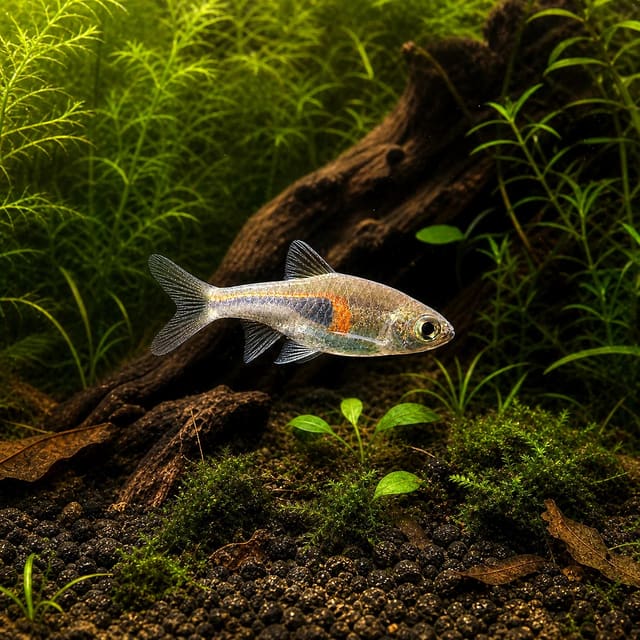
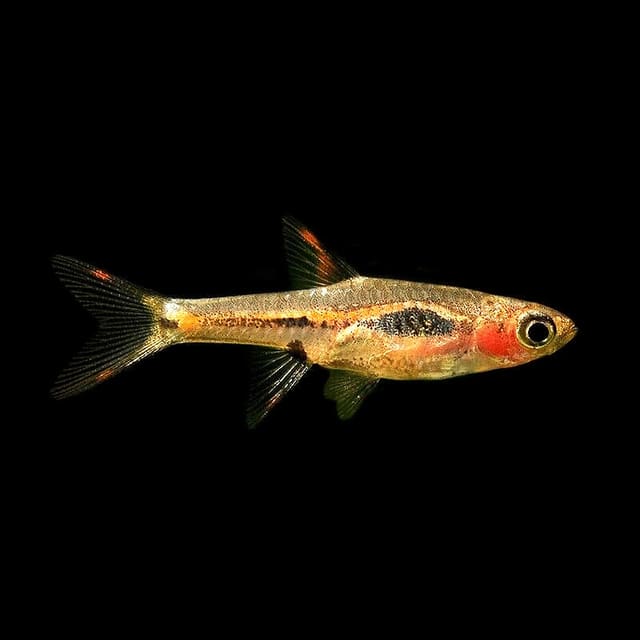
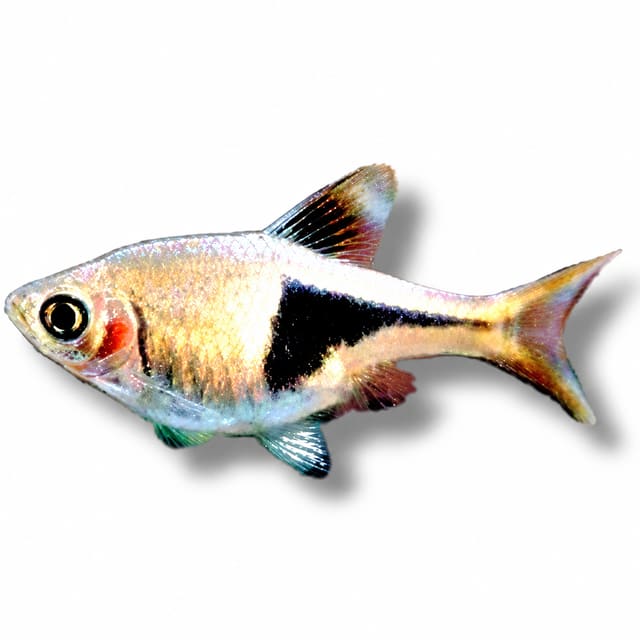
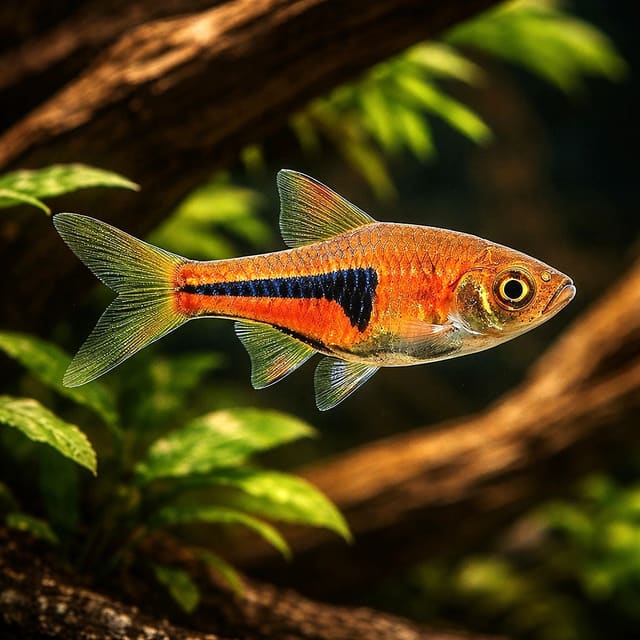
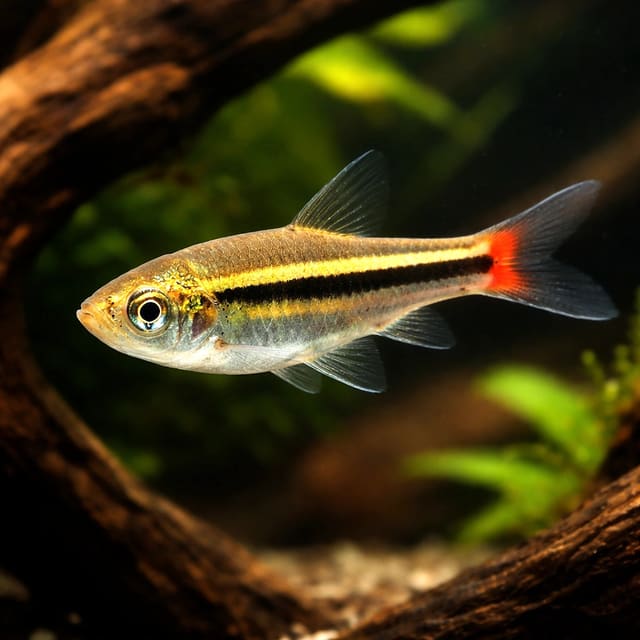
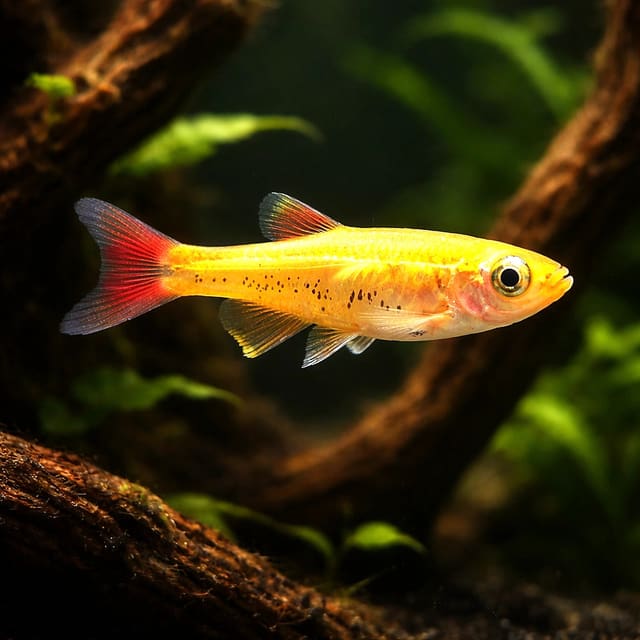
Long-fin White Clouds are valued for movement as much as colour. The body is slender, with a light-reflecting lateral area and red or orange accents often visible around the fins. Extended dorsal, anal and caudal rays can give the fish a more flowing silhouette. Colour and fin development vary with age, genetics, condition, lighting, background and stress.
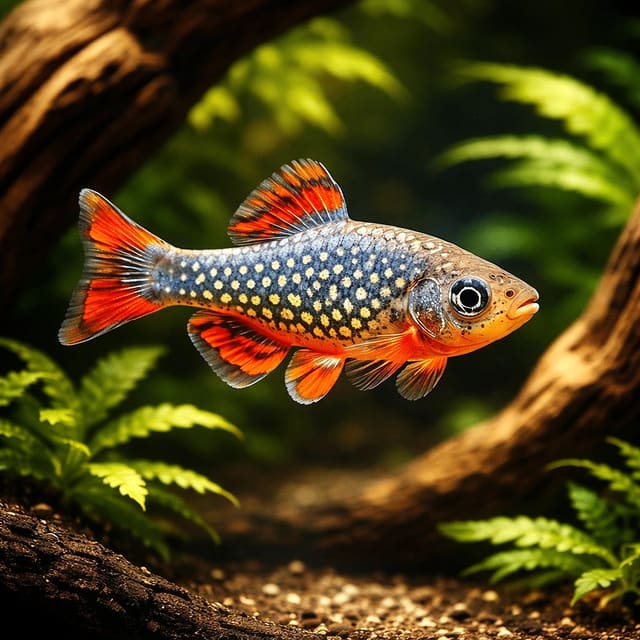
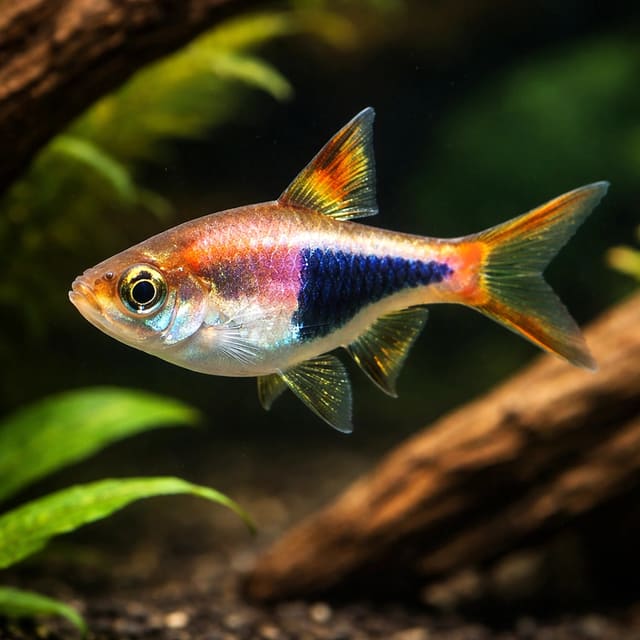
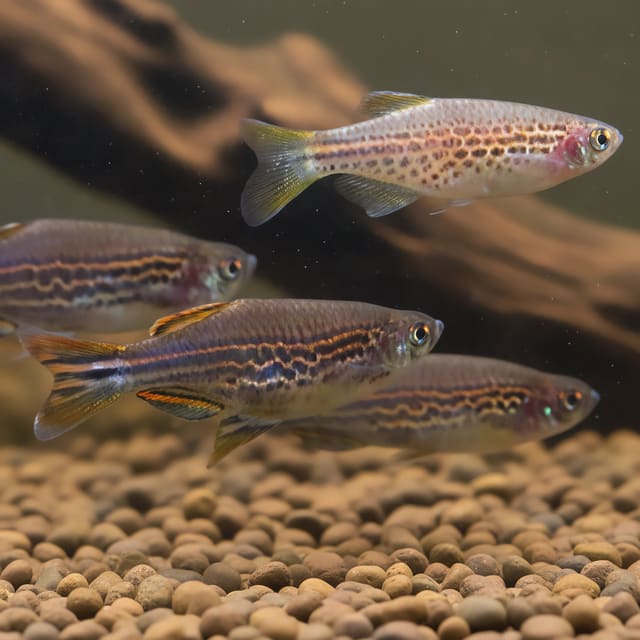
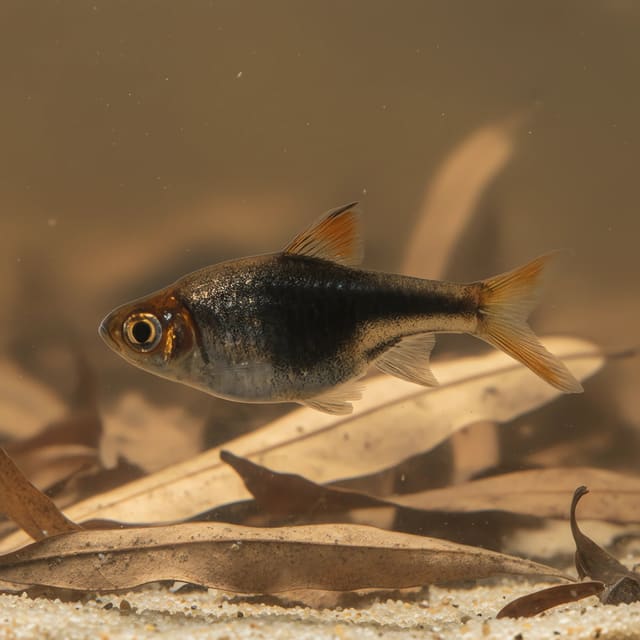
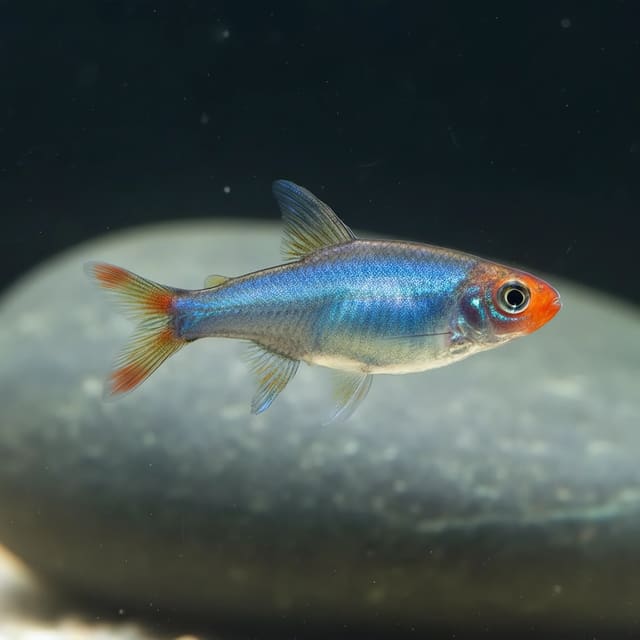
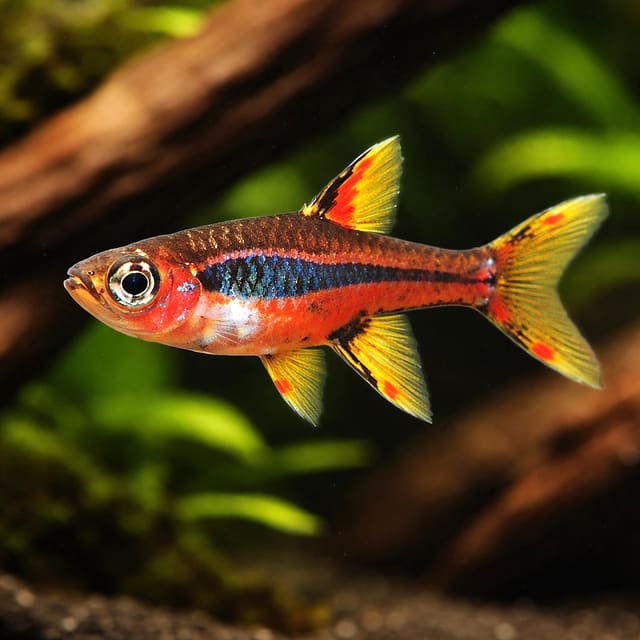
The gallery images are representative illustrations of the product form, not photographs of the exact fish dispatched. One image shows two fish to illustrate social presentation, but it is not a pair or quantity promise. The fish you receive may be paler after transport and can look different as it settles, grows and develops.
The accurate buying promise is therefore the listed identity, live size option and quantity, not an exact rendered pattern or fin shape. No sex, individual colour placement, adult fin length or breeding status is guaranteed.
Sex is not guaranteed. OATA notes that sexing is difficult unless fish are in breeding condition; females may look fuller, while spawning males can be slimmer and brighter. Those are tendencies, not a reliable retail method for every juvenile. A rounded fish after feeding is also not proof of sex.
White Clouds are egg scatterers. In a mature group, brief displays and spawning among fine plants may occur without intervention. If the aim is to raise fry, use a separate planned breeding setup with suitable spawning media and appropriately small first foods. Adults may eat eggs or newly hatched fry, and a general display tank is not a controlled breeding environment.
Buying two fish does not create an established pair, and the gallery does not imply one. For a healthy display, buy for social-group welfare rather than trying to obtain a guessed male and female from appearance alone. Breeding requires spare capacity for adults, eggs and juveniles, plus a plan for the resulting fish.
Prepare the aquarium before dispatch day. Confirm that the filter is mature and operating, temperature is stable, ammonia and nitrite are zero, the lid is secure and the intended group size is appropriate. Avoid major filter cleaning, substrate replacement or a large chemistry adjustment immediately before adding livestock.
Our new-fish acclimation guide explains the planning principles in more depth. Quarantine is recommended when mixing livestock from different sources. A quarantine aquarium must itself be mature, filtered, covered and temperature controlled; an unstable spare container can create more risk than it prevents.
Successful care is a routine rather than a one-time setup. Observe the group daily and test regularly. OATA recommends weekly water-quality checks. The water-change schedule should keep nitrate and visible waste controlled without causing abrupt shifts in temperature, pH or hardness. Condition tap water and match replacement temperature before it enters the aquarium.
| Frequency | Checks and actions |
|---|---|
| Daily | Check temperature, filter flow, breathing, balance, fin position, activity and whether every fish feeds |
| Several times weekly | Remove uneaten food and obvious waste; inspect intakes and surface movement |
| Weekly | Test ammonia, nitrite, nitrate and pH; check hardness as needed; complete an appropriate conditioned water change |
| During filter maintenance | Preserve biological media, rinse reusable media appropriately and avoid replacing all mature stages at once |
| After adding fish or changing feeding | Increase testing temporarily because biological demand has changed |
| Seasonally | Review the coldest winter and warmest summer temperatures and adjust the environmental plan |
Read the nitrogen-cycle guide if ammonia or nitrite appears, or before setting up the first aquarium. Do not use fish to cycle a tank. If a reading is unsafe, protect the livestock with correctly matched water changes and address the filter or stocking cause rather than relying on a bottle to hide the result.
A healthy fish should be alert, balanced, interested in food and able to swim with the group. Its fins should normally be open rather than tightly clamped, eyes should be clear and breathing steady. Fresh arrivals may be subdued temporarily, so judge recovery through a combination of behaviour, feeding and water tests rather than colour alone.
Long fins can show physical damage earlier than short fins, but damaged edges do not identify the cause by themselves. Poor water, fin nipping, sharp decor, transport injury and infection require different responses. Record when the change began, photograph progression and avoid mixing treatments without a diagnosis.
These forms share a species-level care foundation, but they are separate products and should remain clearly labelled. The long-fin listing is for extended-finnage stock. The standard form has the familiar shorter outline, while the gold form emphasises a pale gold or pinkish body colour. The Vietnamese White Cloud is a different species and should not be presented as another colour form.
| Fish | Identity | Main visual distinction | Buying boundary |
|---|---|---|---|
| Longfin White Cloud | Domestic long-fin T. albonubes | Extended finnage and flowing profile | This listing; one unsexed fish per quantity |
| Standard White Cloud | Standard-fin T. albonubes | Shorter natural-style fin outline | Separate product and size options |
| Gold White Cloud | Gold colour form of T. albonubes | Paler gold to pinkish body presentation | Separate product and availability |
| Vietnamese White Cloud | Tanichthys micagemmae | Related small Tanichthys species with its own pattern | Do not describe as the same species or merely a colour form |
Mixing compatible forms may be possible in a properly sized aquarium, but do not use that possibility to dilute group planning or product identity. Confirm the adult group total, quarantine new arrivals and choose the actual form you want. The long-fin variant is not an upgrade that makes standard fish inferior; it is a different visual preference with the same need for good welfare.
Browse the Danio, Rasbora and Tanichthys collection to compare current stock, but verify the exact care range of every species rather than treating a shared shop category as proof of compatibility.
Choose the available size, set the number of individual fish and review the basket before checkout. The live selector is the source for current price and stock. If one size is unavailable, do not assume that another option is an equivalent substitute for an established group without considering body-size differences and feeding competition.
Livestock orders use tracked UK delivery and careful packing. The delivery page explains eligible areas, dispatch timing and preparation. Eligible livestock orders are covered by the Live Arrival Guarantee subject to the current reporting window, photographs, destination and other conditions on the returns and live-arrival terms. It is not an unconditional promise about health or survival after the fish has been acclimated into an unsuitable aquarium.
Check special offers for current promotions rather than relying on an old price or discount copied into permanent care text.
For day-to-day care, use the conservative ranges below rather than treating a broad tolerance range as a target:
Care ranges are planning tools, not a substitute for testing the actual aquarium.
No. It is a domestic long-fin form of Tanichthys albonubes. The extended fins are an aquarium strain characteristic, not evidence of a separate species or subspecies.
You receive one unsexed fish from the selected live size option. The illustration showing two fish does not mean two fish or a pair are supplied.
Keep at least five. Eight or more is preferred where aquarium size, filtration and maintenance allow, because a fuller group usually behaves more confidently.
Use at least 45 litres and 60 cm of aquarium length for a small shoal. A 60-litre or larger long aquarium is a better practical target for a fuller group, stable water or companions.
Not always. An unheated aquarium can work when the water remains steadily within 17-23°C. Use a thermostatic heater to prevent cold dips if the room falls below range, and monitor summer heat as well.
Keep a stable 17-23°C. FishBase records 18-22°C, so the high teens to low twenties provide a sensible centre rather than a warm tropical setting.
A practical range is pH 6.5-8.0 and 4-12 dGH, with ammonia and nitrite at zero. Stable tested water matters more than repeatedly chasing one exact pH value.
They can suit a prepared beginner with a mature cycled aquarium, proper group and testing routine. They are not suitable for fish-in cycling, bowls or an uncontrolled room-temperature setup.
Plan for about 4-5 cm body length. The extended fins can make a mature long-fin fish look larger and more flowing than the standard form.
No. The gallery images are representative illustrations. Real fish vary in colour, fin development and markings, and may look subdued immediately after transport.
No sex is guaranteed. Differences are most apparent around breeding condition and are not reliable enough to promise the sex of every retail fish.
Use quality flake, small granules or micro-pellets as a balanced staple, with appropriately sized frozen or live foods for variety. Feed a measured amount eaten promptly.
Only with species that genuinely share the cooler 17-23°C range and do not nip fins, hunt small fish or overwhelm them at feeding. Many warm-only tropical fish are unsuitable.
They share species-level care and may be compatible in a suitable aquarium. Still account for the whole group, protect extended fins from nipping and buy the intended form from its separate listing.
Prepare stable, tested water in advance, keep lighting low and follow the supplied instructions promptly. Match conditions gradually without leaving fish in cooling, deteriorating transport water.
Eligible livestock orders are covered subject to the current reporting window, photographs, destination and other conditions shown on the delivery and returns pages.
No reviews for this item yet. Bought one? Honest reviews only, good or bad.
What customers say about ordering from us
I have a small group of long finned mountain minnows. So was delighted to be able to order ten of this variety to increase the genetics in my tank . The ones I recieved are healthy but it’s to early to give a verdict on wether they are of a long finned type since they are small currently.
Gordon Walker · 23 Sept 2026
100% success travel and "installation". Pleased with quality of purchase. The Siamese fighter a bit "shy" so have not yet seen him at his best yet but looking good. Happy customer. GG
George E Garratt · 21 Sept 2026
Reviews of our shop, collected by Judge.me, an independent third-party review collector. Newest first.