Moderate
Least Rasbora (Boraras urophthalmoides)
22–28°C · pH 5–7.5 · 40L
£2.99

Sawbwa barb (Sawbwa resplendens), also called the rummynose rasbora, is a small shoaling fish for a cool planted aquarium. Males can compete persistently, so cover and group composition matter. Sold as one live fish in the 2–3 cm supply grade.
Sawbwa resplendens
Shoaling fish: kept in a group they feel safer, stay calmer and show their best colour.
Sawbwa barb (Sawbwa resplendens), also called the rummynose rasbora, is a small shoaling fish for a cool planted aquarium. Males can compete persistently, so cover and group composition matter. Sold as one live fish in the 2–3 cm supply grade.
Maintain these water conditions for optimal health and vibrant colors
The Sawbwa barb (Sawbwa resplendens) brings a distinctive combination of a red face, silvery blue body and delicate tail markings to a planted aquarium. It is also known as the rummynose rasbora or Asian rummynose. Its small body makes it appealing when space is limited, but the most important thing to plan is its social life: males compete with one another, and a thoughtfully arranged aquarium gives the quieter fish room to move away.
This is a fish to build a display around. A cool, well-planted aquarium with gentle water movement lets you watch individuals browse through cover, approach food and interact across the planting. A crowded collection of unrelated community fish makes those small interactions much harder to manage. Peaceful behaviour towards other species can coexist with persistent rivalry within the group, so the whole aquarium matters as much as the fish's size.
One purchase supplies one live fish. The listed supply grade is 2–3 cm, which describes the size supplied rather than an adult maximum. There is one offer on this page. Sex is guaranteed only when the selected option explicitly states male or female. This Sawbwa barb listing has no sex-guaranteed option.
If you are planning a group, work out its composition before deciding on the number to buy. This is especially relevant when an existing aquarium already contains several males. More fish is not automatically the answer to chasing: sufficient room, the balance of sexes and cover all affect whether the group can share the space. An order quantity by itself cannot establish that balance.
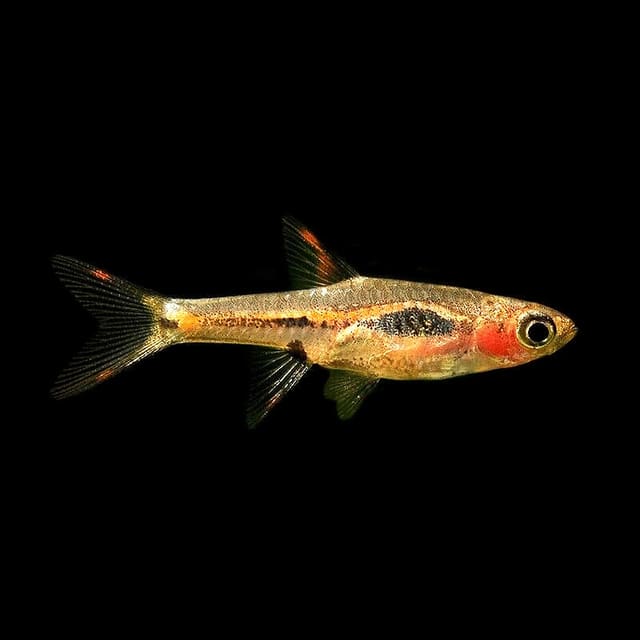
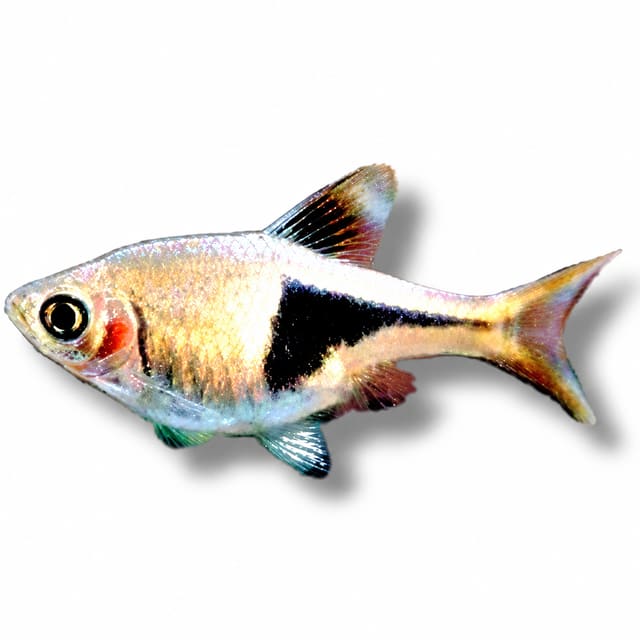
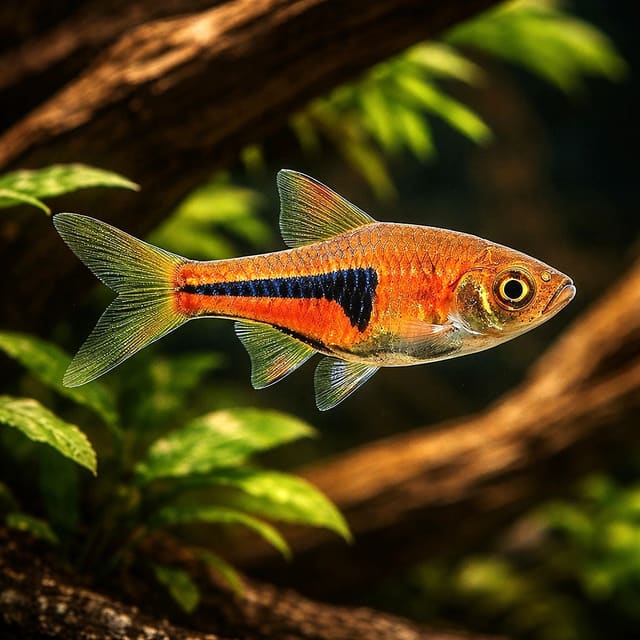
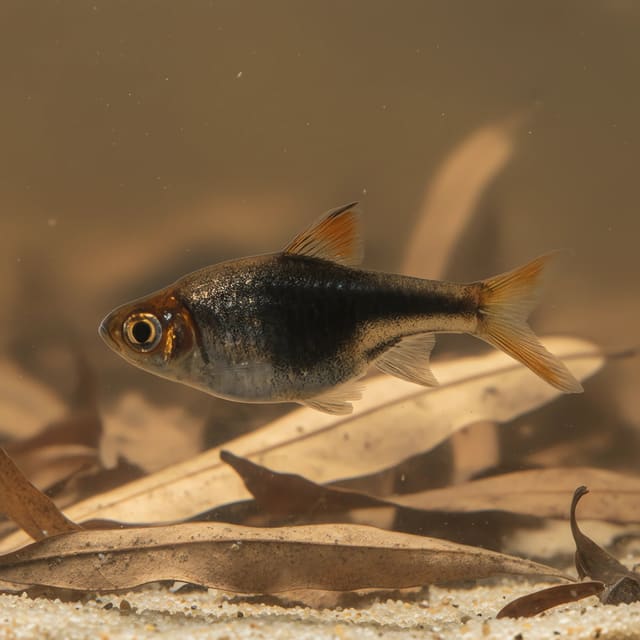
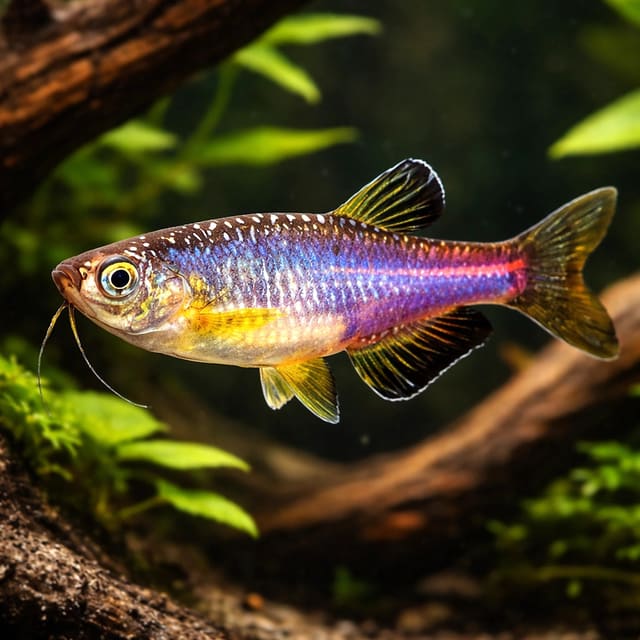
Mature males typically show red across much of the head and at the ends of the tail, with a blue sheen along the flanks. Females are more softly coloured, ranging from olive to pale brown, with a dark marking just ahead of the anal fin. These descriptions explain the differences you may see within the species. They are useful context when observing a settled group, rather than a promise that every fish will have the same colour or appearance.
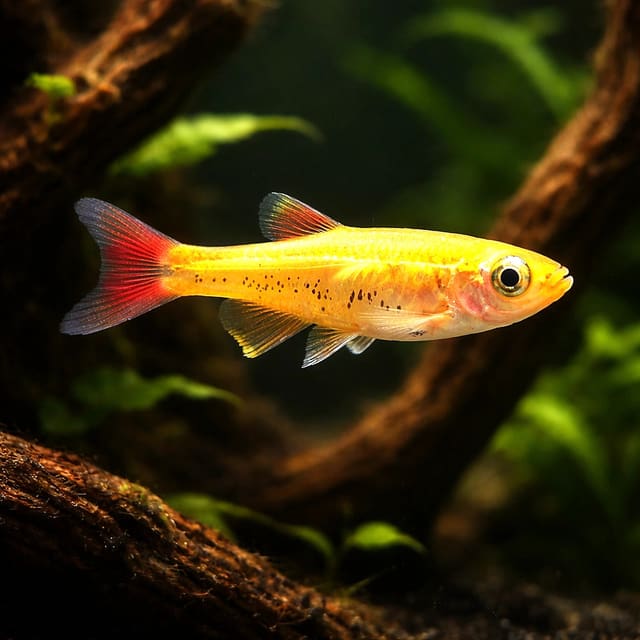
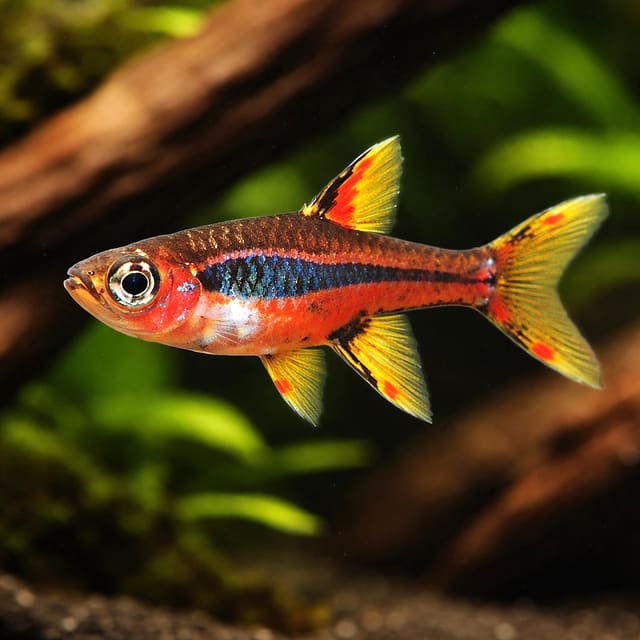
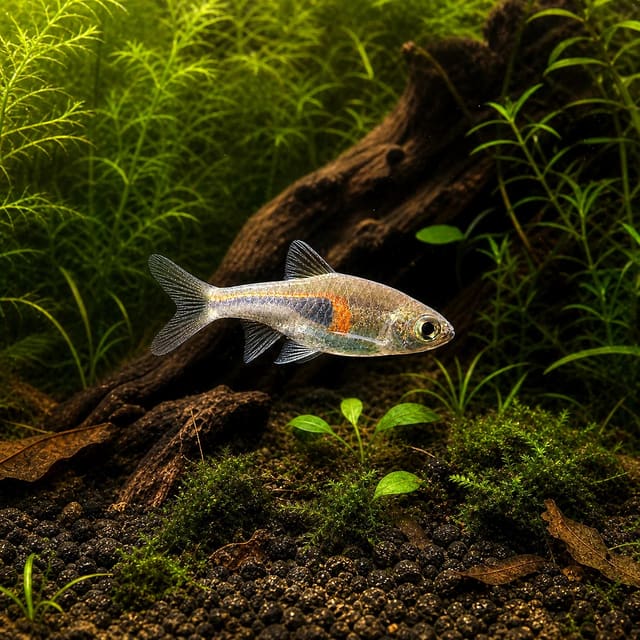
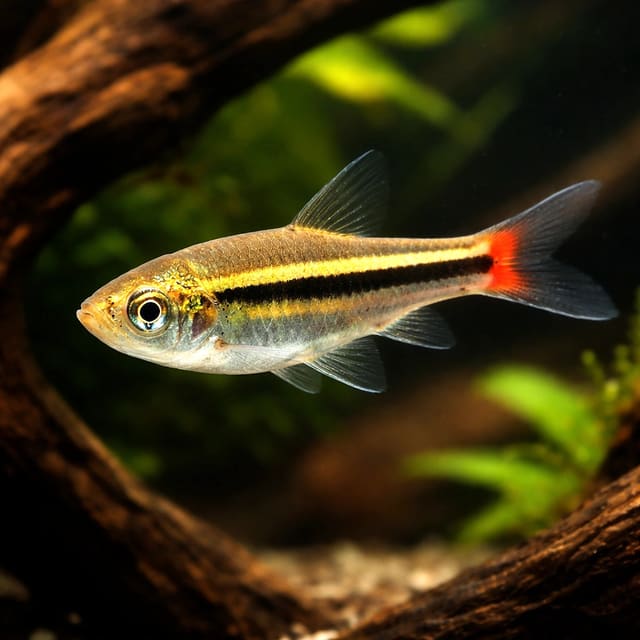
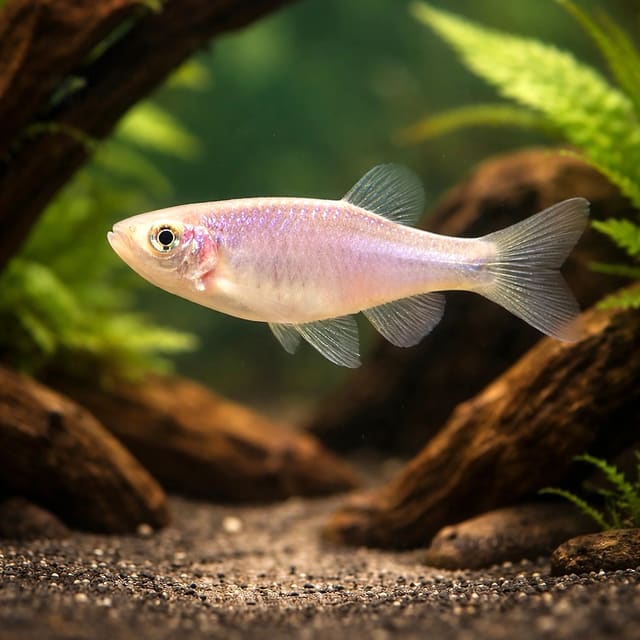
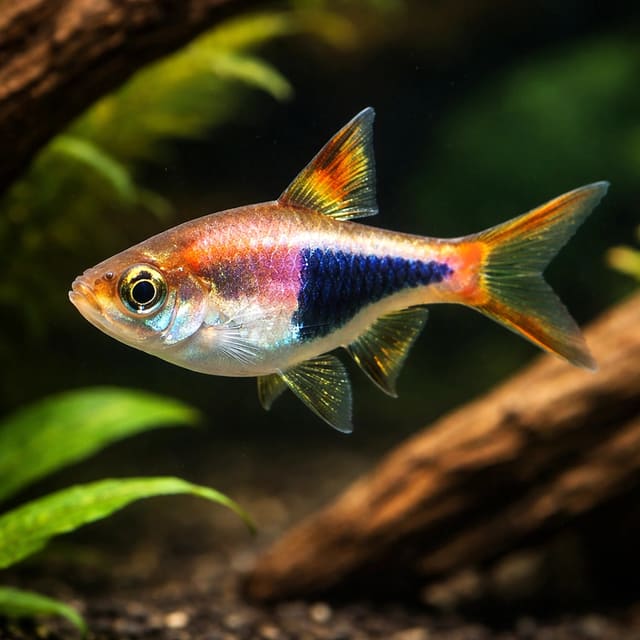
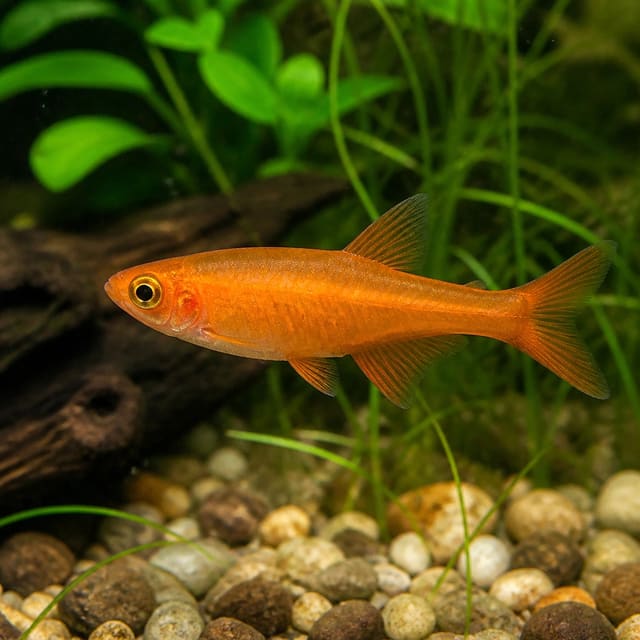
The gallery images are representative of this type of animal rather than photographs of the exact animal supplied, so colours can look slightly different from the live animal.
Enjoy the fish as a group of individuals rather than expecting a tightly synchronised school. The species forms shoals, and the way fish spread through the planting can be just as interesting as their moments together. An individual that can leave an encounter, find another route through cover and still come out to eat has more useful space than one constantly exposed to its rivals.
The species comes from Lake Inle and its surrounding waters in Myanmar. FishBase describes it among dense vegetation in both clear and peaty water. That variety is a useful reminder that an attractive aquarium need not reproduce a single photograph of a lake. The practical features to carry into the home are plant cover, suitable water and enough room for social behaviour.
Its familiar trade name can lead people to treat it like any other small rasbora. Check the actual species requirements when choosing equipment or companions. The aquarium guidance below is cooler than the setting used for many tropical community tanks, and raising the temperature to suit a different fish may leave this one outside that guidance. Choose the main inhabitants together at the planning stage.
A good home combines a mature filter, careful feeding and an aquarist willing to observe more than the overall appearance of the shoal. Consider whether you can identify a fish that is missing meals, keep planted areas accessible for cleaning and provide another suitable space if social problems develop. These are everyday keeping decisions, and making them beforehand is far easier than rearranging a stocked aquarium in a hurry.
For a wider view of small-fish choices, browse the rasboras and danios collection. Start with the water and space you can maintain consistently, then choose the display that fits them. The Sawbwa is particularly appealing when you want to spend time watching behaviour within planting rather than fill every open part of the tank.
Seriously Fish recommends an aquarium with a base of at least 60 × 30 cm and gives an approximate volume of 54 litres. Treat the footprint as an important part of that recommendation. A narrow, tall aquarium can hold a similar amount of water while offering fewer routes around planting and less separation between fish. Extra height cannot create another sheltered area at the opposite end of a short tank.
Use a larger aquarium when the intended group or its interactions demand more room. The minimum dimensions are a starting point for planning, not a stocking allowance for a fixed number of fish. Equipment, planting and ornaments also occupy space. Look at the routes remaining after the aquarium is furnished: the fish should be able to travel between open and sheltered areas without being forced through a single passage.
Seriously Fish gives 35 mm standard length, equivalent to 3.5 cm measured without the tail fin. FishBase separately records 3.0 cm for male or unsexed fish without specifying the measurement convention. Those figures describe different records and should not be treated as interchangeable whole-fish maxima. They establish that this is a small species, while the aquarium should still be planned around its movement and social needs.
The 2–3 cm supply grade is a separate description of the fish offered. Buying a small animal does not remove the need to prepare its long-term home. Avoid using centimetres of fish per litre as your main guide: that calculation cannot account for one male repeatedly preventing another from entering a feeding area.
A heavily planted arrangement with a darker substrate suits this species. Position planting so that it interrupts the view from one area to another while leaving routes through the display. Floating plants can provide further cover. You should still be able to see enough of the aquarium to check that every fish is feeding and that debris is not collecting unnoticed behind the thickest growth.
A central open space can be useful, but avoid making every sheltered patch open onto the same exposed corridor. Think about what a fish meets when it leaves cover. Several ways through the planting are more useful than one decorative refuge that a dominant individual can watch continuously. Adjust the arrangement if repeated chasing follows the same route.
Choose lighting around the plants you grow, with shaded places available to the fish. There is no need to impose a precise daily lighting schedule solely for the Sawbwa. Keep the maintenance practical: plants that are easy for you to look after are more likely to remain effective cover. A beautiful display that becomes difficult to clean will gradually lose its value as a living environment.
The Seriously Fish species profile gives the following aquarium range. Use it as a coherent set of keeping guidance, alongside the social and layout advice, rather than selecting the most convenient number from several unrelated care sheets.
| Measure | Aquarium guidance |
|---|---|
| Temperature | 18–22°C |
| pH | 6.0–8.0 |
| General hardness | 3–15 dGH |
FishBase records a different environmental range: 21–25°C, pH 7.0–8.0 and hardness 9–19 dH. Those describe the species' recorded environment; they are not the routine aquarium target used here. In particular, a warmer community setting should not be justified simply because it falls somewhere within a wild environmental record.
Measure the aquarium temperature during ordinary use and during warmer weather. A heater can prevent excessive cooling, but it cannot keep an aquarium cool when the room itself is too warm. Sunlight, the position of the aquarium and heat from nearby equipment can all affect the practical result. Plan the location before filling a tank that will be difficult to move later.
Read an independent thermometer instead of relying only on a heater dial. If the aquarium drifts away from its intended conditions, establish the reason and correct it carefully. Avoid repeatedly changing the setting while judging the result only a few minutes later. The purpose is a dependable environment, not a series of abrupt adjustments made to chase a number.
Test both the aquarium and the replacement water you intend to use. pH and general hardness describe different characteristics, so a pH result alone does not tell you whether the hardness is suitable. The water chemistry guide explains the measurements and how to interpret them together.
If your supply requires preparation, choose a method you can repeat reliably at every water change. A complex routine that is skipped when you are busy creates more uncertainty than a straightforward arrangement you can maintain. Record the results so that a developing change is visible before the fish show obvious difficulties.
The water matcher can help organise a comparison between measured water and care guidance. Treat any match as the beginning of a decision: social behaviour, adult size, feeding competition and the space available still need a separate assessment. A list of overlapping water values cannot settle compatibility on its own.
A mature biological filter is essential. The RSPCA's aquarium welfare guidance explains that fish release toxic ammonia and that beneficial bacteria in a working filter process waste through nitrite to nitrate. Clear water does not establish that this process is working: ammonia and nitrite can be present without making the tank look dirty.
Prepare the aquarium and establish its filter before adding livestock. The relevant question is whether the system can process waste, not simply how many weeks it has contained water. Follow a fishless preparation method and use the first aquarium guide to work through the setup in order. Resolve water-quality problems before making a stocking commitment.
OATA's general fishkeeping advice calls for zero ammonia and zero nitrite. Keep test equipment available after the fish arrive, because the filter must continue to handle changes in feeding and stocking. Avoid adding several unrelated groups at once. A tank can look spacious while its biological filtration is still adjusting to a larger waste load.
The Sawbwa should not have to fight a strong current throughout the aquarium. Arrange the filter outlet so that water moves through the tank while calmer areas remain accessible. Watch the fish and the movement of fine food to see where the strongest flow runs. If all the fish shelter in one corner, check both the water quality and the way the outlet is directed.
A calm surface alone is not the goal; the filter still needs to work and waste must be managed. Check the intake and outlet for plant material or other obstructions. A filter that becomes progressively blocked may continue making its usual sound while circulating less water. Include that simple visual check in your ordinary observation of the aquarium.
Live plants and filtration support different parts of the display. A heavily planted aquarium still needs maintenance and a reliable filter. Keep equipment accessible so that routine servicing can be carried out without dismantling the refuges the fish depend on.
The species is likely to take small invertebrates and other zooplankton in nature. In an aquarium it can accept appropriately sized dried foods, with regular small live or frozen foods such as Daphnia and Artemia. Choose food that the fish can pick up and swallow easily. A suitable ingredient list is little use if most particles pass the fish untouched because they are too large.
Watch individual fish as well as the general rush towards food. A confident male may eat readily while a quieter individual waits behind planting and receives very little. Offer a small amount where the fish can reach it, then see what happens before adding more. If necessary, use more than one accessible feeding area so that the same individual cannot dominate the whole meal.
Look for food being swallowed rather than repeatedly taken and spat out. Persistent difficulty can indicate that particle size or texture needs attention. Crumbling a suitable dried food may be useful, but avoid turning the whole meal into dust that disappears into the filter before the fish can take it. The practical test is what reaches the fish, not how fine the food looks in the container.
OATA's broad barb guidance recommends feeding once a day with only what the fish eat within a few minutes. Use that as general portion-control advice, then observe appetite and body condition. A fixed number of pellets cannot account for differences in food size or group composition; judge the portion by the fish eating it.
Remove uneaten food and review the cause when waste regularly remains. Adding a larger meal to compensate for one fish missing out can worsen water quality without solving the social problem. It is better to improve access to food and check whether the fish is being chased away. Consider feeding and compatibility together whenever an individual becomes thinner.
Include the small live or frozen foods as part of a varied routine, rather than relying on them only when colour seems disappointing. Appearance alone is a poor way to decide how much to feed. Appetite, access to food, body condition and clean water give a more useful picture of how the group is doing.
The OATA barb care sheet gives general maintenance advice of a partial water change of 25% at least once every week, together with regular testing at least weekly. Use a siphon to remove settled waste and treat replacement tap water to remove chlorine or chloramine before it enters the aquarium.
Its broad nitrate guidance is no more than 20 mg per litre above the normal tap-water level. Test the supply as well as the tank when interpreting that comparison. Ammonia and nitrite should remain at zero. If results move in the wrong direction, review feeding, stocking and filter performance rather than treating the weekly schedule as proof that everything must be satisfactory.
Work carefully around the planted refuges. Remove loose debris without unnecessarily disturbing the entire layout. A maintenance session is also a chance to notice whether one shelter has become crowded, whether a formerly open route is blocked by growth or whether food is collecting where you cannot normally see it.
Check the filter for blockages. When its media needs cleaning, rinse it lightly in water removed from the aquarium during the water change. Do not rinse the media under the tap: chlorine or chloramine can damage the beneficial bacterial population. The purpose is to restore flow while retaining the filter's biological function, not to make every surface look new.
Keep a brief record of water tests, filter servicing and significant changes to the aquarium. If the fish later become unsettled, that record helps connect the timing with a change in temperature, an altered layout or additional inhabitants. It also makes it easier for someone else to follow the routine when you are away.
OATA advises watching swimming, breathing, colour, appetite and body condition. Persistent hiding, unusually rapid gill movement, damaged fins or a fish losing interest in food deserve attention. Compare the fish with its own ordinary behaviour, because the less colourful individuals should not be judged against the brightest male.
Test the water when a health concern appears and seek advice with the results and a clear description of what has changed. Symptoms alone do not establish a specific disease. Avoid making several unrelated alterations at once, because that makes it difficult to know which condition mattered. If another fish is preventing normal feeding or rest, take that social pressure seriously alongside the water tests.
Arrange for someone to receive the parcel and prepare the aquarium before the fish arrive. Tropical Fish Co's delivery and Live Arrival Guarantee policy describes hand-bagging with pure oxygen, insulated packaging and a heat pack when weather requires it. A licensed live-animal courier carries the parcel, with the confirmed delivery date and tracking sent by email.
A continuous unboxing video is required for a Live Arrival Guarantee claim. Begin with the sealed parcel visible, continue as it is opened and show the fish while they remain in their sealed bag. This records their condition on arrival for the claim. Someone must receive the delivery, and the parcel must be opened and inspected on the same day.
If something has gone wrong, contact Tropical Fish Co that day with the order number and the video. Keep the process clear and continuous so the condition of the fish can be assessed without ambiguity. Read the current policy before delivery, when there is time to arrange who will receive and inspect the parcel.
The store advises slow acclimatisation, including floating the bag for 20–30 minutes to equalise temperature, and keeping bag water out of the aquarium. Follow the supplied arrival instructions. Have the equipment you need ready so that opening the parcel does not become an improvised search around the house.
After introduction, check the actual interactions in the prepared layout. A plan that looked generous before the fish arrived may need adjustment once their movements are visible. Continue observing access to shelter and food as the group settles, alongside the ordinary water-quality checks.
Sawbwa are gregarious fish, but their social behaviour is better described as shoaling than tight schooling. Rival males may spend considerable time establishing dominance. Seriously Fish particularly warns about small numbers of males and groups containing few females. This is why a simple label such as peaceful leaves out an important part of the keeping decision.
The species profile recommends at least four females per male as the ideal balance for reducing rivalry. That is a sex-ratio recommendation, not a guarantee that a particular group will settle in any tank. Nor does buying a certain quantity produce that ratio. The size of the aquarium and the number of broken sight lines remain part of the same decision.
Watch whether an encounter ends with both fish returning to normal activity. Repeated pursuit of the same individual, exclusion from food or a fish confined to one small area calls for a change. More planting may improve separation, but there must be enough underlying space for that planting to create usable retreats. A refuge has little value if the fish cannot leave it safely to eat.
OATA's general advice for barbs mentions groups of at least five, but that broad rule does not settle Sawbwa group design. Apply the species' own advice about male rivalry and the balance of sexes. Plan a suitable alternative space for an individual that needs separating rather than relying on the hope that persistent harassment will resolve itself.
Seriously Fish describes the species as peaceful towards other fishes while cautioning that it is not an ideal general-community choice. A display centred on the Sawbwa is a straightforward option. If you keep other species, assess similarly sized, active fish that enjoy comparable water conditions, and check how feeding and movement work once all inhabitants are present.
Avoid large or aggressive fish that could threaten such a small animal. Keep a particular eye on feeding competition: a tankmate can cause problems without biting or chasing if it takes all the suitable food before the Sawbwa reach it. Different swimming levels may help organise a display, but do not turn them into a guarantee that two species will ignore each other.
Choose a common temperature and chemistry that are appropriate for every inhabitant over the long term. An overlap at the extreme ends of two care ranges is a weaker basis for planning than conditions that comfortably fit both. The available aquarium footprint must also support the social requirements of each species separately.
If you are still choosing the focus of a small-fish aquarium, the Gold White Cloud Mountain Minnow is another display to investigate on its own care page. Compare its requirements with the tank you can provide, rather than treating an alternative product as a suggested tankmate. The useful choice is the fish whose complete care you can support consistently.
Do the same when considering shrimp or other small animals. The Sawbwa's diet includes tiny animal foods, so a claim that every life stage of every invertebrate is safe would be too broad. If protecting very small young is the purpose of the aquarium, arrange that protection independently instead of relying on a general description of the fish as peaceful.
Seriously Fish gives 35 mm standard length, or 3.5 cm excluding the tail fin. FishBase separately records 3.0 cm for male or unsexed fish with the measurement convention unspecified. These are labelled records, not interchangeable whole-fish maxima; plan the aquarium around social behaviour as well as body size.
The species profile recommends a base of at least 60 × 30 cm and gives an approximate volume of 54 litres. Plant it to interrupt sight lines while leaving usable swimming routes. A larger aquarium may be needed for the group you intend to keep; the dimensions are not a fixed stocking allowance.
The Sawbwa barb is a shoaling fish, but group composition needs particular care. Seriously Fish recommends at least four females per male as the ideal balance for reducing rivalry. Plenty of cover and sufficient space still matter. Buying a set quantity does not establish the sexes in that group.
It suits someone ready to manage a mature filter, cooler conditions and rivalry between males. Those needs make it a considered choice for a new keeper rather than a fish to add casually to a busy community. Prepare and test the aquarium first, then plan the group and its retreats.
Sawbwa resplendens accepts dried foods of a suitable small size, alongside regular small live or frozen foods such as Daphnia and Artemia. Watch every fish swallow food, including individuals waiting behind plants. If one misses meals, improve access and assess chasing instead of simply adding more food.
Seriously Fish gives aquarium guidance of 18–22°C, pH 6.0–8.0 and general hardness 3–15 dGH for the Sawbwa barb. Check the room's warm-weather temperature as well as the heater setting. Keep replacement water preparation consistent and interpret pH and hardness as separate measurements.
The species is peaceful towards other fishes, but rival males can show persistent aggression towards one another. That social conflict is the main issue to plan around. Watch for repeated pursuit, damaged fins or exclusion from food, and change the arrangement if an individual cannot feed and rest normally.
A species-focused aquarium is a useful starting point. Seriously Fish allows consideration of similarly sized, active fishes with comparable water conditions, while cautioning against treating this as a general-community species. Assess space and feeding competition, and avoid large or aggressive animals that threaten the small fish.
Tropical Fish Co uses oxygen-filled bags, insulated packaging and a licensed live-animal courier. Receive and inspect the parcel the same day. A Live Arrival Guarantee claim requires a continuous unboxing video showing the sealed parcel being opened and the fish still in their sealed bag; contact the store that day with your order number and video.
FishBase: Sawbwa resplendens covers identity, distribution and recorded measurements. Seriously Fish covers aquarium conditions, feeding and social behaviour. OATA's barb sheet and the RSPCA aquarium guidance provide the broader filtration, testing and maintenance advice. Read numerical values together with their stated purpose: a wild environmental record, an aquarium recommendation and a supply grade answer different questions.
No reviews for this item yet. Bought one? Honest reviews only, good or bad.
What customers say about ordering from us
I have a small group of long finned mountain minnows. So was delighted to be able to order ten of this variety to increase the genetics in my tank . The ones I recieved are healthy but it’s to early to give a verdict on wether they are of a long finned type since they are small currently.
Gordon Walker · 23 Sept 2026
100% success travel and "installation". Pleased with quality of purchase. The Siamese fighter a bit "shy" so have not yet seen him at his best yet but looking good. Happy customer. GG
George E Garratt · 21 Sept 2026
Reviews of our shop, collected by Judge.me, an independent third-party review collector. Newest first.