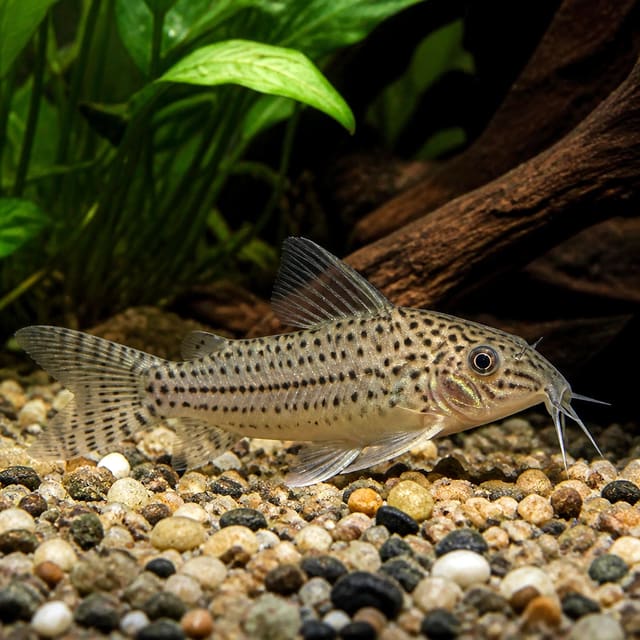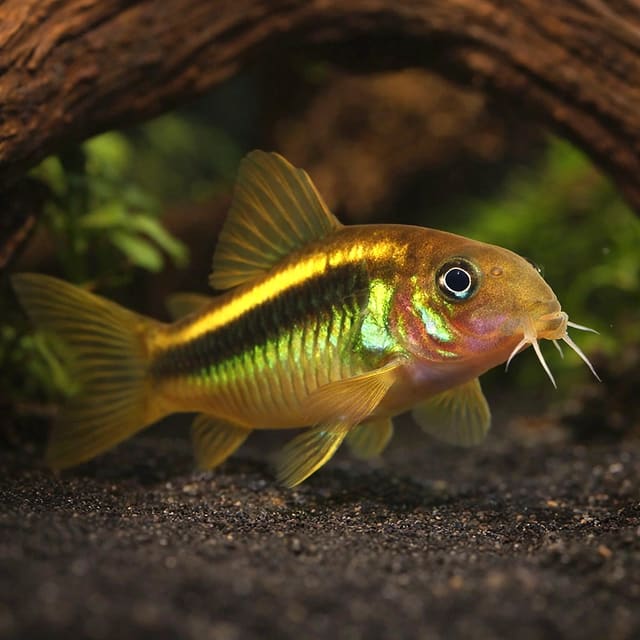
Gold Laser Cory (Osteogaster sp.) — CW010
22–27°C · pH 6–8
£24.99

Peaceful nocturnal doradid talking catfish for shaded mature aquariums with wood, caves and calm tank mates. Moderate care, 23-28C, pH 6.0-7.5.
Adult size is the maximum length this species reaches at full maturity (scientific sources). The livestock you receive will be younger and smaller — pick a size above for the actual shipping size. Product-photo provenance and any image-specific limitations are stated on the listing.
Amblydoras hancockii
Shoaling fish: kept in a group they feel safer, stay calmer and show their best colour.
Confirm your email, then we’ll send an availability message for this exact item if it returns within 180 days.
This request is only for this product—no newsletter or other promotions. A mail-provider retry may very rarely duplicate the same availability message. Unconfirmed addresses are removed after 48 hours. See our privacy policy.
Peaceful nocturnal doradid talking catfish for shaded mature aquariums with wood, caves and calm tank mates. Moderate care, 23-28C, pH 6.0-7.5.
Adult size is the maximum length this species reaches at full maturity (scientific sources). The livestock you receive will be younger and smaller — pick a size above for the actual shipping size. Product-photo provenance and any image-specific limitations are stated on the listing.
Maintain these water conditions for optimal health and vibrant colors
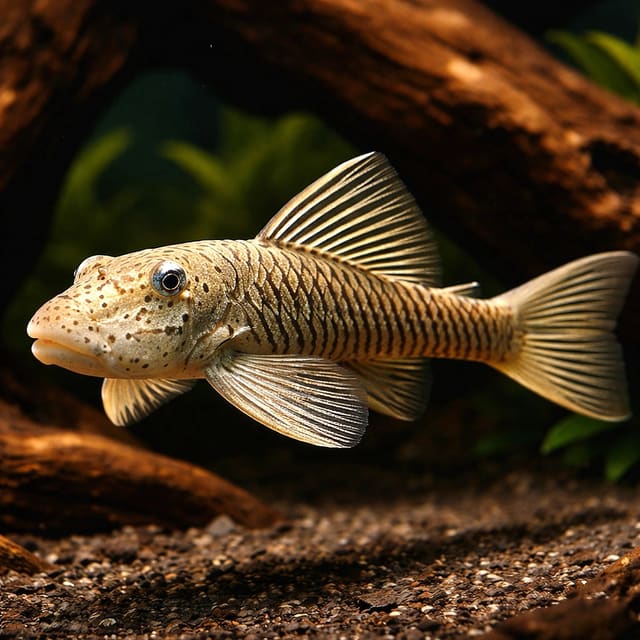
Hancock's Talking Catfish (Amblydoras hancockii) is a small, peaceful doradid catfish sold in the aquarium trade under names such as Hancock's Amblydoras, Hancock's catfish, croaking spiny catfish and marbled talking catfish. It is a secretive bottom-dweller rather than a showy midwater fish, but it becomes a very characterful choice for aquarists who enjoy natural behaviour, night-time feeding and shaded South American-style aquariums.
The trade name needs a little care. Supplier and hobby labels may use Amblydoras hancocki, Amblydoras hancockii, Platydoras hancockii or related marbled talking-catfish names. The sources checked for this page show that the taxonomy has been messy in the aquarium trade. For the customer-facing listing, the useful point is practical and honest: this is a peaceful, armoured talking catfish type that needs cover, stable tropical water and food reaching the bottom after lights dim.
This listing is for the 4-5 cm size, with a larger sibling size also kept on the same Shopify product. It suits mature aquariums where there are caves, driftwood, leaf litter or plant shade, and where tank mates are peaceful enough not to bully a shy nocturnal catfish.
| Common names | Hancock's Talking Catfish, Hancock's Amblydoras, Croaking Spiny Catfish, Marbled Talking Catfish |
|---|---|
| Scientific / trade name | Amblydoras hancockii / supplier trade Amblydoras hancocki |
| Family | Doradidae, the thorny or talking catfishes |
| Current size | Usually supplied around 4-5 cm for SKU 8013 |
| Adult size guide | Often kept as a small-to-medium doradid; allow around 8-12 cm depending on exact trade form |
| Temperament | Peaceful, shy, mainly bottom-dwelling and nocturnal |
| Care level | Moderate: hardy once settled, but needs hiding places and calm tank mates |
Hancock's Talking Catfish is not bought for constant front-glass display. It is bought for texture, behaviour and the quiet charm of a hidden catfish that appears when the aquarium settles. The body is armoured with doradid-style plates and spines, and the fish can produce audible croaking or talking sounds by using its pectoral fin spines and swim bladder. This is normal for the group and is one reason these catfish have such memorable common names.
In a well-planned aquarium, it adds a very different presence from corydoras, plecos or open-water community fish. It spends the day tucked under wood, among roots or inside caves, then becomes more active at feeding time. It is especially good for aquarists who like natural aquascapes with shaded corners rather than bare, bright tanks.
Use a mature aquarium with stable filtration and plenty of shelter. A sandy or smooth fine-gravel substrate is preferable because this catfish spends its life close to the bottom and uses its barbels to investigate food. Driftwood roots, half coconut caves, smooth rock shelters, broad-leaved plants and leaf litter all help it feel secure.
Dim light is helpful. Floating plants or tall background plants can soften the aquarium and make the fish more confident. The aim is not a sterile display tank, but a calm catfish habitat with dark retreats and open feeding areas at the front.
| Minimum aquarium | 60 litres for a small specimen; larger is better for groups or mixed catfish communities |
|---|---|
| Temperature | 23-28 C |
| pH | About 6.0-7.5, with stability more important than chasing a number |
| Hardness | Soft to moderately hard water is usually tolerated if acclimated carefully |
| Layout | Soft bottom, wood, caves, roots, plants and shaded resting places |
This fish should not be left to survive on leftovers alone. Offer sinking carnivore or omnivore pellets, small sinking wafers, frozen bloodworm, brine shrimp, daphnia, black mosquito larvae and finely chopped meaty frozen foods. Some sources note algae and detritus feeding in wild relatives, but in aquariums it still benefits from a varied, protein-rich bottom-feeder diet.
Feed after the lights dim, or use tongs or a feeding tube to make sure food reaches the bottom before faster fish take it. A rounded belly after feeding is normal; a pinched body or a fish that never emerges for food means the aquarium routine needs adjusting.
Hancock's Talking Catfish is peaceful with fish too large to be swallowed and calm enough not to harass it. Good choices include medium tetras, peaceful barbs, hatchetfish, pencilfish, larger rasboras, peaceful dwarf cichlids, angelfish in suitable tanks, and other non-aggressive bottom dwellers with enough space. Avoid aggressive cichlids, fin nippers, large predatory catfish, very boisterous loaches, and tiny fry or shrimp that could be eaten at night.
| Best with | Peaceful community fish, calm South American setups, shaded planted aquariums |
|---|---|
| Avoid | Aggressive cichlids, predators, rough bottom dwellers, tiny ornamental shrimp |
| Group or single? | Can be kept singly, but similar doradids often behave naturally with conspecifics if space and hides are available |
| Activity | Mostly nocturnal; expect more movement after lights-out and during quiet feeding |
Doradid talking catfishes are famous for their defensive sounds and strong pectoral spines. Handle them with care and avoid fine mesh nets that can trap the spines. Use a container when moving the fish where possible. In the aquarium, they are usually peaceful but secretive, and a new specimen may hide for days while it settles.
Breeding is not commonly reported in home aquariums. FishBase notes bubble-nest behaviour and male defence in the blue-eye/Hancock's catfish complex, while aquarium sources describe captive breeding as rare or undocumented. The practical advice is to treat this species as a display and behaviour fish, not as an easy breeding project.
Keep the aquarium lights low when the fish arrives. Float the sealed bag to equalise temperature, then gradually mix small amounts of aquarium water into the bag or acclimation container over 30-45 minutes. Release the fish gently near cover and do not worry if it hides immediately. Offer a small sinking meal after lights-out once it has had time to settle.
As eligible livestock, this fish is dispatched through our UK live-animal courier process and covered by our Live Arrival Guarantee when the guarantee conditions are followed. Avoid adding it to a brand-new aquarium; mature, stable water is much safer for a bottom-dwelling catfish.
This is a good choice for an aquarist who wants an unusual peaceful catfish, enjoys nocturnal behaviour and can provide shaded cover. It is less suitable for someone wanting a fish that is always visible in the open. If you want a hardy, characterful, armoured catfish for a mature community aquarium, Hancock's Talking Catfish is a much more interesting choice than the old stuffed sales title made it sound.
No reviews for this item yet. Bought one? Honest reviews only, good or bad.
What customers say about ordering from us
I have a small group of long finned mountain minnows. So was delighted to be able to order ten of this variety to increase the genetics in my tank . The ones I recieved are healthy but it’s to early to give a verdict on wether they are of a long finned type since they are small currently.
Gordon Walker · 23 Sept 2026
100% success travel and "installation". Pleased with quality of purchase. The Siamese fighter a bit "shy" so have not yet seen him at his best yet but looking good. Happy customer. GG
George E Garratt · 21 Sept 2026
Reviews of our shop, collected by Judge.me, an independent third-party review collector. Newest first.