Moderate
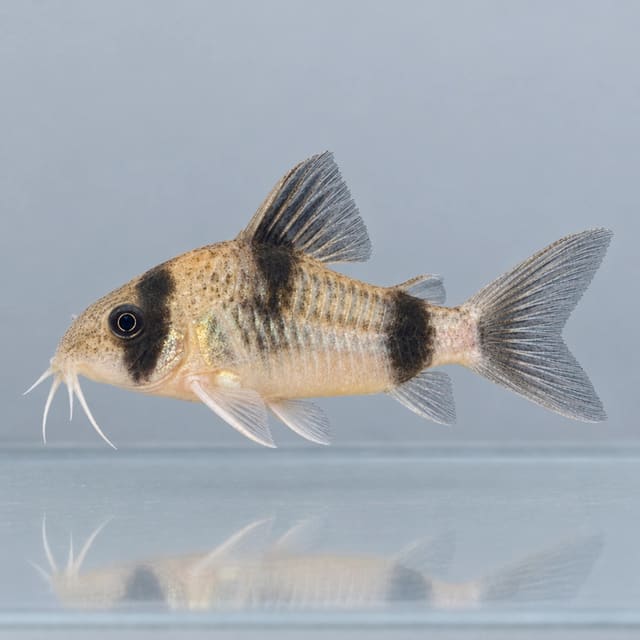
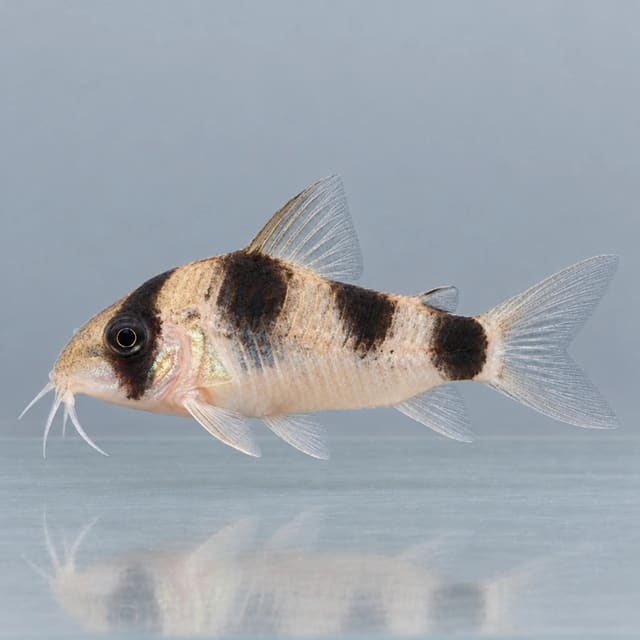
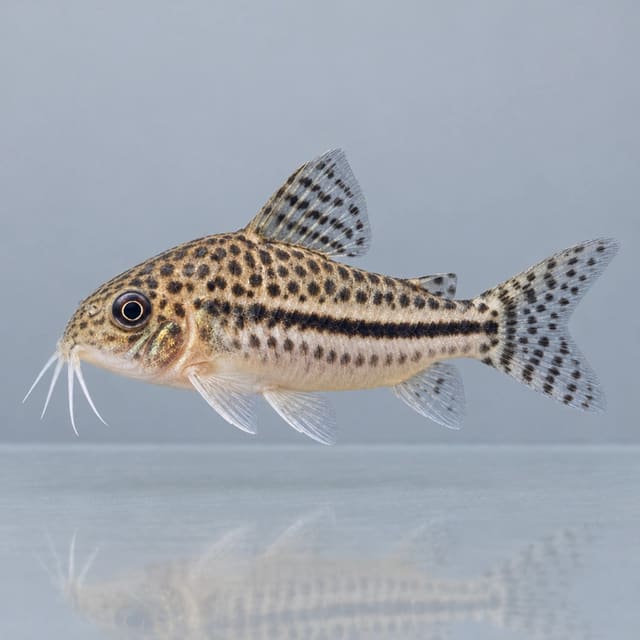
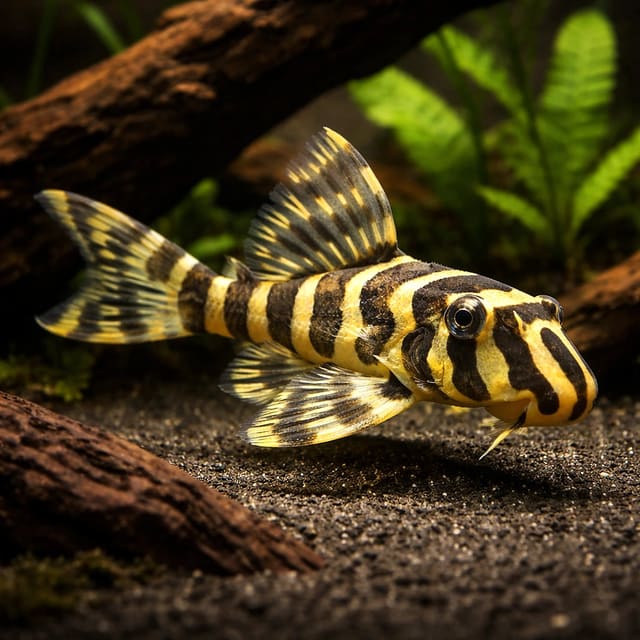
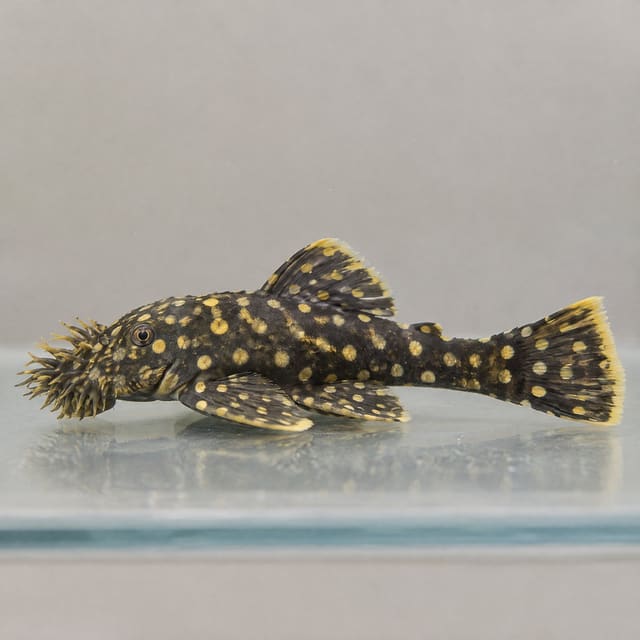
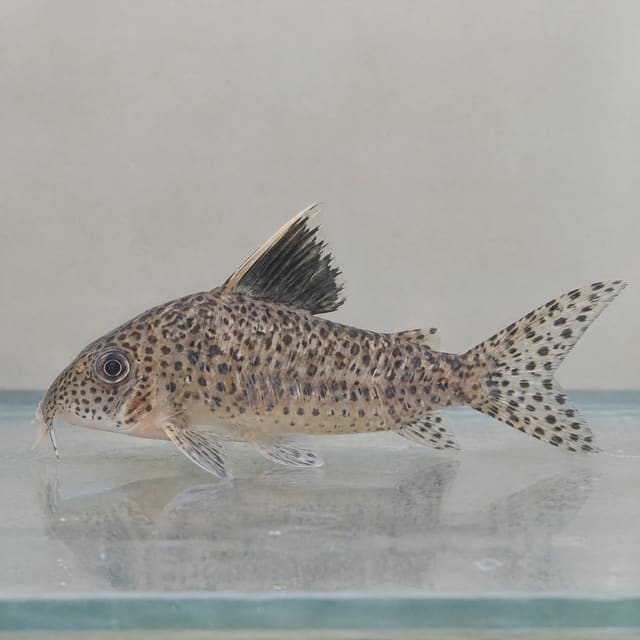
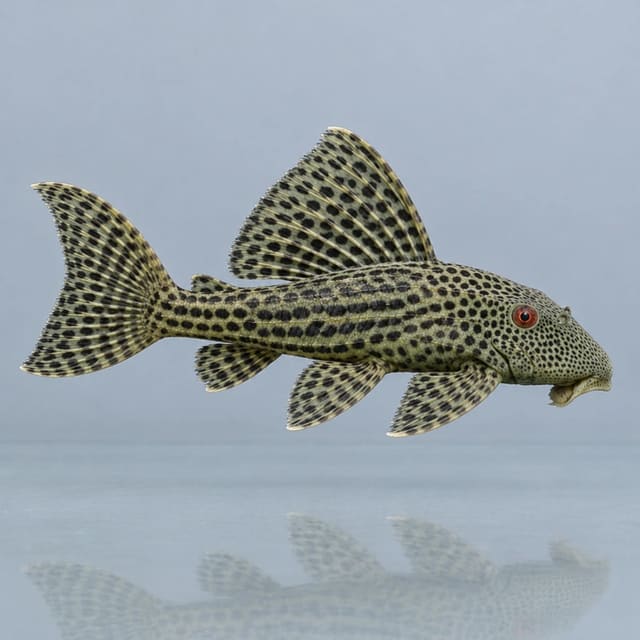
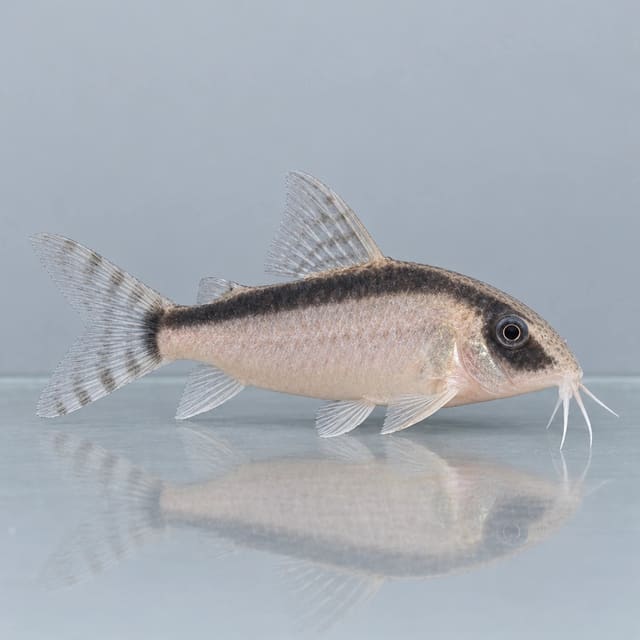
Mitu Cory CW106 (Brochis sp. CW106)
23–25°C · pH 6–7
£31.39
The Hognose Brochis (Brochis multiradiata) is a long-snouted, metallic-green armoured catfish from the north-western Amazon in Ecuador and Peru. It is a peaceful shoaling bottom dweller for a sandy aquarium with a 120 × 45 cm base at 21–24°C, kept in a group of six to eight or more. Sold individually as one live fish.
Brochis multiradiata
Quantity discounts are pricing offers, not a group-size recommendation. Check the full care guidance and your existing animals before choosing a quantity.
The Hognose Brochis (Brochis multiradiata) is a long-snouted, metallic-green armoured catfish from the north-western Amazon in Ecuador and Peru. It is a peaceful shoaling bottom dweller for a sandy aquarium with a 120 × 45 cm base at 21–24°C, kept in a group of six to eight or more. Sold individually as one live fish.
Read the full care guidance when planning conditions for your aquarium.
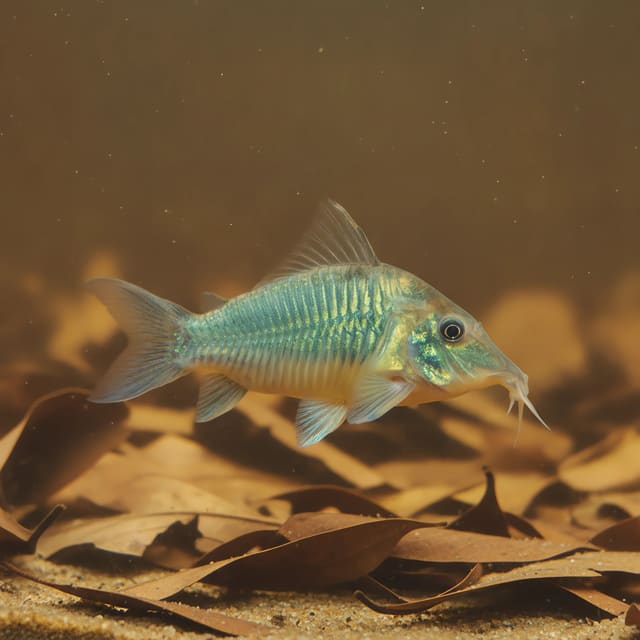
The Hognose Brochis is Brochis multiradiata, a long-snouted armoured catfish from the north-western Amazon basin in Ecuador and Peru. Its back and upper flanks shine metallic green and bronze over a pale cream belly, and its snout runs forward and down to a mouth fringed with barbels, which is where the "hognose" name comes from. It belongs to the corydoras family, the Callichthyidae, and lives like a large, busy cory: it stays on the bottom, sifts sand for food in small groups and darts to the surface now and then to gulp air.
The species was described by Orcés in 1960 from a tributary of the Río Lagartococha near Garza-Cocha, in the upper Río Napo system of Ecuador. Its name means "many rays" and refers to the dorsal fin, which carries far more rays than a normal cory's: Seriously Fish gives 17–18 dorsal rays, against 6–8 in the corydoras and their close relatives. That tall, many-rayed fin and the long snout together make the Hognose Brochis one of the most distinctive fish in the family.
| Name | What it means |
|---|---|
| Hognose Brochis | The common name used by Planet Catfish and Seriously Fish, from the long, sloping snout |
| Long-finned Brochis | A second common name listed by both sources |
| Brochis multiradiata | The current scientific name, used by Seriously Fish and Planet Catfish |
| Brochis multiradiatus | The same fish with the older ending, still used by FishBase and many dealers |
| Corydoras multiradiatus | Its name in books from about 2003 to 2024, while Brochis was merged into Corydoras |
| Chaenothorax multiradiatus | The original 1960 name |
The genus has moved twice. Seriously Fish explains that Britto merged Brochis into Corydoras in 2003, and that Dias and colleagues revalidated Brochis in 2024 and placed this species back in it. You will therefore find the same fish under three genus names, depending on the age of the book or website. Browse its relatives in our Brochis catfish range, the wider South American catfish category and our full corydoras collection.
The fish most often confused with it is the Emerald Catfish, Brochis splendens, which shares the metallic green colour. Two features separate them. First, the snout: Planet Catfish names the hog-like snout as the mark that sets this species apart from the other brochis. Second, the dorsal fin: Seriously Fish gives B. splendens 10–12 rays, B. britskii 15–18 (normally 15) and the Hognose Brochis 17–18, while Planet Catfish says 15–18, usually 17. A short-snouted fish with a modest dorsal fin is not this species.
One purchase supplies one live Hognose Brochis at the standard size offered on this listing. It is a shoaling fish, so choose the quantity for a whole group and order them together; a lone fish is likely to stay nervous and hidden. Youngsters are smaller than the adults described below, so plan the aquarium for grown fish from the start.
Sex is not specified. Seriously Fish and Planet Catfish both describe adult females as larger and fuller-bodied, best seen from above, and Planet Catfish adds that males develop more pointed fin tips, but these differences are hard to judge in young fish. The photographs show the species, not the individual you will receive; the depth of the green sheen changes with lighting, age and mood.
Before ordering, read our delivery and Live Arrival Guarantee information and have the aquarium running, mature and at temperature, so the group goes straight into stable water.
Seriously Fish gives a minimum base of 120 × 45 cm, about 243 litres, for a group of Hognose Brochis, with a recommended size of 120 × 45 × 45 cm. That is more than many corydoras need, because this is a bigger, more active fish that patrols the whole floor. Planet Catfish adds that it prefers deeper water of at least 18 inches, about 45 cm. OATA's catfish guidance gives at least 80 litres for a shoal of smaller corydoras, which shows how far above the cory minimum this species sits.
Floor area matters more than height for any bottom-dwelling shoal. Every catfish, loach and other bottom fish in the tank shares the same sand, so count them together when you judge whether there is room. Our tank volume calculator turns your measurements into litres if you are not sure what your aquarium holds.
A Hognose Brochis feeds by pushing its snout and barbels into the substrate, so the floor needs to be soft. Seriously Fish calls fine sand ideal and accepts rounded gravel only if it is kept very clean; OATA also recommends sand or fine gravel to protect the barbels. Sharp or dirty gravel can damage the barbels the fish rely on to find food.
Planet Catfish describes the ideal layout as open spaces of substrate with rock or wood refuges raised slightly off the floor, giving the shade these fish like to rest under in their rare quiet moments. It suits an Amazon river layout well: a long run of pale sand, a few pieces of driftwood, smooth stones and subdued light, with plants kept to the back and sides.
The three main references give slightly different water values, so the safest target is the band they all agree on.
| Value | Seriously Fish | Planet Catfish | FishBase |
|---|---|---|---|
| Temperature | 20–26°C | 21–24°C | 21–24°C |
| pH | 6.0–7.5 | 6.0–7.2 | 6.0–7.2 |
| Hardness | 2–12 dGH | not given | up to 15 dH |
| Maximum size | 100 mm SL | 67 mm SL | 6.7 cm SL |
Aim for 21–24°C and pH 6.0–7.2, with soft to moderately hard water inside the Seriously Fish band of 2–12 dGH. UK tap water varies a great deal from region to region, so test your general and carbonate hardness, or read your water company's hardness report, before you decide whether the tap water needs blending with softer water. Make any change gradually, over several water changes. Our water matcher compares your readings with the needs of each fish you plan to keep.
Temperature, pH and hardness describe the habitat. Ammonia, nitrite and nitrate describe waste, and OATA's limits apply whatever the species: ammonia and nitrite at zero, and nitrate no more than 20 mg per litre above your tap water. A new aquarium must finish its nitrogen cycle before the group arrives, and a bottom-feeding shoal is the first to suffer when waste builds up in the sand.
A group of foraging catfish stirs up the sand all day, so choose a filter rated for the whole aquarium and set the outlet to move the surface without blasting the floor. Seriously Fish notes that brochis are facultative air breathers with a modified, highly vascularised intestine: an occasional dash to the surface for a gulp of air is normal. Leave a gap below the cover glass so the fish can always reach the surface. If the whole group starts making frequent trips upward, test the water at once.
Seriously Fish describes the Hognose Brochis as a foraging omnivore that accepts most sinking dried foods and small live or frozen foods such as bloodworm and Tubifex, and stresses that it should not be expected to survive on leftovers or to clean the tank. Planet Catfish says live bloodworm and tubifex are especially relished, and suggests offering tubifex in a shallow ceramic dish so the worms cannot settle into the sand and foul the water.
OATA advises feeding once a day and giving only what the fish clear within a few minutes. Spread sinking food over the open sand rather than dropping it in one spot, so every fish in the group gets a share.
OATA recommends double-bagging catfish because their spines can puncture a bag. At home, switch off the aquarium lights, float the sealed bag for 10 minutes to match the temperature, then add small amounts of tank water to the bag over up to 20 minutes before releasing the fish and discarding the bag water. Our guide to acclimatising new fish covers each step.
Handle them with care. Seriously Fish warns that the stiff pectoral-fin spines can pierce skin and give a painful sting, and that secretions from glands at the base of the spines may be mildly toxic. The same spines snag easily in fine nets, so guide the fish into a container where possible.
| When | What to check |
|---|---|
| Day 1 | Lights low; no food on arrival day. Count the group and check every fish is on the sand. |
| Days 2–3 | Offer a small sinking meal. Watch that all fish come out to feed. |
| Days 4–5 | Test ammonia and nitrite; both must read zero after the extra stocking. |
| Day 7 | Carry out the normal 25% water change and check barbels and fins for damage. |
OATA lists the signs of a healthy fish as clear eyes, undamaged fins, no ulcers or bumps, normal swimming and steady breathing. For a bottom-dwelling catfish, the barbels and the way the fish feeds tell you most: a confident group spreads out and works the sand together.
| Observation | Action |
|---|---|
| Short, red or worn barbels | Check the substrate and test nitrate; clean or replace rough gravel with fine sand. |
| Frequent rushes to the surface by the whole group | Test ammonia and nitrite, check the heater and increase surface movement. |
| Fish hiding and not feeding | Check tank mates for bullying at the feeding area and that the group is large enough. |
| White spots, fluffy patches or clamped fins | Test the water first, then treat; see our white spot treatment guide. |
Seriously Fish describes the Hognose Brochis as peaceful and gregarious and rates it fine with other fish. Planet Catfish calls it an ideal community resident that can live with most fish, notes that its larger size helps it compete for food better than corydoras do, and says it is boisterous enough for livelier aquariums. It is perfect for an Amazon river biotope with calm, mid-water fish above a busy group of brochis on the sand.
| Suits | Avoid |
|---|---|
| Calm South American tetras such as Black Phantom Tetra and Lemon Tetra | Large cichlids or catfish that guard the floor or can swallow small fish |
| Surface fish such as the Marbled Hatchetfish, which leave the sand free | Fish that need very warm water, well above the shared 21–24°C band |
| Other brochis, such as the Delphax Cory and Reticulated Cory, if the floor is large enough | Fin-nippers and fast, greedy bottom feeders that take all the food |
Our tank mates checker runs through these questions for the fish you have in mind, and the corydoras care guide covers the family's general needs.
Little is known about breeding this species. Seriously Fish lists reproduction as unreported, and Planet Catfish says a spawning was once reported but no details survive, beyond the suggestion that it spawns much like a cory. If your group spawns, note the water values, temperature changes and foods that came before it; a written record would add to what is known about the species.
It is Brochis multiradiata, a long-snouted armoured catfish from the north-western Amazon basin in Ecuador and Peru. It belongs to the corydoras family, Callichthyidae, and is sometimes sold as the Long-finned Brochis or under the older names Brochis multiradiatus and Corydoras multiradiatus.
The sources disagree. Planet Catfish and FishBase give 67 mm standard length (body length without the tail), while Seriously Fish gives 100 mm. Plan the aquarium for the larger figure.
Seriously Fish recommends a group of at least six to eight. One purchase is one fish, so add the number you need to the basket in one order.
Seriously Fish gives a base of 120 × 45 cm, about 243 litres, and Planet Catfish says it prefers water at least 18 inches (about 45 cm) deep. Most of that space should be open sand.
Aim for 21–24°C and pH 6.0–7.2, the band shared by Seriously Fish, Planet Catfish and FishBase, with soft to moderately hard water (Seriously Fish gives 2–12 dGH). Keep ammonia and nitrite at zero.
Look at the snout and the dorsal fin. The Hognose Brochis has a long, sloping snout and 17–18 dorsal rays according to Seriously Fish; the Emerald Catfish, Brochis splendens, has a short snout and 10–12 rays.
It is a foraging omnivore. Give a good sinking pellet or tablet every day and small frozen or live foods such as bloodworm several times a week. It should not be left to live on leftovers.
Not in any detail. Seriously Fish lists reproduction as unreported, and Planet Catfish says a spawning was reported but no details survive beyond it being similar to corydoras.
No reviews for this item yet. Bought one? Honest reviews only, good or bad.
What customers say about ordering from us
Easy website plenty of info on fish your buying great to pick a time slot
TRACEY DURRANT · 7 Oct 2026
Got some lovely fish thank you
Kevin Mackie · 7 Oct 2026
Reviews of our shop, collected by Judge.me, an independent third-party review collector. Newest first.
Moved by UK carriers licensed to handle live animals
Hand-packed with oxygen bags, poly box, heat pack
Email photos the same day; an optional unboxing video helps us review problems faster — claim terms apply
Klarna & PayPal Pay in 3 at checkout