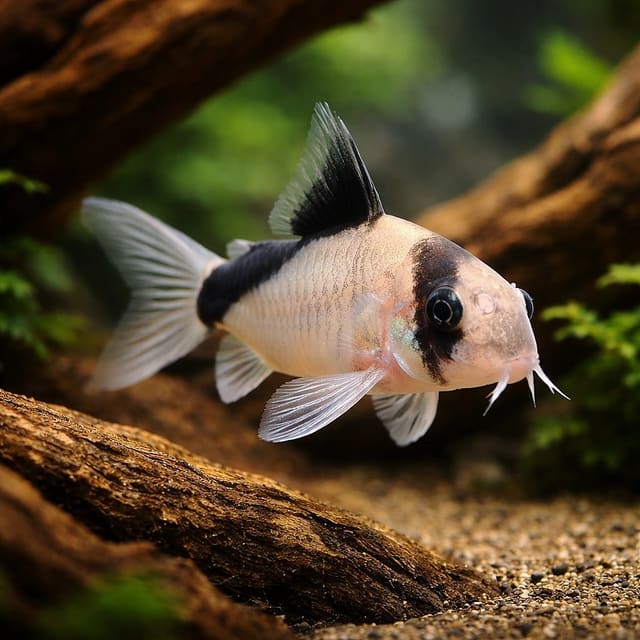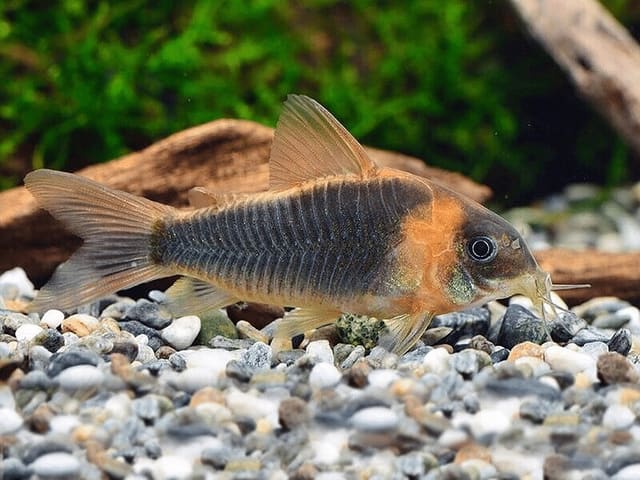
Horseman Cory (Corydoras eques)
24–26°C · pH 6–8 · 81L
£6.99

Peaceful Delphax Cory / False Blochi Catfish, correctly listed as Brochis delphax. Best kept in a 5+ group on clean soft sand at 21-26C with calm community fish.
Brochis delphax
Shoaling fish: kept in a group they feel safer, stay calmer and show their best colour.
Confirm your email, then we’ll send an availability message for this exact item if it returns within 180 days.
This request is only for this product—no newsletter or other promotions. A mail-provider retry may very rarely duplicate the same availability message. Unconfirmed addresses are removed after 48 hours. See our privacy policy.
Peaceful Delphax Cory / False Blochi Catfish, correctly listed as Brochis delphax. Best kept in a 5+ group on clean soft sand at 21-26C with calm community fish.
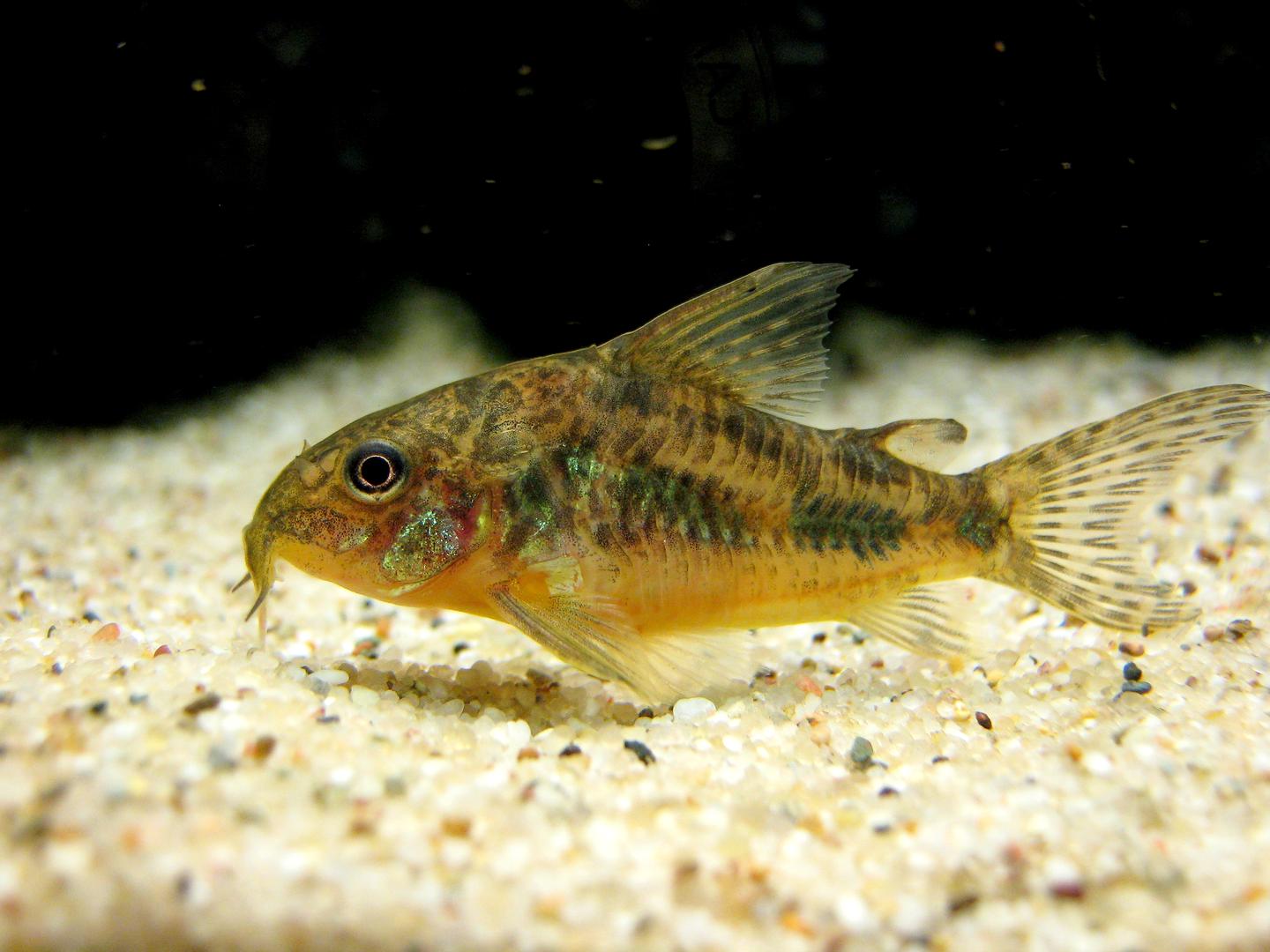
Identify the exact cory catfish before choosing care. Our starting policy for many common medium species is six compatible conspecifics, a mature 60 x 30 cm aquarium of about 60 litres, smooth fine sand and measured species-appropriate water.
Maintain these water conditions for optimal health and vibrant colors
Delphax Cory, also called the False Blochi Catfish, is a peaceful South American armoured catfish now best listed as Brochis delphax. The older aquarium name Corydoras delphax is still widely used by suppliers and fishkeepers, so this page keeps both names together for clarity. Older local data and some supplier text have used the spelling Corydoras delfox; the correct species spelling is delphax.
This is a social bottom-dwelling catfish for mature aquariums with soft sand, clean water and gentle tank mates. It has the familiar cory-style armour and barbels, but it is not a tiny nano cory: supplied sizes may start around 2.5-3cm, while adults can reach roughly 5-7.5cm depending on sex and source. Plan for a proper group and enough floor space rather than treating it as a single cleaner fish.
| Current scientific name | Brochis delphax |
|---|---|
| Trade/search synonym | Corydoras delphax |
| Common names | Delphax Cory, False Blochi Catfish, False Blochi Cory |
| Legacy supplier spelling | Corydoras delfox appears in older data; delphax is the corrected spelling |
| Sale sizes | 2.5-3cm, 3.5-4cm and XL options when available |
| Adult size | About 5-7.5cm |
| Best kept | Group of 5+; larger groups display better |
Delphax Cory is a spotted, longer-bodied cory relative with a sturdy head, sensory barbels and a pattern that can be confused with other Blochi-type and spotted Brochis/Corydoras fish. The body is usually pale beige to warm grey with darker spotting, a dark area near the front of the dorsal fin and markings through the tail. Pattern intensity can fade or strengthen with age, lighting, stress and substrate colour, so the page uses the corrected scientific name rather than relying only on common names.
The old label “False Blochi” is useful because it tells fishkeepers what the fish is often compared against, but it can also cause confusion. The safest practical approach is to keep the species name, sale size and group-care notes visible together, then use photos as representative guidance rather than as a promise that every individual will carry identical markings.
Reference sources place Brochis delphax around the upper Orinoco and Inirida river systems in Colombia. That points to a soft-substrate, clean-water aquarium with shaded resting areas, driftwood, plants or botanicals and a stable mature filter. It does not need a harsh current, but it does need oxygen, low waste and a substrate that will not damage the barbels.
Because these fish spend so much time working the bottom, the condition of the aquarium floor matters as much as the water test numbers. Food trapped under coarse gravel can rot out of sight and contribute to barbel erosion. A fine sand foreground, regular light cleaning and open feeding area will keep them healthier and more visible.
| Temperature | 21-26°C; avoid sustained overheated water |
|---|---|
| pH | 6.0-7.5, with stable slightly acidic to neutral water ideal |
| Hardness | Soft to moderate, up to about 15 dGH for practical aquarium care |
| Minimum aquarium | 80-120 litres depending on group size; larger floorspace is better |
| Substrate | Fine sand or very smooth rounded substrate |
| Filtration | Mature, stable, oxygenated and gentle to moderate |
| Maintenance | Frequent partial water changes and low nitrate are important |
This species is peaceful and social. Keep a group of at least five, with six to eight or more preferred when the aquarium footprint allows. A proper group makes the fish more confident, encourages natural sand-sifting behaviour and reduces the shy stop-start movement often seen when cory-type fish are kept singly.
Like other Corydoradinae catfish, Delphax Cory can gulp air at the surface and use intestinal air breathing. Occasional quick surface trips are normal. Repeated frantic surface visits are not a care strategy; they can point to poor oxygenation, heat stress or deteriorating water quality. Leave an air gap above the water and keep surface movement steady.
The 2.5-3cm option is best for fishkeepers who enjoy growing on a young group and already have peaceful, fine-mouthed tank mates. The 3.5-4cm option is a stronger middle size for community aquariums where the bottom group needs to settle quickly without being intimidated. XL fish are better for larger displays, established Corydoradinae groups or aquariums with more confident midwater fish.
Whichever size you choose, build the group around similar-sized individuals when possible and give them time to settle before judging colour or pattern. Young Delphax Cory can look slimmer and paler after transport, then fill out once feeding, substrate and water quality are steady. Avoid mixing a single small individual into a rough adult bottom-dweller community; the goal is a calm group that feeds together and rests together.
| 2.5-3cm | Young group-building size for calm mature aquariums and careful feeding |
|---|---|
| 3.5-4cm | Good all-round size for most peaceful community setups |
| XL | Larger, showier fish for roomy aquariums with stable bottom-feeding access |
| Best purchase plan | Prioritise a proper group, clean sand and floor space over buying a single specimen |
Good companions are peaceful midwater fish that will not harass the group or steal every sinking food item. Smaller tetras, pencilfish, rasboras, calm livebearers and gentle dwarf cichlids can work well. Avoid large predatory fish, rough cichlids, fin-nippers, aggressive bottom dwellers and very boisterous feeding species.
If you are comparing cory-type catfish, see related soft-sand species such as Palespotted Cory, Banded Cory, Bandit Cory and Sands' Cory. One good group of one species is usually better than several under-sized groups in a small tank.
| Best companions | Small peaceful tetras, pencilfish, rasboras and calm community fish |
|---|---|
| Use caution | Other bottom dwellers unless there is enough floor space and feeding access |
| Avoid | Predators, rough cichlids, fin-nippers, sharp gravel and dirty substrate pockets |
| Feeding zone | Bottom; target sinking foods after midwater fish have fed |
| Best display | Open sand at the front, shaded wood/plants behind and calm midwater dither fish |
Feed a varied omnivore diet: quality sinking catfish pellets, fine granules, cory tablets and frozen foods such as bloodworm, daphnia, brine shrimp and mosquito larvae. They may pick at plant matter or soft vegetable foods, but they should not be expected to survive on leftovers. Watch the group eat and make sure food reaches the bottom before stronger midwater fish intercept it.
Small portions are better than heavy feeding. Uneaten food trapped in sand or under wood quickly affects water quality, and this species is best kept in tanks where the substrate stays clean without being stripped bare of all cover.
We pack live fish for specialist UK live-animal courier service and support eligible livestock orders with our Live Arrival Guarantee. Prepare a mature aquarium before dispatch day, check that the heater and filter are stable, and avoid major aquascaping or large water-chemistry changes immediately before arrival.
Dim the lights, float the sealed bag to match temperature, then gradually mix small amounts of aquarium water before release. Do not pour transport water into the tank. During the first week, feed lightly, keep the group calm and look for normal sand-sifting, resting together and occasional surface air-gulping.
Well-conditioned adults may spawn after richer feeding and a slightly cooler water change. Females hold eggs during the classic cory-style spawning embrace and deposit adhesive eggs onto glass, leaves, decor or other surfaces. Adults may eat eggs, so breeders usually move eggs or use a dedicated spawning setup. Fry need very clean water and tiny foods such as newly hatched brine shrimp once ready.
Choose Delphax Cory if you want an uncommon, peaceful, social bottom-dweller for a mature soft-sand community aquarium. It is a poor choice for sharp gravel, brand-new tanks, aggressive tank mates or aquariums where bottom feeders are expected to clean up scraps. Kept correctly, Brochis delphax is a confident, characterful catfish.
Care and identity were checked against FishBase, Fishkeeper/Maidenhead, Fishipedia, Aqua-Fish, Aquadiction and current Corydoradinae revision context. The listing uses Brochis delphax as the current name, keeps Corydoras delphax as the trade/search bridge, and treats Corydoras delfox as a legacy spelling to redirect rather than the primary species name.
No reviews for this item yet. Bought one? Honest reviews only, good or bad.
What customers say about ordering from us
I have a small group of long finned mountain minnows. So was delighted to be able to order ten of this variety to increase the genetics in my tank . The ones I recieved are healthy but it’s to early to give a verdict on wether they are of a long finned type since they are small currently.
Gordon Walker · 23 Sept 2026
100% success travel and "installation". Pleased with quality of purchase. The Siamese fighter a bit "shy" so have not yet seen him at his best yet but looking good. Happy customer. GG
George E Garratt · 21 Sept 2026
Reviews of our shop, collected by Judge.me, an independent third-party review collector. Newest first.