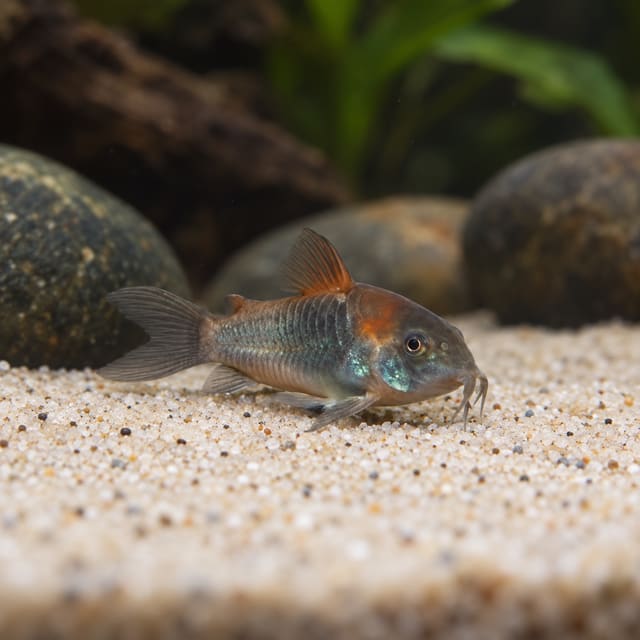
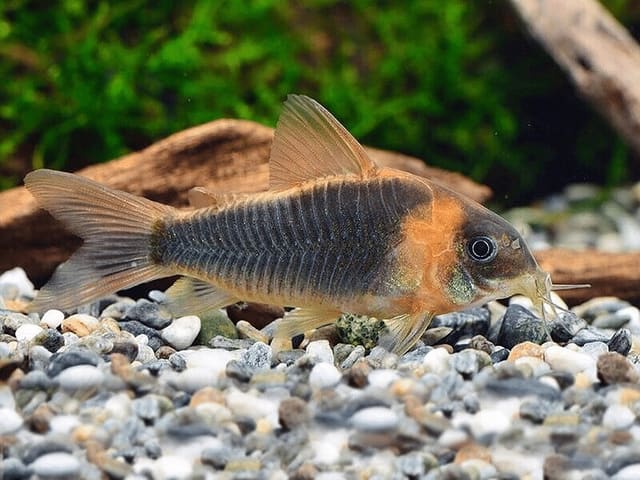
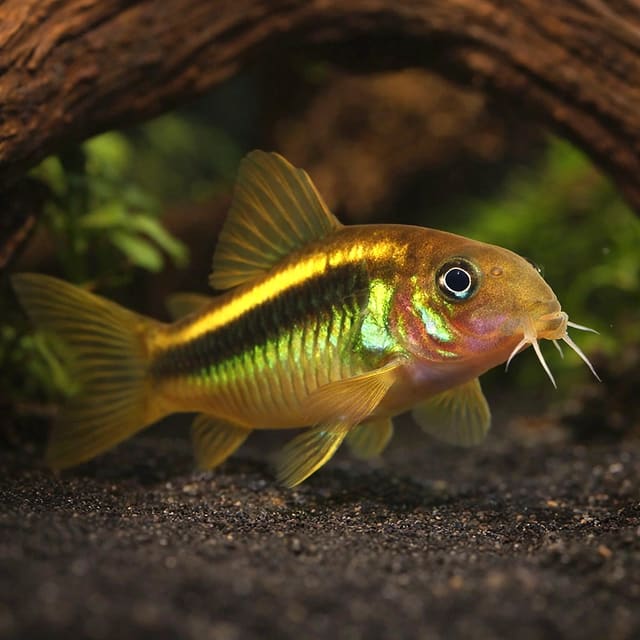
Albino Bronze Cory (Osteogaster aenea)
22–27°C · pH 6–8 · 72L
£2.99

Peaceful Reticulated Cory / Network Cory, now best treated as Brochis reticulata with Corydoras reticulatus as the familiar aquarium name. Keep in a group on clean soft sand at 22-26C.
Adult size is the maximum length this species reaches at full maturity (scientific sources). The livestock you receive will be younger and smaller. Product-photo provenance and any image-specific limitations are stated on the listing.
Brochis reticulata
Shoaling fish: kept in a group they feel safer, stay calmer and show their best colour.
Confirm your email, then we’ll send an availability message for this exact item if it returns within 180 days.
This request is only for this product—no newsletter or other promotions. A mail-provider retry may very rarely duplicate the same availability message. Unconfirmed addresses are removed after 48 hours. See our privacy policy.
Peaceful Reticulated Cory / Network Cory, now best treated as Brochis reticulata with Corydoras reticulatus as the familiar aquarium name. Keep in a group on clean soft sand at 22-26C.
Adult size is the maximum length this species reaches at full maturity (scientific sources). The livestock you receive will be younger and smaller. Product-photo provenance and any image-specific limitations are stated on the listing.
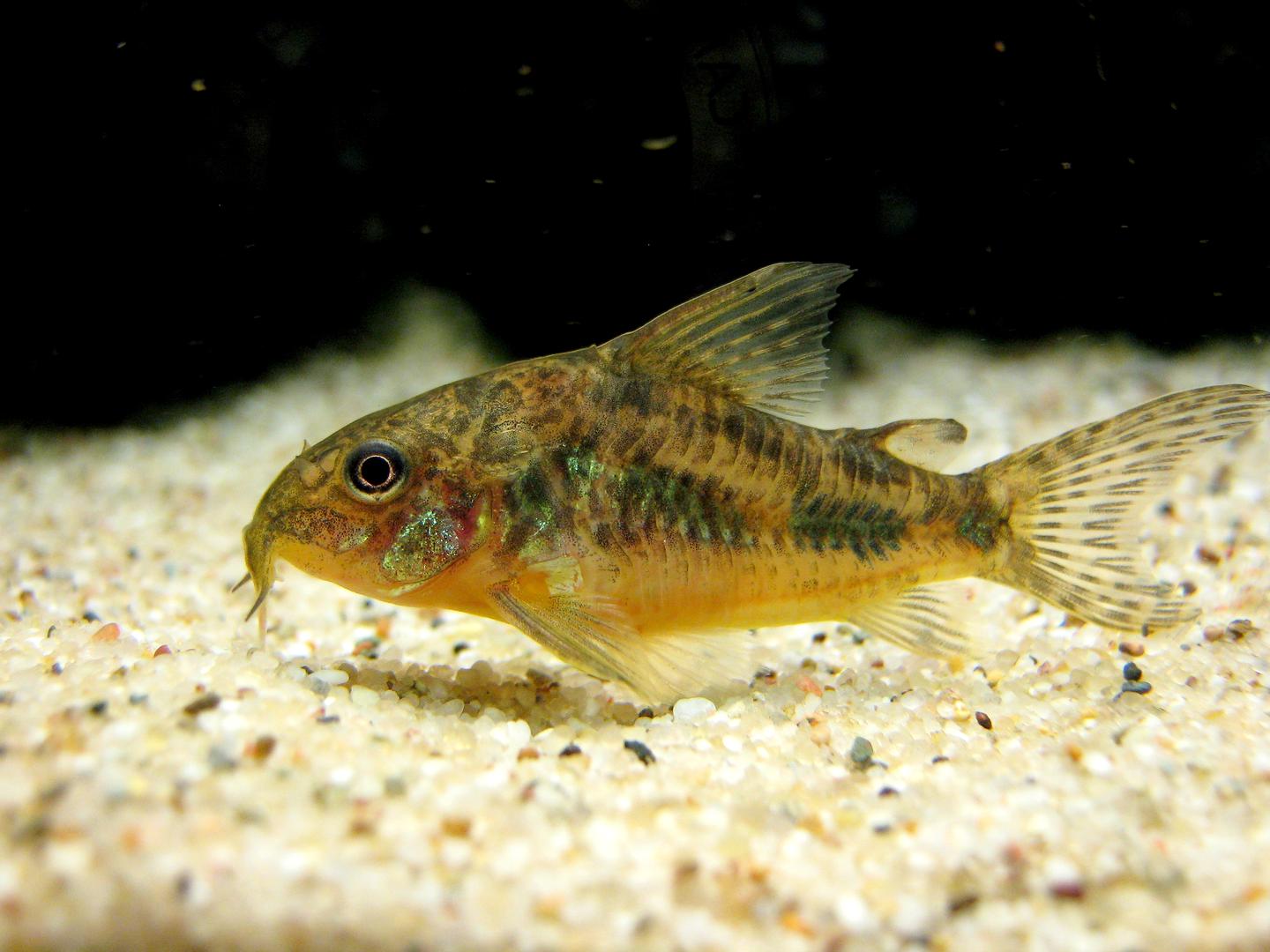
Identify the exact cory catfish before choosing care. Our starting policy for many common medium species is six compatible conspecifics, a mature 60 x 30 cm aquarium of about 60 litres, smooth fine sand and measured species-appropriate water.
Maintain these water conditions for optimal health and vibrant colors
Reticulated Cory, also called the Network Cory or Reticulated Corydoras, is a peaceful South American armoured catfish with a fine net-like body pattern. Current Corydoradinae references increasingly place this fish as Brochis reticulata, while the long-standing aquarium and supplier name Corydoras reticulatus remains the phrase many fishkeepers search for. This listing keeps both names visible so the page is accurate without losing the familiar trade name.
This is a social bottom-dweller for mature aquariums with soft sand, steady oxygen and calm tank mates. It is not a single “cleaner fish”; it is a shoaling catfish that does best in a group, where it can sift, rest and move with confidence. The 3-4cm size offered here is a useful settled juvenile/subadult size, but adults can reach roughly 6cm, so plan the group and floor space properly.
| Current scientific name | Brochis reticulata |
|---|---|
| Trade/search synonym | Corydoras reticulatus |
| Common names | Reticulated Cory, Network Cory, Network Corydoras, Reticulated Corydoras |
| Sale size | 3-4cm young fish |
| Adult size | About 5-6.1cm |
| Best kept | Group of 6+ where space allows |
| Main appeal | Net-like flank pattern, peaceful behaviour and active sand-sifting |
The “reticulated” name describes the fish’s network-style markings: a pale to warm grey base crossed by darker lines, spots and broken mesh-like patterning. The head and shoulder area may show darker spotting, while the body pattern can look more like a fine net than the bold bands seen on some other cory-type catfish. As with all patterned Corydoradinae, individual markings vary with age, sex, stress, lighting and substrate colour.
Because older catalogues and fish shops have used Corydoras reticulatus for many years, that name still matters for search and customer recognition.
FishBase places the species in the lower Amazon basin in South America. That background points to warm, clean, oxygenated freshwater with a soft substrate, shaded areas and plenty of small edible items on or near the bottom. In the aquarium, the most important translation is not an extreme blackwater setup; it is stable water quality, clean sand, appropriate group size and enough open floor area for natural foraging.
Reticulated Cory should be kept in a tank that has already matured biologically. Newly set up aquariums often swing in ammonia, nitrite, pH and oxygen, and bottom-dwelling catfish feel those problems quickly. A settled filter, gentle water movement, regular maintenance and a clean feeding area will do more for this fish than chasing a single perfect number.
| Temperature | 22-26°C for normal long-term care; avoid sustained overheating |
|---|---|
| pH | 6.0-7.5 preferred, with stability more important than constant adjustment |
| Hardness | Soft to moderate water; avoid sudden hardness swings |
| Minimum aquarium | 60-80 litres for a small group; larger floorspace is better |
| Substrate | Fine sand or very smooth rounded grains to protect barbels |
| Filtration | Mature, oxygenated and gentle to moderate |
| Maintenance | Small regular water changes and light substrate cleaning |
Keep Reticulated Cory in a group, ideally six or more. A proper group makes the fish bolder, encourages natural sifting and reduces the stop-start shyness often seen when cory-type catfish are kept singly or in pairs. They spend much of the day moving along the bottom, resting together, exploring shaded edges and making quick visits to the surface.
Surface air-gulping can be normal in Corydoradinae because they can use atmospheric air. Occasional trips are expected. Repeated frantic dashing, hanging near the surface or gasping should be treated as a warning sign for low oxygen, excess heat, poor water quality or transport stress. Keep the surface accessible and do not completely seal the waterline with floating plants.
The best layout has open sand at the front, cover behind and no sharp gravel. Use driftwood, smooth stones, robust plants and leaf litter or botanicals if they suit the rest of the aquarium. Shaded retreats help the group rest, while open sand lets them feed where you can see them. Avoid deep dirty gravel, jagged decor and tight rock piles that trap food.
Substrate quality is a health issue, not just a design choice. Cory-type catfish use their barbels constantly while feeding; abrasive gravel and rotting trapped food can lead to barbel wear, infection and poor condition. A clean sand feeding zone, a small siphon during maintenance and controlled portions make a visible difference.
| Foreground | Open fine sand for feeding and group movement |
|---|---|
| Background | Wood, plants and shaded resting areas |
| Lighting | Moderate to subdued; floating cover can help confidence |
| Flow | Gentle to moderate with good oxygen exchange |
| Avoid | Sharp gravel, dirty substrate pockets and aggressive bottom competitors |
The 3-4cm size is large enough to show the reticulated pattern clearly, but still young enough to settle into a new group and grow on well. Buy with group behaviour in mind rather than treating the fish as an accessory for the bottom of the tank. A group added together will usually settle more smoothly than a single fish added to an already busy bottom zone.
During the first few days, expect the fish to rest more than they do once established. Keep lighting gentle, avoid moving decor around the bottom, and offer small sinking foods in the same open sand area each evening. Once comfortable, Reticulated Cory usually becomes much more visible, especially when midwater fish are calm and the substrate is easy to sift.
| Before arrival | Mature filter, clean sand, stable heater and no recent major rescape |
|---|---|
| Day one | Dim lights, gentle acclimation and no heavy feeding |
| Days two to seven | Small sinking meals, calm tank mates and close observation of barbels and breathing |
| Do not judge too early | Pattern, colour and confidence often improve after the fish has settled |
Good companions are peaceful midwater fish that enjoy similar water conditions: small tetras, pencilfish, rasboras, calm livebearers and gentle dwarf cichlids can all work. Avoid large predators, rough cichlids, persistent fin-nippers and very boisterous bottom feeders. Reticulated Cory is peaceful, but it can lose feeding access if kept with pushy loaches, aggressive catfish or fast bottom-feeding cichlids.
If you are comparing cory-type catfish, see related cleaned pages such as Delphax Cory, Palespotted Cory, Banded Cory and Bandit Cory. One good group of one species is usually healthier and more natural than a few individuals from many different cory species.
| Best companions | Small peaceful tetras, rasboras, pencilfish and calm community fish |
|---|---|
| Use caution | Other bottom dwellers unless floor space and feeding access are generous |
| Avoid | Predators, rough cichlids, fin-nippers and aggressive catfish |
| Feeding zone | Bottom; target sinking foods after midwater fish have fed |
| Best display | Reticulated group over pale sand with shaded wood and plants |
Feed a varied omnivore diet built around quality sinking cory tablets, small sinking pellets and fine granules. Add frozen or live foods such as bloodworm, daphnia, brine shrimp, mosquito larvae and similar small foods. They will search for scraps, but scraps should not be their diet. Watch the group eat and make sure food reaches the bottom before faster midwater fish take everything.
Small portions are safer than heavy feeding. Any food left in sand, under wood or behind decor can pollute the bottom layer where these fish spend their lives. If the group is shy at first, feed after lights dim and place food in the same open sand area until they learn the routine.
We pack live fish for specialist UK live-animal courier service and support eligible livestock orders with our Live Arrival Guarantee. Prepare a mature aquarium before dispatch day, check that heater and filter are steady, and avoid large water-chemistry changes immediately before arrival.
Dim the lights, float the sealed bag to match temperature, then gradually mix small amounts of aquarium water before release. Do not pour transport water into the aquarium. During the first week, feed lightly, keep the group calm and look for steady bottom activity, normal resting together and occasional surface air-gulping.
Well-conditioned adults may spawn after richer feeding and a cooler water change. As with many cory-type catfish, eggs are adhesive and may be placed on glass, leaves, decor or other surfaces. Adults do not provide parental care and may eat eggs, so breeders usually move eggs or use a separate spawning setup. Fry need very clean water and tiny first foods once they are free-swimming.
Choose Reticulated Cory if you want a peaceful, patterned, social bottom-dweller for a mature community aquarium. It suits fishkeepers who will keep a real group, provide soft sand and feed targeted sinking foods. It is a poor fit for sharp gravel, brand-new tanks, rough tank mates or aquariums where bottom fish are expected to fix leftover-food problems.
The most common mistake is keeping too few. A single Reticulated Cory may survive, but it will not show the same natural confidence as a proper group. The second mistake is sharp or dirty substrate. Even when water tests look acceptable, dirty gravel can hold waste exactly where these fish feed. The third mistake is relying on leftovers. They need deliberate sinking foods, not hope.
Another avoidable problem is mixing too many similar bottom species in a small tank. A few corys, a few loaches and a pleco can look peaceful at first, but the bottom can become crowded at feeding time. Give the group enough floor space and make sure every fish can feed without being shoved away.
Care and identity were checked against FishBase, Seriously Fish, Aqua-Fish and current Corydoradinae revision context.
No reviews for this item yet. Bought one? Honest reviews only, good or bad.
What customers say about ordering from us
I have a small group of long finned mountain minnows. So was delighted to be able to order ten of this variety to increase the genetics in my tank . The ones I recieved are healthy but it’s to early to give a verdict on wether they are of a long finned type since they are small currently.
Gordon Walker · 23 Sept 2026
100% success travel and "installation". Pleased with quality of purchase. The Siamese fighter a bit "shy" so have not yet seen him at his best yet but looking good. Happy customer. GG
George E Garratt · 21 Sept 2026
Reviews of our shop, collected by Judge.me, an independent third-party review collector. Newest first.