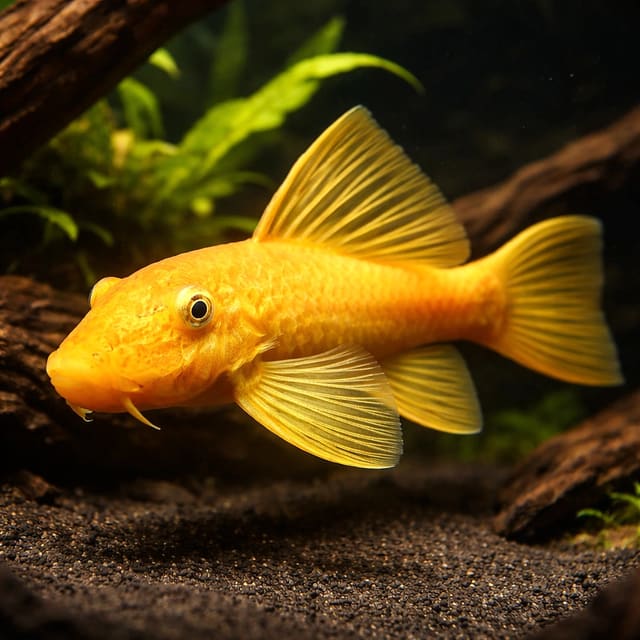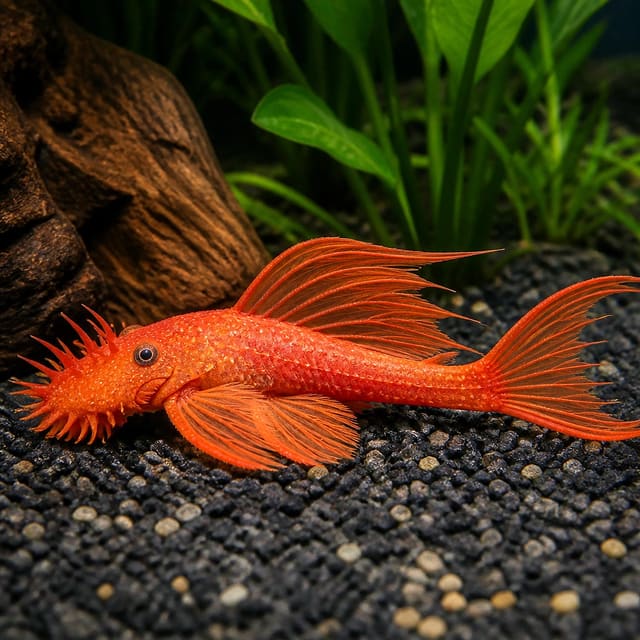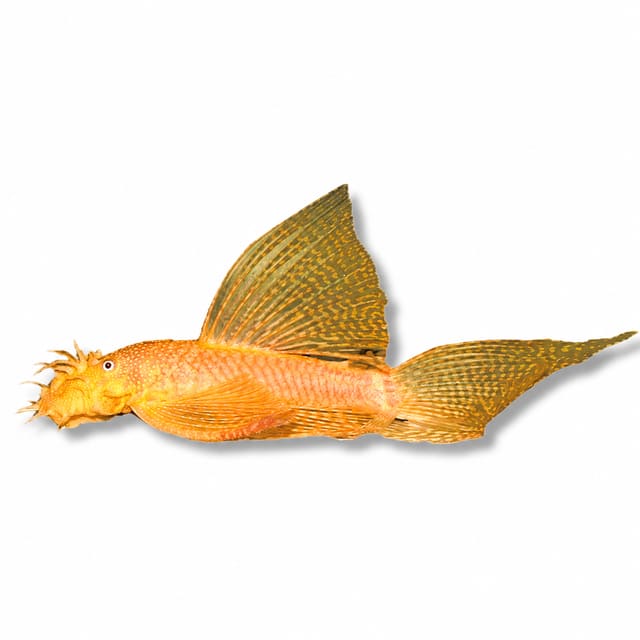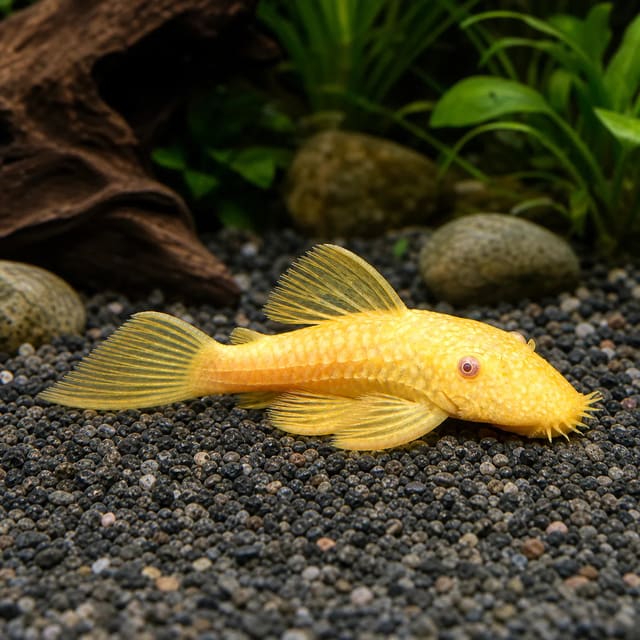
Albino Green Dragon Bristlenose Pleco (Ancistrus sp.)
22–27°C · pH 6–8
£42.99

Green Dragon Longfin Bristlenose Pleco (Ancistrus sp.) is a patterned longfin catfish offered in four dispatch sizes from 2.5–3 cm to 5–7 cm. Plan a mature, filtered aquarium with wood, shelter, measured water and room for a bristlenose-type fish to graze and establish a refuge.
Ancistrus sp.
Green Dragon Longfin Bristlenose Pleco (Ancistrus sp.) is a patterned longfin catfish offered in four dispatch sizes from 2.5–3 cm to 5–7 cm. Plan a mature, filtered aquarium with wood, shelter, measured water and room for a bristlenose-type fish to graze and establish a refuge.
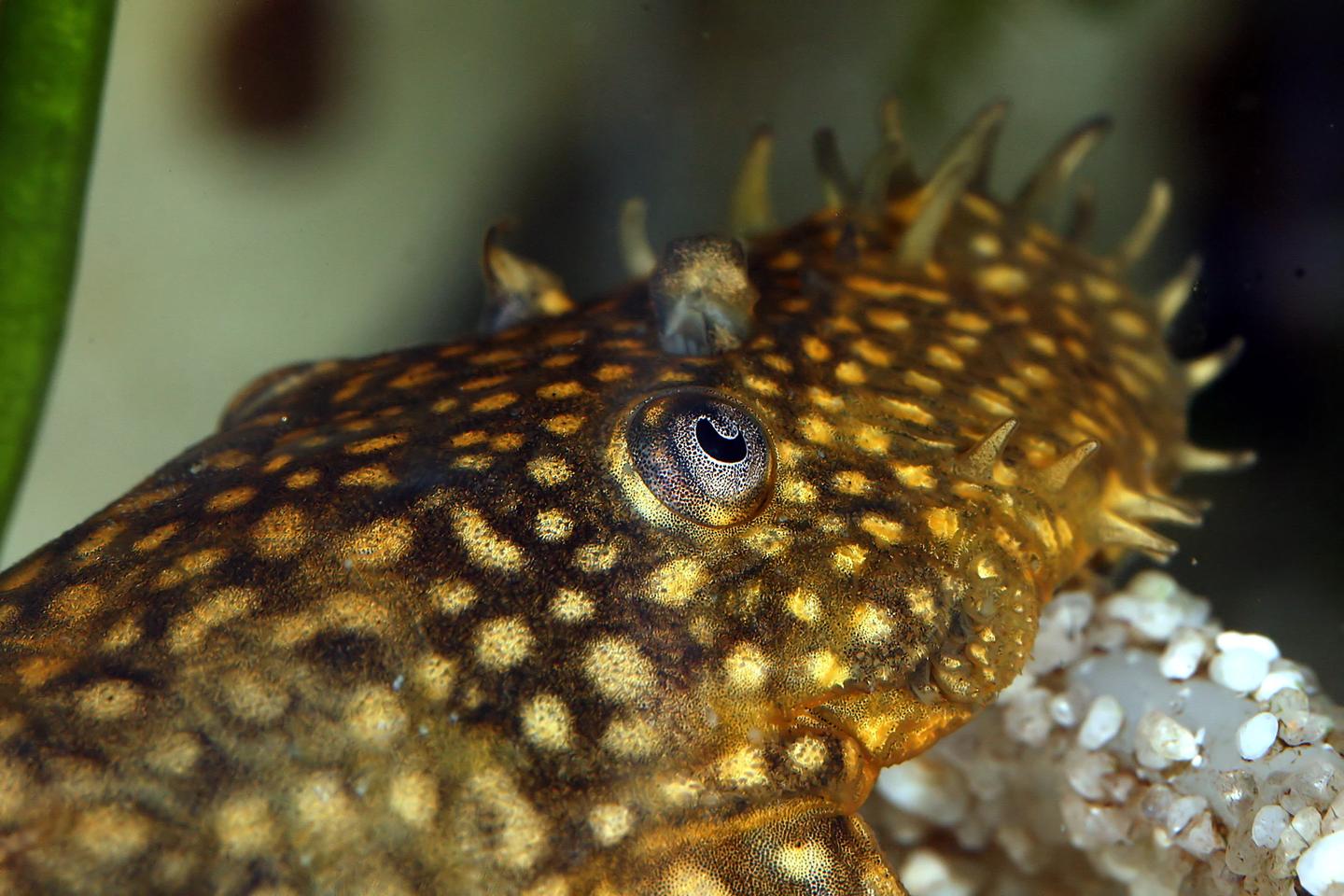
For one typical common bristlenose, start with a mature, filtered aquarium of at least 90 litres, useful floor area, wood and cover. OATA reports about 15 cm adult length, 22-27°C, pH 6-8 and 4-12 dGH. Confirm the exact trade identity before applying species-level claims.
Maintain these water conditions for optimal health and vibrant colors
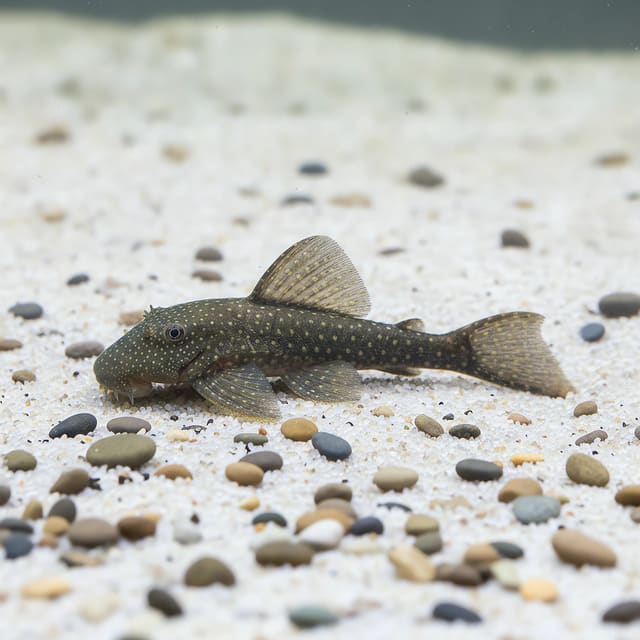
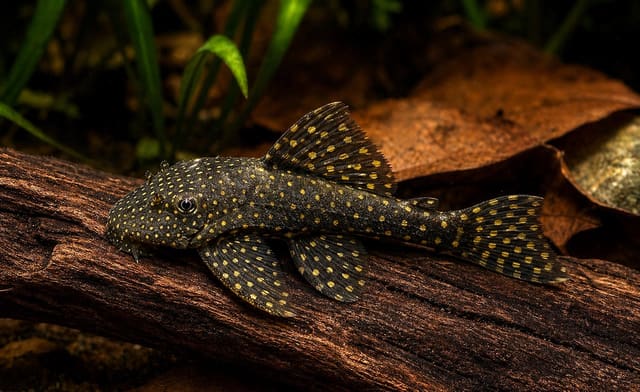
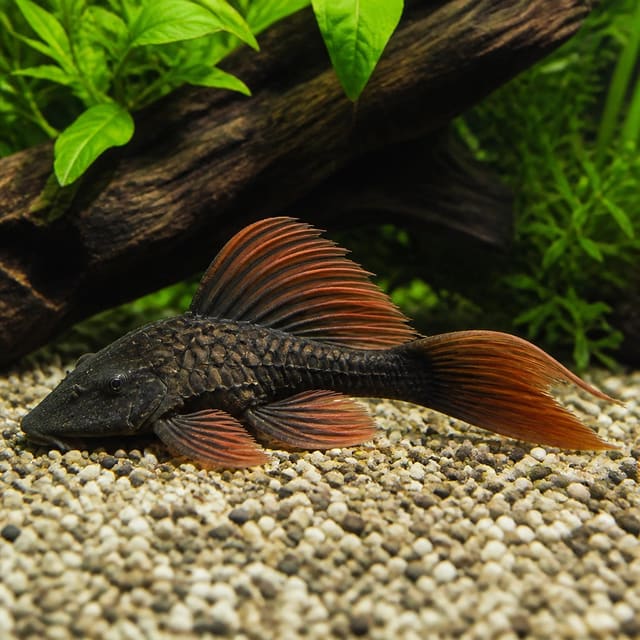
The Green Dragon Longfin Bristlenose Pleco is a patterned, extended-fin form sold under the genus-level name Ancistrus sp. Its appeal is easy to see: the broad pectoral and dorsal fins carry a fine spotted pattern, while the lengthened fin rays give a more flowing outline than a standard-fin bristlenose. It is still a practical bottom-oriented catfish, however, and should be chosen for the aquarium you can provide throughout its life rather than as a decorative answer to visible algae.
The exact species has not been identified, so the care advice here follows the genus Ancistrus and its care group. That distinction matters. A trade form can be recognisable without supporting a species epithet, an exact species maximum, a native locality or a species-specific minimum aquarium volume. This page therefore uses the accepted genus and Loricariidae family placement, keeps OATA's bristlenose guidance clearly at group level and leaves out attractive-looking precision that cannot be attached responsibly to this exact fish.
One purchase supplies one live fish. Four genuine dispatch grades are offered across the parent listing: 2.5–3 cm, 3–4 cm, 4–5 cm and 5–7 cm. The size you select is the size supplied, not the adult size. These are useful choices for matching the new fish to the scale of an already prepared aquarium and its residents; they are not promises about present stock, future growth rate or maturity. Whichever grade you choose, plan the permanent aquarium before arranging arrival.
| Suits | A prepared keeper with a mature filtered aquarium, measurable stable water, wood and cover, and time to check feeding and territory at floor level. |
|---|---|
| Identity | Green Dragon Longfin Bristlenose Pleco, Ancistrus sp., family Loricariidae; exact species unresolved. |
| Sold as | One live fish per purchase, in a selected 2.5–3, 3–4, 4–5 or 5–7 cm dispatch grade. |
| Routine group guidance | 22–27 °C and pH 6.0–8.0, used as broad OATA bristlenose guidance rather than a species-specific optimum. |
| Key preparation | Mature biological filtration, regular water tests, wood to graze, secure refuges, smooth furnishings and access to suitable sinking food. |
| Social plan | Alone, a carefully assessed pair or a managed small group can be considered; provide separate refuges and a contingency for territorial pressure. |
OATA describes bristlenose catfish at approximately 15 cm. Use that only as broad planning context for the care group, not as a verified maximum for this unidentified trade form. A sensible layout gives an adult bristlenose-type fish generous floor area, turning room around wood and caves, clear routes between feeding places and enough capacity for the waste load of every resident. Litres are useful, but shape, floor dimensions, filter maturity and the number of companions decide whether those litres are genuinely usable.
This listing is best treated as intermediate rather than effortless. The fish needs no theatrical routine, but success depends on several ordinary jobs being done well: mature filtration, stable water, reliable sinking foods, cover that does not trap long fins, a realistic social plan and observation after lights-out or at feeding time. A keeper moving from a basic community can manage those jobs with preparation; an uncycled aquarium or a purchase made chiefly for algae removal is not an appropriate starting point.
Sex is guaranteed only when the selected option explicitly states male or female. This Ancistrus green dragon long fin listing has no sex-guaranteed option. Bristles can become more obvious in some mature males, but age, condition and the unresolved identity make a photograph or juvenile appearance a poor basis for a sale promise. Choose this fish for the trade form and care fit, not for an inferred sex.
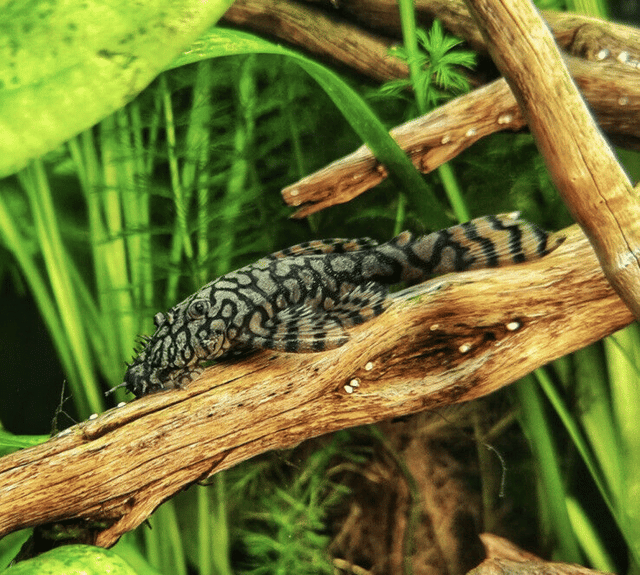
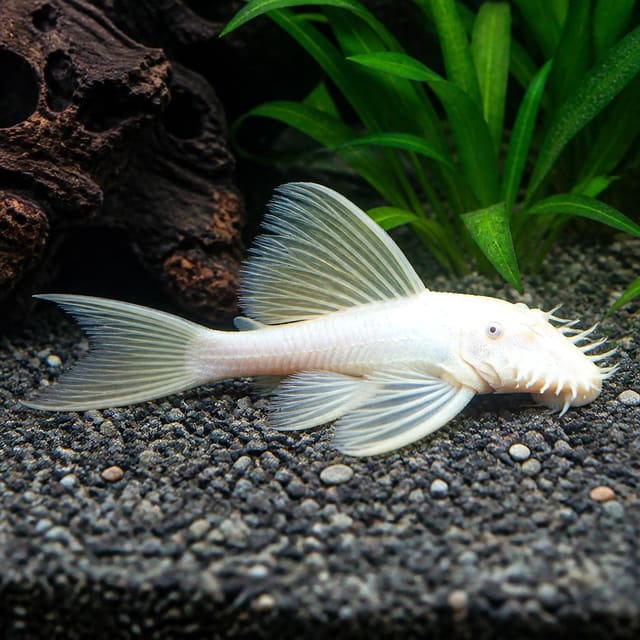
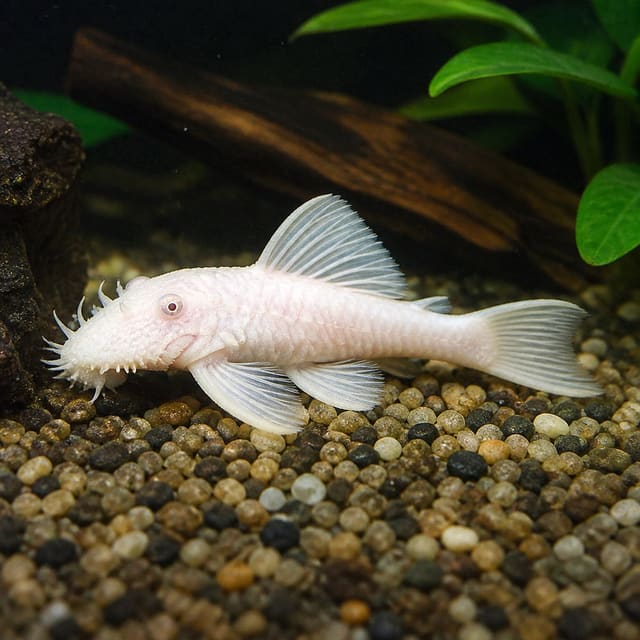
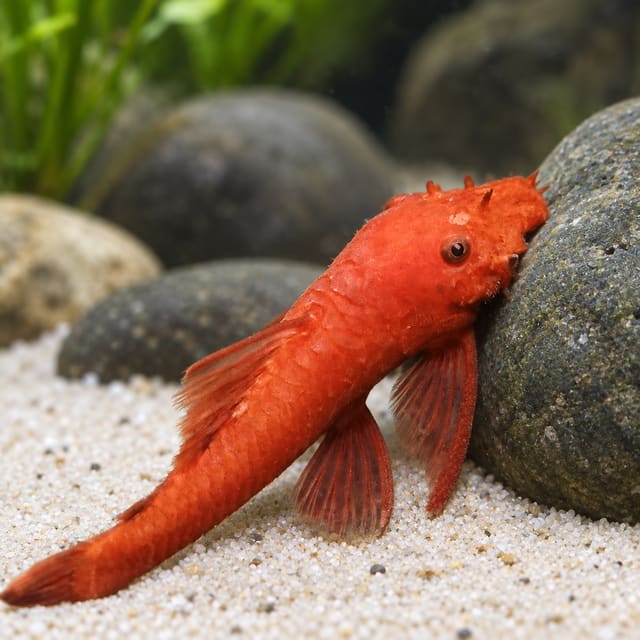
Gallery images have been digitally enhanced to improve image quality. Natural colour, pattern, size and maturity can vary between live animals. The gallery shows the general longfin look, not a promise that the supplied fish will duplicate every spot, fin position or shade. The frozen hero image depicts one patterned olive-green longfin pleco on rounded gravel beside wood and plants; it does not prove the animal's sex or exact species.
For other current forms, browse the bristlenose pleco collection. Treat that page as a choice of related offers, not as a ready-made tank-mate list. Compare each animal's adult plan, water range, feeding access and territory before combining anything.
A working filter is the foundation of the aquarium, not an accessory added after the fish. The RSPCA aquarium environment guidance explains the biological reason. Fish release ammonia, which is toxic. Beneficial bacteria in a mature biological filter convert ammonia to nitrite and then nitrate. That process takes time to establish and it remains dependent on oxygenated flow, sensible stocking and maintenance that does not strip away the whole bacterial community at once. Prepare the aquarium, run and mature the filter, and prove with tests that it can process waste before the pleco arrives.
If this is your first livestock aquarium, use the first tropical tank guide as the setup sequence. Do not judge readiness by clear-looking water or by how long the equipment has been switched on. Test ammonia and nitrite, understand the nitrogen cycle, make sure the heater and filter hold steady, and add fish only when the system is genuinely ready. A bristlenose-type catfish produces solid waste and spends much of its time close to surfaces where debris can collect, so filter capacity and accessible cleaning routes matter.
Rinse filter media in removed aquarium water when it needs cleaning and preserve the mature biological media. Keep an eye on the flow reaching the biological section and clear obvious blockages before circulation falls away. At the same time, avoid creating a high-speed channel across every refuge. The long fins benefit from open routes and sheltered resting areas where the fish is not constantly working against the strongest output. A guarded intake reduces the chance of extended fins being drawn against a coarse opening.
No single minimum volume can be stated responsibly for this genus-level trade form from the applicable guidance. Instead, design around adult floor use and the whole community. OATA's broad sheet describes bristlenose catfish at approximately 15 cm, so allow for a fish of that general order while remembering that it is not an exact maximum for this listing. A long, broad footprint usually contributes more useful bottom area than the same volume arranged as a narrow tower.
The fish needs room to turn without folding long fins against rock edges, pass between refuges without being trapped, reach food without crossing another bottom-dweller's only territory and leave waste where a siphon can reach it. The aquarium also needs reserve capacity for companions. A tank that appears spacious for one juvenile can become crowded when several bottom-oriented fish mature, caves become valuable and each feeding place attracts competition. Plan the permanent layout rather than relying on an early dispatch size.
Large aquariums are generally more stable than small ones, but size does not compensate for an immature filter or neglected maintenance. Think of capacity as a linked set of resources: water volume, floor area, refuge count, oxygenated circulation, biological media, feeding access and the keeper's ability to clean without dismantling every shelter. When adding community fish, increase space for their adult activity as well as for the pleco's bottom territory.
Use aquarium-safe wood as both a grazing surface and part of the refuge network. OATA specifically advises at least one piece of wood for bristlenose catfish to graze. Position it securely so burrowing or routine cleaning cannot make it shift. Add caves, shaded gaps or stable ornaments sized so the fish can enter, turn and leave. More than one useful shelter is important when another bottom-dweller is present, because one prized cave can become the focus of repeated pushing.
Wood is valuable, but it is not a substitute for a complete diet and this page does not claim that it is essential for digestion. Its practical roles are grazing surface, cover and structure. Natural growth on mature surfaces may be browsed, yet the aquarium should still receive suitable prepared food. Check that sharp splinters, narrow forks and rough holes cannot catch extended fin rays. Sand or smooth aquarium gravel can work when kept clean and arranged without unstable piles.
Plants and additional decor provide useful shelter and make exposed areas less stressful. Leave enough open floor for feeding and inspection. Heavy ornaments should rest securely rather than on loose substrate where digging could undermine them. Examine any manufactured cave for abrasive seams, and keep heater guards, intake guards and gaps behind backgrounds in mind. Long fins turn a minor snag into a repeated injury risk if the fish uses the same route every night.
The OATA tropical algae-eater care sheet gives broad bristlenose-group guidance of 22–27 °C and pH 6.0–8.0 for routine planning. They are not a species-specific optimum for this unresolved Ancistrus. Stable conditions within an overlap between the seller's holding water and the established aquarium are more useful than chasing a fashionable midpoint. Measure the destination tank and ask about current holding conditions when arranging a move.
Hardness still needs to be measured and kept stable even though this page gives no numerical target. Record general hardness and alkalinity in the aquarium and avoid rapid shifts. If the source and destination differ materially, use a slow, controlled acclimation plan rather than changing the whole aquarium around an arriving fish. The water chemistry guide explains what the main tests mean, while the water matcher helps compare your measured values with stated guidance.
Test at least weekly as part of the normal routine and more often after a filter problem, power interruption, medication, unexpected death, major stocking change or persistent uneaten food. OATA's broad guidance is ammonia zero, nitrite zero and nitrate no more than 20 mg/l above the tap-water level. Record the tap baseline as well as the aquarium reading; otherwise a nitrate number lacks useful context. Respond to a trend early with a cause check and appropriate partial water changes.
Keep replacement water close to the aquarium temperature and treat tap water appropriately before it reaches the fish. Avoid large elective changes in temperature, pH or mineral content. Consistency does not mean leaving old water untouched: it means regular maintenance performed in a repeatable way, without abrupt chemistry swings. If a test result is surprising, repeat the test, confirm the kit is in date and compare with a known sample before making drastic adjustments.
A bristlenose-type pleco may browse algae and surface growth, but it is not an aquarium-cleaning appliance. OATA is explicit that algae-eating fish do not replace routine maintenance and need supplementary feeding. Offer suitable algae-based wafers or flakes and washed vegetables as part of a varied plan. Choose sinking food that reaches the fish after active mid-water residents have fed, and place it where the pleco can approach without crossing a dominant neighbour's refuge.
Offer a measured portion and observe how quickly the prepared food is found, allowing an appropriate grazing period for algal foods before removing vegetable pieces that begin to deteriorate. There is no value in leaving excess food overnight simply because the intended fish is nocturnal. The real measure is whether the pleco receives its share while water quality remains clean.
Rotate suitable foods rather than relying on one wafer indefinitely. A washed vegetable can add texture and variety; a quality prepared algae-based food offers more consistent nutrition. Do not assume visible tank algae provides a balanced ration, and do not starve the fish in an attempt to make it clean glass. A rounded abdomen, steady grazing, prompt interest in food and normal waste are more useful day-to-day observations than the amount of algae left on one ornament.
Feed after the fish has settled and watch from a respectful distance. In a busy community, distribute food across more than one place so a confident bottom-dweller cannot monopolise everything. Remove persistent leftovers, then adjust the next portion. Uneaten food raises the waste burden that the filter must process; repeated overfeeding can therefore undermine the very water stability the fish needs.
A weekly routine should include water tests, a visual equipment check, a partial water change suited to the readings and stocking, light substrate siphoning in accessible debris traps, and inspection of intakes, wood and caves. Do not sterilise the aquarium. Clean sections in rotation when possible, preserve mature biological media and leave useful surface growth where it is not smothering plants or equipment.
Look behind and under wood with a torch periodically. Plecos often rest out of the main viewing angle, so trapped waste can accumulate unnoticed. Ensure every refuge has circulation without becoming a high-velocity tunnel, and check that the fish can leave each cave freely. If a piece of wood softens or shifts, secure or replace it before it closes a route. If plant leaves decay around a cave entrance, remove them before the area becomes an oxygen-poor debris pocket.
Keep a short record of temperature, pH, ammonia, nitrite, nitrate, water-change dates, foods offered and unusual behaviour. The purpose is not paperwork for its own sake. A simple sequence helps distinguish one quiet evening from a developing pattern: progressively later feeding, more hiding, increased chasing, rapid breathing or repeated surface visits. It also shows whether a water result changed before the behaviour did.
Be present at the delivery address to receive the parcel. Before opening, record a continuous unboxing video showing the parcel still sealed and the outer box, then continue through opening until the fish is visible inside the sealed bag. Retain the recording. It is required evidence for any Live Arrival Guarantee claim. Inspect the fish and packaging on the day of arrival and contact Tropical Fish Co the same day if there is a problem.
Read the current delivery and Live Arrival Guarantee policy before the delivery date. Prepare a quiet aquarium, a clear route to the tank and the equipment needed for acclimation. Float the sealed bag for 20–30 minutes as stated in the store guidance, then acclimatise slowly. Never pour transport water into the aquarium. Do not open the parcel and then leave the fish unattended while finishing the aquascape.
After release, allow the fish to find cover without delay. A newly arrived pleco may hide, but hiding does not remove the need to observe breathing, posture, balance and any transport damage. Offer a modest suitable food when the aquarium is settled rather than flooding the tank with several foods. Check the fish again after the room is quiet, because bottom-dwelling catfish may emerge once activity drops.
Normal behaviour can include resting beneath wood, grazing after lights dim and returning to a preferred shelter. Concern rises when a fish cannot hold position, breathes rapidly for a sustained period, remains unusually exposed with poor balance, stops feeding across repeated opportunities, develops clamped or damaged fins, or is continually displaced by another resident. Start by testing water and checking equipment rather than guessing a diagnosis from one sign.
Long fins deserve a daily glance. Small splits may follow a snag or chasing, but repeated damage points to an unresolved cause: abrasive decor, an unguarded intake, a narrow route or a persistent aggressor. Correct the environment and seek qualified aquatic-veterinary or experienced retailer advice when symptoms persist. Do not add medication casually to a system without understanding the problem, the dose and its effect on catfish and biological filtration.
A robust care plan includes the days when the normal keeper is away. Leave a written feeding amount rather than a loose instruction to feed generously, because overfeeding can damage water quality quickly. Show the temporary carer where the fish normally shelters, how to confirm the filter is running and whom to contact if the aquarium leaks or loses heat. Pre-measured portions are safer than asking someone unfamiliar with plecos to estimate a wafer or vegetable amount.
Before a holiday, service equipment early enough to observe it working afterwards; do not replace filter media or redesign the aquarium on the morning you leave. Check that heaters, plugs and airline connections are secure and that any backup air or battery equipment is functional. A short planned absence rarely needs extra food. Stable filtration and an unchanged routine are more valuable than a large meal that decays while nobody is testing the water.
For a power cut, keep filter media wet and oxygenated where possible, limit unnecessary feeding and monitor temperature. Once power returns, confirm circulation rather than assuming the pump restarted. If a canister has stood stagnant for a long period, seek manufacturer or experienced advice before simply flushing its contents back into the aquarium. Test ammonia and nitrite during recovery and respond to the measured condition.
A separate mature observation aquarium can make it easier to see whether a new fish eats, produces normal waste and has intact fins before it joins an established community. It should have a cycled filter, heat, secure cover, smooth furnishings and a refuge; a bare, unstable container is not safer merely because it is called quarantine. Use separate nets and siphons or disinfect shared equipment appropriately to avoid carrying water and pathogens between systems.
Observation is especially useful for a shy bottom-dweller whose feeding can be difficult to confirm in a busy display. Offer a familiar sinking food in a known place and inspect after dark without repeatedly disturbing the shelter. Record water values and behaviour. Do not medicate automatically in the absence of a reason: catfish sensitivity, biological-filter effects and an incorrect diagnosis can create new problems.
When moving the fish onward, compare the two aquariums' temperature, pH and measured mineral conditions and avoid another abrupt change. Transfer the fish with minimal transport water, keep lighting low and provide an immediately accessible refuge. Continue watching feeding and territory after introduction, because quarantine can reveal health but cannot predict every social interaction in the permanent community.
A 2.5–3 cm arrival and a mature longfin animal use the aquarium differently. Revisit cave openings, turning routes, intake guards, feeding portions and companion pressure rather than assuming a juvenile layout remains suitable. Photographing the aquarium from above at intervals can reveal how much floor area wood and ornaments actually occupy. The aim is not constant rearrangement; it is noticing when growth has reduced a once-generous route to a narrow channel.
Body condition and behaviour should guide small practical adjustments. A fish that feeds eagerly but loses condition may be outcompeted or need its ration reviewed. A fish that becomes more territorial may need additional separated refuges or fewer bottom competitors. A fin that is repeatedly split in the same place suggests an environmental snag. Make one reasoned change at a time where welfare allows, record the result and avoid masking a social or water problem with more food.
Compatibility begins with resources, not a list of familiar common names. Compare adult size, temperature and pH overlap, activity level, feeding speed, fin behaviour and the part of the aquarium each animal actually uses. For this pleco, the crucial resources are floor area, wood, secure refuges and access to sinking food. Two fish may look peaceful in open water while competing every night for the same cave.
OATA says bristlenose catfish may be kept alone, as a pair or in small groups, usually with one male per group. That is broad group guidance, not a guarantee that any two unidentified juveniles will form a compatible pair. This offer has no sex-guaranteed choice, so a buyer cannot safely plan a sex ratio from the product image or early bristle development. A single fish is a valid plan; more than one requires extra space, multiple usable refuges and a realistic way to separate individuals.
When considering companions, look for calm community fish whose water requirements overlap and whose feeding does not prevent the pleco reaching food. Mid-water use can reduce direct competition, but it does not automatically make a species suitable. Very active or aggressive fish may keep a shy bottom-dweller hidden. Persistent fin-nippers are a poor match for the extended fins, and territorial bottom fish may contest caves even when the upper aquarium appears calm.
Do not interpret the pleco's algae-browsing habit as protection for shrimp, eggs or fry, and do not promise that a catfish will ignore every small animal. Use no universal named tank-mate list for this exact trade form. Assess every proposed species on its own care information and provide separate feeding stations. Avoid building a community around marketing labels such as peaceful, cleaner or beginner fish.
Territorial pressure is often quieter than open combat. One fish may occupy the best wood, block a cave entrance, push another away from food or force it into the strongest current. Warning signs include repeated chasing, one animal feeding only after all food is gone, a fish remaining high on the glass, damaged fins, weight loss or a refuge that is never left because the route is guarded.
Arrange secure wood and plants into separated sheltered areas, give each bottom resident more than one route through the layout, and spread sinking food across several places. Rearranging some decor can interrupt an established territorial map, but it is not a cure for insufficient space. Keep a cycled separation aquarium or responsible rehoming route available before attempting a pair or group. Persistent pressure requires action; waiting for serious injury is not a social plan.
Reassess the community as fish mature. The smallest dispatch grades may occupy little space at first, yet body size, fin length, refuge use and confidence can all change. A community that works in the juvenile stage can need more floor area or fewer competitors later. Plan around the permanent aquarium and adult care group, not the convenient size of a new arrival.
The exact species has not been identified, so an exact maximum is not claimed for this fish. OATA describes bristlenose catfish at approximately 15 cm; use that as broad care-group planning context, not a verified maximum for this trade form. Allow generous floor area and turning room for the body and extended fins. The dispatch size is not the adult size.
There is no responsible universal litre minimum for this unresolved Ancistrus. Choose a mature filtered aquarium with generous floor area, adult turning room, secure wood and refuges, clear feeding places and capacity for every companion. OATA advises choosing the largest practical aquarium because larger systems are generally more stable. A longer, broader footprint is more useful than litres alone.
OATA says bristlenose catfish may live alone, as a pair or in a small group, usually with one male per group. This listing does not guarantee sex, and two fish are not automatically compatible. One is a valid choice. For more than one, provide extra floor area, several separate refuges and feeding places, monitor territory closely and keep a separation plan.
It is best treated as intermediate. A prepared newer keeper can succeed with a mature biological filter, weekly water testing, suitable sinking foods, wood and cover, a longfin-safe layout and a realistic social plan. It is not suitable for an uncycled aquarium or as a substitute for cleaning. Readiness matters more than the number of months a keeper has owned fish.
Provide suitable algae-based wafers or flakes and washed vegetables, while allowing access to mature grazing surfaces. OATA says algae-eating fish still require supplementary feeding and do not replace aquarium maintenance. Offer measured food that reaches the bottom, allow grazing time, remove deteriorating leftovers and check that faster companions are not taking the pleco's share.
Use 22–27 °C and pH 6.0–8.0 as broad OATA bristlenose-group guidance, not as an exact species optimum. Test the established aquarium, compare it with the fish's holding water and keep any changes gradual. Measure hardness, keep it close to the fish's holding water and avoid abrupt mineral changes.
Bristlenose catfish can defend a refuge or feeding place, particularly around other bottom-oriented fish. Treat defence of a refuge as the main social risk, while protecting its own extended fins from persistent nippers and rough decor. Watch for repeated chasing, blocked caves, missed food and damaged fins, then separate fish when pressure persists.
Consider calm community fish with overlapping water needs, adequate adult space and feeding habits that do not exclude a bottom-dweller. No universal named tank-mate list is justified for this exact trade form. Avoid aggressive competitors, persistent fin-nippers and combinations that crowd the same wood or caves. Check every proposed species individually and keep a separation option.
Be present to receive the live-animal parcel and inspect it on arrival day. Before opening, make a continuous video showing the sealed parcel, outer box, opening and fish inside the sealed bag; retain it for any Live Arrival Guarantee claim. Float the sealed bag for 20–30 minutes, acclimatise slowly and release the fish without pouring transport water into the aquarium.
Taxonomy supports only the genus-level name used here. OATA's care values apply broadly to the bristlenose care group rather than proving a species-specific optimum, and the RSPCA material is general aquarium-welfare guidance.
No reviews for this item yet. Bought one? Honest reviews only, good or bad.
What customers say about ordering from us
I have a small group of long finned mountain minnows. So was delighted to be able to order ten of this variety to increase the genetics in my tank . The ones I recieved are healthy but it’s to early to give a verdict on wether they are of a long finned type since they are small currently.
Gordon Walker · 23 Sept 2026
100% success travel and "installation". Pleased with quality of purchase. The Siamese fighter a bit "shy" so have not yet seen him at his best yet but looking good. Happy customer. GG
George E Garratt · 21 Sept 2026
Reviews of our shop, collected by Judge.me, an independent third-party review collector. Newest first.