Moderate
Least Rasbora (Boraras urophthalmoides)
22–28°C · pH 5–7.5 · 40L
£2.99
Tiny Red Axelrodi Rasbora for mature planted nano aquariums, best kept in a peaceful shoal with soft, stable water and tiny foods.
Adult size is the maximum length this species reaches at full maturity (scientific sources). The livestock you receive will be younger and smaller. Product-photo provenance and any image-specific limitations are stated on the listing.
Sundadanio axelrodi
Shoaling fish: kept in a group they feel safer, stay calmer and show their best colour.
Confirm your email, then we’ll send an availability message for this exact item if it returns within 180 days.
This request is only for this product—no newsletter or other promotions. A mail-provider retry may very rarely duplicate the same availability message. Unconfirmed addresses are removed after 48 hours. See our privacy policy.
Tiny Red Axelrodi Rasbora for mature planted nano aquariums, best kept in a peaceful shoal with soft, stable water and tiny foods.
Adult size is the maximum length this species reaches at full maturity (scientific sources). The livestock you receive will be younger and smaller. Product-photo provenance and any image-specific limitations are stated on the listing.
Maintain these water conditions for optimal health and vibrant colors
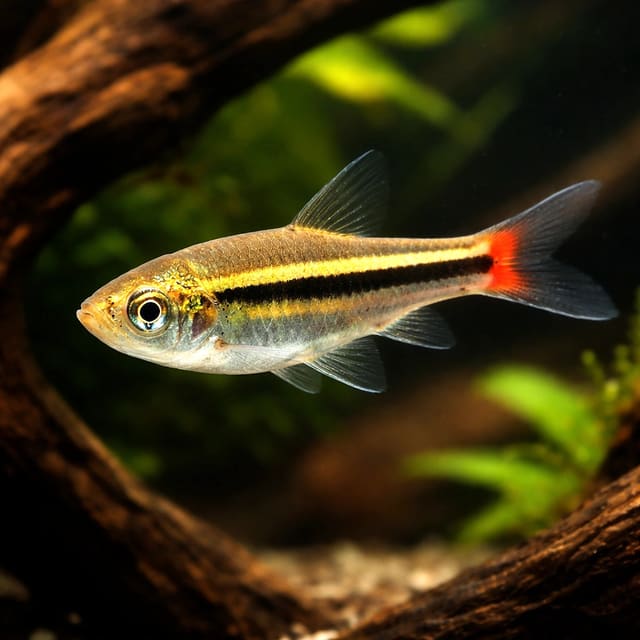
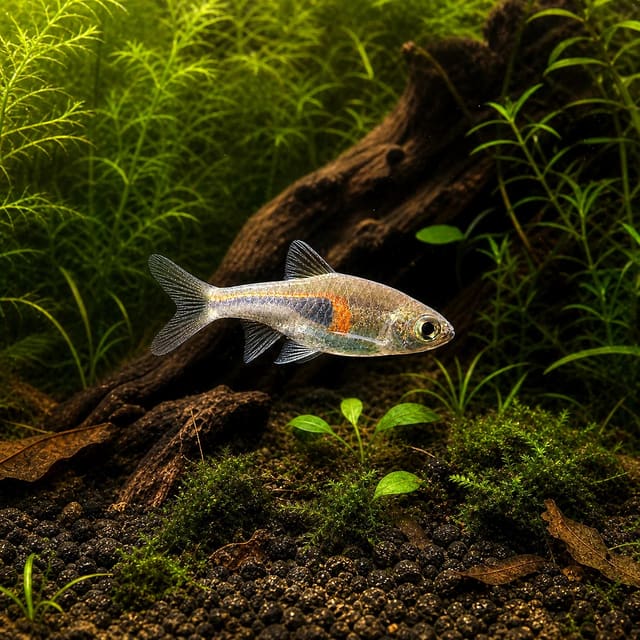
The Red Axelrodi Rasbora, sold in the trade as Rasbora axelrodi red and more accurately treated as Sundadanio axelrodi, is a tiny, peaceful nano fish for mature planted aquariums. It is chosen for its delicate red glow, small adult size and calm shoaling behaviour rather than for bold aggression or large display size. This listing keeps the useful care detail already on the page, but cleans the wording and adds clearer tables so shoppers can judge whether this specialist nano rasbora suits their aquarium.
This is not a fish to rush into a new, bright or boisterous tank. It does best in a stable aquarium with soft to moderately soft water, gentle filtration, fine-leaved plants, shaded areas and peaceful companions of similar size. Kept in a proper group, Red Axelrodi Rasboras become more confident and show better colour. Kept singly or with large, fast fish, they can fade, hide and struggle to feed.
| Care point | Recommendation | Why it matters |
|---|---|---|
| Scientific name | Sundadanio axelrodi | The old trade wording often appears as Rasbora axelrodi. |
| Adult size | About 2-3 cm | Small size makes calm tank mates and tiny food essential. |
| Minimum aquarium | 45-60 litres for a stable shoal | Small fish still need stable water and group space. |
| Temperature | 23-27 C | Warm, steady water suits planted nano systems. |
| pH | 5.5-7.0 preferred | They are best in soft, slightly acidic to neutral water. |
| Group size | 10 or more where possible | A larger shoal improves confidence and colour. |
Many wholesalers and shops still use the name Rasbora axelrodi, especially for colour forms labelled red, blue or green. Modern references commonly place Axelrodi Rasboras in Sundadanio. For shoppers, the important point is practical: this is a very small, delicate shoaling cyprinid with micro-food needs and a preference for quiet planted aquariums.
The red form is subtle rather than neon-sign bright. Colour improves with a dark substrate, shaded planting, good diet and low stress. If the fish are pale after arrival, give them time to settle. Tiny rasboras often look best once they have had several days in a calm, mature tank and are feeding confidently.
Use a mature aquarium with gentle flow. A sponge filter, softened internal filter outlet or spray bar works well because these fish are small and do not enjoy being pushed around by strong current. Plant the back and sides with fine-leaved stems, mosses or low-light plants, then leave a small open swimming lane through the centre.
| Setup feature | Best choice | Avoid |
|---|---|---|
| Lighting | Moderate or shaded with floating plants | Very bright bare tanks |
| Substrate | Dark sand or fine gravel | Sharp decor in cramped layouts |
| Decor | Wood, leaf litter, moss and fine plants | Open tanks with no refuge |
| Flow | Gentle, well oxygenated movement | Strong jet flow across the whole tank |
Leaf litter and botanicals can be useful if your aquarium style allows them. They create shade, grazing surfaces and a more natural look. Keep the water clean, but do not chase a sterile-looking tank at the expense of cover and stability.
Stability matters more than constant adjustment. Red Axelrodi Rasboras are small, so sudden changes in temperature, pH or dissolved waste affect them quickly. Keep ammonia and nitrite at zero, nitrate low, and avoid adding them to an aquarium that has only just been set up.
| Parameter | Target | Notes |
|---|---|---|
| Temperature | 23-27 C | Keep steady; avoid cold drafts and heater swings. |
| pH | 5.5-7.0 preferred | Neutral can work if stable, but very hard alkaline water is not ideal. |
| Hardness | Soft to moderately soft | RO blending may help in very hard-water areas. |
| Water changes | Small regular changes | Gentle maintenance is safer than rare large swings. |
Food size is the common mistake with this species. Use micro pellets, powdered or crushed flake, fine granules, cyclops, daphnia, baby brine shrimp and other tiny foods. They may be shy at first, so feed small amounts and watch that the shoal is actually eating.
| Food | Use | Tip |
|---|---|---|
| Micro pellet or powdered flake | Daily staple | Crush if any pieces are too large. |
| Cyclops or daphnia | Conditioning food | Excellent for tiny mouths and active feeding. |
| Baby brine shrimp | Occasional boost | Useful after arrival or for breeding condition. |
| Large flakes or pellets | Avoid as main food | They may ignore pieces they cannot swallow. |
Choose calm companions. Good options include other tiny rasboras, Boraras species, pygmy Corydoras in suitable water, small peaceful shrimp colonies and very gentle nano fish. Avoid large tetras, hungry barbs, boisterous livebearers, cichlids and anything likely to outcompete or swallow them.
For similar small-fish planning, compare with Chilli Rasbora, Ember Tetra, Celestial Pearl Danio and Pygmy Corydoras. Check water requirements before mixing; similar size alone is not enough.
Because Red Axelrodi Rasboras are small, gentle acclimation is more important than speed. Float the sealed bag to equalise temperature, then introduce small amounts of aquarium water gradually before release. Keep the lights low for the first few hours and avoid feeding heavily on arrival day. A light first feed of tiny food is enough once the shoal is moving normally.
Healthy fish should hold position with the group, respond to tiny foods and show a clean body outline without clamped fins. Newly arrived nano rasboras may look pale at first, especially after courier travel, but they should become steadier and more colourful as they settle. Watch for bullying from existing tank mates, because intimidation is often the reason timid fish hide or miss food.
| After arrival | Good sign | Warning sign |
|---|---|---|
| First hour | Fish begin grouping and exploring shaded areas | Heavy breathing, rolling or being trapped in strong flow |
| First feed | They take powdered or tiny frozen foods | Food is too large or faster tank mates take everything |
| First week | Colour improves and the shoal uses open water | Fish remain hidden, thin or separated from the group |
This is a strong choice for aquarists who already enjoy planted nano aquariums, Boraras-style communities, soft-water layouts or quiet species displays. It is less suitable for a brand-new aquarium, a hard-water livebearer tank, a high-flow hillstream layout or a mixed community with large, fast feeders. If you want a very visible beginner fish for hard tap water, a livebearer may be easier. If you want a refined shoaling fish for a mature planted setup, this rasbora is much more appropriate.
The product page keeps the trade name because many customers search for Rasbora axelrodi red, but the care guidance uses Sundadanio axelrodi so the husbandry is clearer. That combination helps shoppers find the listing while still giving them the correct expectations for size, temperament, water and feeding.
| Before ordering | Ready? | Why |
|---|---|---|
| Mature filter | Essential | Tiny fish are sensitive to ammonia and nitrite. |
| Peaceful shoal plan | Essential | They need confidence from numbers. |
| Tiny foods available | Essential | Standard pellets may be too large. |
| Covered, planted tank | Recommended | Reduces stress after courier delivery. |
Livestock is packed carefully for licensed UK courier delivery and covered by our live-arrival policy where the conditions are met. First-time customers can use WELCOME10 for 10% off while the code is active. Acclimate slowly, dim the lights after release, and let the shoal settle before judging colour.
Yes, that is the trade wording. The current scientific name is commonly treated as Sundadanio axelrodi.
Keep at least 8-10, with a larger group preferred in a stable planted aquarium.
No. It is small and delicate, so a mature, stable aquarium is strongly recommended.
No reviews for this item yet. Bought one? Honest reviews only, good or bad.
What customers say about ordering from us
Easy website plenty of info on fish your buying great to pick a time slot
TRACEY DURRANT · 7 Oct 2026
Got some lovely fish thank you
Kevin Mackie · 7 Oct 2026
Reviews of our shop, collected by Judge.me, an independent third-party review collector. Newest first.