−15%
Mini Cory / Light-Spot Catfish (Gastrodermus nanus)
22–27°C · pH 6–8
£5.94£6.99

Corydoras ellisae is a peaceful small Corydoras catfish for mature community aquariums, best kept in groups over clean sand with calm tank mates.
Adult size is the maximum length this species reaches at full maturity (scientific sources). The livestock you receive will be younger and smaller. Product-photo provenance and any image-specific limitations are stated on the listing.
Corydoras ellisae
Shoaling fish: kept in a group they feel safer, stay calmer and show their best colour.
Confirm your email, then we’ll send an availability message for this exact item if it returns within 180 days.
This request is only for this product—no newsletter or other promotions. A mail-provider retry may very rarely duplicate the same availability message. Unconfirmed addresses are removed after 48 hours. See our privacy policy.
Corydoras ellisae is a peaceful small Corydoras catfish for mature community aquariums, best kept in groups over clean sand with calm tank mates.
Adult size is the maximum length this species reaches at full maturity (scientific sources). The livestock you receive will be younger and smaller. Product-photo provenance and any image-specific limitations are stated on the listing.
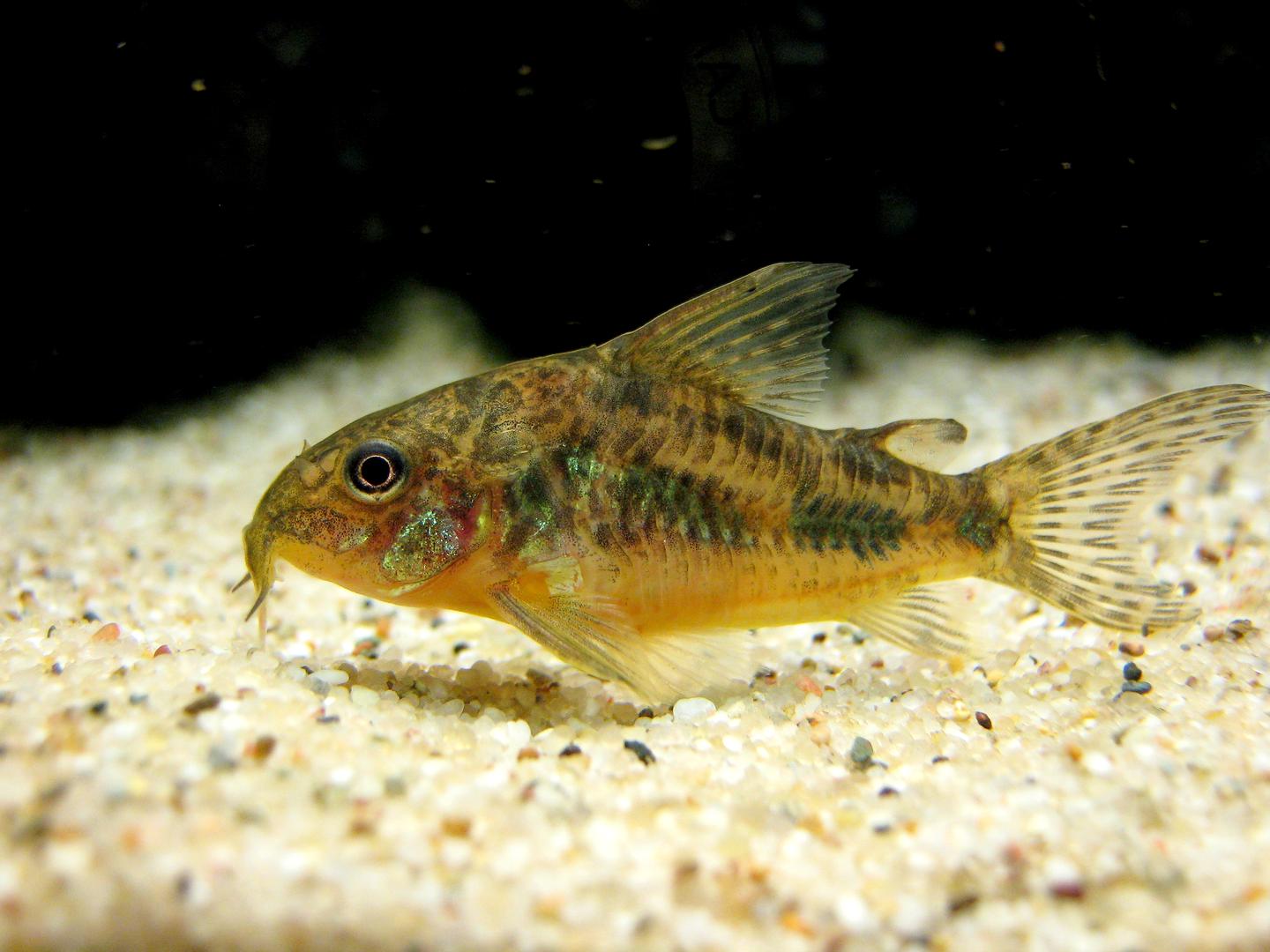
Identify the exact cory catfish before choosing care. Our starting policy for many common medium species is six compatible conspecifics, a mature 60 x 30 cm aquarium of about 60 litres, smooth fine sand and measured species-appropriate water.
Maintain these water conditions for optimal health and vibrant colors
Corydoras ellisae, often called the Two Point Cory or Ellis's Corydoras in the aquarium trade, is a small peaceful armoured catfish for mature community aquariums. It is a social bottom-dweller, not a solitary cleaner fish, so it should be planned as a group species with soft sand or very smooth fine substrate, gentle cover and calm tank mates. The current listing is for the 2.5-3 cm size range, but the aquarium should be planned around an adult fish of about 5 cm standard length, with some references allowing a little more for robust specimens.
The important search and care terms are still present naturally: Corydoras ellisae, Two Point Cory, Ellis's Corydoras, Corydoras catfish, sand substrate, group size, peaceful community tank and water parameters. The aim is a page that reads like good fishkeeping advice, not a block of repeated keywords.
FishBase lists Corydoras ellisae as the Two point cory, a demersal freshwater member of the Callichthyidae. Some specialist catfish references note that this name has been reviewed or treated as very close to Corydoras aurofrenatus. For customer clarity, this listing keeps the supplier and trade name Corydoras ellisae, while the care advice follows the practical needs shared by this small Paraguay-basin Corydoras type.
That name caution is useful because it prevents overclaiming. This is not a large pleco, not an algae solution and not a fish that should be kept alone as a tank-floor tool. It is a small shoaling catfish with sensitive barbels, an armoured body, a peaceful temperament and the classic Corydoras habit of searching the bottom for food.
| Care point | Recommendation | Reason |
|---|---|---|
| Group size | Keep six or more where possible | Corydoras feel safer and behave more naturally in groups |
| Substrate | Fine sand or very smooth fine gravel | Protects barbels and allows normal foraging |
| Temperature | 22-26°C | Matches FishBase and common aquarium care ranges |
| Tank style | Planted, shaded and clean with open feeding areas | Gives security without trapping waste in the substrate |
For this species, clean bottom conditions matter more than decorative complexity. A tank can look natural and still be unhealthy if mulm collects under wood or if food disappears into coarse gravel. The best setup lets the group forage in view while giving them shade, plants and retreats when they want to rest.
A small group can be kept in a modest mature aquarium, but a longer footprint is more useful than a tall tank. Use 60 litres as a sensible floor for a small group, and go larger if the aquarium contains other bottom fish. If you want a busy community with tetras, rasboras or dwarf cichlids above them, 75-100 litres gives better feeding space and more stable water quality.
Choose fine sand wherever possible. Corydoras push their snouts and barbels through the surface as they search for food, so sharp gravel can damage the mouth area and make infection more likely. Rounded fine gravel can work if kept spotless, but sand is easier to read: leftover food and waste sit on top where you can remove them.
| Parameter | Target range | Notes |
|---|---|---|
| Temperature | 22-26°C | Avoid prolonged heat; warm water carries less oxygen |
| pH | 6.0-7.8 | Stable, mature water is safer than constant adjustment |
| Hardness | Soft to moderately hard | FishBase gives a broad dH range; avoid sudden swings |
| Flow | Gentle to moderate | Good oxygen and filtration without blasting the bottom |
Like other Corydoras, this species can gulp air at the surface, but that is not a substitute for good oxygenation. Occasional dashes to the surface are normal. Frequent frantic surface trips can signal poor oxygen, high temperature, poor water quality or stress.
Do not rely on leftovers from midwater fish. Corydoras need their own sinking foods: small catfish pellets, quality granules, wafers, frozen bloodworm, brine shrimp, daphnia and finely sized omnivore foods. Feed after the lights dim if faster fish steal everything, and watch the group long enough to confirm each fish gets food.
| Food type | Use | Frequency |
|---|---|---|
| Sinking catfish pellets | Main staple | Most feeding days |
| Frozen bloodworm or brine shrimp | Condition and variety | Several times weekly in small portions |
| Fine granules | Useful for small specimens | Rotate with pellets |
| Uneaten scraps | Not a diet plan | Remove rather than relying on the fish to clean it |
Two Point Corys suit peaceful community aquariums with small to medium fish that do not harass the bottom. Good companions include small tetras, rasboras, pencilfish, peaceful livebearers in compatible water, dwarf gourami-style community fish and calm upper-level species. Avoid boisterous cichlids, fin-nippers, large catfish, predatory fish and any tank mate that competes aggressively for food on the substrate.
They can share a tank with other Corydoras, but mixing many very similar bottom species in a small aquarium can create feeding pressure. If the tank is small, a larger single-species group is usually better than two tiny groups of different Corydoras.
A settled group spends much of the day browsing the bottom, resting under cover and moving together in loose bursts. They are not schooling fish in the tight midwater sense, but they are strongly social. When kept alone or in pairs, they are often shy and can hide for long periods. In a proper group, they show more confident foraging and more natural interaction.
The armoured body and fin spines are defensive features, not a sign that the fish wants rough tank mates. Handle them gently if moving them, and avoid nets or bags where spines can become trapped.
FishBase describes the typical Corydoras egg-placement behaviour: the female holds a few eggs between the pelvic fins, the male fertilises them, and the female then attaches the sticky eggs to a chosen surface. This cycle can repeat until a larger batch is deposited. In aquariums, adults may eat eggs, so breeders often move eggs or condition a separate breeding group.
Cooler clean water changes, varied frozen foods and a well-conditioned group can encourage spawning behaviour. Fry need tiny foods and excellent water quality. For most keepers, the main goal is not breeding but giving the group enough space and clean substrate to behave naturally.
Healthy Corydoras ellisae should have clear eyes, intact barbels, full but not bloated body shape, steady breathing and active foraging. Short or eroded barbels are a warning sign: check substrate sharpness, trapped waste, bacterial pressure and nitrate control. A fish that sits clamped and breathes quickly should prompt water tests before medication.
On arrival, keep lights low and let the fish settle quietly. Corydoras are sensitive to poor acclimation and sudden temperature or chemistry swings. Avoid adding them to immature aquariums, tanks with ammonia or nitrite, or tanks where aggressive fish already control the feeding area.
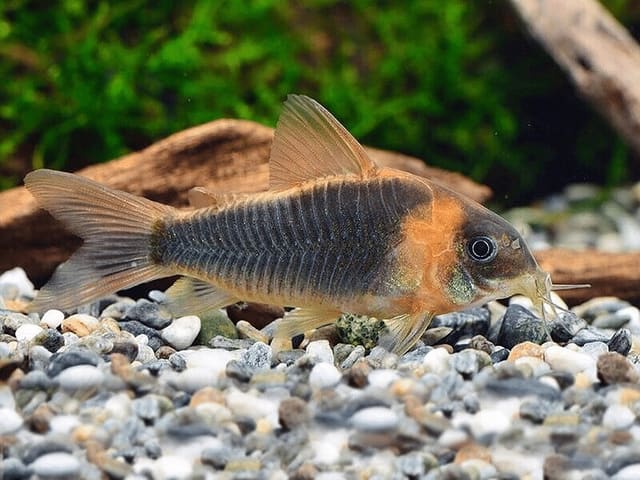
The source image shows a small Corydoras with a pale body, warm yellow-orange fin tones and darker markings along the flank and tail. Aquarium lighting, substrate colour and stress level can change how strong those markings appear. The planted-scene visuals on this page show how the fish may look in a natural community layout, but the source image remains the best reference for shape and trade identity.
Choose Corydoras ellisae if you want a small peaceful bottom-dwelling catfish for a mature community aquarium and you can provide a group, clean substrate and regular feeding at the bottom. It is not a shortcut for aquarium cleaning; it is a social fish with its own needs. Keep the water stable, use sand, avoid rough tank mates, and the group should reward you with the busy, endearing behaviour Corydoras keepers enjoy.
No reviews for this item yet. Bought one? Honest reviews only, good or bad.
What customers say about ordering from us
I have a small group of long finned mountain minnows. So was delighted to be able to order ten of this variety to increase the genetics in my tank . The ones I recieved are healthy but it’s to early to give a verdict on wether they are of a long finned type since they are small currently.
Gordon Walker · 23 Sept 2026
100% success travel and "installation". Pleased with quality of purchase. The Siamese fighter a bit "shy" so have not yet seen him at his best yet but looking good. Happy customer. GG
George E Garratt · 21 Sept 2026
Reviews of our shop, collected by Judge.me, an independent third-party review collector. Newest first.