Advanced
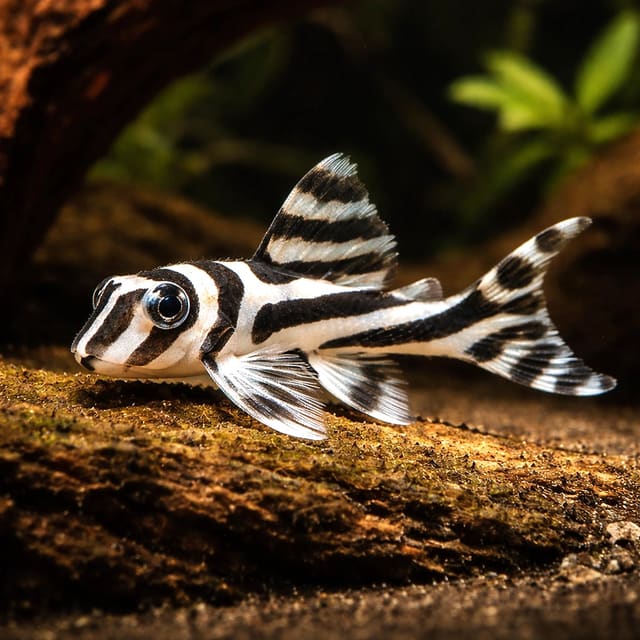
L046 Hypancistrus zebra
26–30°C · pH 6–7.5 · 54L
£243.99

Striking L029 Galaxy Pleco ideal for well-kept community aquariums. Peaceful, eye-catching and beginner suitable with guidance. Order now for UK delivery.
Adult size is the maximum length this species reaches at full maturity (scientific sources). The livestock you receive will be younger and smaller — pick a size above for the actual shipping size. Product-photo provenance and any image-specific limitations are stated on the listing.
Leporacanthicus sp.
Confirm your email, then we’ll send an availability message for this exact item if it returns within 180 days.
This request is only for this product—no newsletter or other promotions. A mail-provider retry may very rarely duplicate the same availability message. Unconfirmed addresses are removed after 48 hours. See our privacy policy.
Striking L029 Galaxy Pleco ideal for well-kept community aquariums. Peaceful, eye-catching and beginner suitable with guidance. Order now for UK delivery.
Adult size is the maximum length this species reaches at full maturity (scientific sources). The livestock you receive will be younger and smaller — pick a size above for the actual shipping size. Product-photo provenance and any image-specific limitations are stated on the listing.
‘Pleco’ is a loose aquarium-trade label, not one species or one care sheet. Before buying, confirm the scientific name or defensible L-number, adult size and measurement method, required footprint, temperature and water, diet, social plan and source. No universal pleco tank size, menu or algae result is honest.
Maintain these water conditions for optimal health and vibrant colors
If you are searching for a standout pleco for sale UK aquarists can genuinely enjoy long term, the Leporacanthicus sp. L029 Galaxy Pleco deserves a close look. This striking Loricariid is famous for its deep charcoal body covered in crisp white spots that look like a night sky, which is why hobbyists often call it the Galaxy Pleco. Native to the Rio Tocantins and Xingu region of Brazil, it grows to around 20 cm, can live up to 15 years, and rewards good care with bold patterning, confident feeding, and fascinating cave-dwelling behaviour. Although often described as moderate care, many keepers consider it the best catfish for freshwater aquarium displays when you want a dramatic bottom dweller with real personality.
Unlike a common algae grazer, this species is a dedicated carnivore, so a proper pleco tank setup, stable pleco temperature requirements, and a realistic understanding of pleco aquarium requirements matter more than simply adding it as a cleaner fish. It is not a cold water pleco for sale uk type of species and should not be confused with pond fish or beginner algae eaters. See our detailed photos showing the body spotting, fin shape, and head structure that make this fish so desirable for collectors looking for pleco fish for sale uk, catfish for sale UK, or a memorable centrepiece for a warm South American aquarium. For aquarists who want a robust, cave-loving pleco with presence, this is a superb choice.
The L029 Galaxy Pleco belongs to the armored catfish family, a group prized in the aquarium hobby for their sucker mouths, heavy body plating, and specialised feeding habits. Within Loricariidae, Leporacanthicus species are especially admired for their bold markings and more carnivorous diet compared with many wood-grazing or algae-focused plecos. In the hobby, L-numbers such as L029 help aquarists identify distinctive plecos before formal taxonomy is fully settled.
The L029 Galaxy Pleco comes from fast-flowing South American river systems, especially the Rio Tocantins and Xingu basin in Brazil. In the wild, these rivers are warm, oxygen-rich, and structured with rock piles, crevices, submerged wood, and shaded retreats. That natural pleco habitat explains why this fish appreciates caves, current, and secure hiding places in captivity. It is not one of the algae eating fish for ponds, nor is it suitable as an algae eater fish for a pond or algae eater fish freshwater pond choice. This species is a tropical river catfish, not a pond fish.
Because many shoppers compare bottom dwellers online, it is worth clearing up some common confusion. Searches for algae eater fish for ponds uk, algae eating fish for an outdoor pond, algae eating fish for backyard pond, algae eating fish for farm ponds, algae eater fish in pond, algae eater fish for cold water ponds, and algae eating fish cold water pond are about very different animals and conditions. The Galaxy Pleco needs heated indoor aquariums with stable tropical temperatures, softer water, and strong filtration. It should never be treated as an algae eating fish for a pond or algae eater fish for ponds substitute.
In nature, this pleco spends much of its time close to the bottom, moving between cracks and caves while searching for snails, insect larvae, and other protein-rich foods. That natural diet lines up with the captive L029 Galaxy Pleco diet of mussel, prawn, bloodworm, carnivore pellets, and occasional snails. Wild fish are adapted to seasonal fluctuations in water level and flow, but they still need clean, highly oxygenated conditions. In the aquarium, poor circulation and stale substrate often lead to stress far faster than many keepers expect.
Mimicking the natural habitat with rock caves, shaded zones, and brisk water movement improves feeding confidence, reduces territorial stress, and often brings out stronger contrast in the white spotting.
A successful pleco tank setup starts with floor space, not just litres. The official L029 Galaxy Pleco minimum tank size is 200 litres, but for an adult specimen with proper caves and room to turn, 240 litres or more is better. When hobbyists ask about L029 Galaxy Pleco tank size or l029 galaxy pleco minimum tank size, the key point is footprint. A long tank with broad bottom area works better than a tall tank of similar volume. This is not a pleco for small aquarium species.
The ideal L029 Galaxy Pleco water temperature is 24-28°C, with most keepers aiming for 25-27°C for day-to-day stability. These are the real pleco temperature requirements to focus on. The fish also does best at pH 5.5-7.5 and pleco water hardness around 2-12 dGH. Soft to moderately hard water is usually fine if it is stable. Sudden swings in temperature or pH are much more dangerous than running at the upper or lower end of the acceptable range.
Filtration should be strong and reliable because this is a meaty-food pleco that produces more waste than herbivorous grazers. A canister filter with good biological media is ideal, and extra circulation helps keep oxygen levels high. Add smooth stones, slate caves, ceramic tubes, and driftwood for shelter. Even though this is not a wood-eating panaque, wood still helps create visual barriers and a natural look. Fine sand or smooth rounded gravel is best for the substrate, as sharp gravel can damage the belly and fins during resting and turning.
If you want a pleco for planted tank layouts, the Galaxy Pleco can work, but choose sturdy species such as Anubias, Java fern, Bolbitis, and larger Cryptocoryne. It is less likely to uproot plants than some larger plecos, though heavy decor should always be secured. Dim to moderate lighting suits the fish well, especially if caves and shaded areas are included. Strong bright light without cover often makes it hide all day.
Many search phrases online compare this pleco with algae eaters, so here is the practical difference. Questions like what size tank does a siamese algae eater need, what size tank for siamese algae eater, siamese algae eater tank size, siamese algae eater tank size litres, true siamese algae eater tank size, siamese algae eater minimum tank size, siamese algae eater size requirements, siamese algae eater tank requirements, and even siamese algae eater fish tank size refer to a very different, active schooling algae grazer. Likewise, chinese algae eater minimum tank size and gold chinese algae eater tank size are not useful comparisons because Chinese algae eaters become much more problematic as they age. The Galaxy Pleco is a solitary cave fish with different needs.
For temperature comparisons, searches such as siamese algae eater minimum temperature, siamese algae eater temperature, siamese algae eater tank temperature, siamese algae eater temperature range, and what temperature do siamese algae eaters like are common, but the Galaxy Pleco should be treated as a warmer, more cave-oriented species. It also makes one of the more impressive peaceful bottom dwellers for aquarium displays when housed correctly, despite being territorial toward its own kind.
Always cycle the aquarium for 4-6 weeks before adding an L029. This species handles mature, oxygen-rich systems far better than newly set up tanks with unstable bacteria colonies.
If you are comparing similar plecos for your setup, the Lemon Bristlenose Pleco - Ancistrus Sp. is a smaller alternative, while the Blue Phantom Pleco - Hemiancistrus Sp. offers another striking cave-dwelling option. For larger wood-focused systems, the L090 Papa Panaque - Panaque Bathyphilus needs a very different feeding plan, and the L226 Iquitos Tiger Pleco - Panaqolus suits aquarists wanting a more compact patterned pleco.
The biggest care mistake with this species is assuming it behaves like a standard algae grazer. Good algae eater fish care advice does not automatically apply here because the Galaxy Pleco is primarily carnivorous. A proper L029 Galaxy Pleco feeding guide should centre on protein-rich foods. In the wild it hunts benthic invertebrates and snails, and in captivity the best staples are sinking carnivore pellets, frozen bloodworm, chopped mussel, prawn, krill, and occasional snail. This is the core L029 Galaxy Pleco diet that keeps body mass, finnage, and activity strong.
Because many buyers ask broad questions like what are some algae eating fish, what are siamese algae eaters, what are chinese algae eaters, what algae do siamese algae eaters eat, what eats hair algae freshwater, what do siamese algae eaters eat, and what do chinese algae eaters eat, it helps to be clear: the L029 is not the fish you buy mainly for algae removal. Some individuals may rasp biofilm or soft growth, but L029 Galaxy Pleco algae control is not its main value. If your main goal is nuisance algae management, this species should be chosen for beauty and character first, with cleaning ability as a minor bonus.
Feed once daily for adults, preferably in the evening when the fish becomes more active. Juveniles can be fed smaller portions twice a day. Offer only what is eaten within a few hours, then remove leftovers. Overfeeding rich foods quickly damages water quality and can undo even the best filtration. Variety matters, so rotate pellets with frozen foods and shellfish to provide a broad nutrient profile.
| Time | Food | Amount |
|---|---|---|
| Morning | Sinking carnivore pellet | Small portion for juveniles only |
| Evening | Bloodworm, mussel, prawn, or carnivore pellets | Enough to finish within 2-3 hours |
As a practical comparison, siamese algae eater diet, siamese algae eater care, and a general siamese algae eater care guide focus far more on algae, biofilm, and active daytime feeding. Questions like do siamese algae eaters eat plants also come up often; the Galaxy Pleco is much less about plant nibbling and much more about meaty foods. If you want a broad answer to what eats hair algae freshwater, look elsewhere. If you want a dramatic carnivorous pleco with a strong feeding response, the L029 is ideal.
Overfeeding causes ammonia spikes, cloudy water, and bacterial stress. Rich foods such as mussel and prawn should be fed in sensible portions, especially in warm tanks where waste breaks down quickly.
If you enjoy target-feeding carnivorous plecos, the L333 Maze Zebra Pleco is another protein-loving species with bold patterning and cave-spawning behaviour.
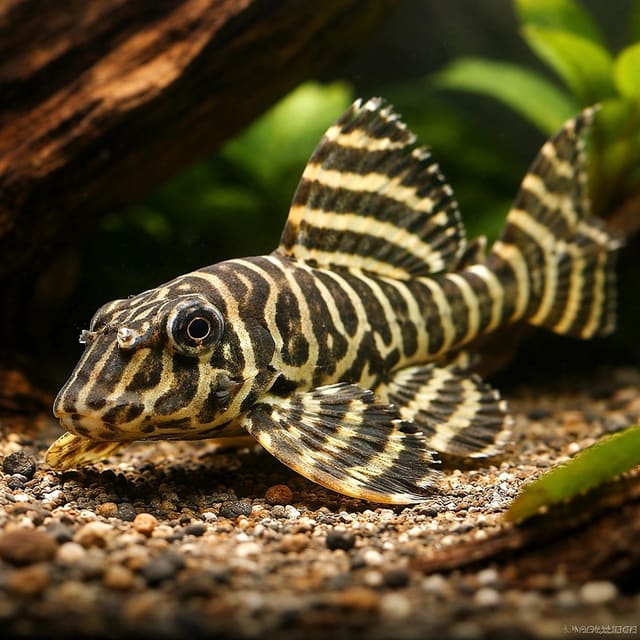
The L134 Leopard Frog Pleco offers a more mixed feeding profile and is a useful comparison if you want a patterned pleco with slightly different dietary habits.
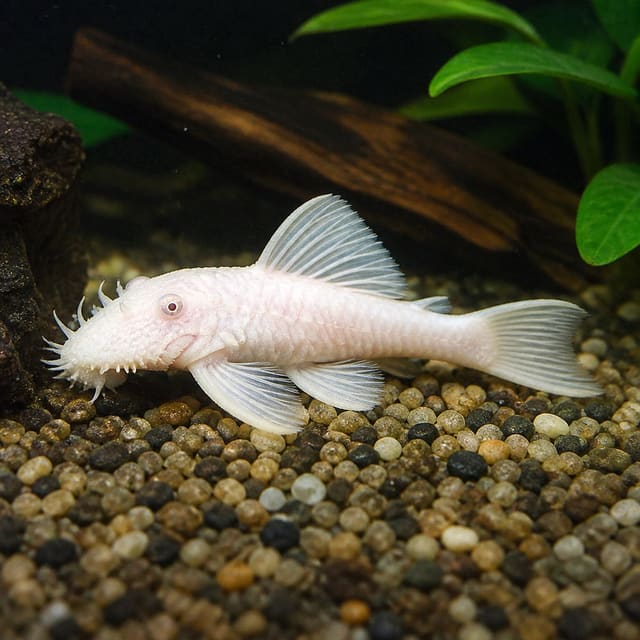
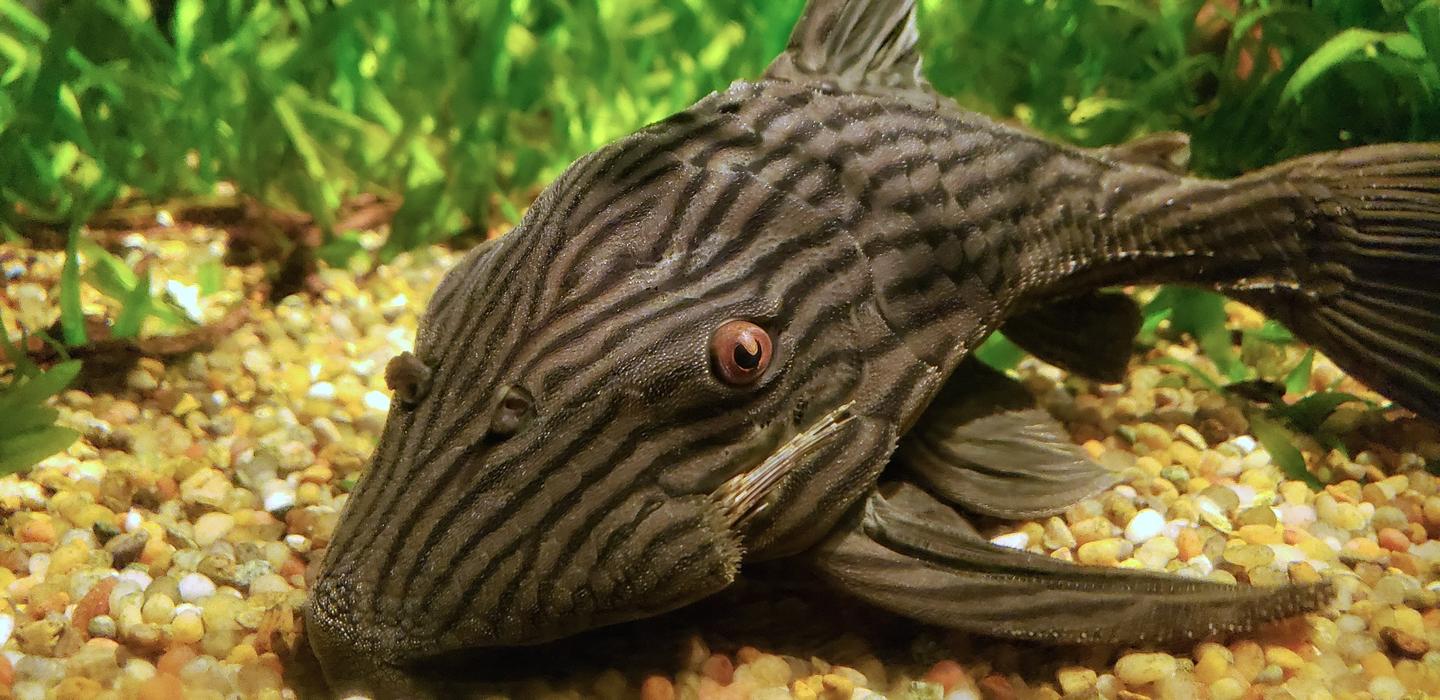
The L029 Galaxy Pleco has a broad-headed, muscular body built for life among rocks and caves. Adults reach about 20 cm, with a strong sucker mouth, sturdy pectoral fins, and a slightly flattened underside. The base colour is usually dark brown to black, overlaid with bright white to cream spots across the body and fins. In a mature, well-kept specimen, the contrast can be exceptional. Our photos show the intense dark base tone and clean spotting that make this fish so popular with collectors.
Online searches such as what siamese algae eater size do i need, what siamese algae eater size is best, which siamese algae eater size do i need, which siamese algae eater size is best, which siamese algae eater size should i get, and siamese algae eater size highlight how often buyers compare bottom fish by length alone. With the L029, body mass and territorial footprint matter more than simple length. A 20 cm Galaxy Pleco is a very different aquarium presence from a slim 6 inch algae eater.
Sexing is not easy when young. Mature males may show a broader head, heavier odontode development, and more territorial cave ownership, while females are often fuller-bodied when viewed from above. This is not a species with many established colour morphs in the trade, so pattern quality, body condition, and finnage are the main things to assess. Good diet, dark decor, and low-stress housing help maintain strong contrast.
Some search terms such as what day siamese algae eater size, what day siamese algae eater size 5, what day siamese algae eater size 10, what day siamese algae eater size chart, what day siamese algae eater size change, and what day siamese algae eater size limit are clearly aimed at other species, but they underline a useful point: growth depends heavily on food quality, water quality, and space. The l029 galaxy pleco growth rate is steady rather than fast, and juveniles often colour up more impressively as they mature in stable conditions.
The L029 is best described as semi-aggressive rather than outright hostile. Toward midwater fish it is usually calm, but toward other plecos or bottom-dwelling cave fish it can become territorial. That makes L029 Galaxy Pleco tank mates an important topic. In a suitably sized aquarium, it can work well as an L029 Galaxy Pleco for community tank centrepiece with medium to larger tetras, robust barbs, peaceful cichlids that occupy other levels, and similarly sized open-water fish. It is one of the more interesting peaceful bottom dwellers for aquarium setups when given enough personal space.
Good companions include larger characins and non-nippy schooling fish. Among pleco enthusiasts, the Blue Phantom Pleco - Hemiancistrus Sp., L134 Leopard Frog Pleco - Peckoltia, and L333 Maze Zebra Pleco - Hypancistrus are useful comparison species, though mixing plecos requires caution and extra caves. For smaller community systems, the Lemon Bristlenose Pleco - Ancistrus Sp., Long Fin Guama Bristlenose Pleco -, and Super Red Long Fin Bristlenose Pleco are often easier to house than an adult L029.
Many buyers arrive here after searching compatibility questions about algae eaters. For example: are siamese algae eaters community fish, are siamese algae eaters schooling fish, are siamese algae eaters aggressive, are siamese algae eaters territorial, can siamese algae eaters be aggressive, are siamese algae eaters aggressive to other fish, and why is my siamese algae eater aggressive. Those questions matter because the Galaxy Pleco behaves differently. It is not a schooling fish, and unlike the common query of 1 siamese algae eater versus 2 siamese algae eater, the L029 is usually best kept singly unless the aquarium is very large and carefully structured. It values caves more than companionship.
Bettas, tiny shrimp, and very small fish are poor choices. Questions like can siamese algae eater live with betta, can siamese algae eaters live with bettas, can siamese algae eaters live with shrimp, are siamese algae eaters safe with shrimp, can siamese algae eaters live with cherry shrimp, and can siamese algae eaters live with corydoras are not directly transferable here. While an L029 may ignore larger tank mates, it can prey on very small fish or shrimp and may outcompete corydoras at feeding time. Snails may be eaten.
African cichlid tanks are also not ideal. Searches like can siamese algae eaters live with african cichlids, siamese algae eater with african cichlids, and siamese algae eater with cichlids point to mixed advice online, but for the Galaxy Pleco, the issue is water chemistry and aggression. Most Rift Lake cichlid setups are too hard, too alkaline, and too combative for long-term success.
| Species | Compatible? | Notes |
|---|---|---|
| L134 Leopard Frog Pleco - Peckoltia | ⚠️ Caution | Possible only in larger tanks with many caves and visual barriers |
| Tetras and larger barbs | ✅ Yes | Good midwater companions that rarely compete for caves |
| Small shrimp and tiny fry | ❌ Avoid | May be eaten, especially at night |
Always quarantine new arrivals for 2-4 weeks. This reduces parasite transfer and lets shy bottom dwellers settle before facing established tank mates.
L029 Galaxy Pleco breeding is considered difficult and is usually attempted only by experienced pleco keepers. This is not a casual project for a mixed community tank. Mature pairs need excellent condition, secure caves, warm clean water, and a carefully managed feeding plan heavy in quality protein. If you are used to broad online questions like how do siamese algae eaters breed, do siamese algae eaters lay eggs, siamese algae eater eggs, or siamese algae eater reproduction, pleco breeding is much more cave-oriented and male-driven.
Sexing adults is the first challenge. Similar to searches for siamese algae eater male and female, siamese algae eater male vs female, and siamese algae eater male vs female pictures, aquarists want visual clues. In L029, males tend to have broader heads, stronger odontodes, and more assertive cave use. Females are often rounder through the abdomen when conditioned. A dedicated breeding tank of 250 litres or more is recommended, with multiple snug caves and brisk oxygen-rich flow.
Condition the pair with mussel, prawn, bloodworm, and high-quality carnivore pellets. Many breeders trigger spawning with large cool water changes that mimic seasonal rain influx, though swings should be controlled. The male usually claims a cave, and if the female is receptive, eggs are deposited inside. Like many cave-spawning plecos, the male guards and fans the clutch. This differs sharply from common searches such as siamese algae eater breeding, siamese algae eater breeding behavior, siamese algae eater how to breed, siamese algae eater laying eggs, and siamese algae eater fry.
Once hatched, fry need immaculate water and small meaty foods. Newly hatched brine shrimp, powdered carnivore foods, and finely crushed pellets can work once yolk sacs are absorbed. Growth is steady, and the l029 galaxy pleco growth rate improves with frequent small feeds and heavy maintenance. Unlike broad concerns such as do siamese algae eater eat guppy fry, siamese algae eater eat guppy fry, and will siamese algae eater eat guppy fry, pleco fry raising is more about avoiding bacterial losses than predation.
Use several cave diameters and place them in areas of moderate current. Males often show a clear preference for one cave shape, and getting that fit right can make the difference between repeated conditioning and an actual spawn.
Choosing the right pleco depends on tank size, feeding style, and the look you want. The Galaxy Pleco appeals to aquarists who want a bold spotted fish with a carnivorous diet and strong cave behaviour. It is not the right choice if you want a dedicated algae specialist or a tiny community-safe bottom dweller. It is, however, a serious contender for the best pleco for beginners among medium-large fancy plecos, because once established it is hardy in a mature tank and has straightforward dietary needs.
| Feature | L029 Galaxy Pleco | Lemon Bristlenose Pleco |
|---|---|---|
| Max Size | 20 cm | 10-12 cm |
| Care Level | Moderate | Easy |
| Temperature | 24-28°C | 23-27°C |
| Price | £53.23 | Varies |
| Best For | Show pleco in larger tanks | Smaller community aquariums |
| Feature | L029 Galaxy Pleco | L333 Maze Zebra Pleco |
|---|---|---|
| Diet | Strongly carnivorous | Protein-rich omnivore/carnivore |
| Temperament | Semi-aggressive | Territorial but manageable |
| Tank Style | Rock caves, current | Caves, warm high-oxygen setup |
| Pattern | White galaxy spotting | Maze-like striping |
| Best For | Bold contrast and larger footprint | Collectors wanting zebra-style markings |
If you want a smaller, more forgiving fish, the Lemon Bristlenose Pleco - Ancistrus Sp. or Super Red Long Fin Bristlenose Pleco may be better. If you want a rarer collector pleco with dramatic patterning, compare the L333 Maze Zebra Pleco - Hypancistrus and Blue Phantom Pleco - Hemiancistrus Sp.. Shoppers looking for gold spotted dwarf pleco for sale uk, bristlenose pleco for sale uk, or large pleco for sale uk are often comparing very different species, so focus on adult size, diet, and temperament rather than colour alone.
Good L029 Galaxy Pleco health starts with oxygen, cleanliness, and correct feeding. A healthy specimen has a full but not bloated body, clear eyes, intact fins, strong grip on surfaces, and a willingness to emerge for food after dark. The belly should not look pinched. Because this species is a carnivore, chronic underfeeding often shows up as weight loss long before obvious disease appears.
Common issues include bacterial infections from dirty substrate, skin damage from rough decor, internal wasting from poor diet, and stress-related susceptibility to parasites. General search terms like siamese algae eater disease are broad, but for L029 the main triggers are usually unstable water and territorial stress. White spot, fin damage, and secondary infections can all appear after transport or after being bullied by other bottom dwellers.
Treatment should begin with testing water, increasing aeration, and checking temperature stability. Quarantine is strongly advised for any sick fish. Use medications carefully with plecos, as many are sensitive to overdosing. Avoid unnecessary salt-heavy treatments in soft-water systems, and monitor appetite closely. If the fish stops feeding, inspect caves and tank mate behaviour before assuming infection. In many cases, stress is the root cause.
Never expose plecos to sudden pH swings, uncycled tanks, or sharp decor. Also avoid copper-based medications in mixed systems with invertebrates, as copper is lethal to shrimp and can upset delicate aquarium balances.
The best prevention is a mature aquarium, regular water changes, and a diet based on quality meaty foods. This is one reason the L029 Galaxy Pleco care guide always emphasises stable conditions over quick fixes. If you are wondering which siamese algae eater size should i get or comparing other algae eaters, remember that the Galaxy Pleco needs a more specialised approach than typical community algae fish.
l029 galaxy pleco behaviour is one of the species' biggest attractions. During the day it may rest in caves or under wood, then become much more active at dusk and after lights out. It explores the bottom methodically, investigates food with confidence, and often develops a routine around feeding time. In a settled aquarium, many individuals become surprisingly bold.
This species is solitary by nature and strongly cave-oriented. That is why L029 Galaxy Pleco with other fish usually works best when those fish occupy the mid and upper levels. It is not a schooling species, unlike questions such as are siamese algae eaters schooling fish. It also does not behave like a classic algae grazer, so do not expect constant glass-cleaning activity.
To encourage natural behaviour, provide several shelters, subdued lighting, and a predictable feeding schedule. Current across the bottom often increases activity, and secure caves reduce aggression. When housed correctly, the Galaxy Pleco becomes a confident, characterful display fish rather than a hidden ornament.
When buying a fish like this, condition matters more than marketing. A Galaxy Pleco should arrive with a full body, intact fins, clear spotting, and a strong feeding response. We select specimens for pattern quality, body shape, and overall vigour, not just L-number appeal. That matters when customers compare pleco fish price uk, L029 Galaxy Pleco price UK, and general listings for pleco fish for sale near me. A cheaper fish that arrives thin or stressed is rarely the better buy.
Each fish is held, observed, and fed before sale so we can assess condition and behaviour. We also help customers understand whether they need a true show pleco, a smaller bristlenose, or another catfish entirely. If you are looking to buy L029 Galaxy Pleco UK, order L029 Galaxy Pleco online UK, or compare L029 Galaxy Pleco for sale UK options, that guidance is valuable. This species is not suitable for ponds, so searches like where to buy algae eating fish for ponds, algae eating fish for ponds for sale, and algae eating fish for ponds for sale near me point to a different purchase entirely.
For delivery, fish are packed in insulated boxes with professional bagging, and heat packs are used in cold weather when needed. Tracked delivery reduces transit time and helps fish arrive in stable condition. We recommend acclimating slowly to temperature and water chemistry, then offering a dark cave immediately on introduction. Customers shopping for pleco for sale UK, pleco fish for sale uk, and catfish for sale UK often tell us the difference is obvious when a pleco arrives settled, alert, and ready to claim a cave rather than hiding in poor condition for days.
Order your Galaxy Pleco with confidence if you want a serious display pleco that combines unusual patterning, longevity, and unmistakable personality.
If you are building a pleco-focused setup, compare the smaller Lemon Bristlenose Pleco - Ancistrus Sp. for community tanks, the striking Blue Phantom Pleco - Hemiancistrus Sp. for another cave-loving show fish, or the patterned L134 Leopard Frog Pleco - Peckoltia for a different look. Collectors wanting rarer options should also view the L333 Maze Zebra Pleco - Hypancistrus and L226 Iquitos Tiger Pleco - Panaqolus. If your tank is larger and wood-rich, the L090 Papa Panaque - Panaque Bathyphilus offers a very different pleco experience. These related species help you choose the right balance of size, diet, and temperament for your aquarium.
No reviews for this item yet. Bought one? Honest reviews only, good or bad.
What customers say about ordering from us
I have a small group of long finned mountain minnows. So was delighted to be able to order ten of this variety to increase the genetics in my tank . The ones I recieved are healthy but it’s to early to give a verdict on wether they are of a long finned type since they are small currently.
Gordon Walker · 23 Sept 2026
100% success travel and "installation". Pleased with quality of purchase. The Siamese fighter a bit "shy" so have not yet seen him at his best yet but looking good. Happy customer. GG
George E Garratt · 21 Sept 2026
Reviews of our shop, collected by Judge.me, an independent third-party review collector. Newest first.