Moderate
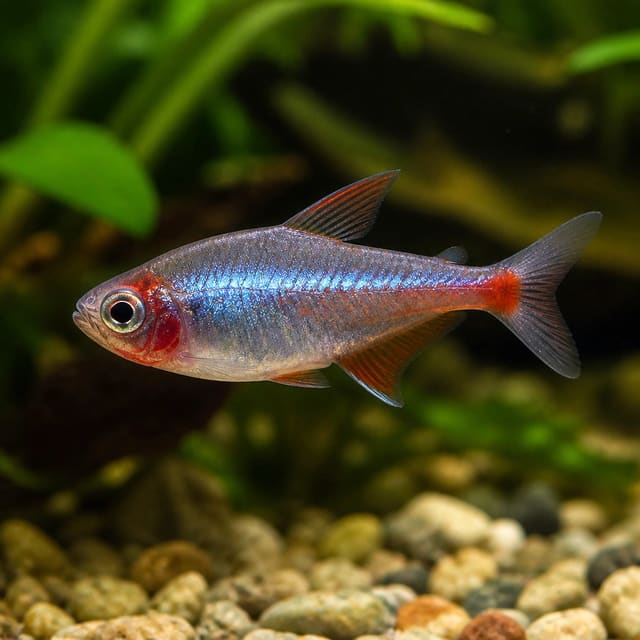
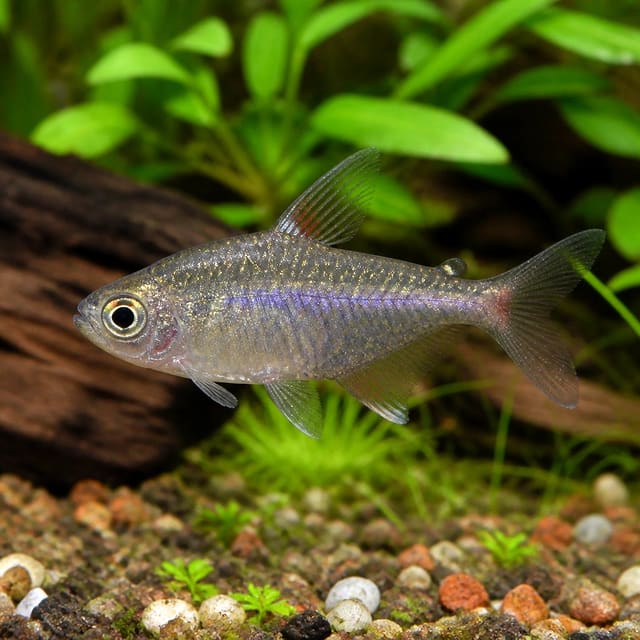
Neon Tetra (Paracheirodon innesi)
21–25°C · pH 5–7
£2.99

The Saratetra (Hyphessobrycon elachys) is a freshwater American tetra from the Paraguay River basin in South America that reaches 2 cm. It suits keepers with a mature, filtered aquarium; keep at least five under OATA's tetra guidance, using the FishBase/OATA overlap of 24–27°C and pH 6.5–7.2. Sold individually.
Adult size is the maximum length this species reaches at full maturity (scientific sources). The livestock you receive will be younger and smaller. Product-photo provenance and any image-specific limitations are stated on the listing.
Hyphessobrycon elachys
Shoaling fish: kept in a group they feel safer, stay calmer and show their best colour.
The Saratetra (Hyphessobrycon elachys) is a freshwater American tetra from the Paraguay River basin in South America that reaches 2 cm. It suits keepers with a mature, filtered aquarium; keep at least five under OATA's tetra guidance, using the FishBase/OATA overlap of 24–27°C and pH 6.5–7.2. Sold individually.
Adult size is the maximum length this species reaches at full maturity (scientific sources). The livestock you receive will be younger and smaller. Product-photo provenance and any image-specific limitations are stated on the listing.
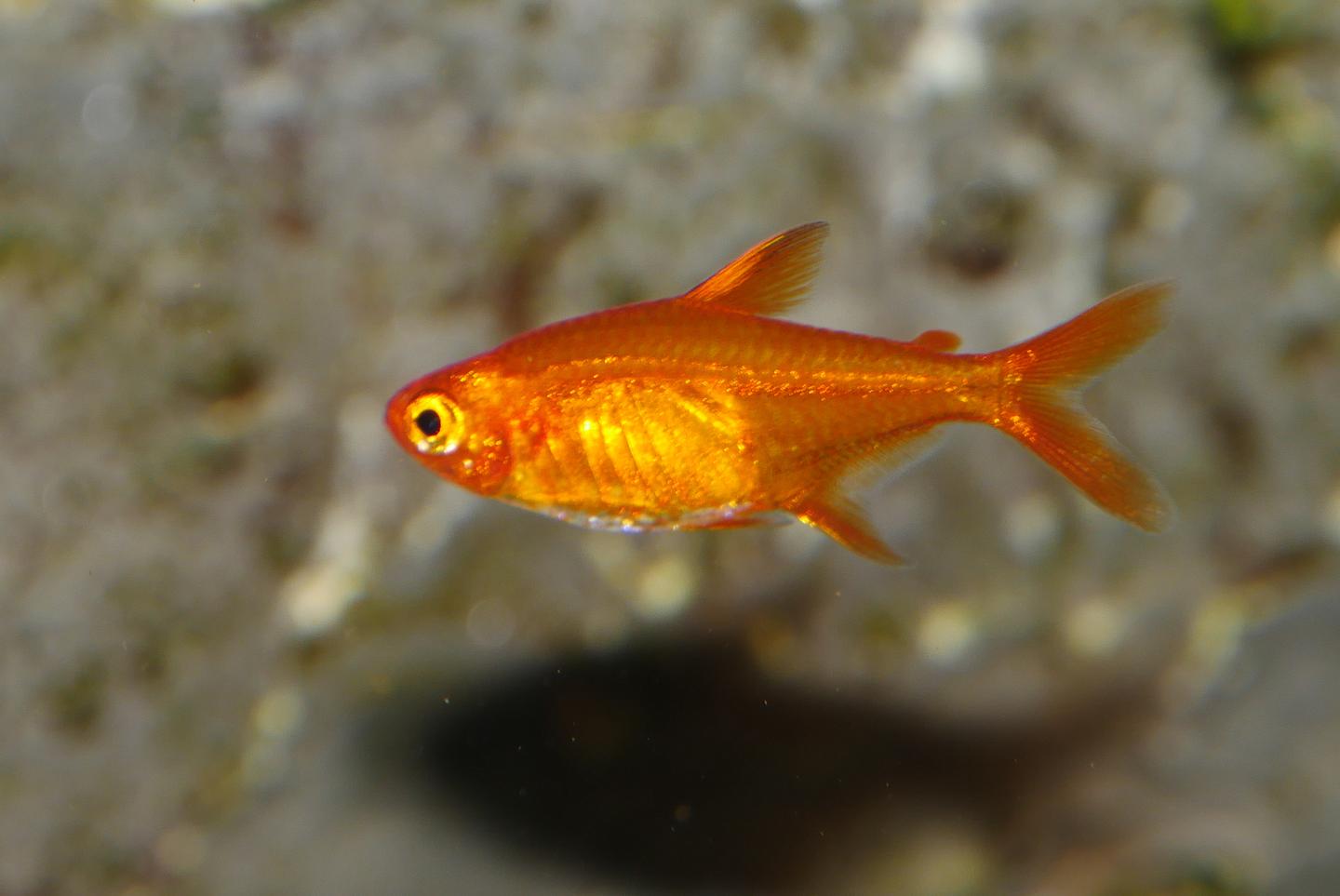
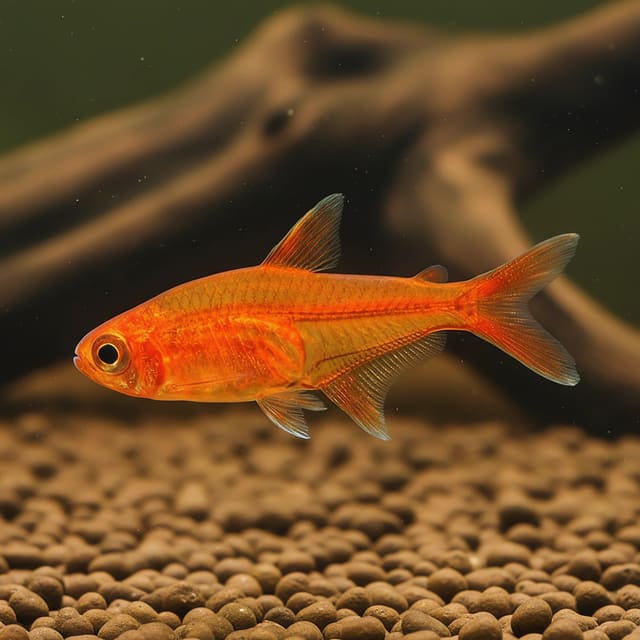
Ember tetras are very small Brazilian social fish, with a maximum recorded length of 2.0 cm excluding the tail. Keep them only in a fully cycled, stable aquarium. We recommend a group of at least 10 and about 45 litres with a 45 × 30 cm footprint rather than using a litres-per-fish formula.
Maintain these water conditions for optimal health and vibrant colors
The Saratetra (Hyphessobrycon elachys) is a freshwater, ray-finned American tetra in the family Acestrorhamphidae. It comes from the Paraguay River basin in South America and reaches a recorded maximum of 2 cm standard length. This fish suits a keeper who can prepare a mature, filtered aquarium, maintain a close water range and keep a proper shoal rather than one fish by itself.
FishBase records the species as tropical, freshwater and benthopelagic, with a range in the Paraguay River basin. Its 2 cm maximum makes it physically small, but the aquarium still has to support a group, stable filtration and open swimming space. Plan around the needs of the whole shoal instead of treating the adult length as a reason to use a very small container.
The common name Saratetra refers here to Hyphessobrycon elachys. A Wikipedia overview of Hyphessobrycon places the genus among the freshwater American characins known as tetras and describes a wider Neotropical distribution. For this particular fish, use the Paraguay River basin range recorded by FishBase rather than applying that wider genus range to the species.
This is a useful choice for a carefully planned small-fish aquarium, especially where the keeper wants the movement of a shoal. Browse the Tropical Fish Co tetra collection to compare identities and care requirements, but assess every species on its own adult size, water range and social needs.
Keep Saratetra at 24–27°C and pH 6.5–7.2; these are the overlaps between FishBase's species values and OATA's tetra guidance. Keep general hardness at 4–12°dH under OATA's guidance, which remains below FishBase's recorded maximum of 15°dH.
Keep a group of at least five in an aquarium of at least 45 litres. OATA gives at least five as the group size for tetras and pencilfish, and at least 45 litres for a small shoal of a smaller species. A larger group is better, provided the aquarium has the capacity, filtration and water quality to support every added animal.
| Suits | Not suited to |
|---|---|
| A mature, filtered freshwater aquarium | An unfiltered or biologically immature aquarium |
| A group of at least five | Solitary keeping or a group below five |
| 24–27°C and pH 6.5–7.2 | Water that cannot remain within the care range |
| Fish of similar size and temperament | Fish large enough to eat a 2 cm tetra |
| Cover plus open swimming space | A layout with no shelter or swimming room |
Use 45 litres as the starting point for the shoal, not as a target that overrides stocking reality. A larger aquarium keeps temperature and water quality more stable and gives the group more usable swimming room. Count the full community when deciding whether the filter and aquarium can carry the planned biological load.
Each purchase supplies one live Saratetra. Each fish is supplied at 1.5–2 cm. Dispatch size describes the fish at the point of supply; plan the aquarium around the recorded adult maximum of 2 cm standard length and the space required by its shoal. Do not infer sex or life stage from a measurement, colour pattern or gallery scene.
Sex is guaranteed only when the selected option explicitly states male or female. This Saratetra listing has no sex-guaranteed option.
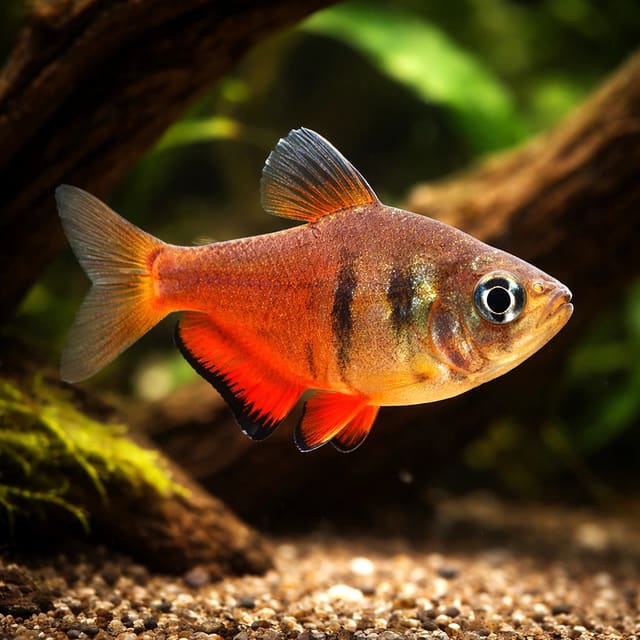
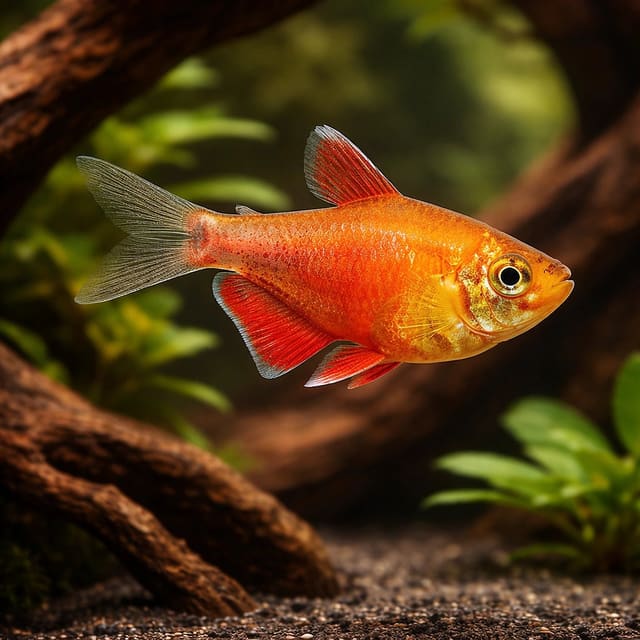
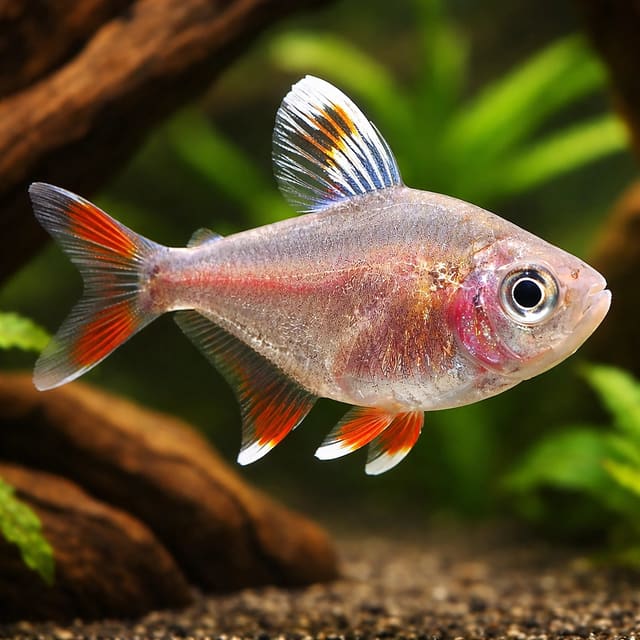
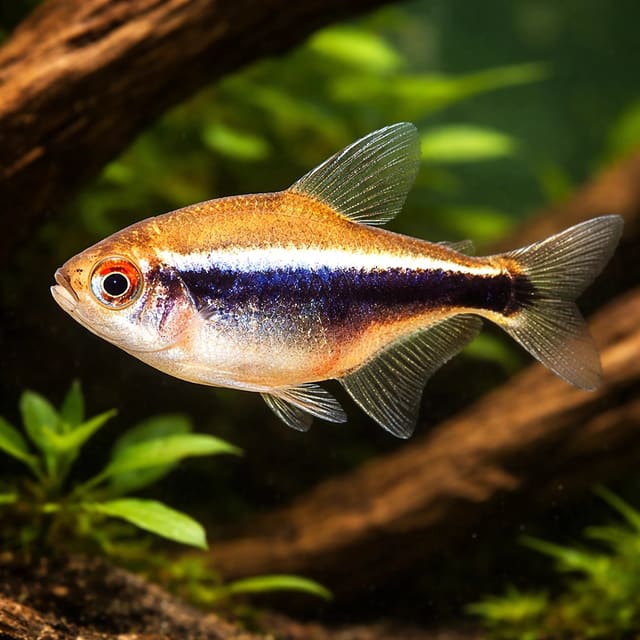
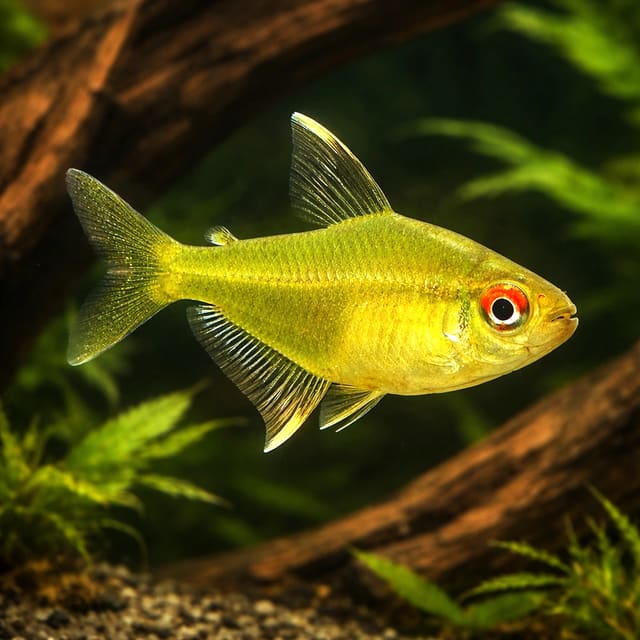
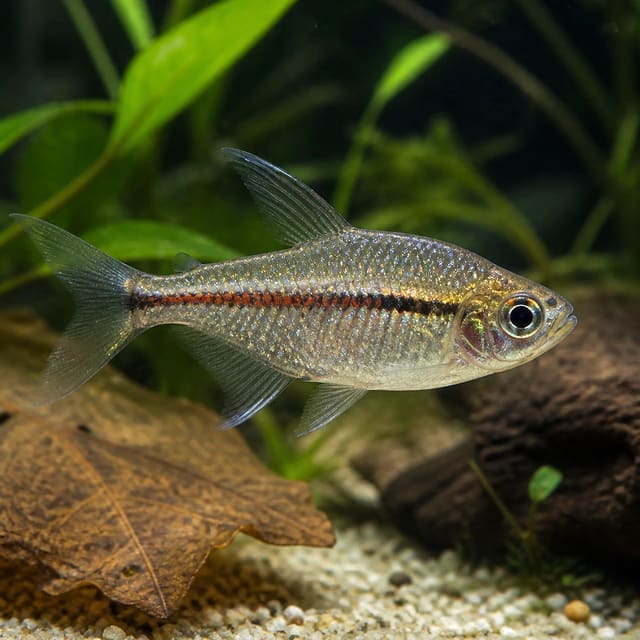
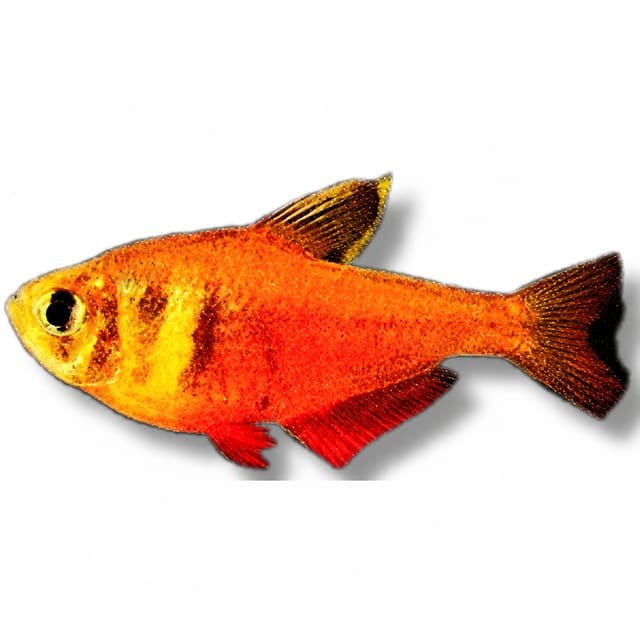
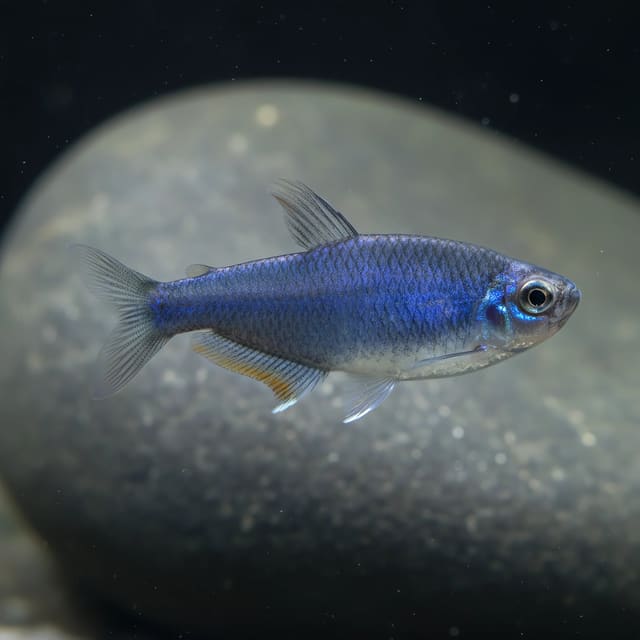
The gallery images are representative, based on reference photographs of this species, so colours can look slightly different from the live animal.
A 2 cm adult length can make the fish look suitable for almost any small aquarium, but social space, filter capacity and swimming room remain decisive. The correct purchase plan therefore starts with the complete shoal and aquarium, not the dimensions of one fish.
Set the aquarium to 24–27°C and pH 6.5–7.2, the overlaps between FishBase's values for Hyphessobrycon elachys and OATA's routine tetra guidance. Keep general hardness at OATA's 4–12°dH range, which remains below FishBase's recorded maximum of 15°dH. Measure the aquarium rather than relying on heater settings, tap-water assumptions or a previous test.
The nitrate figure uses the tap-water result as its baseline. If the tap water measures 10 mg per litre, the aquarium should not exceed 30 mg per litre. If the tap water measures 25 mg per litre, the corresponding ceiling is 45 mg per litre. Record both results so that the comparison remains meaningful.
Use the aquarium water chemistry guide to understand what each test measures, then compare your readings with this fish through the water matcher. A result outside any stated range is a reason to pause the introduction and resolve the mismatch first.
Test consistently enough to notice movement before it becomes a welfare problem. OATA recommends at least weekly testing for ammonia and nitrite. Check pH, hardness and temperature when assessing a new aquarium, following maintenance or whenever behaviour changes. Treat replacement tap water with conditioner before it enters the aquarium so chlorine or chloramine does not harm the fish or biological filter.
Use a well-established biological filter and confirm zero ammonia and zero nitrite before adding Saratetras. The RSPCA's aquarium welfare guidance explains why filtration is essential: fish release toxic ammonia, beneficial bacteria convert it to nitrite, and another bacterial stage converts nitrite to the safer nitrate.
A running filter is not automatically a mature filter. It must contain enough beneficial bacteria to process the waste created by the aquarium's present population and feeding level. Prepare that biological capacity before livestock arrives; our first tropical aquarium guide covers the preparation and maturation process.
OATA advises increasing fish numbers slowly because every addition raises waste production and feeding. The bacterial population then needs time to grow with the increased load. Adding a full community too quickly can produce new tank syndrome, in which ammonia or nitrite rises because the filter cannot process the waste.
Filter capacity must be judged with the whole group in mind. Five 2 cm fish create more waste than one, and community companions add to the same biological load. A larger aquarium keeps environmental conditions more stable, but it still needs an appropriate, functioning filter.
Never operate this aquarium without filtration. Keep the filter running and check it for blockages during routine maintenance. Protect its bacterial population by rinsing the media lightly in aquarium water removed during a partial water change, never under the tap.
Build the aquarium with gravel or sand, shelter and clear swimming space. OATA recommends live plants where practical; when live plants are not used, add plastic plants and suitable ornaments such as plant pots or model caves for shelter. Arrange every item securely and leave enough unobstructed water for the shoal to move together.
| Area | Purpose |
|---|---|
| Gravel or sand | Provides the recommended aquarium base |
| Live or artificial plants | Creates cover and sheltered areas |
| Suitable ornaments | Adds shelter where it does not block swimming |
| Open water | Allows the shoal to move without threading through clutter |
| Gentle current | Matches OATA's advice for smaller tetra species |
At a recorded maximum of 2 cm, Saratetra falls within the smaller end of the tetra size range. Use a gentle current rather than making the fish hold position against forceful flow. Check the way the group swims throughout the aquarium: usable space matters more than an empty volume hidden behind dense decoration.
Cover should not come at the cost of maintenance access. Leave room to siphon waste from the substrate and inspect the fish from more than one angle. Plants and ornaments can make the group feel sheltered, while a visible open area helps you notice changes in swimming, feeding, body condition or group behaviour.
Begin with the at-least-45-litre plan for a small shoal, then consider how much of that space remains after substrate, plants, ornaments and equipment are fitted. A larger aquarium offers more scope to provide both shelter and open water. Do not compensate for limited space by reducing the shoal below five; choose an aquarium that can meet the fish's social requirement.
Keep at least five Saratetras together; a larger group is better whenever the aquarium, filter and water quality can support it. OATA identifies tetras as shoaling fish and warns that individuals kept alone or in groups that are too small often become stressed.
Do not use the minimum as permission to crowd the aquarium. Every extra fish increases feeding and waste, so group size must be considered alongside litres, filter capacity, swimming room and existing companions. If the aquarium cannot support five, it is not a suitable Saratetra home.
Observe the group at feeding time and during ordinary swimming. Healthy fish should have clear, bright eyes, intact scales and undamaged fins. OATA advises watching for hanging at the surface, sitting on the bottom, erratic swimming, darker or paler colour, unusual hiding, altered aggression, faster or slower gill movement, white spots, fluffy growths, lost fins or scales, changes in body condition and reduced feeding.
A single observation is most useful when compared with that fish's normal pattern. Note whether the change affects one animal or the whole shoal, and test the water immediately when behaviour, breathing or feeding changes. Group-wide changes can direct attention to shared conditions such as water quality, while an individual still requires close monitoring.
Shoaling does not make every movement perfectly synchronised. Use the group requirement as a welfare rule, not as a promise of a particular display. The practical goal is a stable social group with enough room, suitable water and no companion large enough to treat these tiny fish as prey.
Feed a good-quality flake or granule once a day, offering only what the group can eat within a few minutes. OATA's tetra guidance also recommends variety through small live or frozen foods such as daphnia, small bloodworm or tubifex.
Choose particles the fish can take readily. Saratetra reaches only 2 cm, so watch the first mouthfuls rather than assuming every flake or granule grade is manageable. If food repeatedly passes uneaten, use a more suitably sized form at the next meal instead of adding extra.
The correct portion is therefore set by consumption, not by a fixed pinch that ignores group size. A five-fish shoal and a larger community will not consume the same quantity, and appetite can change. The rule remains constant: one daily meal that is finished within a few minutes.
Overfeeding leaves uneaten food to break down and release toxic waste into the water. That creates extra work for the biological filter and can contribute to unhealthy water conditions. If food remains after the feeding period, reduce the next portion and include the substrate in the normal waste-removal routine.
Use live or frozen items as part of a varied programme, not as permission to extend the feeding period or offer multiple uncontrolled meals. Rotate among OATA's named foods while retaining quality flake or granule as the regular aquarium diet.
Reduced interest in food is a health observation as well as a feeding issue. When one fish stops eating, compare its behaviour and body condition with the rest of the shoal. When the group loses interest together, test temperature, ammonia, nitrite and the other water values before changing the menu.
Change 25% of the water at least once every week and test ammonia and nitrite at least weekly. OATA strongly recommends this routine for tetras and pencilfish because regular removal of water and solid waste helps protect water quality.
Do not rinse filter media under the tap. Chlorine or chloramine may kill the beneficial bacterial population in the media. When cleaning is needed, rinse the media lightly in aquarium water removed during the partial change. This reduces bacterial loss while removing material that obstructs the filter.
| Weekly result | Decision |
|---|---|
| Ammonia 0 and nitrite 0 | Continue the planned routine and observation |
| Any ammonia or nitrite | Pause further stocking and assess water quality and filtration |
| Nitrate within 20 mg/l above tap level | Continue monitoring against the same baseline |
| Nitrate beyond that difference | Review waste, feeding and maintenance before adding fish |
Look at the fish during every maintenance session. Changes in swimming, colour, breathing, temperament, appearance, body condition or appetite can give early warning of a problem. Test the water first when a change appears, because ammonia, nitrite, temperature and other shared conditions can affect the shoal.
If a health change continues after the immediate water-quality check, contact us for guidance. Do not begin a disease treatment merely from a general symptom such as hiding or pale colour; the same visible change can accompany different problems.
Arrange for someone to receive the parcel because live fish must not be left unattended. The fish is hand-bagged in pure oxygen and placed in an insulated poly box, with a heat pack when the weather calls for it. A licensed live-animal courier carries the parcel, and tracking and the confirmed arrival date are sent by email.
These steps come from the current Tropical Fish Co delivery and Live Arrival Guarantee policy. Open and inspect the parcel on the day it arrives, and read the delivery policy before it is due so the receiver knows the unpacking steps.
OATA advises confirming that ammonia and nitrite are zero before introducing fish. The aquarium should already be mature and filtered, with temperature and pH within the FishBase/OATA overlap of 24–27°C and pH 6.5–7.2, and hardness within OATA's 4–12°dH guidance. The shoal plan, companion screening and swimming space should also be settled before the box is opened.
Add fish populations slowly rather than combining the Saratetra introduction with several other stocking changes. Beneficial bacteria need to increase as fish numbers and feeding rise. Keep testing at least weekly after introduction and postpone any further addition if ammonia or nitrite appears.
Watch whether the new fish joins the group, swims normally and takes its daily food. Check for clear eyes, intact scales and undamaged fins. If you see surface hanging, bottom sitting, erratic swimming, unusual hiding, altered breathing, reduced feeding or a visible change in colour or condition, test the water and compare the affected fish with the rest of the shoal.
Choose companions of similar size and temperament, with water requirements that match the FishBase/OATA overlap of 24–27°C and pH 6.5–7.2 plus OATA's 4–12°dH hardness guidance. Avoid any fish large enough to eat a 2 cm Saratetra. OATA gives this as the central compatibility rule for smaller tetras and pencilfish.
| Check | Question to answer |
|---|---|
| Adult size | Will the companion become large enough to eat a 2 cm tetra? |
| Temperament | Is it similar in activity and behaviour rather than markedly boisterous or aggressive? |
| Water | Can both animals remain within the same temperature, pH and hardness range? |
| Space | Can the aquarium support the Saratetra shoal and the companion's full needs? |
Passing one check is not enough. A fish of similar present size may grow much larger, while a peaceful-looking fish may require water outside the Saratetra range. Use adult characteristics and the complete husbandry plan, not shop size or a brief first impression.
OATA names neon tetras and Beckford's pencilfish as examples of smaller fish that must not be housed with anything large enough to eat them. That example explains the predator-size rule; it is not an automatic recommendation for a specific mixed aquarium. Each proposed species still needs its own water, group, space and temperament assessment.
Avoid keeping timid or long-finned fish with larger or more boisterous tetra species because OATA warns that those tetras may nip fins. Saratetra reaches only 2 cm, so plan it as one of the smaller tetras and watch any mixed group for chasing or damaged fins.
For a stocking assessment, contact us with the aquarium volume, measured water values, existing animals and the proposed companion's adult size. The useful decision is whether the complete combination works, not whether two common names appear on a generic compatibility list.
Introduce livestock gradually and watch how the complete community behaves. OATA describes tetras generally as peaceful while noting exceptions, so compatibility remains an observed relationship between particular animals in a particular aquarium.
Check feeding particularly carefully. A companion can match the water range yet still prevent a tiny fish from taking its daily portion. Watch the whole few-minute feeding period and confirm that every part of the shoal participates. Do not respond by scattering excessive food, because leftovers add waste and can harm water quality.
Hiding alone does not identify the cause of a problem. Compare it with breathing, colour, fin condition, swimming and appetite, then test ammonia, nitrite, temperature and the remaining water values. This separates a shared environmental problem from a conflict that mainly affects one fish.
Maintain at least five Saratetras even in a mixed community. Count only Saratetras towards the group of five, whatever other tetras share the aquarium. Likewise, adding more Saratetras does not correct an aquarium that is too small, biologically immature or paired with a predator.
Reassess compatibility as fish grow and the community changes. The Saratetra's recorded maximum remains 2 cm, but a companion bought at a similar dispatch size may have a much larger adult form. Adult size, temperament, water overlap and usable space remain the four continuing checks.
FishBase records a maximum length of 2 cm standard length. Plan the aquarium around that adult figure and the space required by a shoal, not the size of one fish.
Saratetra should be planned around an aquarium of at least 45 litres for a small shoal. OATA gives 45 litres as group guidance for a small shoal of a smaller tetra species, and a larger aquarium gives more stable temperature and water quality and more swimming room.
Keep at least five together, and more when the aquarium and filter can support them. OATA identifies tetras as shoaling fish and warns that solitary fish or groups that are too small often become stressed.
Have a mature, filtered aquarium running at 24–27°C and pH 6.5–7.2 with zero ammonia and zero nitrite, and room for a group of at least five. Settle the water, filter and group plan before the fish arrive rather than adjusting them afterwards.
Feed a quality flake or granule once daily, offering only what the group eats within a few minutes. OATA's tetra guidance also recommends variety through small live or frozen daphnia, small bloodworm or tubifex.
Keep it at 24–27°C and pH 6.5–7.2, the overlaps between FishBase's species values and OATA's tetra guidance.
OATA describes tetras generally as peaceful but notes exceptions. Keep a proper shoal, choose companions of similar size and temperament, and watch for chasing, hiding, damaged fins or altered feeding.
Choose fish of similar size and temperament that can also live at 24–27°C, pH 6.5–7.2 and 4–12°dH. Avoid any fish large enough to eat this 2 cm tetra, and avoid keeping timid or long-finned fish with larger or more boisterous tetra species.
It is hand-bagged in pure oxygen, placed in an insulated poly box with a heat pack when weather calls for it, and carried by a licensed live-animal courier. Have someone at the address to receive it and open it the same day: start filming before the sealed parcel is opened, keep one continuous take until the fish are seen in the bag, float the bag for 20–30 minutes before release and never pour bag water into the aquarium.
No reviews for this item yet. Bought one? Honest reviews only, good or bad.
What customers say about ordering from us
I have a small group of long finned mountain minnows. So was delighted to be able to order ten of this variety to increase the genetics in my tank . The ones I recieved are healthy but it’s to early to give a verdict on wether they are of a long finned type since they are small currently.
Gordon Walker · 23 Sept 2026
100% success travel and "installation". Pleased with quality of purchase. The Siamese fighter a bit "shy" so have not yet seen him at his best yet but looking good. Happy customer. GG
George E Garratt · 21 Sept 2026
Reviews of our shop, collected by Judge.me, an independent third-party review collector. Newest first.