Moderate
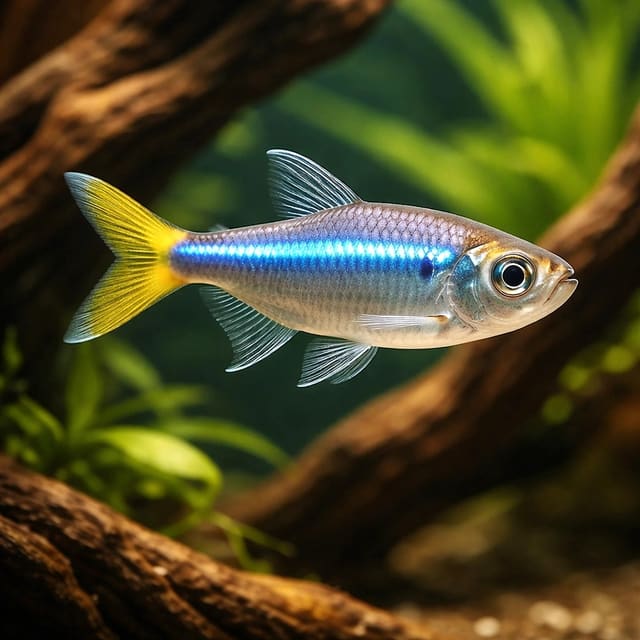
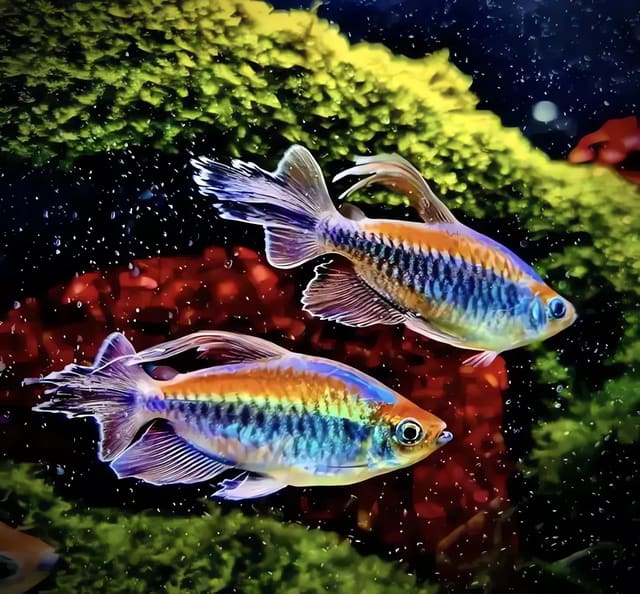
Congo Tetra (Phenacogrammus interruptus)
23–28°C · pH 6–7.5 · 150L
£5.99

A lively, attractive West African tetra that shines in a peaceful shoaling community aquarium. Moderate care, peaceful. 23-28C, pH 6.0-7.5.
Adult size is the maximum length this species reaches at full maturity (scientific sources). The livestock you receive will be younger and smaller — pick a size above for the actual shipping size. Product-photo provenance and any image-specific limitations are stated on the listing.
Arnoldichthys spilopterus
Save when buying multiple fish. Each quantity is one fish; sex and pair formation are not guaranteed unless the selected variant explicitly states them.
Confirm your email, then we’ll send an availability message for this exact item if it returns within 180 days.
This request is only for this product—no newsletter or other promotions. A mail-provider retry may very rarely duplicate the same availability message. Unconfirmed addresses are removed after 48 hours. See our privacy policy.
A lively, attractive West African tetra that shines in a peaceful shoaling community aquarium. Moderate care, peaceful. 23-28C, pH 6.0-7.5.
Adult size is the maximum length this species reaches at full maturity (scientific sources). The livestock you receive will be younger and smaller — pick a size above for the actual shipping size. Product-photo provenance and any image-specific limitations are stated on the listing.
Maintain these water conditions for optimal health and vibrant colors
Tropical fish for sale UK enthusiasts seeking a rare and attractive African species will find Arnoldichthys spilopterus, commonly known as Arnold's tetra or the Niger tetra, a rewarding choice for peaceful community aquariums. This West African tetra is endemic to Nigeria, inhabiting the Niger River basin and associated tributaries. Available for sale UK in sizes from 5-7cm, the species reaches approximately 7.5cm at maturity, making it suitable for medium-sized community tanks. The species displays subtle but attractive coloration with iridescent scales, intricate finnage, and a peaceful shoaling nature. Moderate care requirements suit aquarists with some experience maintaining African community fish, though the species' relative rarity means availability may be limited compared to popular South American tetras.
Arnoldichthys spilopterus features a streamlined, laterally compressed body with silvery-grey base coloration overlaid with subtle iridescent green, blue, or gold highlights depending on lighting and mood. The scales reflect light beautifully, creating a shimmering effect when the shoal moves in unison. A dark horizontal stripe runs along the lateral line from the gill cover toward the caudal peduncle, becoming more or less pronounced depending on stress levels. Males develop more elongated dorsal and anal fins with subtle extensions, while females remain slightly rounder and fuller-bodied. The caudal fin is forked, and all fins display delicate patterning or spotting. Overall coloration is refined rather than bold, rewarding careful observation in well-planted, naturalistic aquariums with subdued lighting.
This species is endemic to the Niger River basin in Nigeria, West Africa, where it inhabits slow to moderately flowing rivers, tributaries, and floodplain areas. Natural habitats feature sandy or muddy substrates, submerged wood, overhanging vegetation, and dense aquatic plant growth. Water conditions are typically warm, soft to moderately hard, and slightly acidic to neutral. The species forms loose shoals that patrol midwater zones, feeding on small insects, insect larvae, zooplankton, and organic particles. Seasonal flooding disperses populations into temporarily inundated areas, while the dry season concentrates fish in deeper river channels. The species coexists with other West African community fish in densely vegetated, tannin-stained waters.
A minimum 75-litre aquarium with dimensions emphasizing length over height provides suitable space for a shoal of 8-10 Arnold's tetras. Use fine sand or smooth gravel substrate and densely plant the tank with species such as Vallisneria, Anubias, Java fern, and Cryptocoryne. Include driftwood, dried leaves, and floating plants to create subdued lighting and visual security. The species appreciates tannin-stained water achieved through Indian almond leaves or blackwater extracts, though this is optional. Provide open swimming areas alongside planted zones, as the shoal enjoys patrolling the tank in synchronized formation. Filtration should be efficient but gentle—moderate water movement is tolerated, but avoid strong currents. Ensure excellent water quality, as the species is sensitive to elevated ammonia, nitrite, or nitrates.
Expert Tip: Keep Arnold's tetras in groups of at least 8 individuals. Larger shoals display more confident behavior, better coloration, and natural schooling dynamics that enhance the visual impact.
Maintain temperatures between 22-28°C, with 24-26°C representing optimal conditions. The species tolerates slight variations but performs best with stability. pH should remain between 6.0-7.5, with slightly acidic to neutral values (6.5-7.0) ideal. Water hardness can range from soft to moderately hard without issue, though soft to moderate hardness better replicates natural Niger basin conditions. Ammonia and nitrite must be undetectable, while nitrates should stay below 30 ppm through efficient biological filtration and weekly water changes of 25-30%. The species is moderately sensitive to poor water quality, responding with faded coloration, lethargy, or increased susceptibility to disease. Maintain consistency and perform regular maintenance to ensure long-term health.
Arnoldichthys spilopterus is an omnivore with a preference for small, varied foods. Offer high-quality flake or micro-pellets as the dietary foundation, supplemented with small frozen or live foods such as daphnia, cyclops, baby brine shrimp, and finely chopped bloodworms. Include vegetable matter or spirulina-based foods to ensure balanced nutrition and support digestive health. Feed small portions 1-2 times daily in amounts consumed within 2-3 minutes. The species is not a particularly aggressive feeder, so ensure food reaches all individuals in the shoal and that faster tankmates do not outcompete them. A varied diet supports vibrant coloration, healthy growth, and active schooling behavior.
Arnold's tetras are peaceful, social fish that form cohesive shoals constantly moving through midwater zones. The species swims gracefully in loose formation, often oriented in the same direction and moving in synchronized patterns. Activity levels remain moderate throughout the day, with increased feeding activity during dawn and dusk. The shoal explores planted areas, open water, and around decorations, creating constant gentle movement in the aquarium. The species displays no aggression toward tankmates and is entirely compatible with other peaceful community fish. Stress or inadequate shoal size causes the fish to scatter, hide, or display faded coloration, while confident shoals remain visible and active throughout the day.
Arnoldichthys spilopterus thrives alongside other peaceful, similarly sized schooling fish and bottom dwellers. Suitable companions include small tetras, rasboras, peaceful barbs, Corydoras catfish, small peaceful cichlids, and other West African community fish that share similar water requirements. Avoid large or aggressive fish, fin-nippers, predatory species, or very boisterous tankmates that may intimidate or harass the tetras. The species' peaceful nature and moderate activity level make it an excellent addition to well-planned community tanks with calm, compatible inhabitants.
Breeding Arnoldichthys spilopterus in home aquariums is uncommon and rarely reported. Successful spawning likely requires a well-conditioned shoal, soft and slightly acidic water, fine-leaved plants or spawning mops for egg deposition, and excellent water quality. If spawning occurs, adults should be removed after egg laying to prevent predation. Eggs are small and adhesive, attaching to plants or spawning media. Fry are tiny and require microscopic foods such as infusoria initially, transitioning to newly hatched brine shrimp within a week. Raising fry demands exceptional water quality and careful feeding. Most specimens in the trade are wild-caught, with captive breeding remaining rare.
Tropical Fish Co supplies healthy, active Arnold's tetras carefully selected for good body condition and strong schooling behavior. We ensure all specimens are feeding confidently on prepared foods and displaying normal social behavior before dispatch. Our expert team provides detailed care guidance covering the importance of group housing, water parameters, tank setup, and suitable tankmate selection. With reliable UK delivery using specialist livestock couriers, your fish arrive safely in insulated packaging with oxygen. We support rare species conservation and responsible fishkeeping, offering ongoing advice to help you succeed with this beautiful West African tetra. Choose Tropical Fish Co for rare, quality livestock and expert customer support.
No reviews for this item yet. Bought one? Honest reviews only, good or bad.
What customers say about ordering from us
I have a small group of long finned mountain minnows. So was delighted to be able to order ten of this variety to increase the genetics in my tank . The ones I recieved are healthy but it’s to early to give a verdict on wether they are of a long finned type since they are small currently.
Gordon Walker · 23 Sept 2026
100% success travel and "installation". Pleased with quality of purchase. The Siamese fighter a bit "shy" so have not yet seen him at his best yet but looking good. Happy customer. GG
George E Garratt · 21 Sept 2026
Reviews of our shop, collected by Judge.me, an independent third-party review collector. Newest first.