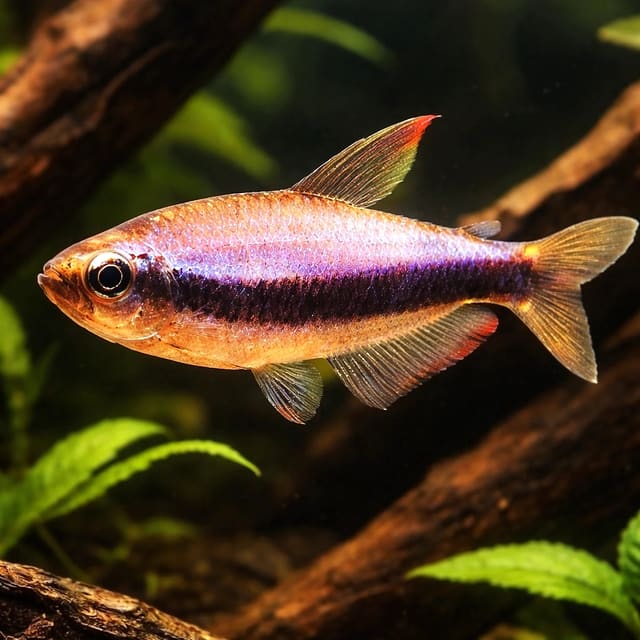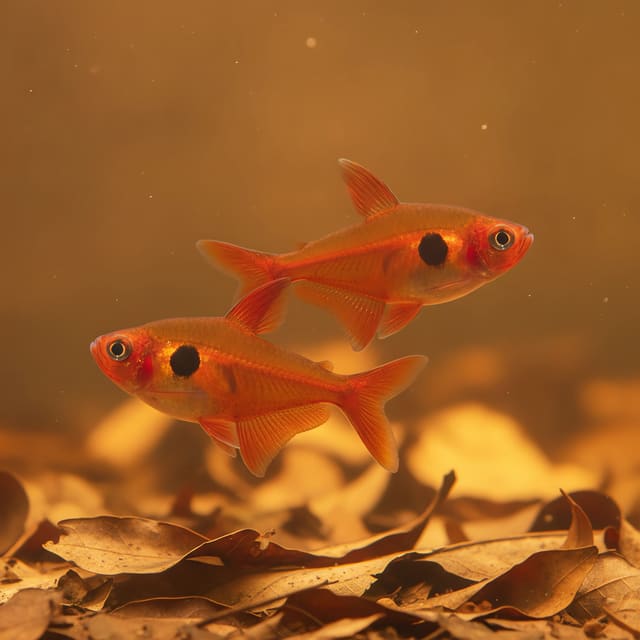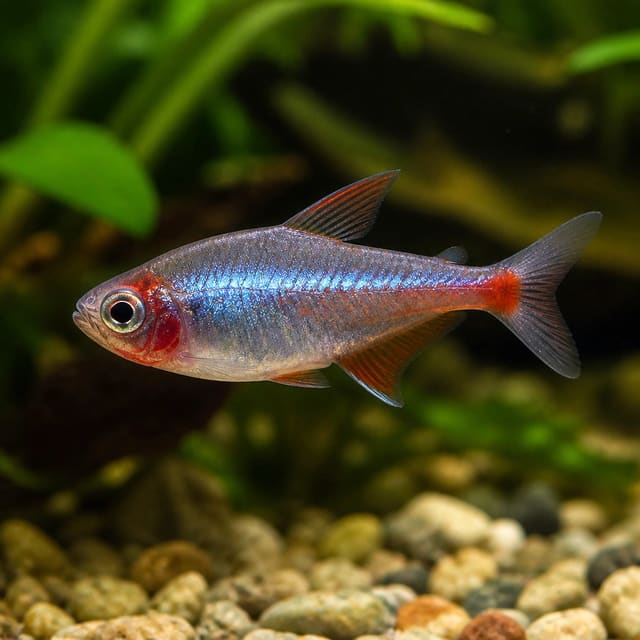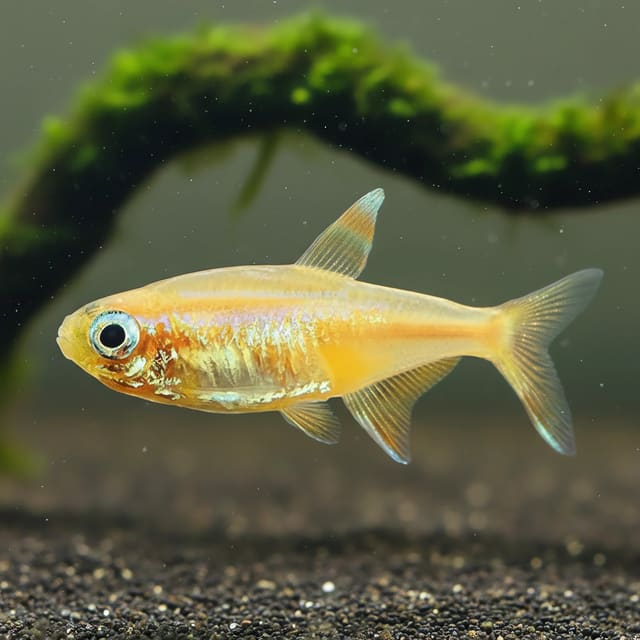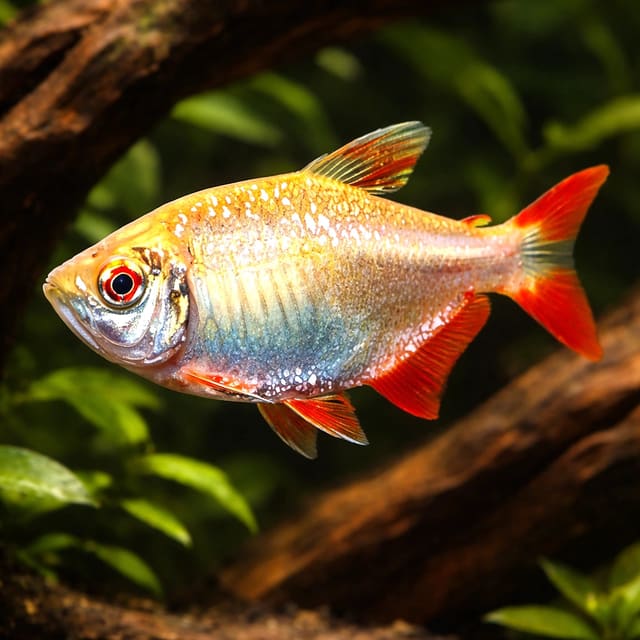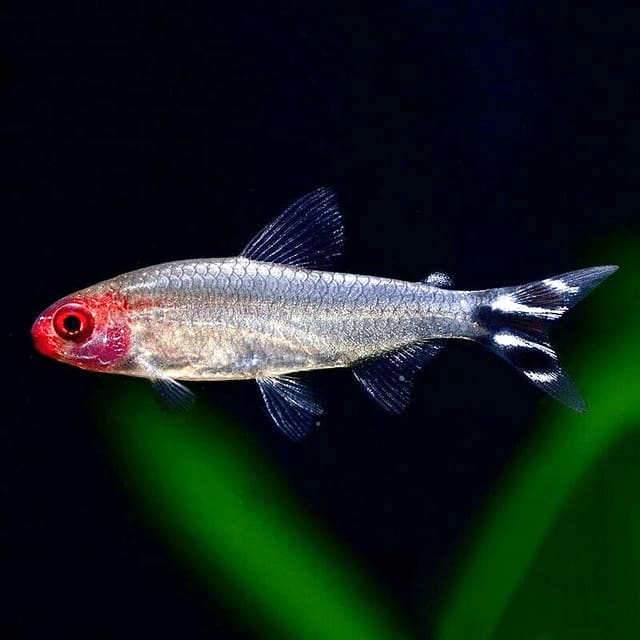
Rummy Nose Tetra (Petitella rhodostoma)
24–27°C · pH 5.5–7
£3.29
A stunning shoaling tetra with a vivid red face and silver body, ideal for peaceful planted community aquariums.
Adult size is the maximum length this species reaches at full maturity (scientific sources). The livestock you receive will be younger and smaller — pick a size above for the actual shipping size. Product-photo provenance and any image-specific limitations are stated on the listing.
Hemmigrammus rhodostomus
Shoaling fish: kept in a group they feel safer, stay calmer and show their best colour.
A stunning shoaling tetra with a vivid red face and silver body, ideal for peaceful planted community aquariums.
Adult size is the maximum length this species reaches at full maturity (scientific sources). The livestock you receive will be younger and smaller — pick a size above for the actual shipping size. Product-photo provenance and any image-specific limitations are stated on the listing.
Maintain these water conditions for optimal health and vibrant colors
The Brilliant Head Rummy Nose Tetra, Hemmigrammus rhodostomus, is a classic South American shoaling fish prized for its elegant silver body, translucent fins and unmistakable red face. This 2-3 cm size is ideal for aquarists looking to add movement, colour and natural behaviour to a peaceful community aquarium. When kept in a proper group, these tetras display a tight, coordinated shoal that is both calming and captivating to watch.
Sometimes sold under the common name Rummy Nose Tetra, this species is best known for the intensity of the red on the head, which can deepen when the fish are settled, healthy and kept in suitable water conditions. They are active mid-water swimmers and thrive in mature aquariums with stable parameters, gentle filtration and plenty of cover from plants and driftwood.
At Tropical Fish Co, our live fish are selected with care and shipped with a live arrival guarantee and fast UK delivery, so your new tetras arrive in the best possible condition for acclimatisation and long-term success.
| Attribute | Details |
|---|---|
| Scientific name | Hemmigrammus rhodostomus |
| Common name | Brilliant Head Rummy Nose Tetra |
| Care level | Moderate |
| Temperament | Peaceful |
| Adult size | Approx. 4-5 cm |
| Minimum tank size | 80 litres for a small group; larger is better |
| Temperature | 24-28°C |
| pH | 5.5-7.0 |
| Diet | Omnivore |
| Tank region | Middle |
Hemmigrammus rhodostomus originates from soft, acidic waters in northern South America, particularly the Amazon basin and associated blackwater and clearwater systems. In nature, these fish inhabit slow-moving tributaries, flooded forest margins and sheltered waterways where leaf litter, submerged roots and aquatic plants create a dim, tannin-stained environment.
This natural habitat explains much of their care requirements. They prefer warm, soft water with low to moderate lighting and excellent water quality. In the wild, they live in large shoals, using group cohesion as a defence against predators. In the aquarium, this means they should never be kept singly or in very small numbers if you want to see their best colour and behaviour.
Rummy Nose Tetras are best kept in a mature, well-established aquarium with stable water chemistry. A planted tank with open swimming space is ideal. Use fine-leaved plants, driftwood, leaf litter and dark substrate to help them feel secure and to bring out their colour. Gentle filtration is important, but the tank should still have excellent oxygenation and clean water, as these fish are sensitive to poor conditions.
For a group, we recommend at least 80 litres, though a larger aquarium is always preferable. A longer tank gives the shoal more room to move naturally. Keep them in groups of 8 or more if possible; the larger the shoal, the more confident and visually impressive they become. Stable water is key, so regular partial water changes and careful maintenance are essential.
Recommended parameters:
Because they are sensitive to sudden changes, acclimatisation should be slow and gentle. This helps reduce stress and supports a smooth transition into your aquarium.
These tetras are omnivorous and will accept a wide range of quality aquarium foods. A varied diet helps maintain colour, health and breeding condition. Feed small portions once or twice daily, only what they can consume in a couple of minutes.
Because they have small mouths, food should be appropriately sized. A mixed diet is best, and regular inclusion of frozen or live foods will help support strong colouration and natural activity.
Brilliant Head Rummy Nose Tetras are peaceful shoaling fish and do best with other calm species that enjoy similar water conditions. They are excellent choices for planted community aquariums and can be kept with a wide range of non-aggressive fish.
Good companions include other small tetras, rasboras, Corydoras catfish, small peaceful dwarf cichlids, Otocinclus and other gentle South American species. Avoid boisterous, fin-nipping or predatory fish, as well as species that require hard, alkaline water. Fast, aggressive tank mates can cause the shoal to remain nervous and may prevent the fish from displaying their best colour.
It is also important to avoid keeping them in very small groups. A lone or understocked shoal will be shy and may lose colour. In a proper group, however, they become much more confident and will often form a tight, synchronised school in open water.
At Tropical Fish Co, we understand that live fish need more than just a quick dispatch. We focus on healthy stock, careful packing and reliable service so your fish arrive ready to settle in. Our Brilliant Head Rummy Nose Tetras are supplied in a size that is ideal for acclimating into a community aquarium, and we aim to make the whole process as smooth as possible.
When you order from us, you benefit from fast UK delivery and a live arrival guarantee for peace of mind. We also provide clear care information to help you create the right environment from day one. Whether you are building a South American biotope, a planted display tank or a peaceful community setup, these tetras are a superb choice for adding movement, elegance and natural shoaling behaviour.
If you are looking for a fish that rewards good husbandry with stunning colour and fascinating group dynamics, the Brilliant Head Rummy Nose Tetra is an excellent addition to your aquarium.
No reviews for this item yet. Bought one? Honest reviews only, good or bad.
What customers say about ordering from us
Easy website plenty of info on fish your buying great to pick a time slot
TRACEY DURRANT · 7 Oct 2026
Got some lovely fish thank you
Kevin Mackie · 7 Oct 2026
Reviews of our shop, collected by Judge.me, an independent third-party review collector. Newest first.