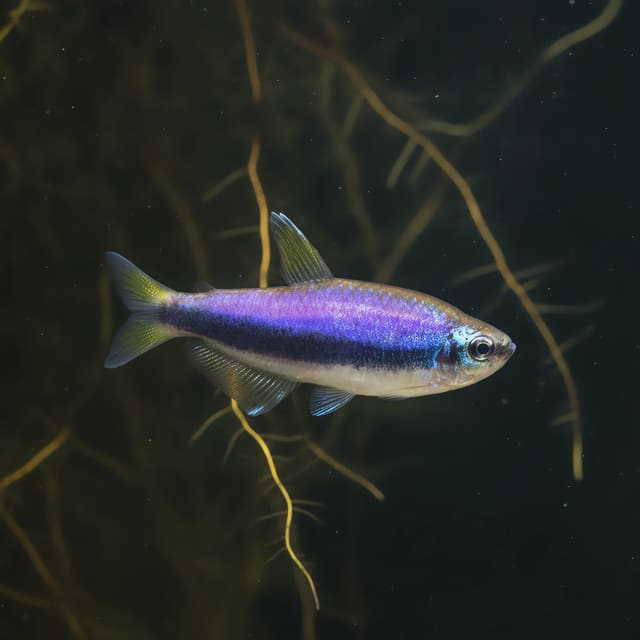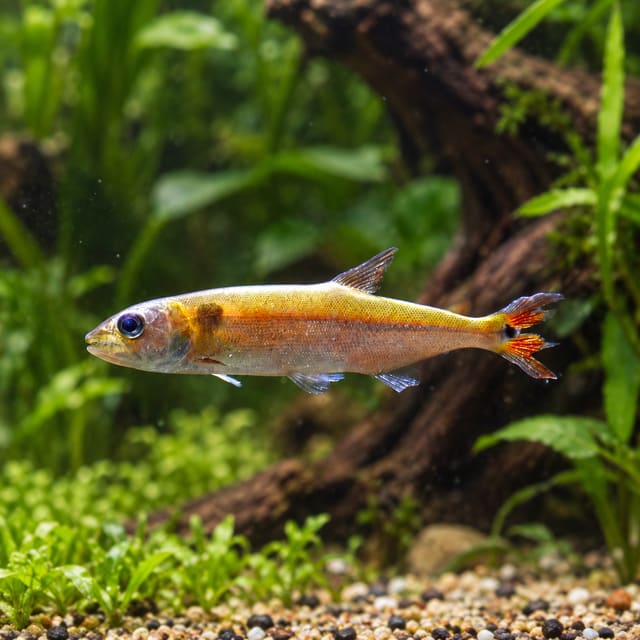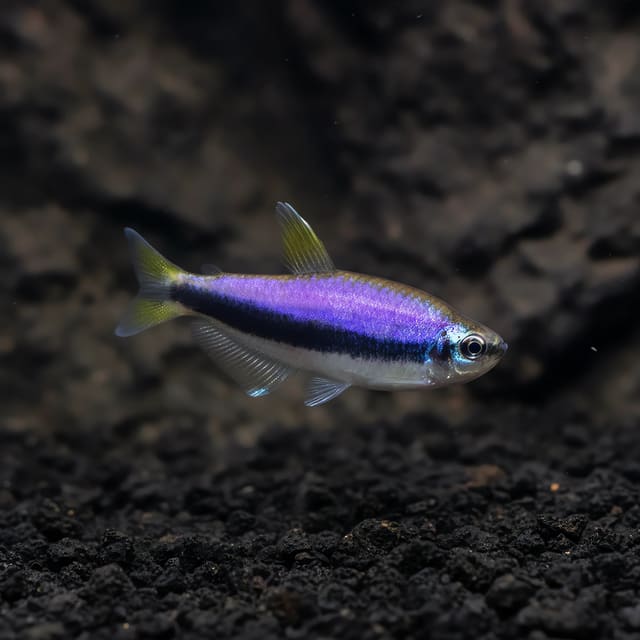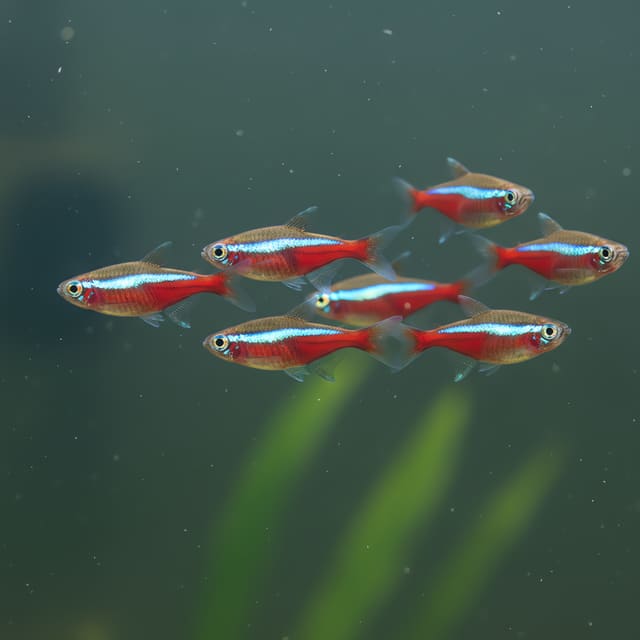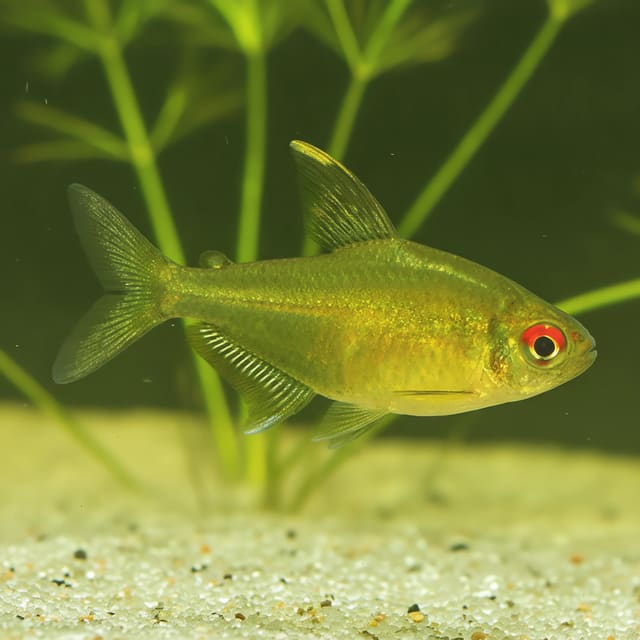
10 × Lemon Tetras (Hyphessobrycon pulchripinnis)
22–27°C · pH 6.5–7.5 · 72L
£16.99

This pack supplies 10 captive-bred Rummy Nose Tetras (Hemigrammus rhodostomus), a peaceful, closely shoaling freshwater fish reaching 5 cm. Keep the group in a mature aquarium at least 90 cm long, with 24–27°C water and calm, similarly sized companions.
Adult size is the maximum length this species reaches at full maturity (scientific sources). The livestock you receive will be younger and smaller. Product-photo provenance and any image-specific limitations are stated on the listing.
Hemigrammus rhodostomus
This pack supplies 10 captive-bred Rummy Nose Tetras (Hemigrammus rhodostomus), a peaceful, closely shoaling freshwater fish reaching 5 cm. Keep the group in a mature aquarium at least 90 cm long, with 24–27°C water and calm, similarly sized companions.
Adult size is the maximum length this species reaches at full maturity (scientific sources). The livestock you receive will be younger and smaller. Product-photo provenance and any image-specific limitations are stated on the listing.
Maintain these water conditions for optimal health and vibrant colors
This pack supplies 10 captive-bred Rummy Nose Tetras, giving you the minimum group recommended for this closely shoaling fish in one purchase. Their defining pattern combines a red head, a slender silver body and a black-and-white striped tail. In a calm aquarium, the group creates coordinated movement across the open swimming area rather than behaving as ten separate display fish.
FishBase records a maximum length of 5 cm and places the wild fish in freshwater habitats of the lower Amazon and Orinoco river basins. Use that 5 cm figure to plan swimming room, filtration capacity and total stocking. FishBase now lists it as Petitella rhodostoma.
| Suits | Not suited to |
|---|---|
| A mature, filtered aquarium at least 90 cm long | An aquarium with detectable ammonia or nitrite |
| Keepers planning a peaceful shoal of at least 10 | A solitary-fish plan or a group below 10 |
| Calm communities with compatible water requirements | Communities containing fish large enough to eat a 5 cm tetra |
| Layouts with open swimming room and nearby shelter | Plans dominated by very boisterous or much larger companions |
The offer: one purchase supplies one pack of 10 fish. The pack has no named centimetre dispatch-size grade; treat the 5 cm adult measurement as a planning figure rather than the size on arrival. Sex is guaranteed only when the selected option explicitly states male or female. This 10 × Rummy Nose Tetras listing has no sex-guaranteed option.
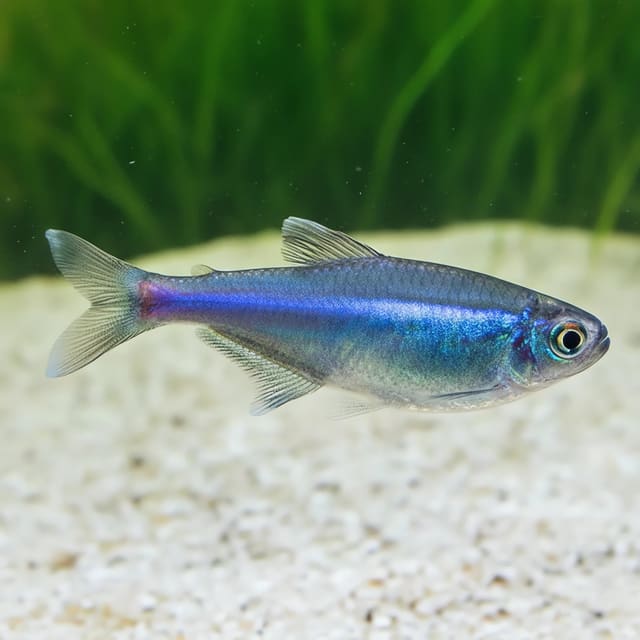
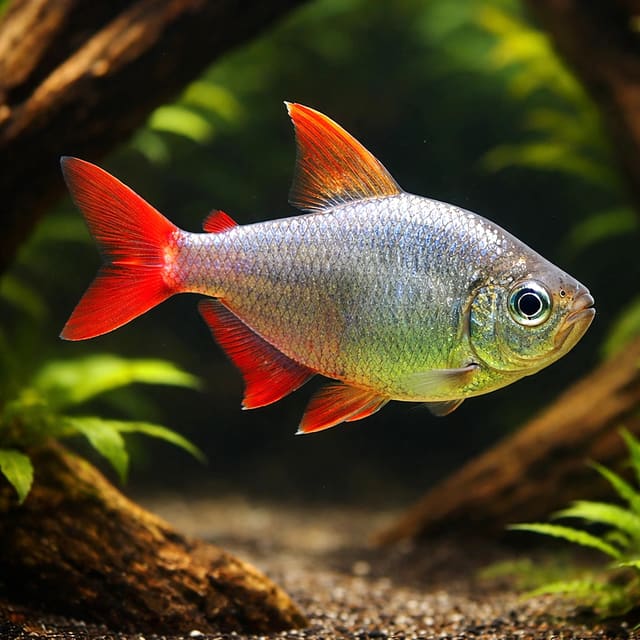
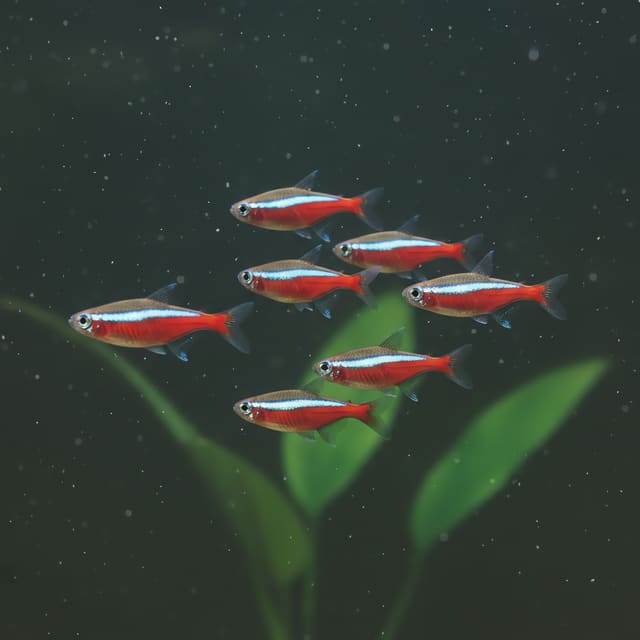
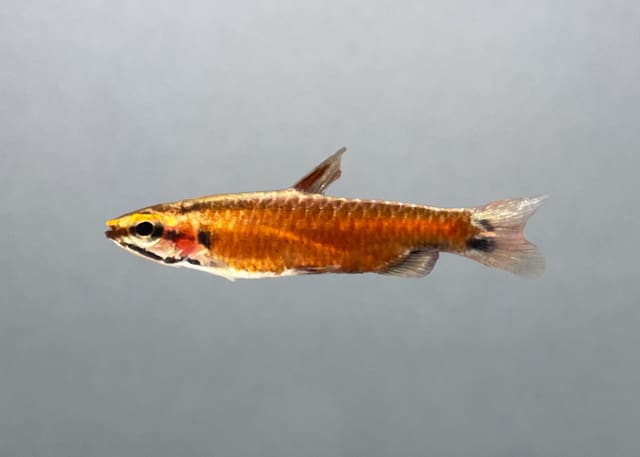
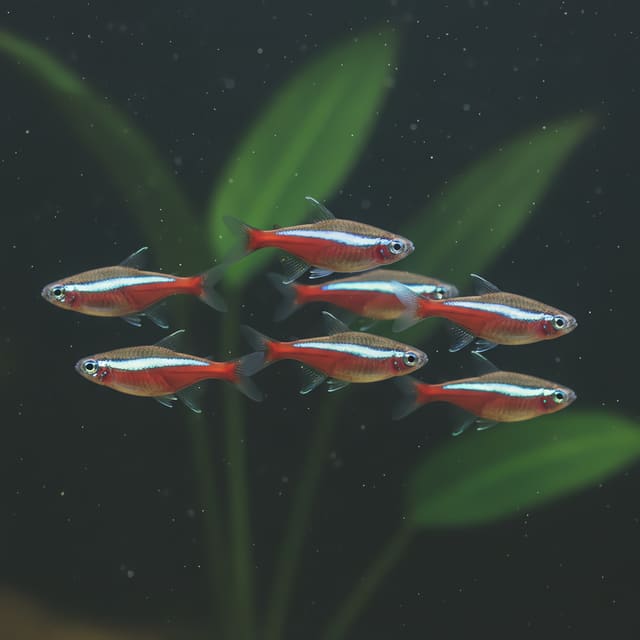
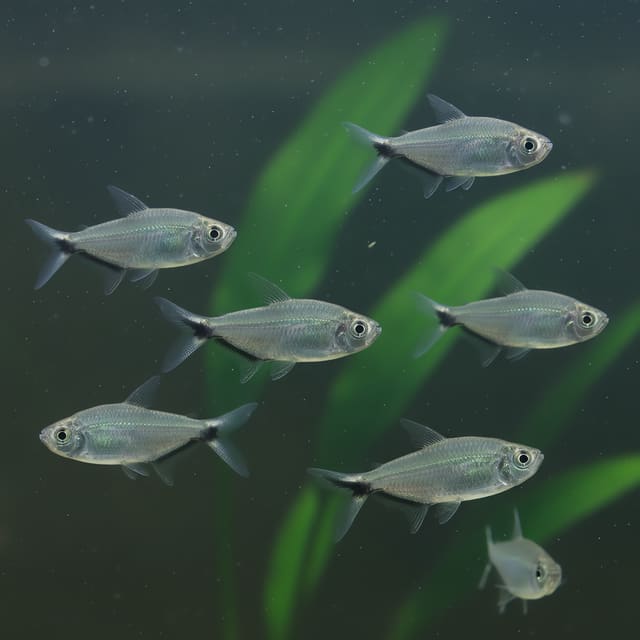
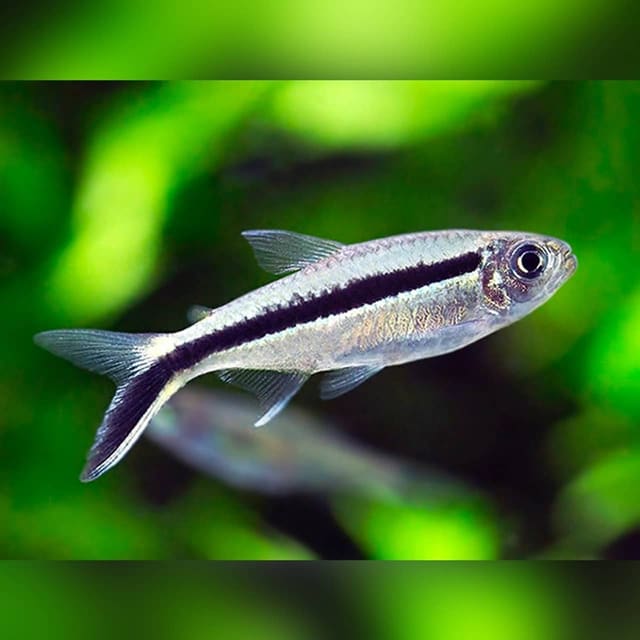
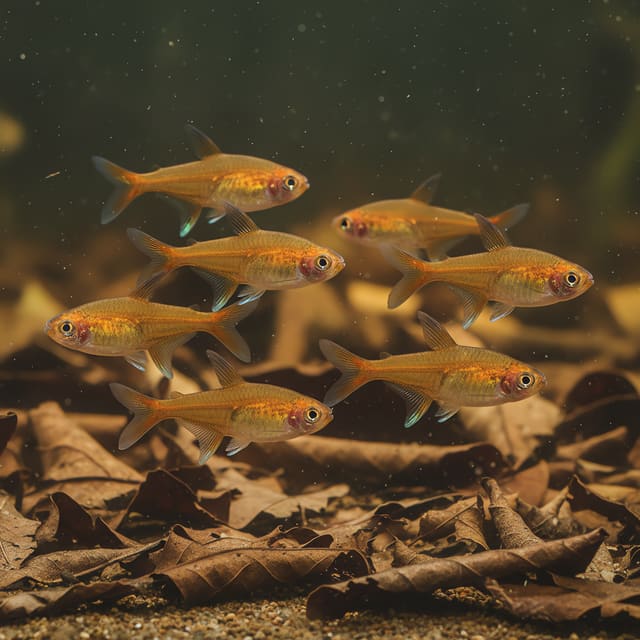
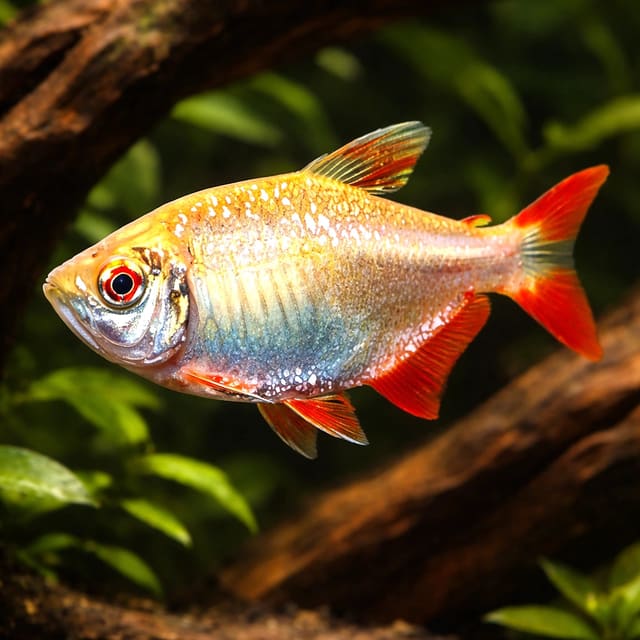
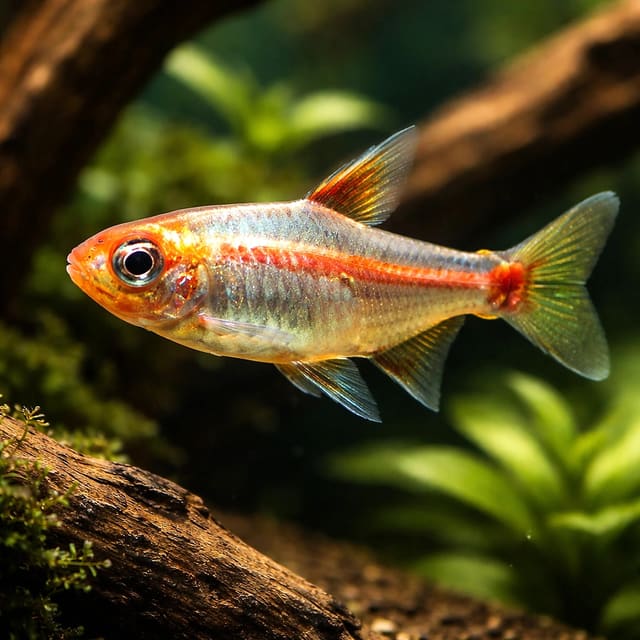
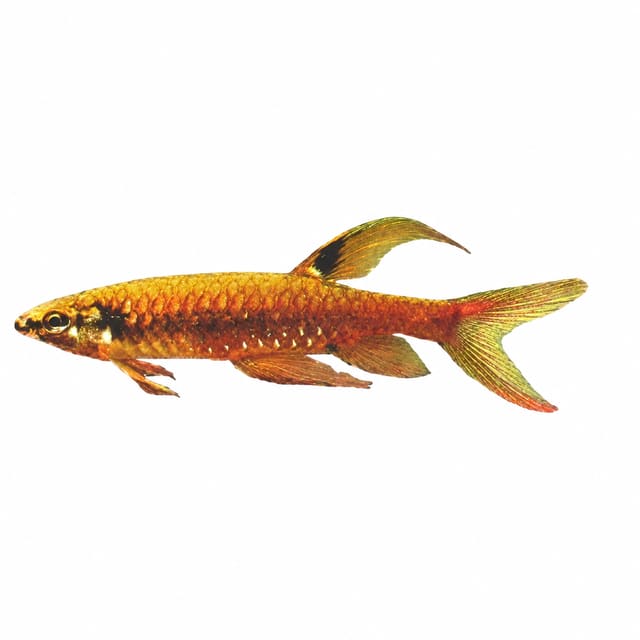
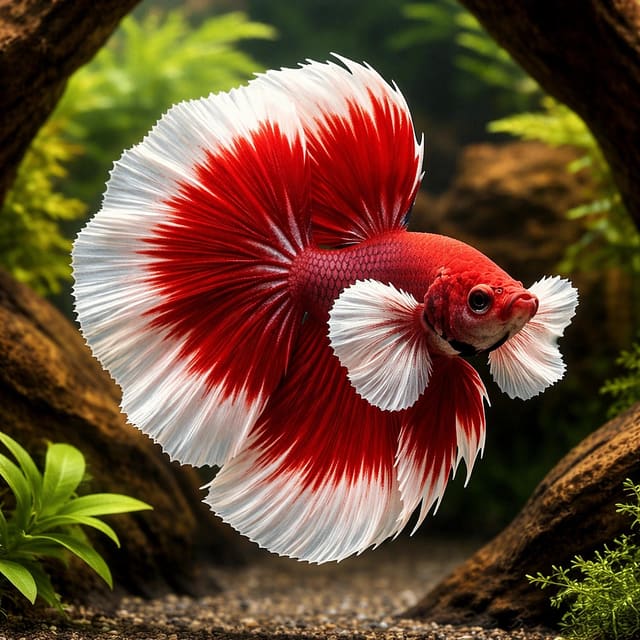
The gallery images are representative of this type of animal rather than photographs of the exact animal supplied, so colours can look slightly different from the live animal.
Seriously Fish gives the aquarium range as 24–27°C, pH 5.5–7.0 and 2–15 dGH. It also recommends a group of at least 10 and an aquarium length of at least 90 cm because these are active swimmers. Those are the central planning limits for this pack.
| Decision | Plan |
|---|---|
| Adult length | Up to 5 cm |
| Group | At least 10; preferably more where space and filtration allow |
| Tank length | At least 90 cm |
| Temperature | 24–27°C |
| pH | 5.5–7.0 |
| General hardness | 2–15 dGH |
A litre figure cannot replace the 90 cm length requirement. Two aquariums with similar volumes can have very different footprints, and this fish needs useful horizontal swimming distance. Start with the length, then assess the filter, existing livestock and open water before deciding whether more than the supplied 10 can be accommodated.
Go ahead when the aquarium has been matured, the filter is working reliably, weekly tests show zero ammonia and zero nitrite, and all residents fit inside the same temperature and chemistry range. Pause when a heater setting, tap-water chemistry or established tank-mate requirement falls outside the overlap. Our water matcher can help compare measured aquarium values with these ranges.
A planted aquarium can work well if it retains open swimming space. A darker arrangement with sand, wood, roots and subdued light is another supported option. Whichever style you choose, prioritise clean water, shelter and an uninterrupted route along the aquarium rather than filling every part of the footprint with décor.
| Layout | How to arrange it |
|---|---|
| Planted community | Use plants for cover around the edges while retaining a broad open lane through the middle. |
| Dark-water style | Use river sand, driftwood or thoroughly dried bark-free beech, twisted roots and dried beech or oak leaves under fairly dim light. |
When using dried leaves, remove ageing material and renew it every few weeks before it rots and fouls the water. Wood and leaves may tint the water like weak tea. Aquarium-safe peat in a filter can also help create that visual style, but do not use décor changes as a substitute for measuring pH and hardness.
Begin with an aquarium at least 90 cm long. Keep a clear route across the middle of the tank so the group can move together, then place shelter towards the back and ends. The fish can live in a standard planted aquarium, but plants should frame the swimming area rather than divide it into narrow pockets.
Provide a secure cover. Keep filtration running throughout the aquarium, while avoiding an arrangement that leaves the group fighting through one concentrated jet. OATA recommends swimming space and a gentle current for smaller tetra species, so spread the return where possible and watch whether the whole shoal can hold position without being pushed into a corner.
If this is your first aquarium, prepare the filter and establish the tank before arranging delivery. Our first tropical aquarium guide explains the preparation sequence.
Set the aquarium between 24 and 27°C, with pH between 5.5 and 7.0 and general hardness between 2 and 15 dGH. Measure the aquarium rather than relying only on the heater dial or a tap-water report. A stable reading inside all three ranges is more useful than repeatedly adjusting the water towards one exact value.
OATA’s tetra and pencilfish sheet gives group guidance of zero ammonia, zero nitrite and nitrate no more than 20 mg per litre above the normal tap-water level. It also places general hardness at 4–12 dGH for the group, which sits inside this fish’s wider 2–15 dGH aquarium range. Use the species limits as the boundary and aim for stability within them.
| Result | Action |
|---|---|
| Ammonia above zero | Pause livestock additions, check the filter and perform appropriate conditioned-water maintenance. |
| Nitrite above zero | Treat it as an urgent water-quality warning and pause feeding or stocking increases while correcting the cause. |
| Nitrate rising unusually | Review feeding, waste removal and the regular water-change routine. |
| pH outside 5.5–7.0 | Do not add the shoal until the aquarium can remain within range. |
| Hardness outside 2–15 dGH | Resolve the mismatch before changing livestock plans. |
Learn what each measurement means in our aquarium water chemistry guide. Record results at the same point in the weekly maintenance cycle so changes are easier to interpret. If a reading shifts, check it again before making a correction and avoid a sudden change that moves temperature or chemistry rapidly.
Colour may fade in alkaline conditions, but colour alone is not a water test. Use a test result to decide what to do, then consider appearance and behaviour alongside it.
The RSPCA explains that a working biological filter converts toxic ammonia to nitrite and then to the safer nitrate. Install and mature that filter before adding the pack. The aquarium is ready when repeated tests show zero ammonia and zero nitrite under the normal routine, not merely when the equipment has been running for a set number of days.
This product adds 10 fish together because it is a pack, so assess the biological capacity for the whole group before purchase. A filter that supports a lightly stocked aquarium may still need careful monitoring after a larger single addition. Test more closely during the first week and respond to any ammonia or nitrite reading immediately.
Flow and biological capacity are separate decisions. A powerful jet does not by itself create a mature biological filter, while a mature filter still needs enough circulation to process aquarium water. Arrange the outlet so the shoal retains a comfortable swimming route, then verify performance through water tests rather than judging it only by visible movement.
Never use faded colour as the only reason to alter filtration or chemistry. Test first, inspect equipment second and make one measured correction at a time.
Rummy Nose Tetras are omnivorous and have small mouths. Offer appropriately sized food that every member of the shoal can take without struggling. Seriously Fish recommends a varied mixture of dried flakes or granules and small live or frozen foods; OATA recommends feeding only what the group can finish within a few minutes once a day.
| Food role | Suitable approach |
|---|---|
| Daily staple | A good-quality flake or small granule sized for a small tetra mouth |
| Variety | Small live or frozen daphnia, bloodworm or tubifex |
| Portion limit | Only the amount finished within a few minutes |
Distribute the portion so the shoal can feed without one area becoming crowded. Watch whether quieter fish reach food before it drops away. If food remains after a few minutes, remove what you can and reduce the next portion. Uneaten food breaks down into waste, increasing the burden on the biological filter.
Variety supports colour development, but more food is not the same as better nutrition. Keep the once-daily limit and rotate suitable food types rather than adding several full portions. Bloodworm and other live or frozen items are additions to a balanced routine, not a reason to increase the total amount.
Do not use an automatic feeding pattern until you have established how much this particular group finishes within a few minutes. The useful measure is the shoal’s consumption and the resulting water quality, not the visual size of a pinch.
Prepare the aquarium before the parcel arrives. Confirm that someone can receive the fish, switch off distracting aquarium lighting if needed, and check temperature, ammonia and nitrite. Do not begin moving décor or changing water chemistry while the fish are acclimatising.
Follow our current delivery and Live Arrival Guarantee policy: acclimatise slowly, float the sealed bag for 20–30 minutes before release and never pour the bag water into the aquarium. The policy also explains the unboxing video needed for a Live Arrival Guarantee claim.
The red head may look less intense during the transition, so base immediate decisions on breathing, balance and water tests rather than colour alone. Keep the environment calm and avoid adding further livestock while you are assessing how the pack settles.
| Checkpoint | What to assess |
|---|---|
| After release | Balanced swimming, breathing and access to cover |
| First feeding | Whether appropriately sized food reaches the group |
| First week | Ammonia, nitrite, feeding response and stable temperature |
| Before new livestock | Stable water tests and enough remaining swimming space |
A close shoal is natural for this tetra, particularly when the fish are responding to a new setting. Judge progress from the combination of stable water, regular feeding and normal swimming rather than expecting one fixed formation throughout the day.
Change 25% of the aquarium water at least once every week. Treat replacement tap water with a conditioner before adding it, and keep the new water close enough to the aquarium conditions to avoid an abrupt temperature or chemistry change. Use a siphon to remove solid waste from the substrate while preserving the open swimming route and established shelter.
Recording results turns routine maintenance into a useful comparison. A single nitrate result tells you where the aquarium is that day; a sequence shows whether feeding, stocking and water changes are keeping waste under control. Aim to prevent nitrate rising more than 20 mg per litre above the normal tap-water level.
| If you notice | Do this |
|---|---|
| Repeated debris build-up | Review feeding and siphon the affected area during weekly changes. |
| Reduced filter flow | Check for blockages and rinse dirty media lightly in removed aquarium water. |
| Rising nitrate | Check portion size, stocking and whether the 25% weekly change is being completed. |
| Ammonia or nitrite | Pause additions and correct the water-quality problem immediately. |
Do not combine every maintenance job into a complete reset. Preserving mature biological filtration is central to stable water. Replace ageing leaves before they rot, remove waste and maintain the equipment, but retain the functioning bacterial population.
At the end of the first month, compare the initial and current records. Stable results, normal feeding and coordinated swimming support the next stocking decision; an unresolved rise means the aquarium needs correction before any addition.
Learn the group’s normal swimming, colour, breathing and feeding response. Individual variation occurs, but a clear change deserves attention because it can reveal a water-quality, feeding or social problem before the cause becomes more serious.
| Change | First response |
|---|---|
| Hanging at the surface | Test water quality and inspect filter operation. |
| Sitting on the bottom | Check temperature, ammonia, nitrite and breathing. |
| Erratic swimming | Test the water and look for sudden environmental changes. |
| Paler or darker colour | Check chemistry, companions and recent disturbance. |
| Faster or slower gill movement | Test water immediately and inspect the whole group. |
| Reduced feeding | Check water, food size and competition at the meal. |
| White spots, fluffy growths or damaged fins | Record what you see, test the aquarium and contact us for health guidance. |
Faded red colour can occur in alkaline conditions, but it is not a diagnosis. Compare pH with the 5.5–7.0 range and look at behaviour, breathing and appetite before deciding on a response. Avoid rapidly changing chemistry based on appearance alone.
Healthy-condition checks include clear eyes, intact scales, undamaged fins, steady swimming and an appropriate feeding response. These signs are more useful together than any single colour cue. Do not begin a treatment solely because a fish is pale; identify the husbandry problem or obtain guidance for the observed signs first.
This is a peaceful tetra that may be outcompeted by very boisterous or much larger companions. Avoid fish large enough to eat it. The first compatibility screen is therefore size and temperament: choose calm fish that are unlikely to chase the shoal, monopolise food or treat a 5 cm adult tetra as prey.
| Check | Passing condition |
|---|---|
| Predation | The companion is not large enough to eat a 5 cm tetra. |
| Temperament | It is peaceful enough not to harass or continually displace the group. |
| Feeding | The rummy noses can reach their small food without being outcompeted. |
| Water | All fish share an overlap within 24–27°C, pH 5.5–7.0 and 2–15 dGH. |
Seriously Fish identifies other small tetras, pencilfish, Corydoras, small Loricariids, smaller rasboras, some barbs, anabantoids and certain dwarf cichlids as possible community companions. These are candidates for assessment, not universal matches. Each exact species still needs compatible adult size, behaviour, water requirements and space.
Bottom-dwelling fish do not automatically solve stocking pressure. Corydoras or small Loricariids may occupy a different area, but they still add waste, require their own social and habitat planning, and share the same filter capacity. Likewise, another shoaling fish adds a second complete group rather than simply filling unused visual space.
If the rummy noses repeatedly hang back while another fish takes the food, the community has failed the competition screen even if there is no chasing. Reassess food distribution and the companion mix. If you are uncertain about an exact combination, contact us once you have the aquarium dimensions, water values, filter and complete livestock list.
Keep this supplied group of 10 together. If you want a larger shoal, add fish only when the aquarium remains at least 90 cm long, water tests stay stable and the filter can support the increased feeding and waste. More fish may strengthen the group display, but the decision must follow capacity rather than appearance alone.
A simple example is a 90 cm aquarium containing no predators but already carrying a large, fast-feeding community. It passes the length check yet may fail the competition or filtration check. Conversely, an aquarium with peaceful residents and excellent water still fails if it is shorter than 90 cm. All the conditions must work together.
| Observation | Stocking response |
|---|---|
| Stable tests and calm feeding | Continue observing before considering another addition. |
| Detectable ammonia or nitrite | Add nothing and correct filtration or loading. |
| Shoal crowded out at meals | Change the community plan rather than increasing stock. |
| Persistent chasing or hiding | Reassess temperament, territory and cover. |
Compatibility can change as other fish grow. Recheck adult dimensions and temperament when planning every addition, and retain enough capacity for all residents at their full planning size.
They are one captive-bred pack of 10 peaceful freshwater tetras. Each fish can reach 5 cm, and the species forms a close shoal in an appropriately arranged aquarium.
A purchase of 10 × Rummy Nose Tetras supplies one pack containing 10 fish. That pack meets the recommendation to keep this species in a group of at least 10.
Each fish can reach 5 cm. Use that adult planning length when assessing swimming room, filtration and the space required by the complete community.
Use a mature, filtered aquarium at least 90 cm long, with open swimming space, nearby shelter and no detectable ammonia or nitrite.
Keep the fish as a group of at least 10 rather than separating individuals. This pack supplies that minimum group in one purchase.
Maintain 24–27°C, pH 5.5–7.0 and general hardness of 2–15 dGH. Keep ammonia and nitrite at zero and nitrate no more than 20 mg per litre above the tap-water level.
Feed an appropriately sized quality flake or small granule once a day, offering only what the shoal finishes within a few minutes. Add variety with small live or frozen daphnia, bloodworm or tubifex.
Start filming with the parcel still sealed before opening it, and continue in one take until the fish are shown inside the sealed bag. Then float the bag for 20–30 minutes before release, acclimatise slowly and never pour the bag water into the aquarium.
Choose peaceful, similarly sized fish that share 24–27°C, pH 5.5–7.0 and 2–15 dGH. Avoid fish large enough to eat it, and screen boisterous companions for chasing or food competition.
No reviews for this item yet. Bought one? Honest reviews only, good or bad.
What customers say about ordering from us
I have a small group of long finned mountain minnows. So was delighted to be able to order ten of this variety to increase the genetics in my tank . The ones I recieved are healthy but it’s to early to give a verdict on wether they are of a long finned type since they are small currently.
Gordon Walker · 23 Sept 2026
100% success travel and "installation". Pleased with quality of purchase. The Siamese fighter a bit "shy" so have not yet seen him at his best yet but looking good. Happy customer. GG
George E Garratt · 21 Sept 2026
Reviews of our shop, collected by Judge.me, an independent third-party review collector. Newest first.