Orange Flame Tetra (Hyphessobrycon flammeus)
20–26°C · pH 5.5–7.5 · 54L
£4.99

A small, peaceful upper Rio Tapajos tetra with a dark lateral stripe and warm copper-red highlights. Best kept as a proper shoal in a planted, stable community aquarium.
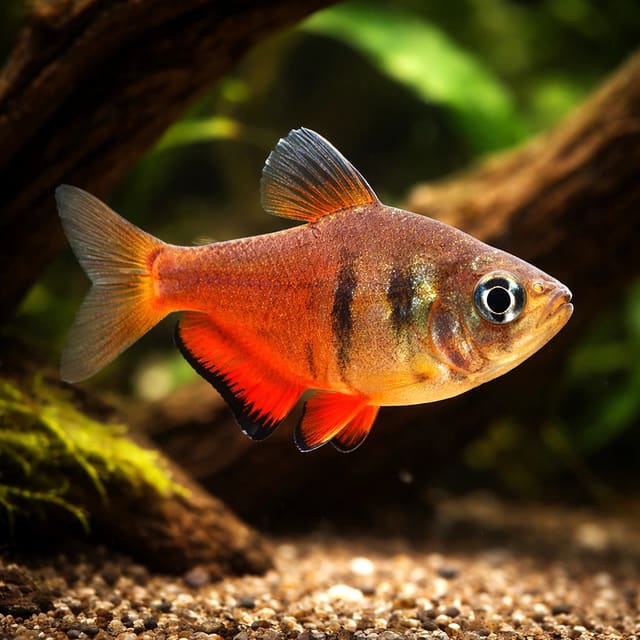
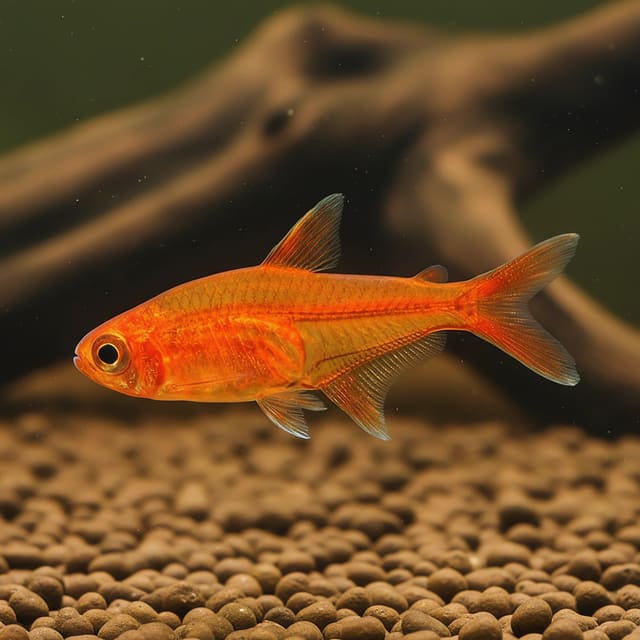
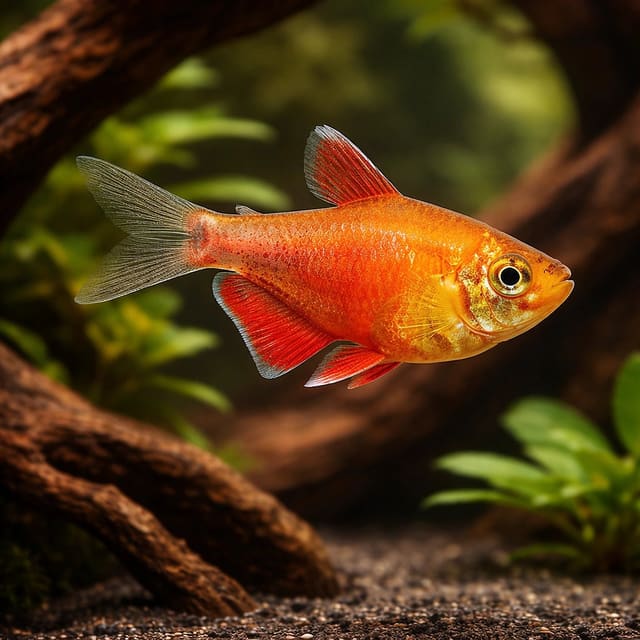
Adult size is the maximum length this species reaches at full maturity (scientific sources). The livestock you receive will be younger and smaller. Product-photo provenance and any image-specific limitations are stated on the listing.
Hyphessobrycon vilmae
Shoaling fish: kept in a group they feel safer, stay calmer and show their best colour.
Confirm your email, then we’ll send an availability message for this exact item if it returns within 180 days.
This request is only for this product—no newsletter or other promotions. A mail-provider retry may very rarely duplicate the same availability message. Unconfirmed addresses are removed after 48 hours. See our privacy policy.
A small, peaceful upper Rio Tapajos tetra with a dark lateral stripe and warm copper-red highlights. Best kept as a proper shoal in a planted, stable community aquarium.
Adult size is the maximum length this species reaches at full maturity (scientific sources). The livestock you receive will be younger and smaller. Product-photo provenance and any image-specific limitations are stated on the listing.
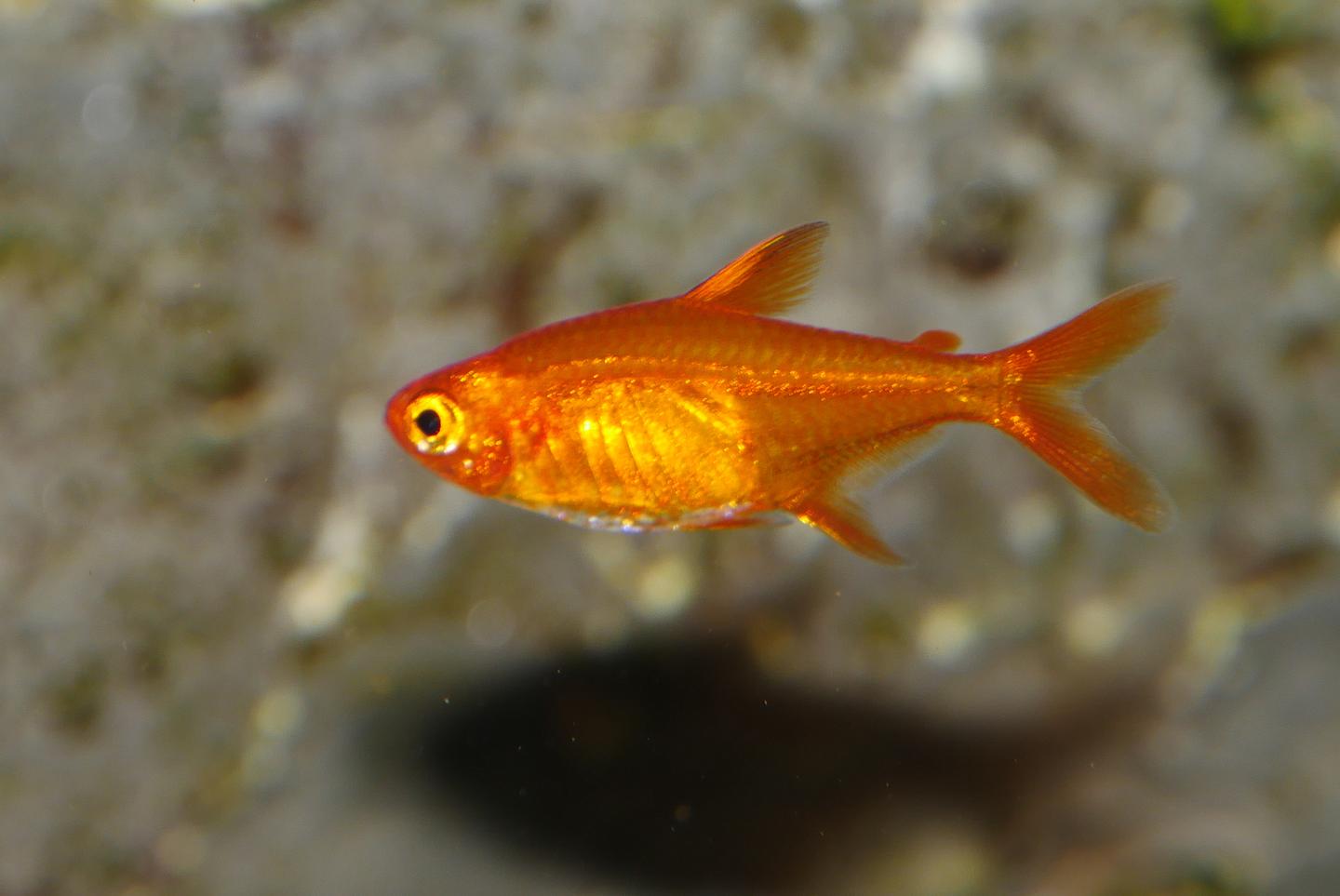
Ember tetras are very small Brazilian social fish, with a maximum recorded length of 2.0 cm excluding the tail. Keep them only in a fully cycled, stable aquarium. We recommend a group of at least 10 and about 45 litres with a 45 × 30 cm footprint rather than using a litres-per-fish formula.
Maintain these water conditions for optimal health and vibrant colors
Tetra Wilmae, also traded as the Chocolate Neon Tetra or Vilmae Tetra, is a small South American shoaling tetra best identified by its accepted scientific name, Hyphessobrycon vilmae. FishBase, Aquarium Glaser and recent trade references use this spelling, and the listing keeps the familiar Tetra Wilmae trade name so aquarists can still recognise the fish.
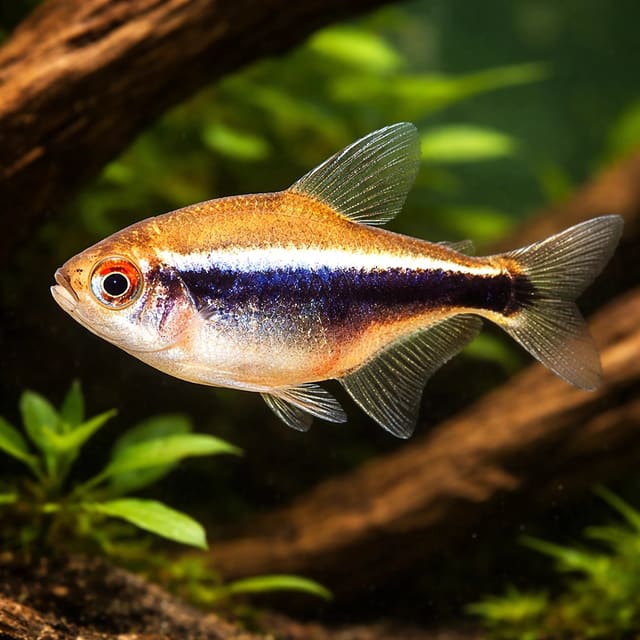
This is a subtle, elegant tetra rather than a loud show fish. Settled adults usually show a warm silver to copper body, a dark horizontal stripe and a reddish to orange line above it, giving the fish its Chocolate Neon comparison. In a planted aquarium with soft light and a secure group, males can show stronger colour and fine pale edging in the fins, while females are usually a little fuller in the body.
Reliable references place Hyphessobrycon vilmae in the upper Tapajos system in Brazil. That means it should be treated as a warm-water South American characin from soft, mineral-poor water rather than a generic community tetra from an unknown source. It is adaptable in the aquarium, but it looks and behaves best when the tank gives it cover, stable chemistry and a proper shoal.
The species remains small. FishBase records a maximum standard length of 2.9 cm, with aquarium specimens around 4 cm total length, so it is well suited to planted community aquariums where large or boisterous fish are avoided. The dark lateral stripe, warm red-copper highlight and neat body shape make it especially attractive against green plants, botanicals and darker substrate.
Colour can vary between individuals and with settling time. Aquarium Glaser notes that some wild-collected fish can appear especially golden, while males often show more intense colour than females. For customers, the important care point is simple: do not judge the fish only in the transport bag. Give the group clean water, shade, plants and a week or two to settle before expecting full colour.
Tetra Wilmae is often compared with the Black Neon Tetra because the body pattern has the same calm, horizontal look, but the effect is warmer. Instead of a bright white neon line, this fish usually shows a red-copper highlight above the dark stripe, especially once settled. It is also more unusual in the trade, so it suits aquarists who like the behaviour of classic small tetras but want something less common than Neon Tetras, Ember Tetras or Black Neons.
The care approach is similar to other peaceful Hyphessobrycon species: keep a group, avoid rough tank mates, give them plant cover and offer a varied small-food diet. The difference is that this species benefits from a little more attention to water softness and calm surroundings. It is not difficult when the aquarium is mature, but it is not the best choice for a brand-new tank that is still unstable.
A 60 litre aquarium is the sensible minimum for a small group, but a longer 75 litre or larger tank is preferable because it gives the shoal room to move and makes the display more natural. Use a planted layout with open swimming space at the front or centre, then provide structure around the edges with fine-leaved plants, mosses, driftwood, floating plants or botanicals.
If you are building a display around this species, think in terms of a quiet mid-water shoal. A group of eight or more will move more confidently than a token pair, and the extra individuals spread any minor chasing between males. In planted aquariums the fish usually hold together loosely, then tighten the shoal when startled or during feeding. That behaviour is part of the appeal and is lost when the fish is kept singly.
Subdued lighting helps the colours show more naturally. A dark substrate, leaf litter and tannin-stained water are all suitable if they fit the rest of the aquarium, but this fish does not require a blackwater tank to thrive. What matters most is stability: mature filtration, zero ammonia and nitrite, low nitrate and gentle to moderate flow. Avoid very bright, bare aquariums where small tetras feel exposed.
Keep a secure lid on the aquarium. Small characins can jump when startled, especially during water changes, netting or first introduction. Leave enough quiet cover for the shoal to retreat, but avoid overcrowding the middle of the tank with hardscape because the fish should still be able to move as a group.
A stable temperature of 22-26C suits this species well. For pH, aim for mildly acidic to neutral water, roughly 5.8-7.2. Soft water is preferred, and the fish is likely to show its best colour and breeding behaviour in softer, slightly acidic conditions, but it can adapt to moderately hard neutral water when changes are gradual and water quality is high.
Do not chase numbers with sudden chemical changes. If your tap water is outside the ideal range, improve stability first, then make any adjustment slowly through water-change routine, botanicals, RO blending or appropriate remineralisation. A small tetra is more likely to suffer from abrupt swings than from a steady, slightly imperfect reading.
Tetra Wilmae is an omnivorous micropredator. Use a fine tropical flake, micro granule or small soft pellet as the daily base, then rotate small frozen or live foods such as daphnia, cyclops, baby brine shrimp, mosquito larvae or finely chopped bloodworm. Foods should be small enough for the fish to swallow comfortably.
Feed modest portions once or twice daily, only what the group can clear quickly. Extra frozen foods are useful for conditioning and colour, but they should not replace a balanced staple. A mixed diet supports steady condition, stronger colour and more natural mid-water foraging behaviour.
This is a peaceful shoaling tetra for calm community aquariums. Keep it with similarly sized species that enjoy comparable water conditions: small South American tetras, pencilfish, hatchetfish, peaceful rasboras, Corydoras, Otocinclus, small whiptail catfish and carefully chosen dwarf cichlids can all work in the right layout.
For a biotope-inspired or soft-water community, combine Tetra Wilmae with other small characins and bottom dwellers that do not dominate feeding time. For a general planted community, choose tank mates that are calm enough to let the shoal feed in the open. If food is disappearing before the tetras reach it, use smaller sinking or slow-falling foods and feed in more than one area of the aquarium.
Avoid large predators, aggressive cichlids, fin-nipping barbs and fast, boisterous fish that outcompete small tetras at feeding time. Very large tank mates may view a 3-4 cm tetra as food. The fish is best bought as a shoal, not as a single specimen, because group security is what brings out normal behaviour and colour.
Like many small characins, Hyphessobrycon vilmae is expected to be an egg scatterer with no parental care. Breeding is not guaranteed in a display aquarium because eggs and fry are easily eaten. If attempting it, condition adults with small live and frozen foods, use soft acidic water, provide fine plants or spawning mops, and remove adults after spawning.
These notes are included for aquarists who like to understand the species, not as a promise that every home aquarium will produce fry. For most keepers, the main goal should be a settled, well-fed shoal in clean, stable water.
When your fish arrive, turn off bright aquarium lights and float the sealed bag to equalise temperature. Then add small amounts of aquarium water gradually before release. A slow acclimation is especially useful for small soft-water fish because it reduces stress after transport.
Tetra Wilmae is a good choice for aquarists who want a less common South American tetra with natural colour, peaceful behaviour and real planted-tank character. It is small, but it is not a disposable filler fish. It deserves a mature aquarium, a proper group and tank mates chosen around its size and temperament. Orders are supported by Tropical Fish Co's Live Arrival Guarantee when the stated delivery and acclimation terms are followed.
Care and identity notes were checked against FishBase for Hyphessobrycon vilmae, Aquarium Glaser's Chocolate Neon Tetra notes, trade information from The Wet Spot and Aqua Imports, and the Amazonas Magazine report on rare Vilmae Tetras from the upper Rio Tapajos.
Max adult size is the length this species reaches at full maturity (from scientific sources). The livestock you receive will be younger and smaller. Product-photo provenance and any image-specific limitations are stated on the listing.
Peaceful shoaling tetra. Keep in a group of at least 6, with 8-10+ preferred for better confidence and colour.
Always research specific species before adding them to your tank. Consider:
No reviews for this item yet. Bought one? Honest reviews only, good or bad.
What customers say about ordering from us
I have a small group of long finned mountain minnows. So was delighted to be able to order ten of this variety to increase the genetics in my tank . The ones I recieved are healthy but it’s to early to give a verdict on wether they are of a long finned type since they are small currently.
Gordon Walker · 23 Sept 2026
100% success travel and "installation". Pleased with quality of purchase. The Siamese fighter a bit "shy" so have not yet seen him at his best yet but looking good. Happy customer. GG
George E Garratt · 21 Sept 2026
Reviews of our shop, collected by Judge.me, an independent third-party review collector. Newest first.