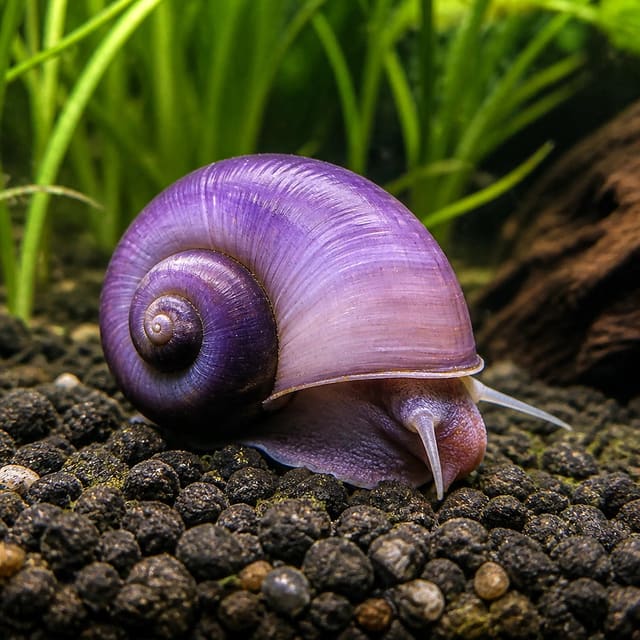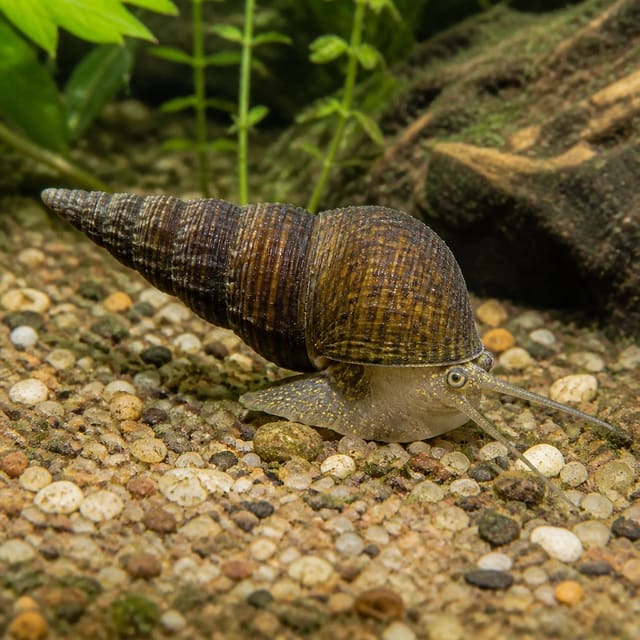
Easy
Parallel Nerite Snail (Neritina sp.)
17–27°C · pH 6.5–8
£4.99

Zebra Horned Nerite Snail (Clithon sp.), supplied as one snail per quantity at approximately 0.5–1 cm. For mature, filtered freshwater aquariums with stable mineral-bearing water and established grazing surfaces.
Clithon sp.
Lives in groups: kept together they stay settled, active and show their best colour.
Minimum of 2 per order.
Zebra Horned Nerite Snail (Clithon sp.), supplied as one snail per quantity at approximately 0.5–1 cm. For mature, filtered freshwater aquariums with stable mineral-bearing water and established grazing surfaces.
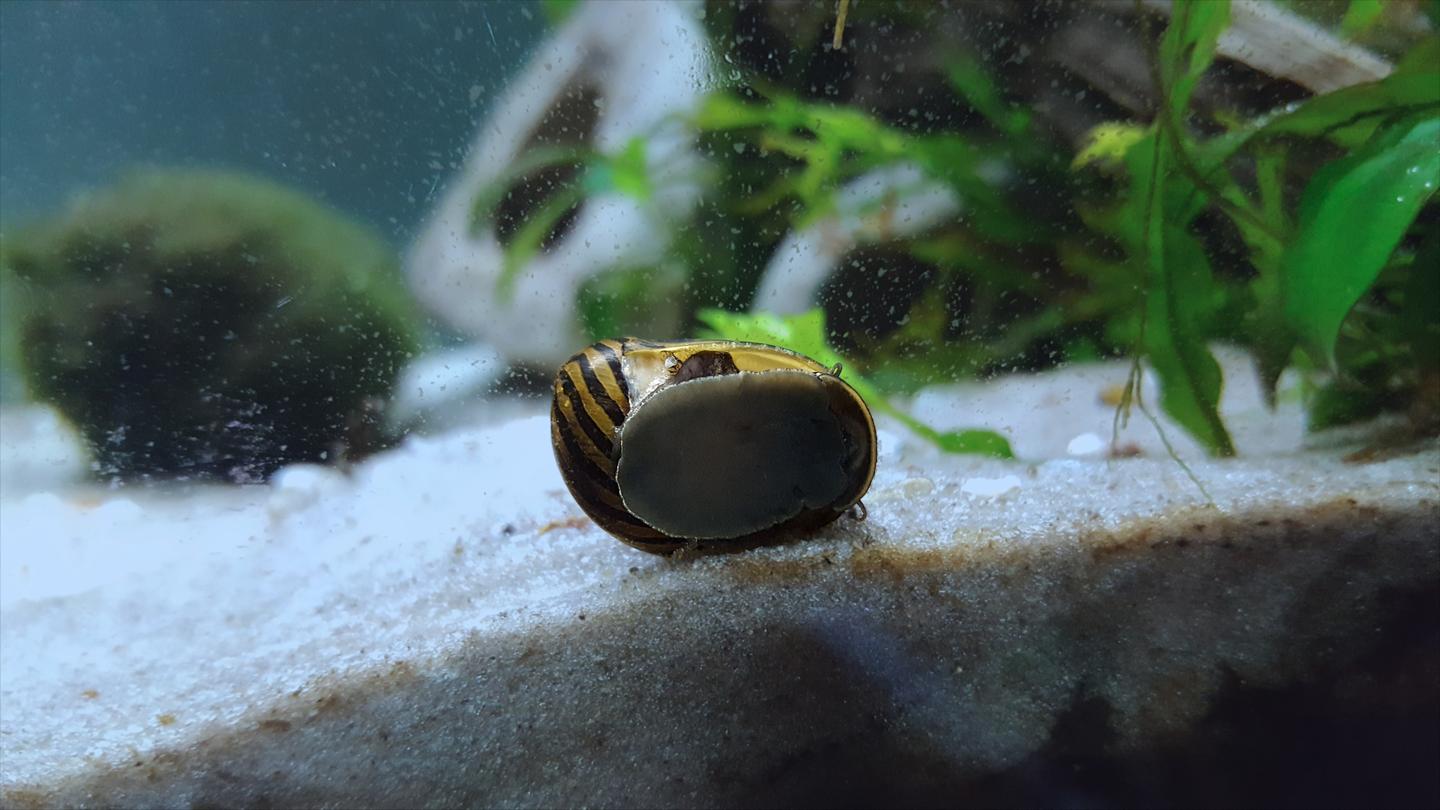
Nerite snail is a trade umbrella, not one species. Confirm the supplied taxon and holding water, use a mature covered aquarium with established grazing surfaces, stock from food availability rather than a litre formula, and treat egg capsules, medicines and tank mates as species-specific decisions.
Maintain these water conditions for optimal health and vibrant colors
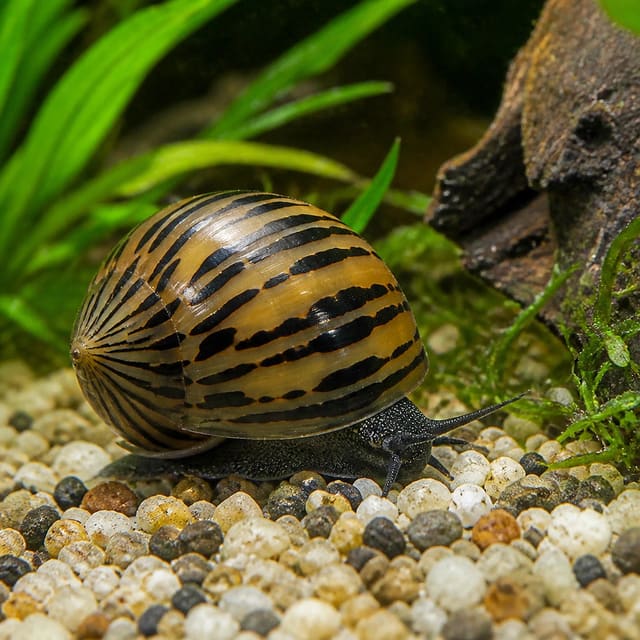
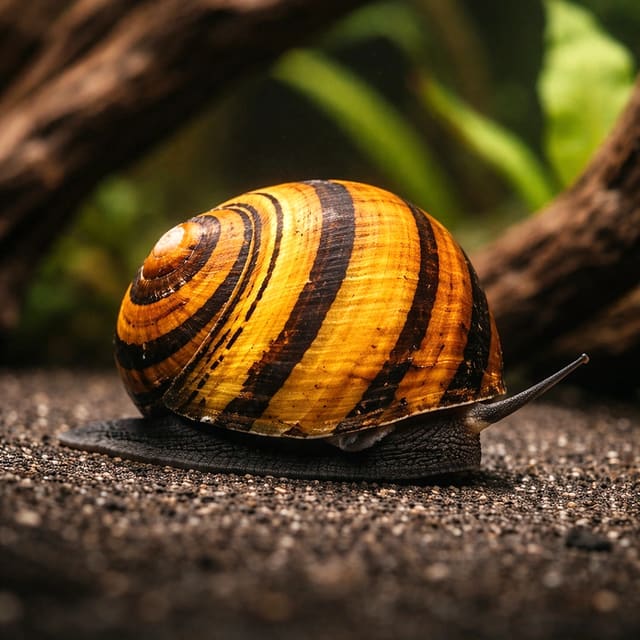
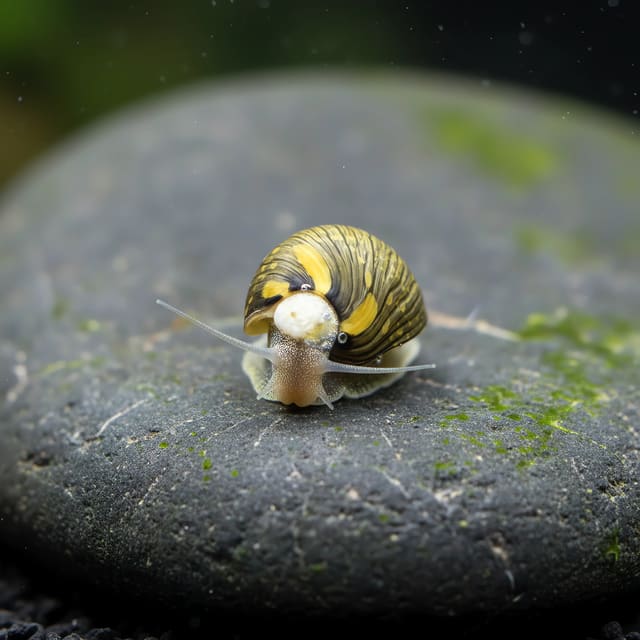
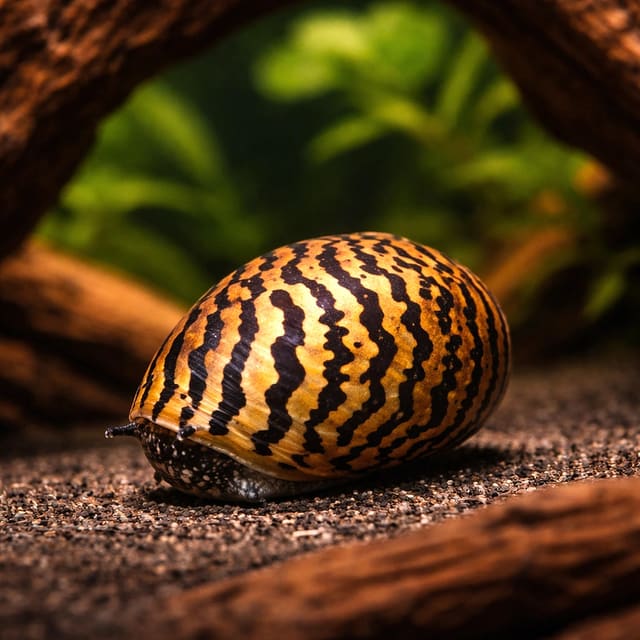
Zebra Horned Nerite Snail is the trade name for this small, boldly patterned Clithon snail. The exact supplier description is “Clithon / thorn zebra”, so the responsible scientific identity for the animal offered here is Clithon sp. The yellow-and-dark bands and horn-like shell projections create its familiar zebra-horned appearance, although every living snail has its own colour, pattern and shell shape.
One selected quantity buys one snail. It is not a pair or pack, including when a gallery scene shows two animals. The supplier dispatch grade is approximately 0.5–1 cm. This is a size band rather than an exact measurement for every arrival. The supplier also records growth up to 3 cm, but final size and apparent shell length can vary with the individual, maturity and whether projections are included when measuring.
This is an intermediate-care invertebrate for a mature, biologically filtered freshwater aquarium. It needs established surfaces to graze, additional suitable food when natural growth is insufficient, stable mineral-bearing water and protection from predators and copper. It should not be added to a newly filled aquarium simply because algae is visible.
The supplier parameters for this stock are 19–26°C, pH 6.8–8.5 and 10–31 dGH. Maintain conditions steadily within those ranges rather than aiming for an extreme or changing the aquarium abruptly. Ammonia and nitrite must remain at zero. Check the aquarium itself before ordering; appearance alone cannot confirm that water is biologically or chemically suitable.
| Quick fact | Zebra Horned Nerite Snail |
|---|---|
| Identity | Clithon sp.; supplier description “Clithon / thorn zebra” |
| Family | Neritidae |
| Sale unit | One snail per selected quantity |
| Dispatch grade | Approximately 0.5–1 cm |
| Supplier adult field | Grows up to 3 cm |
| Temperature | 19–26°C |
| pH | 6.8–8.5 |
| General hardness | 10–31 dGH |
| Food | Established surface growth plus suitable supplementary invertebrate food |
| Care level | Intermediate |
Use a cycled, filtered aquarium with zero ammonia and nitrite, stable temperature and measured pH and hardness. Make sure there is established grazing area, a plan for supplementary feeding, a secure cover and no snail-eating tank mates.
A Zebra Horned Nerite can contribute useful grazing on aquarium surfaces, but it is not a guaranteed solution to every form of algae. It still needs feeding once readily edible growth becomes scarce, while the aquarium still needs testing, filtration and ordinary maintenance. Choose it as livestock rather than as a disposable cleaning tool.
Where an order meets the applicable conditions, livestock may be covered by the current Live Arrival Guarantee. Postcode coverage, dispatch arrangements, exclusions and evidence requirements are set out in the current delivery policy. Read those terms and prepare the aquarium before ordering.
Each increase of the basket quantity adds one living snail. For example, selecting quantity three means three individual snails; it does not mean three pairs or three wholesale packs. The supplier’s packing information concerns trade logistics and does not change the retail sale unit.
The expected dispatch grade is approximately 0.5–1 cm. Small shells can be difficult to measure consistently, particularly when their projections are included by one person and excluded by another. Treat the stated grade as a practical supplier band, not as a certificate that every shell will have an identical measurement.
The supplier’s “grows up to 3 cm” field is useful for longer-term planning, but it is not a promise that every animal will reach exactly 3 cm. The stock is identified at genus level, individuals mature differently and horn-like projections affect apparent dimensions. Allow for growth while concentrating on aquarium stability, grazing area and the requirements of every other inhabitant.
Buy only the quantity that the aquarium can feed and support. Increasing the number does not create a breeding pair; base it on available grazing, space and the needs of the complete community.
Natural appearance varies. A snail may have broad or narrow bands, different proportions of yellow and dark colour, and a different number, direction or length of shell projections. Prior wear or normal growth can also leave one projection shorter than another. These differences are expected in living stock and do not make a naturally varied individual the wrong trade type.
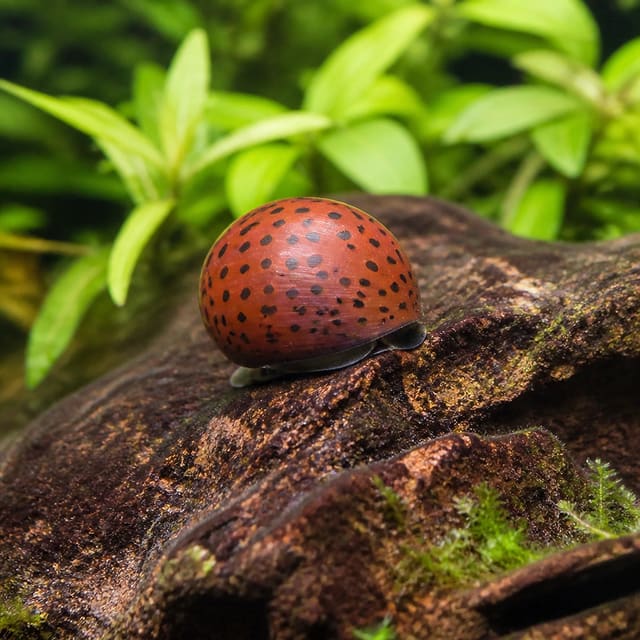
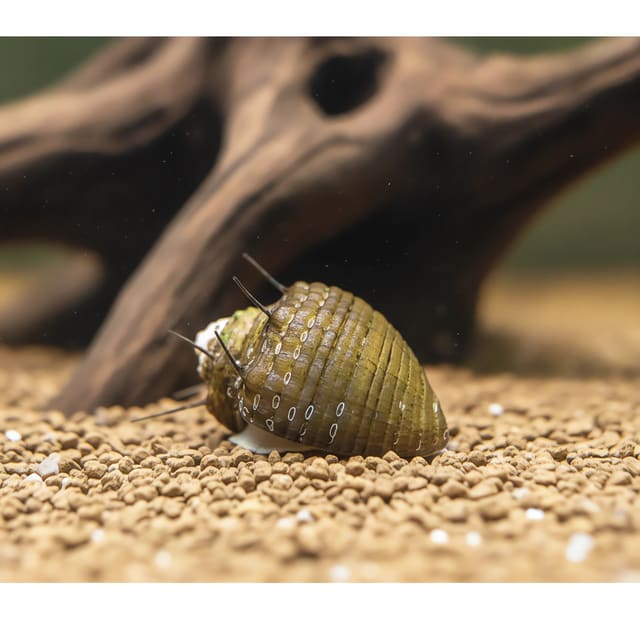
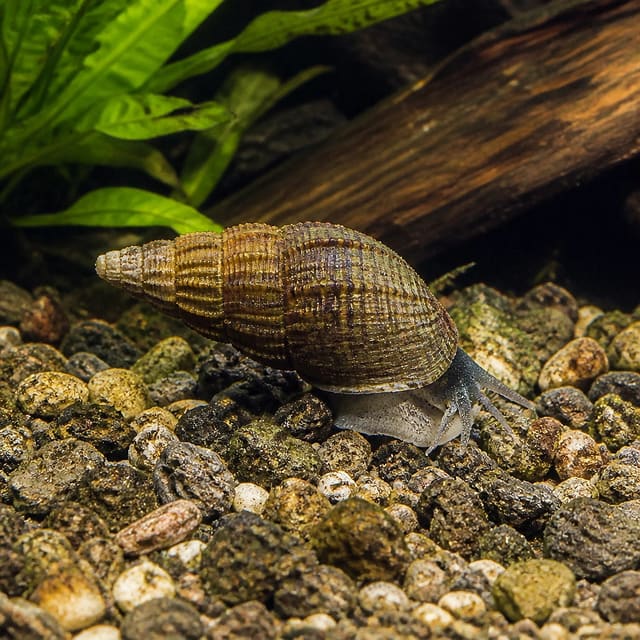
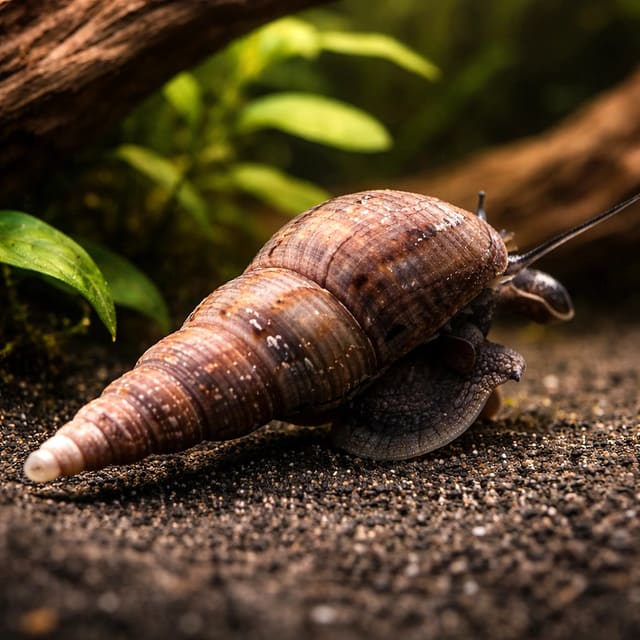
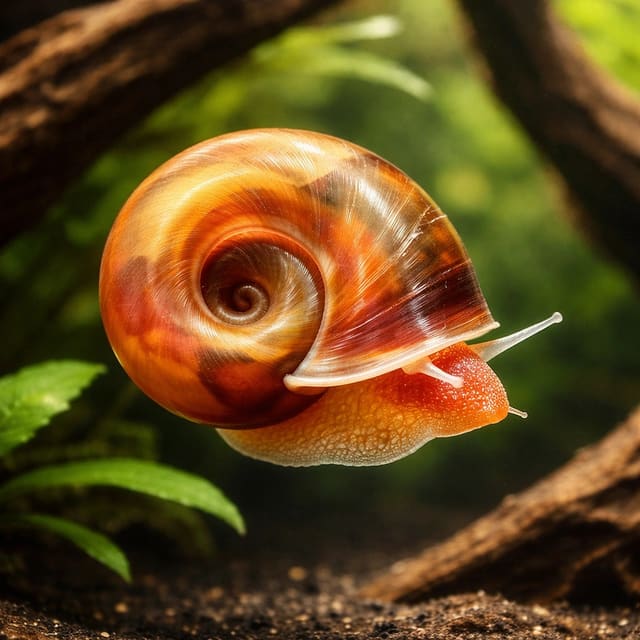
Gallery images have been digitally enhanced to improve image quality from source photographs. They show the listed animal type; natural colour, pattern, size and maturity can vary between live animals.
The gallery includes a two-animal planted scene, but one snail is supplied per purchase. The photographs are not a scale guide or a record of the exact individual selected for dispatch.
The safest identity for this offer is Zebra Horned Nerite Snail (Clithon sp.) because the supplier identifies it as “Clithon / thorn zebra” without confirming a species. That description supports the genus and recognisable trade form, but not a claim that every animal has been anatomically identified as one exact species.
Clithon corona is a recognised species in the family Neritidae, as recorded by OBIS. It is relevant taxonomic context for zebra-horned snails in the trade, but the existence of that valid species does not prove that each snail in this stock is C. corona.
Detailed identification within this group can depend on anatomical characters that cannot be confirmed from a trade label or enhanced photograph. Haynes’ comparison of Clithon and Neritina discusses opercular and reproductive anatomy used in distinguishing these snails. Those features are beyond what can responsibly be inferred from shell stripes alone.
This distinction matters to the buyer because exact-species certainty can lead to overconfident claims about final size, habitat and reproduction. Here, the supplier information controls the animal being offered: genus-level Clithon, the zebra-horned trade appearance, a 0.5–1 cm dispatch grade and the stated water ranges.
The exact capture or breeding country for the current stock is not stated. The listing therefore does not describe the animals as wild-caught from a particular locality or as captive-bred. It also does not offer locality-certified specimens.
A field study recorded C. corona in an upper mangrove setting, providing useful ecological context for that recognised species; see Takada’s neritid distribution study. This does not establish the exact species or origin of the stock sold here, and it is not a reason to add salt to a freshwater community aquarium.
A good home is a mature freshwater aquarium with effective biological filtration, stable tropical conditions and a selection of established hard surfaces. Glass, aquarium-safe rock, wood and plant leaves can all provide grazing area. The snail also needs access to a suitable supplementary food if those surfaces no longer carry enough edible growth.
The aquarium should be covered securely. Small snails can reach the waterline and find openings around cables, pipes or filter equipment. Inspect gaps before delivery rather than waiting until an animal has explored them. The cover must still allow the aquarium’s normal gas exchange and safe operation.
Do not judge suitability from visible algae alone. A recently filled tank can develop surface growth without having a mature biological filter. Conversely, an established but heavily cleaned aquarium may be chemically stable while offering too little food. Both biological maturity and food availability need to be considered.
Tank volume by itself is not a complete stocking rule. The supplier does not set a minimum litre figure for this animal, and no universal volume can guarantee a suitable home. A larger, stable aquarium usually offers more water volume and grazing area, but maturity, surface area, filtration, oxygenation, existing livestock and feeding competition remain important.
Two aquariums of equal volume can be very different homes. One may contain mature wood and rock with plentiful surface film; another may have recently sterilised decoration and several competing grazers. Assess the whole system rather than following a fixed “one snail per litre” formula.
This is described as intermediate care because success depends on more than putting a small snail into tap water. The keeper needs to understand cycling, test pH and hardness, protect against copper, monitor food availability and check tank-mate behaviour. A prepared aquarist can meet those needs without elaborate equipment, but the animal is not maintenance-free.
Use the exact supplier ranges as the working requirements for this stock: 19–26°C, pH 6.8–8.5 and 10–31 dGH. These are maintenance ranges, not instructions to move the water rapidly between their endpoints. Choose stable conditions that also suit the aquarium’s other inhabitants.
The current OATA freshwater shrimp and snail guidance gives broader group values of 17–27°C, pH 6.5–8, 4–18 dGH and 3–15 dKH, while advising keepers to check species-specific needs. Where those broad figures differ from the supplied fields, the supplied values above control planning for this offer.
Measure the aquarium temperature with suitable equipment and consider how it behaves across the day. A number shown briefly after filling the tank is less useful than knowing the system remains stable while the heater, lights and room temperature follow their normal cycle.
A proposed tank mate must share an appropriate part of the range. It is not enough for both species to tolerate opposite ends of broad published ranges. Select a stable setting that works for the complete community and avoid sudden correction after the snail has arrived.
The supplier range extends from near neutral into alkaline water. Test the actual aquarium rather than assuming its pH from the local area, substrate or appearance. If the reading is outside the range, identify the cause and plan a controlled approach before purchasing livestock.
Do not chase pH with repeated, unmeasured additions. pH is linked to buffering, source water, substrate and routine maintenance. A rapid change can be harmful even when the final result appears to sit within a published range.
This stock is listed for mineral-bearing water. Test GH directly; clear water is not evidence that it contains an appropriate concentration of dissolved minerals. Very soft source water may require a carefully measured aquarium remineralisation method, but any change should be based on test results rather than a guessed dose.
KH is not specified in our stock records. The OATA group guide gives a broad 3–15 dKH baseline, which can help with understanding buffering, but it should not replace testing or override the supplier’s pH and GH fields. Check pH, GH and KH together when investigating unstable chemistry.
The water parameter matcher can help organise a comparison between measured aquarium conditions and the listed requirements. It is a planning aid, not a substitute for testing the tank or observing trends over time.
Ammonia and nitrite must be zero. Any detectable result means the aquarium is not ready for this snail or requires immediate water-quality investigation if livestock is already present. Do not use the animal as a test of whether a newly established filter is working.
Nitrate should be monitored alongside the aquarium’s source water, stocking and maintenance history. There is no reliable universal nitrate ceiling for this snail that overrides the needs of the complete aquarium, so monitor the tank's own trend. The useful approach is to test consistently, recognise a rising trend and maintain the aquarium before water quality deteriorates.
Do not add aquarium salt simply because related neritids occur in estuarine habitats. An ecological record for a recognised species is not a salinity recipe for genus-level trade stock. Unplanned salt addition can also conflict with the requirements of plants, fish and other invertebrates.
This animal should enter a suitable freshwater aquarium. If salinity has been used for another purpose, or if the system is intentionally brackish, check every inhabitant and seek species-specific evidence before proceeding. Never expose a community to abrupt salinity changes in an attempt to reproduce conditions from a field study.
Set up and cycle the aquarium before ordering. Biological filtration needs time and an appropriate process to establish the microorganisms that convert waste. Clear water, a running filter or a recently added bacterial product does not on its own confirm that the aquarium can support livestock.
The RSPCA’s aquarium environment guidance supports establishing biological filtration, testing the water and avoiding sudden environmental changes. For this snail, preparation also means confirming the supplier temperature, pH and hardness ranges and ensuring edible grazing surfaces are available.
Choose filtration for the whole aquarium rather than for the snail in isolation. The filter should provide dependable biological processing and support oxygen exchange without repeatedly dislodging a small animal. Check that an intake cannot trap the snail and that gaps around equipment do not create an escape route.
Do not replace all biological filter media at once. When reusable media needs cleaning, preserve the functioning biological community and follow the filter manufacturer’s aquarium-safe maintenance guidance. Cleaning should restore appropriate flow without treating mature media as disposable dirt.
Established surfaces are valuable. Routine maintenance should remove decomposing food and accumulated waste, but avoid sterilising the entire aquarium at the same time. If all accessible growth is scrubbed from the glass, wood and stone, the snail’s feeding plan must make up the difference.
Test the aquarium under ordinary operating conditions. Check that heating and filtration remain reliable, that the cover fits around equipment and that pH and hardness are not drifting between maintenance sessions. Record results where possible; a trend is more informative than a single isolated reading.
Age alone does not prove suitability. A mature aquarium has functioning biological filtration, consistently safe test results and established surfaces, while remaining compatible with the snail’s stated temperature, pH and hardness.
For broader preparation advice, read the nerite snail care guide. Always bring the category-level guidance back to the exact supplier parameters and one-animal sale unit shown on this page.
This snail is a surface grazer. It can browse edible films and algal growth from glass, rock, wood and other aquarium surfaces. That behaviour is useful in a mature tank, but it does not mean the animal will eat every visible patch or solve the underlying cause of unwanted algae.
Biofilm, diatoms and selected softer surface growth may form part of its grazing. Tough, long or otherwise unsuitable algae can be ignored. Preferences and access vary between individuals, and the snail cannot compensate for excessive lighting, an aquarium imbalance or neglected maintenance.
A mature aquarium may initially provide substantial natural food. As the snail grazes, however, the supply can decline. A tank that looks impressively clean to its keeper may be becoming food-poor for an animal that depends on surfaces. Continue assessing what is available rather than assuming the original algae will feed it indefinitely.
When natural grazing is insufficient, offer a suitable algae wafer or reputable commercial food intended for freshwater snails or compatible aquarium invertebrates. OATA’s general guidance supports algae-wafer or commercial-food supplementation and gives two or three supplementary feeds each week as a broad starting point.
That frequency is not a command to add food regardless of the aquarium. Adjust the amount to the tank’s natural growth, number of grazers and actual consumption. Offer a modest portion, confirm that the snail can reach it and remove food that remains long enough to deteriorate.
Other inhabitants may reach supplementary food first. Shrimp, fish and other snails can consume a wafer before this individual gets access. Place food where the snail can locate it safely and observe who is eating. A missing wafer does not automatically prove that every grazer was fed.
Do not respond to uncertainty by scattering excessive food around the aquarium. Overfeeding can degrade water quality and undermine the stable conditions the snail needs. If food repeatedly remains untouched, reassess the portion, product, placement, competition and water test results before offering more.
Equally, do not withhold food simply because the animal was purchased for algae grazing. The goal is a sustainable diet, not the cleanest possible glass. Leave useful mature surfaces where practical and supplement according to what the aquarium can genuinely provide.
One selected quantity supplies one snail, and there is no hidden group minimum. The right number depends on available grazing area, supplementary feeding, filtration, aquarium stability and competition from existing livestock.
A large aquarium is not automatically able to feed a large group. A newly scrubbed tank may offer little edible growth despite its volume, while an older aquascape may carry more useful surface film. Consider hardscape area and maturity alongside litres.
Add conservatively rather than ordering from a fixed algae-to-snail formula. Natural food does not multiply immediately when extra grazers arrive, and additional supplementary feeding also adds waste. If more than one snail is planned, make sure every animal can access food without compromising water quality.
A group recommendation is care advice only. Increasing the quantity does not create a guaranteed pair. Base the number on husbandry resources, not breeding expectations.
Zebra Horned Nerites are non-predatory surface grazers. They do not hunt healthy fish or shrimp. The main compatibility risk runs in the opposite direction: another inhabitant may bite exposed tissue, damage the shell, pull at the animal or repeatedly dislodge it.
Peaceful community fish may be suitable when their temperature, pH and hardness requirements overlap with the supplier ranges. “Peaceful” is not enough by itself. Check the exact species, adult size, feeding behaviour and history with snails before combining them.
Dwarf shrimp can often share an appropriately mature aquarium with a nerite when the water works for both groups. Ensure there is enough food for all grazers and that any fertiliser, conditioner or treatment is suitable for every invertebrate present.
Other non-predatory snails may also coexist, provided the aquarium has enough mature surface area and supplementary food. Competition is easy to overlook because the animals may not fight visibly. Several grazers can still deplete the same food supply.
Avoid puffers, known snail-eating loaches, crayfish and other animals likely to crush, pull or bite a small snail. Adult behaviour matters more than the size of a juvenile fish at the time of purchase.
The Assassin Snail is a predatory snail and should not be treated as a companion for this product. The link is provided as an incompatibility reference, not as a related tank mate.
Tank chemistry can rule out an otherwise peaceful combination. A fish that requires consistently soft, acidic conditions is not made compatible merely because it ignores snails. Likewise, a species that shares the water range may still be unsuitable if it investigates or eats molluscs.
Freshwater snails are highly sensitive to copper. Read the complete label for medications, algaecides, conditioners, fertilisers and other aquarium products before use. A treatment described as safe for fish or plants is not automatically suitable for snails.
Follow the manufacturer’s compatibility and dosing information rather than assuming that a small amount is harmless. If a fish needs a medicine that is unsuitable for invertebrates, do not expose the snail in the hope that it will tolerate the dose. Use an appropriately prepared alternative treatment arrangement under competent guidance.
Prevent cross-contamination from equipment used in treated aquariums. Nets, buckets, siphons, filter media and other reusable items can transfer residues or treated water. Aquarium-dedicated equipment and clear labelling reduce avoidable mistakes.
Do not add random shell or mineral products simply because the animal has a hard shell. First test pH, GH and KH, review source water and check whether conditions are stable within the supplier ranges. Unmeasured correction can create another problem through sudden chemical change.
If several animals change behaviour after a product has been added, stop guessing and review the label, dose, water tests and recent maintenance. The listing cannot diagnose illness or poisoning. Unexplained deterioration or repeated losses should be referred to an appropriately competent aquatic-health professional.
Maintain the aquarium according to measured water quality, stocking and feeding. OATA gives a weekly partial water change of about 25% as general freshwater-invertebrate guidance, but the suitable routine for an individual aquarium depends on source water, nitrate trends, plant mass and the complete livestock load.
Treat replacement tap water appropriately for chlorine or chloramine and avoid sudden temperature or chemistry changes. If source water differs markedly from the aquarium, investigate why before making a large correction. Stability does not mean avoiding maintenance; it means carrying it out in a controlled and informed way.
Remove decomposing food before it damages water quality. Clean accumulated waste without stripping every mature surface of useful grazing at once. A sensible routine can preserve both biological filtration and enough established texture for the snail to browse.
Record temperature, pH, GH, KH, ammonia, nitrite and nitrate. Test after unusual behaviour, an equipment fault, a significant maintenance change or the introduction of a new product. Regular records make gradual drift easier to identify.
Check the filter flow and cover at the same time. A reduced flow can affect filtration and oxygen exchange, while a shifted lid can create an escape gap. These practical checks are as important as looking at the snail itself.
Prepare before the order is dispatched. The aquarium should already be cycled, tested and operating at suitable conditions. Check the heater, filter, cover and food supply, and make sure no existing tank mate presents a predation risk.
Read the acclimation instructions supplied with the order and follow them promptly. The purpose is to avoid sudden environmental change while transferring the animal safely. Do not invent a salt treatment or add an unverified medication during acclimation.
Acclimation cannot make unsuitable water safe. If the aquarium is outside the supplier temperature, pH or hardness ranges, correct the husbandry plan before purchasing rather than relying on a longer transfer process after delivery.
Keep the aquarium securely covered from the first day. If the animal reaches the waterline, check that equipment gaps are blocked and review water quality, temperature, oxygenation, food and tank-mate pressure. Do not treat one isolated behaviour as a diagnosis, but do investigate repeated changes.
If there is a delivery concern, follow the current policy immediately. Retain the evidence required by that policy and do not allow the applicable reporting window to pass while waiting to see what happens. Eligibility and the required process depend on the published terms.
A new tank may contain visible algae but still lack adequate biological filtration. Confirm zero ammonia and nitrite before livestock arrives. Do not mistake clear water for a completed cycle.
The supplier ranges describe acceptable planning boundaries, not a target for repeated fluctuation. Maintain a stable point that suits the whole community rather than allowing temperature or pH to swing between extremes.
Water can look perfectly clear while its GH is unsuitable. Test general hardness and pH directly. If remineralisation is needed, use a controlled aquarium method and verify the result rather than estimating.
The animal may graze biofilm, diatoms and selected soft growth while leaving tougher or less palatable algae untouched. Continue managing lighting, nutrients, waste and maintenance instead of adding more snails automatically.
Scrubbing all glass and hardscape simultaneously can leave a grazer with little to eat. Preserve some established surfaces where possible and provide a suitable supplementary food when natural grazing is limited.
A wafer disappearing only proves that something removed it. Observe whether the snail can reach food before fish, shrimp or other snails consume it, then adjust placement and amount without overfeeding.
Broad labels do not predict every species’ behaviour. Research adult feeding habits and avoid known snail predators even when the water parameters appear compatible.
Products suitable for fish may be unsafe for snails, especially where copper is involved. Read the label and manufacturer’s instructions before any product enters an invertebrate aquarium.
Choose this listing when you specifically want the compact zebra-horned Clithon trade form and accept natural variation in stripes, colour and projections. It is a particularly characterful choice for an established aquarium that can meet its mineral and feeding needs.
If the exact horned appearance is less important, compare the alternatives presented alongside this product rather than assuming every nerite listing supplies the same animal. Each product can have its own identity limits, dispatch grade and water requirements.
Browse the nerite snail collection for closely related commercial options. For different aquarium-snail types, use the wider aquarium snail collection. A product link is an alternative to compare, not evidence that two animals should share the same aquarium.
This is one naturally variable Zebra Horned Nerite Snail, supplied at approximately 0.5–1 cm and identified responsibly as Clithon sp. Keep it in a mature, filtered freshwater aquarium within the supplier’s 19–26°C, pH 6.8–8.5 and 10–31 dGH ranges. Provide established grazing, supplement when needed, exclude predators and protect it from copper and abrupt changes.
No reviews for this item yet. Bought one? Honest reviews only, good or bad.
What customers say about ordering from us
I have a small group of long finned mountain minnows. So was delighted to be able to order ten of this variety to increase the genetics in my tank . The ones I recieved are healthy but it’s to early to give a verdict on wether they are of a long finned type since they are small currently.
Gordon Walker · 23 Sept 2026
100% success travel and "installation". Pleased with quality of purchase. The Siamese fighter a bit "shy" so have not yet seen him at his best yet but looking good. Happy customer. GG
George E Garratt · 21 Sept 2026
Reviews of our shop, collected by Judge.me, an independent third-party review collector. Newest first.