Easy
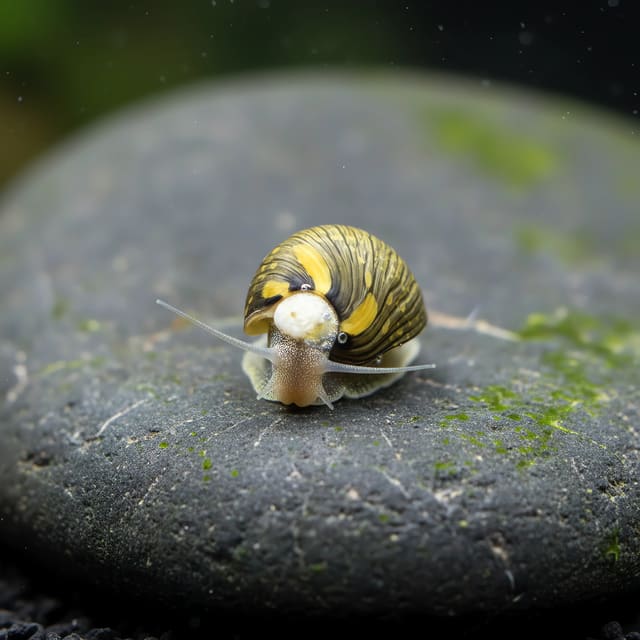
Parallel Nerite Snail (Neritina sp.)
Check species-specific water needs
£2.59
The Yellow Rabbit Snail (Tylomelania sp.) is a freshwater gastropod in the family Pachychilidae. It suits a mature, filtered aquarium; OATA’s freshwater-snail group guidance gives 17–27°C, pH 6.5–8.0 and 4–18°dH. Sold individually as one live snail, dispatched at 4–6 cm.
Water requirements for this listing are not yet confirmed. General care ranges are not a species-specific recommendation. Check temperature, pH and hardness needs with us before ordering.
Tylomelania sp.
Save when buying more. Each quantity is one snail; sex is not guaranteed unless the listing explicitly states it.
The Yellow Rabbit Snail (Tylomelania sp.) is a freshwater gastropod in the family Pachychilidae. It suits a mature, filtered aquarium; OATA’s freshwater-snail group guidance gives 17–27°C, pH 6.5–8.0 and 4–18°dH. Sold individually as one live snail, dispatched at 4–6 cm.
Water requirements for this listing are not yet confirmed. General care ranges are not a species-specific recommendation. Check temperature, pH and hardness needs with us before ordering.
The Yellow Rabbit Snail belongs to Tylomelania, an accepted genus in the family Pachychilidae according to the World Register of Marine Species. Wikipedia describes Tylomelania as a genus of freshwater aquatic gastropod molluscs with an operculum; aquarists commonly call members of the genus rabbit snails.
This snail suits a keeper with a mature, filtered aquarium who can test the water every week, maintain stable conditions, provide supplementary food and exclude fish that eat snails. Plan around the practical water and space guidance below while allowing room to respond if the animal continues to grow.
One purchase supplies one animal. The dispatch grade is 4–6 cm, which describes the snail at dispatch rather than its eventual adult size. Plan the aquarium around long-term movement, filtration and water stability rather than treating the dispatch measurement as a final size.
The exact species has not been identified, so the care advice here follows the genus Tylomelania and its care group.
Sex is guaranteed only when the selected option explicitly states male or female. This Yellow Rabbit Snail listing has no sex-guaranteed option.
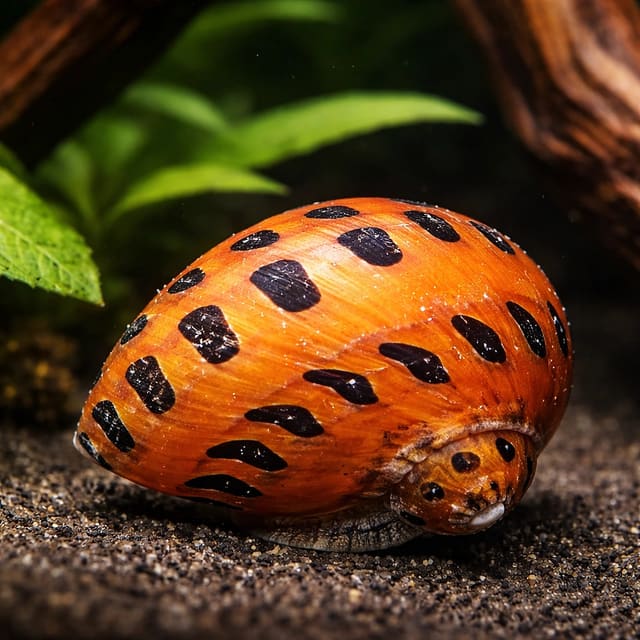
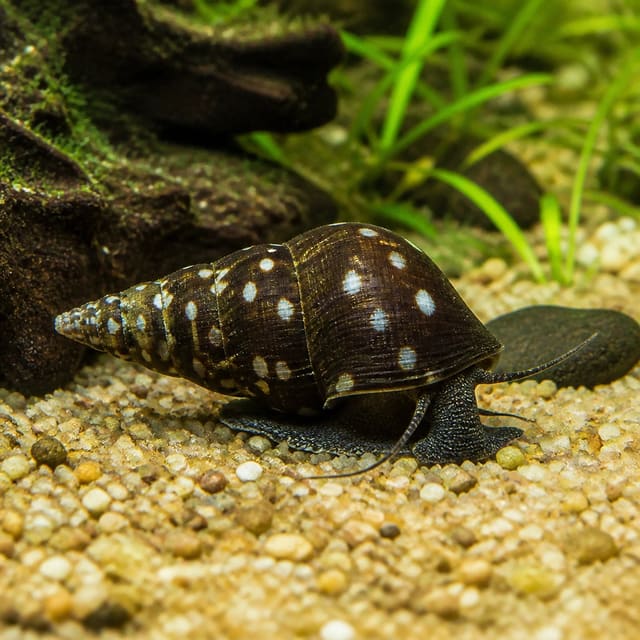
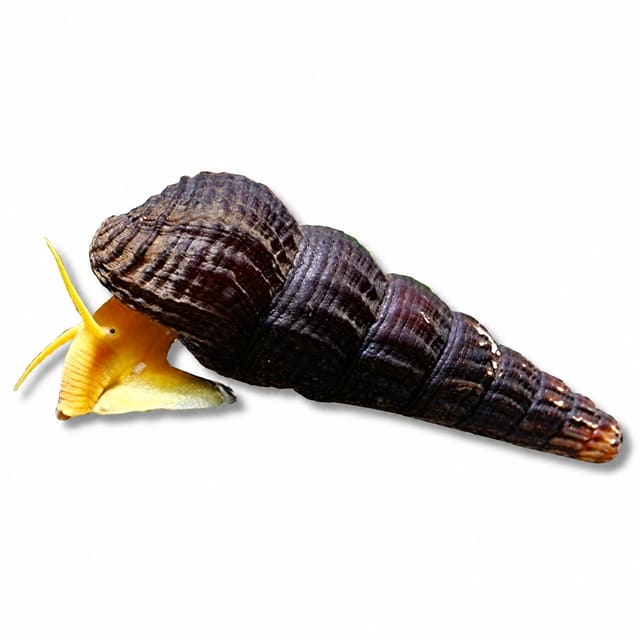
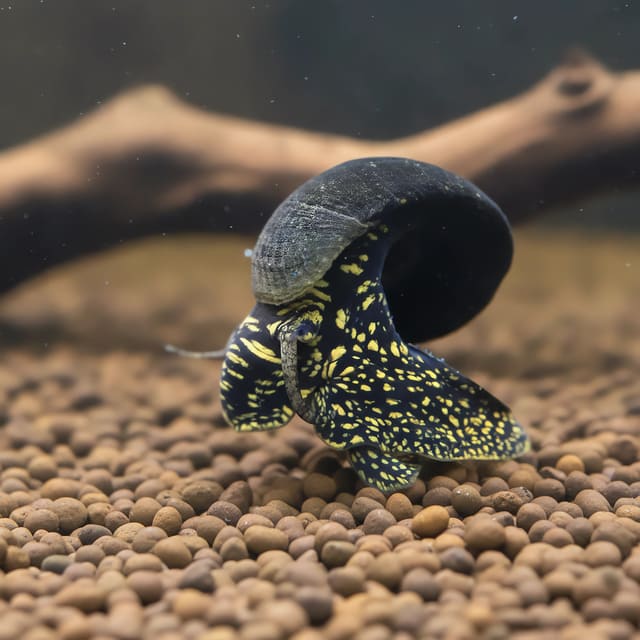
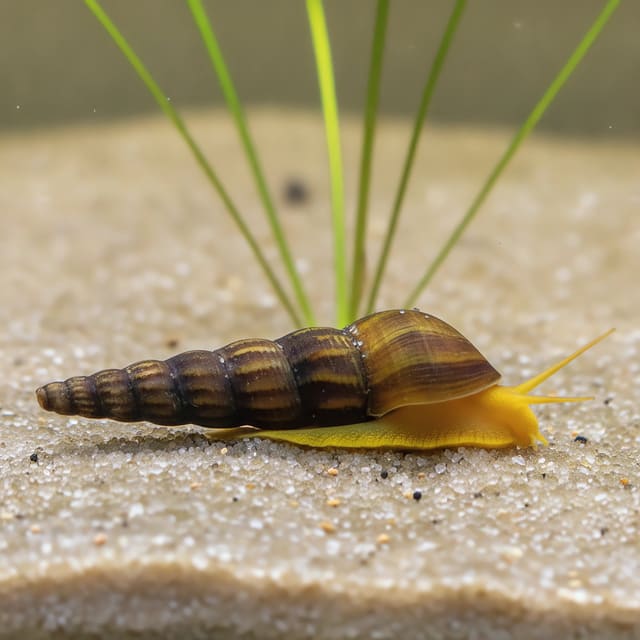
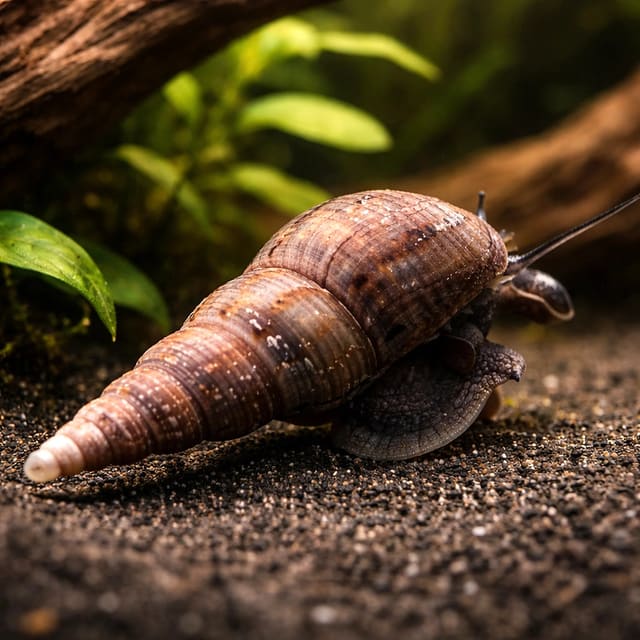
The pictured type has a vivid yellow body, long tentacles and a long, dark, ridged shell. The gallery images are representative of this type of animal rather than photographs of the exact animal supplied, so colours can look slightly different from the live animal.
You can compare its form with other animals in our freshwater snail collection, but choose care and companions for this genus rather than assuming every aquarium snail has identical needs.
Write down the aquarium’s measured temperature, pH and general hardness before choosing the snail. Then compare the readings with 17–27°C, pH 6.5–8.0 and 4–18°dH, check that ammonia and nitrite are both 0 mg/l, and confirm that the filter can support another animal. This short check separates a suitable prepared aquarium from one that merely looks ready.
Also inspect the usable floor area and the route between cover and feeding places. A 4–6 cm dispatch animal needs clear surfaces for movement and an observable place to receive supplementary food. If ornaments block those routes or make waste removal difficult, adjust the layout before arrival rather than disturbing the aquarium during the first week.
OATA’s freshwater shrimp and snail sheet gives broad group guidance rather than a species-specific optimum: 17–27°C, pH 6.5–8.0, general hardness of 4–18°dH and carbonate hardness of 3–15°dKH. It also calls for ammonia and nitrite at 0 mg/l, with nitrate not exceeding 20 mg/l above the normal tap-water level.
| Suits | Not suited to |
|---|---|
| A mature aquarium with an essential working filter | An unfiltered or newly filled aquarium |
| Stable water within the freshwater-snail ranges | Water outside the stated temperature, pH or hardness ranges |
| A keeper able to test and maintain the aquarium every week | An aquarium where weekly testing and maintenance cannot be maintained |
| Solitary keeping or carefully screened companions | Fish that eat snails, including pufferfish and loaches |
| Only treatments explicitly safe for invertebrates | Exposure to copper, even at low levels |
| Decision | Planning value |
|---|---|
| Temperature | 17–27°C |
| pH | 6.5–8.0 |
| General hardness | 4–18°dH |
| Carbonate hardness | 3–15°dKH |
| Ammonia and nitrite | 0 mg/l |
| Nitrate | Up to 20 mg/l above tap-water level |
Choose a stable point within these ranges that also suits every other aquarium inhabitant. Stability matters more than repeatedly moving a reading from one acceptable end of a range to the other. Test the aquarium before introduction and continue testing at least weekly so a developing change is found before it becomes severe.
OATA recommends at least 10 litres for a group of small freshwater snails and approximately 20 litres for larger species, with more space when fish share the aquarium. Use those as general planning benchmarks, not as a fixed minimum for every Tylomelania. The 4–6 cm dispatch grade already deserves a properly filtered aquarium with usable floor area, cover and room for stable water conditions.
A larger aquarium usually changes temperature and water quality more slowly than a very small container. That extra stability gives you more time to detect a feeding, filtration or compatibility problem and take measured action.
Suppose an established aquarium measures 24°C, pH 7.4 and 10°dH. Those readings fall within the planning ranges, but the decision is not complete until ammonia and nitrite both read 0 mg/l, the nitrate result is compared with the tap-water baseline, and every fish is screened for snail-eating behaviour. If the water matches but a loach is present, choose a different aquarium rather than relying on the shared chemistry.
If the same readings come from a newly filled aquarium, wait for the biological filter to mature and demonstrate that it can maintain zero ammonia and nitrite. Matching temperature and pH cannot replace that filtration checkpoint.
This snail suits an aquarium where routine maintenance is already established. The essential commitment is a working biological filter, weekly water testing, a 25% partial water change at least once a week and controlled supplementary feeding. It should not be used as a substitute for aquarium cleaning: grazing can help with nuisance algae, but the keeper still manages waste, filter performance and uneaten food.
Snails are not social animals, so this animal does not need a group for social welfare. A single snail can therefore be planned as a single addition, provided the aquarium has enough capacity for the extra waste and feeding. If you choose more livestock later, increase numbers slowly so the filter’s beneficial bacteria can adjust to the added load.
The strongest fit is a keeper who values steady observation over reactive changes. Watch normal movement, colour, appearance and feeding response, then act when those patterns change rather than waiting for several warning signs to appear together.
Plan one regular session at least once a week for testing, a 25% partial water change, waste removal and the filter check. Place two or three short feeding observations elsewhere in the week. This separates routine maintenance from feeding and makes it easier to see whether a poor reading follows excess food, reduced filter flow or a recent increase in livestock.
Keep the routine simple enough to repeat. A written note of ammonia, nitrite, nitrate and feeding response gives you a useful comparison when the snail becomes less active or ignores food. React to a change by checking measurements and equipment first rather than altering several conditions at once.
A filter is essential because livestock waste ultimately produces ammonia. The RSPCA’s aquarium welfare guidance explains that a working biological filter supports beneficial bacteria which convert toxic ammonia into nitrite and then into the safer end product nitrate. The filter must be established and functioning before the snail is introduced.
Use our first-aquarium preparation guide to plan maturation before livestock arrives. A newly filled aquarium is not mature simply because its water looks clear: clarity cannot show whether enough nitrifying bacteria are present to process waste.
Every addition increases waste and usually increases feeding. The bacterial population then needs time to grow in response. Adding too many animals too quickly can cause new tank syndrome, in which ammonia or nitrite rises because biological filtration cannot yet process the load.
Check the filter for blockages during the weekly routine. When its media needs cleaning, rinse it lightly in aquarium water removed during a partial water change. Do not run it under the tap because chlorine or chloramine can kill part of the beneficial bacterial population and weaken biological filtration.
After cleaning, confirm that normal flow has returned without replacing all established media at once. Continue weekly testing even when the aquarium has been stable for months; a blocked filter, increased feeding or added livestock can alter the balance.
Manage temperature between 17 and 27°C, pH between 6.5 and 8.0, general hardness between 4 and 18°dH and carbonate hardness between 3 and 15°dKH. Choose values within those ranges that overlap with the needs of every planned companion, then aim for consistency.
Our water chemistry guide explains what the main readings mean. Once you have measured the aquarium, use the water matcher to compare those readings with the care range rather than estimating from how the aquarium looks.
| Test | Action point |
|---|---|
| Temperature | Keep within 17–27°C |
| pH | Keep within 6.5–8.0 |
| General hardness | Keep within 4–18°dH |
| Carbonate hardness | Keep within 3–15°dKH |
| Ammonia | Maintain 0 mg/l |
| Nitrite | Maintain 0 mg/l |
| Nitrate | Do not exceed 20 mg/l above tap water |
Test at least once each week and keep the timing consistent enough to make results comparable. Test the normal tap-water nitrate as well, because the nitrate limit is measured relative to that baseline. A tap reading of 10 mg/l, for example, makes 30 mg/l the upper aquarium limit under this guidance; it is not an invitation to let nitrate rise when maintenance can keep it lower.
If ammonia or nitrite appears, pause further livestock additions, check the filter for reduced flow or blockages and carry out the established maintenance routine with conditioned replacement water. Review recent changes in feeding and stocking because both increase the load placed on the filter.
If pH, hardness or temperature sits outside the range, resolve the mismatch before introduction. Avoid chasing a reading with repeated unmeasured adjustments; test each change and preserve a stable environment.
Set up the aquarium with gravel or sand and provide cover. Live plants are ideal within the freshwater-snail guidance; plastic plants and suitable ornaments such as plant pots or model caves can provide shelter when live plants are not used. Arrange the interior so the snail has surfaces to move across and feeding places you can inspect after a meal.
The general benchmarks are at least 10 litres for a group of small snails and approximately 20 litres for larger freshwater invertebrates, with a larger aquarium needed when fish are included. Do not reduce aquarium planning to the space occupied by the shell. Water volume, filter capacity, the number of inhabitants and feeding all determine how quickly waste can affect water quality.
For a 4–6 cm dispatch animal, use a properly filtered aquarium rather than a decorative jar or unfiltered container. If fish already occupy the aquarium, judge capacity from the whole community and its biological load. More animals mean more waste, and mixed-species stocking needs enough space for the snail to feed without being continually approached or displaced.
Review the layout as the shell grows. Dispatch size is a starting measurement, so continued movement and access should guide later adjustments. If furnishings make cleaning difficult or trap food, simplify the arrangement while retaining cover.
Trace a clear route across the substrate from shelter to the chosen feeding place. Remove narrow traps between ornaments and keep the route visible enough to assess movement and appetite. The aim is not an empty aquarium; it is a layout that combines cover with practical access for the animal and the keeper.
During maintenance, look beneath movable ornaments for trapped food and solid waste. If one area repeatedly collects debris, reposition the ornament or improve access for the siphon. A maintainable layout supports a 25% partial water change at least once a week and reduces the chance that decaying food remains hidden.
Freshwater snails are generally herbivorous and graze on algae in the aquarium. Supplement that grazing with algae wafers or a commercial invertebrate pellet so the animal is not expected to live on whatever algae happens to develop. Feed two or three times a week rather than adding food every day.
A practical three-feed pattern is Monday, Thursday and Saturday. A two-feed pattern could use Tuesday and Saturday. The exact days matter less than keeping the total within two or three feeds per week and observing what happens to each portion.
Overfeeding creates more than a cosmetic mess. Uneaten food breaks down and releases waste into the water, placing extra demand on the biological filter and increasing the risk of poor ammonia, nitrite or nitrate readings. A larger portion is therefore not automatically better, even if tank mates remove some of it.
| What you see | What to do |
|---|---|
| Food remains repeatedly | Reduce the next portion and review competing food sources |
| The snail does not approach food | Check activity, appearance and water quality |
| Readings worsen after feeding | Reduce waste input and check filtration |
Do not add extra food simply because the aquarium looks clean. Algae control is one benefit associated with freshwater snails, but it does not measure whether this individual has eaten enough. Use feeding response, visible condition and water-test results together.
If food remains after several feeds, reduce the portion while keeping the two- or three-feed schedule steady. This makes the result easier to interpret than changing portion size, food type and feeding days together. Continue allowing at least 30 minutes before judging whether the snail has had a reasonable opportunity to feed.
In a mixed aquarium, watch whether fish take the supplement before the snail reaches it. Move the feeding place or reassess the combination if access remains poor. Do not compensate by scattering excess food, because uneaten material still adds waste and increases demand on the filter.
Carry out a partial water change of 25% at least once every week. Use a siphon to remove solid waste from the substrate, and treat replacement tap water with a suitable conditioner before it enters the aquarium so chlorine and chloramine are removed.
This sequence connects observation with a measured response. Testing before the water change shows whether waste was accumulating; testing on the same weekly rhythm makes trends easier to spot. Do not rely on the absence of cloudiness, because toxic nitrogen compounds can be present in clear water.
Freshwater snails are highly sensitive to copper and will die if exposed even to low levels. Check every medication, algae treatment and other aquarium additive for an explicit statement that it is safe for invertebrates before use. A product intended for fish is not automatically suitable for a snail aquarium.
Watch for increased inactivity, restlessness, darker or paler colour, more hiding, visible lesions, discolouration, unusual growths, damage or reduced interest in food. First test the water, check filter operation and review recent feeding or stocking changes. If the change continues or the animal appears seriously affected, contact us about the health change and provide the latest readings and a clear description of what has altered.
Prepare before the parcel arrives: the aquarium should already be mature, filtered and within range, and someone should be present to receive the live-animal delivery. Read the current delivery and Live Arrival Guarantee policy before the delivery window so you know the receipt and claim steps.
Keep the continuous video with your order number; a video is optional and clear photos are accepted for a Live Arrival Guarantee claim. We strongly recommend an unboxing video when practical: it helps us investigate arrival concerns faster, resolve them with less back-and-forth and understand packing or transit issues so we can reduce recurrence. Video is optional and clear photos are accepted. Never delay necessary animal care to record evidence.
Look for gradual movement, normal colour and interest in grazing or supplementary food. Follow the established two- or three-feed weekly pattern rather than adding repeated food to provoke activity. If food remains after at least 30 minutes, reduce the next portion instead of leaving more to break down.
Test ammonia and nitrite if activity or feeding changes, and continue the normal weekly tests even when the snail appears settled. Both readings should remain at 0 mg/l. Check that filter flow remains normal and that no tank mate is pecking, biting or repeatedly disturbing the snail.
Complete a 25% partial water change at least once each week, record test results and compare behaviour from week to week. Do not add several more animals at once merely because the first introduction went smoothly. Increase livestock slowly so beneficial bacteria can adjust to each increase in waste and feeding.
Freshwater snails may be eaten by aquarium fish, so compatibility starts with predation rather than a general community label. Avoid fish that eat snails, including pufferfish and loaches. A water match does not make a known snail predator suitable.
| Question | Decision |
|---|---|
| Is it known to eat snails? | Do not combine them |
| Can it bite or continually disturb the snail? | Choose another combination |
| Do the water ranges overlap? | Proceed only within the shared range |
| Will the mixed aquarium increase the load? | Provide more volume and filter capacity |
| Can the snail reach supplementary food? | Create an observable feeding place |
Compatibility is conditional rather than universal. Assess the fish’s feeding behaviour, the shared water range, aquarium volume and the snail’s access to food as one decision. Do not use colour, peaceful marketing language or the fact that two animals are freshwater species as a substitute for that screen.
For a stocking and compatibility assessment, contact us with the proposed species, aquarium volume, temperature, pH, hardness and current livestock. Those details allow a practical comparison with the 17–27°C, pH 6.5–8.0 and 4–18°dH ranges used here.
Snails are not social animals, so one Yellow Rabbit Snail does not need additional snails as companions. Keeping one animal can simplify feeding observation and reduce the immediate increase in biological load. More snails may be considered only when aquarium capacity, filtration and food management support the added livestock.
A compatibility decision continues after introduction. Watch whether the snail can move, graze and reach supplementary food without being bitten, displaced or repeatedly approached by fish. Also watch for increased hiding, inactivity, colour change or loss of interest in food.
| Observation | Response |
|---|---|
| Normal movement and feeding | Continue the established routine |
| Food is repeatedly taken by fish | Change the feeding arrangement and reassess the mix |
| Repeated pecking or biting | Separate the snail from the fish |
| Inactivity with poor readings | Correct water quality and check filtration |
| Inactivity with stable readings | Review disturbance, feeding and visible condition |
Test water when behaviour changes because compatibility and water quality can produce overlapping warning signs. Ammonia or nitrite above 0 mg/l points to a filtration or loading problem that must be addressed even if no aggression has been seen. Stable readings shift attention towards feeding access, disturbance and visible health changes.
OATA advises using a larger aquarium when freshwater snails are kept with fish. The reason is practical: every animal adds waste, feeding increases the load and a larger volume offers greater environmental stability. Keep the filter unobstructed, continue weekly tests and avoid adding several new inhabitants in quick succession.
Do not build a permanent compatibility claim from a calm first hour. Continue observation through the first week and at routine feeds, when competition or predatory interest may be easier to see. A combination remains suitable only while water conditions, feeding access and behaviour remain acceptable.
Make one observation when the aquarium is otherwise undisturbed and another during a scheduled supplementary feed. Calm movement at rest shows only part of the relationship; feeding reveals whether fish block access, take every portion or repeatedly approach the snail. Use both observations before deciding that the arrangement works.
If the snail feeds when alone but withdraws whenever fish approach, change the feeding arrangement and watch again. Repeated biting or pecking requires separation. If behaviour changes without visible disturbance, test ammonia and nitrite, inspect filter flow and review recent stocking before assigning the problem to compatibility alone.
The 4–6 cm measurement is its dispatch size rather than an adult-size promise. Plan the aquarium around continued growth, usable floor area, filtration and stable water instead of treating that measurement as its final size.
Use approximately 20 litres as OATA’s freshwater-invertebrate group benchmark for a larger animal, and choose a larger aquarium when fish are included. The aquarium must be mature, filtered and arranged with usable floor area and cover.
One can be kept alone because OATA’s freshwater-snail guidance says snails are not social animals. Add further livestock slowly and only when aquarium capacity, filtration and food management can support the increased load.
It suits a keeper who can maintain a mature biological filter, test the water at least weekly, carry out a 25% partial water change at least once a week, control feeding and keep copper away from the aquarium.
Allow it to graze on aquarium algae and supplement with an algae wafer or commercial invertebrate pellet two or three times a week. Leave the food for at least 30 minutes and reduce the next portion if residue is repeatedly left behind.
OATA’s freshwater-snail group guidance gives 17–27°C, pH 6.5–8.0, general hardness of 4–18°dH and carbonate hardness of 3–15°dKH. Keep ammonia and nitrite at 0 mg/l and nitrate no more than 20 mg/l above tap water.
Compatibility planning should focus on whether fish may eat, bite or continually disturb the snail and whether it can reach food. Watch the combination during normal movement and scheduled feeds, and separate the snail if repeated pecking or biting occurs.
Choose companions that do not eat or continually disturb snails, fit OATA’s freshwater-snail group guidance of 17–27°C, pH 6.5–8.0 and 4–18°dH, and allow access to food. Avoid fish that eat snails, including pufferfish and loaches.
If practical, start filming every delivery before opening, showing the sealed parcel and outer box, then continue in one uninterrupted take as it is opened with the animal still inside the sealed bag. Have someone present to receive it, float the bag for 20–30 minutes, release the snail and never pour the bag water into the aquarium.
No reviews for this item yet. Bought one? Honest reviews only, good or bad.
What customers say about ordering from us
Easy website plenty of info on fish your buying great to pick a time slot
TRACEY DURRANT · 7 Oct 2026
Got some lovely fish thank you
Kevin Mackie · 7 Oct 2026
Reviews of our shop, collected by Judge.me, an independent third-party review collector. Newest first.