Easy
Parallel Nerite Snail (Neritina sp.)
17–27°C · pH 6.5–8
£4.99

Hairy Nerite Snail (Neritina sp.) is an algae-grazing snail of the nerite family, supplied as one live snail at about 1.5 cm. It needs a mature, copper-free freshwater aquarium without snail-eating fish.
Neritina sp.
Lives in groups: kept together they stay settled, active and show their best colour.
Hairy Nerite Snail (Neritina sp.) is an algae-grazing snail of the nerite family, supplied as one live snail at about 1.5 cm. It needs a mature, copper-free freshwater aquarium without snail-eating fish.
Nerite snail is a trade umbrella, not one species. Confirm the supplied taxon and holding water, use a mature covered aquarium with established grazing surfaces, stock from food availability rather than a litre formula, and treat egg capsules, medicines and tank mates as species-specific decisions.
Maintain these water conditions for optimal health and vibrant colors
The Hairy Nerite Snail (Neritina sp.) is a small aquatic snail of the nerite family, Neritidae, sold as one live snail supplied at about 1.5 cm. It is a grazer that feeds on algae in the aquarium, and it makes a straightforward addition to a mature freshwater tank as long as two things hold true: nothing in the tank will eat it, and nothing that goes into the water contains copper.
The name on this listing is a trade name. WoRMS accepts Neritina as a genus in the family Neritidae, and the name this snail reaches us under stops at the genus. The exact species has not been identified, so the care advice here follows the genus Neritina and its care group. In practice, that means the OATA care sheet for freshwater shrimp and snails, which covers the whole group, together with our own delivery and acclimatisation steps.
| Scientific label | Neritina sp. (species not identified) |
|---|---|
| Family | Neritidae, the nerites |
| Supplied size | About 1.5 cm |
| Diet | Algae grazer; supplement with algae wafers or shrimp pellets |
| Water (group guidance) | 17–27 °C, pH 6.5–8.0, 4–18 °dH |
| Company | Can be kept on its own; snails are not social |
| Suits | Mature freshwater aquariums of 10 litres or more with no snail-eating fish |
| Never | Copper, or any treatment not labelled safe for invertebrates |
Each purchase is one live Hairy Nerite Snail at about 1.5 cm. If you would like several, the quantity you order is the number of snails you receive.
Sex is guaranteed only when the selected option explicitly states male or female. This Hairy Nerite Snail listing has no sex-guaranteed option.
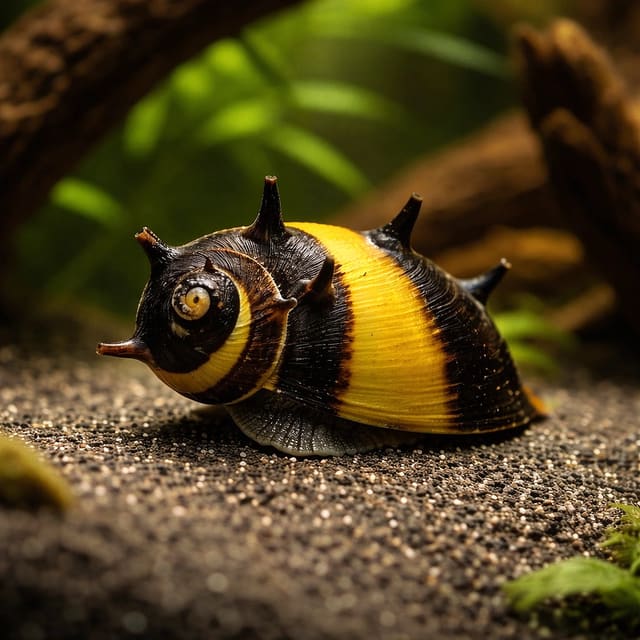
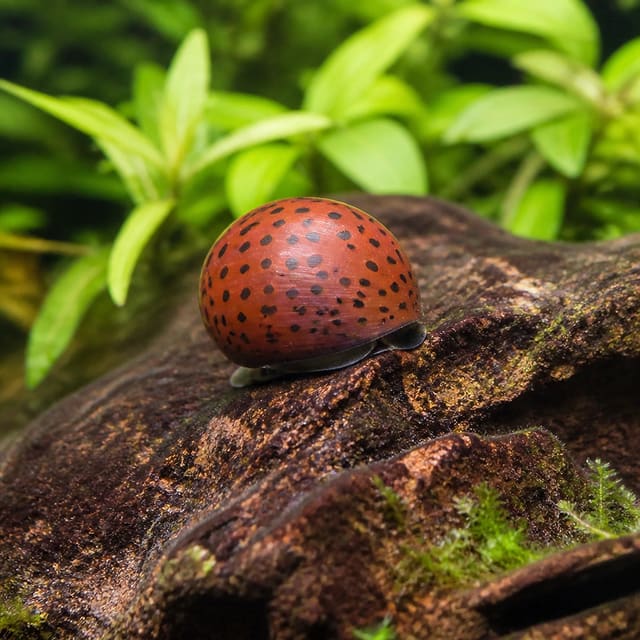
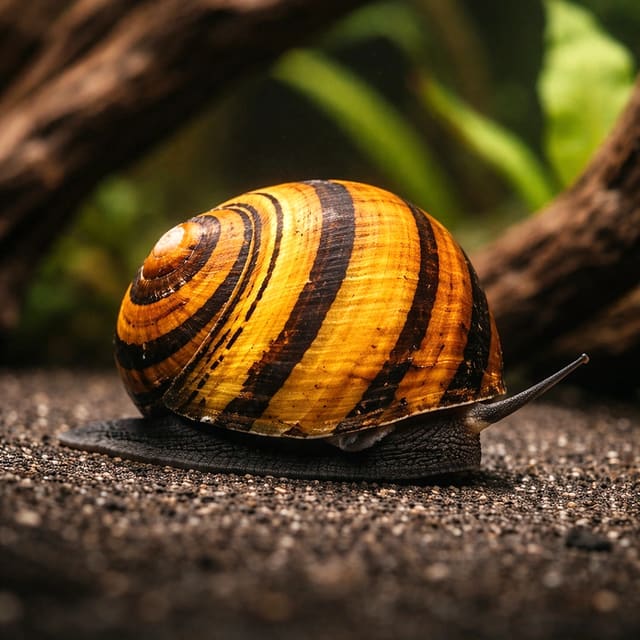
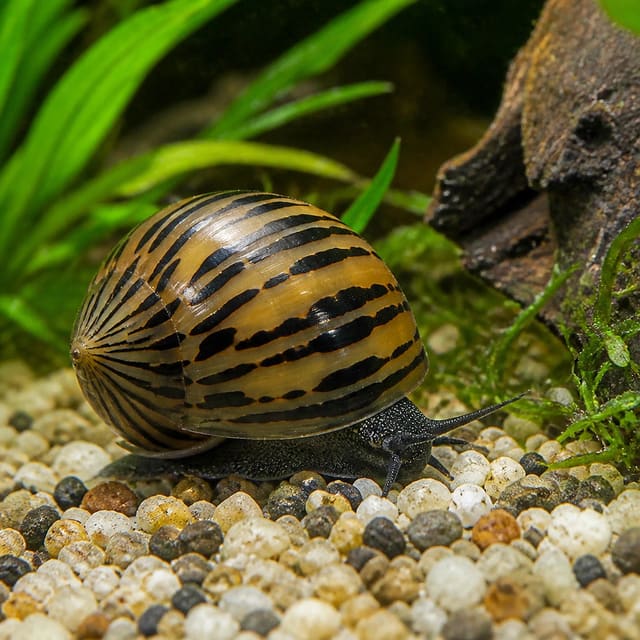
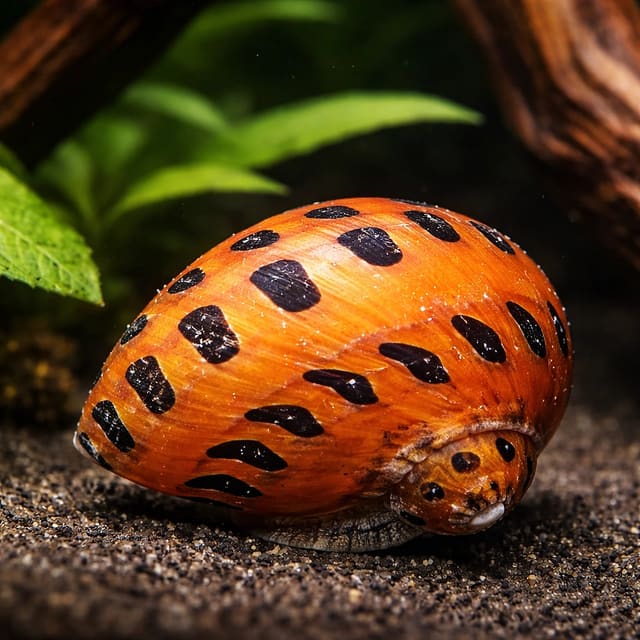
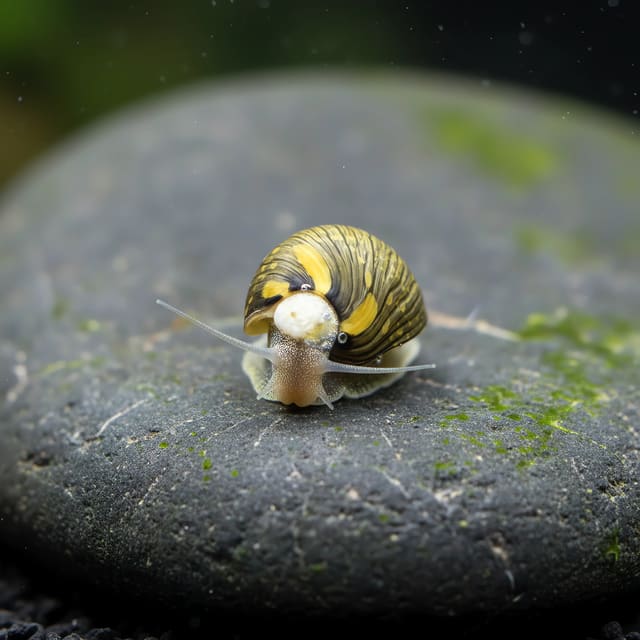
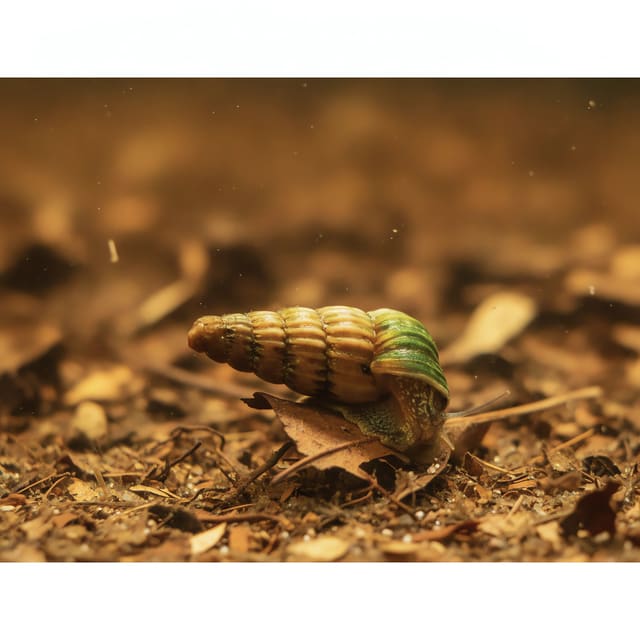
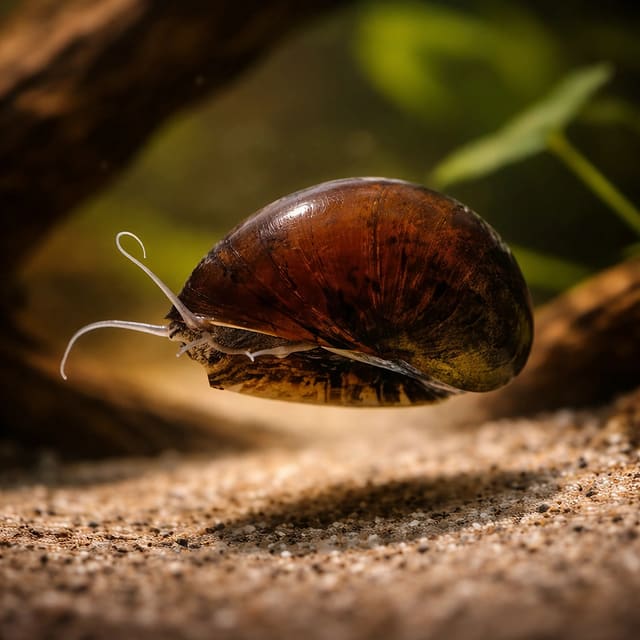
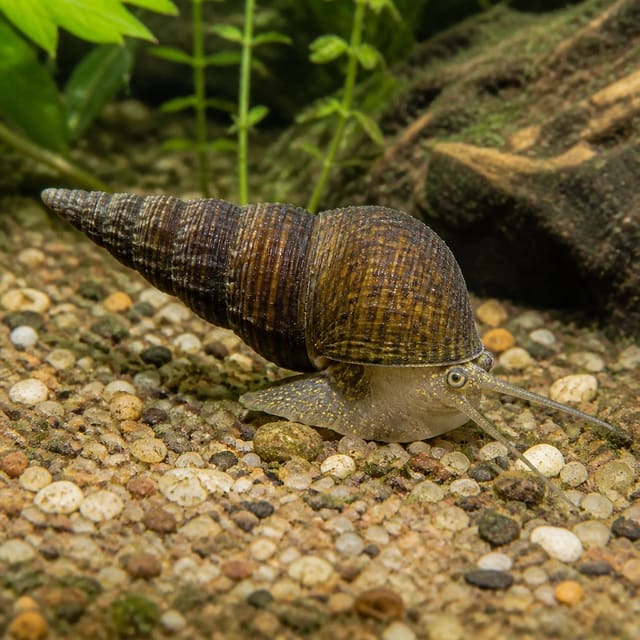
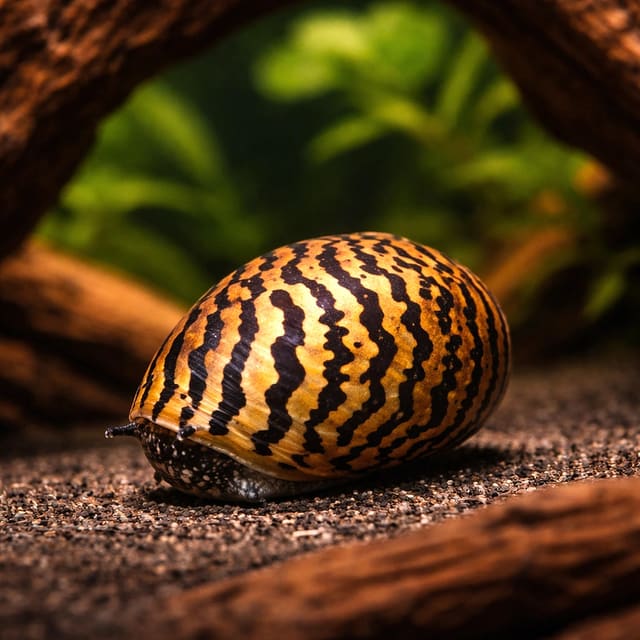
Gallery images have been digitally enhanced to improve image quality. Natural colour, pattern, size and maturity can vary between live animals. The photograph shows a snail with a ribbed olive-brown shell, rows of small white oval marks and several long, dark bristles. Shell colour and markings differ from snail to snail, so the one you receive may not match the picture exactly.
Freshwater snails earn their place, in OATA's words, because they help to control nuisance algae. A nerite spends its time grazing the algae that grows in the aquarium, it does not need company of its own kind, and OATA regards freshwater snails as generally compatible with most aquarium species. That makes it a simple invertebrate to add to a settled tank, provided the tank is free of copper and of fish that eat snails.
Wikipedia describes Neritina as a genus of small aquatic snails with an operculum, the hard plate a snail uses to close the opening of its shell, in the nerite family. The genus is broad: it includes marine and brackish-water snails as well as some that live in fresh water. This snail is sold for freshwater aquariums, and nerite snails are among the popular aquarium snails named on OATA's freshwater shrimp and snail care sheet.
Look elsewhere if your tank holds pufferfish, loaches or assassin snails, or if you regularly treat it with copper. If you would prefer a nerite sold under a species name, or simply a different shell, compare the options in our nerite snail collection.
The OATA care sheet for freshwater shrimp and snails describes them as usually undemanding of water chemistry and gives a suggested set of parameters for the group. It adds that these are a general guide, and that species-specific requirements should be checked before buying. With a snail sold at genus level there is no species profile to check against, so the sensible course is to keep the water inside the group ranges and, above all, clean and stable.
| Temperature | 17–27 °C |
|---|---|
| pH | 6.5–8.0 |
| General hardness | 4–18 °dH (soft to hard) |
| Carbonate hardness | 3–15 °dKH (soft to hard) |
| Ammonia | Zero |
| Nitrite | Zero |
| Nitrate | No more than 20 mg per litre above your tap water level |
Most nerites join a tank that has been planned around fish or shrimp, so the useful question is whether the conditions you already keep sit inside the snail's group ranges. Take the temperature first: a tropical community run somewhere in the middle of 17–27 °C leaves room either side, while a tank kept at the very top of that band has no margin if the room warms up. Do the same with pH, where 6.5–8.0 is the target, and with general hardness, where 4–18 °dH runs from soft to hard water.
The nitrate figure is relative to your own supply. If your tap water measures 10 mg per litre, the aquarium should stay at or below 30 mg per litre; if it measures 25, the ceiling is 45. Regular partial water changes are what hold it there, as the maintenance section explains.
OATA advises testing at least once a week so that ammonia and nitrite cannot build up. Our guide to aquarium water parameters explains what each reading means and why pH and hardness shift over time. When you have your numbers, the water parameter matcher compares them with the ranges above, which is a quick way to confirm that the tank you have in mind suits a nerite before you order.
One rule matters more than any other for this snail. OATA's care sheet states that freshwater shrimp and snails, being invertebrates, are very sensitive to copper and will die if exposed even to low levels. It asks keepers to make sure that any treatment added to the aquarium is safe for invertebrates.
It is worth going through the treatments you already own before the snail arrives. Keep anything that is not labelled safe for invertebrates away from this tank, so that it cannot be reached for in a hurry when a fish looks unwell.
This is also the reason to tell anyone who helps look after your aquarium that it holds invertebrates. A single dose of the wrong product can undo months of steady care.
OATA recommends an aquarium of at least 10 litres for a group of small freshwater shrimp or snails, and approximately 20 litres for larger species such as apple snails or Amano shrimp. Both figures are for invertebrates kept alone: the aquarium needs to be larger if the snail shares it with fish. As a general rule, OATA suggests buying as large an aquarium as is reasonable, because the larger the volume, the more stable the temperature and water quality will be.
OATA is clear that, whatever the size, a filter is always essential. The RSPCA's guidance explains why: animals release ammonia, which is toxic, and a working biological filter lets beneficial bacteria convert it to nitrite, which is also toxic, and then to nitrate, which is safer. A filter only does that job once those bacteria are established, which is why the tank needs to be matured before the snail arrives.
OATA advises aquarium gravel or sand and, ideally, live plants to provide cover. If you do not use live plants, it recommends plastic plants and suitable ornaments, such as plant pots or model caves, to provide shelter. It also notes that sand or fine gravel is important for some species, so for a snail whose exact species is unknown, a sand or fine gravel substrate is the safe choice.
Rocks, wood and plant leaves also give a grazer surfaces on which algae can grow. A tank with an established film of algae gives the snail something to work on from the first day; in a very clean tank, plan on supplementary feeding from the start.
Our guide to setting up a first shrimp tank walks through maturing a filter and the checks to make before invertebrates go in, and the same preparation suits a nerite. OATA advises confirming that ammonia and nitrite both read zero before adding any shrimp or snail, then increasing numbers slowly, because the beneficial bacteria in the filter have to catch up each time more livestock is added and feeding increases.
Overstocking, or stocking too quickly, can cause new tank syndrome: there are not enough nitrifying bacteria to cope with the extra waste, and ammonia and nitrite rise to levels that may cause shrimp and snails to become ill or die. If you plan to keep several snails, add them over a few weeks rather than all at once.
OATA describes freshwater shrimp and snails as generally herbivorous animals that graze on algae in the aquarium, and it notes that they are popular precisely because they help to control nuisance algae. Grazing alone is not always enough, though, so the care sheet recommends supplementing it with algae wafers to make sure the snail is getting enough food. Commercial pellets made for freshwater shrimp can also be used for snails.
| Every day | Natural grazing on algae growing in the tank |
|---|---|
| Two or three times a week | One algae wafer or a few shrimp pellets |
| After feeding | Leave the food for at least 30 minutes so the snail has time to eat |
| Afterwards | Remove anything left over before it breaks down |
OATA advises feeding freshwater shrimp and snails only two or three times a week and taking care not to overfeed, because uneaten food breaks down and releases toxic waste into the water. A snail moves slowly, which is why the food needs to stay in place long enough for it to reach it.
In a community aquarium, fish may reach a wafer long before the snail does. Drop supplementary food close to where the snail is grazing, and check afterwards that it has had its share rather than assuming the wafer was eaten by the snail.
Among the early warning signs OATA lists are reduced intake or lack of interest in food and noticeable weight loss. For a grazer, a tank that has been scraped clean of algae is a prompt to add a wafer on the next feeding day. Treat the snail as one helper in keeping algae under control, alongside regular maintenance, rather than the whole solution.
The figures on this page are easier to use together. These two examples show how they combine in practice; adjust them to your own aquarium.
In both cases the snail itself asks for very little: clean, stable water, something to graze, and freedom from copper and from fish that eat snails.
Your snail is hand-packed by our team, hand-bagged in pure oxygen and sent in an insulated poly box, with a heat pack when the weather calls for it. A licensed live-animal courier carries the parcel on a tracked service, and we email the tracking number and your confirmed delivery date so you know when to be in. The full conditions are on our delivery and Live Arrival Guarantee page.
The video is what allows a Live Arrival Guarantee claim to be resolved quickly. Our courier may ask for continuous unboxing evidence when we raise a claim, and the guarantee requires someone to have been at the address to receive the parcel, the parcel to be opened and inspected the same day, and a continuous video showing it still sealed.
OATA points out that all freshwater shrimp and snails vary slightly in behaviour and appearance, and that watching for changes helps you spot a problem before it becomes a real health issue. For a newly added snail, keep an eye on:
If you are concerned, test the water first, since ammonia, nitrite and copper are the risks OATA highlights for invertebrates, and then get in touch for guidance.
OATA stresses that good husbandry is essential because freshwater shrimp and snails are easily stressed by poor water. Its weekly routine is short:
The weekly change is easy to work out: in a 10-litre nano tank it is 2.5 litres, and in a 40-litre tank, 10 litres. Keeping to the same percentage every week, rather than making occasional large changes, keeps conditions steady for an animal that is easily stressed.
When you siphon the gravel, look into the bucket before you pour it away. A snail of about 1.5 cm is easy to lift out by accident while you are cleaning around decor and plants.
| Each time you look in | Find the snail and check it is moving normally |
|---|---|
| Once a week | Test ammonia and nitrite; change 25% of the water |
| Every water change | Condition the new water before it goes in |
| When flow drops | Rinse filter media in removed tank water |
| Before any new product | Check it is labelled safe for invertebrates |
OATA describes freshwater shrimp and snails as generally compatible with most species in the aquarium, but it also warns that they should be mixed with caution because they may be eaten by common aquarium fish. For a snail, the specific rule is that it should not be mixed with fish that can eat it, such as pufferfish or loaches, and OATA advises checking before mixing freshwater shrimp or snails with any fish species.
| Good fit | Most aquarium species that will not eat snails, including freshwater shrimp |
|---|---|
| Use caution | Fish you have not yet checked, until you know they do not eat snails |
| Avoid | Pufferfish, loaches, assassin snails and any fish that can eat snails |
OATA's care sheet covers freshwater shrimp and snails together, with the same water guidance, maintenance routine and copper warning, which makes a nerite a natural fit for a shrimp aquarium. The difference is social: shrimp species are usually social and should be kept in groups, while snails are not social creatures and are fine on their own. Freshwater shrimp have their own rule for mixed tanks, since OATA advises against keeping them with any fish that can fit them in its mouth or any predatory species.
A nerite can live in a community aquarium, but remember that OATA's 10-litre and 20-litre figures are for invertebrates alone, and the tank needs to be larger when fish are added. Check every species on your stocking list against the snail rule before you buy: a fish that can eat snails will treat a 1.5 cm nerite as food, however peaceful it is with other fish. Check loaches with particular care, as OATA names them alongside pufferfish.
Assassin snails are the clear exception among snails. OATA notes that they prey on other snail species, which is why they are used to control excessive snail populations, so they should not share a tank with a nerite you want to keep. Several nerites can share a tank, and because snails are not social, you can decide numbers purely on how much algae there is to graze and how much your filter can support.
Whenever you add new animals to a tank with the snail in it, add them gradually, as OATA recommends for all livestock, and check each new species against the snail rule before it goes in. Watch the snail over the following days for the changes described in the care section, such as more hiding or reduced interest in food, which can show that a newcomer is bothering it.
Because this snail is sold at genus level, without a species name, there is no recorded adult size to quote for it. OATA's care sheet says the snails popular in aquariums, nerites among them, are unlikely to grow larger than 5 cm, which is a sensible upper figure to plan around.
OATA recommends at least 10 litres for a group of small freshwater shrimp or snails and about 20 litres for larger species such as apple snails, with more space again when fish share the tank. Whatever the size, the aquarium needs a filter and should be fully matured before the snail goes in.
One is fine. OATA notes that snails, unlike most freshwater shrimp, are not social animals, so a single snail does not need company. If you want several for extra grazing, add them gradually so the filter bacteria can keep pace.
It can be, provided the aquarium is mature and copper-free. OATA describes freshwater shrimp and snails as usually undemanding of water chemistry, but as invertebrates they will die if exposed even to low levels of copper, so every treatment you use must be labelled safe for invertebrates.
It grazes on algae in the aquarium. OATA advises supplementing that with algae wafers, or with commercial shrimp pellets, which suit snails too, two or three times a week, leaving the food for at least 30 minutes so the snail has time to eat and removing what is left rather than overfeeding.
OATA's group guidance for freshwater shrimp and snails is 17–27 °C, pH 6.5–8.0 and a general hardness of 4–18 °dH, with ammonia and nitrite at zero. Because the exact species is unknown, treat these as broad limits and keep conditions stable inside them.
No. It is a grazing snail, and OATA describes freshwater snails as generally herbivorous and compatible with most species. The risk runs the other way: some fish, such as pufferfish and loaches, eat snails.
Most aquarium species that cannot eat it, including freshwater shrimp, which OATA's care sheet covers alongside snails. Keep it away from pufferfish, loaches and assassin snails, which prey on other snails, and check any fish before mixing it with snails.
It is hand-bagged in pure oxygen and packed in an insulated poly box, with a heat pack when the weather calls for it, then carried by a licensed live-animal courier on a tracked service. Someone must be at the address to receive it. Film a continuous unboxing video from the sealed parcel to the snail still in its bag, open and inspect it the same day, float the bag for 20–30 minutes before releasing the snail, and contact us the same day with your order number and the video if anything has gone wrong, as our Live Arrival Guarantee requires.
No reviews for this item yet. Bought one? Honest reviews only, good or bad.
What customers say about ordering from us
I have a small group of long finned mountain minnows. So was delighted to be able to order ten of this variety to increase the genetics in my tank . The ones I recieved are healthy but it’s to early to give a verdict on wether they are of a long finned type since they are small currently.
Gordon Walker · 23 Sept 2026
100% success travel and "installation". Pleased with quality of purchase. The Siamese fighter a bit "shy" so have not yet seen him at his best yet but looking good. Happy customer. GG
George E Garratt · 21 Sept 2026
Reviews of our shop, collected by Judge.me, an independent third-party review collector. Newest first.