Easy
Parallel Nerite Snail (Neritina sp.)
17–27°C · pH 6.5–8
£4.99
The Red Lips Nerite Snail (Neritina sp.) is an operculate aquatic gastropod in Neritidae; members of this genus occur in marine, brackish and sometimes freshwater habitats. It suits a mature, filtered freshwater aquarium kept at 17–27°C, pH 6.5–8.0 and 4–18°dH under OATA's freshwater shrimp and snail guidance; snails have no social group requirement. Sold individually.
Neritina sp.
Lives in groups: kept together they stay settled, active and show their best colour.
The Red Lips Nerite Snail (Neritina sp.) is an operculate aquatic gastropod in Neritidae; members of this genus occur in marine, brackish and sometimes freshwater habitats. It suits a mature, filtered freshwater aquarium kept at 17–27°C, pH 6.5–8.0 and 4–18°dH under OATA's freshwater shrimp and snail guidance; snails have no social group requirement. Sold individually.
Nerite snail is a trade umbrella, not one species. Confirm the supplied taxon and holding water, use a mature covered aquarium with established grazing surfaces, stock from food availability rather than a litre formula, and treat egg capsules, medicines and tank mates as species-specific decisions.
Maintain these water conditions for optimal health and vibrant colors
The Red Lips Nerite Snail (Neritina sp.) is an aquatic gastropod with an operculum, belonging to the nerite family Neritidae. It suits a keeper who can prepare a mature, filtered freshwater aquarium, test the water regularly and protect invertebrates from copper and snail-eating fish. Because the identity is at genus level, aquarium planning should focus on stable water, safe companions and dependable grazing food rather than assumptions about one named species.
WoRMS recognises Neritina as an accepted genus in Neritidae. A Wikipedia overview of the genus describes its members as small aquatic snails found in marine, brackish and sometimes freshwater habitats. This offer is for aquarium care in freshwater.
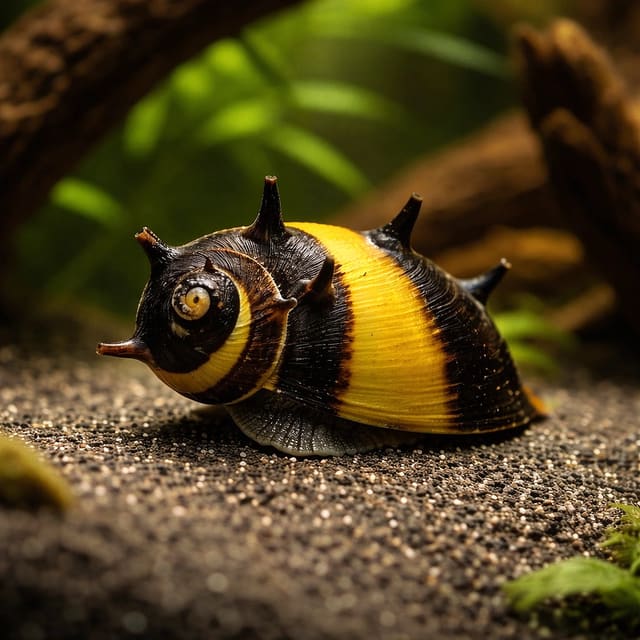
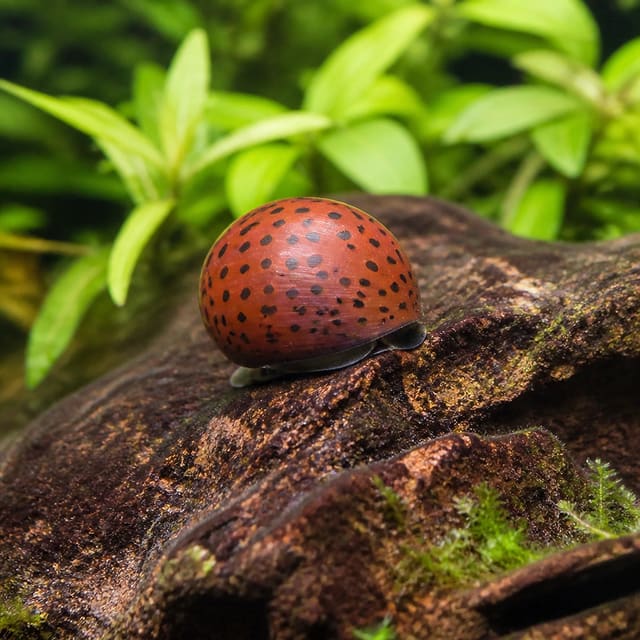
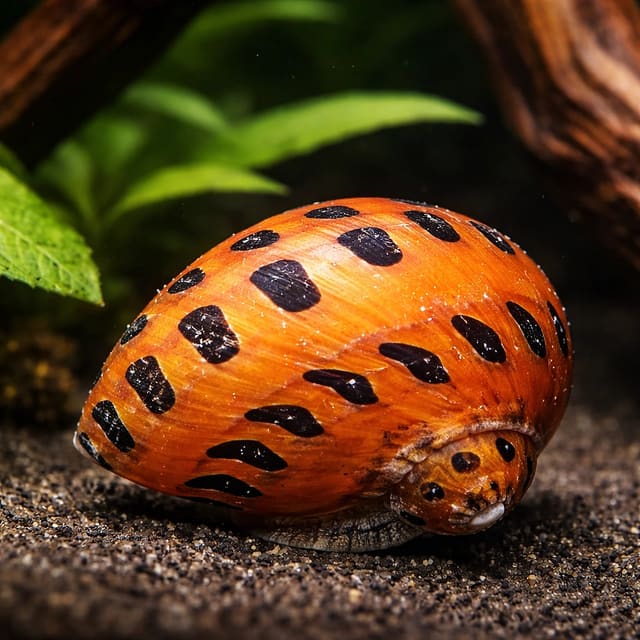
The shell colour and red-edged form make the animal visually distinctive, but appearance must not be used to infer sex, mature size or a more precise species identity. Plan its home from the freshwater-snail care values below, observe how it feeds and moves after introduction, and adjust stocking only through water tests and compatibility screening.
A mature, filtered aquarium is the starting point. Keep ammonia and nitrite at zero, provide gravel or sand, and include plants or suitable ornaments that create surfaces and cover. The aquarium must also have enough capacity for any fish sharing it, because OATA recommends more space when freshwater shrimp or snails are mixed with fish.
| Suits | Not suited to |
|---|---|
| A mature freshwater aquarium with an established filter | An unfiltered aquarium or one with measurable ammonia or nitrite |
| Water maintained within 17–27°C, pH 6.5–8.0 and 4–18°dH | A setup where the water cannot be tested and kept stable |
| A keeper able to feed carefully and change 25% of the water weekly | Aquariums treated with products that are unsafe for invertebrates |
| Communities screened for snail-eating behaviour | Pufferfish, loaches or other fish capable of eating snails |
Snails are not social creatures under OATA guidance, so this animal does not need a group for social welfare. If you add more snails for a larger aquarium, increase livestock gradually so the biological filter can adjust to the extra waste and feeding.
One purchase supplies one Red Lips Nerite Snail. The animal is dispatched at 1–2 cm; that is its size when sent, not a predicted mature measurement. Plan the aquarium around the care requirements and the total livestock load rather than treating the dispatch measurement as a final size.
The exact species has not been identified, so the care advice here follows the genus Neritina and its care group. Sex is guaranteed only when the selected option explicitly states male or female. This Red Lips Nerite Snail listing has no sex-guaranteed option.
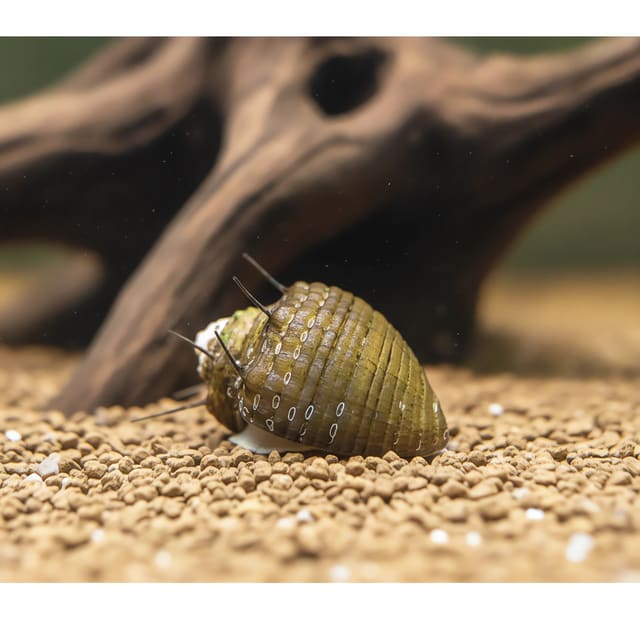
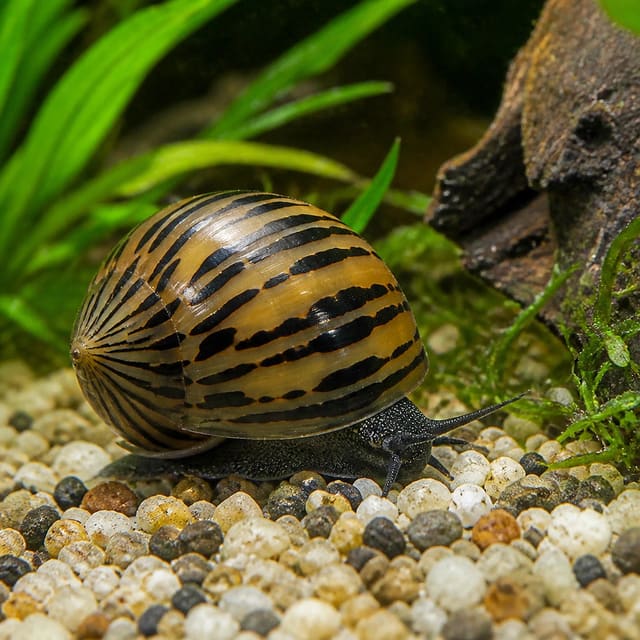
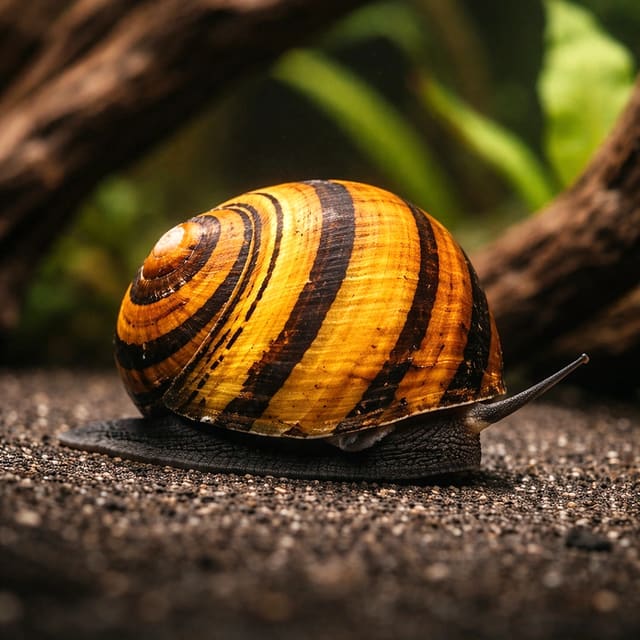
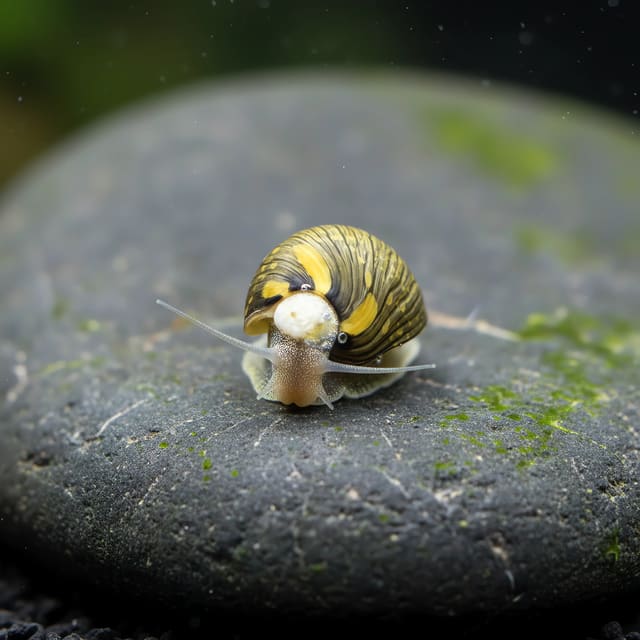
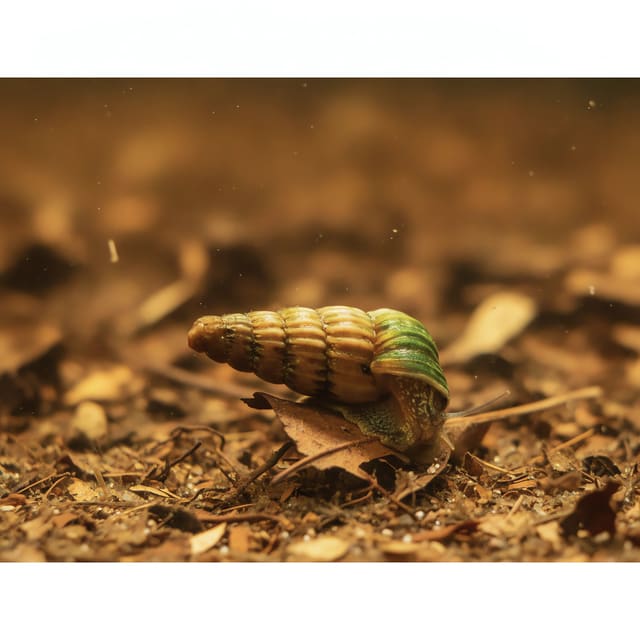
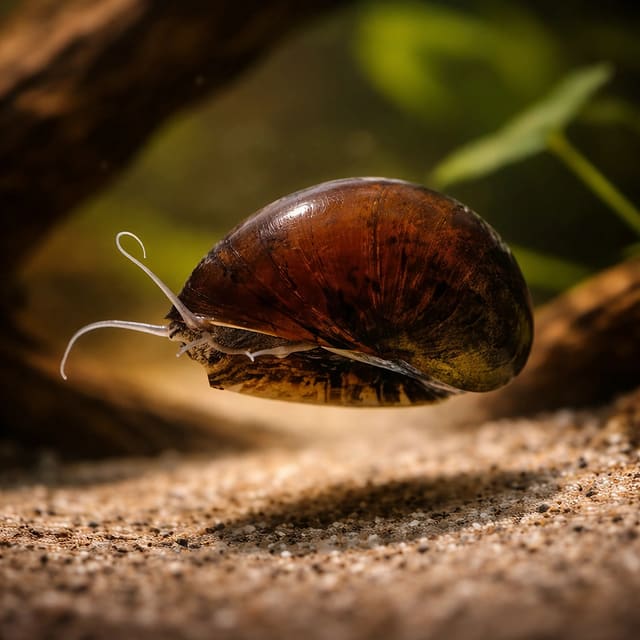
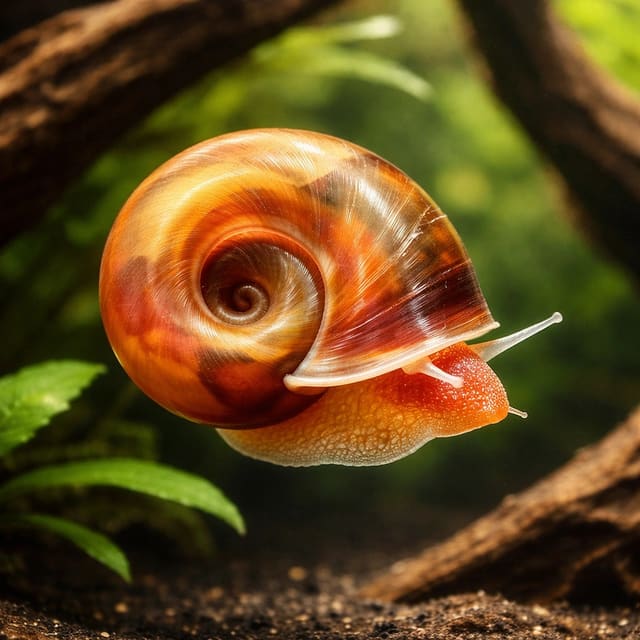
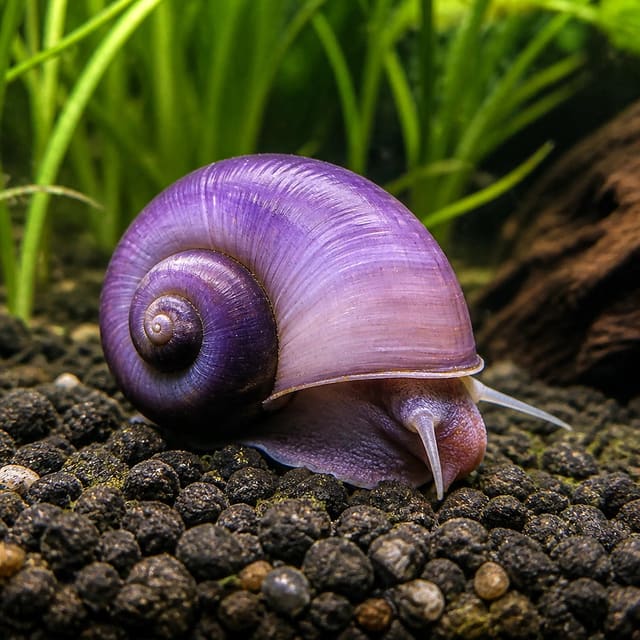
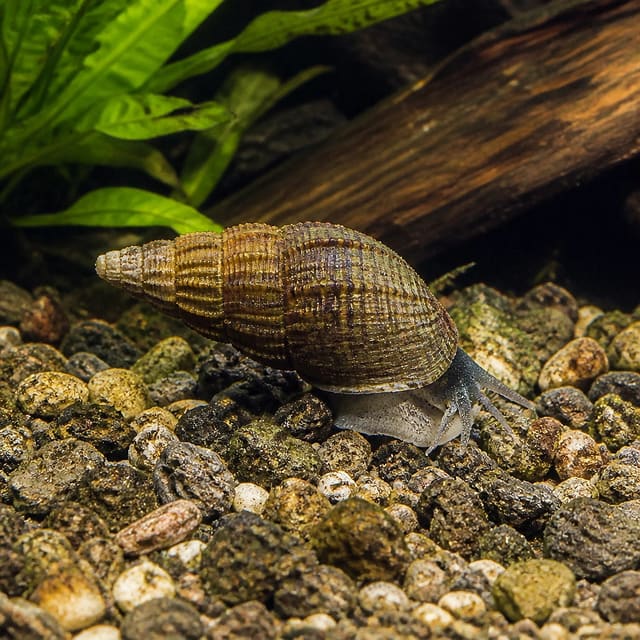
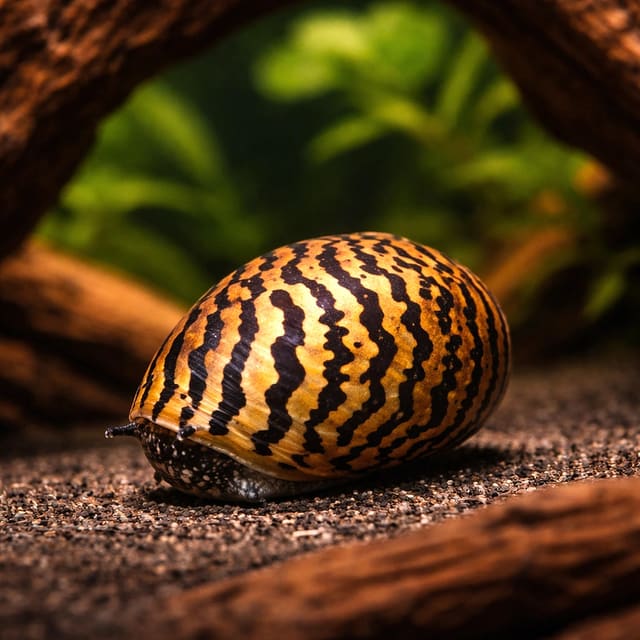
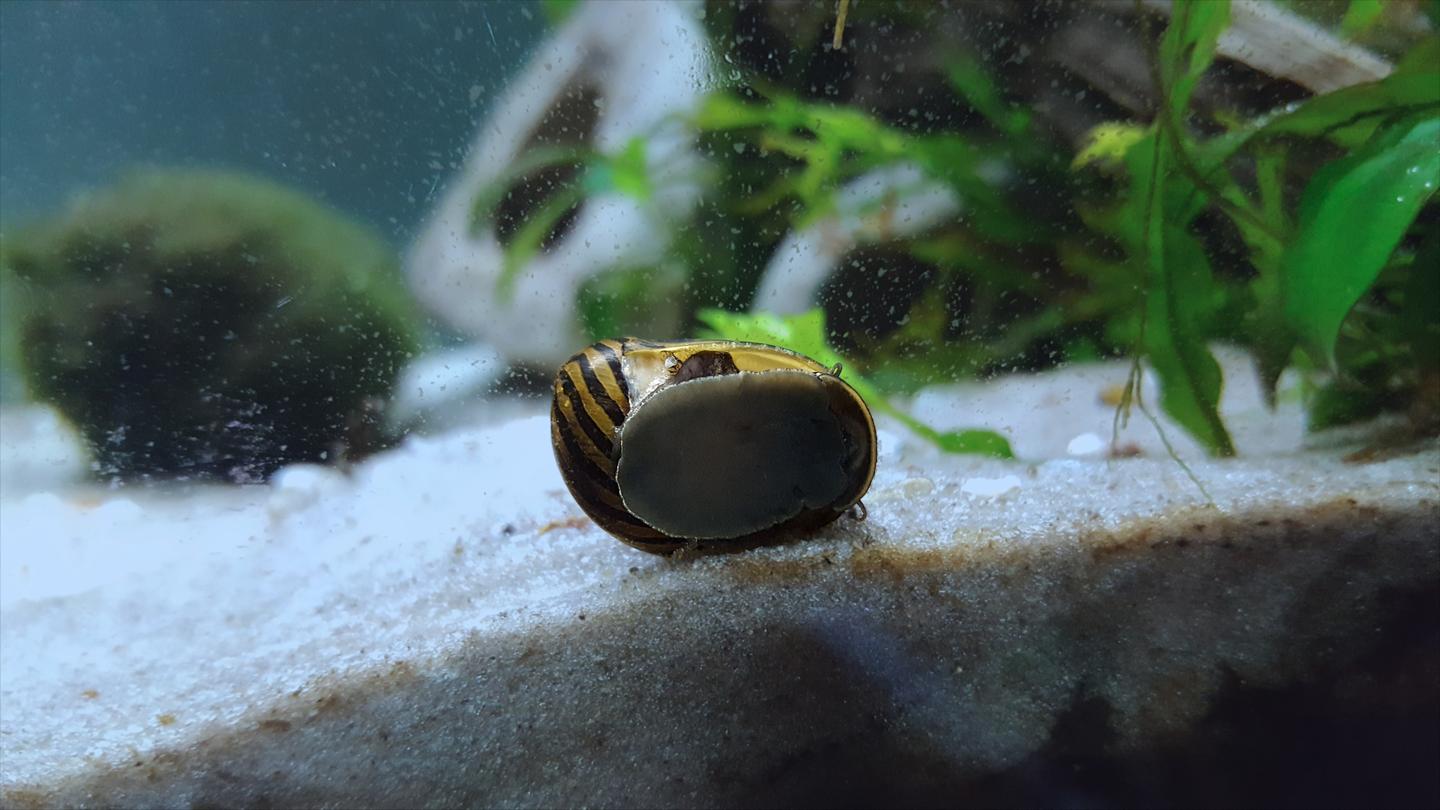
The gallery images are representative of this type of animal rather than photographs of the exact animal supplied, so colours can look slightly different from the live animal. Use the pictures to understand the general red-rimmed, mottled shell form, not to predict the exact markings, sex or dimensions of the individual sent.
These checks work together. A suitable temperature does not make an immature filter safe, and adequate volume does not make a snail-eating fish compatible. Complete the water, space and companion checks before introduction, then add livestock gradually so the filter can respond to the additional waste and feeding.
If you are comparing forms within the same broad group, browse the nerite snail collection. Make the final decision from the needs of your aquarium: mature filtration, measurable water values, appropriate capacity and companions that will not eat snails.
Keep the aquarium at 17–27°C, pH 6.5–8.0 and general hardness 4–18°dH. Carbonate hardness can be maintained within 3–15°dKH. Ammonia and nitrite must remain at zero mg per litre, while nitrate should not exceed 20 mg per litre above the normal level in the tap water.
OATA's freshwater shrimp and snail guidance gives these as broad group planning values. Use them as one complete operating range: check temperature, pH and hardness before introduction, then keep the aquarium stable within those limits rather than repeatedly moving between their extremes.
Test the aquarium rather than judging water quality by appearance. Record temperature, pH, general hardness, ammonia, nitrite and nitrate so that a later result can be compared with the usual pattern. Our aquarium water chemistry guide explains what the principal measurements mean, while the water matcher helps compare measured values with the stated range.
If ammonia or nitrite rises above zero, treat that as a water-quality problem rather than attempting to compensate with extra food or more livestock. Pause further additions, check the filter and feeding load, and restore dependable biological filtration. Nitrate trends are also useful: a rising weekly result can indicate that feeding, stocking or maintenance is adding waste faster than the routine removes it.
A single acceptable measurement does not outweigh a problem elsewhere. For example, an aquarium at 22°C and pH 7.2 is within the temperature and pH guidance, but it is not ready for another animal if ammonia or nitrite is measurable. Likewise, zero ammonia does not remove the need to check nitrite, nitrate and filter performance. Use the full set of results to decide whether conditions are stable.
Compare each new test with the previous result as well as the stated limits. A stable series helps show that the aquarium routine is working, while a repeated movement in one direction gives you time to review feeding, stocking and maintenance. Make one careful husbandry correction at a time where practical, then retest so you can see whether that action addressed the trend.
Before introduction, confirm that temperature, pH and hardness all fall within the guidance and that ammonia and nitrite are zero. After adding the snail, continue the same test schedule. The useful result is not merely a number inside a range on one day, but a mature aquarium that continues to process waste while its principal water values remain steady.
Use an aquarium of at least 10 litres as the OATA planning minimum for a group of small freshwater snails, and provide a larger aquarium when fish are included. A larger volume is easier to keep stable because changes in temperature and water quality are less abrupt. The precise capacity should therefore account for every animal in the community, not the snail alone.
Fit a working filter regardless of aquarium size. Add aquarium gravel or sand, then include live plants where practical. If live plants are not used, plastic plants and suitable ornaments can provide structure and cover. These features also create accessible surfaces across the aquarium, allowing the snail to move and graze without all activity being concentrated in one small area.
If this is your first invertebrate setup, follow our guide to preparing and maturing a first aquarium before choosing an introduction date. The key checkpoint is not the aquarium's appearance; it is a working filter accompanied by zero ammonia and zero nitrite.
Start with the aquarium's actual volume, then consider whether fish or other livestock will share it. A 10-litre aquarium may meet OATA's minimum for a group of small freshwater snails, but that figure should not be carried unchanged into a mixed community. Fish increase the biological load and require the larger capacity OATA advises for mixed setups.
Check that the filter can operate without plants, ornaments or substrate blocking its flow. Layout decisions should support both cover and maintenance: leave enough access to siphon solid waste, inspect the filter and observe the snail. An arrangement that looks complete but prevents routine cleaning makes the weekly care harder to perform consistently.
Use the first weeks to confirm that the planned capacity works in practice. Test ammonia and nitrite, monitor the nitrate trend and check whether supplementary food is consumed without persistent leftovers. If waste accumulates or the test results deteriorate, reduce the feeding load and postpone further livestock additions. A larger aquarium can improve stability, but it still requires an established filter, regular testing and weekly partial water changes.
When planning another animal, repeat the assessment rather than assuming unused visual space equals safe capacity. The decision depends on total waste, feeding and compatible water requirements. Add gradually only after the current inhabitants, filter and maintenance routine are producing stable results.
Keep the filter running and check it regularly for blockages. The filter provides water movement and physical waste removal, but its biological role is decisive: beneficial bacteria process toxic waste created by aquarium livestock and uneaten food.
The RSPCA explains biological filtration as a sequence in which ammonia is converted to nitrite and then to the safer nitrate. Ammonia and nitrite are both toxic, so a clear-looking aquarium can still be unsafe if the bacterial population is immature, damaged or overloaded.
Add snails and other livestock gradually. Each addition increases waste, and supplementary feeding adds another demand on the bacterial population. Introducing too many animals too quickly can produce new tank syndrome because the filter bacteria have not yet expanded to process the increased load.
A simple decision rule is to test before and after a stocking change. If ammonia and nitrite remain at zero and nitrate is controlled by the weekly routine, continue observing. If either toxic compound becomes measurable, stop adding livestock and address filter function, feeding and maintenance first.
Rinse biological filter media in water removed from the aquarium, never under the tap. Chlorine or chloramine may kill beneficial bacteria and reduce the aquarium's ability to process waste. When cleaning is necessary, rinse the media lightly in aquarium water removed during the partial water change. This retains more of the bacterial population while clearing loose debris.
Let the snail graze on algae in the aquarium and supplement that grazing with an algae wafer. Commercial pellets made for freshwater shrimp can also be used for freshwater snails. This follows OATA's group feeding routine for freshwater shrimp and snails and gives the animal a dependable food source when aquarium algae alone is insufficient.
Feed two or three times a week. Offer a modest portion and leave a pellet or wafer for at least 30 minutes so the snail has time to reach and eat it. Check how much remains after feeding; repeated leftovers show that the portion is greater than the animals are consuming.
Overfeeding is a water-quality problem as well as a feeding problem. Uneaten food decomposes and releases waste, increasing the burden on the filter. More food is not automatically better even when visible algae is limited; a measured schedule and small portions give a clearer view of what the snail actually consumes.
Avoid using a long menu of unmeasured foods. Algae wafers and suitable commercial pellets already provide the supported supplementary choices, while the aquarium's algae supplies grazing between scheduled feeds.
Choose two or three feeding days across the week and observe each portion for at least 30 minutes. Record whether the snail reached the food, whether another animal took it first and how much remained. This turns feeding into a measured routine rather than a response to how clean the aquarium glass appears.
If the snail reaches the food and the portion is consumed without a worsening water trend, retain that amount for the next feed. If a large remainder is present after the feeding opportunity, remove the excess and reduce the next portion. Do not add another wafer simply because the first was taken by a tank mate; first decide whether food placement or the community itself is preventing the snail from feeding.
Review the feeding record alongside the weekly ammonia, nitrite and nitrate results. Zero ammonia and nitrite remain essential, while nitrate should stay within the stated limit. When leftovers and a rising waste trend occur together, reduce excess food and check the filter before the next scheduled feed. When interest in food falls alongside unusual activity, colour or appearance, test the water and review recent changes instead of trying several new foods at once.
Change 25% of the aquarium water at least once every week. Use a siphon where helpful to remove solid waste from the gravel, and treat replacement tap water with a conditioner that removes chlorine or chloramine before it enters the aquarium.
Test the water at least weekly. Record ammonia, nitrite and nitrate alongside temperature and pH so gradual changes become visible before they develop into a serious problem. Ammonia and nitrite should both read zero; nitrate must remain no more than 20 mg per litre above the normal tap-water level.
Consistency matters because the snail depends on the same biological system from week to week. Large gaps between maintenance sessions allow waste to accumulate, while excessive filter cleaning can remove bacteria needed to process that waste. A measured partial change, gentle media care and written test results preserve both cleanliness and biological stability.
Review feeding and stocking whenever the weekly results drift. Maintenance should correct the cause of the trend rather than merely making the water look clearer.
During the first week, note the aquarium's temperature, pH, ammonia, nitrite and nitrate before the scheduled water change. Record the snail's activity and interest in food at the same time. These observations create a baseline for later comparisons and help distinguish a one-off quiet period from a repeated change accompanied by deteriorating water results.
Repeat the same sequence each week for the first month. If ammonia and nitrite remain at zero, nitrate stays controlled and food is consumed without persistent waste, continue the routine. If ammonia or nitrite becomes measurable, pause new additions, inspect the filter and review feeding. If nitrate rises week after week, check whether waste removal, the 25% change and portion control are keeping pace with the aquarium's load.
Do not combine heavy filter cleaning with an unnecessary disruption of the rest of the setup. Check for blockages and clean media only when needed, using removed aquarium water. Treat all replacement tap water before adding it. Keeping the process consistent makes each week's results easier to interpret and protects the beneficial bacterial population.
At the end of the month, compare all four sets of results rather than looking only at the newest test. A stable pattern supports the existing routine. A gradual shift identifies the part of care that needs attention before another animal or more food increases the load.
Before the parcel arrives, confirm that the intended aquarium has a mature filter, suitable temperature and zero ammonia and nitrite. OATA's freshwater shrimp and snail guidance supports these water checks before introduction. Do not use delivery day to finish cycling the aquarium or to make a major stocking change.
These steps follow the Tropical Fish Co delivery and Live Arrival Guarantee policy. The parcel is hand-packed, the animal travels bagged in pure oxygen inside an insulated poly box, and a heat pack is used when weather conditions call for it.
After introduction, avoid adding several more animals at once. OATA advises increasing freshwater shrimp and snail numbers slowly because the beneficial bacteria in the filter must expand as livestock and feeding increase. Use water tests to judge whether the system has absorbed the new load: ammonia and nitrite should remain at zero.
Observe the snail's movement, colour, appearance and interest in food over the following checks. A single quiet period should be considered alongside the water results and the animal's usual pattern, while persistent inactivity or several changes together call for a prompt review of water quality and compatibility.
Use only aquarium treatments clearly marked as safe for invertebrates. Freshwater shrimp and snails are highly sensitive to copper, and OATA warns that even low exposure will die. Check every treatment before it enters the aquarium rather than assuming a product intended for fish is also suitable for a snail.
If one of these changes appears, test temperature, pH, ammonia, nitrite and nitrate first. Check recent feeding, maintenance, treatment use and new tank mates as part of the same review. Correct a measurable husbandry problem carefully rather than adding medication without identifying whether it is safe for an invertebrate.
Contact us about significant health changes, especially when more than one warning sign appears or water results have moved outside the stated guidance. Provide the recent test values and describe what changed; concrete observations make the next decision clearer.
Avoid pufferfish, loaches and any fish capable of eating snails. OATA names pufferfish and loaches as examples of fish that should not be mixed with snails. For every other proposed companion, the useful question is not whether it carries a broad community label; it is whether that animal can swallow, attack or repeatedly disturb a snail.
Freshwater shrimp and snails are generally compatible with many aquarium species under OATA guidance, but they may also be eaten by common aquarium fish. That makes compatibility conditional rather than universal. A peaceful-looking fish is not automatically safe, and a mixed aquarium needs more capacity than the 10-litre recommendation for a small snail group.
Observe newly introduced companions instead of relying solely on a category name. If a fish repeatedly approaches, picks at or prevents the snail from moving and feeding, separate them and reassess the combination. If you want a stocking and compatibility assessment for named animals, contact us with the aquarium volume, current livestock and measured water values.
Count the snail as part of the aquarium's total biological load even though it grazes algae. It still produces waste, and supplementary wafers or pellets add material that the filter must process. Aquarium capacity, filtration and feeding must therefore be assessed for the entire community.
| Before adding | Decision |
|---|---|
| Ammonia or nitrite is measurable | Do not add livestock; restore filtration and zero readings first |
| A proposed fish eats snails | Avoid the combination |
| The aquarium only meets the 10-litre small-snail group guide | Use a larger aquarium before adding fish |
| Water values suit every intended animal | Add gradually and monitor the filter response |
Snails do not require a social group under OATA guidance. Keep one without adding companions purely to create a group, or add further snails only when the aquarium has enough grazing food, filtration and capacity. Increase numbers slowly, then verify that ammonia and nitrite stay at zero after the change.
Food competition also matters. Watch whether the snail can reach its supplementary wafer or pellet and has at least 30 minutes to feed. If other animals consume the food first, reassess placement and portioning without leaving excess food to decay. If uneaten food remains, reduce the portion instead of assuming more inhabitants are needed to consume it.
The final compatibility decision combines behaviour and water quality. A combination is unsuitable if it exposes the snail to predation, prevents feeding or pushes the biological filter beyond zero ammonia and nitrite.
The 1–2 cm measurement describes its dispatch size, not a predicted final size. Plan its space around OATA's broad recommendation of at least 10 litres for a group of small freshwater snails, with a larger aquarium when fish are included.
For the Red Lips Nerite Snail, OATA's group guidance recommends at least 10 litres for a group of small freshwater snails and a larger aquarium when fish are present; use a mature, filtered setup.
OATA describes snails as not social creatures, so one can be kept without a group. Add any further snails slowly so the filter bacteria can adjust to the extra livestock and feeding.
The Red Lips Nerite Snail can suit a first-time invertebrate keeper who can mature the filter, test water weekly, keep ammonia and nitrite at zero, change 25% of the water weekly and avoid copper.
Under OATA's freshwater-snail guidance, let it graze aquarium algae and supplement with an algae wafer or commercial freshwater-shrimp pellet two or three times a week, allowing at least 30 minutes for feeding.
Keep it at 17–27°C and pH 6.5–8.0, with general hardness of 4–18°dH; these are OATA's broad group values for freshwater shrimp and snails.
It has no fins to nip, and the main compatibility concern is fish eating the snail. Avoid pufferfish, loaches and any other fish capable of eating snails.
Keep it only with aquarium animals that cannot eat or attack snails and that suit the same water conditions. OATA says freshwater snails are generally compatible with many aquarium species but specifically advises against pufferfish and loaches.
It is hand-bagged in pure oxygen, placed in an insulated poly box with a heat pack when weather calls for it, and carried by a licensed live-animal courier. Be home to receive it and start filming continuously before opening the parcel, showing it still sealed, then being opened, with the animal still in the bag. Float the bag for 20–30 minutes, release the animal and do not pour transport water into the aquarium.
No reviews for this item yet. Bought one? Honest reviews only, good or bad.
What customers say about ordering from us
Easy website plenty of info on fish your buying great to pick a time slot
TRACEY DURRANT · 7 Oct 2026
Got some lovely fish thank you
Kevin Mackie · 7 Oct 2026
Reviews of our shop, collected by Judge.me, an independent third-party review collector. Newest first.