Easy
Parallel Nerite Snail (Neritina sp.)
17–27°C · pH 6.5–8
£4.99
The Tiger Nerite Snail (Neritina sp.) is an aquatic snail of the nerite family, Neritidae, whose genus includes marine, brackish-water and some freshwater species. It suits a mature, filtered freshwater aquarium kept within OATA's shrimp and snail guidance of 17–27 °C and pH 6.5–8.0, away from pufferfish, loaches and copper. Sold as one live snail per purchase, supplied at around 2 cm.
Neritina sp.
Lives in groups: kept together they stay settled, active and show their best colour.
Minimum of 2 per order.
The Tiger Nerite Snail (Neritina sp.) is an aquatic snail of the nerite family, Neritidae, whose genus includes marine, brackish-water and some freshwater species. It suits a mature, filtered freshwater aquarium kept within OATA's shrimp and snail guidance of 17–27 °C and pH 6.5–8.0, away from pufferfish, loaches and copper. Sold as one live snail per purchase, supplied at around 2 cm.
Nerite snail is a trade umbrella, not one species. Confirm the supplied taxon and holding water, use a mature covered aquarium with established grazing surfaces, stock from food availability rather than a litre formula, and treat egg capsules, medicines and tank mates as species-specific decisions.
Maintain these water conditions for optimal health and vibrant colors
The Tiger Nerite Snail (Neritina sp.) is a small aquatic snail with an operculum, from the family Neritidae, the nerites. WoRMS lists Neritina as an accepted genus in the family Neritidae, placed in Cycloneritida, and the genus summary on Wikipedia describes its members as marine, brackish-water and sometimes freshwater snails. It suits keepers who want a quiet algae grazer for a mature, well-filtered freshwater aquarium that is free of copper treatments and snail-eating fish.
Tiger is a trade name, and this snail is identified to genus level. The exact species has not been identified, so the care advice here follows the genus Neritina and its care group. In practice that means the OATA care sheet for freshwater shrimp and snails, which names nerites among the snails popular in aquariums, sets the water, feeding and maintenance advice on this page.
Snails like this are kept because they graze. OATA explains that freshwater shrimp and snails are popular partly because they help to control nuisance algae, and that they are generally herbivorous. Treat the snail as one part of a well-run aquarium rather than a replacement for water changes and careful feeding.
OATA names apple, nerite and assassin snails among the snails popular in aquariums, and they are kept for different reasons. Apple snails are larger, and OATA allows them about 20 litres; assassin snails prey on other snails; nerites like this one are kept as grazers. Knowing which kind you are buying makes the rest of the planning simpler.
| Suits | Not suited to |
|---|---|
| A mature, filtered freshwater aquarium | A newly set-up tank with ammonia or nitrite present |
| Keeping singly or with several snails | Aquariums with pufferfish or loaches |
| Community tanks of fish that cannot eat snails | Tanks treated with copper |
| Shrimp aquariums | Tanks that hold assassin snails |
| Water within 17–27 °C and pH 6.5–8.0 | Water that swings outside those ranges |
Each purchase is one live snail, supplied at around 2 cm. To keep several, add the number you want to the basket; snails do not need company, so one is a complete purchase in itself. Sex is guaranteed only when the selected option explicitly states male or female. This Tiger Nerite Snail listing has no sex-guaranteed option.
Because the species has not been identified, there is no species maximum to plan around. OATA's care sheet notes that the snails popular in aquariums come in various colours, shapes and sizes but are unlikely to grow any larger than 5 cm, and that is the practical ceiling to allow for.
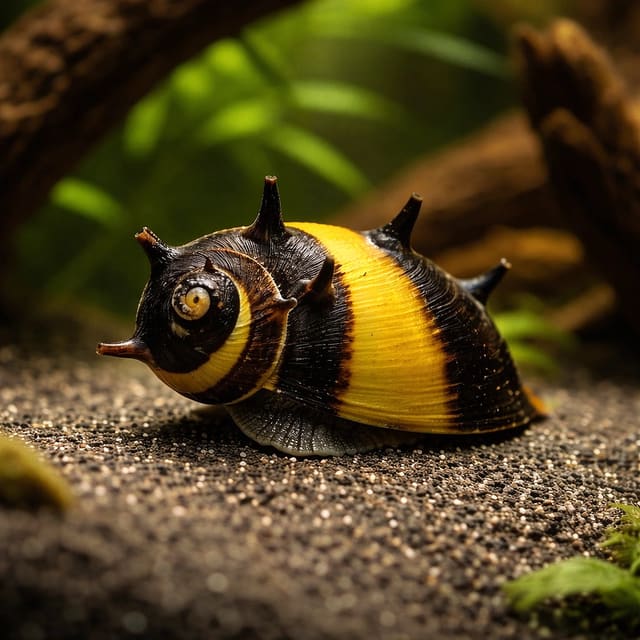
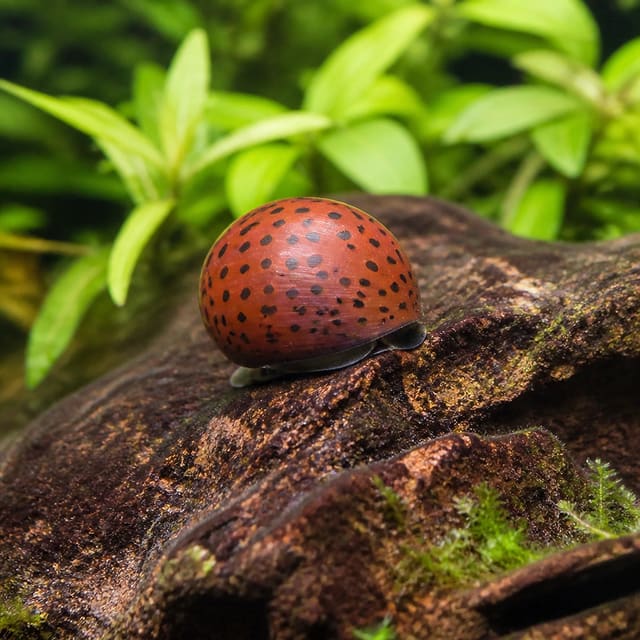
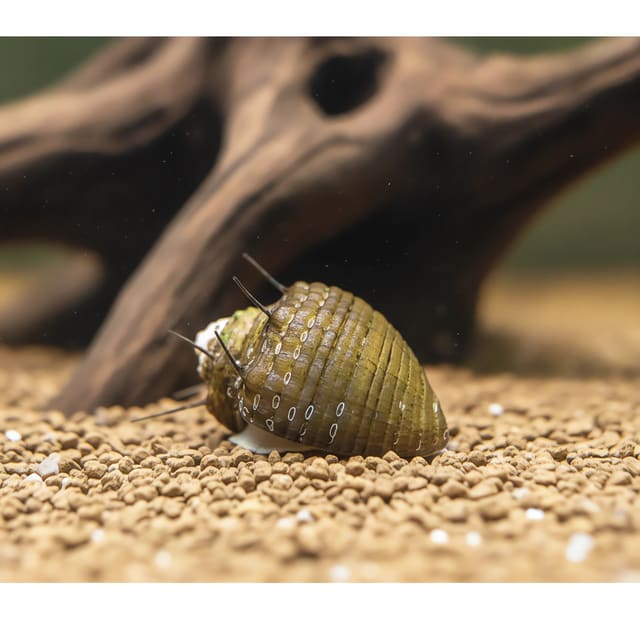
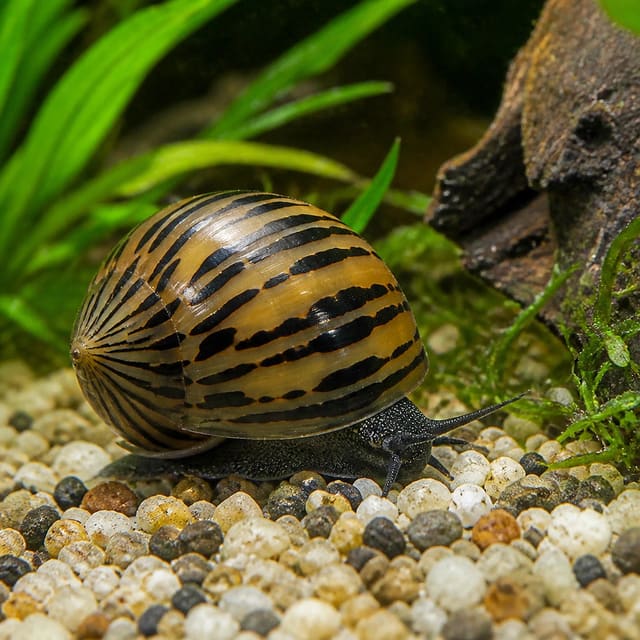
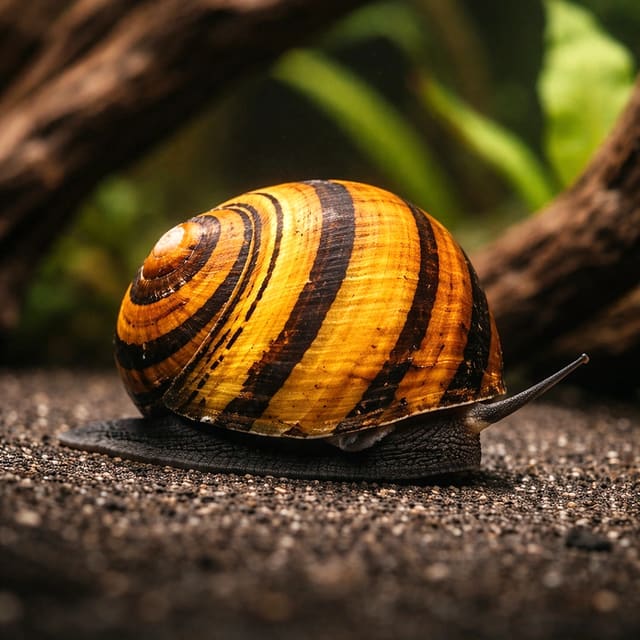
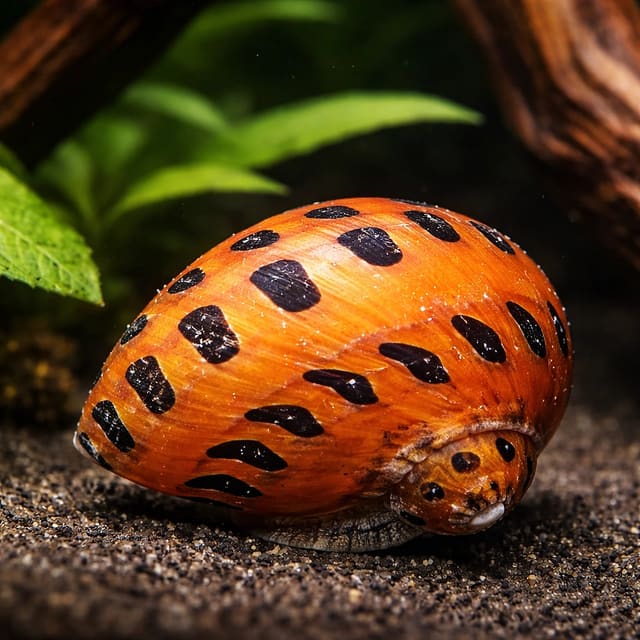
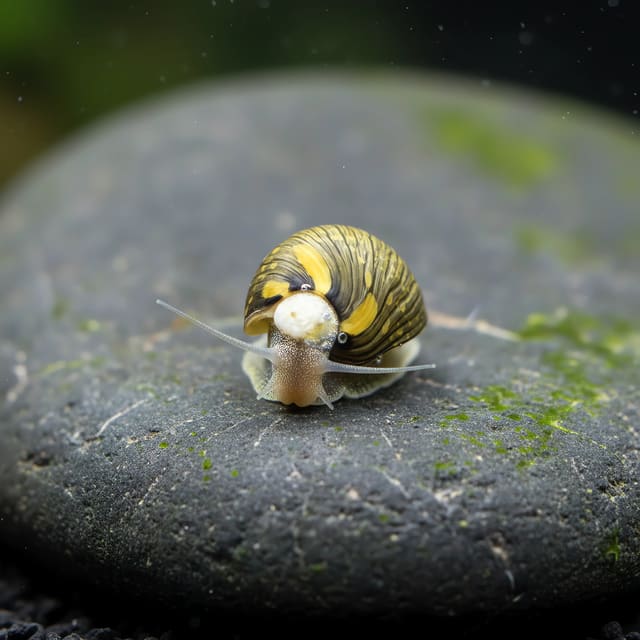
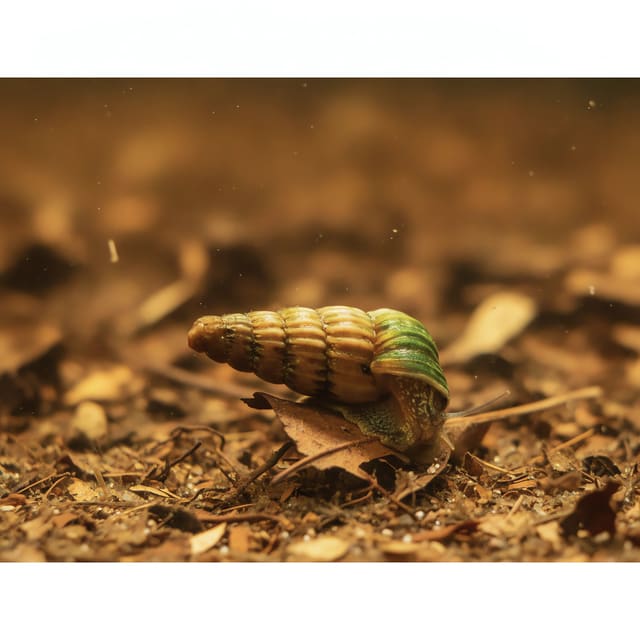
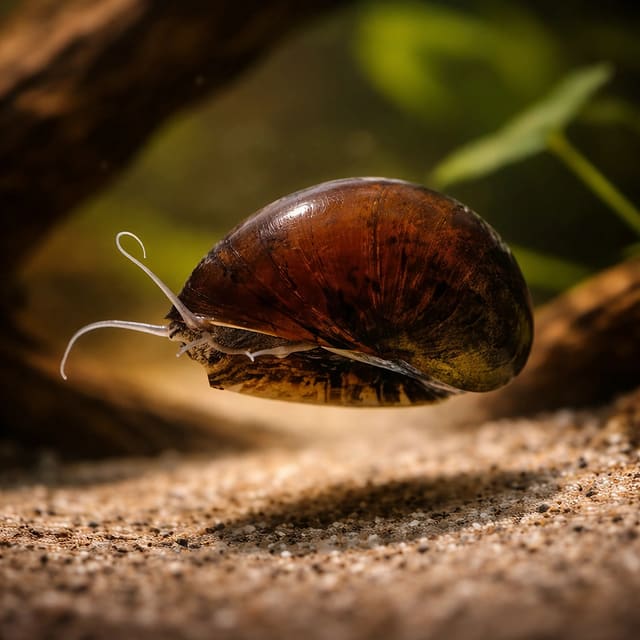
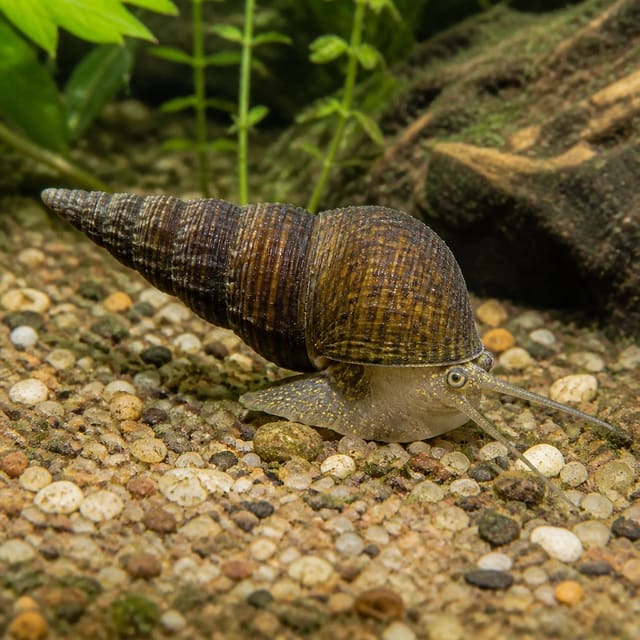
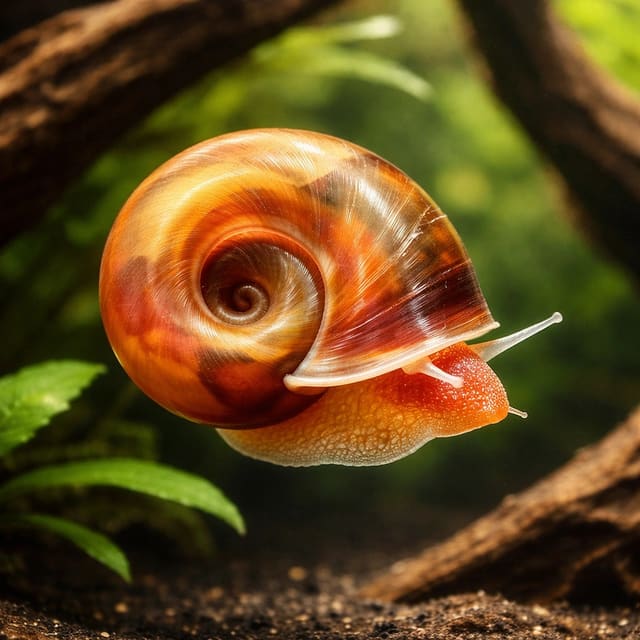
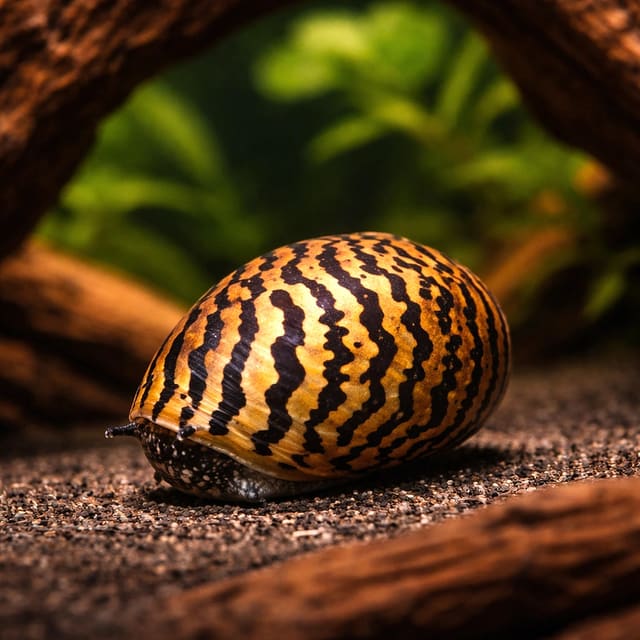
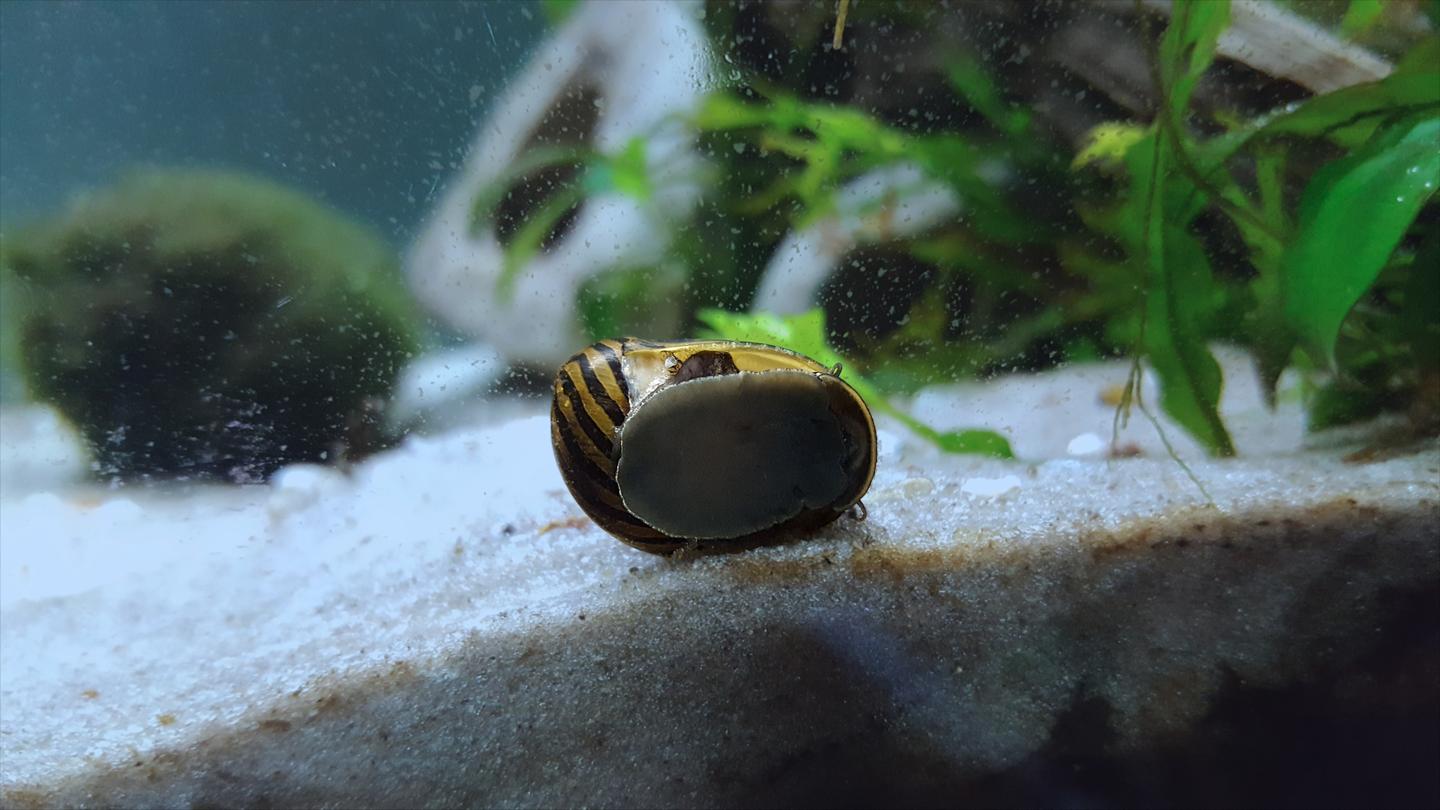
The gallery shows a snail with a golden shell banded in black. Gallery images have been digitally enhanced to improve image quality. Natural colour, pattern, size and maturity can vary between live animals.
If you are comparing nerites, the nerite snail collection lists the other nerites side by side.
If all five are true, the tank is ready for this snail. If one is not, put it right first; the care sections below explain how.
OATA recommends an aquarium of at least 10 litres for a group of small freshwater shrimp or snails, and approximately 20 litres for larger species such as apple snails. Those figures are for invertebrate-only tanks: the aquarium needs to be larger if the snail will live with any fish species. As a general rule, buy as large an aquarium as is reasonable, because a larger volume keeps temperature and water quality more stable.
Whatever the size, a filter is essential. The RSPCA explains the reason: animals release ammonia, which is toxic, and a working biological filter lets beneficial bacteria convert it to nitrite, which is also toxic, and then to the safer nitrate. A snail added to a tank whose filter has not matured meets that ammonia and nitrite directly.
| Set-up | What to plan |
|---|---|
| Invertebrate nano tank | At least 10 litres for a small group of snails or shrimp, with a mature filter |
| Community tank with fish | Larger than the invertebrate minimum, with fish that cannot eat snails |
If this will be a new aquarium, our first-tank guide for shrimp and other invertebrates walks through setting it up and maturing the filter before any livestock goes in.
Keep the aquarium at 17–27 °C and pH 6.5–8.0, with a general hardness of 4–18 °dH and a carbonate hardness of 3–15 °dKH. These are OATA's figures for freshwater shrimp and snails as a group, which is the right basis while the species is unidentified; OATA describes the group as usually undemanding of water chemistry.
| Value | Keep it at |
|---|---|
| Temperature | 17–27 °C |
| pH | 6.5–8.0 |
| General hardness | 4–18 °dH, soft to hard |
| Carbonate hardness | 3–15 °dKH, soft to hard |
| Ammonia and nitrite | Zero |
| Nitrate | No more than 20 mg per litre above your tap water |
In a community aquarium, the fish usually decide the exact temperature and pH. Check that their needs sit inside these ranges before adding the snail, and aim for a point both can share rather than an edge of either range. Once set, keep it steady rather than adjusting it often.
Each water change brings in new tap water, so condition every batch, test the tank on the same day each week, and compare pH and hardness with last week's readings. A change of direction over several weeks is the cue to look at your tap water and routine before the snail shows any sign of stress.
The genus Neritina covers snails from marine, brackish and sometimes freshwater habitats. That breadth is one reason nerites can be confusing to research: advice written for a marine or brackish species does not automatically apply to the snail in your tank.
This Tiger Nerite Snail is offered for freshwater aquariums, and its care on this page follows OATA's freshwater shrimp and snail sheet. Set the tank up as a normal freshwater aquarium within the ranges above, and keep it there.
Neritina sp. means the snail belongs to the genus Neritina, but the species within it has not been named. For a keeper, that has three consequences:
None of this makes the snail harder to keep. It simply means the dependable advice is the group guidance that covers every freshwater snail of this kind.
OATA describes freshwater shrimp and snails as generally herbivorous: they graze on algae in the aquarium. Grazing alone may not be enough, so OATA recommends supplementing it with algae wafers to make sure the snail is given enough food. Commercial pellets made for freshwater shrimp can be used for snails too.
Overfeeding leaves uneaten food to break down and release toxic waste into the water, and a small tank has little margin for that. If food is regularly left untouched, offer less next time rather than more often.
Where fish share the tank, place the wafer or pellets where the snail is grazing, and watch that the fish do not take all of it before the snail has had its share over the 30 minutes.
A tank with plenty of algae on its rock and glass gives the snail more of its own food, so the supplementary feeds can stay small. A very clean or newly matured tank with little algae leaves the snail more dependent on the wafers or pellets, so keep to the two or three feeds a week and watch that the food is found.
Copper is the one hazard with no margin for error. OATA explains that invertebrates, shrimp and snails alike, are very sensitive to copper and will die if exposed even to low levels. Always make sure any treatment added to the aquarium is safe for invertebrates.
If you are unsure whether a product is safe to use with snails, ask us before dosing and we will help you check it.
Whenever a treatment or additive goes into the tank, watch the snail closely over the following days for the changes listed under health signs, such as unusual inactivity or loss of interest in food, and test the water if anything looks wrong.
OATA stresses that good husbandry is essential for freshwater shrimp and snails, which are easily stressed. A short weekly routine keeps waste down and conditions stable.
In a 20 litre invertebrate tank, a 25% change is 5 litres a week. Condition that water as above, and watch the siphon intake so it cannot pick up the snail from the gravel.
| Task | Why it matters |
|---|---|
| Weekly test | Catches ammonia and nitrite before they build up |
| 25% water change | Removes waste and keeps nitrate down |
| Tap water conditioner | Removes harmful chlorine or chloramine |
| Filter check | Finds blockages before flow drops |
| Rinse media in tank water | Keeps the beneficial bacteria alive |
Write down each week's test results and water change. A slow rise in nitrate or a drift in pH is much easier to spot in a list of numbers than by watching the snail.
Before ordering, check that the aquarium is ready. OATA advises that ammonia and nitrite should read zero, and that shrimp or snails should be added slowly, because the filter bacteria must increase every time more livestock is added and feeding increases. Stocking too many too quickly can lead to new tank syndrome, with unhealthy ammonia and nitrite levels which may cause freshwater shrimp and snails to become ill or die.
Your order is hand-bagged in pure oxygen and packed in an insulated poly box, with a heat pack when the weather calls for it. It travels with a licensed live-animal courier, and you receive the tracking number and a confirmed Thursday or Friday delivery date by email, so you know when to be in. Livestock cannot be left unattended.
If anything has gone wrong, contact us the same day, with WhatsApp the fastest route, including your order number and the unboxing video, and a replacement or refund will be arranged. The full terms are on the delivery and Live Arrival Guarantee page.
Keep up your normal testing, feed sparingly, and check the snail each day against the signs in the next section. Add any further snails or shrimp later, once readings have stayed at zero ammonia and nitrite.
All shrimp and snails vary a little in behaviour and appearance, so learn what is normal for yours. OATA suggests watching for changes in these areas:
| If you see | Check first |
|---|---|
| A snail inactive for much longer than usual | Ammonia, nitrite and temperature |
| A snail staying where oxygen is higher | Filter flow and a full water test |
| Food ignored for several feeds | Water quality, then the amount you feed |
| Changes after a treatment was added | Whether the product was safe for invertebrates |
If a change persists once the water checks out, ask us, with your test results and what you have noticed, and we will help you work through it.
OATA describes freshwater shrimp and snails as generally compatible with most species in the aquarium, but also says they should be mixed with caution because they may be eaten by common aquarium fish. Snails should not be mixed with fish that can eat them, such as pufferfish or loaches, and OATA's advice is always to check before mixing snails with fish species.
| Good match | Avoid |
|---|---|
| Freshwater shrimp | Pufferfish |
| Community fish that cannot eat snails | Loaches |
| Other grazing snails | Assassin snails |
| Invertebrate-only tanks | Any other fish that can eat snails |
OATA explains that the assassin snail preys on other snail species, which is why it is used to control excessive snail populations. That makes it a poor companion for a snail you want to keep.
A fish that fails any of these checks is not a safe companion. When in doubt, keep the snail with shrimp or in an invertebrate-only aquarium.
OATA's care sheet covers freshwater shrimp and snails together, with the same water ranges, feeding and maintenance, which makes a shared invertebrate tank straightforward. Two differences are worth knowing: shrimp species are usually social, unlike snails, and OATA says freshwater shrimp should not be mixed with any fish that can fit them in its mouth or any species known to be predatory. If you plan shrimp as well as this snail, choose fish with both limits in mind.
Snails are not social creatures, OATA notes, unlike most shrimp species, which usually are. A single Tiger Nerite Snail will not suffer for lack of company, so the right number is set by the aquarium, not by the snail.
OATA treats freshwater shrimp and snails as generally compatible, and different grazing snails can usually share a tank. Build up slowly, feed for the total number of grazers, and keep an eye on whether every snail is finding food.
| Aquarium | A sensible approach |
|---|---|
| A 10 litre invertebrate tank | Start with one snail, add others slowly, and feed for every grazer |
| A larger community tank with fish | Check the fish first, then add one snail at a time with the filter kept mature |
In both cases, test ammonia and nitrite after each addition and hold off on the next until the readings stay at zero.
Because the exact species of this snail has not been identified, there is no single species maximum to quote. OATA's shrimp and snail care sheet says the snails popular in aquariums, nerites among them, are unlikely to grow any larger than 5 cm, which makes a sensible upper limit for planning.
OATA recommends an aquarium of at least 10 litres for a group of small freshwater snails, and approximately 20 litres for larger species such as apple snails. The tank needs to be larger again if the snail will share it with fish, and a bigger aquarium keeps temperature and water quality more stable.
One is fine. OATA notes that snails are not social creatures, so the number depends on the size of the aquarium and how much algae and food it offers, not on company. Add snails gradually, so the filter bacteria can keep pace with the extra waste, and feed for the total number of grazers.
It can be, in the right tank. OATA describes freshwater shrimp and snails as usually undemanding of water chemistry and good aquarium inhabitants. It still needs a mature, filtered aquarium, ammonia and nitrite at zero, no copper-based treatments and no fish that eat snails.
It grazes algae in the aquarium, as OATA says freshwater snails generally do, and needs extra food to be sure it gets enough. Offer algae wafers or pellets made for freshwater shrimp two or three times a week, leave them for at least 30 minutes, and remove what is left so it does not foul the water.
OATA's shrimp and snail guidance gives 17–27 °C, pH 6.5–8.0 and a general hardness of 4–18 °dH for the group, with ammonia and nitrite at zero and nitrate no more than 20 mg per litre above your tap water. Keep conditions steady within those ranges.
It is a grazer, and OATA describes freshwater shrimp and snails as generally compatible with most species in the aquarium. The risk runs the other way: some fish eat snails, so check every fish species before mixing and keep it away from snail-eating fish.
Freshwater shrimp and most community fish that cannot eat snails. Avoid pufferfish, loaches and other fish that can eat snails, and avoid assassin snails, which prey on other snail species.
Start filming a continuous unboxing video with the parcel still sealed, open it in one take and inspect the snail the same day, then float the bag for 20–30 minutes before releasing it. Livestock travels hand-bagged in pure oxygen in an insulated poly box, with a heat pack when the weather calls for it, by a licensed live-animal courier on a confirmed Thursday or Friday, so someone must be in to receive the parcel. For a Live Arrival Guarantee claim, send the order number and the video the same day.
No reviews for this item yet. Bought one? Honest reviews only, good or bad.
What customers say about ordering from us
Easy website plenty of info on fish your buying great to pick a time slot
TRACEY DURRANT · 7 Oct 2026
Got some lovely fish thank you
Kevin Mackie · 7 Oct 2026
Reviews of our shop, collected by Judge.me, an independent third-party review collector. Newest first.