
Easy
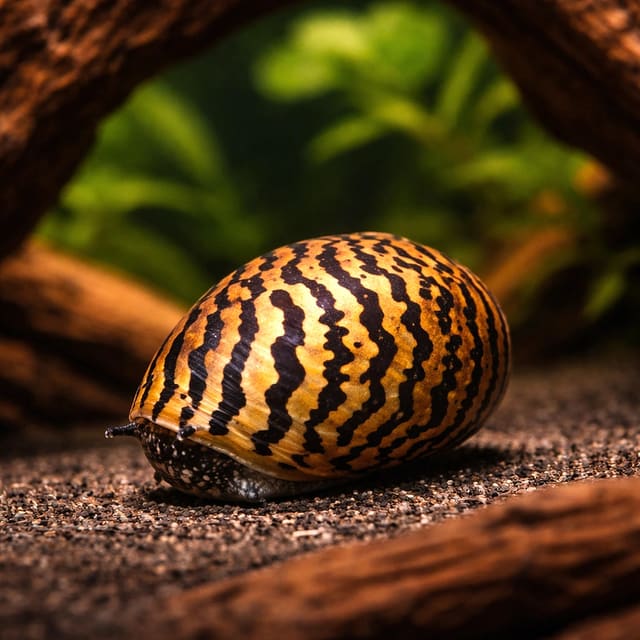
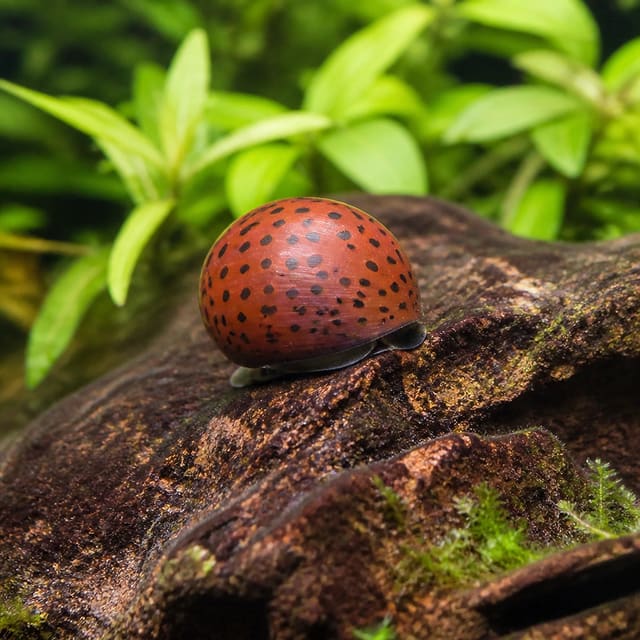
Parallel Nerite Snail (Neritina sp.)
17–27°C · pH 6.5–8
£4.99

Wizard Snail (Filopaludina martensi) is a large gilled freshwater snail in the Viviparidae family, supplied as one unsexed 2–3 cm animal. It suits a mature filtered aquarium where copper exposure and snail-eating fish are avoided, with feeding monitored rather than left to algae alone.
Filopaludina martensi
Wizard Snail live in groups — 6+ keeps them settled, active and showing their best colour.
Wizard Snail (Filopaludina martensi) is a large gilled freshwater snail in the Viviparidae family, supplied as one unsexed 2–3 cm animal. It suits a mature filtered aquarium where copper exposure and snail-eating fish are avoided, with feeding monitored rather than left to algae alone.
Maintain these water conditions for optimal health and vibrant colors
The Wizard Snail (Filopaludina martensi) is a large freshwater gastropod in the family Viviparidae. It has a gill and an operculum: the firm trapdoor-like structure used to close the shell opening. Its slow, deliberate movement and textured, high-spired shell make it an engaging aquarium animal, but it should be chosen as livestock with its own feeding and water-quality needs, not bought as a disposable answer to algae.
This offer is anchored to the identity Filopaludina martensi. The World Register of Marine Species also accepts that exact species name, so there is no unresolved genus or species change to bridge. One purchase supplies one live snail at the 2–3 cm dispatch grade. That is the size supplied, not a promised adult maximum.
| What one purchase supplies | One live Wizard Snail |
|---|---|
| Dispatch size | 2–3 cm |
| Sex | No male or female guarantee |
| Identity | Filopaludina martensi, family Viviparidae |
| Water planning | 17–27°C, pH 6.5–8.0 and 4–18°dGH under OATA's broad freshwater shrimp and snail guidance |
| Suits | Mature filtered freshwater aquariums without snail-eating fish or copper-unsafe treatments |
Sex is guaranteed only when the selected option explicitly states male or female. This Wizard Snail listing has no sex-guaranteed option. Do not infer sex from shell size, colour or the gallery image.
There is no reliable species-level centimetre adult maximum or aquarium temperature, pH, hardness, tank volume, social group, lifespan or breeding recipe to promise. The practical figures on this page therefore retain their proper scope: they come from OATA's UK guidance for freshwater shrimp and snails rather than being presented as a measured optimum unique to F. martensi.
That distinction still leaves useful decisions. Use a mature aquarium with biological filtration. Keep ammonia and nitrite at zero. Add livestock gradually. Provide sand or fine gravel, cover and grazing surfaces. Feed algae wafers or a suitable commercial pellet two or three times a week, give the snail time to feed, and remove excess. Avoid copper exposure and fish that eat snails, especially puffers and loaches.
Wizard Snails are best for a keeper who notices details. Activity, feeding response, shell condition and position in the aquarium can all change when water quality or tank-mate pressure changes. A snail that remains unusually inactive, loses interest in food or shows shell or soft-body damage needs a water test and a close review of anything recently added to the aquarium.
The broader aquarium snail collection can help compare other snail offers, but each species has its own identity and the related links do not imply that different snails need identical care or should be mixed automatically.
Gallery images have been digitally enhanced to improve image quality. Natural colour, pattern, size and maturity can vary between live animals.
The World Register of Marine Species lists Filopaludina martensi as an accepted species in Viviparidae. The exact offer uses the same genus and species. This agreement is important because similar trade names can sometimes cover more than one snail, but an identity entry is not an aquarium care sheet.
The species summary describes a large freshwater snail with a gill and an operculum. The operculum closes across the shell opening when the animal withdraws. It is a normal anatomical feature, not a sign that the snail has become sealed permanently. Give a newly arrived snail time to settle and observe whether normal activity resumes in suitable water.
The 2–3 cm dispatch grade tells you the size expected when supplied; it does not establish the eventual adult length. Do not copy the broad care sheet's statement that popular aquarium snails are unlikely to exceed 5 cm onto this species as an adult guarantee. Plan space and stocking conservatively for a visibly large snail and avoid relying on a precise final centimetre figure.
Each purchase is one animal. It is neither a pair nor a group pack. The offer does not promise male or female, and the image cannot establish sex. If reproduction matters to your plans, this listing should not be treated as a guaranteed breeding animal.
Start with a filtered, biologically mature aquarium. The RSPCA explains that aquatic animals release ammonia, which is toxic. Beneficial bacteria in a working filter convert ammonia to nitrite and then nitrate. Clear water alone does not prove that this cycle is established, so test ammonia and nitrite before adding the snail.
OATA recommends at least 10 litres for a group of small freshwater shrimp or snails and about 20 litres for larger species, with more space when fish share the aquarium. Filopaludina martensi is described as a large freshwater snail, so use the larger end as a cautious starting point and increase the volume for fish, multiple invertebrates or a heavily furnished layout. The value is broad invertebrate planning guidance, not a species-tested minimum.
A larger aquarium changes temperature and chemistry more slowly. It also provides more grazing area and more room to separate feeding from fish. In a very small container, one missed feed, dead leaf or dosing error has proportionally greater impact. Choose a volume you can filter, heat if necessary and maintain consistently rather than the smallest vessel that physically fits the snail.
OATA advises aquarium gravel or sand and ideally live plants for freshwater shrimp and snails. Sand or fine gravel is a practical choice for a snail moving across the base. Smooth wood, stones and established plant leaves provide extra surfaces for biofilm and algae. Avoid sharp decoration that could trap the soft body or make ordinary movement hazardous.
New glass and freshly scrubbed decor offer little established biofilm. Let the aquarium mature before relying on natural grazing, and avoid sterilising every surface at the same time. A planted invertebrate setup can provide useful ideas for cover and maturation; the freshwater shrimp guide is relevant to that general setup process, although shrimp-specific sections do not define Wizard Snail biology.
Use a working filter appropriate to the aquarium. Check the intake and gaps around equipment so the snail cannot become trapped. Flow should distribute oxygen and carry waste without repeatedly rolling the animal or making every resting surface unusable. Check equipment after rearranging decor because a snail can explore spaces fish ignore.
Beneficial bacteria need time to adjust when feeding and animal numbers increase. OATA warns that adding too many shrimp or snails too quickly can contribute to new tank syndrome, with unhealthy ammonia and nitrite. Add one stage at a time, monitor the filter's response and resist using a group of snails as an instant correction for a young aquarium's algae.
OATA's general freshwater shrimp and snail range is 17–27°C, pH 6.5–8.0, general hardness 4–18°dGH and carbonate hardness 3–15°dKH. Use these as a broad planning envelope for the group, not a claim that every point is an ideal for Filopaludina martensi. Choose stable values that your source water and aquarium can hold consistently.
| Temperature | 17–27°C |
|---|---|
| pH | 6.5–8.0 |
| General hardness | 4–18°dGH |
| Carbonate hardness | 3–15°dKH |
| Ammonia | 0 mg/l |
| Nitrite | 0 mg/l |
| Nitrate | No more than 20 mg/l above the normal tap-water level under OATA guidance |
Measure the aquarium and source water. A stable pH in the broad range is preferable to frequent abrupt adjustment. Log temperature, pH, hardness, ammonia, nitrite and nitrate so you can see a trend. The aquarium water guide explains the purpose of each test, and the water matcher helps compare readings with the stated planning range.
OATA states that freshwater shrimp and snails are very sensitive to copper and will die if exposed even to low levels. Read every treatment label before use. Confirm that medications, algae controls and other additives are safe for invertebrates. If the manufacturer does not clearly support use with snails, do not dose the display aquarium on assumption.
Copper risk is not limited to a bottle labelled as copper medication. Review fertilisers, remedies and any recent treatment history. Keep a written record of what was dosed and when. Never transfer wet equipment or treatment water from a copper-treated system into the snail aquarium without knowing it is safe.
Changes in normal activity, increased inactivity, restlessness, unusual behaviour, darker or paler colour, abnormal swelling, visible lesions, shell or soft-body damage, and reduced feeding are reasons to investigate. Test ammonia, nitrite, temperature and other routine readings, review recent additions and contact the retailer when the animal's health remains concerning.
Freshwater shrimp and snails generally graze algae, but OATA says this should be supplemented with algae wafers. Commercial shrimp pellets can also be used for snails. This gives a practical feeding basis for the Wizard Snail while keeping the advice at its proper freshwater-snail scope.
Biofilm and soft algae vary with aquarium age, lighting, plant growth and the number of grazers. A tank that looks green to a person can still offer little edible growth of the right texture. Watch whether the snail actually spends time feeding and whether prepared food is being reached before fish or shrimp remove it.
Offer an algae wafer or suitable commercial pellet. OATA recommends feeding freshwater shrimp and snails two or three times a week. Leave a pellet or wafer for at least 30 minutes to allow slow invertebrates to feed, then remove uneaten excess before it breaks down and affects water quality.
Place food on an accessible surface near the snail rather than dropping it into a busy fish feeding zone. If fast fish consume everything, feed in a sheltered area or temporarily distract the fish elsewhere. The purpose is not to scatter more food across the tank; it is to make the intended ration available to the slower animal.
Begin conservatively and observe. If the food remains after the feeding window, reduce the next portion or remove competing waste. If it vanishes immediately into other animals, change placement before increasing quantity. Uneaten food releases waste as it decomposes, so overfeeding is not a safe substitute for making sure the snail can feed.
A snail can graze nuisance algae without solving the cause of excessive growth. Lighting duration, nutrient balance, plant health and maintenance still matter. Buy the Wizard Snail because you want to keep the animal, with grazing as one aspect of its behaviour, rather than expecting it to clean every surface on demand.
Snails communicate trouble through changes that can be easy to miss. Learn the animal's usual activity, preferred resting places and feeding response while conditions are good. That makes an unusual period of inactivity or a failed feeding attempt easier to recognise.
When activity changes, confirm the temperature and filter operation, then test ammonia and nitrite. Review the latest water change, conditioner dose, food and any additive used in the aquarium. A clear timeline often points to the relevant change more quickly than treating every quiet snail as diseased.
Look for shell damage, discolouration, lesions, abnormal swelling and visible injury to the soft body. OATA also names darker or paler colour, restlessness and reduced feeding among warning signs for freshwater invertebrates. Avoid pulling a withdrawn snail from its shell or repeatedly handling it to provoke movement.
Make sure the layout does not leave the snail wedged behind equipment or unable to reach food. Check the animal's position before moving wood, stones or filter parts. If fish gather around the snail whenever it emerges, treat the interaction as a compatibility problem rather than waiting for obvious damage.
Copper sensitivity makes an impulsive medication especially risky. Read the active ingredients and invertebrate warning on every product. Move the snail only to a properly prepared, stable system; an unfiltered bowl is not a safe response to uncertainty in the main aquarium.
If the snail remains inactive or damaged after water and compatibility checks, contact the retailer with current test results, recent changes, photographs and the time it last fed or moved normally. Specific observations make it easier to distinguish a husbandry problem from normal withdrawal after transport.
OATA strongly recommends changing 25% of the water at least once a week for freshwater shrimp and snails. Test the water regularly, at least weekly, for ammonia and nitrite. Treat replacement tap water with conditioner to remove chlorine or chloramine, and avoid a sudden shift in temperature or chemistry.
Check the filter for blockages. When media needs rinsing, use water removed from the aquarium rather than running it under the tap. Chlorine or chloramine can kill the beneficial bacteria that carry the biological cycle. Preserve mature biological media while removing enough trapped debris to maintain flow.
Remove solid waste from accessible gravel or sand during the water change, but check the snail's position before starting. Work around plants and wood rather than stripping every mature surface. Inspect buckets, siphons and removed decor before discarding water because small aquatic animals can be difficult to spot.
The aquarium should already be filtered, stable and tested. Have a clear route from parcel to tank and know where the snail will be observed after release. The delivery policy says to float the sealed bag for 20–30 minutes and not to pour bag water into the aquarium.
Begin a continuous unboxing video with the parcel still sealed and the outer box visible. Open it in one take and show the animal while it remains inside the sealed bag. Someone must be present to receive the parcel. Inspect it on the day it arrives and contact Tropical Fish Co the same day with the order number and video if a claim is needed. Read the full Delivery and Live Arrival Guarantee policy before arrival day.
Allow time for the snail to withdraw and re-emerge. Avoid adding medication, rearranging the entire aquarium or introducing more livestock on the same day unless animal welfare requires action. Confirm the snail can right itself and move across the chosen substrate, and check that no fish immediately peck at its tentacles or foot.
Before adding the Wizard Snail, consider the animals already present and the products used in their care. A fish does not need to be labelled aggressive to be a poor companion; a species that hunts snails, pecks tentacles or consumes every sinking food is enough to make the combination unsuitable.
Exclude puffers, loaches and any fish with a known habit of eating snails. Ask how the fish feeds and behaves at the substrate. Watch established fish during feeding before assuming that a shell protects the new animal.
Choose a location where an algae wafer or pellet can remain accessible for at least 30 minutes. If fish remove it immediately, change the stocking or feeding method. Adding more food across the whole aquarium increases waste without guaranteeing that the snail receives any.
All residents must share the same water safely, and every medication or additive must be suitable for invertebrates. A treatment required routinely for another animal can make an otherwise peaceful combination impractical.
Allow for the combined waste and grazing demand of every fish, shrimp and snail. Add animals slowly so the biological filter can respond. Continue testing after the addition rather than treating a stable result from the week before as proof that the larger population is already supported.
Freshwater snails are not social animals under OATA's guidance, so the Wizard Snail has no shoaling minimum. One purchase supplies one snail, and you can keep a single animal without trying to create a pair. If keeping more than one, add them gradually and size the aquarium and feeding plan for the combined waste and grazing demand.
OATA says snails should not be mixed with fish that can eat them, naming pufferfish and loaches. Even when a fish cannot swallow the shell, repeated pecking at tentacles or the foot can cause injury and keep the snail withdrawn. Do not use the shell alone as proof that a fish is safe.
Choose fish that are not known to prey on or harass snails. Consider feeding speed as well as aggression: a peaceful but very quick fish may take every wafer before the snail reaches it. Provide places where prepared food can be offered without constant competition.
OATA describes freshwater shrimp and snails as generally compatible with most aquarium species, but that broad statement still requires attention to food, space and water. Another snail may compete for the same grazing surfaces, and a shrimp colony may remove prepared food quickly. Add livestock slowly and watch the actual result.
Live plants provide cover and grazing surfaces. If live plants are not used, OATA suggests artificial plants and suitable ornaments such as plant pots or model caves for shelter. Whichever approach you choose, avoid narrow traps and sharp edges, and keep access open enough to observe the snail's condition.
Use a mature aquarium with stable water and choose animals that neither eat nor repeatedly disturb snails. Make sure the Wizard Snail can reach food, and confirm every treatment used for a tank mate is safe for invertebrates before it enters the shared water.
This Wizard Snail is supplied at 2–3 cm and the species is described as a large freshwater snail. There is no reliable adult centimetre maximum to promise, so do not use the dispatch size as the expected final size.
OATA recommends at least 10 litres for a group of small snails and about 20 litres for larger invertebrates, with more space when fish share the tank. As this species is described as large, start at the larger end and increase for tank mates.
Snails are not social animals under OATA guidance, so there is no shoaling minimum. One can be kept alone; add further snails slowly only when the aquarium, filter, grazing area and feeding plan can support them.
It can suit a careful newer keeper who already has a mature filtered aquarium and will test the water, supplement grazing and check every treatment for invertebrate safety. Copper sensitivity and predatory fish make casual care risky.
Use the broad freshwater snail feeding plan: natural algae grazing supplemented with an algae wafer or suitable commercial pellet two or three times a week. Allow at least 30 minutes for slow feeding and remove uneaten excess.
OATA's broad freshwater shrimp and snail guidance gives 17–27°C and pH 6.5–8.0, with 4–18°dGH. Keep values stable, test ammonia and nitrite at zero and treat these figures as group guidance rather than a species-specific optimum.
Wizard Snails are kept as freshwater invertebrates rather than fin nippers. The important risk runs the other way: fish may peck exposed soft parts or eat the snail, so watch interactions and remove an unsafe combination promptly.
Consider peaceful fish that are not snail predators, plus compatible shrimp or non-predatory snails when food and space are adequate. Avoid pufferfish, loaches and any species known to eat or repeatedly harass snails.
Tropical Fish Co hand-packs live animals with oxygen and insulation and uses a licensed live-animal courier. Be present, film the sealed parcel being opened in one continuous take, inspect the snail in the sealed bag and contact the store the same day if a Live Arrival Guarantee claim is needed.
The accepted species identity and family come from the World Register of Marine Species. The description of a large gilled freshwater snail with an operculum is summarised by the Filopaludina martensi species page.
Practical water, aquarium, copper, feeding, maintenance and compatibility guidance comes from OATA's freshwater shrimp and snail care sheet. Filtration context comes from the RSPCA's aquarium environment guidance.
Always research specific species before adding them to your tank. Consider:
No reviews for this item yet. Bought one? Honest reviews only, good or bad.
What customers say about ordering from us
I have a small group of long finned mountain minnows. So was delighted to be able to order ten of this variety to increase the genetics in my tank . The ones I recieved are healthy but it’s to early to give a verdict on wether they are of a long finned type since they are small currently.
Gordon Walker · 23 Sept 2026
100% success travel and "installation". Pleased with quality of purchase. The Siamese fighter a bit "shy" so have not yet seen him at his best yet but looking good. Happy customer. GG
George E Garratt · 21 Sept 2026
Reviews of our shop, collected by Judge.me, an independent third-party review collector. Newest first.
17–27°C · pH 6.5–8
17–27°C · pH 6.5–8
17–27°C · pH 6.5–8
22–28°C · pH 7–8.2 · 40L
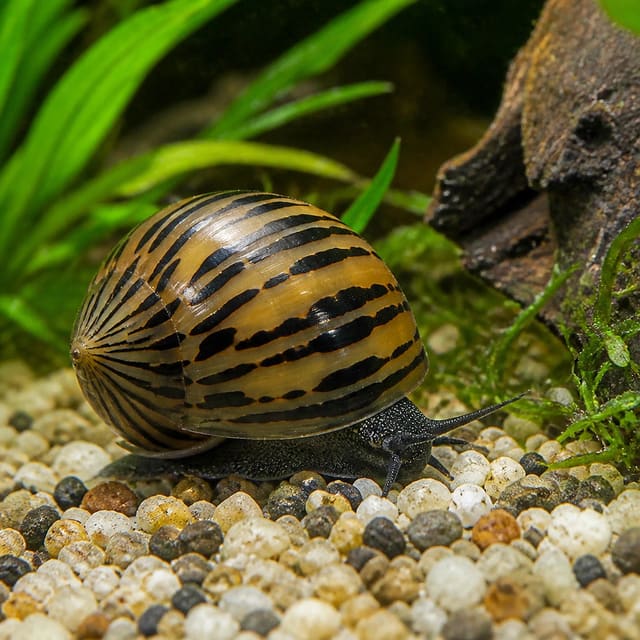
17–27°C · pH 6.5–8
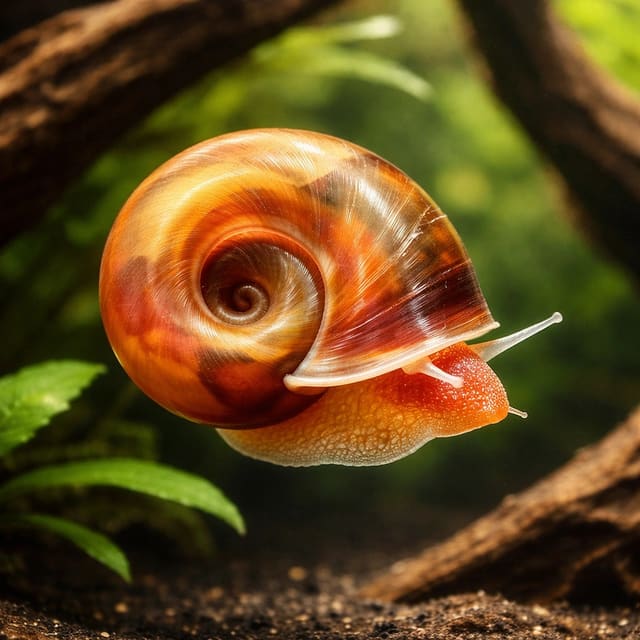
18–28°C · pH 6.5–8 · 10L
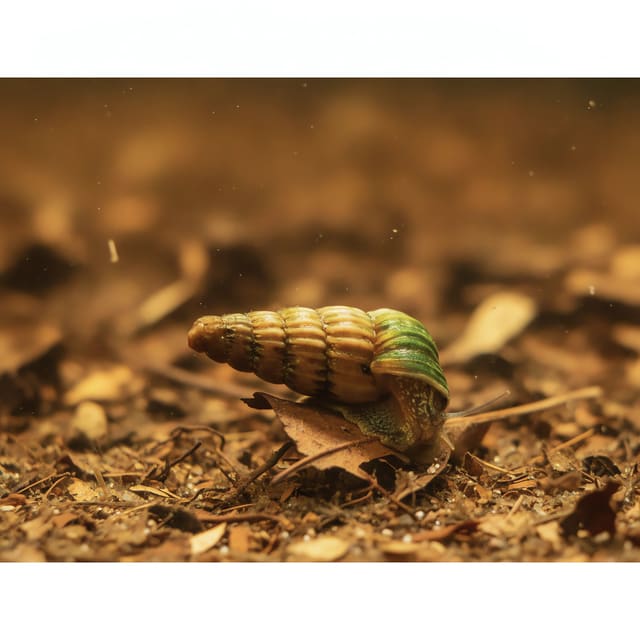
22–28°C · pH 7–8.5 · 10L
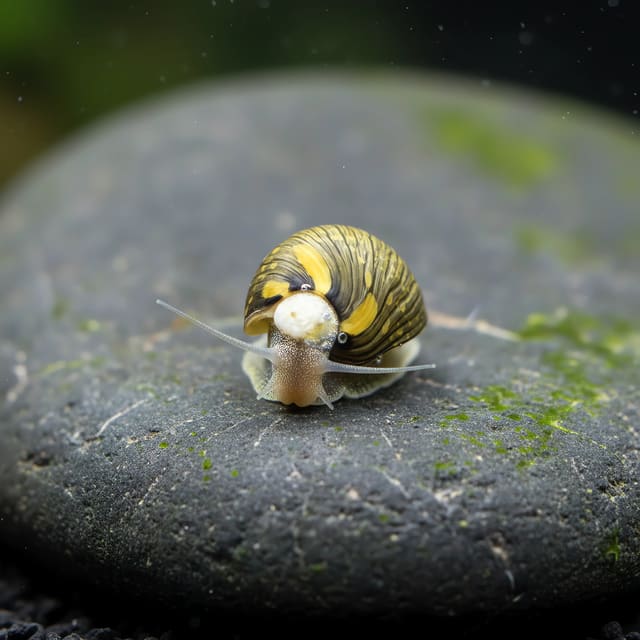
17–27°C · pH 6.5–8

17–27°C · pH 6.5–8
17–27°C · pH 6.5–8

17–27°C · pH 6.5–8

pH 7–7.5
19–26°C
17–27°C · pH 6.5–8
17–27°C · pH 6.5–8

17–27°C · pH 6.5–8

22–28°C · pH 7–8 · 41L

21–25°C · pH 5–7
24–29°C

24–27°C · pH 6.5–6.5

22–27°C · pH 6–8 · 72L

23–27°C · pH 5.5–7 · 60L

22–27°C · pH 6–8

22–26°C · pH 6–7.8 · 75L