Easy
Parallel Nerite Snail (Neritina sp.)
17–27°C · pH 6.5–8
£4.99
The Prambanan Nerite Snail (Neritina sp.) is a freshwater aquarium gastropod in the nerite family; Neritina includes marine, brackish and sometimes freshwater snails. It suits a mature, filtered aquarium; OATA’s freshwater shrimp and snail guidance gives 17–27°C, pH 6.5–8.0 and 4–18°dH, and snails do not need a social group. Sold individually at a dispatch size of 1.5–2 cm.
Neritina sp.
Lives in groups: kept together they stay settled, active and show their best colour.
Minimum of 2 per order.
The Prambanan Nerite Snail (Neritina sp.) is a freshwater aquarium gastropod in the nerite family; Neritina includes marine, brackish and sometimes freshwater snails. It suits a mature, filtered aquarium; OATA’s freshwater shrimp and snail guidance gives 17–27°C, pH 6.5–8.0 and 4–18°dH, and snails do not need a social group. Sold individually at a dispatch size of 1.5–2 cm.
Nerite snail is a trade umbrella, not one species. Confirm the supplied taxon and holding water, use a mature covered aquarium with established grazing surfaces, stock from food availability rather than a litre formula, and treat egg capsules, medicines and tank mates as species-specific decisions.
Maintain these water conditions for optimal health and vibrant colors
The Prambanan Nerite Snail (Neritina sp.) is a freshwater aquarium gastropod in the nerite family, Neritidae. WoRMS places Neritina in Neritidae, while Wikipedia describes the genus as small aquatic snails with an operculum that occur in marine, brackish and sometimes freshwater environments. This animal suits a keeper prepared to maintain a mature biological filter, test the water every week, supplement its algae grazing and screen every companion for snail-eating behaviour.
Keep the aquarium at 17–27°C, pH 6.5–8.0 and 4–18°dH. OATA’s freshwater shrimp and snail guidance gives these broad values for the care group, together with 3–15°dKH. Ammonia and nitrite must remain at zero mg/l, and nitrate should not rise by more than 20 mg/l above the normal level in your tap water.
| Suits | Not suited to |
|---|---|
| A mature, filtered freshwater aquarium | A new or unfiltered system |
| A keeper who tests water weekly | Water with detectable ammonia or nitrite |
| A carefully screened community | Pufferfish, loaches or other snail-eating fish |
| An aquarium kept free of copper | Treatments that are not safe for invertebrates |
One purchase supplies one Prambanan Nerite Snail at a dispatch size of 1.5–2 cm. That is the size supplied, so plan the aquarium and companions for a mature snail rather than for a 1.5–2 cm animal. Plan the aquarium around stable water, adequate grazing space and the needs of every inhabitant rather than treating the dispatch measurement as a final size.
The exact species has not been identified, so the care advice here follows the genus Neritina and its care group. Follow the freshwater snail routine below rather than care advice written for any one named Neritina species. This distinction matters because members of a genus can differ, while the practical routine here gives you a cautious freshwater starting point for water quality, space, feeding and compatibility.
Sex is guaranteed only when the selected option explicitly states male or female. This Prambanan Nerite Snail listing has no sex-guaranteed option. Do not use shell pattern, colour, body size or gallery appearance to plan for a particular sex.
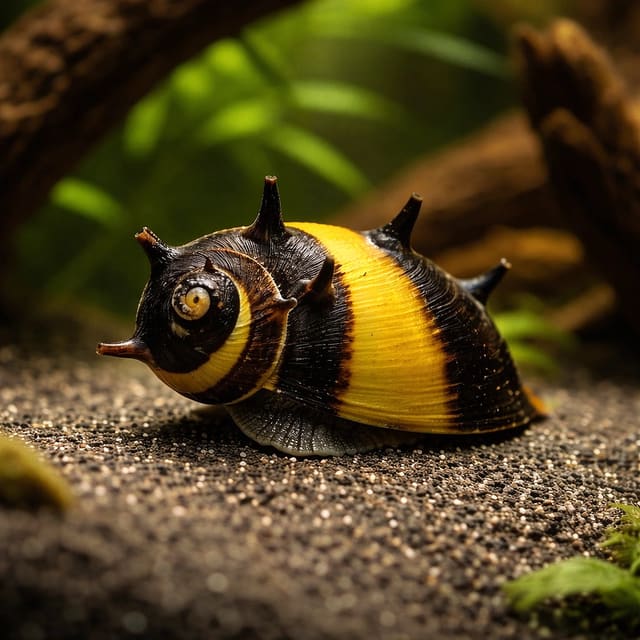
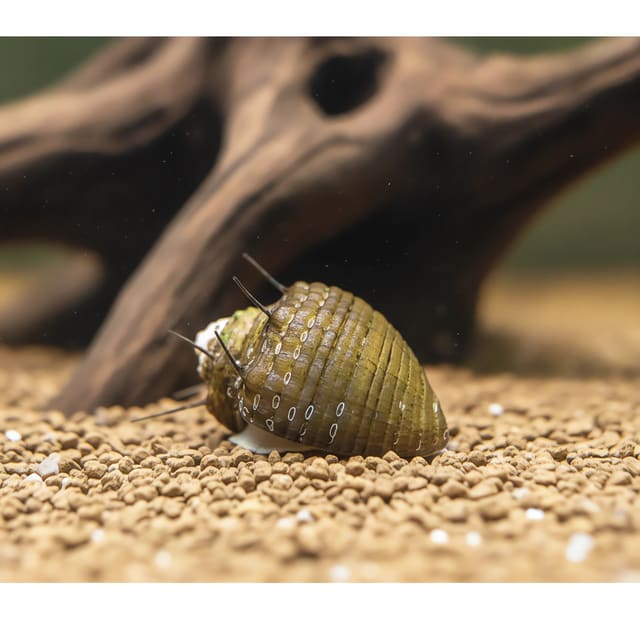
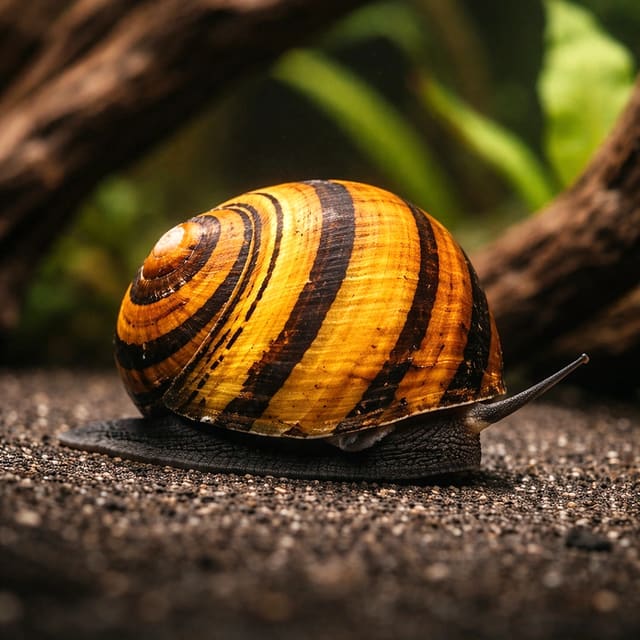
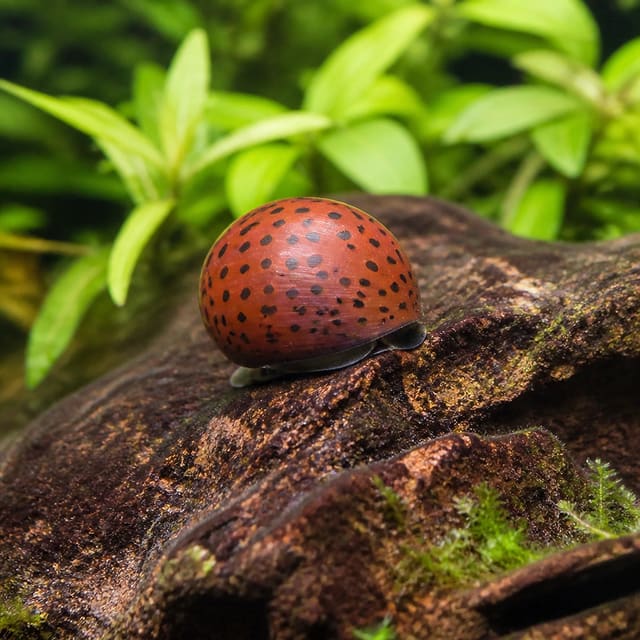
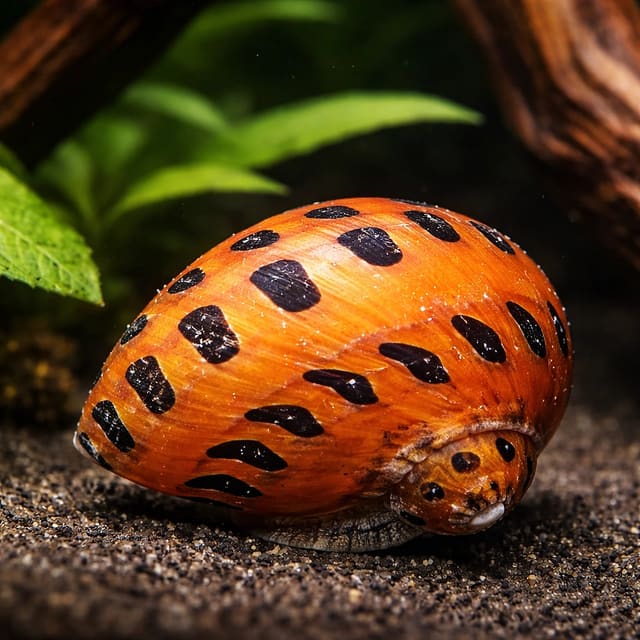
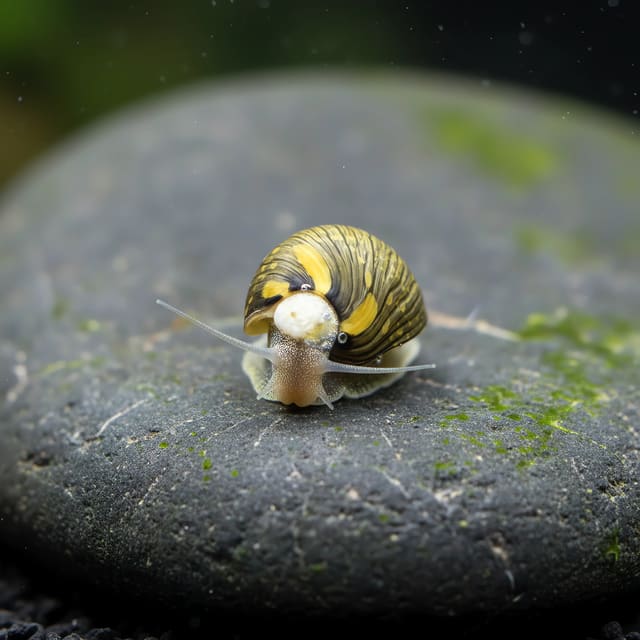
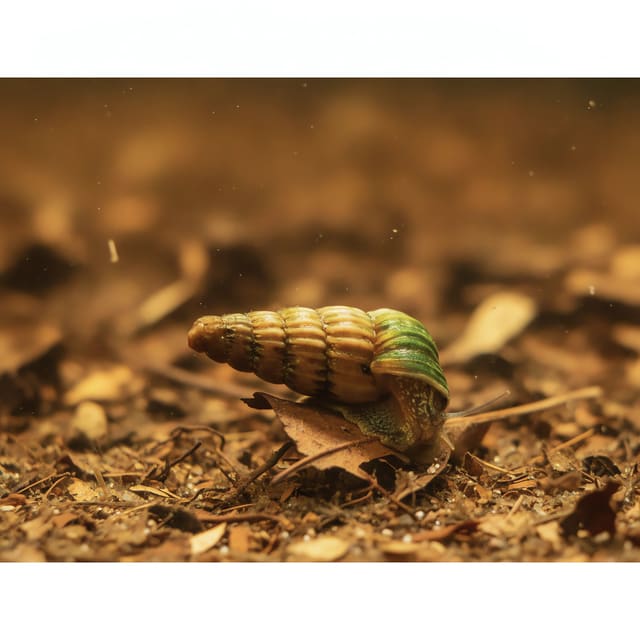
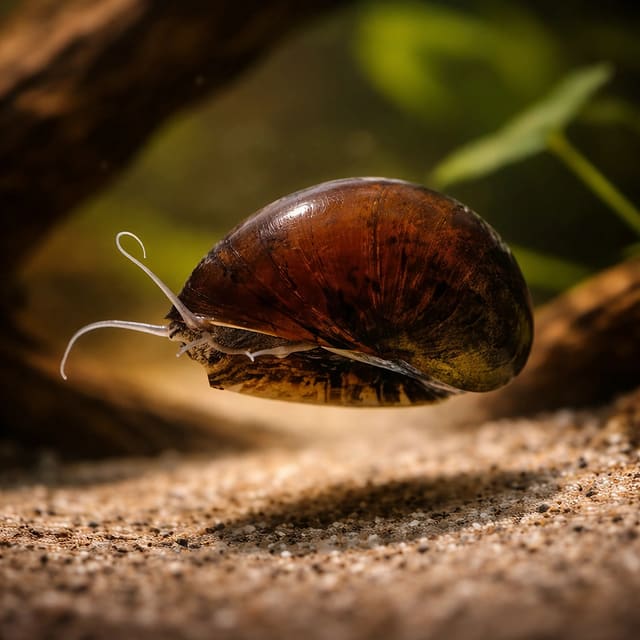
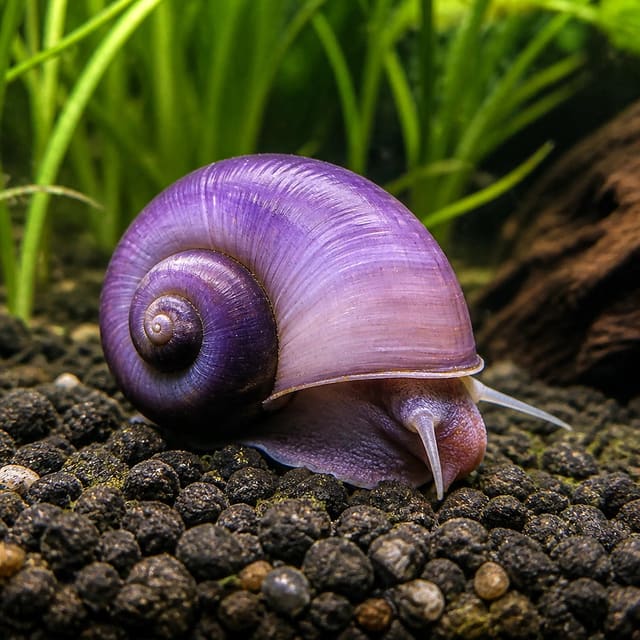
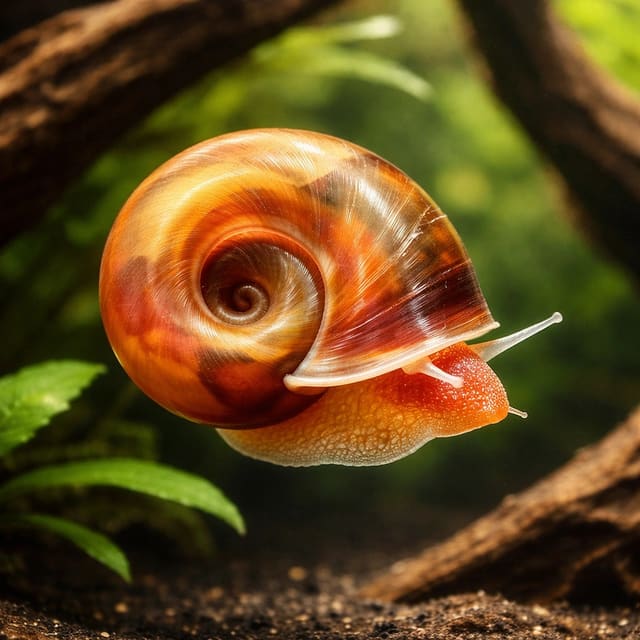
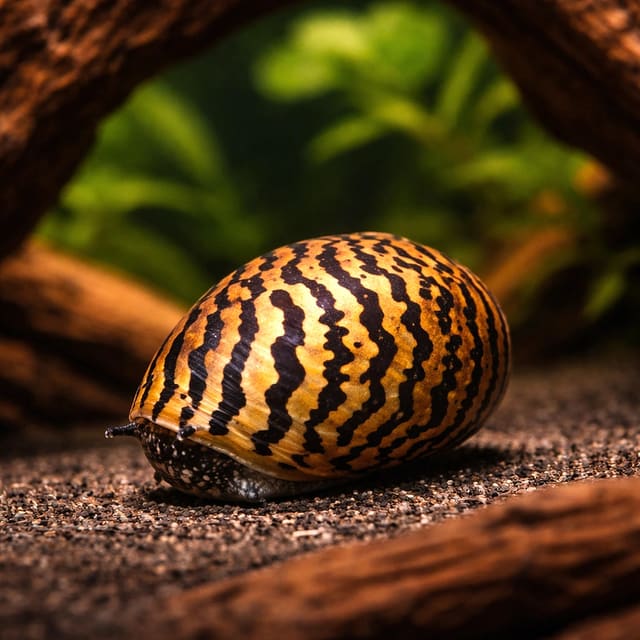
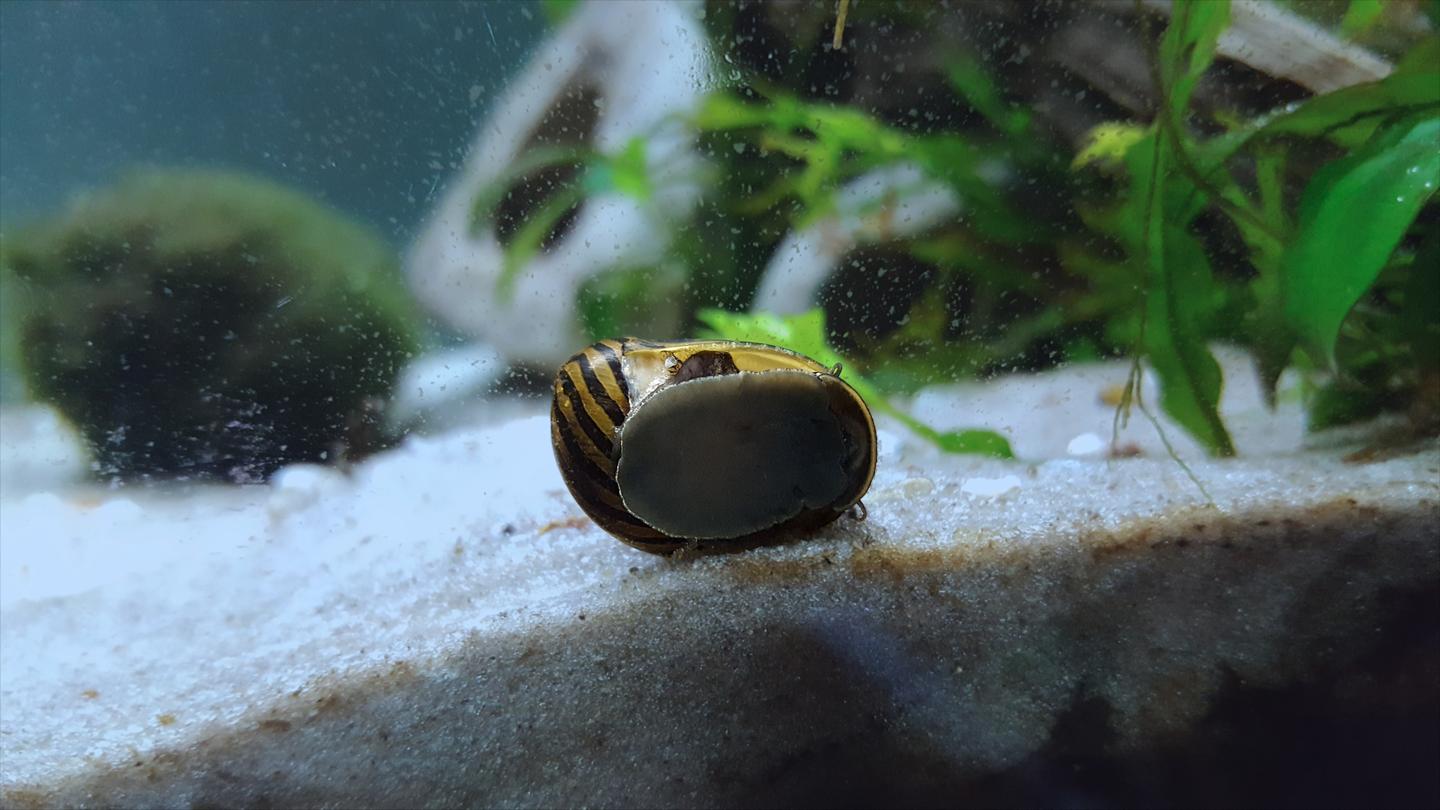
The gallery images are representative of this type of animal rather than photographs of the exact animal supplied, so colours can look slightly different from the live animal. The visible shell pattern is useful for recognising the general type, but each care decision should be based on measured aquarium conditions rather than colour alone.
Before purchase, confirm that the aquarium is mature, filtered and within the stated water range. Check that ammonia and nitrite are both zero mg/l, identify every fish that may attack or eat snails, and check every planned treatment for invertebrate safety. A suitable home also needs gravel or sand and cover such as live plants, artificial plants or appropriate ornaments.
If you are comparing different shell forms or genus labels, you can browse the nerite snail collection. Treat each animal’s own identity and care details separately rather than assuming that every nerite has identical requirements.
Keep the temperature between 17 and 27°C, pH between 6.5 and 8.0, general hardness between 4 and 18°dH and carbonate hardness between 3 and 15°dKH. These are OATA’s group-level values for freshwater shrimp and snails. Choose a stable point within each range that also suits every other inhabitant, then avoid preventable swings caused by untreated replacement water or neglected maintenance.
Ammonia and nitrite must both test at zero mg/l. Nitrate should remain no more than 20 mg/l above the normal level in your tap water. Test the tap water as well as the aquarium, then keep the aquarium nitrate reading no more than 20 mg/l above the tap-water reading. Carry out the weekly 25% water change even when nitrate is within that limit.
| Test result | Action |
|---|---|
| Ammonia above zero | Pause further stocking and restore safe water quality. |
| Nitrite above zero | Treat it as a filtration or stocking problem requiring prompt correction. |
| Nitrate over the tap-water baseline by more than 20 mg/l | Carry out the scheduled partial water change and review waste and feeding. |
| Temperature, pH or hardness outside the stated range | Correct the cause gradually and check replacement water before use. |
Record the results each week so that a change is visible before it becomes a sustained water-quality problem. Our aquarium water chemistry guide explains what the individual tests mean, while the water matcher helps compare your measured values with the target range.
Always condition replacement tap water before it enters the aquarium. Chlorine or chloramine can damage the beneficial bacteria in the filter, and an invertebrate depends on that biological filtration to keep toxic waste under control. Match the replacement water carefully enough to preserve a stable temperature and chemistry rather than creating an abrupt change during routine maintenance.
Use a mature aquarium with a working filter before introducing this snail. OATA says a filter is always essential for freshwater shrimp and snails, and the RSPCA explains the biological process: beneficial bacteria convert toxic ammonia into nitrite and then into the safer nitrate. Maturity refers to that established aquarium and filter, not simply to water that has been left standing.
Confirm maturity with test results. Ammonia and nitrite must read zero before introduction, and they must remain zero after the animal joins the aquarium. Clear water alone is not enough because dissolved waste can be present without making the aquarium look cloudy or dirty.
Use our guide to preparing and maturing a first invertebrate aquarium as a setup checklist. The same preparation principle applies here: establish filtration first, confirm safe test results and introduce livestock only when the system can process its waste.
Do not treat the filter as a substitute for water changes. Filtration transforms waste, but nitrate and solid debris still need routine control. Conversely, do not replace or aggressively clean all filter media during a water change, because preserving the bacterial population is part of preserving the aquarium’s stability.
The aquarium is ready only when the filter is operating, ammonia and nitrite are zero, the water lies within the stated temperature, pH and hardness ranges, and the intended companions have passed the snail-safety screen. If one of those checks fails, correct it before adding another animal.
Use at least 10 litres as OATA’s starting point for a group of small freshwater shrimp or snails. Increase the aquarium size when fish share the system, because the group recommendation explicitly calls for more space in a mixed aquarium. A larger volume also gives more stable environmental conditions, including temperature and water quality.
The 1.5–2 cm dispatch grade must not be treated as a final adult measurement. For broad planning, OATA says popular aquarium snails are unlikely to grow larger than 5 cm, so plan the aquarium and companions for a mature snail rather than the size supplied. Review the snail’s space and companions as it matures.
| Aquarium plan | Decision |
|---|---|
| One snail in a small invertebrate setup | Start at no less than 10 litres and maintain full filtration and weekly testing. |
| Several small snails | Add them gradually and confirm that food and filtration remain adequate. |
| Snail with fish | Use a larger aquarium based on the combined needs and waste of all inhabitants. |
| Unfiltered container or temporary bowl | Do not use it, even for a short time, because a working filter is always essential. |
Space is not only an empty-water measurement. Furnish the aquarium with gravel or sand, plants or suitable alternatives, and surfaces on which the snail can move and graze. Do not crowd the floor and hard furnishings so tightly that routine cleaning, observation and access to food become difficult.
Snails are not social animals, so there is no welfare requirement to keep this one in a fixed group. Decide the number by aquarium volume, filtration capacity, food supply and the needs of any fish sharing the system. Additions must be gradual because every new animal and every increase in feeding raises the load handled by the biological filter.
If ammonia or nitrite becomes detectable after an addition, stop increasing the population. Restore safe water quality and review the pace of stocking before proceeding. This links the stocking decision to measurements rather than to the apparent amount of unused space.
Use algae grazing as the basis of the feeding plan and supplement it with algae wafers. OATA describes freshwater shrimp and snails as generally herbivorous animals that graze algae in the aquarium, but it also recommends supplementary food so that the keeper controls whether enough food is offered.
Feed two or three times a week. Offer a measured portion of algae wafer and allow at least 30 minutes for the snail to feed. Commercial pellets made for freshwater shrimp can also be used for both shrimp and snails, but introduce any food in a controlled amount and observe what remains.
Overfeeding creates a water-quality problem rather than a better feeding plan. Uneaten food breaks down and releases waste, placing additional demand on the biological filter. The correct portion is therefore the amount the inhabitants can use without leaving a persistent residue.
Do not rely on the phrase “clean-up crew” as a feeding strategy. The snail is a living aquarium animal whose food intake and effect on water quality must be observed. Its algae grazing may help control nuisance algae, but it does not replace cleaning, water changes or balanced stocking.
Note the feeding day, food type, portion and whether anything remains. A short record prevents accidental daily feeding by different household members and makes it easier to connect reduced feeding interest with a water-quality result. Keep the schedule at two or three feeds each week unless a clear observation requires a smaller portion.
When food remains repeatedly, reduce the portion rather than leaving it for longer and longer periods. When the aquarium appears clean, continue observing the snail and supplement according to the schedule instead of assuming that visible algae alone will meet its needs.
Change 25% of the aquarium water at least once every week. Use a siphon where practical to remove solid waste from the gravel, test the water during the same maintenance cycle and inspect the filter for blockages. This regular routine protects water quality without neglecting the biological filter.
Treat replacement tap water with a suitable conditioner before adding it to the aquarium. The conditioner must address chlorine or chloramine, which can harm the filter’s beneficial bacteria. Check the replacement water’s temperature and chemistry so that the change keeps the aquarium inside the 17–27°C, pH 6.5–8.0 and 4–18°dH ranges.
Never rinse filter media under the tap. Chlorine or chloramine can kill part of the bacterial population established in the media. A light rinse in removed aquarium water clears debris while reducing bacterial loss.
Interpret the test results rather than treating the water change as a box-ticking exercise. Detectable ammonia or nitrite means the system is not processing waste safely. A nitrate rise beyond the stated tap-water allowance points to a need to review maintenance, feeding and stocking.
Freshwater shrimp and snails are highly sensitive to copper and will die if exposed even at low levels. Before adding any medicine or chemical treatment, confirm explicitly that it is safe for invertebrates. Check the complete treatment instructions rather than judging safety from the condition it is intended to treat.
Continue weekly observation alongside testing. A stable numerical result and normal activity together are more useful than either alone. If activity, colour, appearance or feeding changes, test promptly rather than waiting for the next scheduled water change.
Arrange for someone to receive the live-animal parcel so it is not left unattended. Our delivery and Live Arrival Guarantee policy explains the packing and arrival process: live animals are hand-bagged in pure oxygen, placed in an insulated box and given a heat pack when the weather calls for one.
Before opening the bag, follow OATA’s freshwater shrimp and snail guidance by confirming that the aquarium is ready. The filter must be working, ammonia and nitrite must both be zero mg/l, and the temperature, pH and hardness must lie within the stated ranges. The intended companions must also have been screened for any tendency to eat snails.
Do not add further livestock at the same time simply because the aquarium has unused space. OATA advises increasing the number of shrimp or snails slowly so that the beneficial bacteria in the filter can respond to the additional waste and feeding. Stocking too quickly can lead to new tank syndrome, in which ammonia or nitrite rises because the bacterial population cannot yet process the load.
Use measured results to decide whether another animal can be added later. Zero ammonia, zero nitrite and controlled nitrate show that the system is handling its present load; they are not a reason to rush the next addition.
Know the snail’s normal pattern of activity, appearance and feeding, then respond when that pattern changes. OATA recommends watching freshwater invertebrates for increased inactivity, restlessness, unusual behaviour, darker or paler colour, increased hiding, visible discolouration, lesions, abnormal growths, physical damage and reduced interest in food.
A single observation should trigger a structured check rather than an immediate treatment. Start with ammonia and nitrite because both must remain at zero mg/l. Then check temperature, pH, general hardness, carbonate hardness and nitrate against the aquarium’s normal readings and the stated ranges.
| What you notice | What to do first |
|---|---|
| Reduced movement | Test ammonia and nitrite and confirm that the filter is operating. |
| Reduced interest in food | Test the water, review recent portions and remove degrading leftovers. |
| Darker or paler colour | Compare current water values with the snail’s normal stable conditions. |
| Visible lesion, discolouration or damage | Check companions for harassment and assess water quality before treatment. |
| Change after a new animal was added | Pause further stocking and check whether filtration is handling the increased load. |
Do not add a treatment until its label confirms that it is safe for invertebrates. Copper is especially dangerous to freshwater shrimp and snails, even at low levels. A product intended for aquarium fish is not automatically suitable for an aquarium containing a snail.
If ammonia or nitrite is detectable, restore safe water quality and review filter performance, recent stocking and feeding. If nitrate has risen by more than 20 mg/l above the normal tap-water level, carry out the scheduled partial change and examine the causes of excess waste.
If a health change persists despite safe, stable water, check companions for harassment and add only a treatment whose label confirms it is safe for invertebrates. Record the aquarium volume, temperature, pH, hardness, ammonia, nitrite and nitrate readings alongside a description of the change and any recent stocking or maintenance.
Keep this snail only with animals that have been assessed as unable to eat it. OATA describes freshwater shrimp and snails as generally compatible with most species in the aquarium, but it also warns that they may be eaten by common aquarium fish. Compatibility therefore depends on the individual companion’s feeding behaviour, mouth size and history with snails.
Avoid pufferfish and loaches. OATA names both as fish that can eat snails, making them unsuitable companions for this animal. Avoid any other fish known to eat snails as well, and apply the same practical screen to every other proposed fish.
Do not use the broad label “community fish” as the whole assessment. Two fish placed in the same retail category can differ in feeding behaviour and their response to a snail. The useful question is whether the particular companion is known to eat, bite or harass snails.
If you want a stocking and compatibility assessment, contact us with the aquarium volume, measured water values and the exact names of all intended inhabitants. A useful assessment needs the complete community plan rather than a general description such as “peaceful fish”.
Use a larger aquarium when this snail shares its home with fish. OATA’s 10-litre minimum is a starting point for a group of small freshwater shrimp or snails, and its guidance says the aquarium must be larger when fish are included. Base the final choice on all inhabitants, not on the snail’s dispatch size alone.
There is no need to add more snails for social companionship because snails are not social animals. Add another only when the aquarium has enough volume, filtration and food for the additional load. Increase the population gradually so the beneficial bacteria can adjust as waste and feeding rise.
| Decision | Safe rule |
|---|---|
| Predation | Avoid pufferfish, loaches and any other fish known to eat snails. |
| Water | Use only companions that share the 17–27°C, pH 6.5–8.0 and 4–18°dH range. |
| Space | Go larger than the small-invertebrate starting point when fish are present. |
| Treatment | Use only products clearly labelled as safe for invertebrates. |
Compatibility can fail even when no attack is visible. A shared aquarium may become unsuitable if increased feeding produces persistent leftovers, if ammonia or nitrite appears after stocking, or if the snail cannot reach its supplementary food. Treat those outcomes as reasons to revise the plan.
Keep the normal weekly maintenance routine after adding a companion: test the water, change 25%, condition replacement water and inspect the filter. Test sooner if the snail becomes unusually inactive, changes colour, hides more or loses interest in food.
Reassess the aquarium whenever you add an animal, alter feeding or begin treatment. Check physical safety first, then water compatibility, filter capacity and food access. This prevents a seemingly small change from creating a predation, waste or treatment risk.
Never assume a medicine is safe because the fish tolerate it. Freshwater snails are highly sensitive to copper, so the invertebrate warning on the treatment determines whether it can be used in the shared aquarium.
The 1.5–2 cm figure is the size supplied, not an adult measurement. OATA says popular aquarium snails are unlikely to grow larger than 5 cm, so plan the aquarium for a mature snail rather than the size supplied.
Use at least 10 litres as OATA’s starting point for a group of small freshwater shrimp or snails, with a larger aquarium required when fish share the system.
Snails are not social animals, so no fixed group is required. Add individuals gradually and let aquarium volume, filtration capacity, food and the needs of other inhabitants determine the number.
It suits a keeper who can maintain a mature filtered aquarium, keep ammonia and nitrite at zero mg/l, complete weekly 25% water changes and avoid copper exposure and snail-eating fish.
OATA’s freshwater shrimp and snail guidance describes algae grazing supplemented with algae wafers. Feed a controlled portion two or three times a week, allow at least 30 minutes for feeding and remove uneaten food before it degrades.
OATA’s freshwater shrimp and snail guidance gives 17–27°C, pH 6.5–8.0, 4–18°dH and 3–15°dKH, with ammonia and nitrite at zero mg/l.
OATA describes freshwater shrimp and snails as generally compatible with most species in the aquarium. Screen companions for their ability to eat or attack the snail, and monitor interactions after introduction.
Keep it only with aquarium animals assessed as unable to eat snails. OATA specifically says to avoid pufferfish and loaches because they can eat snails.
Tropical Fish Co hand-packs live animals in pure oxygen inside an insulated box, with a heat pack when weather calls for one. Be home to receive it, start filming before opening the sealed parcel, float the bag for 20–30 minutes and never pour bag water into the aquarium.
No reviews for this item yet. Bought one? Honest reviews only, good or bad.
What customers say about ordering from us
Easy website plenty of info on fish your buying great to pick a time slot
TRACEY DURRANT · 7 Oct 2026
Got some lovely fish thank you
Kevin Mackie · 7 Oct 2026
Reviews of our shop, collected by Judge.me, an independent third-party review collector. Newest first.