Easy
Parallel Nerite Snail (Neritina sp.)
17–27°C · pH 6.5–8
£4.99

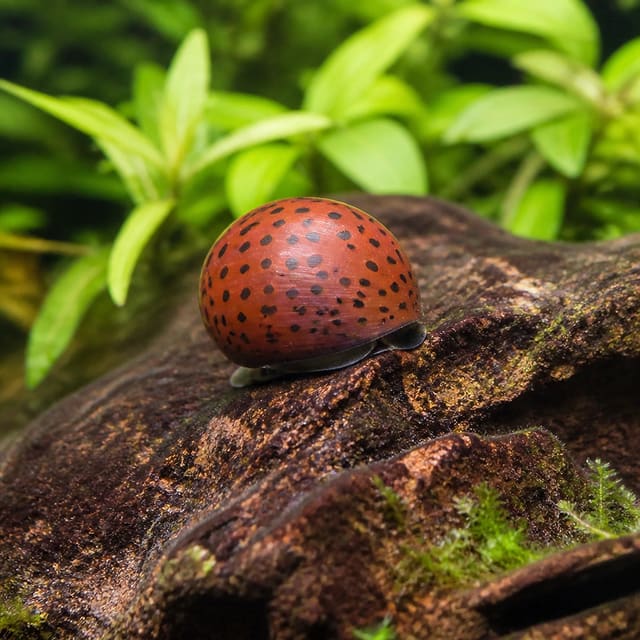
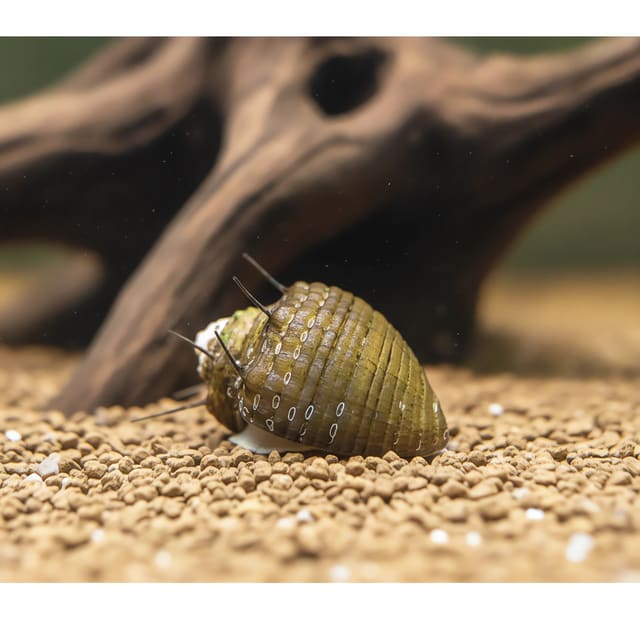
The Spotted Nerite Snail (Neritina sp.) is a freshwater aquarium gastropod in the Neritidae family, identified to genus level. It suits a mature, filtered aquarium; OATA’s freshwater shrimp and snail guidance gives 17–27°C, pH 6.5–8.0 and 4–18°dH. Sold individually as one live snail.
Neritina sp.
Lives in groups: kept together they stay settled, active and show their best colour.
Minimum of 2 per order.
The Spotted Nerite Snail (Neritina sp.) is a freshwater aquarium gastropod in the Neritidae family, identified to genus level. It suits a mature, filtered aquarium; OATA’s freshwater shrimp and snail guidance gives 17–27°C, pH 6.5–8.0 and 4–18°dH. Sold individually as one live snail.
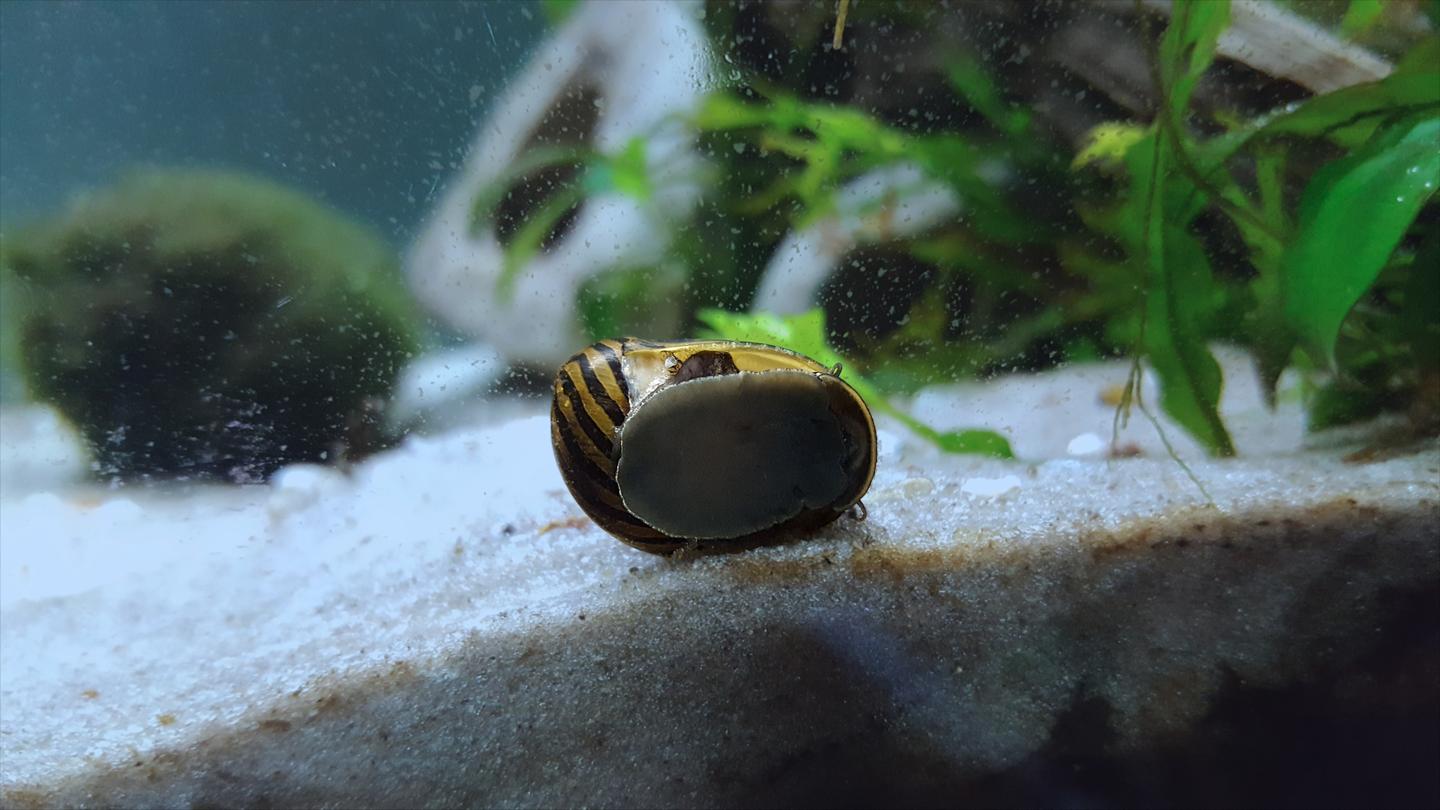
Nerite snail is a trade umbrella, not one species. Confirm the supplied taxon and holding water, use a mature covered aquarium with established grazing surfaces, stock from food availability rather than a litre formula, and treat egg capsules, medicines and tank mates as species-specific decisions.
Maintain these water conditions for optimal health and vibrant colors
The Spotted Nerite Snail (Neritina sp.) is an aquatic gastropod in the nerite family, Neritidae. The World Register of Marine Species accepts Neritina as a genus. This freshwater aquarium snail suits a keeper prepared to provide a mature, filtered aquarium, stable measured water, established grazing surfaces and carefully screened companions.
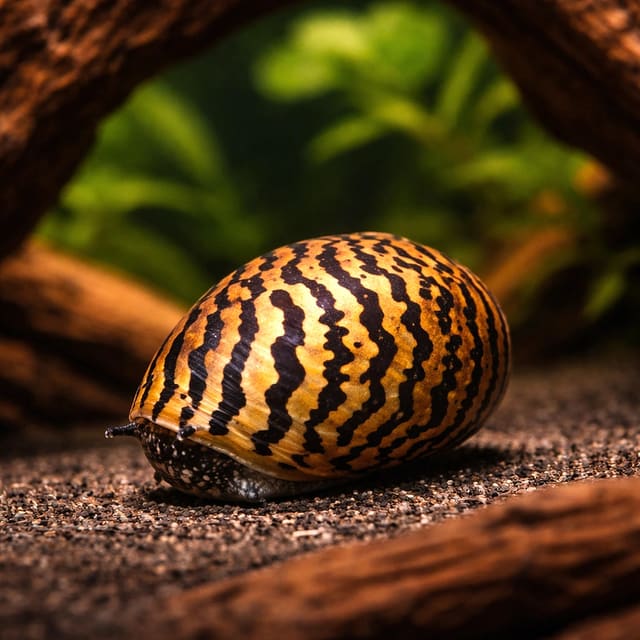
The “sp.” means the animal is identified to genus rather than species. Shell colour and markings should therefore remain a trade description rather than being used to assign a different scientific identity. Plan care around the stated genus and freshwater snail guidance instead of treating the spotted pattern as a species diagnosis.
Wikipedia’s account of Neritina describes members of the genus as small aquatic snails with an operculum in the family Neritidae. The genus includes marine, brackish-water and sometimes freshwater gastropods; this particular offer is catalogued as a freshwater aquarium mollusc.
| Suits | Not suited to |
|---|---|
| A mature aquarium with established algae-grazing surfaces | A newly prepared aquarium without an established food base |
| A filtered aquarium with zero ammonia and nitrite | Water containing measurable ammonia or nitrite |
| A keeper who tests water and controls feeding | A plan that treats the snail as a substitute for maintenance |
| Companions screened for snail predation | Pufferfish, loaches that eat snails or other snail predators |
Choose this animal for its natural grazing behaviour, but continue ordinary aquarium cleaning and water changes. A snail can help control nuisance algae without guaranteeing that every surface or every type of algae will be cleared.
One purchase supplies one Spotted Nerite Snail. Treat that sold unit as commerce information rather than a stocking formula: the aquarium must be assessed for water quality, food-bearing surfaces and compatible inhabitants before another grazer is added.
Sex is guaranteed only when the selected option explicitly states male or female. This Spotted Nerite Snail listing has no sex-guaranteed option.
The exact species has not been identified, so the care advice here follows the genus Neritina and its care group.
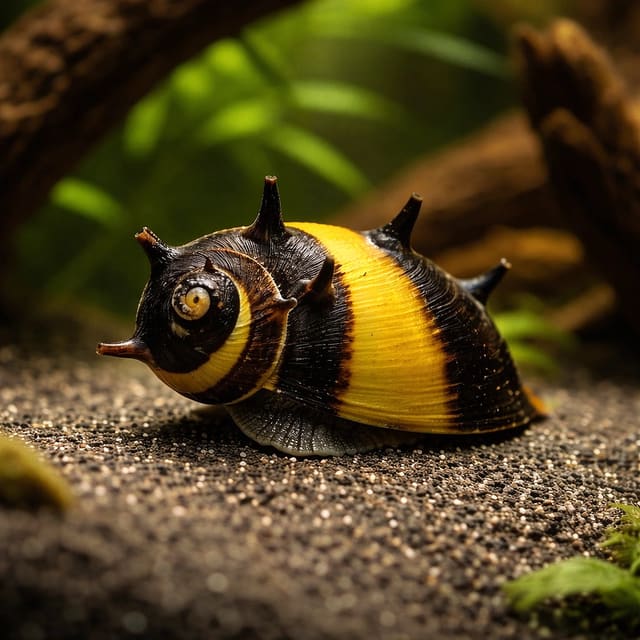
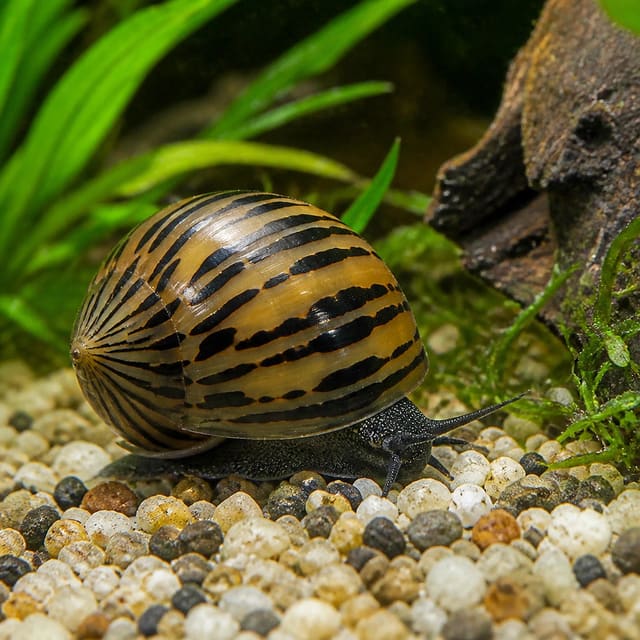
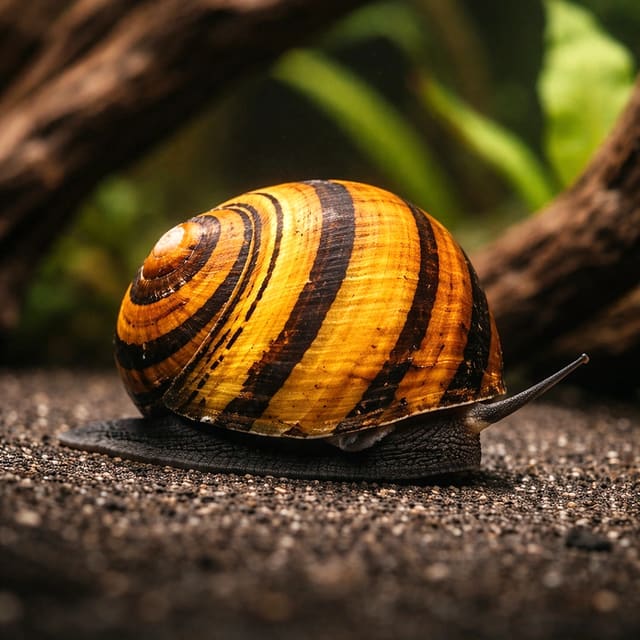
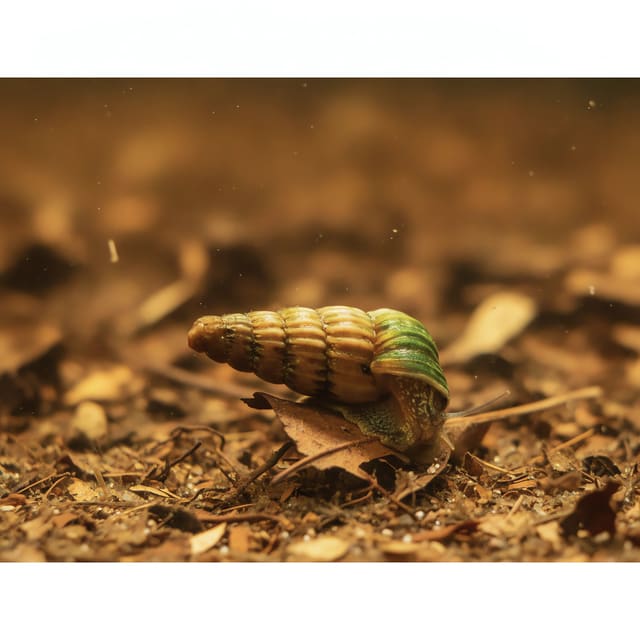
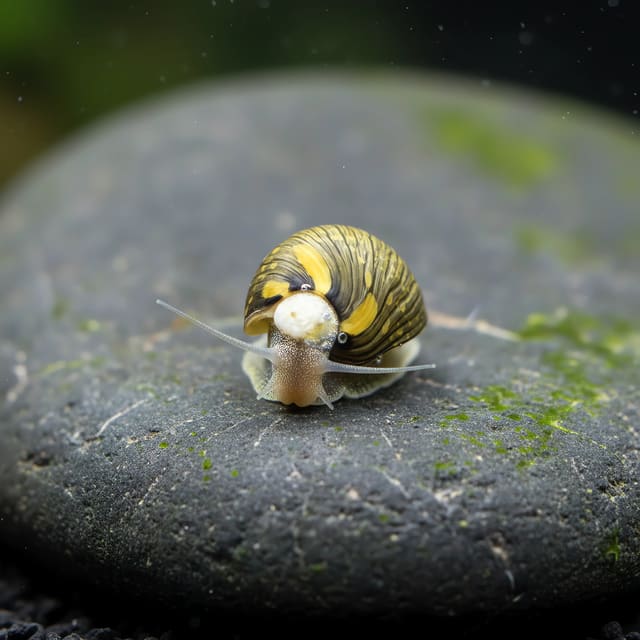
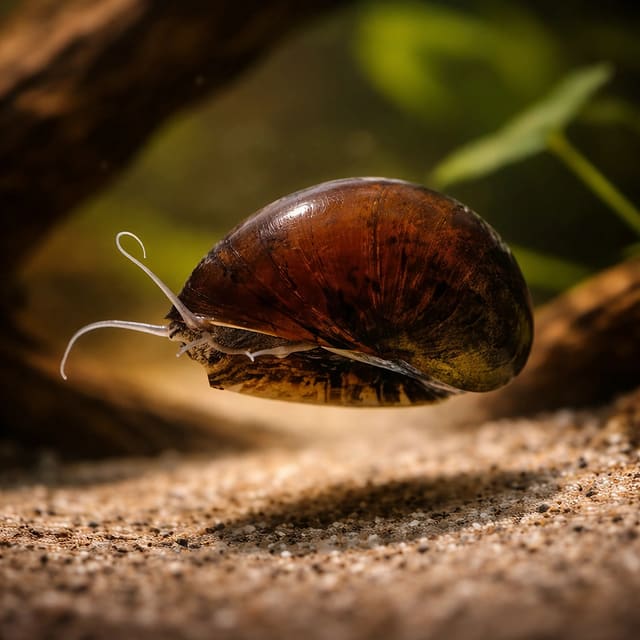
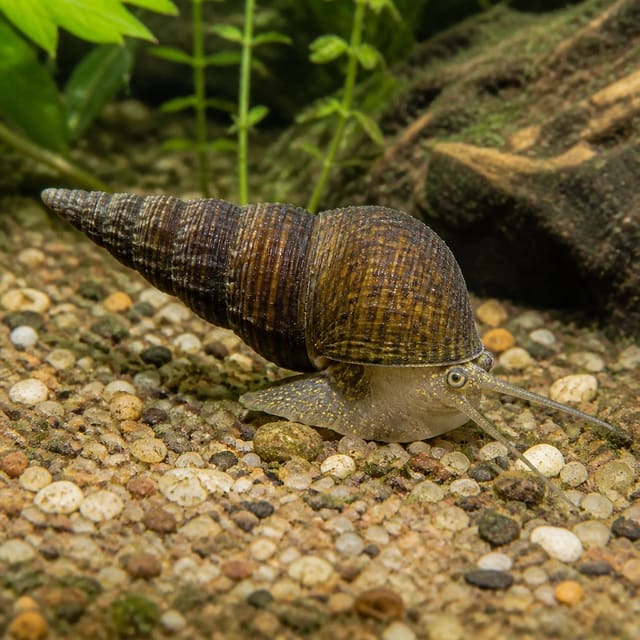
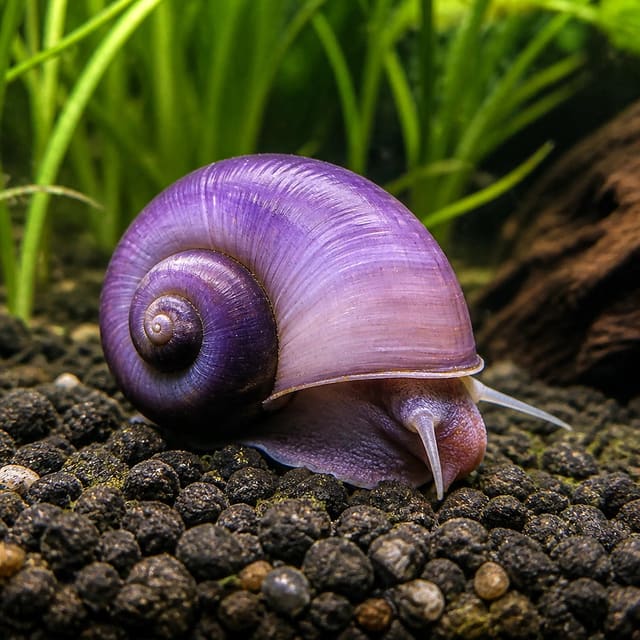
The gallery images are representative, based on reference photographs of this kind of animal, so colours can look slightly different from the live animal.
Use the current snails collection to compare other snail identities and sold units. Each different animal still needs its own water, food and compatibility assessment.
Read the current delivery and Live Arrival Guarantee policy before the delivery date so someone can receive the parcel, film the sealed parcel being opened and follow the acclimatisation steps.
Use approximately 20 litres as the initial aquarium planning figure for this genus-level snail. OATA recommends at least 10 litres for a group of small freshwater shrimp or snails and approximately 20 litres for larger species; where adult size is not assigned at species level, plan with the larger group category. Increase the aquarium size when fish are included because OATA specifically says that mixed fish-and-invertebrate aquariums need more space.
Keep the aquarium at 17–27°C, pH 6.5–8.0 and general hardness 4–18°dH. OATA’s freshwater shrimp and snail sheet provides these as broad group guidance, not a species-specific optimum. Its carbonate-hardness range is 3–15°dKH.
| Planning check | Working instruction |
|---|---|
| Temperature | Keep it between 17°C and 27°C. |
| pH | Keep it between 6.5 and 8.0. |
| General hardness | Keep it between 4°dH and 18°dH. |
| Carbonate hardness | Keep it between 3°dKH and 15°dKH. |
| Ammonia and nitrite | Maintain both at zero mg per litre. |
| Nitrate | Do not exceed 20 mg per litre above the normal tap-water level. |
| Space | Plan around approximately 20 litres and use more when fish are included. |
The larger aquarium is usually easier to keep environmentally stable. Do not translate the planning figure into one snail for every 20 litres: food-bearing surface area, other grazers, fish and filter capacity all affect the number the aquarium can support.
Use a mature aquarium with a working biological filter before introducing the snail. OATA warns that increasing livestock too quickly can leave too few nitrifying bacteria to process the extra waste and feeding, causing unhealthy ammonia and nitrite levels. Add livestock gradually so the filter can adjust.
The RSPCA explains biological filtration as beneficial bacteria processing toxic ammonia into nitrite and then into the safer nitrate. Test the actual aquarium rather than assuming that a running filter is ready. Ammonia and nitrite must both read zero mg per litre before introduction.
If this is your first invertebrate aquarium, use the aquarium preparation and maturation guide to organise filter maturation, testing and routine maintenance before livestock arrives. Apply the shared aquarium-preparation principles while following the snail-specific feeding and compatibility instructions on this page.
A visually clean aquarium is not automatically a mature one. The useful checks are zero ammonia, zero nitrite, a functioning filter and an established grazing area. Preserve some algae-bearing surfaces during maintenance so the snail does not lose its natural food base all at once.
Begin only when the aquarium passes every preparation check. If ammonia or nitrite is measurable, delay introduction and restore safe water first. If surfaces have been scrubbed clean, allow a food base to establish and prepare suitable supplementation rather than expecting the snail to live on a bare aquarium.
Measure the destination aquarium and keep it at 17–27°C, pH 6.5–8.0, general hardness 4–18°dH and carbonate hardness 3–15°dKH. These are OATA’s freshwater shrimp and snail group values, so stability within the range is the practical aim.
Use the water chemistry guide to understand what each result measures. Then enter the measured values into the water matcher to compare the aquarium with the stated guidance.
| If the test shows | Take this action |
|---|---|
| Ammonia above zero | Delay introduction and investigate filtration, stocking and decaying waste. |
| Nitrite above zero | Delay introduction and restore biological filtration before adding the snail. |
| Nitrate rising | Review feeding, waste removal and the weekly water-change routine. |
| Temperature outside 17–27°C | Bring the destination into range without making an abrupt change. |
| pH outside 6.5–8.0 | Correct the aquarium through a controlled plan that accounts for every inhabitant. |
| GH or KH outside range | Test the source and aquarium water, then identify what is altering the result. |
Do not judge hardness from a postcode or a description of regional tap water. Test the water entering the aquarium and the aquarium itself because décor, substrate and previous additions can affect the final values.
Record results at least weekly so changes can be seen over time. A sequence of measurements is more useful than one isolated result when feeding, stocking or maintenance has changed.
For example, an aquarium at 23°C, pH 7.4, 10°dH and 7°dKH sits within all four group ranges. That result is useful only when ammonia and nitrite are also zero and nitrate remains within the stated limit. If the next test shows nitrite above zero, the earlier acceptable temperature and hardness readings do not make introduction safe; resolve the nitrite first.
Provide established algae-bearing surfaces and supplement them with algae wafers or suitable commercial pellets. OATA describes freshwater shrimp and snails as generally herbivorous animals that graze aquarium algae, then recommends supplemental food to make sure they receive enough.
Feed two or three times a week. Leave pellets or wafers for at least 30 minutes so the snail has time to reach and eat them, but prevent uneaten food from remaining and breaking down into toxic waste.
Overfeeding does not create a safer food reserve. Uneaten food decomposes, adds waste and can contribute to harmful ammonia or nitrite. Adjust the amount to what the animal consumes while preserving a natural grazing area.
| Observation | Next decision |
|---|---|
| Food is consumed within the feeding period | Continue the measured amount and monitor water quality. |
| Food remains after the snail has had time to feed | Remove it and reduce the next portion. |
| Other animals take every pellet | Reassess food access and whether the aquarium supports all grazers. |
| Natural algae is disappearing quickly | Do not add another grazer and review supplementation. |
| Ammonia or nitrite appears after feeding | Stop increasing food and restore safe water and filtration. |
Continue normal maintenance even when the snail grazes visible algae. It helps with nuisance growth but does not replace waste removal, filter care, testing or water changes.
Neritina snails do not need a social group. OATA describes snails as animals that are not social, so one can be kept without adding companions of the same kind. Consider another snail only when the aquarium still provides suitable food and stable water.
The sold unit is one animal, but it is not a rule of one snail for each fixed volume. OATA’s aquarium figures are group planning guidance, while the actual stocking decision also depends on established algae, supplemental feeding, fish, competing grazers and biological filtration.
A 40-litre aquarium can still be a poor home for several grazers if its surfaces have been scrubbed clean and other inhabitants take every wafer. Conversely, passing the approximate 20-litre planning figure does not automatically make an aquarium suitable if ammonia or nitrite is detectable.
Add animals slowly. OATA explains that beneficial bacteria need to increase as livestock and feeding increase; stocking too quickly can cause new tank syndrome, with unhealthy ammonia and nitrite that may make freshwater snails ill or kill them.
| Checkpoint | Decision |
|---|---|
| After introduction | Confirm that the snail reaches established grazing surfaces. |
| After the first feeds | Check consumption and remove uneaten food. |
| At each weekly test | Confirm zero ammonia and nitrite. |
| Before adding livestock | Reassess food, filtration and compatibility. |
Prepare the mature destination before delivery, with the filter running and ammonia and nitrite at zero mg per litre. Someone must be present to receive the live-animal parcel, and the parcel must be opened and inspected on the day it arrives.
Keep the continuous unboxing video and order number. If a Live Arrival Guarantee claim is needed, contact us on the day the animal arrives and provide the video showing the sealed parcel, the continuous opening and the animal still inside the bag.
Test the aquarium before the parcel arrives rather than trying to solve a water-quality problem during acclimatisation. The destination should be within 17–27°C and pH 6.5–8.0, with ammonia and nitrite at zero mg per litre. These checks come from OATA’s freshwater shrimp and snail guidance.
| Checkpoint | What to do |
|---|---|
| After release | Place the snail where it can attach and reach an established grazing surface. |
| During the first feeds | Confirm that it reaches natural or supplemental food. |
| Daily at first | Watch for inactivity, unusual behaviour, colour change or visible damage. |
| At the weekly test | Confirm zero ammonia and nitrite and review nitrate. |
Do not treat a single movement or period of rest as a complete health diagnosis. Compare behaviour over time and test the aquarium whenever normal activity or feeding changes.
At least once every week, carry out a partial water change of 25%. Treat replacement tap water with a suitable conditioner to remove chlorine or chloramine before adding it to the aquarium.
Test the water at least once per week. Ammonia and nitrite must remain at zero mg per litre, while nitrate should not exceed 20 mg per litre above the normal tap-water level. Check temperature, pH and hardness when activity, feeding or appearance changes.
| If you see | Do this first |
|---|---|
| Increased inactivity or restlessness | Test water quality and review recent changes. |
| Darker or paler colour | Check water, feeding and the complete aquarium environment. |
| More hiding than normal | Look for harassment and changes to the surroundings. |
| White spots, lesions or abnormal growths | Check the environment promptly and arrange appropriate health advice. |
| Reduced food intake | Inspect food access, competition and water quality. |
OATA recommends watching for changes in activity, colour, temperament, appearance, condition and feeding because these may reveal a problem before it becomes more serious. Assess changes against the animal’s normal pattern instead of relying on a single isolated observation.
Combine the water change, testing and filter inspection into one recorded routine. If ammonia or nitrite is above zero, prioritise water quality and filter function. If tests remain stable but feeding falls, check food access and companion behaviour next. Distinct observations lead to clearer action than changing several things at the same time.
Never expose this snail to copper, even at low levels. OATA states that freshwater shrimp and snails will die if exposed even to low levels of copper. Check every treatment before it enters the aquarium and use only products stated to be safe for invertebrates.
Do not weaken the instruction because a product contains only a small amount of copper. Even low levels are lethal to freshwater snails according to OATA’s group guidance.
Check medicines, algae treatments and other aquarium additives before use. Measure doses exactly as directed and never improvise a treatment from an aquarium product whose invertebrate safety is unclear. Equipment previously used with copper can also create an avoidable exposure route, so keep its use controlled.
Good water quality remains the first husbandry response to unusual behaviour. Test ammonia, nitrite, nitrate, temperature and pH, review recent additions and inspect companion behaviour. A water-quality correction can remove an environmental stress, but it does not justify adding an unapproved medicine.
| Situation | Decision |
|---|---|
| Routine water change | Use conditioned replacement water and add no unnecessary medication. |
| Fish treatment proposed | Check explicit invertebrate safety before dosing the shared aquarium. |
| Copper appears on the label | Do not expose the snail. |
| Snail behaviour changes | Test water and inspect feeding and compatibility before choosing an intervention. |
Never release aquarium animals or water into the wild. Arrange responsible rehoming through an appropriate aquarium keeper or retailer if care cannot continue.
Avoid pufferfish, loaches that eat snails and any other fish capable of eating the snail. OATA specifically says that snails should not be mixed with fish that can eat them and names pufferfish and loaches as examples.
Avoid assassin snails because OATA describes them as predators of other snail species. Do not treat additional space or extra food as a way to make a predator safe.
| Check | Pass condition |
|---|---|
| Predation | The proposed companion is not known to eat snails. |
| Water | Both animals can be maintained within suitable stable conditions. |
| Food | The snail can reach established algae and supplemental food. |
| Space | The aquarium is larger when fish are included and can support the added waste. |
Do not approve a companion from a broad label such as “community fish” alone. Check the actual kind of fish and whether it eats snails. OATA warns that freshwater shrimp and snails may be eaten by common aquarium fish, so peaceful behaviour towards other fish is not enough to pass the screen.
Shrimp and other non-predatory invertebrates still require a food check. Animals that graze the same algae or take every supplemental pellet can leave too little food for the snail even when there is no direct attack.
Compatibility remains a continuing observation rather than a one-time label. Reassess it when fish grow, livestock changes or competition for food increases.
Observe access to food and safe surfaces after adding any companion. A pairing that initially appears calm can still fail if the other animal begins eating snails, taking every food item or causing the snail to remain unusually inactive.
| If you see | Respond this way |
|---|---|
| A fish attempting to eat the snail | Separate the animals into suitable mature accommodation. |
| An assassin snail approaching or attacking other snails | End the pairing; assassin snails prey on other snail species. |
| Other animals taking every pellet | Change food placement and reassess whether both can be supported. |
| Established algae disappearing rapidly | Do not add another grazer and review the feeding plan. |
| Ammonia or nitrite appearing after stocking | Restore safe water and reduce the load on the biological filter. |
A larger aquarium can provide more water volume and grazing surfaces, but it does not make a predator compatible. The avoid rule for pufferfish, snail-eating loaches and other fish that eat snails remains unconditional.
Food competition is a separate decision from predation. Shrimp or another snail may not attack this animal, yet the pairing can still become unsuitable if one animal takes all supplemental food or the shared grazing surfaces are depleted.
Keep any separation aquarium mature, filtered and within the appropriate water range. Moving the snail away from predation should not replace one hazard with measurable ammonia, nitrite or a lack of food.
Review compatibility again whenever a fish grows or a new inhabitant is added. A current pass applies only while predation risk, water conditions, food access and filter capacity remain suitable.
The Spotted Nerite Snail is identified as Neritina sp. rather than a particular species, so plan its aquarium with OATA’s larger freshwater snail category of approximately 20 litres instead of assigning a species-sized adult length.
Use approximately 20 litres as the initial planning figure. OATA recommends at least 10 litres for a group of small freshwater shrimp or snails and approximately 20 litres for larger species; use more space when fish share the aquarium.
Spotted Nerite Snails do not require a social group. Start with one, then consider another only when ammonia and nitrite remain at zero mg per litre and established grazing and supplemental food remain sufficient.
It suits a keeper who can mature and test a filtered aquarium, maintain OATA’s group values of 17–27°C and pH 6.5–8.0, preserve grazing surfaces, control feeding and prevent copper exposure.
A Spotted Nerite Snail grazes aquarium algae. OATA recommends supplementing this with algae wafers or suitable commercial pellets two or three times a week, allowing at least 30 minutes for feeding and removing uneaten food before it decays.
Keep it at 17–27°C and pH 6.5–8.0. OATA’s freshwater shrimp and snail group guidance also gives general hardness of 4–18°dH and carbonate hardness of 3–15°dKH.
A Spotted Nerite Snail is a grazing gastropod rather than a fin-nipping fish. The main compatibility risk runs in the other direction: freshwater snails may be eaten by aquarium fish.
Choose individually screened animals with overlapping water needs that do not eat snails and will not take all available food. Avoid pufferfish, loaches that eat snails, assassin snails and any other known snail predator.
Film every delivery continuously from the sealed parcel before floating the bag: be present to receive it, show the outer box, open it in one take and show the animal still inside the sealed bag. Float the bag for 20–30 minutes, then release the snail without pouring the bag water into the aquarium.
No reviews for this item yet. Bought one? Honest reviews only, good or bad.
What customers say about ordering from us
I have a small group of long finned mountain minnows. So was delighted to be able to order ten of this variety to increase the genetics in my tank . The ones I recieved are healthy but it’s to early to give a verdict on wether they are of a long finned type since they are small currently.
Gordon Walker · 23 Sept 2026
100% success travel and "installation". Pleased with quality of purchase. The Siamese fighter a bit "shy" so have not yet seen him at his best yet but looking good. Happy customer. GG
George E Garratt · 21 Sept 2026
Reviews of our shop, collected by Judge.me, an independent third-party review collector. Newest first.