Easy
Parallel Nerite Snail (Neritina sp.)
17–27°C · pH 6.5–8
£4.99

The Black Helmet Nerite Snail (Neritina sp.) is a grazing nerite sold as one snail per purchase, supplied at about 1–2 cm. It needs a cycled, filtered freshwater aquarium with algae to graze, water within OATA’s broad snail guidance of 17–27°C and pH 6.5–8.0, no copper-based treatments and no snail-eating fish such as pufferfish or loaches.
Neritina sp.
Lives in groups: kept together they stay settled, active and show their best colour.
Minimum of 2 per order.
The Black Helmet Nerite Snail (Neritina sp.) is a grazing nerite sold as one snail per purchase, supplied at about 1–2 cm. It needs a cycled, filtered freshwater aquarium with algae to graze, water within OATA’s broad snail guidance of 17–27°C and pH 6.5–8.0, no copper-based treatments and no snail-eating fish such as pufferfish or loaches.
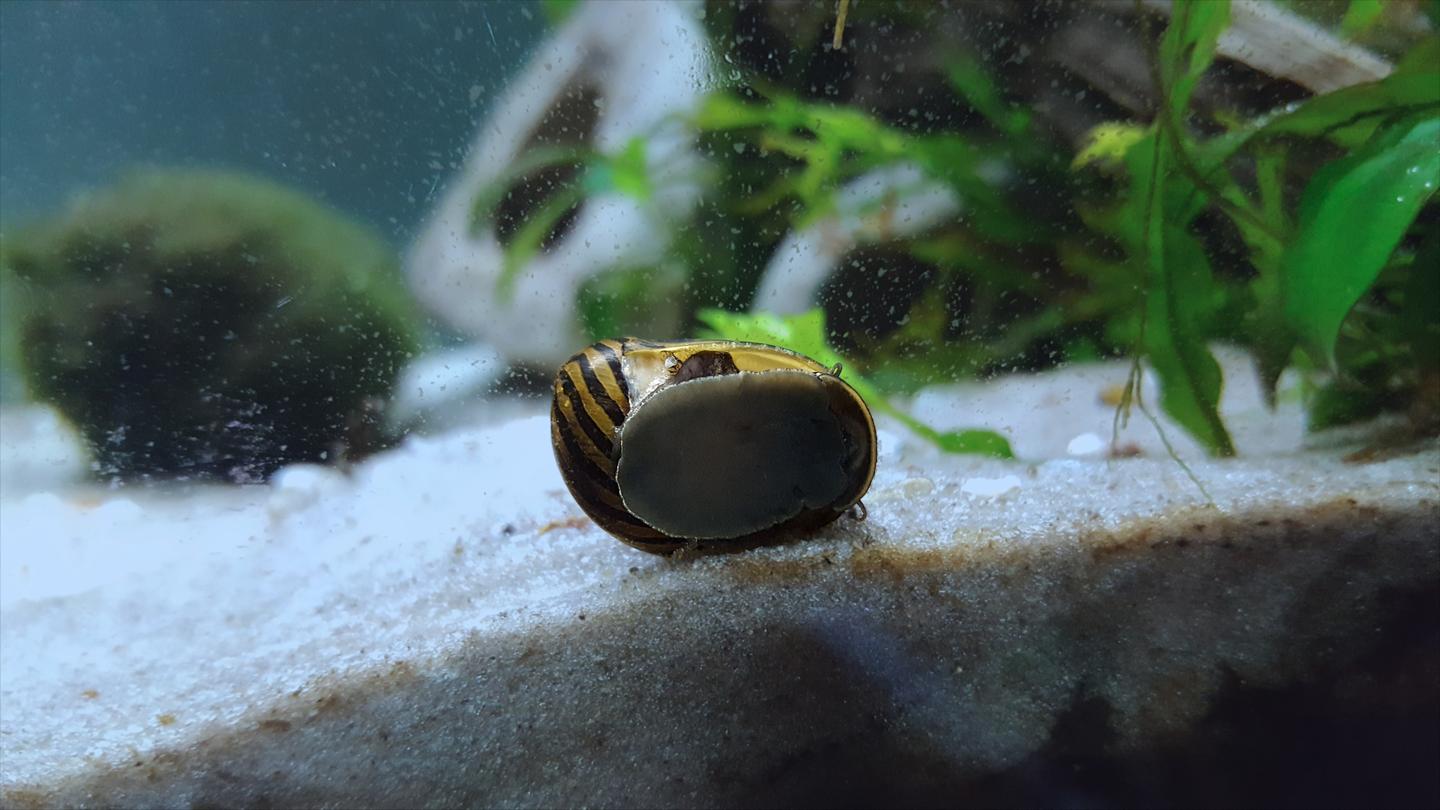
Nerite snail is a trade umbrella, not one species. Confirm the supplied taxon and holding water, use a mature covered aquarium with established grazing surfaces, stock from food availability rather than a litre formula, and treat egg capsules, medicines and tank mates as species-specific decisions.
Maintain these water conditions for optimal health and vibrant colors
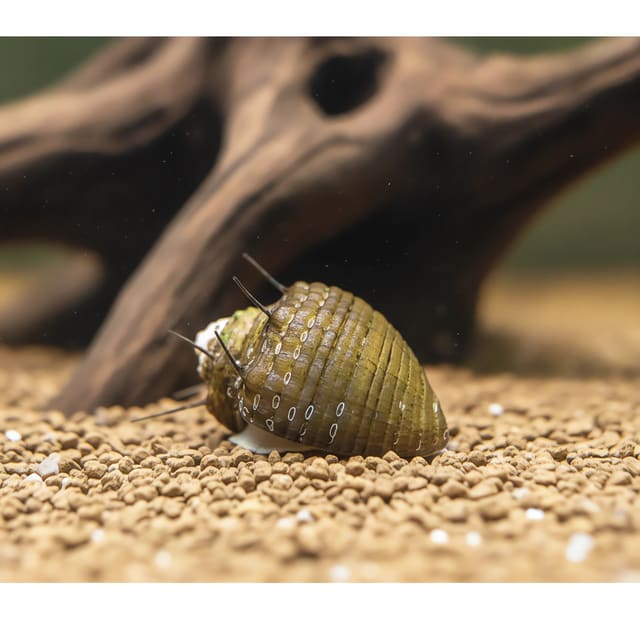
The Black Helmet Nerite Snail is a small grazing snail from the nerite genus Neritina, sold as one snail per purchase and supplied at about 1–2 cm. It suits a cycled, filtered freshwater aquarium with algae to graze and no snail-eating fish. One condition rules a tank out straight away: copper. Freshwater snails will die if exposed even to low levels, so every treatment used in its aquarium must be safe for invertebrates.
The exact species has not been identified, so the care advice here follows the genus Neritina and its care group. “Black Helmet” is a trade name for the look of the shell, and “sp.” shows that the genus is known while the species is not. WoRMS lists Neritina as an accepted genus in the family Neritidae, the nerites, and Wikipedia’s genus summary describes them as small aquatic snails with an operculum, the hard plate that closes the shell opening when the snail withdraws. The genus includes marine, brackish-water and freshwater snails.
| Suits | A cycled, filtered freshwater aquarium with algae to graze and no snail-eating fish |
|---|---|
| Supplied | One snail per purchase, about 1–2 cm |
| Identity | Genus Neritina, family Neritidae; species not identified |
| Water | OATA snail and shrimp guidance: 17–27°C, pH 6.5–8.0, general hardness 4–18°dH |
| Company | Not a social animal; one snail or several can be kept |
| Diet | Grazes algae; top up with algae wafers or shrimp pellets |
| Keep away from | Copper-based treatments, pufferfish, loaches and assassin snails |
Freshwater snails are popular aquarium inhabitants because they help to control nuisance algae, grazing it where it grows in the aquarium. A nerite does that quietly, and because snails are not social animals, a single one can join an aquarium without companions of its own kind. It is a helper rather than a substitute for maintenance, and it needs a safe tank: no copper, no snail-eating fish and enough to eat.
Each purchase is one live snail at about 1–2 cm. OATA notes that snails, unlike most shrimp, are not social creatures, so there is no minimum group to buy. Choose the number to suit the aquarium’s size and how much algae it grows, and add snails gradually rather than all at once. Sex is guaranteed only when the selected option explicitly states male or female. This Black Helmet Nerite Snail listing has no sex-guaranteed option.
Run through four quick checks. If any answer is no, sort it out first, because a snail added to an unready tank is put at real risk.
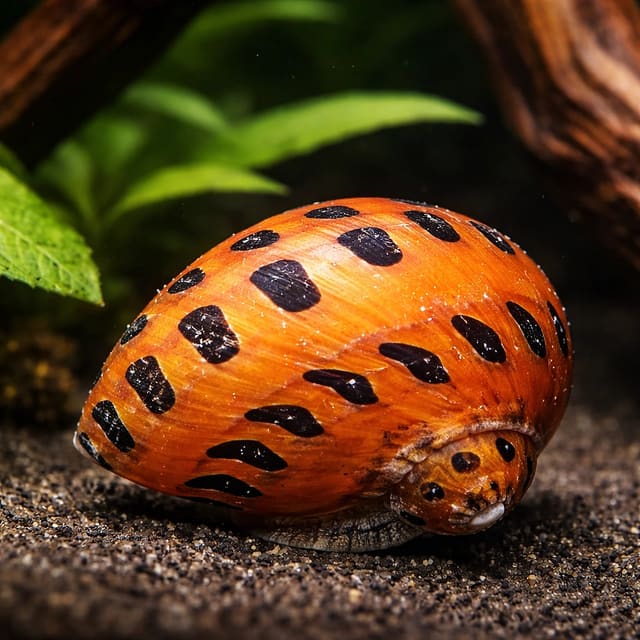
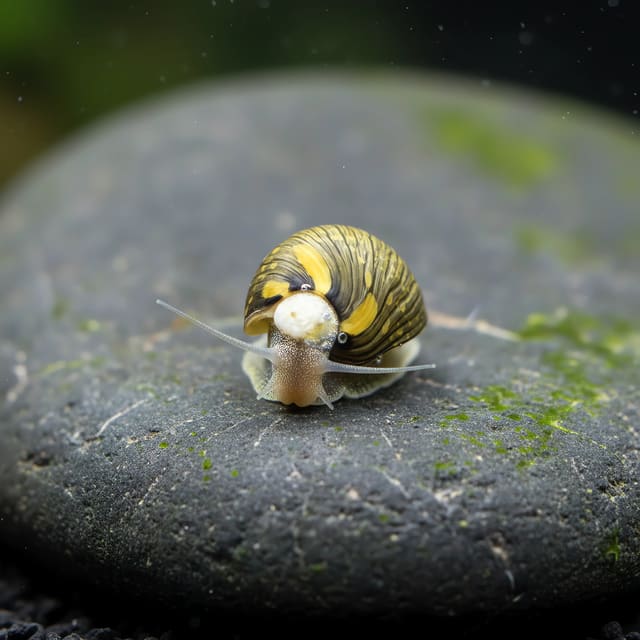
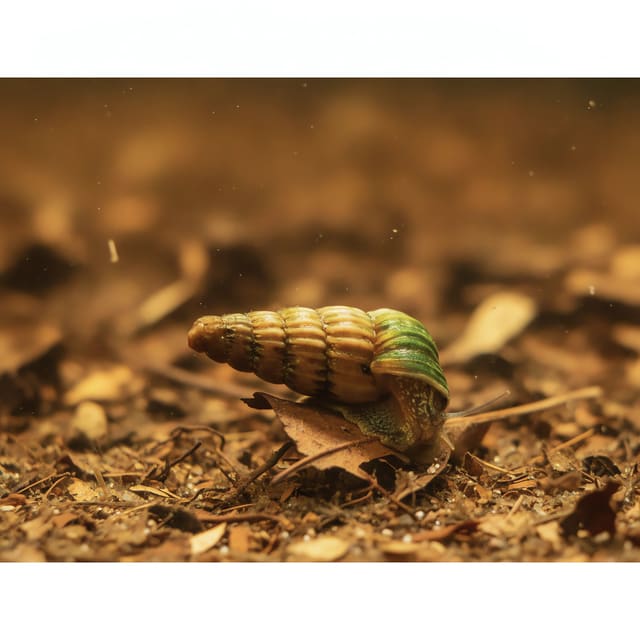
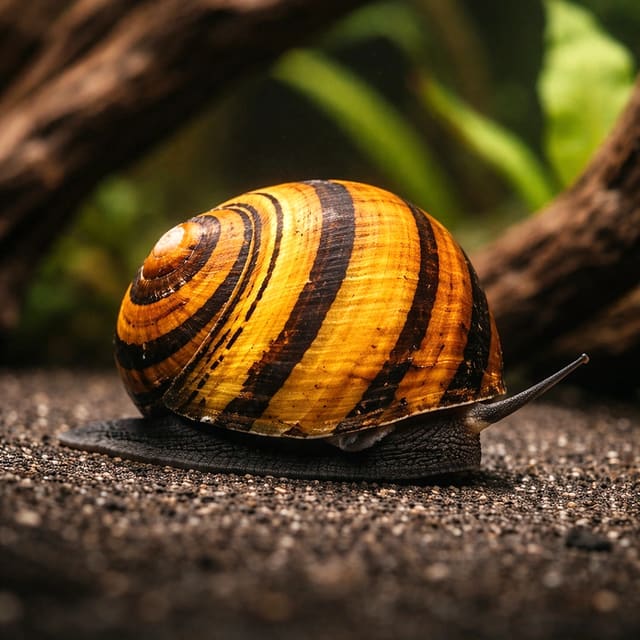
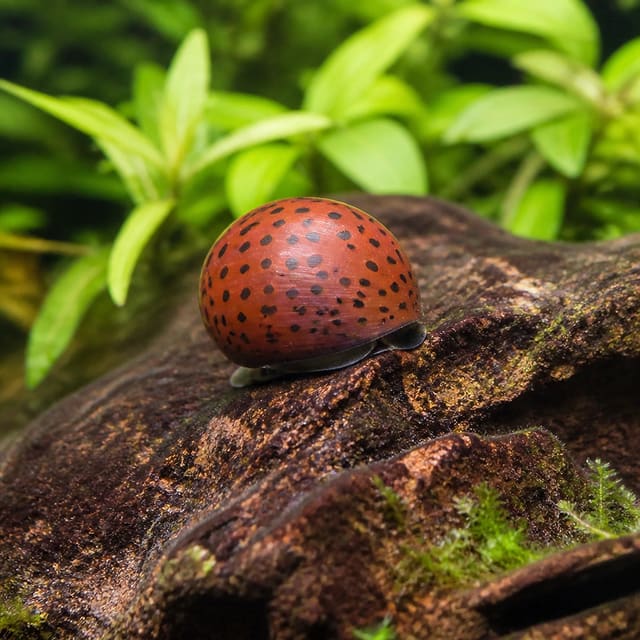
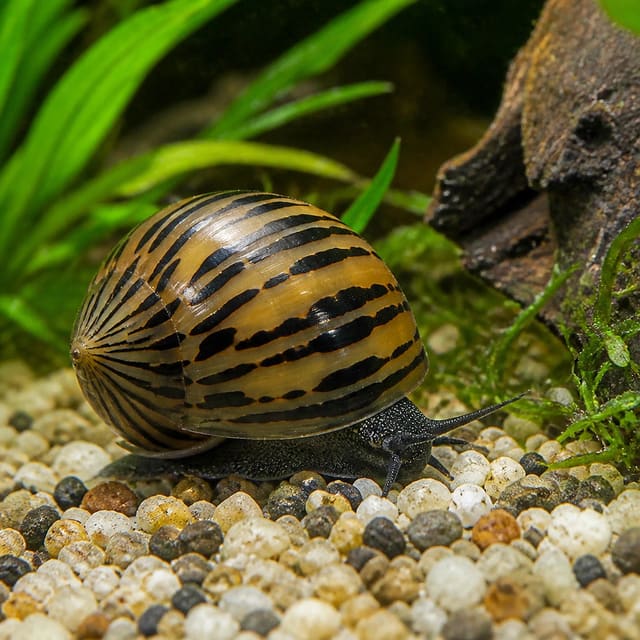
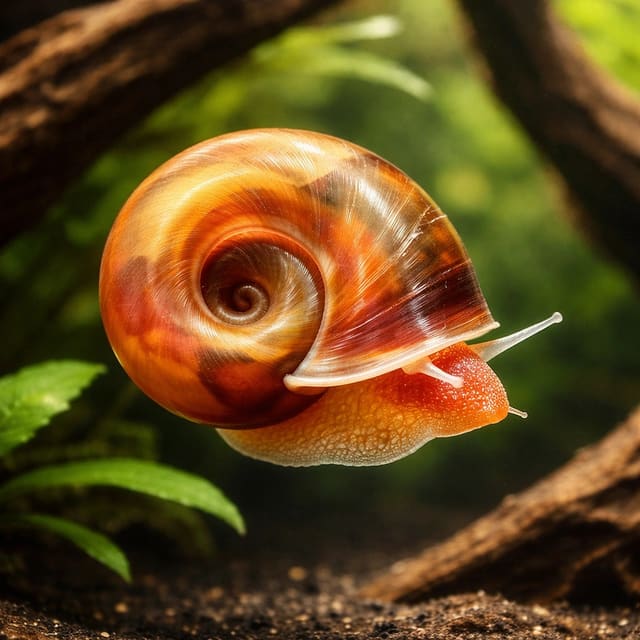
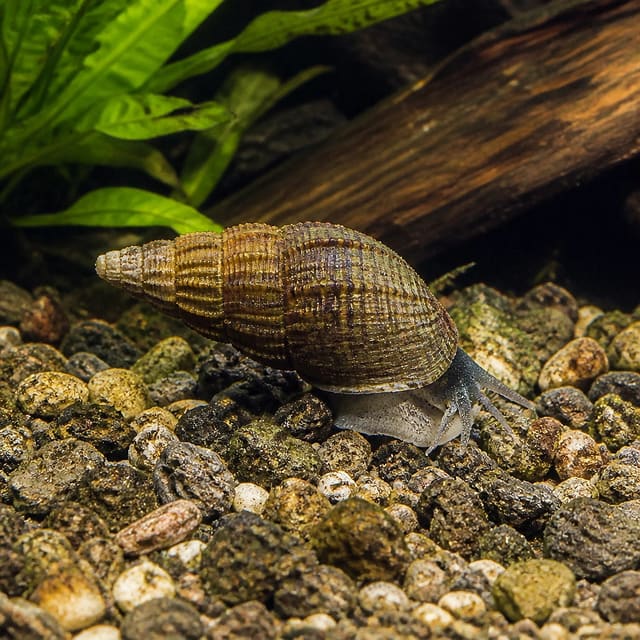
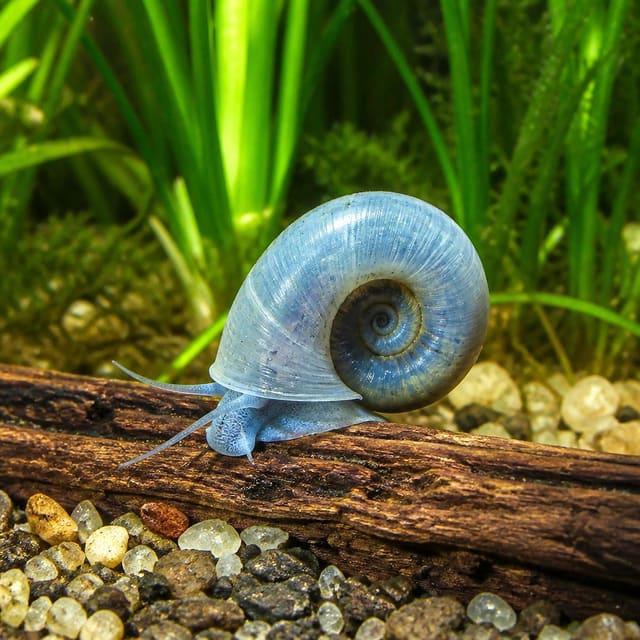
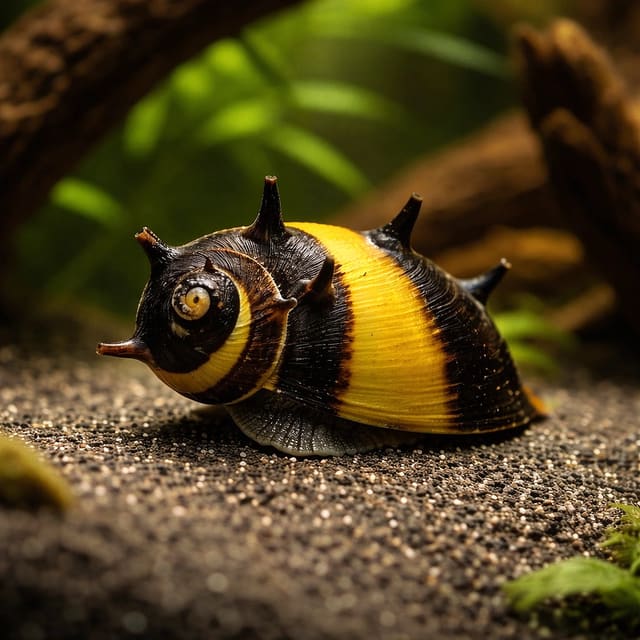
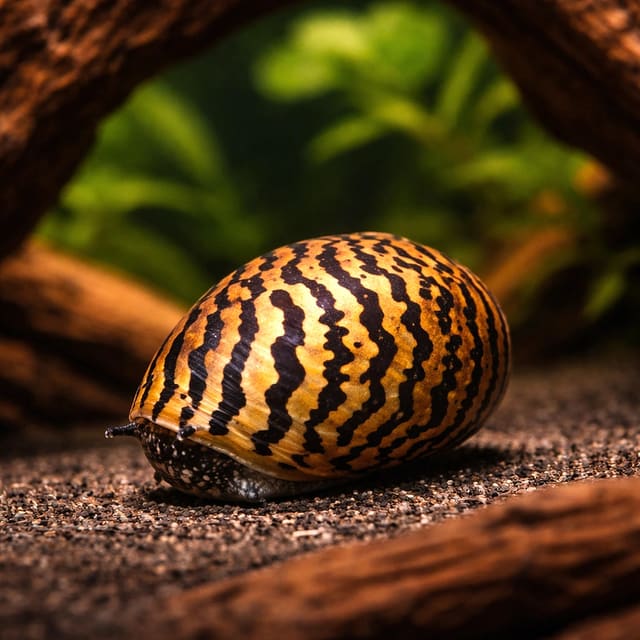
Aquarium snails come in many colours, shapes and sizes, and one nerite’s shell can look noticeably different from the next. Gallery images have been digitally enhanced to improve image quality. Natural colour, pattern, size and maturity can vary between live animals. Judge the snail by its health and behaviour rather than an exact match to a picture.
A nerite needs the same foundations as any aquarium animal: filtered, stable water and a filter that has matured before livestock arrives. Getting those right matters more for a small invertebrate than almost anything you can add later.
OATA recommends an aquarium of at least 10 litres for a group of small freshwater shrimp or snails, and about 20 litres for larger species such as apple snails. It adds that the aquarium needs to be larger again if fish share it, and that a bigger volume keeps temperature and water quality more stable. With the exact Neritina species unknown, treat 10 litres as the floor for snails kept on their own and plan a larger aquarium when a nerite joins a fish community.
Whatever the size, a filter is essential. The RSPCA’s aquarium advice explains why: animals release ammonia, which is toxic, and a working biological filter grows beneficial bacteria that turn ammonia into nitrite, also toxic, and then into nitrate, which is safer. Before any snail goes in, ammonia and nitrite should both test at zero.
OATA warns that adding livestock too quickly causes ‘new tank syndrome’: the bacteria cannot keep up with the extra waste, ammonia and nitrite climb, and shrimp and snails become ill or die. The fix is patience. Mature the filter first, confirm it with repeated tests, and raise stock levels in steps so the bacteria grow with each addition.
If you are setting up from scratch, our freshwater shrimp tank set-up guide walks through preparing and maturing an aquarium for small invertebrates, and the same cycling steps apply to a nerite.
OATA recommends aquarium gravel or sand and, ideally, live plants for cover. Where live plants are not used, plastic plants and ornaments such as plant pots or model caves add shelter. Glass, stones, wood and plant leaves all give algae somewhere to grow, and that algae is part of the snail’s food, so a furnished aquarium supports a grazer better than a bare one.
These examples apply OATA’s guidance for freshwater shrimp and snails to situations buyers often describe.
| Aquarium | How a nerite fits |
|---|---|
| A matured 20-litre planted tank with a group of freshwater shrimp | Comfortably above the 10-litre starting point for small snails and shrimp. Share supplementary food between shrimp and snail, and apply the same no-copper rule to both. |
| A 100-litre community of small, peaceful fish | Room for one or several nerites. Check that none of the fish can eat a snail, and set a temperature inside both the fish’s range and 17–27°C. |
| Any aquarium with pufferfish or loaches | Not suitable: OATA names both as fish that eat snails. |
| A newly filled aquarium still showing ammonia or nitrite | Wait. New tank syndrome can make snails ill or kill them; mature the filter first. |
| An aquarium where fish are being treated with a copper-based medicine | Not suitable while copper is present, because freshwater snails will die if exposed even to low levels. |
There is no minimum group. In a small aquarium, one snail is a sensible start. In a larger, well-planted tank you may choose several, but every snail adds waste and needs food, so add them in stages, watch how quickly visible algae is grazed down and top up with algae wafers when it runs short. If algae keeps returning faster than it is grazed, look at feeding, stocking and water changes before adding more grazers.
Nerites are sold under trade names such as Black Helmet, Parallel and Spotted. These names describe the colour, pattern or shape of the shell; they are not scientific names, and a trade name alone does not show which species a snail belongs to. This snail is identified to the genus Neritina in the family Neritidae, and other nerites in the aquarium trade may belong to different genera within the same family.
For care, the practical effect is simple. The planning values on this page come from OATA’s guidance for freshwater shrimp and snails, and the same water, feeding, copper and tank-mate rules apply whichever Neritina species this turns out to be.
OATA describes freshwater shrimp and snails as usually undemanding of water chemistry and publishes one set of suggested values for the whole group. They are a general guide for shrimp and snails rather than a target for any single species, and OATA advises checking species-specific requirements before buying. With this snail’s species unidentified, the group values are the plan.
| Parameter | OATA guidance for freshwater shrimp and snails |
|---|---|
| Temperature | 17–27°C |
| pH | 6.5–8.0 |
| General hardness | Soft to hard, 4–18°dH |
| Carbonate hardness | Soft to hard, 3–15°dKH |
| Ammonia | Zero |
| Nitrite | Zero |
| Nitrate | No more than 20 mg per litre above your tap-water level |
When the snail shares an aquarium with fish, choose a temperature that sits comfortably inside both the fish’s range and the snail group’s 17–27°C, rather than at the edge of either. Hold it steady; a stable middle value is kinder than a number that drifts with the room.
Suppose your tap water reads pH 7.4, GH 9°dH and KH 6°dKH, and the aquarium sits at 25°C. Every value is inside the group guidance, so the job is to keep it there with conditioned, temperature-matched water changes. If the tap water instead read pH 6.0 with GH 2°dH, it would sit below the group’s suggested minimums, and the aquarium would need attention before a nerite joined it.
Our guide to which aquarium water values to test and why explains each measurement in plain terms, and the water parameter matcher compares your own readings with a stated range before you order.
OATA describes freshwater snails as generally herbivorous: they graze on algae in the aquarium, which is why shrimp and snails are popular for helping to control nuisance algae. A tidy aquarium does not always grow enough algae to keep a snail fed, so OATA advises supplementing grazing with algae wafers. Commercial pellets made for freshwater shrimp can be used for snails as well.
| Situation | Feeding approach |
|---|---|
| Plenty of visible algae and an active snail | Little supplementary food needed; offer a small piece now and then and watch whether it is eaten. |
| Glass and decor grazed clean | Supplement two or three times a week with algae wafers or shrimp pellets, left for at least 30 minutes. |
| Busy community with hungry fish or shrimp | Place food where the snail is working and check that some reaches it. |
Regular movement over glass, decor and leaves is normal grazing behaviour. If the visible algae runs short, or the snail becomes much less active, add a little more supplementary food and test the water at the same time. OATA lists reduced intake or lack of interest in food, and changes in normal activity, among the early signs worth watching.
Fish and shrimp may take the same wafers, so a snail in a busy community can miss out. Place food where the snail is working, check that some reaches it, and resist fixing the problem by feeding more overall; overfeeding pollutes the water that the snail depends on. If algae is plentiful and the snail is active, less supplementary food is needed.
Copper is the biggest avoidable danger for this snail. OATA is direct: as invertebrates, freshwater shrimp and snails are very sensitive to copper and will die if exposed even to low levels. It asks keepers to make sure that any treatment added to the aquarium is safe for invertebrates.
If the snail shares its tank with fish, decide now where you would treat a fish that falls ill. A separate, cycled aquarium lets you use whatever the fish needs without exposing the snail, and it avoids a rushed choice between the fish’s treatment and the snail’s safety. Keep a note of which products in your cupboard are labelled safe for invertebrates.
When something looks wrong, test the water before reaching for any product. Shrimp and snails can be stressed by small lapses in water quality, and a water change is often the safest first step.
Have the aquarium ready and tested before dispatch so the snail goes straight into stable, cycled water. Livestock is hand-bagged in pure oxygen and packed in an insulated poly box, with a heat pack when the weather calls for it, and we email the tracking number and your confirmed delivery date so you know when to be in. Our delivery and Live Arrival Guarantee policy sets out the packing, courier and claim terms in full.
OATA advises increasing the number of shrimp or snails slowly, because the filter bacteria must grow each time livestock and feeding increase. If you are building up a group of grazers, add them in stages and test ammonia and nitrite between additions.
OATA lists changes that help catch problems early in freshwater shrimp and snails:
The OATA freshwater shrimp and snail care sheet sets out a simple routine, and it suits any aquarium housing a nerite:
OATA stresses that good husbandry is essential because freshwater shrimp and snails can be stressed by even small lapses. Keep the routine regular rather than intensive: steady weekly care protects a small invertebrate better than occasional large clean-ups.
Every snail adds waste and needs food. If you add more grazers, raise numbers slowly, watch the algae and supplementary food, and keep testing. An aquarium that has been stripped bare of algae needs more supplementary feeding, not simply more snails.
OATA describes freshwater shrimp and snails as generally compatible with most aquarium species, but warns that they should be mixed with caution because common aquarium fish may eat them. For a nerite the rule is straightforward: keep it only with animals that will not eat snails.
OATA covers freshwater shrimp and snails on one care sheet, with the same water guidance and the same copper warning, so a nerite and a group of shrimp can share a set-up. The difference is social: shrimp species are usually social animals, while snails are not. Shrimp also need protection from any fish that can fit them in its mouth or is predatory, so a tank planned carefully for shrimp usually suits a nerite as well.
Nerites can share an aquarium with other peaceful snails, provided none of them preys on snails and the combined grazing load suits the tank. Our aquarium snail collection includes other nerite forms and different snail families; check each species’ own needs before mixing, and keep assassin snails out of any tank where you want the nerite to thrive.
A nerite is often bought to help with algae, and grazing does help to control nuisance algae. It is one part of a balanced aquarium rather than a cure, so keep feeding, stocking levels and weekly water changes under control as well.
The exact species behind the Black Helmet trade name has not been identified, so there is no single adult size to quote for it. OATA’s snail and shrimp care sheet notes that popular aquarium snails come in various sizes but are unlikely to grow larger than 5 cm, which is a sensible upper limit to plan around.
OATA recommends at least 10 litres for a group of small freshwater snails and about 20 litres for larger snail species, with more space when fish share the tank. Whatever the size, the aquarium needs a filter and should be fully cycled before the snail arrives.
There is no minimum group: OATA notes that snails are not social creatures, so a single nerite can live happily on its own. Choose the number to suit the tank size and the amount of algae it grows, and add snails gradually so the filter keeps pace.
It can be, provided the aquarium is cycled with zero ammonia and nitrite and nothing containing copper is ever added. OATA describes freshwater snails as usually undemanding of water chemistry, but they are very sensitive to copper and poor water quality, so steady routine care matters more than experience.
Freshwater snails are generally herbivorous and graze on algae in the aquarium. OATA advises supplementing that grazing with algae wafers, or pellets made for freshwater shrimp, two or three times a week, leaving the food for at least 30 minutes and removing what is not eaten.
Because the species is unidentified, use OATA’s broad guidance for freshwater shrimp and snails: 17–27°C, pH 6.5–8.0 and a general hardness of 4–18°dH, with zero ammonia and nitrite. In a community aquarium, choose a setting that suits both the snail group and the fish.
No. It is a grazing snail with no way to nip fins, and OATA describes freshwater snails as generally compatible with most aquarium species. The risk runs the other way: some fish eat snails.
Peaceful community fish too small to eat snails, freshwater shrimp and other non-predatory snails are the usual companions. Avoid fish that eat snails, such as pufferfish and loaches, and assassin snails, which prey on other snail species.
It is hand-bagged in pure oxygen and packed in an insulated poly box, with a heat pack when the weather calls for it, then carried by a licensed live-animal courier with tracking. Someone must be at home to receive the parcel. Film one continuous unboxing video from the sealed parcel to the snail still in the sealed bag, then float the bag for 20–30 minutes before release; the Live Arrival Guarantee needs that video.
These public sources support the identity and care guidance on this page.
No reviews for this item yet. Bought one? Honest reviews only, good or bad.
What customers say about ordering from us
I have a small group of long finned mountain minnows. So was delighted to be able to order ten of this variety to increase the genetics in my tank . The ones I recieved are healthy but it’s to early to give a verdict on wether they are of a long finned type since they are small currently.
Gordon Walker · 23 Sept 2026
100% success travel and "installation". Pleased with quality of purchase. The Siamese fighter a bit "shy" so have not yet seen him at his best yet but looking good. Happy customer. GG
George E Garratt · 21 Sept 2026
Reviews of our shop, collected by Judge.me, an independent third-party review collector. Newest first.