Easy
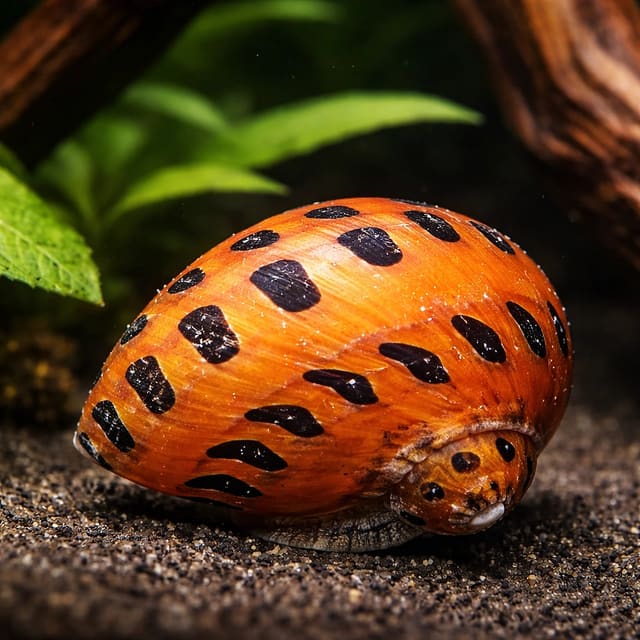
Parallel Nerite Snail (Neritina sp.)
17–27°C · pH 6.5–8
£4.99

The White Spot Rabbit Snail (Tylomelania sp.) is a freshwater snail in the family Pachychilidae, from a genus native to Sulawesi in Indonesia. It suits a matured, filtered and heated aquarium without snail-eating fish; OATA's group guidance for freshwater snails gives 17–27°C and pH 6.5–8.0, and rabbit snails are kept on the warm, alkaline side. Sold as one live snail, dispatched at 4–6 cm.
Tylomelania sp.
Lives in groups: kept together they stay settled, active and show their best colour.
The White Spot Rabbit Snail (Tylomelania sp.) is a freshwater snail in the family Pachychilidae, from a genus native to Sulawesi in Indonesia. It suits a matured, filtered and heated aquarium without snail-eating fish; OATA's group guidance for freshwater snails gives 17–27°C and pH 6.5–8.0, and rabbit snails are kept on the warm, alkaline side. Sold as one live snail, dispatched at 4–6 cm.
Maintain these water conditions for optimal health and vibrant colors
The White Spot Rabbit Snail (Tylomelania sp.) is a freshwater snail from Tylomelania, the genus the aquarium hobby calls rabbit snails. WoRMS lists Tylomelania as an accepted genus in the family Pachychilidae, and like the rest of the genus this snail carries an operculum, the lid-like plate that closes the shell when the animal withdraws. The genus is native to Sulawesi in Indonesia, where most species are restricted to Lake Poso and the Malili lake system, so this is a snail for a heated tropical aquarium rather than a pond or an unheated tank.
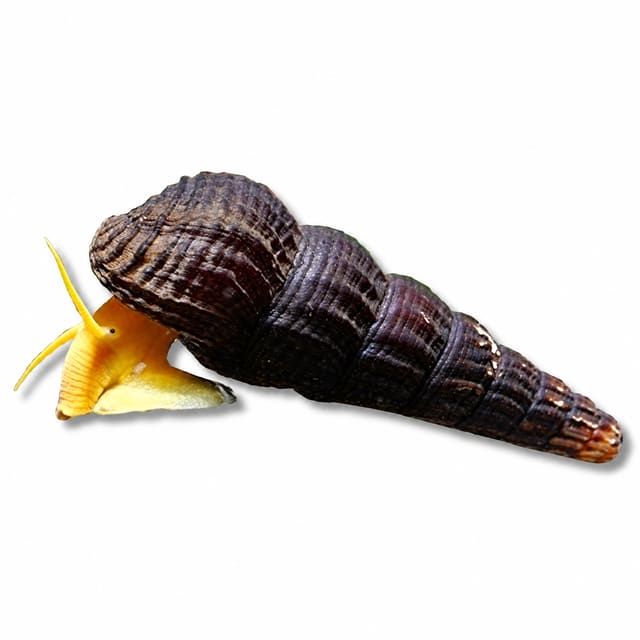
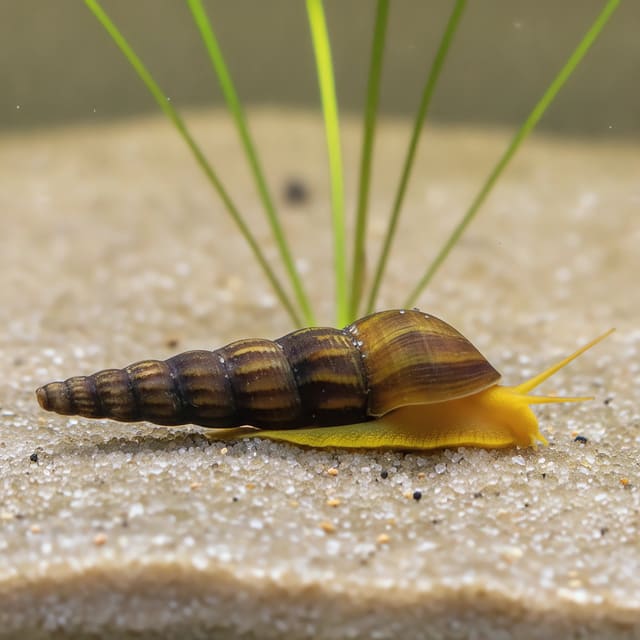
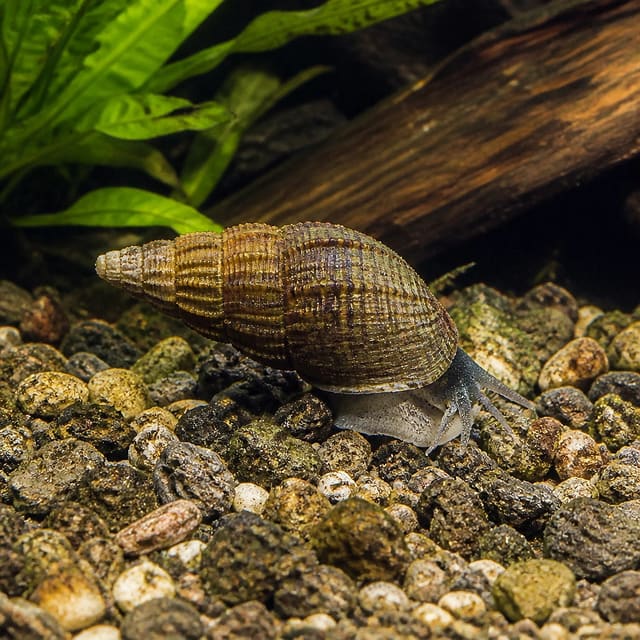
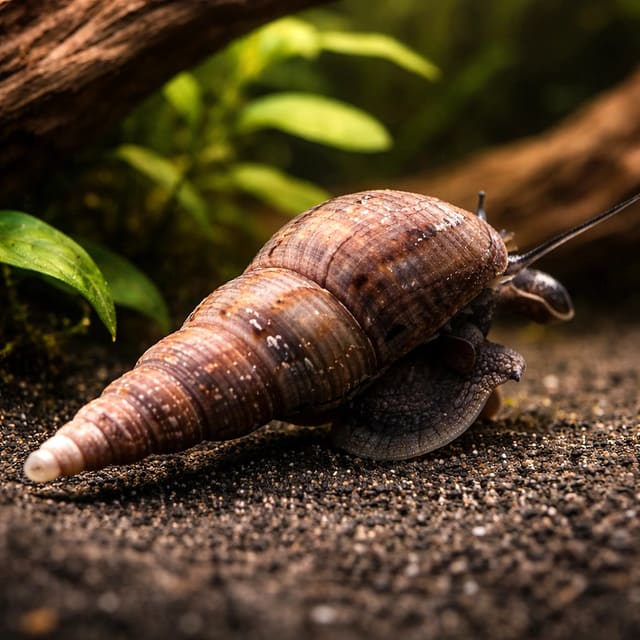
"White spot" is the trade name for this form. The snail in our photograph has a tall, tapering dark shell dotted with white spots and moves over fine gravel on a broad dark foot, its long feelers stretched out ahead. That outline and contrast make it a genuine display animal for the lower level of the aquarium, where it grazes over the substrate, rocks and décor.
It suits a keeper with a matured, filtered and heated aquarium who is happy to test the water every week and keep conditions steady. It is a poor match for a tank that holds pufferfish, loaches or other fish that eat snails, and for anyone who treats the aquarium with copper-based medicines.
| Suits | Not suited to |
|---|---|
| A heated, filtered tropical aquarium that has finished maturing | A new tank where ammonia or nitrite still shows on a test |
| Keepers who test weekly and change 25% of the water at least once a week | Tanks treated with copper or medicines that are unsafe for invertebrates |
| Calm communities of shrimp and fish that cannot eat snails | Pufferfish, loaches or any other snail-eating fish |
| Someone content with one snail, or a few added gradually | An unheated tank that follows room temperature |
Each purchase supplies one live snail, dispatched at 4–6 cm. That measurement describes the snail as it leaves us, and it is the only size sold under this listing. The exact species has not been identified, so the care advice here follows the genus Tylomelania and its care group. For the same reason we do not give an adult length; plan the aquarium around a snail that is already 4–6 cm long on the day it arrives.
Sex is guaranteed only when the selected option explicitly states male or female. This White Spot Rabbit Snail listing has no sex-guaranteed option. That matters mainly if you are hoping for young. Rabbit snails are live-bearers, and a single snail bought on its own is best treated as a display animal rather than the start of a breeding group.
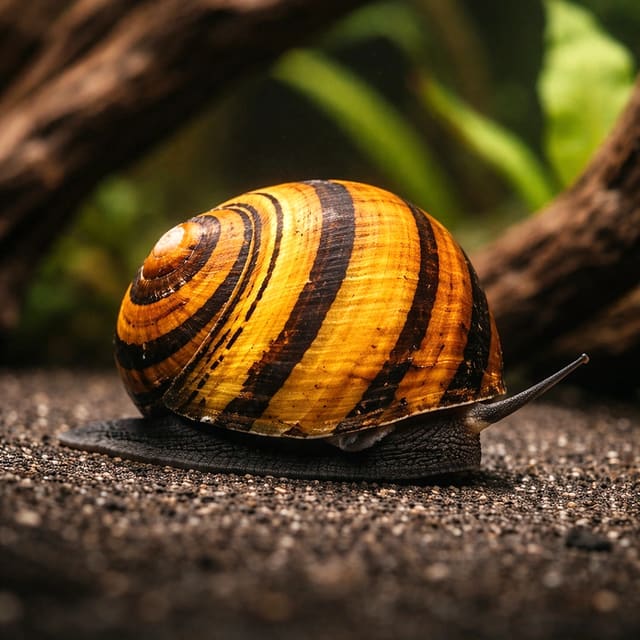
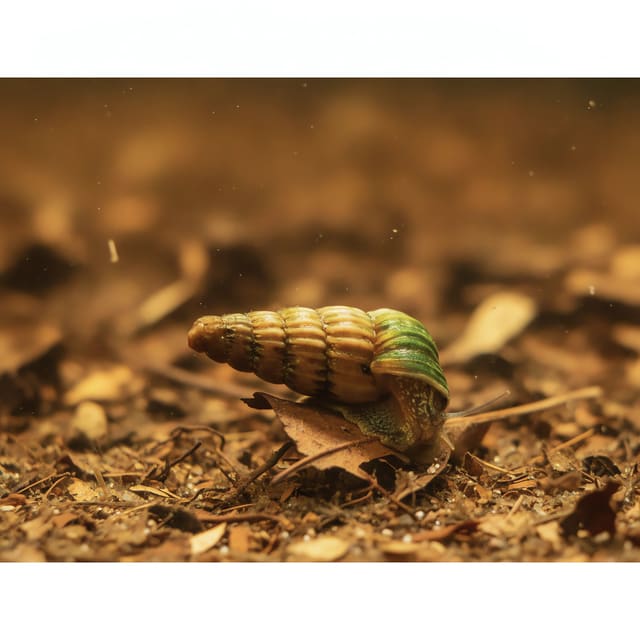
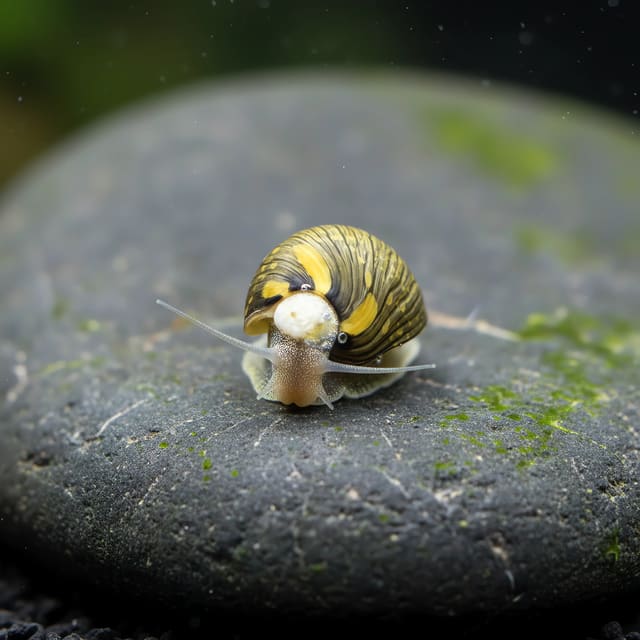
Gallery images have been digitally enhanced to improve image quality. Natural colour, pattern, size and maturity can vary between live animals. Your snail will be an individual with its own spotting and shell tone.
If you are weighing up several kinds of snail before deciding, you can browse our other aquarium snails side by side; everything that follows is written for this rabbit snail.
Six questions cover the numbers that matter most. The water figures come from OATA's group guidance for freshwater shrimp and snails, and the care tab explains each one in full.
| Question | Ready when |
|---|---|
| Is the tank heated? | A thermostatic heater holds a steady reading in the warmer part of 17–27°C |
| Has the filter matured? | Ammonia and nitrite both read zero on weekly tests |
| Is there enough water? | Approximately 20 litres for one snail kept alone, more with fish |
| Does the pH fit? | Within 6.5–8.0, ideally in the upper, alkaline half |
| Are the tank mates safe? | No pufferfish, loaches or other fish that eat snails |
| Is every treatment invertebrate-safe? | Nothing containing copper goes into the tank |
If any answer is no, sort that out first. A week spent fixing a heater or waiting for a filter to mature costs far less than a snail lost to the wrong conditions. When every answer is yes, the arrival steps in the care tab take you from the sealed parcel to a settled snail.
A rabbit snail does best in an aquarium that was planned around it before the parcel is ordered. Four decisions shape that aquarium: the volume of water, the filter, the heater and the surface the snail lives on.
OATA's care sheet for freshwater shrimp and snails advises buying an aquarium as large as possible within reason. It suggests at least 10 litres for a group of small shrimp or snails and approximately 20 litres for larger species such as apple snails, with a larger aquarium again when snails share the tank with any fish. A rabbit snail that arrives at 4–6 cm belongs with those larger snails, so treat approximately 20 litres as the starting point for one snail kept alone. The larger the aquarium, the more stable its temperature and water quality will be, and stability is the thing this snail most needs from you.
Whatever the size of the tank, a filter is always essential. It removes waste and gives the beneficial bacteria that process that waste somewhere to live. Choose a filter rated for the volume you have, and set it running before anything else goes into the aquarium.
The genus comes from tropical Sulawesi, and rabbit snails are kept warm in the hobby, so fit an aquarium heater with a thermostat. Let it run for a few days before the snail is due and check a separate thermometer each morning and evening; you want to see the same reading at both times, not a tank that cools overnight and warms under the lights.
OATA recommends aquarium gravel or sand, notes that sand or fine gravel is important for some species, and ideally live plants for cover. A rabbit snail spends its life on the bottom, so a base of sand or fine gravel gives it an easy surface to move and graze over; the snail in our photograph is crossing exactly that kind of fine gravel. If you do not keep live plants, OATA suggests plastic plants and ornaments such as plant pots or model caves to provide shelter.
Keep the aquarium at 17–27°C and pH 6.5–8.0, with general hardness of 4–18°dH and carbonate hardness of 3–15°dKH. These are OATA's figures for freshwater shrimp and snails as a group rather than a species-specific optimum, and OATA describes the group as usually undemanding of water chemistry. Within those ranges, Wikipedia's account of the genus notes that rabbit snails are kept in warm, alkaline water, which fits a genus from tropical Sulawesi. Aim for the warmer part of the temperature range and the upper, alkaline half of the pH range, then keep both steady.
| Value | Keep it at |
|---|---|
| Temperature | 17–27°C, held steady in the warmer part |
| pH | 6.5–8.0, in the upper, alkaline half |
| General hardness | 4–18°dH |
| Carbonate hardness | 3–15°dKH |
| Ammonia | Zero |
| Nitrite | Zero |
| Nitrate | No more than 20 mg per litre above your tap water |
The nitrate limit is measured against your tap water, so it differs from home to home. If your tap water tests at 10 mg per litre, keep the aquarium at or below 30 mg per litre; if it tests at 25 mg per litre, the ceiling becomes 45 mg per litre. Test the tap once so you know your own baseline and recheck it now and then. You can compare your readings with these ranges in our water parameter matcher before the snail is ordered.
OATA advises testing at least once a week so that ammonia and nitrite never build up. Test ammonia, nitrite, nitrate, pH and temperature on the same day each week and write the results down. A pH that slides a little lower each week, or a nitrate figure creeping towards your ceiling, is easy to see in a notebook long before it shows in the snail, and it tells you to act with a water change rather than wait.
Every animal in the aquarium produces waste, and the ammonia in that waste is toxic. The RSPCA explains that a working biological filter lets beneficial bacteria grow and break waste down naturally: ammonia is converted to nitrite, which is also toxic, and then to nitrate, which is safer. Those bacteria need time to build up in a new filter, which is why this snail should only go into an aquarium that has already matured.
Before the snail arrives, confirm that ammonia and nitrite both read zero. OATA warns that overstocking, or stocking too quickly, can result in "new tank syndrome": there are not enough nitrifying bacteria to cope with the extra waste, ammonia and nitrite rise to unhealthy levels, and that may cause freshwater shrimp and snails to become ill or die. The bacterial population has to grow each time livestock is added and feeding increases, so bring animals in gradually.
If this is your first aquarium, our step-by-step guide to setting up and maturing a first invertebrate tank walks through the same preparation in more detail, from the empty tank to the first livestock.
Your snail is hand-bagged in pure oxygen and packed in an insulated poly box, with a heat pack when the weather calls for it, then carried by a licensed live-animal courier. We email the tracking number and your confirmed delivery date so you know when to be in. Someone needs to be at the delivery address to receive the parcel, because live animals cannot be left unattended, and the parcel must be opened and inspected the same day it arrives. The full terms are on our delivery and Live Arrival Guarantee page.
The Live Arrival Guarantee needs a continuous unboxing video, so film every delivery from the sealed parcel onward. Follow these steps in order:
On the aquarium side, OATA advises checking that ammonia and nitrite read zero before any shrimp or snail goes in, so run that test the day before delivery rather than in the middle of unpacking. Afterwards, let the snail explore in its own time and note where it starts to graze; those first observations become the baseline you compare against in the weeks that follow.
OATA describes freshwater snails as generally herbivorous animals that graze on algae in the aquarium. That grazing should be supplemented with algae wafers so the snail is getting enough food, and commercial pellets made for freshwater shrimp can be used for snails too. Grazing alone should not be relied on, so plan to feed whether or not you can see algae on the glass.
Feed only two or three times a week, not every day. Leave wafers and pellets in place for at least 30 minutes so a slow grazer has time to find them, then lift out anything still untouched rather than letting it rot. Overfeeding is a quick way to spoil good water: uneaten food breaks down and releases toxic waste, undoing the work of your filter and water changes.
| Day | What to offer |
|---|---|
| Monday | An algae wafer on open substrate close to the snail |
| Thursday | A small portion of pellets made for freshwater shrimp |
| Saturday, if needed | A third feed only when the earlier ones were cleared |
| Other days | No food; the snail grazes on algae in the tank |
Start with a small piece and look again once the 30 minutes have passed. If most of it is gone, the portion is about right; if it is barely touched after several feeds, offer less. Place the food where the snail is already grazing, particularly in a tank with shrimp or fish, so faster animals do not clear it first. A snail that ignores food it used to take is worth a closer look, and the health checks later in this guide explain what to look for.
OATA strongly recommends a partial water change of 25% at least once every week, using a siphon to lift solid waste out of the gravel. For a snail that lives and feeds on the substrate, that siphoning does double duty: it clears waste and leftover food from exactly the surface where the snail grazes.
In an aquarium of approximately 20 litres, a 25% change means siphoning out about 5 litres and replacing it with 5 litres of conditioned water. Doing that at least once every week, rather than saving it for a large occasional change, keeps nitrate low and the water values steady. If you are new to test kits, our guide to which aquarium water values to test and why explains each reading and what it means for the tank.
Snails show trouble through small changes, so learn what normal looks like in the first week. OATA's watch list for freshwater shrimp and snails covers:
One point is specific to this form. The white spots on its shell are its normal pattern, so photograph the shell clearly on arrival day. When the watch list mentions white spots or discolouration, it means marks that develop later; your arrival photo lets you tell a new change from the pattern the snail came with.
If you notice a change, test ammonia, nitrite and nitrate straight away, because poor water quality is exactly what the weekly routine is designed to prevent, and contact us with your readings if you are concerned about the snail's health.
Being invertebrates, freshwater snails are very sensitive to copper and will die if exposed even to low levels. Always make sure that any treatment added to the aquarium is safe for invertebrates, and read the label of every product before it goes into a tank that holds this snail.
The first month shows whether the aquarium and the snail suit each other. Work through these checkpoints and let each answer decide your next step.
Look for signs that the snail is moving around the tank and grazing, and check whether it has taken food on your feeding days. If it has, keep the routine as it is. If food has been left untouched after several feeds, test the water, offer smaller portions and run through the watch list above before changing anything else.
Ammonia and nitrite should still read zero with the snail in the tank. If either rises, the filter has not caught up with the extra waste: make a partial water change with conditioned water, feed less for the rest of the week, and hold off adding any other livestock until the readings are back at zero.
Compare your four weekly nitrate readings with your own ceiling. Steady figures under it mean the weekly water change is keeping pace. A figure that climbs every week means more waste is going in than coming out, so check portion sizes before you think about adding more animals.
| If you see | Do this |
|---|---|
| Ammonia or nitrite above zero | Change part of the water with conditioned water, feed less and retest |
| Nitrate above your ceiling | Add an extra partial water change and trim portions |
| Food untouched after several feeds | Offer less, test the water and check the watch list |
| Much more hiding than usual | Test the water and compare the snail with your arrival photo |
| New marks on the shell | Compare them with the arrival photo and follow the health steps above |
Tylomelania snails do not lay the egg clusters that many aquarium snails leave on glass and plants. Wikipedia's account of the genus describes them as ovoviviparous: the female's reproductive tract has become a brood chamber that releases young snails already in their shells. Newly hatched young of some species measure nearly 2 cm, which Wikipedia describes as the largest newly hatched young of any live-bearing gastropod. In the hobby, rabbit snails are valued partly for that slow, manageable rate of reproduction.
This listing supplies one snail of unknown sex, so buy it as a display animal. If young do appear in a tank that holds more than one rabbit snail, look after them in the same way as the adults: clean, matured water, food that reaches the substrate and no snail-eating tank mates.
OATA's guidance is that freshwater shrimp and snails are generally compatible with most aquarium species, but they should be mixed with caution because common aquarium fish may eat them. For snails the rule is specific: do not mix them with fish that can eat them, such as pufferfish or loaches.
OATA's advice is to check before mixing freshwater snails with any fish species. Ask us about a particular combination before you buy; we would rather talk it through than see a snail lost to a tank mate.
Shrimp and snails share one OATA care sheet and one set of water values, which makes a rabbit snail a natural neighbour for freshwater shrimp kept in the same range. They differ socially: OATA notes that snails are not social creatures, while shrimp species usually are. A rabbit snail does not need company of its own kind, so a single snail is a complete purchase.
Commercial pellets made for freshwater shrimp can feed both animals, which keeps a mixed invertebrate tank simple. Spread the food across more than one spot so the snail gets its share while shrimp gather at the first piece.
Among other snails, OATA singles out the assassin snail, which preys on other snail species; treat it with caution in a tank built around a rabbit snail. Grazing snails that are happy in the same water values can live alongside it.
If you want several rabbit snails, add them gradually, as OATA advises for all shrimp and snails, and let the filter catch up between additions. Each extra snail adds waste and feeding, so size the aquarium up rather than crowding the substrate.
Start from approximately 20 litres, OATA's figure for larger snails, with a matured filter, a heater and a sand or fine-gravel base planted for cover. Add the rabbit snail first and keep testing weekly. Once ammonia and nitrite have stayed at zero, introduce a group of freshwater shrimp that suit the same water values, and feed them together as the feeding section describes.
Choose a larger aquarium than the snail alone would need, because OATA advises extra space whenever snails share with fish. Screen every fish against the questions above and leave out pufferfish, loaches and any species that eats snails. Stock the tank one addition at a time so the filter keeps up, whether the snail or the fish go in first, and keep the weekly test going throughout so a rise in ammonia or nitrite is caught before the next animal arrives.
It is dispatched at 4–6 cm. Because the exact species within the genus has not been identified, we do not quote an adult length, so plan the aquarium around a snail that is already 4–6 cm long on the day it arrives.
OATA's group guidance for freshwater shrimp and snails gives approximately 20 litres for larger snails such as apple snails, and a larger aquarium again when fish share the tank. A 4–6 cm rabbit snail belongs with those larger snails, so treat approximately 20 litres as the starting point for one snail kept alone and choose a bigger tank for fish, extra snails or steadier water.
One is enough. OATA notes that snails are not social creatures, so a single snail kept on its own is a complete set-up. If you want several, add them gradually so the filter bacteria can keep pace with the extra waste, and size the aquarium up as the number grows.
Preparation matters more than experience. It suits a keeper who will mature a heated, filtered aquarium before it arrives, test ammonia, nitrite, nitrate and pH every week and change 25% of the water at least once every week. It is a poor choice for anyone who doses copper-based treatments, because freshwater snails will die if exposed even to low levels of copper.
They graze on algae in the aquarium, and OATA describes freshwater snails as generally herbivorous. Supplement that grazing with algae wafers or pellets made for freshwater shrimp, feed only two or three times a week, and leave the food for at least 30 minutes before lifting out anything untouched.
OATA's group guidance for freshwater shrimp and snails gives 17–27°C, pH 6.5–8.0 and general hardness of 4–18°dH. Rabbit snails come from a tropical genus and are kept warm and alkaline in the hobby, so hold a steady temperature in the warmer part of that range and keep the pH in its upper, alkaline half, testing every week.
Yes. The genus is native to tropical Sulawesi and rabbit snails are kept warm in the hobby, so use a thermostatic aquarium heater and hold a steady temperature in the warmer part of OATA's 17–27°C group range for freshwater shrimp and snails, rather than letting the tank follow the room.
No. It is a grazer, and OATA describes freshwater snails as generally compatible with most aquarium species. The risk runs the other way: fish that can eat snails, such as pufferfish and loaches, must be kept away from it.
Freshwater shrimp kept in the same water range, and fish that cannot eat snails, can share its tank. OATA advises that snails should not be mixed with fish that can eat them, such as pufferfish or loaches, and notes that assassin snails prey on other snail species, so treat those with caution and check any fish before it joins the tank.
It is hand-bagged in pure oxygen, packed in an insulated poly box with a heat pack when the weather calls for it, and carried by a licensed live-animal courier. Someone must be in to receive the parcel. Start a continuous unboxing video before you open the sealed parcel, then float the bag for 20–30 minutes before releasing the snail, and never pour the bag water into your tank. Message us the same day, with your order number and the video, if anything has gone wrong.
No reviews for this item yet. Bought one? Honest reviews only, good or bad.
What customers say about ordering from us
I have a small group of long finned mountain minnows. So was delighted to be able to order ten of this variety to increase the genetics in my tank . The ones I recieved are healthy but it’s to early to give a verdict on wether they are of a long finned type since they are small currently.
Gordon Walker · 23 Sept 2026
100% success travel and "installation". Pleased with quality of purchase. The Siamese fighter a bit "shy" so have not yet seen him at his best yet but looking good. Happy customer. GG
George E Garratt · 21 Sept 2026
Reviews of our shop, collected by Judge.me, an independent third-party review collector. Newest first.