Easy
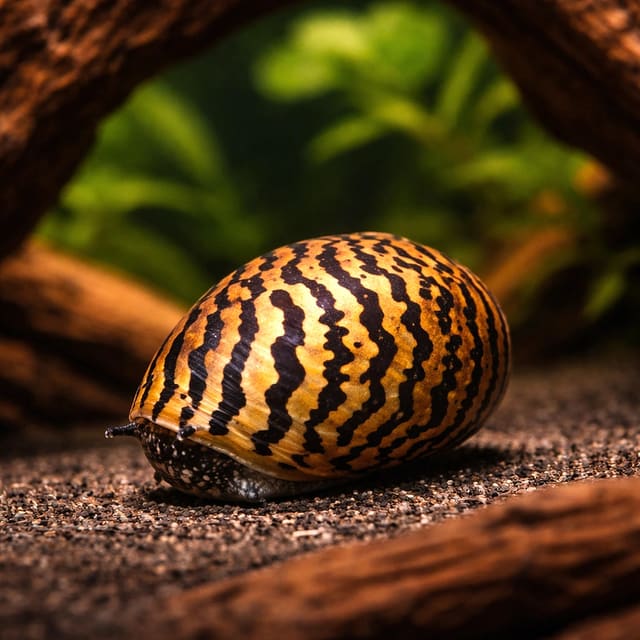
Parallel Nerite Snail (Neritina sp.)
17–27°C · pH 6.5–8
£4.99

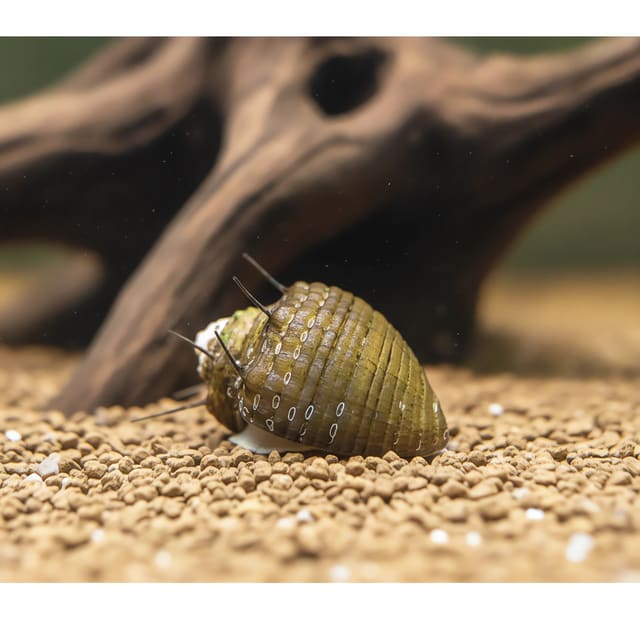
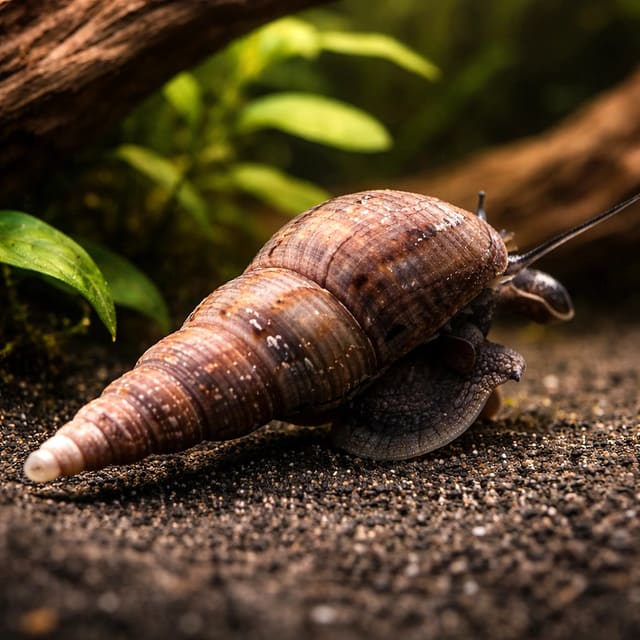
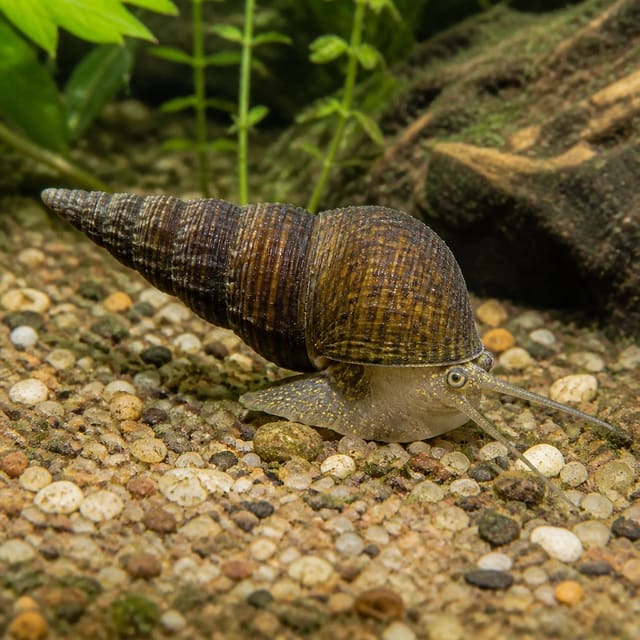
The Scabra Trumpet Snail (Thiara scabra) is a freshwater snail in the family Thiaridae, now accepted by WoRMS as Mieniplotia scabra. It suits a mature, filtered aquarium; OATA's freshwater shrimp and snail guidance gives 17–27°C, pH 6.5–8.0 and 4–18°dH, and notes that snails are not social. Sold individually as one live snail per purchase.
Thiara scabra
Lives in groups: kept together they stay settled, active and show their best colour.
The Scabra Trumpet Snail (Thiara scabra) is a freshwater snail in the family Thiaridae, now accepted by WoRMS as Mieniplotia scabra. It suits a mature, filtered aquarium; OATA's freshwater shrimp and snail guidance gives 17–27°C, pH 6.5–8.0 and 4–18°dH, and notes that snails are not social. Sold individually as one live snail per purchase.
Maintain these water conditions for optimal health and vibrant colors
The Scabra Trumpet Snail (Thiara scabra) is a freshwater snail in the family Thiaridae. It suits a keeper who can prepare a mature, filtered aquarium, test the water every week and protect invertebrates from copper. Tropical Fish Co has also sold it under the name Hedgehog Snail.
WoRMS accepts the scientific name Mieniplotia scabra and records Thiara scabra as an unaccepted name. Both names refer to the same snail. Wikipedia describes Mieniplotia as a monotypic genus, meaning that Mieniplotia scabra is its sole species.
Keep the aquarium at 17–27°C, pH 6.5–8.0 and 4–18°dH. OATA's freshwater shrimp and snail guidance gives these broad values for the group; they are not a species-specific optimum. It also gives carbonate hardness of 3–15°dKH, ammonia and nitrite at zero mg/l, and nitrate no more than 20 mg/l above the normal tap-water level.
Plan on an aquarium of approximately 20 litres and make it larger when fish share the space. OATA gives at least 10 litres for a group of small freshwater snails and approximately 20 litres for larger species such as apple snails, so plan on the larger figure. A larger volume also provides more stable temperature and water quality.
| Suits | Not suited to |
|---|---|
| A mature, filtered freshwater aquarium | An unfiltered or newly stocked aquarium |
| A keeper who tests water every week | Water containing ammonia or nitrite |
| Gravel or sand with plants and shelter | Copper treatments, even at low levels |
| A community screened for snail predation | Pufferfish, loaches or other snail-eating fish |
One purchase supplies one live Scabra Trumpet Snail. The expected dispatch grade is 1–2 cm, which describes the snail's size when sent rather than its eventual adult length. Plan the aquarium around stable long-term conditions and ongoing growth, not around the space occupied by the animal on arrival.
Sex is guaranteed only when the selected option explicitly states male or female. This Scabra Trumpet Snail listing has no sex-guaranteed option.
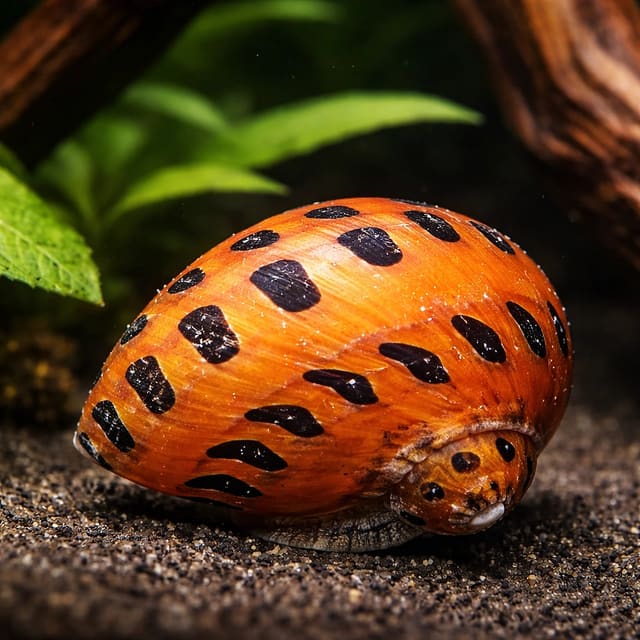
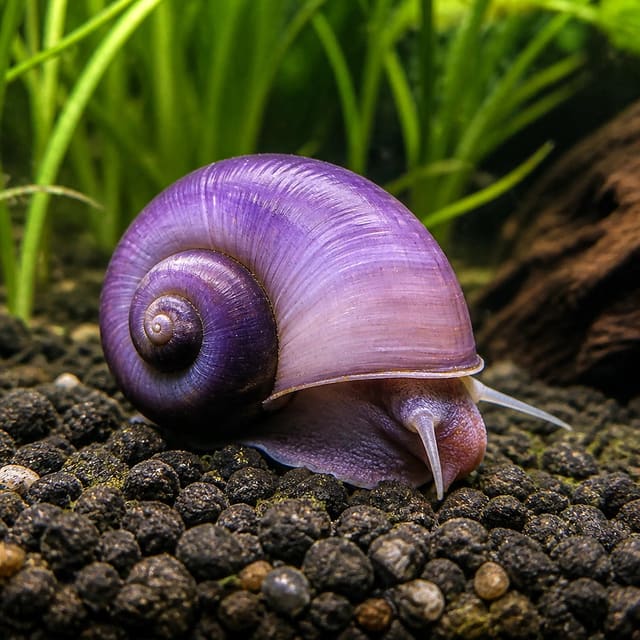
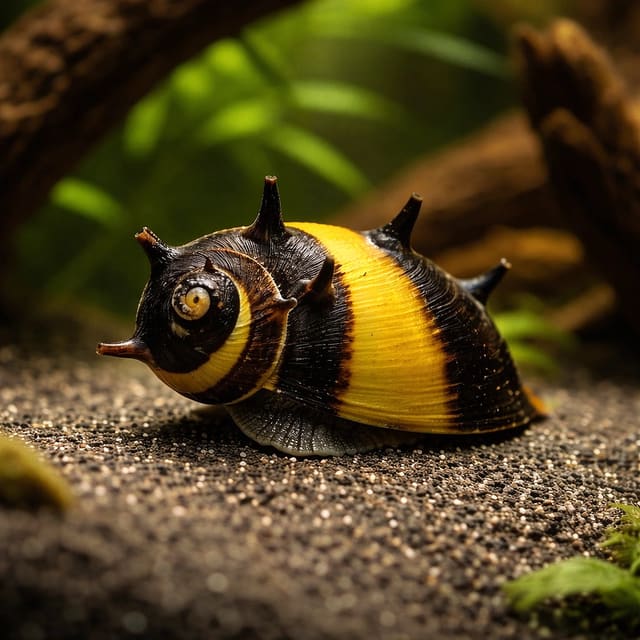
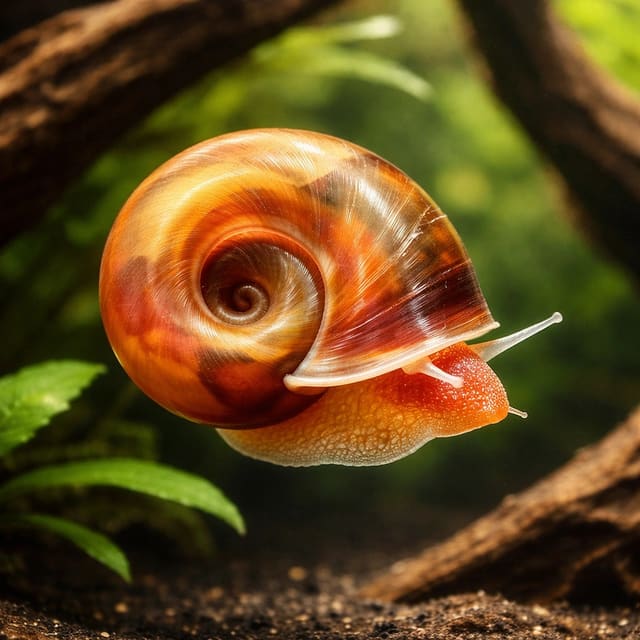
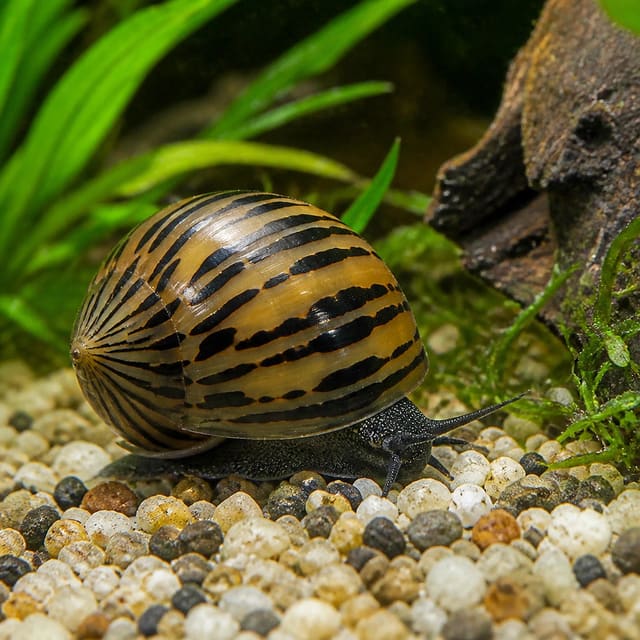
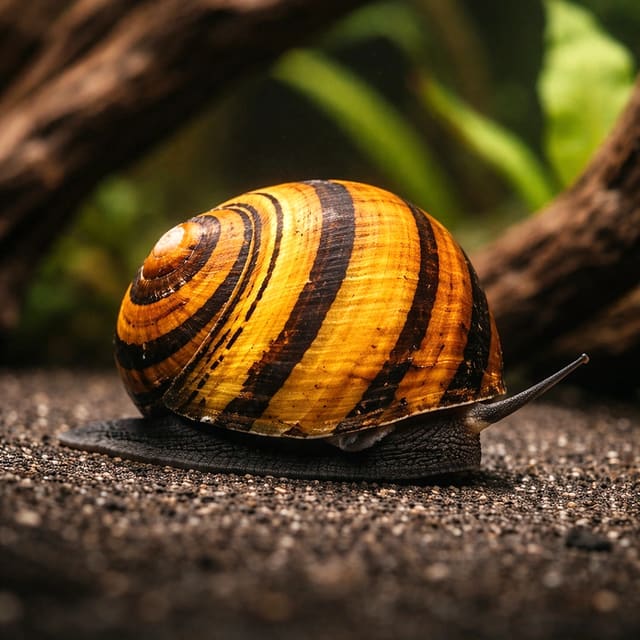
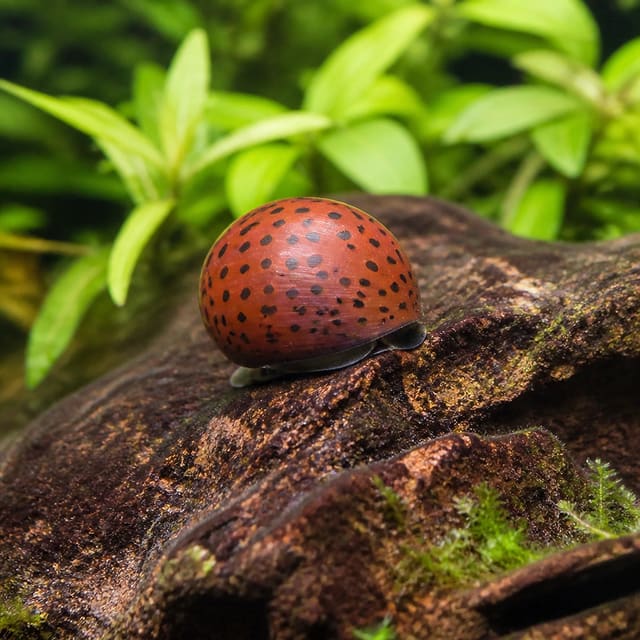
The gallery images are representative of this type of animal rather than photographs of the exact animal supplied, so colours can look slightly different from the live animal.
This animal is a freshwater aquarium invertebrate, not a substitute for routine cleaning or water changes. Its grazing can contribute to nuisance-algae control, but it still needs direct feeding and regular observation. Browse the current freshwater snail collection when comparing the forms and care demands of different aquarium snails.
The strongest plan combines enough water volume, established biological filtration, suitable hardness and careful companion screening. Those decisions matter more than shell colour or the snail's length at dispatch.
Plan on approximately 20 litres for this snail and increase the aquarium size if fish will share it. OATA states that larger species, such as apple snails, will require approximately 20 litres, and explains that larger aquariums provide more stable temperature and water quality. Do not use the 1–2 cm dispatch grade to justify a smaller temporary home.
Mature the aquarium and its filter before adding the snail. Beneficial bacteria must be established so that waste can be processed without ammonia or nitrite accumulating. Add livestock gradually because every added animal and every increase in feeding requires the bacterial population to handle more waste. Stocking too quickly can cause new tank syndrome, with ammonia and nitrite reaching harmful levels.
Use our guide to preparing and maturing a first invertebrate aquarium as a practical setup checklist before the animal arrives. Confirm the results with water tests rather than judging maturity from water clarity alone.
Cover the base with aquarium gravel or sand. OATA recommends live plants, ideally, to provide cover. If live plants are not used, add plastic plants and suitable ornaments such as plant pots or model caves for shelter.
Arrange the interior so the snail can move between substrate, plants and solid surfaces without every area being exposed. Keep enough open substrate for inspection and siphoning, but do not create a bare aquarium solely to make cleaning easier. Cover and structure support normal use of the aquarium while the maintenance routine controls waste.
| Setup decision | Practical action |
|---|---|
| Water volume | Plan on approximately 20 litres; use more with fish |
| Filtration | Run a mature filter continuously |
| Base | Use aquarium gravel or sand |
| Cover | Add live plants or artificial plants and shelters |
Test the aquarium after the filter has matured and before adding livestock. A practical pass means ammonia and nitrite both read zero mg/l, the temperature stays within 17–27°C and the filter has an unobstructed flow. If any reading falls outside the working range, correct the aquarium and test again before proceeding.
Assess space by looking at the entire stocking plan rather than the snail alone. Approximately 20 litres is the planning figure for the snail alone, while an aquarium shared with fish needs more water. The extra volume must accommodate the fish, their feeding and the resulting waste rather than merely provide additional floor area.
Finish by checking that the substrate can be siphoned, the filter can be reached without dismantling the aquarium and the shelters do not prevent inspection. These practical details make weekly maintenance easier and reduce the temptation to postpone it. A setup that can be tested and cleaned consistently is more useful than a complicated arrangement that hides accumulating waste.
Keep temperature at 17–27°C, pH at 6.5–8.0 and general hardness at 4–18°dH. Keep carbonate hardness at 3–15°dKH. These values provide the routine working range for preparation, monitoring and water changes.
Maintain ammonia at zero mg/l and nitrite at zero mg/l. Nitrate should not exceed 20 mg/l above the normal level in the tap water used for the aquarium. Comparing the aquarium result with its replacement-water baseline is therefore essential when interpreting nitrate.
| Measurement | Action range |
|---|---|
| Temperature | 17–27°C |
| pH | 6.5–8.0 |
| General hardness | 4–18°dH |
| Carbonate hardness | 3–15°dKH |
| Ammonia and nitrite | Zero mg/l for each |
| Nitrate | Up to 20 mg/l above the tap-water level |
Test at least once per week and record the results. A written record makes gradual movement easier to see than isolated readings. Test the tap water used for replacement as well as the aquarium, particularly when assessing nitrate, pH and hardness.
Our aquarium water chemistry guide explains what each measurement means. Enter measured figures into the water matcher to compare them with the stated working range.
Treat replacement tap water with a suitable conditioner to remove chlorine or chloramine before it enters the aquarium. Match the routine temperature closely enough to avoid an abrupt change during maintenance. Keep every additive suitable for invertebrates and check the ingredients of treatments separately because copper is fatal to freshwater snails even at low levels.
Work out the nitrate allowance by testing the tap water and adding no more than 20 mg/l to that result. For example, if the tap water measures 10 mg/l nitrate, keep the aquarium at no more than 30 mg/l. If the tap water measures 20 mg/l, the corresponding aquarium ceiling is 40 mg/l. The calculation changes with the replacement-water result, so retest the tap supply when its baseline may have changed.
Do not use the nitrate calculation to relax the ammonia or nitrite requirements. Both must remain at zero mg/l regardless of the tap-water nitrate reading. A non-zero ammonia or nitrite result calls for immediate attention to stocking, feeding, filter operation and water quality rather than waiting for the next scheduled weekly test.
Compare readings over time as well as against the limits. A result can remain within range while moving steadily towards an edge. Recording temperature, pH, hardness and nitrogen-waste figures together helps show whether a water change, altered feeding level or added livestock was followed by a measurable change.
Run a filter continuously because OATA describes filtration as essential for freshwater shrimp and snail aquariums. The filter provides a home for beneficial bacteria and helps the system process the waste created by livestock and uneaten food.
The RSPCA explains biological filtration as the process in which beneficial bacteria convert toxic ammonia into nitrite and then into the safer nitrate. The same biological process is why a mature aquarium filter must be protected during routine maintenance.
If the filter needs cleaning, do not run it under the tap. Rinse it lightly in aquarium water removed during the partial water change. This reduces the loss of beneficial bacteria that chlorine or chloramine could otherwise kill.
Clean only what needs attention during each maintenance session. The purpose is to remove accumulated waste while preserving the mature biological system. Keep the rinse light so the established bacteria stay in the filter media.
Use weekly test results to judge whether the aquarium and filter are coping with the number of animals and the feeding level. Ammonia or nitrite must remain at zero mg/l. Increase livestock slowly so the bacterial population has time to respond as waste and feeding rise.
| Do | Do not |
|---|---|
| Change 25% at least once each week | Run filter media under the tap |
| Rinse media lightly in removed tank water | Add many animals in a short period |
| Condition replacement water | Assume clear water has zero ammonia |
If a weekly result changes after livestock or feeding increases, compare it with the previous record. This links the response to a specific change and helps distinguish a rising waste load from a one-off testing error. Repeat an unexpected test, inspect the filter for blockages and keep further additions on hold until ammonia and nitrite are again zero.
Maintenance should produce a repeatable routine rather than a complete reset. Keeping the same testing day, water-change proportion and observation points makes changes easier to recognise. The filter remains biologically mature, while siphoning and controlled feeding limit the solid and dissolved waste it must process.
Feed the Scabra Trumpet Snail two or three times a week. OATA's freshwater invertebrate guidance describes freshwater snails as generally herbivorous grazers that consume aquarium algae and should receive supplementary food.
Offer a small amount that can be worked on without food accumulating around the aquarium. Leave pellets or wafers for at least 30 minutes so the snail has time to reach and feed from them. Observe the food at the end of that period and reduce the next serving if repeated leftovers are building up.
Watch whether the snail approaches food and whether uneaten material accumulates between feeds. Reduced interest in food is one of the changes OATA advises keepers to monitor. A clean-looking aquarium may still need supplementary feeding, while visible algae does not justify adding excessive wafers.
Overfeeding allows uneaten food to break down and release toxic waste. This can work against the requirement for zero ammonia and nitrite. Keep the schedule at two or three feeds per week, then adjust the amount offered rather than adding extra feeding days without a clear reason.
| Feeding decision | Instruction |
|---|---|
| Frequency | Two or three times per week |
| Foods | Algae wafers or commercial shrimp pellets |
| Access time | At least 30 minutes |
| Waste control | Reduce the next serving if food accumulates |
If food is repeatedly left after the snail has had at least 30 minutes to feed, reduce the portion at the next scheduled feeding. Keep the frequency at two or three times per week while assessing the smaller amount. Changing both portion and frequency together makes it harder to identify which adjustment reduced the waste.
If the snail shows reduced interest in food, test ammonia, nitrite and temperature and inspect the filter before offering extra food. Adding more to an aquarium with a water-quality problem increases the material that can break down. Resume portion adjustments only after the immediate aquarium checks are complete.
Use the weekly water test as a second check on the feeding plan. Zero ammonia and nitrite, limited leftovers and a snail that continues its normal feeding pattern indicate that the current amount is being managed. Accumulating food or deteriorating readings means the next serving should be smaller and the maintenance routine reviewed.
Never expose the Scabra Trumpet Snail to copper. Freshwater snails are very sensitive to it and will die if exposed even to low levels. Check that every medicine or aquarium treatment is explicitly safe for invertebrates before it enters the water.
Read treatment labels rather than relying on a product being described as safe for fish. Fish safety does not establish invertebrate safety. Keep the same rule for products added to the main aquarium and for anything used in a separate holding container.
Use the animal's usual activity and appearance as the baseline. OATA recommends watching for increased inactivity, restlessness, unusual behaviour, a darker or paler colour, more hiding, lesions, discolouration, abnormal growths, damage, abnormal swelling and reduced interest in food.
| Change noticed | Immediate check |
|---|---|
| Less activity | Test ammonia, nitrite and temperature |
| Colour or appearance change | Review recent treatments and water results |
| Reduced feeding | Check food accumulation and water quality |
| Abnormal swelling or damage | Check companions and all recent additives |
These observations are warning signs rather than diagnoses. Check the measured water values, filter operation, recent additions and compatibility before making further changes. Avoid adding medication speculatively because an unsuitable treatment can create an additional hazard for an invertebrate.
If the snail develops a marked health change, retest ammonia, nitrite and temperature, check every recent treatment for copper and remove any companion that can eat snails.
Complete the aquarium checks before the snail reaches the water. Confirm that ammonia and nitrite are both zero mg/l, the filter is mature and operating, and temperature, pH and hardness sit within the working ranges. Delay further livestock additions if those conditions are not stable.
OATA advises increasing invertebrate numbers slowly because the beneficial bacteria in a mature filter must adjust whenever livestock and feeding increase. Even one additional animal changes the waste load, so continue the established testing schedule after introduction.
At each scheduled feed, check whether the snail moves towards grazing or supplementary food and whether its activity differs from its developing normal pattern. Leave the wafer or pellet for at least 30 minutes. If uneaten food repeatedly accumulates, reduce the serving rather than increasing the maintenance burden.
Complete the first weekly 25% water change on the normal aquarium schedule. Test the water at least once during that week and keep the result with earlier readings. This shows whether the filter has continued to hold ammonia and nitrite at zero after the added animal and food.
A gradual introduction is primarily a water-quality decision. Stable readings, controlled feeding and screened companions provide a clearer foundation than adding several animals together and reacting after waste has increased.
If the first weekly test shows ammonia or nitrite, do not add more livestock. Review the feeding amount, confirm that the filter is operating and complete the necessary water-quality maintenance. Continue monitoring until both readings return to zero and remain there.
If the readings remain stable, keep the established routine rather than increasing feeding simply because the first week has passed. Additions should still be gradual. Each later animal and each associated increase in food creates another change that the filter must process.
The animal is hand-bagged in pure oxygen and packed in an insulated box, with a heat pack used when the weather calls for it. A licensed live-animal courier carries the parcel, and tracking information is sent by email so someone can be at the address to receive it in person, because live animals cannot be left unattended.
Inspect the snail on the same day the parcel arrives. The continuous video from the sealed parcel through to the animal inside its sealed bag is required for a Live Arrival Guarantee claim. Keep the order number and the unboxing video ready to send the same day.
If anything has gone wrong, contact us the same day with the order number and the short continuous unboxing video. The video allows the condition inside the unopened bag and parcel to be seen before handling changes the scene.
Read the current delivery and Live Arrival Guarantee policy before the parcel is due. The aquarium itself should already be mature, filtered and within the stated water range; those preparation checks belong before the parcel arrives rather than during acclimatisation.
Avoid pufferfish, loaches and any fish that can eat snails. OATA specifically identifies pufferfish and loaches as examples of fish that should not be mixed with freshwater snails. Keep them apart in every aquarium, because they can eat the snail.
Avoid assassin snails as well. OATA describes assassin snails as predators of other snail species, so they do not belong in a plan intended to protect a Scabra Trumpet Snail.
Freshwater snails are generally compatible with most aquarium species, but they should be mixed with caution because common aquarium fish may eat them. A community label by itself is not enough. Check whether each proposed fish can eat snails before combining it with this animal.
| Compatibility result | Decision |
|---|---|
| Pufferfish | Avoid |
| Loaches | Avoid |
| Assassin snails | Avoid |
| Any fish that can eat snails | Avoid |
| Other aquarium species | Screen for snail predation before mixing |
Do not trial an avoided animal with the snail because the aquarium is large or heavily decorated. Extra space and cover do not cancel a stated predation risk.
Compatibility includes treatments and maintenance products as well as animals. A medicine chosen for a fish community can still kill the snail if it contains copper, even at low levels. Check all products for invertebrate safety before treating a shared aquarium.
Also increase livestock slowly. A combination can pass the behavioural screening and still overload a filter if several animals and extra food are added together. Maintain zero ammonia and nitrite while the biological filter adjusts.
If a proposed companion is a pufferfish, loach or assassin snail, the decision is avoid. Do not continue to a trial stage. If a fish can eat snails, it also belongs under avoid even when the aquarium has plants, caves or extra volume.
If a proposed companion is not named, investigate whether it can eat snails before mixing. An animal not named here still needs checking before mixing. Keep the animals separate while that feeding behaviour remains uncertain, then reassess the aquarium volume and filter capacity after the predation question has been resolved.
Repeat this screening whenever a new animal is considered. Compatibility is a property of the full livestock plan, not a permanent label attached to the aquarium. A tank that was suitable for the snail can become unsuitable when a predator is added later.
Start with the least complicated plan: a mature, filtered freshwater aquarium containing the Scabra Trumpet Snail and no animal that can eat snails. Add other livestock only after checking the species and confirming that the filter is maintaining zero ammonia and nitrite.
| Plan | Decision |
|---|---|
| Dedicated snail aquarium | Use approximately 20 litres, filtration, substrate and cover |
| Planted aquarium | Use plants for cover and screen every animal for snail predation |
| Fish community | Use more than the base volume and avoid all snail-eating fish |
A planted aquarium can provide cover and additional surfaces, but the presence of plants does not decide compatibility. The companion's feeding behaviour remains the key test. The same applies to caves and other shelters: they improve the physical setup without turning a predator into a suitable companion.
When adding fish to a snail aquarium, increase the overall water volume and reassess filtration, feeding and nitrate control. OATA advises that an aquarium must be larger when freshwater shrimp or snails are kept with fish. Continue testing at least weekly and add livestock slowly so the filter can respond to the higher waste load.
If a proposed species is not named in the avoid list, that does not automatically make it suitable. Check whether it can eat snails. If that feeding behaviour remains uncertain, keep the animals separate.
Before mixing, check each proposed companion by its exact species name against the aquarium volume, temperature, pH, hardness and filter maturity.
Recheck compatibility whenever the livestock list changes. A previously suitable aquarium can become unsafe when a snail predator or copper-based treatment is introduced later.
Passing the predation screen is only the first decision. A mixed aquarium needs more than the approximately 20-litre planning value used for the snail alone. The final volume must account for the other animals, while filtration and weekly testing must continue to hold ammonia and nitrite at zero.
Add a screened companion gradually rather than introducing several animals together. Record the water results before the addition and compare them with the next weekly test. If ammonia or nitrite rises above zero, stop further additions and review feeding, filtration and maintenance.
Continue to check every treatment used in the shared aquarium. Even a behaviourally suitable community becomes unsafe for the snail if a copper-containing product is added. Companion screening, water-quality monitoring and invertebrate-safe treatment choices therefore remain separate requirements.
The dispatch grade is 1–2 cm, but that is the size sent rather than an adult-size promise. Plan its aquarium around ongoing growth, stable water and approximately 20 litres rather than the animal's arrival length.
Plan on approximately 20 litres and use a larger aquarium when fish are included. OATA states that larger species, such as apple snails, will require approximately 20 litres, and explains that more water provides greater environmental stability.
OATA notes that snails are not social creatures, so a social group minimum is not required. Increase the number of snails slowly so the mature filter can adjust to the added waste and feeding.
Keep a mature filter running, test the water at least once a week, change 25% of the water at least once each week and keep copper and snail-eating fish out of the aquarium. OATA describes freshwater shrimp and snails as usually undemanding of water chemistry and gives 17–27°C, pH 6.5–8.0 and 4–18°dH as a general guide for the group.
Feed algae wafers or commercial shrimp pellets two or three times a week. OATA's freshwater invertebrate guidance describes freshwater snails as generally herbivorous algae grazers and says wafers or pellets should be left for at least 30 minutes.
Keep it at 17–27°C and pH 6.5–8.0, with general hardness of 4–18°dH. These are OATA's broad freshwater shrimp and snail values, not a species-specific optimum.
Plan compatibility around keeping the snail away from fish that can eat it. OATA advises that snails should not be mixed with fish that can eat them, such as pufferfish or loaches, so screen every other proposed companion before mixing.
OATA says freshwater snails are generally compatible with most aquarium species but should be mixed with caution because common fish may eat them. Avoid pufferfish, loaches, assassin snails and any other animal that can eat snails.
Start filming the sealed parcel before opening it or floating the bag. It is hand-bagged in pure oxygen and placed in an insulated box, with a heat pack when weather calls for it; open in one continuous take, show the snail inside the sealed bag, float the bag for 20–30 minutes, then release it without adding bag water to the aquarium.
No reviews for this item yet. Bought one? Honest reviews only, good or bad.
What customers say about ordering from us
I have a small group of long finned mountain minnows. So was delighted to be able to order ten of this variety to increase the genetics in my tank . The ones I recieved are healthy but it’s to early to give a verdict on wether they are of a long finned type since they are small currently.
Gordon Walker · 23 Sept 2026
100% success travel and "installation". Pleased with quality of purchase. The Siamese fighter a bit "shy" so have not yet seen him at his best yet but looking good. Happy customer. GG
George E Garratt · 21 Sept 2026
Reviews of our shop, collected by Judge.me, an independent third-party review collector. Newest first.