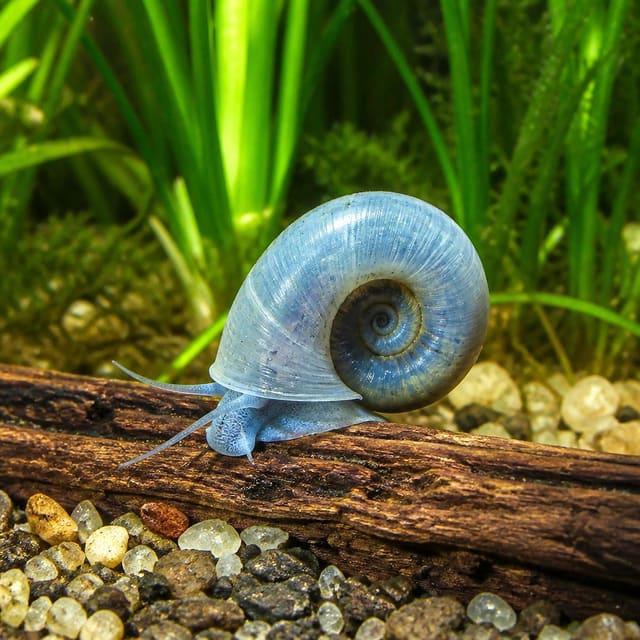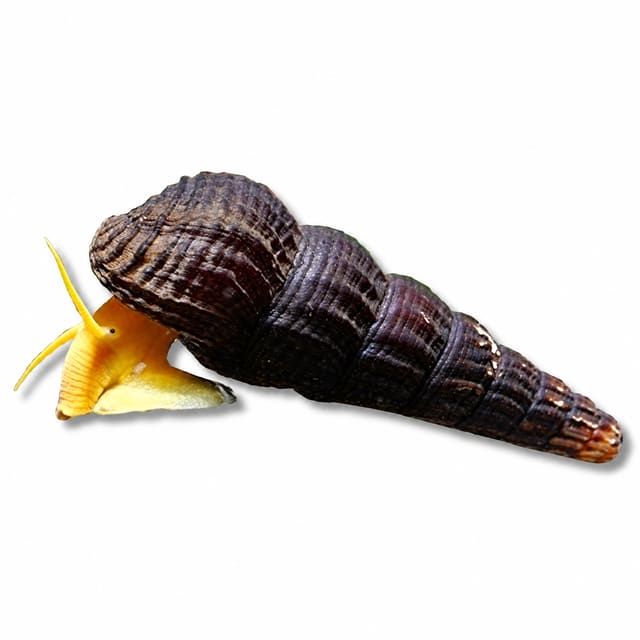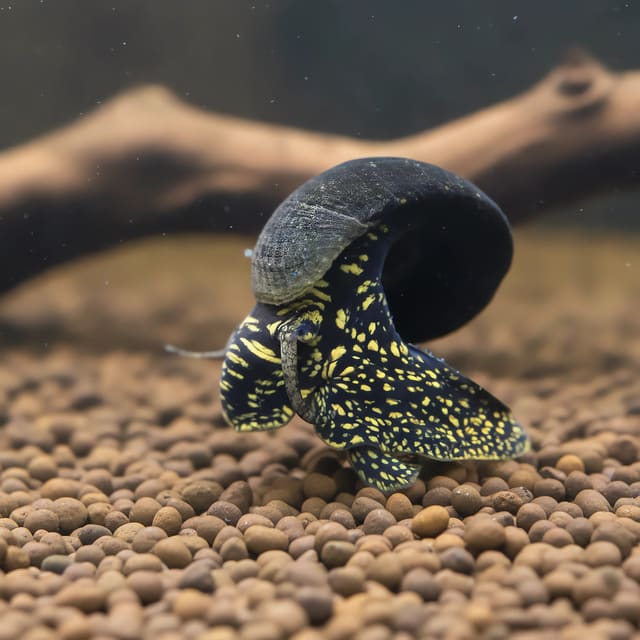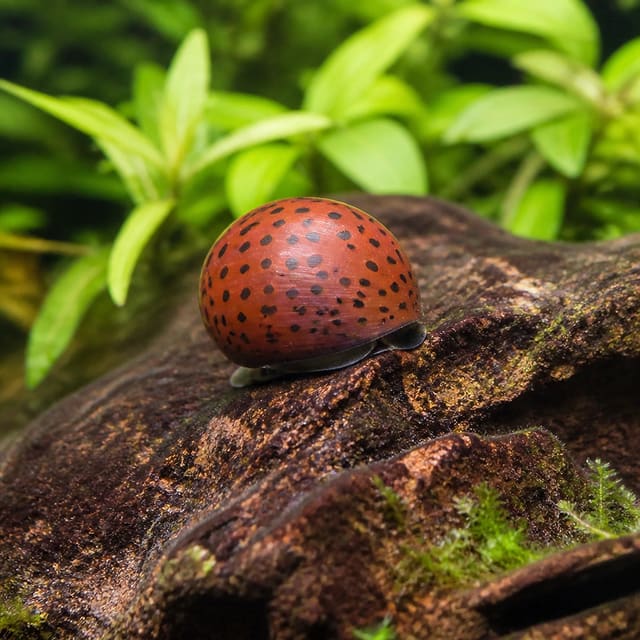
Red Spotted Nerite Snail (Neritina sp.)
17–27°C · pH 6.5–8
£3.99

A hardy, attractive red apple snail that helps clean up algae and leftover food while adding color and movement to the aquarium. Easy care, peaceful. 18-26C, pH 5.8-8.0.
Adult size is the maximum length this species reaches at full maturity (scientific sources). The livestock you receive will be younger and smaller. Product-photo provenance and any image-specific limitations are stated on the listing.
Pomacea sp.
Lives in groups: kept together they stay settled, active and show their best colour.
Confirm your email, then we’ll send an availability message for this exact item if it returns within 180 days.
This request is only for this product—no newsletter or other promotions. A mail-provider retry may very rarely duplicate the same availability message. Unconfirmed addresses are removed after 48 hours. See our privacy policy.
A hardy, attractive red apple snail that helps clean up algae and leftover food while adding color and movement to the aquarium. Easy care, peaceful. 18-26C, pH 5.8-8.0.
Adult size is the maximum length this species reaches at full maturity (scientific sources). The livestock you receive will be younger and smaller. Product-photo provenance and any image-specific limitations are stated on the listing.
Maintain these water conditions for optimal health and vibrant colors
The apple snail (Pomacea sp.) is a hardy, attractive red freshwater snail that brings both functionality and visual appeal to community aquariums. Native to South America, this popular invertebrate has become a favourite among fishkeepers for its ability to help control algae, consume leftover food, and add vibrant colour to the aquariumscape. Available for sale UK aquarists, the Pomacea red snail is an excellent choice for beginners and experienced hobbyists alike, thriving in a wide range of water conditions whilst providing natural cleaning services. Its peaceful temperament and striking red colouration make it a standout addition to any tropical or temperate freshwater setup.
This species displays a beautiful deep red to burgundy shell that develops rich intensity as the snail matures. The shell can grow up to 12cm in diameter at full adult size, though specimens offered at 2cm are juveniles with ample room to grow. The body is typically grey to brown with subtle mottling, whilst the tentacles and foot show similar earthy tones. The operculum—a protective plate the snail uses to seal itself inside its shell—is clearly visible and demonstrates the robust build of this species. Shell quality is an indicator of proper care, with smooth, glossy shells signifying adequate calcium and stable water chemistry.
Pomacea snails originate from slow-moving rivers, ponds, marshes, and wetlands throughout tropical and subtropical South America. These habitats are characterised by warm, soft to moderately hard water with abundant vegetation and detritus. Apple snails are amphibious, able to survive periods of drought by sealing themselves into their shells, and they often climb above the waterline to lay eggs. This adaptability to fluctuating water levels and varying conditions has made them highly successful in the aquarium trade. In the wild, they play an important ecological role as scavengers and algae grazers.
Provide a minimum tank size of 40 litres with a secure, tight-fitting lid to prevent escape attempts, as Pomacea snails are proficient climbers. Include live plants, driftwood, smooth rocks, and hiding places to encourage natural foraging behaviour. A soft sand or fine gravel substrate is ideal, and gentle filtration with moderate water flow replicates their native still-water habitats. Ensure excellent water quality with regular partial water changes, and avoid any copper-based medications or treatments, as copper is highly toxic to invertebrates. Stable water parameters are crucial to prevent shell erosion and maintain overall health.
Apple snails are primarily herbivorous scavengers that feed on algae, biofilm, blanched vegetables, and sinking algae wafers. They will also consume leftover fish food, decaying plant matter, and occasional protein-rich foods in small amounts. Offer a varied diet including courgette, cucumber, spinach, and lettuce, blanched to soften before feeding. Provide calcium-rich foods such as cuttlebone or specialised snail pellets to support shell health and growth. Feed once daily in the evening, removing uneaten food after a few hours to maintain water quality. A well-fed apple snail is less likely to damage live plants, though some nibbling may occur if food is scarce.
Pomacea snails are peaceful, active invertebrates that spend their time grazing on surfaces, exploring the aquarium, and climbing on décor and glass. They are most active during dawn, dusk, and night, though they can often be seen moving about during the day. These snails are social and can be kept in groups, though a single specimen is perfectly content. They occasionally come to the surface to breathe air through their siphon, a normal behaviour that should not cause concern. Apple snails are non-aggressive and pose no threat to fish or other invertebrates, making them ideal for community aquariums.
Compatible with peaceful community fish such as tetras, livebearers, rasboras, corydoras, and small gouramis. They coexist well with other peaceful snails and shrimp, though care should be taken with very small shrimp species that may be accidentally crushed. Avoid housing with loaches, pufferfish, large cichlids, crayfish, or any predatory fish that may attack or consume snails. Tank mates should be chosen based on their non-aggressive nature and lack of interest in snails as prey. A well-planted community tank with gentle fish is the ideal environment.
Breeding occurs readily when both male and female snails are present in stable conditions. Females lay distinctive pink to orange egg clutches above the waterline on aquarium glass, lids, or décor. Keep the clutch humid but not submerged, as the eggs require air to develop. Hatchlings emerge after approximately two to three weeks and drop into the water as miniature versions of adults. Be prepared for large numbers of offspring, as a single clutch can contain dozens of baby snails. Separate juveniles if needed and ensure adequate food and calcium for healthy growth.
Use a tight-fitting lid to prevent escapes, as apple snails are skilled climbers and can leave the aquarium. Avoid all copper-based medications, as even trace amounts are fatal to invertebrates. Maintain stable water chemistry and provide sufficient calcium to prevent shell erosion and deformities. Monitor water quality closely, as snails produce waste and can contribute to bioload. Remove any deceased snails promptly to avoid ammonia spikes. Be aware that some Pomacea species are restricted in certain regions due to agricultural concerns, so verify local regulations before purchase.
Tropical Fish Co is a trusted UK supplier of healthy, responsibly sourced freshwater invertebrates including Pomacea apple snails. Each snail is carefully selected for vibrant colouration, active behaviour, and strong shell quality. Our livestock is quarantined and health-checked before dispatch, ensuring you receive only the finest specimens. We provide expert care advice, detailed species information, and exceptional customer support to help you succeed with your aquarium. With fast, secure delivery across the UK and a commitment to sustainable fishkeeping, Tropical Fish Co is your reliable partner for premium aquatic livestock.
No reviews for this item yet. Bought one? Honest reviews only, good or bad.
What customers say about ordering from us
I have a small group of long finned mountain minnows. So was delighted to be able to order ten of this variety to increase the genetics in my tank . The ones I recieved are healthy but it’s to early to give a verdict on wether they are of a long finned type since they are small currently.
Gordon Walker · 23 Sept 2026
100% success travel and "installation". Pleased with quality of purchase. The Siamese fighter a bit "shy" so have not yet seen him at his best yet but looking good. Happy customer. GG
George E Garratt · 21 Sept 2026
Reviews of our shop, collected by Judge.me, an independent third-party review collector. Newest first.