Easy
Parallel Nerite Snail (Neritina sp.)
17–27°C · pH 6.5–8
£4.99

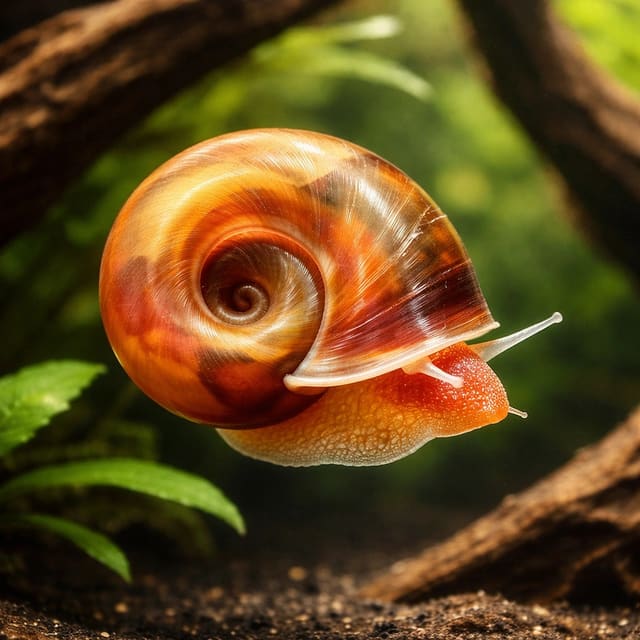
The Blue Ramshorn Snail (Planorbella duryi) is an air-breathing freshwater snail in the family Planorbidae, endemic to Florida. It suits keepers able to run a mature filtered aquarium; OATA's freshwater shrimp and snail guidance gives 17–27°C, pH 6.5–8.0 and 4–18°dGH and notes that snails are not social creatures, so one may be kept alone. Sold individually as one live snail per purchase, measuring 1–1.5 cm when supplied.
Lives in groups: kept together they stay settled, active and show their best colour.
The Blue Ramshorn Snail (Planorbella duryi) is an air-breathing freshwater snail in the family Planorbidae, endemic to Florida. It suits keepers able to run a mature filtered aquarium; OATA's freshwater shrimp and snail guidance gives 17–27°C, pH 6.5–8.0 and 4–18°dGH and notes that snails are not social creatures, so one may be kept alone. Sold individually as one live snail per purchase, measuring 1–1.5 cm when supplied.
Maintain these water conditions for optimal health and vibrant colors
The Blue Ramshorn Snail (Planorbella duryi) is an air-breathing freshwater gastropod in the ram’s horn snail family, Planorbidae. WoRMS lists Planorbella duryi as the accepted species, while Wikipedia describes the Seminole rams-horn as endemic to Florida and frequently found in home aquariums.
This snail suits a keeper who can provide a mature, filtered aquarium, measure the water regularly and protect invertebrates from copper. Freshwater snails generally graze algae in the aquarium, but this snail still needs measured supplementary food and routine aquarium maintenance.
OATA’s freshwater shrimp and snail sheet supplies broad group guidance for its care. It says popular aquarium snails are unlikely to grow larger than 5 cm; use that figure as a cautious space-planning ceiling.
| Suits | Not suited to |
|---|---|
| A mature aquarium with an established filter | An unfiltered or newly stocked setup with detectable ammonia or nitrite |
| A keeper prepared to test water at least weekly | Care that relies on algae alone without measured supplementary feeding |
| Single-snail or carefully increased snail stocking | Aquariums containing pufferfish, loaches or other animals that eat snails |
| Water maintained within the OATA group ranges | Aquariums where copper-containing treatments cannot be excluded |
One purchase supplies one live Blue Ramshorn Snail measuring 1–1.5 cm when supplied. That measurement describes the animal at dispatch, so plan the aquarium around the cautious 5 cm group-planning ceiling rather than treating the supplied measurement as an adult size.
Sex is guaranteed only when the selected option explicitly states male or female. This Blue Ramshorn Snail listing has no sex-guaranteed option.
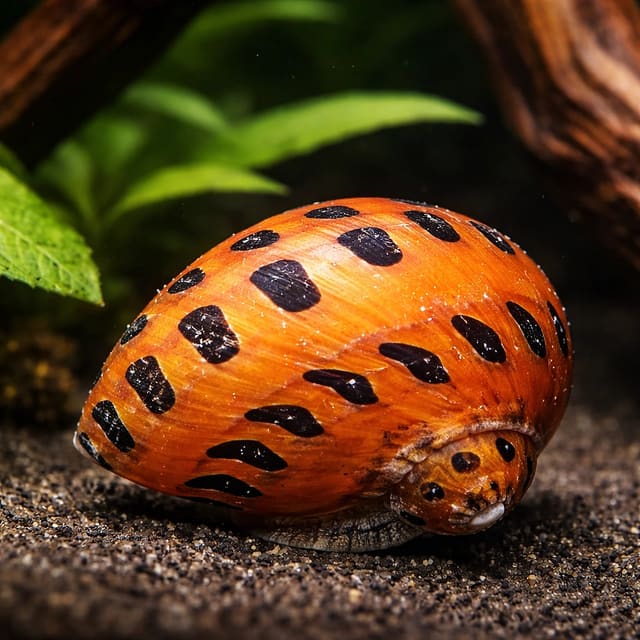
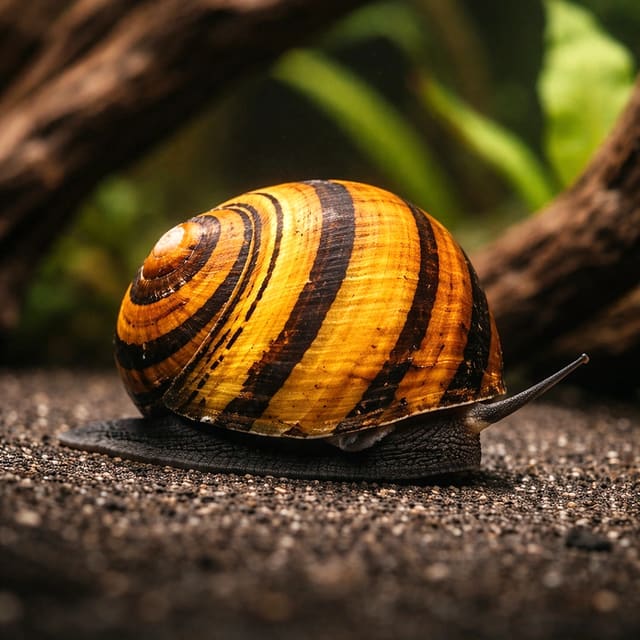
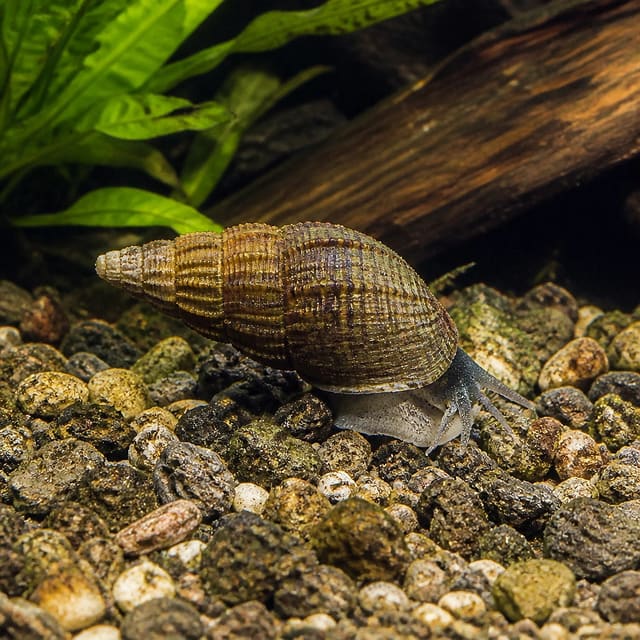
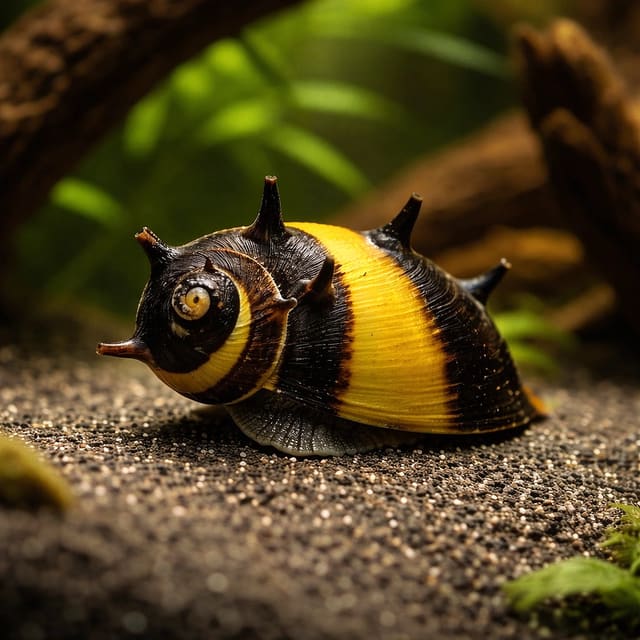
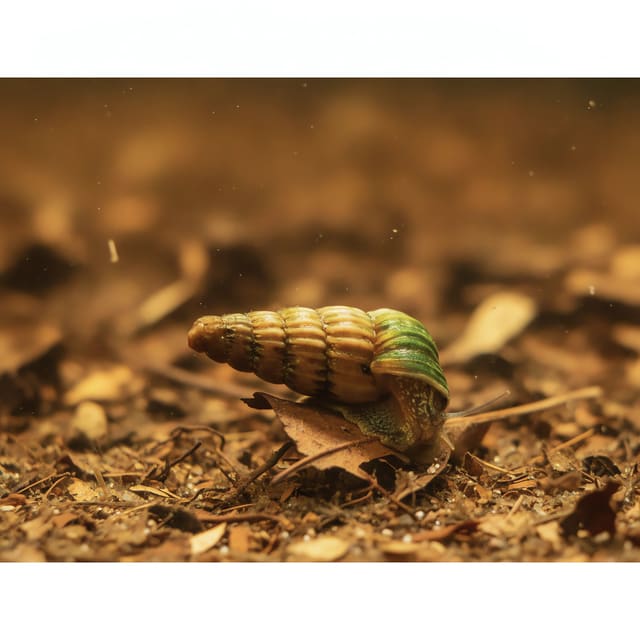
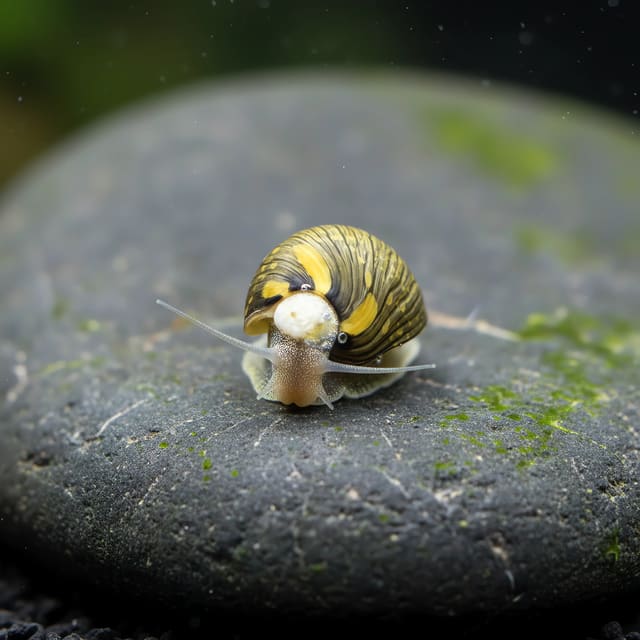
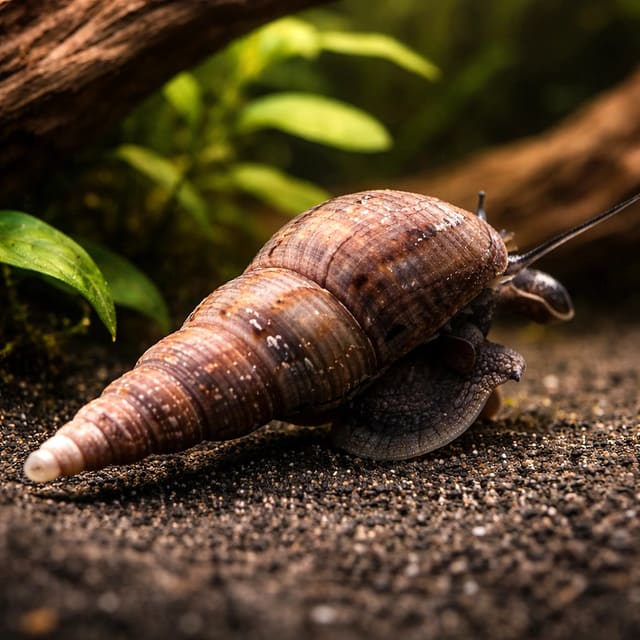
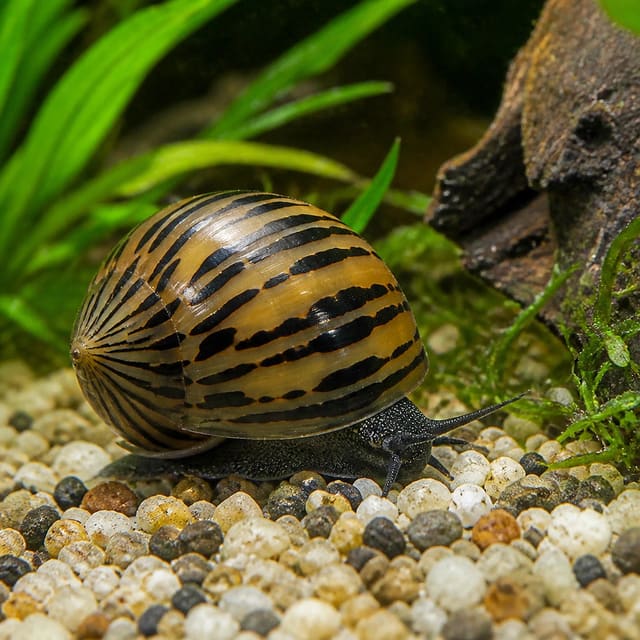
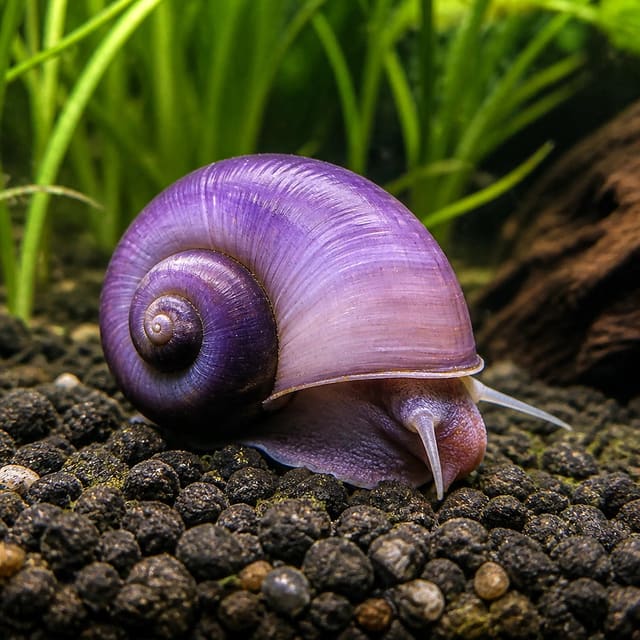
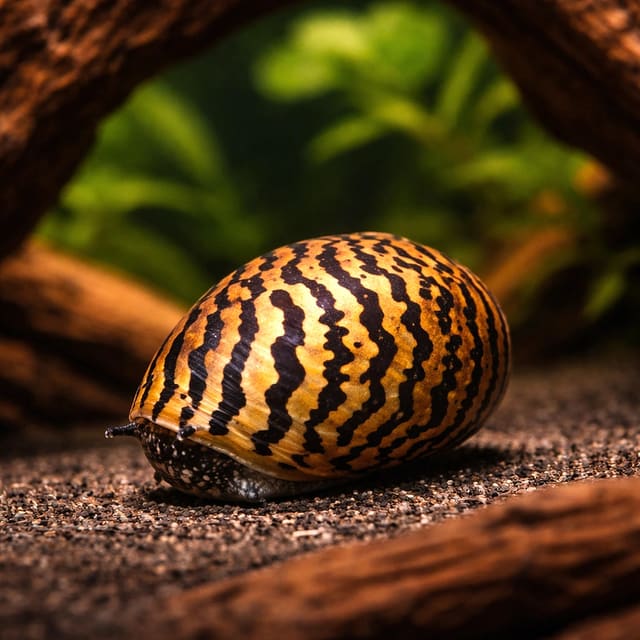
The gallery images are representative of this type of animal rather than photographs of the exact animal supplied, so colours can look slightly different from the live animal.
The name “blue” identifies the trade form in this offer. Colour alone should not be used to infer sex, age, origin or a different care requirement. The species remains Planorbella duryi, with Seminole rams-horn as another established common name.
If you are comparing this animal with other freshwater gastropods, browse the current aquarium snail collection. Compare each animal by its own water guidance and predation risks rather than assuming every snail has identical needs.
Keep the aquarium at 17–27°C, pH 6.5–8.0 and 4–18°dGH. Maintain ammonia and nitrite at zero mg per litre, with nitrate no more than 20 mg per litre above the normal tap-water level. These OATA figures apply to freshwater shrimp and snails as a group, so use them with steady husbandry rather than chasing daily changes.
| Decision | Starting point |
|---|---|
| Aquarium volume | At least 10 litres for a group of small freshwater shrimp or snails, approximately 20 litres for larger species such as apple snails, and a larger aquarium when fish are included |
| Social planning | One snail may be kept alone because snails are not social creatures |
| Filtration | Use an established filter in every aquarium |
| Feeding | Offer algae wafers or suitable commercial pellets two or three times a week |
| Maintenance | Change 25% of the water at least once every week and test at least weekly |
A larger aquarium changes water temperature and water quality more slowly than a very small one. The 10-litre figure is therefore a floor for a small group under OATA’s guidance, not a reason to crowd livestock. Add more space whenever fish or additional invertebrates increase the biological load.
Maintain 17–27°C, pH 6.5–8.0, general hardness of 4–18°dGH and carbonate hardness of 3–15°dKH. Keep ammonia and nitrite at zero mg per litre. Stability within those limits matters more than moving the aquarium towards a particular end of a range without a practical reason.
Keep aquarium nitrate no more than 20 mg per litre above the normal tap-water level. If the tap water measures 10 mg per litre, the corresponding ceiling is 30 mg per litre. If the tap water measures 25 mg per litre, the ceiling is 45 mg per litre. Test both sources of water with the same method so the comparison remains meaningful.
Use our aquarium water chemistry guide to understand the values being measured. Once you have current readings, the water matcher can help compare them with the stated ranges.
Write down test results so trends become visible. A sequence of readings shows whether the aquarium is remaining steady or moving towards a limit, while a single reading only describes that moment.
Use a mature aquarium with an established filter before introducing this snail. OATA says a filter is always essential, and that the filter's beneficial bacteria must increase whenever more livestock are added and feeding increases.
The RSPCA explains the biological-filter cycle: beneficial bacteria convert toxic ammonia to toxic nitrite and then to the safer nitrate. The same biological filter process manages waste in a freshwater aquarium containing snails.
Aquarium volume and filtration solve different problems. More water helps environmental conditions change more slowly, while the biological filter processes waste. A larger unfiltered aquarium does not replace a working filter, and a filter does not make rapid overstocking safe.
Prepare and mature the system before the delivery date rather than trying to complete the filter cycle around a live animal. Our shrimp-keeping guide sets out how to prepare and mature an aquarium before livestock arrives.
Before the snail is introduced, test for zero ammonia and zero nitrite. Confirm that temperature, pH and hardness are within the intended ranges and that the filter is operating without a blockage. Those checks turn “mature” into measurable conditions rather than an estimate based only on how long the tank has been running.
Add freshwater snails gradually because the filter’s beneficial bacterial population must increase whenever livestock numbers and feeding rise. A filter that copes with one level of waste may need time to adapt to a larger load.
Before adding this snail, check that ammonia and nitrite are both zero mg per litre. Do not treat clear-looking water as a substitute for tests: ammonia and nitrite are dissolved pollutants, and OATA links rapid stocking or overstocking with new tank syndrome.
If ammonia or nitrite appears after an addition, stop further stocking and correct the water-quality problem. More livestock and more food would increase the demand on the same biological filter.
Snails are not social creatures, so this animal does not require companions of its own species. Keeping one snail is a valid choice. If you later add more, the decision should be based on aquarium volume, filter capacity, feeding and water results rather than an assumed social minimum.
A first-month plan can remain simple: keep the filter running, test at least weekly, complete the weekly water change, feed only on the established schedule and record changes in activity, appearance or feeding. Each checkpoint measures a different part of care without requiring several changes at once.
Offer an algae-based supplement because freshwater snails generally graze algae in the aquarium, but OATA says this grazing should be supplemented with algae wafers. Commercial pellets made for freshwater shrimp may also be used for freshwater snails.
Feed two or three times a week. Leave a pellet or wafer for at least 30 minutes so the snail has time to feed, while keeping the quantity low enough to prevent a persistent build-up of uneaten food.
| What you observe | What to do |
|---|---|
| Food remains and begins accumulating | Reduce the quantity at the next scheduled feed and remove waste during maintenance |
| The offered food is reached slowly | Still allow at least 30 minutes before judging the portion |
| Ammonia, nitrite or nitrate rises | Review the portion, total stocking and filter performance before feeding more |
| The snail shows reduced interest in food | Check water quality and look for other changes in activity, colour or appearance |
Do not increase the feeding frequency simply because the glass looks clean. Keep to two or three feeds a week, and supplement algae grazing with algae wafers or pellets even when algae is visible.
Overfeeding matters because uneaten food breaks down and releases waste into the water. That waste increases pressure on the biological filter and can push ammonia, nitrite or nitrate away from their target values. The safest portion is therefore one that gives the snail time to feed without leaving a continuing residue.
Keep feeding and maintenance as separate decisions. The snail can graze nuisance algae, but it does not replace water changes, filter checks or removal of solid waste. Likewise, a weekly water change is not permission to add an excessive ration between maintenance days.
Change 25% of the aquarium water at least once every week.
Do not run filter media under the tap. Chlorine or chloramine may kill the beneficial bacterial population established in the media. A light rinse in water removed during the partial change reduces the number of bacteria lost.
Testing and changing water answer related but different questions. The test shows whether pollutants are building up; the change removes a measured portion of dissolved and solid waste. Continue both even when the water looks clear.
Consistency makes changes easier to interpret. When the water-change percentage, test schedule and feeding days are known, a new reading can be compared with the previous routine instead of several variables changing together.
Use only aquarium treatments that are explicitly safe for invertebrates. Freshwater snails are very sensitive to copper, and OATA warns that they will die if exposed even to low levels. Check the label and active ingredients before any treatment enters an aquarium containing this snail.
Copper sensitivity is not limited to medicines being used directly on the snail. Any product added to the shared aquarium must be assessed for invertebrate safety. If the product’s suitability is unclear, keep it out of the occupied aquarium until its compatibility has been established.
| Change noticed | First response |
|---|---|
| Less activity or unusual restlessness | Test ammonia, nitrite, nitrate, temperature and pH |
| Darker or paler colour than normal | Compare with the animal’s usual appearance and check recent water or treatment changes |
| Visible discolouration, lesions or abnormal growth | Check water quality and review every product recently added |
| Reduced feeding or no interest in food | Stop increasing the ration and assess water quality and other physical changes |
A change in one behaviour does not identify a particular illness. It is a prompt to measure the aquarium, check for copper or other recent additions and look for several changes together. Avoid adding a treatment on guesswork, because an unsuitable product can create an additional risk for an invertebrate.
Contact us if you are concerned about a health change, with the current temperature, pH, ammonia, nitrite and nitrate readings and a clear description of what has changed. Those details make it possible to distinguish an environmental warning from the animal’s usual pattern more quickly.
Be at the delivery address to receive the parcel so the live animal is not left unattended. Follow the current Tropical Fish Co delivery and Live Arrival Guarantee policy in this order:
Film every delivery from the sealed parcel onward. The policy needs those sealed-parcel, opening and in-bag condition views for any Live Arrival Guarantee claim.
For a claim, contact us on the same day with the order number and the short continuous unboxing video. The policy requires someone to have been at the delivery address to receive the parcel, the parcel to be opened and inspected on the day it arrives, and a continuous unboxing video showing the parcel still sealed.
Before the parcel arrives, confirm that the filter is established, ammonia and nitrite are zero, and temperature, pH and hardness are within the stated ranges. Having those measurements ready allows the 20–30 minute float and release to proceed without trying to correct the aquarium while the animal remains in its transport bag.
Keep this snail only with animals that cannot eat it. OATA describes freshwater shrimp and snails as generally compatible with most species in the aquarium, but also warns that they may be eaten by common aquarium fish.
Avoid pufferfish and loaches because OATA specifically identifies them as fish that can eat snails. Avoid assassin snails in the same aquarium because OATA describes assassin snails as predators of other snail species.
| Suitable after screening | Avoid |
|---|---|
| Aquarium inhabitants that cannot eat or attack snails | Pufferfish |
| Mixed stocking where each animal’s feeding behaviour has been checked | Loaches |
| A setup with enough volume and filtration for the total biological load | Assassin snails |
| Animals whose own water range overlaps 17–27°C, pH 6.5–8.0 and 4–18°dGH | Any other animal known to eat snails |
Screen each proposed companion individually rather than relying on a general tank-mate list. The useful question is whether the proposed animal eats snails, attacks invertebrates, shares the water range and leaves enough aquarium capacity for the combined stock.
Predation risk comes before water overlap. Two animals may tolerate the same temperature and pH while still being an unsafe combination because one eats the other. Only after predation has been excluded should you compare aquarium volume, water values and filter capacity.
The Blue Ramshorn Snail does not need another snail for social company. A solitary setup avoids adding biological load purely to satisfy a group requirement that does not apply to snails.
Assess a proposed mixed aquarium in the same order every time: predation, water overlap, space, filtration and stocking pace. Passing one check does not cancel a problem found in another.
For example, an animal that shares the temperature and pH range but is known to eat snails fails at the first question. It remains unsuitable even if the water chemistry matches perfectly. Conversely, an animal that does not eat snails still needs a compatible water range and enough space.
When another species’ feeding behaviour is unclear, delay the combination until it has been checked. Contact us for a stocking assessment with the aquarium volume, current livestock, temperature, pH, hardness, ammonia, nitrite and the exact companion name.
After a screened addition, maintain the existing feeding and testing routine so a water-quality change is not hidden by several simultaneous adjustments. If ammonia or nitrite rises, stop further additions and restore water quality before reconsidering the plan.
Compatibility is therefore conditional rather than a fixed list of “community-safe” animals. A safe plan protects the snail from being eaten while meeting the environmental and biological needs of every inhabitant.
Plan around a cautious ceiling of 5 cm: OATA says popular aquarium snail species are unlikely to grow larger than 5 cm. Treat the 1–1.5 cm supplied measurement as its arrival size and the 5 cm group figure as the space-planning ceiling.
OATA recommends at least 10 litres for a group of small freshwater shrimp or snails, approximately 20 litres for larger species such as apple snails, and a larger aquarium when fish are included.
One may live alone because OATA notes that snails are not social creatures. If adding more, increase numbers slowly and confirm that ammonia and nitrite remain at zero mg per litre.
It can suit a first-time snail keeper who can mature the filter, test the water at least weekly, complete a 25% water change at least once every week and exclude copper-containing treatments.
OATA’s freshwater shrimp and snail guidance says these animals generally graze algae. Supplement this with algae wafers or suitable commercial pellets two or three times a week, allowing at least 30 minutes for feeding without leaving a build-up of uneaten food.
Keep it at 17–27°C, pH 6.5–8.0 and 4–18°dGH. OATA gives these values as freshwater shrimp and snail group guidance; maintain ammonia and nitrite at zero mg per litre.
OATA describes freshwater shrimp and snails as generally compatible with most species in the aquarium; the main screening concern is whether another animal can eat this snail.
Use only companions that cannot eat or attack snails and that share its water range. OATA specifically says to avoid pufferfish and loaches, while assassin snails prey on other snail species; other combinations require individual screening.
Tropical Fish Co hand-packs it in pure oxygen in an insulated box, with a heat pack when the weather calls for it. Be present to receive the parcel, start a continuous unboxing video while it is still sealed, inspect it the same day, then float the bag for 20–30 minutes before release.
Independently collected by Judge.me from customers who bought this item. All reviews are shown.
Thank you, everything arrived in good condition.