Easy
Parallel Nerite Snail (Neritina sp.)
17–27°C · pH 6.5–8
£4.99

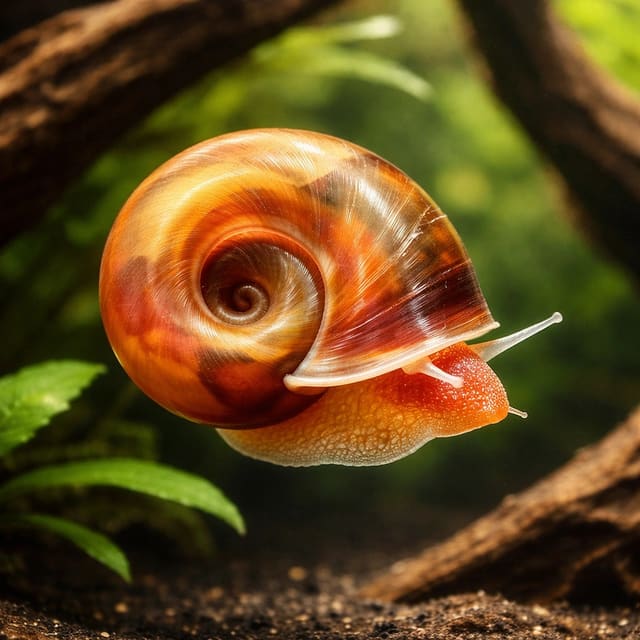
The Pink Ramshorn Snail (Planorbella duryi) is an air-breathing freshwater snail in Planorbidae, endemic to Florida. It suits a mature, filtered aquarium; OATA’s freshwater snail guidance gives approximately 20 litres for larger species, 17–27°C, pH 6.5–8.0 and 4–18°dH, and snails have no social group requirement. Sold individually in sizes from 1–1.5 cm to 2–2.5 cm.
Planorbella duryi
Lives in groups: kept together they stay settled, active and show their best colour.
The Pink Ramshorn Snail (Planorbella duryi) is an air-breathing freshwater snail in Planorbidae, endemic to Florida. It suits a mature, filtered aquarium; OATA’s freshwater snail guidance gives approximately 20 litres for larger species, 17–27°C, pH 6.5–8.0 and 4–18°dH, and snails have no social group requirement. Sold individually in sizes from 1–1.5 cm to 2–2.5 cm.
Maintain these water conditions for optimal health and vibrant colors
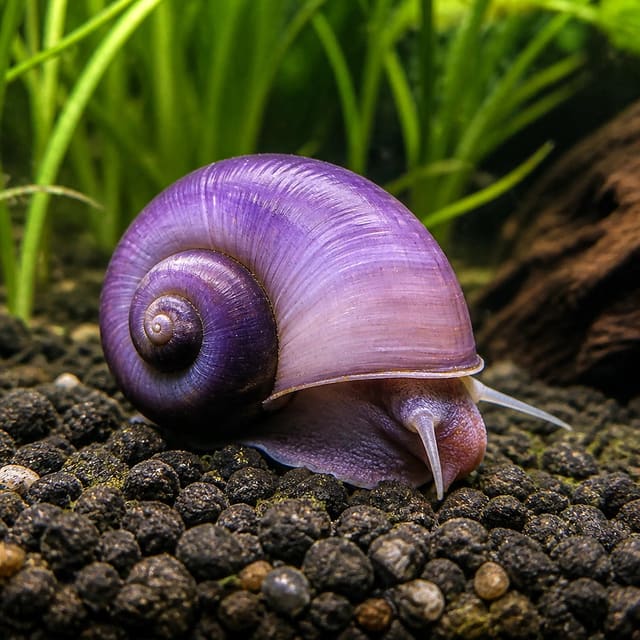
The Pink Ramshorn Snail (Planorbella duryi) is an air-breathing freshwater gastropod in Planorbidae, the ram’s-horn snail family. Wikipedia describes the species as endemic to Florida and frequently found in home aquariums. It suits a keeper prepared to provide a mature, filtered freshwater aquarium, measure water quality and keep it away from animals that eat snails.
WoRMS accepts Planorbella duryi as the scientific name. Seminole rams-horn is another common name for the species, while Pink Ramshorn Snail identifies the pink aquarium form offered here.
Keep the aquarium at 17–27°C, pH 6.5–8.0 and 4–18°dH. OATA’s freshwater shrimp and snail sheet gives these figures as group guidance, together with 3–15°dKH, zero ammonia and zero nitrite. It recommends at least 10 litres for a group of small freshwater snails and says larger species will require approximately 20 litres. Use approximately 20 litres as the conservative starting plan for this snail, then increase the aquarium size when fish or additional livestock share the system.
For growth planning, OATA says popular aquarium snails are unlikely to grow larger than 5 cm. Treat that as a conservative space-planning ceiling for the wider aquarium-snail group rather than a predicted adult length for an individual. The dispatch measurements shown with this offer describe the snail when sent and should not be used as the aquarium’s long-term space limit.
| Suits | Not suited to |
|---|---|
| A mature, filtered freshwater aquarium | A new, unfiltered or unstable container |
| Water kept within the stated temperature, pH and hardness guidance | Water containing ammonia, nitrite or unsafe treatments |
| A keeper who tests water and maintains it weekly | An aquarium treated with copper |
| Companions screened for snail predation | Pufferfish, loaches or other animals that eat snails |
One purchase supplies one live snail. Use the live size selector to choose either 1–1.5 cm or 2–2.5 cm. These measurements are dispatch sizes: the first choice supplies a smaller snail, while the second supplies a larger snail at the time it is sent. The size you select is the size supplied, not the adult size.
Choose between the two labels by the size you want supplied, not by reducing the long-term aquarium plan. Both sizes need the same mature filter, water-quality checks, copper precautions and companion screening. A smaller dispatch size does not make an immature or unfiltered container suitable, and a larger dispatch size does not remove the need for gradual introduction.
Sex is guaranteed only when the selected option explicitly states male or female. This Pink Ramshorn Snail listing has no sex-guaranteed option.
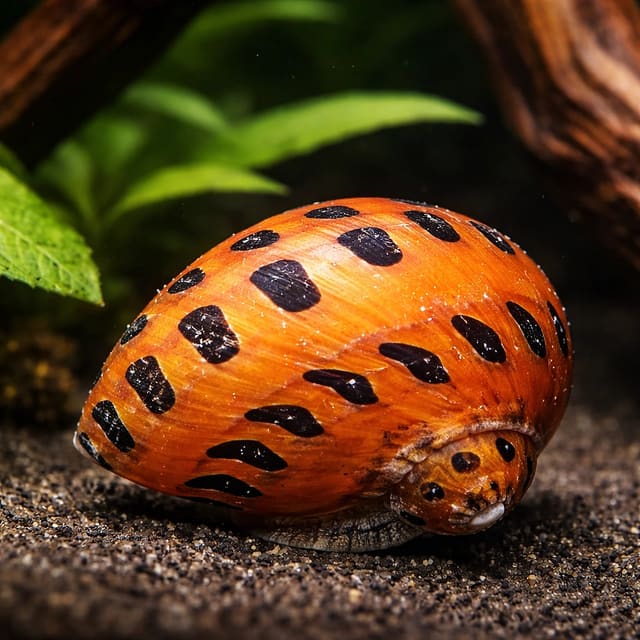
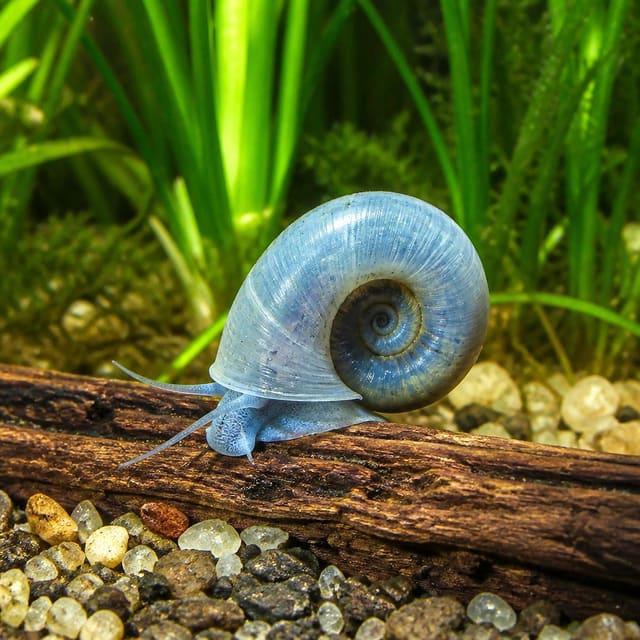
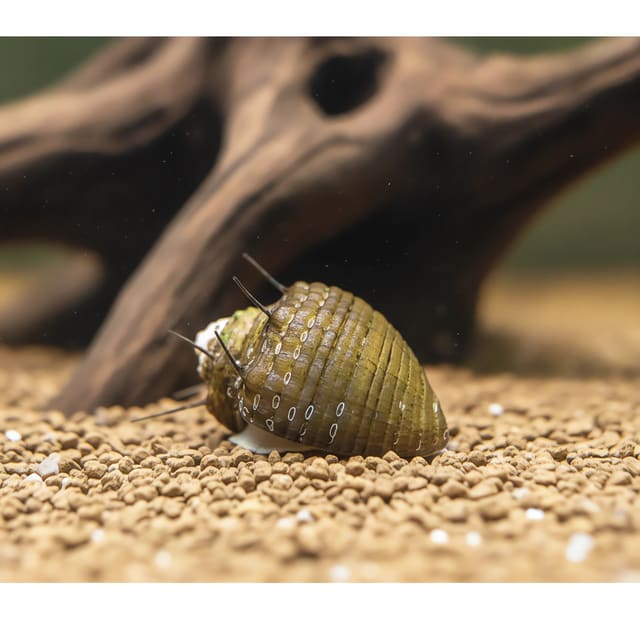
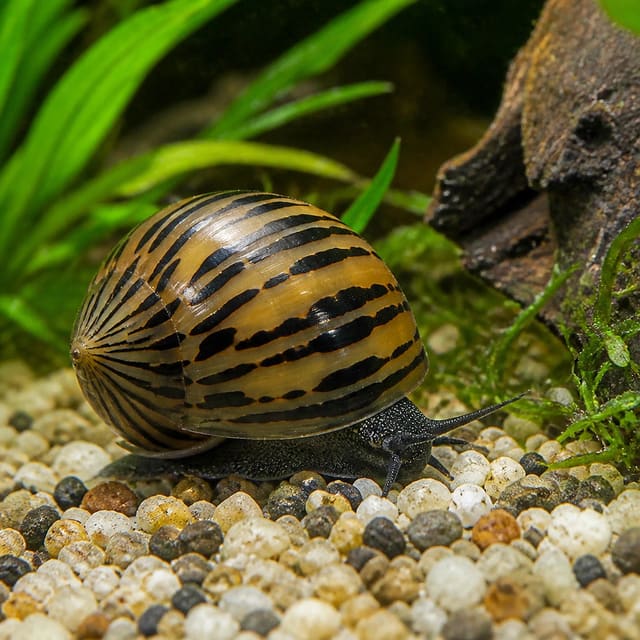
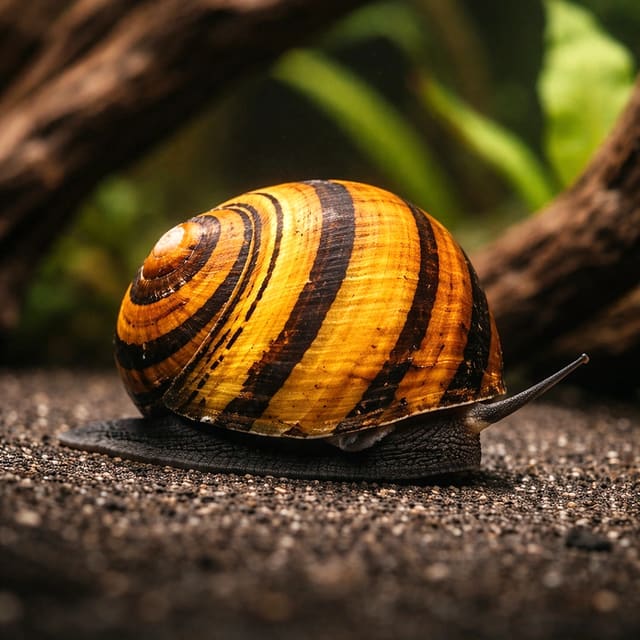
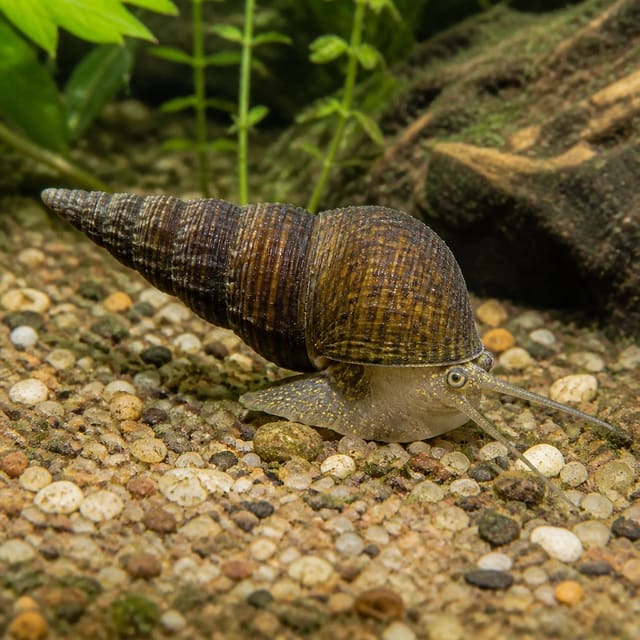
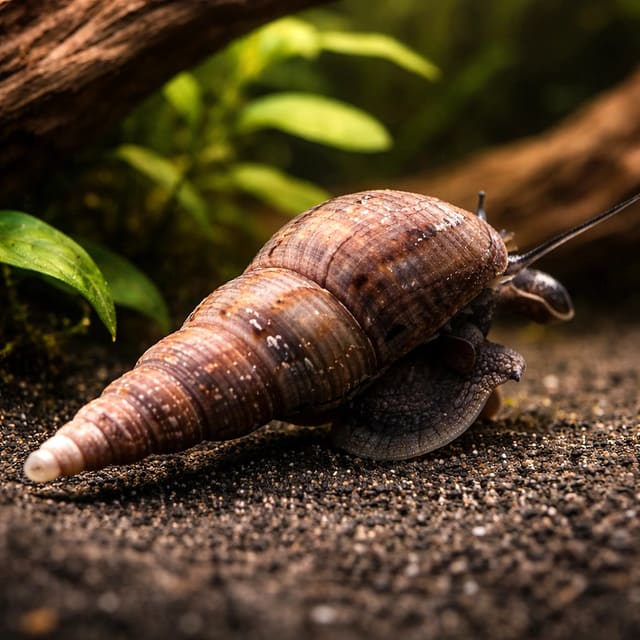
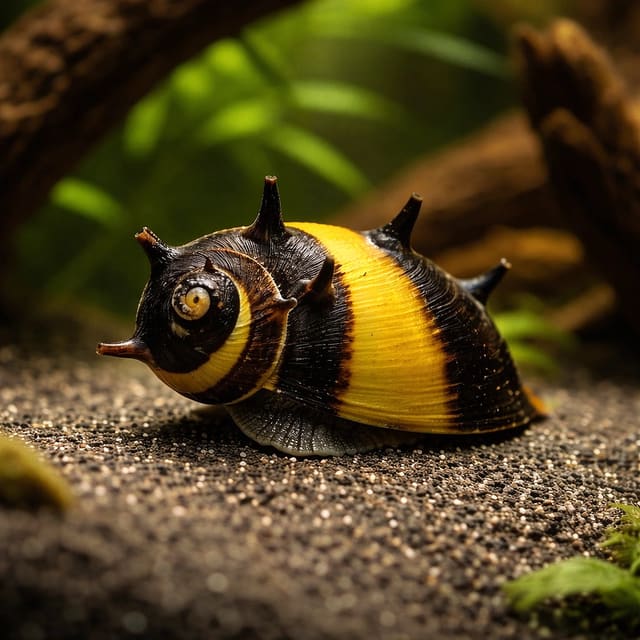
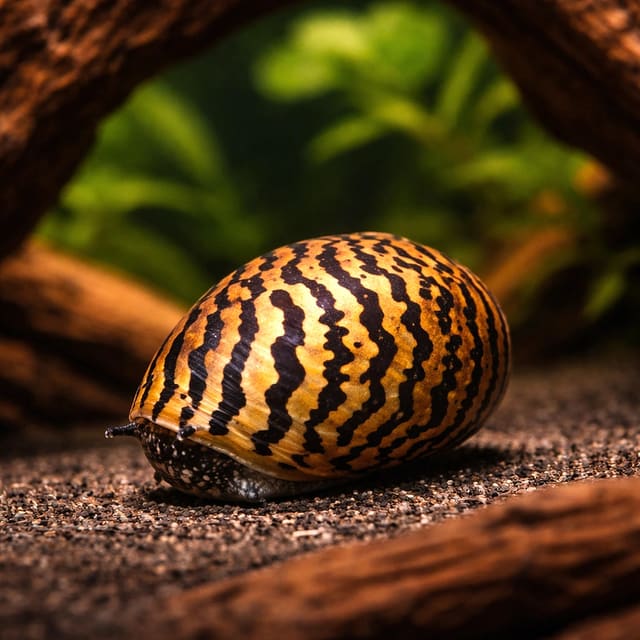
The gallery images are representative of this type of animal rather than photographs of the exact animal supplied, so colours can look slightly different from the live animal.
Visual differences between the two gallery scenes do not change the identity, quantity or care requirements. Use the selector label to decide the supplied measurement and the written care guidance to decide whether your aquarium is ready. If you are comparing this animal with another freshwater mollusc, browse the current aquarium snail collection and compare each animal’s own compatibility and water guidance before choosing.
Keep the water at 17–27°C, pH 6.5–8.0 and general hardness of 4–18°dH. Carbonate hardness should remain within 3–15°dKH. Test the aquarium rather than relying on how clear the water looks: clear water can still contain ammonia, nitrite or an unsuitable pH.
| Measurement | Instruction |
|---|---|
| Temperature | Keep within 17–27°C |
| pH | Keep within 6.5–8.0 |
| General hardness | Keep within 4–18°dH |
| Carbonate hardness | Keep within 3–15°dKH |
| Ammonia | Keep at zero mg per litre |
| Nitrite | Keep at zero mg per litre |
| Nitrate | Do not exceed 20 mg per litre above the normal tap-water level |
Measure the normal nitrate level in the tap water used for changes, then compare it with the aquarium. For example, if that tap water measures 10 mg per litre nitrate, the aquarium should not exceed 30 mg per litre. The comparison matters because OATA expresses the limit as an increase above the normal tap-water level rather than as one fixed aquarium reading.
Use our aquarium water chemistry guide to understand what each test measures. Once you have current results, the water matcher can help you compare them with the stated ranges. Write the results down so that a later change in activity, feeding or appearance can be checked against an actual trend.
Consistency matters alongside the numerical range. Avoid making large, unmeasured adjustments merely to reach a preferred point within it. A measured value that remains stable and inside the guidance is more useful than repeated changes that move the aquarium from one end of the range to the other.
Use a mature aquarium of approximately 20 litres or more as the conservative starting plan, and provide additional space when fish or other livestock share it. OATA recommends at least 10 litres for a group of small freshwater shrimp or snails and says larger species will require approximately 20 litres; using the larger category gives more room for stable temperature and water quality.
A filter is always essential. OATA requires filtration for freshwater shrimp and snail aquariums, while the RSPCA explains the biological filter cycle: beneficial bacteria convert toxic ammonia to nitrite and then to the safer nitrate. Maturation gives this bacterial population time to establish before the animal and its food add more waste.
Prepare and mature the aquarium before arranging livestock. Our shrimp-keeping guide explains how to prepare and mature an aquarium before livestock arrives. A newly filled container is not mature simply because the water is conditioned or the filter is running; confirm zero ammonia and zero nitrite with tests.
A larger aquarium is easier to keep stable because temperature and dissolved waste change less abruptly. This does not remove the need to test or maintain it, but it gives the keeper more time to notice and correct a developing problem. When fish are included, increase the volume beyond the snail-only starting plan because every additional animal adds waste and affects the filter’s workload.
Before introduction, confirm that the filter is operating, the aquarium is within the stated water ranges, and ammonia and nitrite are zero. Add livestock slowly afterwards. Beneficial bacteria need time to increase as the number of animals and the amount of food increase; adding too much too quickly can cause new tank syndrome and unhealthy ammonia or nitrite.
Let the snail graze algae in the aquarium and supplement that grazing with algae wafers or commercial freshwater shrimp pellets. OATA describes freshwater shrimp and snails as generally herbivorous algae grazers and recommends these prepared foods to make sure they receive enough to eat.
Feed two or three times a week. Offer only an amount that can be managed without leaving food to decay, and leave each pellet or wafer for at least 30 minutes so the snail has time to reach it and feed. After that feeding window, remove uneaten material before it breaks down into waste.
| Feeding decision | What to do |
|---|---|
| Visible aquarium algae | Allow normal grazing, then supplement on the weekly schedule |
| Little visible grazing material | Provide a measured algae wafer or suitable pellet |
| Food remains after feeding | Remove it and reduce the next portion |
| Reduced interest in food | Test water and compare activity with the snail’s normal pattern |
| Nitrate or waste is increasing | Reduce excess food and complete the normal maintenance routine |
Keep to two or three feeds a week so that prepared food supplements the snail’s grazing without building up as uneaten waste. Feeding prepared food every time you see the snail does not measure what it has already grazed, and excess food can release toxic waste as it decomposes. Portion size therefore needs to match both the individual’s response and the aquarium’s test results.
Do not use food as a substitute for aquarium maturity or water maintenance. Prepared food can supplement grazing, but it also increases the load on the biological filter. If ammonia or nitrite becomes detectable, stop adding livestock, address the water quality and review how much food is entering the aquarium.
Complete a 25% partial water change at least once every week. Test ammonia and nitrite at least weekly as well, and continue checking the other stated values often enough to recognise a change from the aquarium’s normal pattern.
Treat replacement tap water with a suitable conditioner before adding it to remove harmful chlorine or chloramine. Match the replacement water carefully to the aquarium routine and avoid using an unmeasured change to force the system towards a different value. Regular partial changes are intended to remove accumulated waste while preserving stability.
If the filter needs cleaning, do not run it under the tap. Rinse it lightly in aquarium water removed during the partial water change. Chlorine or chloramine in tap water may kill the filter’s beneficial bacteria, and rinsing in removed aquarium water reduces the amount of bacteria lost.
| If you find | Respond by |
|---|---|
| Detectable ammonia | Address the water quality and do not increase livestock |
| Detectable nitrite | Address the water quality and confirm that the filter is operating |
| Rising nitrate | Complete the scheduled change and review excess feeding |
| Reduced filter flow | Check for blockage and rinse media only in removed aquarium water |
| Uneaten food | Remove it and reduce the next feeding portion |
A larger emergency clean is not a replacement for this routine. Weekly testing makes gradual deterioration visible before it becomes severe, while regular partial changes remove waste without dismantling the biological filter. The combination of measured feeding, a mature filter and repeated maintenance is what keeps ammonia and nitrite at zero.
Never expose this snail to copper. OATA warns that freshwater shrimp and snails are very sensitive to copper and will die if exposed even to low levels. Check every medicine, algaecide and other aquarium treatment before use, and use only products that are explicitly safe for invertebrates.
Do not assume that a treatment is safe because it is intended for freshwater fish. Read the label for active ingredients and invertebrate warnings before anything enters the aquarium. The same check applies when several products are used in sequence, because the snail remains exposed to whatever enters its water.
One observation does not identify a cause, so start with the measurable risks. Test ammonia and nitrite immediately, compare temperature, pH and hardness with the normal log, and review any recent treatment, water change or feeding change. Confirm that the filter is operating and remove uneaten food.
| Change observed | First action |
|---|---|
| Sudden inactivity | Test water and review recent aquarium changes |
| Reduced feeding | Check water quality before offering more food |
| New discolouration or lesion | Record the appearance and check all treatment labels |
| Several livestock affected | Test the whole aquarium and check filtration immediately |
Avoid adding medication merely because activity changes. First establish the water readings and confirm that any proposed product is safe for invertebrates. If the change persists or physical damage appears, contact us with the water results, recent maintenance details and a clear description of what has changed.
Prepare the receiving aquarium before the parcel arrives. Confirm that the filter is mature and operating, ammonia and nitrite are zero, and the water remains within 17–27°C, pH 6.5–8.0 and 4–18°dH. Do not begin opening the parcel while still deciding where the animal will go.
Follow the Tropical Fish Co delivery and Live Arrival Guarantee policy in this order:
Someone must be at the delivery address to receive the parcel, because live animals cannot be left unattended. The animal is hand-bagged in pure oxygen and placed in an insulated poly box, with a heat pack when the weather calls for it. A licensed live-animal courier carries the parcel.
OATA advises increasing the number of freshwater shrimp or snails slowly because the beneficial bacteria in a mature filter need to increase as livestock and feeding increase. After release, do not turn one new addition into a larger stocking change. Let the existing filter respond to this animal and its feeding before adding more livestock.
Observe whether the snail begins normal activity and remains responsive, but do not compensate for a quiet arrival by immediately adding extra food. Transport and introduction are changes in themselves. Keep to the established water and feeding routine, remove any uneaten food after the normal feeding window and test the aquarium if activity or feeding causes concern.
Keep the unboxing recording and order details while you assess the arrival. The continuous sequence matters because it shows the sealed parcel, opening and animal in the bag before release. Complete the filming first, then float the bag for 20–30 minutes and release the snail without pouring the bag water into the aquarium.
Use the first week to establish the snail’s normal activity, appearance and feeding response in your aquarium. Individual behaviour and appearance can vary, so make comparisons with the same animal over time rather than expecting every snail to look or act identically.
Zero ammonia and zero nitrite are the decisive first-week readings. A detectable result means the filter is not keeping pace with the waste entering the aquarium. Address that water-quality problem and delay any further livestock increase.
Respond to patterns rather than repeatedly changing the aquarium after one quiet period. If activity falls at the same time as ammonia, nitrite or nitrate rises, act on the measured water problem. If a change follows a new treatment, check its label immediately. If feeding remains normal and water values remain stable, continue the established routine instead of increasing food.
At the end of the month, the aquarium should have a clear maintenance record: weekly tests, weekly 25% changes, measured feeding two or three times a week and no copper exposure. That record gives you a reliable baseline for deciding whether the aquarium can support any additional livestock.
Avoid pufferfish, loaches and any other fish known to eat snails. OATA specifically names pufferfish and loaches as examples of fish that should not be mixed with snails. Assassin snails prey on other snail species, so do not keep them with this snail.
Freshwater snails are generally compatible with many aquarium species, but the decision must be made animal by animal. The main screening question is whether the proposed companion can eat the snail. A general community label is not enough because individual species within a broad aquarium category can have very different diets.
| Companion type | Decision |
|---|---|
| Pufferfish | Avoid; pufferfish are named snail eaters |
| Loaches | Avoid; loaches are named snail eaters |
| Assassin snails | Avoid; they prey on other snail species |
| Other known snail-eating fish | Avoid |
| Non-predatory aquarium species | Consider only after checking water and feeding compatibility |
| Animal with unclear snail compatibility | Use caution and complete a species-level assessment first |
Do not move an existing snail into a predator aquarium as an experiment. Companion uncertainty is resolved before mixing, not by seeing whether an attack occurs. The snail also needs access to food without extra portions being left to decay, so the companion’s feeding routine must fit the same water-quality plan.
This snail has no social group requirement. OATA states that snails are not social creatures, so one can be kept without adding companions for social reasons. Choose additional snails only when the aquarium has enough space, stable water and biological filtration for the extra waste and feeding.
Add livestock slowly. Every increase in animal numbers and food requires the beneficial bacteria in the mature filter to process more waste. Adding several changes close together makes it harder to identify which addition caused a rise in ammonia, nitrite or nitrate.
| Your plan | Decision |
|---|---|
| Keep one snail | Suitable socially; maintain the full filtered aquarium and feeding routine |
| Add more snails | Increase slowly and test ammonia and nitrite after the stocking change |
| Add fish as well | Use more than the snail-only space plan and screen every fish for predation |
| Add a pufferfish or loach | Do not combine it with the snail |
| Add a species with unclear habits | Pause until its diet and compatibility have been assessed |
Aquarium capacity is not decided by water volume alone. Filter maturity, current livestock, feeding amount and weekly test results all determine whether the system can absorb another addition. Approximately 20 litres is the conservative starting plan for the snail, and OATA says the aquarium will need to be larger when fish are also included.
Before any increase, check the previous week’s ammonia, nitrite and nitrate results. Confirm zero ammonia and zero nitrite, complete the normal maintenance routine and make only one considered stocking change. Afterwards, keep feeding measured and watch the next set of results rather than assuming the filter adjusted immediately.
When a proposed companion is not one of the clearly named avoid groups, contact us before combining the animals if its diet, water range or response to snails remains unclear. Provide the proposed species name, aquarium volume and current water readings so the assessment is based on the actual combination.
Use 5 cm only as a conservative space-planning ceiling. OATA says popular aquarium snails are unlikely to grow larger than 5 cm, so plan space and companions for a snail up to that size rather than the size supplied.
Use approximately 20 litres as a conservative starting plan. OATA recommends at least 10 litres for a group of small freshwater snails and says larger species will require approximately 20 litres; increase the volume when fish share the aquarium.
One can be kept without companions because OATA states that snails are not social creatures. Add any further livestock slowly so the mature biological filter can adjust to increased waste and feeding.
Choose it only if you can mature a filtered aquarium, keep ammonia and nitrite at zero, test the water at least once a week, complete a 25% water change at least once every week and prevent exposure to copper or snail-eating companions.
OATA advises algae grazing supplemented with algae wafers or commercial freshwater shrimp pellets. Feed two or three times a week, allow at least 30 minutes for feeding and remove uneaten food.
Keep it at 17–27°C and pH 6.5–8.0, with general hardness of 4–18°dH. OATA gives these values as freshwater shrimp and snail group guidance.
Treat it as a generally herbivorous algae grazer rather than a fin-nipping fish. OATA describes freshwater snails as generally compatible with most aquarium species, but every companion must be screened for snail predation.
Consider non-predatory aquarium species that cannot eat snails and share its water requirements. Avoid pufferfish, loaches, assassin snails and any other fish known to eat snails.
For every delivery, start filming before opening the parcel, showing it sealed with the outer box visible, and continue in one take through opening and showing the snail inside the sealed bag. It is hand-bagged in pure oxygen, placed in an insulated poly box with a heat pack when the weather calls for it, and carried by a licensed live-animal courier. Someone must receive the parcel; float the bag for 20–30 minutes before release.
No reviews for this item yet. Bought one? Honest reviews only, good or bad.
What customers say about ordering from us
I have a small group of long finned mountain minnows. So was delighted to be able to order ten of this variety to increase the genetics in my tank . The ones I recieved are healthy but it’s to early to give a verdict on wether they are of a long finned type since they are small currently.
Gordon Walker · 23 Sept 2026
100% success travel and "installation". Pleased with quality of purchase. The Siamese fighter a bit "shy" so have not yet seen him at his best yet but looking good. Happy customer. GG
George E Garratt · 21 Sept 2026
Reviews of our shop, collected by Judge.me, an independent third-party review collector. Newest first.