Moderate
Orange Rabbit Snail (Tylomelania sp.)
25–28°C · pH 7.5–8.5 · 60L
£19.99

One live Black Antenna Rabbit Snail in the supplier's 5-9 cm grade. An unidentified Tylomelania trade form for a mature warm aquarium; exact species, locality, sex and colour are not guaranteed.
Tylomelania sp.
Lives in groups: kept together they stay settled, active and show their best colour.
One live Black Antenna Rabbit Snail in the supplier's 5-9 cm grade. An unidentified Tylomelania trade form for a mature warm aquarium; exact species, locality, sex and colour are not guaranteed.
Maintain these water conditions for optimal health and vibrant colors
Black Antenna Rabbit Snail is the supplier's trade name for an unidentified Tylomelania form from the Sulawesi freshwater-snail group. This listing is for one live snail per unit in the supplier's 5-9 cm dispatch grade. The scientific identity is recorded honestly as Tylomelania sp.; “Black Antenna” is not a formal species name, and no exact lake, river, sex or adult colour is guaranteed.
Choose this snail for its substantial size, slow exploratory behaviour and unusual turreted shell, not as a cure for algae or leftover food. A mature warm aquarium, stable non-acidic water, soft substrate, deliberate feeding and peaceful tank mates are more important than a generic clean-up-crew label. Please read the identity and image notes before ordering because the existing gallery is illustrative rather than a photograph of the dispatched individual.
Each unit is one live freshwater snail in the supplier's 5-9 cm grade. Quantity two means two unsexed snails; it does not mean a breeding pair. The grade describes dispatch size, not a promised adult maximum. Natural shell wear, colour, sculpture and tip condition vary because the animal grows its shell over time and the trade form is not a genetically standardised colour strain.
| Product fact | Included | Not guaranteed |
|---|---|---|
| Quantity | One snail per unit | A pair or group |
| Dispatch size | Supplier grade of 5-9 cm | Exact measured length to the millimetre |
| Identity | Tylomelania genus and supplier trade form | Formal species or collection locality |
| Sex | Unsexed animal | Male, female or breeding compatibility |
| Appearance | Natural individual variation | An exact match to an illustrative image |
Check the live price and stock level in the buy box rather than relying on a figure in the description. Commerce data can change with supplier cost and availability, while the animal contract above remains the same. Contact us before ordering if an exact visual feature or locality is essential; this genus-only our stock records cannot support that request by default.
Black Antenna is a commercial common name used in European aquarium stock lists. It helps distinguish one supplier line from orange, yellow and spotted rabbit-snail lines, but it is not a taxonomic diagnosis. our stock records are written as Tylomelania sp. “black antena”, including the supplier's one-n spelling. The customer title corrects the English spelling while retaining the trade identity.
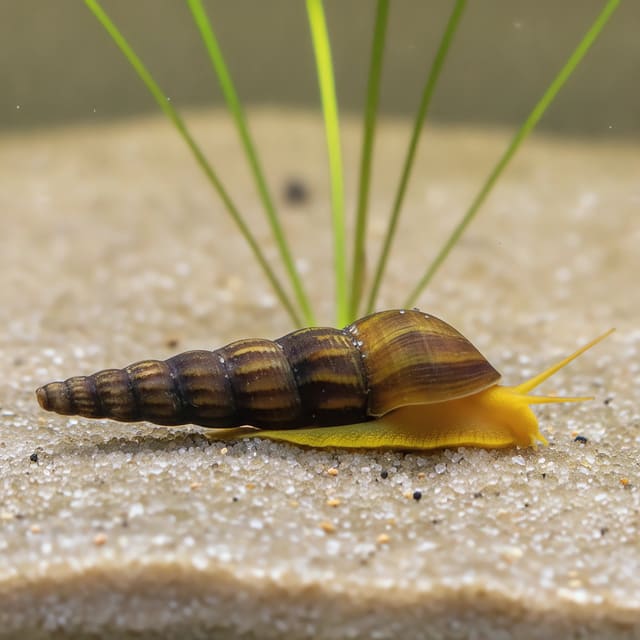
Colour words are especially unreliable in this group. Body shade, tentacles, shell coating, old erosion, lighting and photography can all alter the apparent form. The reference photo animal available to us has a yellow body and strongly sculptured shell even though the trade row says Black Antenna. That conflict is why this page does not turn the trade name into a promise that every visible soft part will be black.
Tylomelania is a diverse Sulawesi radiation in the family Pachychilidae. A large biogeographic study sampled 1,170 animals representing 62 species, including 26 undescribed morphospecies. Researchers use combinations of shell, radula, anatomy, geography and genetics to distinguish animals that can be difficult to identify from a shop photograph.
For that reason, this page will not upgrade a supplier's “sp.” label to Tylomelania patriarchalis, T. gemmifera or another named species. Several of those names circulate inconsistently in the aquarium trade. Accurate genus-level information is more useful than a confident but unsupported species claim, particularly when aquarium care can differ by source habitat.
| Reliable level | Genus Tylomelania, family Pachychilidae |
|---|---|
| Supplier form | Black Antenna, 5-9 cm |
| Exact species | Not provided |
| Exact locality | Not provided |
| Why this matters | Locality affects habitat chemistry, substrate and ecological assumptions |
The genus is restricted to Sulawesi, Indonesia, where species occur in ancient lake systems and rivers. Lake Poso and the Malili lakes are famous centres of endemism, but “from Sulawesi” does not mean every trade snail comes from the same lake or experiences one water formula. Some species live on hard substrates, others on softer sediment, and riverine forms add further variation.
Modern research describes Lake Poso as soft water, while work on Lake Towuti reports weak conductivity and pH around 7.8. Those findings do not support the common sales shortcut that every Sulawesi snail needs extremely hard water at pH 8.5. Without the product's locality, the sound approach is stable, clean, non-acidic aquarium water and slow acclimation from known holding conditions.
A rabbit snail has an elongated, turreted shell and a broad crawling foot with a projecting head and long tentacles. Shell sculpture can include ribs, ridges, growth marks and worn areas. The visible shell is a life record: older whorls may be rough or eroded, while new growth appears at the aperture. A naturally worn tip is not the same as active damage at the growing edge.
The 5-9 cm dispatch band means this is already a substantial aquarium snail. Exact adult size cannot be stated because the formal species is unknown. Provide room and food for a large-bodied snail rather than treating it like a small nerite.
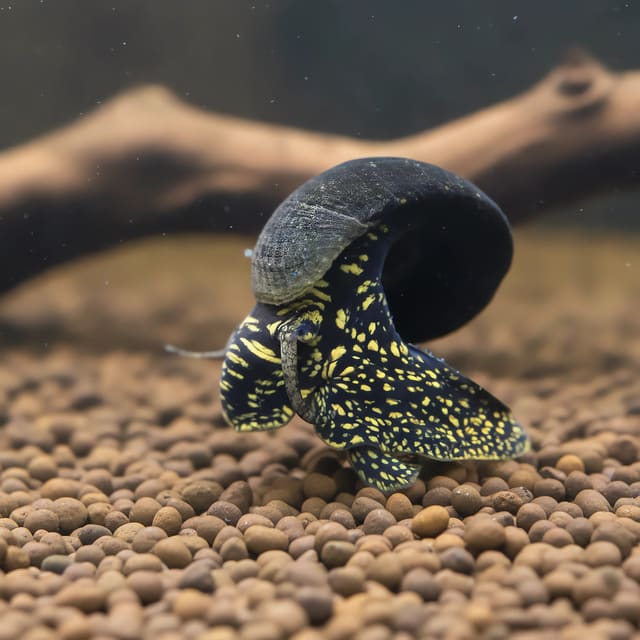
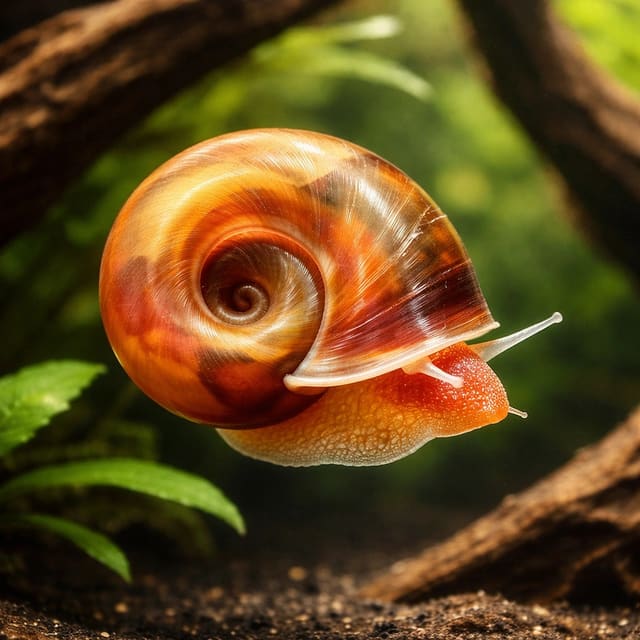
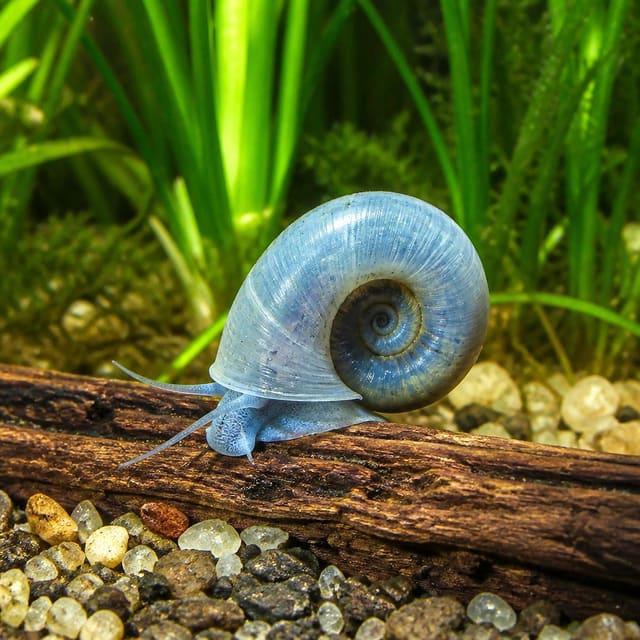
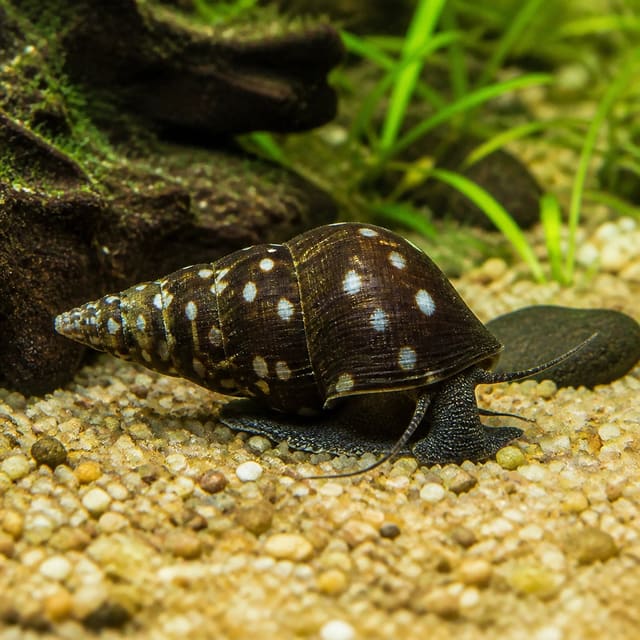
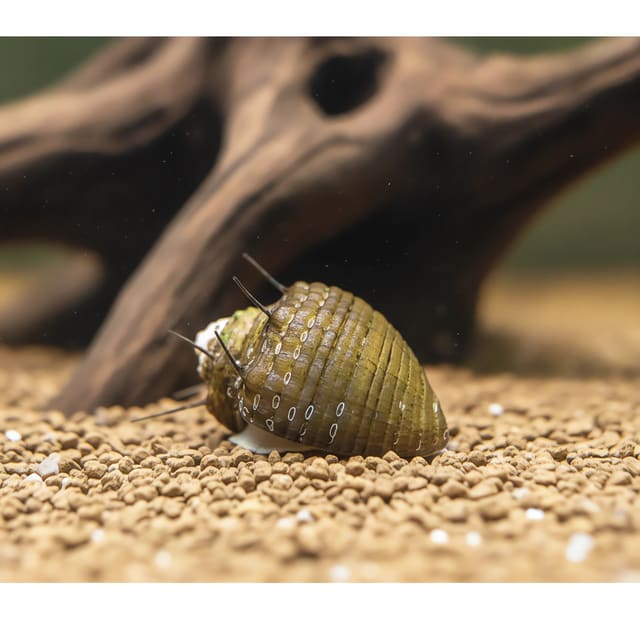
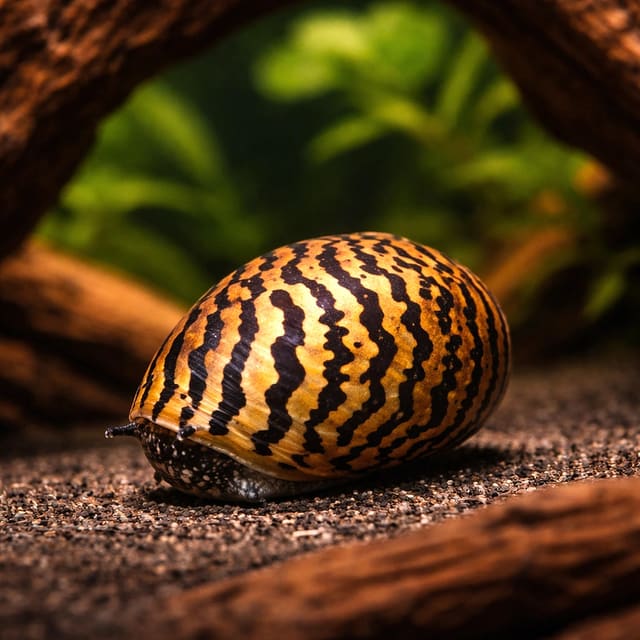
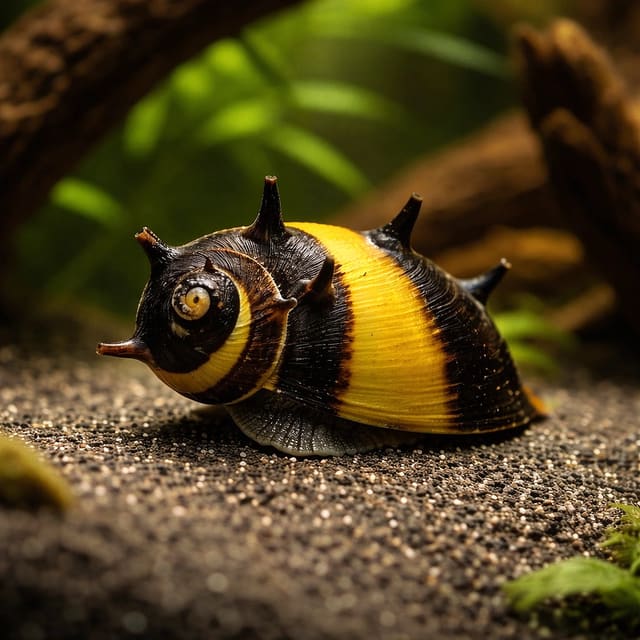
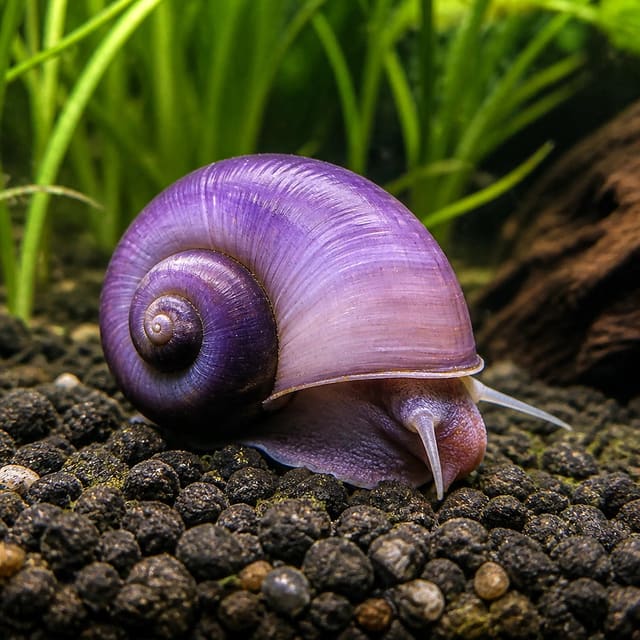
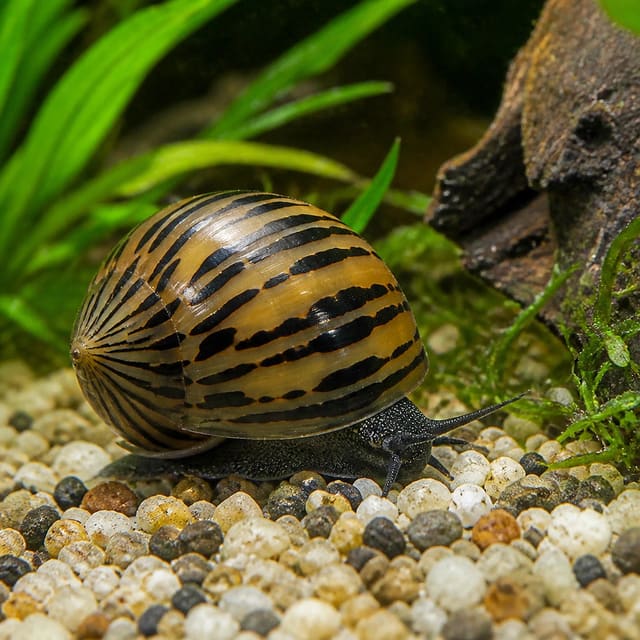
The four gallery images show a dark-bodied, dark-shelled illustrative rabbit snail in aquarium scenes. They are not photographs of the exact individual and are not reliable evidence for the product's species, body colour, shell sculpture or sex. The two-snail scene does not depict a confirmed pair.
The reference photo shows a different presentation: a yellow body and more strongly sculptured shell. That source file is watermarked and is preserved as provenance, not promoted as a clean storefront hero. Until a trustworthy same-product photograph is available, the written dispatch contract and transparency note must control expectations.
Do not order solely because you need the precise dark body or smooth shell shown in the gallery. Natural appearance varies, and the supplier trade label does not establish a formal species or colour-standard strain.
There is no evidence-based universal minimum for an unidentified Tylomelania form. For one 5-9 cm animal, a mature aquarium of roughly 60 litres or larger with a useful floor area is a cautious starting point. Larger is easier to keep stable and provides more established grazing surface. Groups, fish, shrimp or other snails increase both competition and biological load.
Footprint matters because this snail spends much of its time on substrate, wood, stone and glass. A tall narrow aquarium may carry the same litre figure but offer less usable grazing area. Assess the finished tank after hardscape, not just the manufacturer's nominal volume. If the aquarium is new, delay the order until it is cycled and biologically mature.
| Planning factor | Why it matters | Practical response |
|---|---|---|
| Dispatch size | Up to 9 cm within the supplier grade | Allow room for a large snail to turn and forage |
| Floor area | Provides feeding and grazing surface | Prefer a standard footprint over a tall narrow tank |
| Maturity | Supports biofilm and stable filtration | Cycle first and avoid an immaculate new setup |
| Competition | Fish and other invertebrates consume sinking food | Observe the snail actually feeding |
| Group size | Adds waste and reduces food per animal | Increase space and feeding points deliberately |
Use fine sand or smooth rounded gravel so the foot and tentacles can move without sharp abrasion. Leave open routes between hardscape pieces and make sure a large shell cannot become wedged. Rock and wood add useful surfaces for biofilm, but decorations must be stable and free from narrow traps.
Provide shaded areas as well as exposed grazing surfaces. A snail may rest for long periods and then become active when the room is quiet or food is added. Do not repeatedly move it to make it visible. If it falls, give it space to right itself; assist gently only when the shell position makes recovery impossible.
Because the exact species and locality are unknown, use a conservative working range rather than claiming to reproduce one Sulawesi lake. A temperature around 25-28 C, neutral-to-alkaline pH and stable mineral content are a practical starting point for this trade form. Confirm the current holding conditions before making a large change, especially if your aquarium is near the edge of that range.
| Parameter | Working guide | Important limit |
|---|---|---|
| Temperature | Approximately 25-28 C | Match holding water gradually; avoid sudden swings |
| pH | Stable neutral to alkaline | Avoid persistently acidic, eroding conditions |
| Hardness | Stable and tested, not blindly maximised | Locality is unknown; do not chase one generic dGH figure |
| Ammonia | 0 | Any detectable result needs immediate action |
| Nitrite | 0 | Any detectable result is unsafe |
| Nitrate | Kept consistently low | Control through feeding, stocking and water changes |
Test source and aquarium water before adding minerals or buffers. Sudden changes in pH, conductivity or temperature can be more harmful than a modest stable value. If your water is very soft and acidic, build a repeatable remineralisation plan before ordering, ideally with advice based on the current holding water rather than an internet recipe.
Use a mature biological filter sized for the whole aquarium. Sponge pre-filters protect tentacles and any future juveniles from strong intakes. Gentle to moderate circulation is useful, while vigorous surface movement becomes especially important at warmer temperatures because warm water holds less oxygen.
Do not judge filtration only by water clarity. Test ammonia and nitrite, inspect waste around hardscape and maintain mechanical media before flow collapses. Preserve biological media during cleaning and never replace every filter component at once. A power-cut aeration plan is worthwhile in warm, well-stocked invertebrate systems.
A cycled filter processes nitrogen waste; a mature aquarium also develops the biofilm, microbial life and seasoned surfaces that a grazing snail explores between meals. The two are related but not identical. A newly cycled tank can pass ammonia tests while still offering very little natural forage.
Use deliberate feeding from day one rather than assuming the snail will find enough. If all surfaces look sterile, food disappears to fish first or the animal remains withdrawn and loses condition, the tank is not meeting its needs. Our aquarium care planner can help schedule water tests and maintenance.
Tylomelania species diversified into different ecological and feeding roles, so one genus-level animal should not be called a strict herbivore. Treat this form as a grazer and scavenger that needs a varied, complete diet. Biofilm and soft algae are useful, but they do not turn the snail into an automatic algae-control service.
Offer a quality sinking invertebrate or snail food, algae-based wafers and appropriate softened vegetables or aquatic plant-based foods in rotation. A small amount of animal-derived material in a complete invertebrate food is not automatically inappropriate. The goal is balanced nutrition, not a single ingredient repeated every day.
Place a small portion near the snail after lights dim or when it is active. Watch whether the foot reaches the food and whether fish steal it. Remove material that is softening, fouling the substrate or producing a bacterial film. The old one-wafer and one-slice schedules are too crude because foods differ greatly in size and density.
| Food role | Example | How to judge it |
|---|---|---|
| Complete staple | Sinking invertebrate or snail food | The snail feeds and maintains condition without excess waste |
| Grazing support | Mature biofilm and soft algae | Useful between meals, not the whole diet |
| Vegetable variety | Small softened courgette, pumpkin or leaf portion | Remove before it fouls the water |
| Mineral support | Balanced diet and suitable stable water | Observe new shell growth instead of dosing blindly |
| Avoid | Large rotting portions and mammal food scraps | Prevent pollution and unsuitable nutrition |
Feed frequency depends on natural forage, temperature, tank mates and the animal's size. A 9 cm snail in a clean community aquarium may need more direct feeding than a smaller snail in a mature species tank. Appetite is evidence; a timetable is only a prompt to observe.
This snail may browse soft algae and surface films, but it is not sold with a promise to clear glass, hair algae, black beard algae or cyanobacteria. Different algae have different causes and palatability. A snail cannot correct excessive light, nutrient imbalance, overfeeding or an undersized filter.
Choose a rabbit snail because you want to care for the animal. If algae control is the only objective, first identify the algae and correct the husbandry problem. The aquarium snail collection can help compare animals with different grazing behaviours, but none replaces routine maintenance.
Many well-fed rabbit snails spend most of their time on biofilm, decaying matter and prepared foods, but a genus-only listing cannot promise perfect plant safety. Tender, damaged or decaying leaves may be grazed, and a hungry large snail may investigate healthy tissue. Protect valuable aquascapes by feeding adequately and monitoring the first weeks.
New plants can carry pesticide residues that harm invertebrates. Source plants carefully, rinse and quarantine them according to your biosecurity plan, and never assume a product marketed as plant-safe is snail-safe. Avoid major rescapes immediately after the snail arrives.
Choose peaceful animals that tolerate the same warm, stable water and do not bite tentacles, prise at the operculum or flip the shell. Small calm fish and compatible shrimp may work in a sufficiently mature aquarium, but overlap must be checked species by species. Competition for sinking food is often more important than direct aggression.
Avoid puffers, snail-eating loaches, large or aggressive cichlids, crayfish and predatory snails. Assassin snails should not be treated as harmless companions simply because the rabbit snail is larger. Separate any animal that repeatedly investigates or damages the snail.
| Potential companion | Starting assessment | What still needs checking |
|---|---|---|
| Peaceful small fish | Often possible | Temperature, medication and food competition |
| Compatible freshwater shrimp | Often possible | Exact water overlap and access to food |
| Other non-predatory snails | Possible with space | Food, waste and quarantine |
| Puffers or snail-eating loaches | Avoid | Predation risk |
| Crayfish and predatory snails | Avoid | Injury or predation risk |
Related listings are comparisons, not automatic companions. White Spot Rabbit Snail, Yellow Spot Rabbit Snail, Yellow Rabbit Snail and Orange Rabbit Snail all need their own identity and care checks.
Research on Tylomelania describes a uterine brood pouch in which eggs and embryos are retained. The reproductive strategy is considered ovoviviparous, with substantial maternal investment; some species produce unusually large shelled juveniles. That is different from laying clusters of exposed eggs around the aquarium.
This product is not sold as a breeding pair, and one snail does not guarantee reproduction. Exact brood size, interval and juvenile size cannot be copied from one named species onto an unidentified trade form. If young appear, provide mature surfaces, safe filtration and appropriately sized food while maintaining the same stable conditions.
Inspect the aperture and newest shell growth rather than expecting old whorls to become cosmetically perfect. Historic erosion and a worn tip may remain visible. Active pitting, a crumbling edge or sudden deterioration should trigger a review of pH stability, food, mineral balance and water quality.
Do not respond by adding large amounts of calcium powder or buffer without testing. The genus occupies chemically varied habitats, and excessive rapid change can create another problem. Improve conditions through measured, repeatable adjustments and seek specialist advice when deterioration continues.
| Shell observation | What it can mean | Measured response |
|---|---|---|
| Worn tip only | Historic wear on the oldest shell | Photograph and monitor rather than trying to repair it |
| Smooth firm new edge | Current growth is progressing | Keep water and diet consistent |
| Fresh pitting near the aperture | Current chemistry or nutrition may be unsuitable | Test water, review diet and make gradual corrections |
| Crack after a fall | Physical trauma | Remove the hazard and seek specialist advice |
| Rapid change across several snails | Shared environmental problem is likely | Check the aquarium before treating individuals |
A newly arrived snail may remain closed or inactive while it adjusts. Over time, look for secure attachment, coordinated movement, tentacle extension and a feeding response. A snail that repeatedly falls, cannot close, smells strongly, loses tissue or remains unresponsive needs immediate assessment away from animals that may investigate it.
Test ammonia, nitrite, temperature and pH before guessing at disease. Review recent medication, plant treatment, cleaning products and water changes. Invertebrates can react to contaminants at doses tolerated by fish. Ask an aquatic veterinarian or experienced invertebrate specialist when the cause is unclear.
Do not dose copper-based or other invertebrate-unsafe medication into a tank containing this snail. Check the active ingredient and label, move the snail only to a prepared compatible system, and never improvise harsh dips.
A mature separate aquarium allows observation before the snail enters a valuable display. Match temperature and chemistry, provide shelter and food, and use dedicated nets, siphons and containers. The quarantine period should follow your established livestock protocol rather than an arbitrary promise that every risk is gone after a fixed number of days.
Inspect the shell for hitchhikers without scraping healthy tissue. Do not use salt, copper, disinfectant or plant dips on the animal. Quarantine also gives you a quiet place to confirm that the snail is feeding and to compare its actual appearance with the supplier trade label.
Cycle and test the receiving aquarium before dispatch. Make sure somebody can accept the parcel, keep it away from direct sun or cold entrances, and read the current live-livestock delivery information. Delivery schedules, postcode coverage and guarantee evidence requirements can change, so the live policy controls.
Eligible orders are covered by the published Live Arrival Guarantee when its conditions are followed. Check the parcel promptly and record any concern exactly as the policy requires. The guarantee addresses arrival condition; it does not make an uncycled, incompatible or chemically unstable aquarium suitable.
Follow the instructions supplied with the order and use the acclimation timer to avoid guesswork. Compare bag and aquarium temperature and, where possible, pH or conductivity. The exact method should reflect the difference between holding and destination water rather than extending the process indefinitely.
Place the snail upright on an open, sheltered area where it can attach. Keep lighting modest and tank mates calm. Do not repeatedly pick it up to check whether it is alive. Offer a small food portion once it begins exploring, then confirm that it can reach the food without harassment.
Use regular water changes sized to the actual nitrate and waste load. Match replacement water temperature and chemistry, dechlorinate it correctly and avoid exposing the snail during draining. Siphon rotting food while preserving useful mature surfaces.
Keep a log of temperature, pH, ammonia, nitrite, nitrate and any hardness or conductivity value relevant to your water plan. Note feeding response and new shell growth. A record makes gradual deterioration visible before it becomes an emergency.
| Feature | This Tylomelania trade form | Nerite-type snail | Assassin snail |
|---|---|---|---|
| Main appeal | Large display animal and deliberate grazing | Smaller surface grazer | Predatory behaviour |
| Dispatch size here | 5-9 cm | Usually smaller, product dependent | Usually smaller, product dependent |
| Breeding | Broods shelled young; this unit is unsexed | Depends on species and salinity needs | Can reproduce in freshwater |
| With other snails | Peaceful, subject to food competition | Usually peaceful | Not selected as a companion |
| Best reason to buy | You want to keep the animal itself | You want a smaller grazer | You understand and want a predator |
Do not choose between these animals by an “algae eater” label alone. Compare adult size, diet, water, reproduction and compatibility. The Red Lips Nerite and Ring Nerite are smaller comparison options, not automatic substitutes or companions.
The buy box shows the current live price and availability for one 5-9 cm snail. We keep supplier trade identity separate from formal taxonomy so shoppers are not sold a guessed species. The existing public handle is retained to protect route continuity, while visible title and metadata focus naturally on the animal and dispatch size.
Eligible livestock orders receive the published Live Arrival Guarantee. First-time customers can also check the current WELCOME10 terms for 10% off an eligible first order. Promotion and delivery eligibility are determined by the live checkout and policy pages, not a permanent promise in this description.
Product quantity, trade name and 5-9 cm dispatch grade come from our stock records. Genus distribution and diversity come from the peer-reviewed Sulawesi biogeography study. Reproductive guidance comes from the Biological Journal of the Linnean Society anatomy paper. Lake Poso and Lake Towuti chemistry are cited to explain why a genus-only animal should not receive one invented hard-water locality profile.
These sources support genus-level context, not a promise that this trade animal comes from a particular lake or belongs to a named species. Supplier and individual variation limits are part of the product description, not fine print.
One live snail is included per unit. Add two units for two unsexed snails; quantity does not create a breeding pair.
The supplier dispatch grade is 5-9 cm. Exact length varies naturally within that band.
No. It is a trade-form name. The supplier identifies the animal only as Tylomelania sp., so this page does not invent a species.
No exact locality is supplied. The genus is restricted to Sulawesi, but the trade row does not identify a lake or river.
No. The four images are illustrative and are not the dispatched animal. Body colour, shell sculpture and wear can differ.
There is no universal minimum for an unidentified form. About 60 litres or larger with useful floor area is a cautious starting point for one 5-9 cm snail; stock and competition can require more.
Approximately 25-28 C is a conservative working guide. Match current holding water gradually because the exact species and locality are unknown.
Not as a universal rule. Sulawesi habitats vary. Use stable, clean, non-acidic water and test before adjusting minerals or pH.
No. It may graze biofilm and some soft algae, but it does not guarantee control of every algae type or replace maintenance.
Offer a complete sinking invertebrate food plus suitable algae-based and vegetable variety. Confirm that the snail, not only the fish, reaches the portion.
Often, but perfect plant safety is not guaranteed for an unidentified large grazer. Feed it properly and watch tender or damaged leaves.
Potentially, when water requirements overlap and both animals receive food. Check the exact shrimp species and aquarium conditions first.
No. Avoid predatory snails, puffers, snail-eating loaches, crayfish and other animals likely to injure or eat it.
No exposed egg-cluster claim should be used. Tylomelania retain eggs and embryos in a uterine brood pouch and produce shelled young.
No. The product is unsexed, and breeding compatibility is not guaranteed.
Eligible orders are covered by the Live Arrival Guarantee when the current delivery and evidence requirements are followed.
No reviews for this item yet. Bought one? Honest reviews only, good or bad.
What customers say about ordering from us
I have a small group of long finned mountain minnows. So was delighted to be able to order ten of this variety to increase the genetics in my tank . The ones I recieved are healthy but it’s to early to give a verdict on wether they are of a long finned type since they are small currently.
Gordon Walker · 23 Sept 2026
100% success travel and "installation". Pleased with quality of purchase. The Siamese fighter a bit "shy" so have not yet seen him at his best yet but looking good. Happy customer. GG
George E Garratt · 21 Sept 2026
Reviews of our shop, collected by Judge.me, an independent third-party review collector. Newest first.