Easy
Parallel Nerite Snail (Neritina sp.)
17–27°C · pH 6.5–8
£4.99

The Australs Blue Aquarium Snail (Amularis sp. Trade Name) is a freshwater aquarium snail sold under a genus-level trade identity. It suits intermediate keepers; snails do not require a social group, and its keeping range is 20–26°C, pH 7.0–8.2 and 8–20°dH. Sold individually in 2–2.5 cm, 3–4 cm and 4–5 cm dispatch sizes.
Amularis sp. Trade Name
Save when buying more.
The Australs Blue Aquarium Snail (Amularis sp. Trade Name) is a freshwater aquarium snail sold under a genus-level trade identity. It suits intermediate keepers; snails do not require a social group, and its keeping range is 20–26°C, pH 7.0–8.2 and 8–20°dH. Sold individually in 2–2.5 cm, 3–4 cm and 4–5 cm dispatch sizes.
Maintain these water conditions for optimal health and vibrant colors
The Australs Blue Aquarium Snail (Amularis sp. Trade Name) is a freshwater aquarium snail sold under a genus-level trade identity. It suits an intermediate keeper who can test water every week, maintain a mature filter and assess every fish before mixing it with a snail. Plan space around observed growth rather than treating its dispatch measurement as an adult measurement.
Keep the aquarium at 20–26°C, pH 7.0–8.2 and general hardness 8–20°dH. OATA’s broad freshwater shrimp and snail guidance sets ammonia and nitrite at 0 mg/l and says nitrate should not rise more than 20 mg/l above its normal tap-water level.
| Suits | Not suited to |
|---|---|
| A mature, filtered freshwater aquarium | A new or unfiltered aquarium |
| A keeper who tests water at least weekly | A setup where water cannot be tested and maintained |
| Aquariums without snail-eating fish | Aquariums containing pufferfish or loaches that can eat snails |
| A keeper willing to adjust space as the snail grows | A fixed setup planned only around the dispatch measurement |
| Treatments explicitly labelled safe for invertebrates | Exposure to copper or treatments unsafe for invertebrates |
Snails are not social animals, so this one does not need companions of its own kind. Adding more snails remains a stocking decision: each animal adds waste and feeding demand, and the filter’s beneficial bacteria must be allowed to adjust gradually.
One purchase supplies one snail in the size selected through the live size selector. The selector uses the labels 2–2.5 cm, 3–4 cm and 4–5 cm. These measurements describe the animal prepared for dispatch, so select a size for its immediate scale while keeping room for further growth.
The size you select is the size supplied, not the adult size. The exact species has not been identified, so the care advice here follows the genus Amularis and its care group. Plan an aquarium that can be enlarged or changed if the snail’s growth, grazing area or waste output exceeds the first setup.
Sex is guaranteed only when the selected option explicitly states male or female. This Australs Blue Aquarium Snail listing has no sex-guaranteed option.
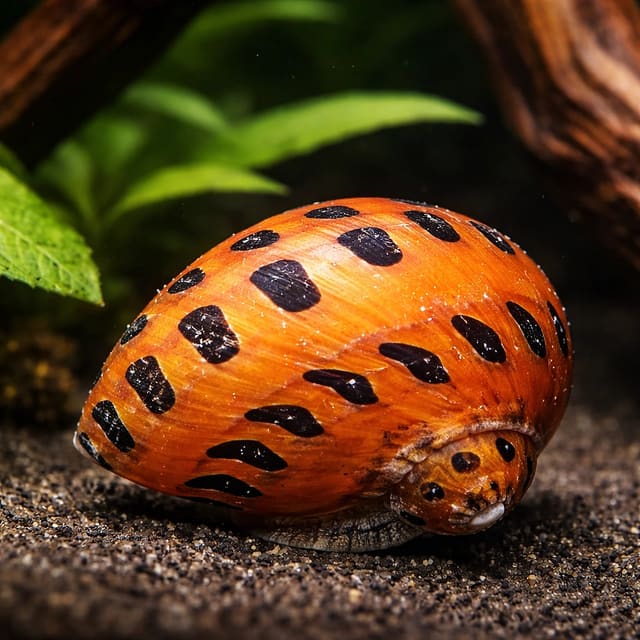
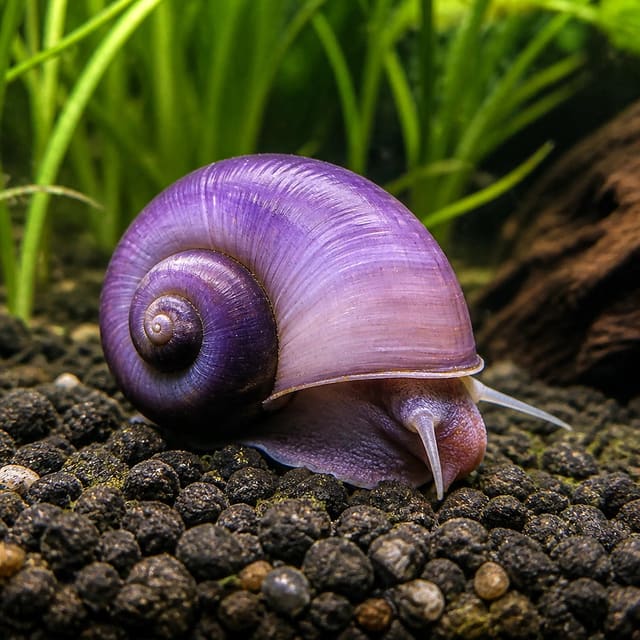
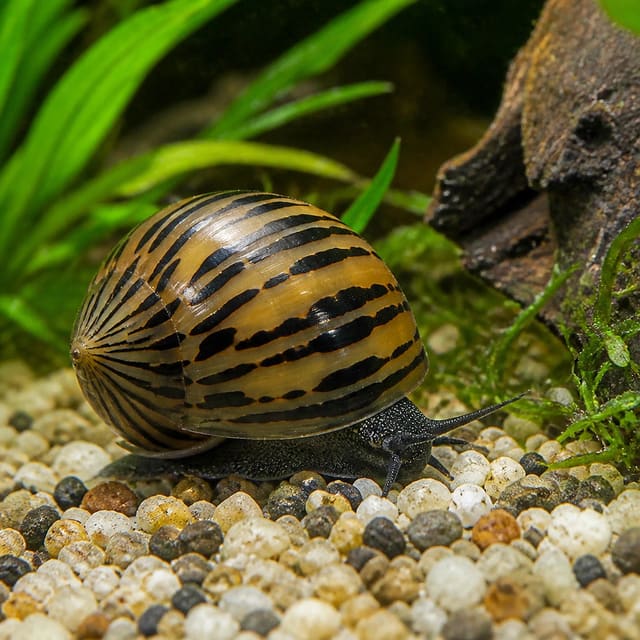
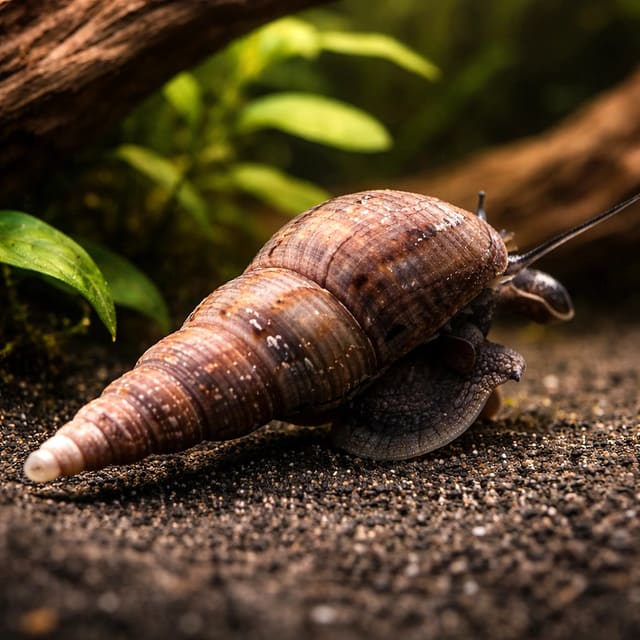
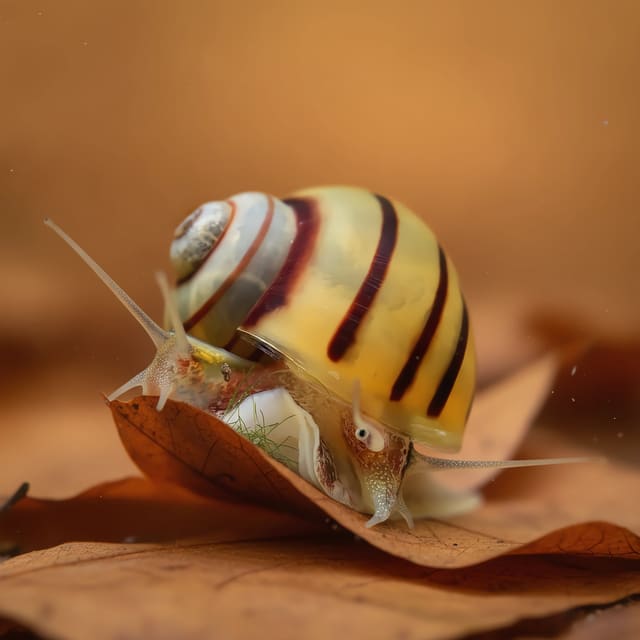
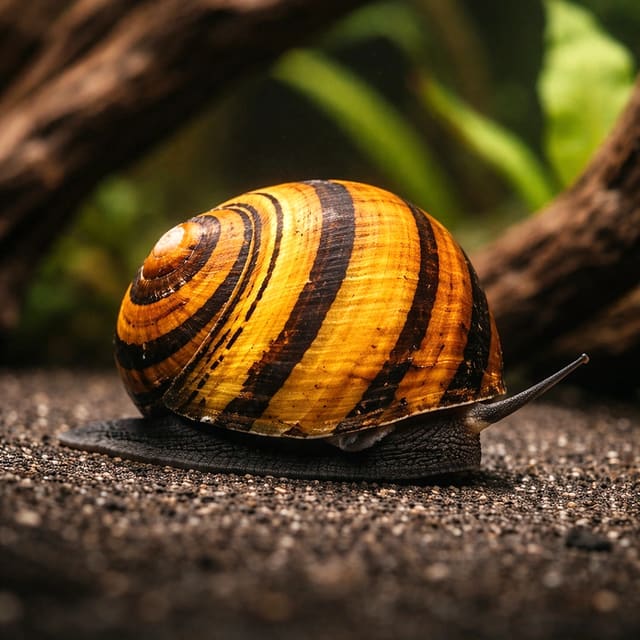
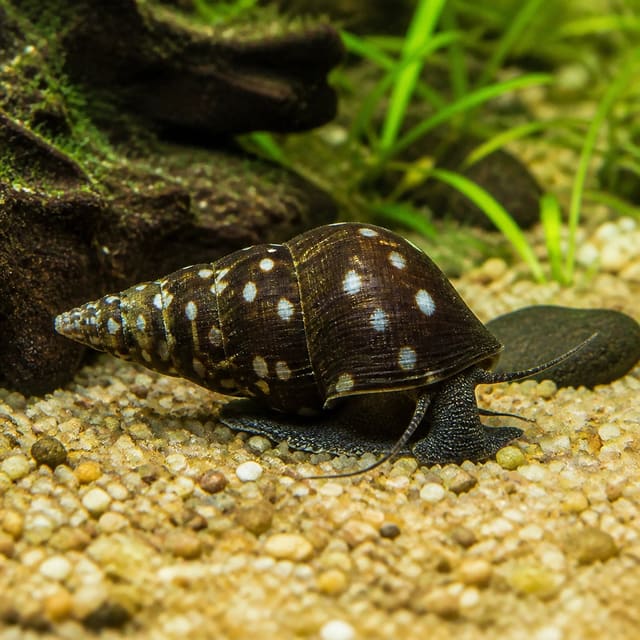
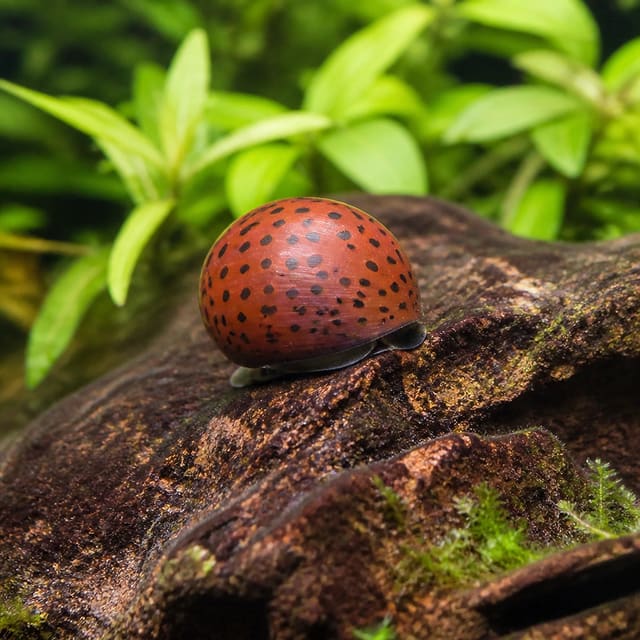
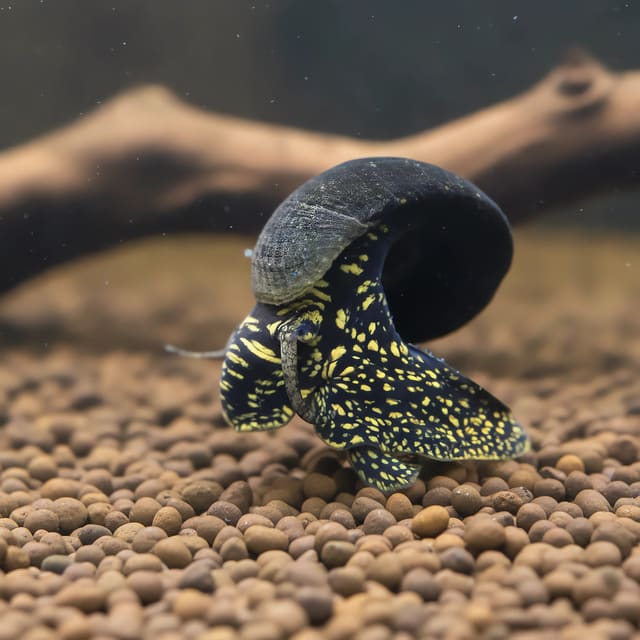
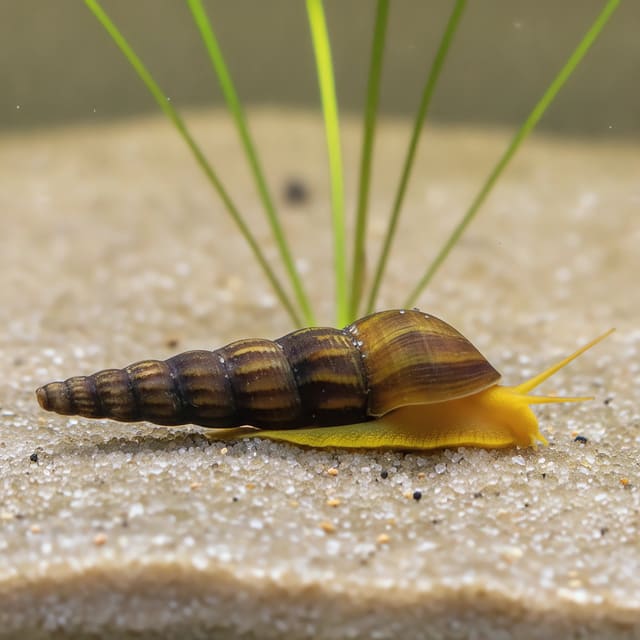
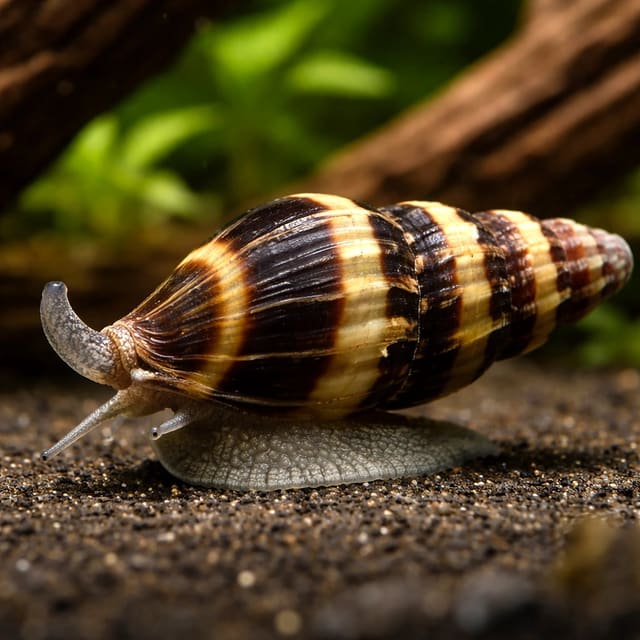
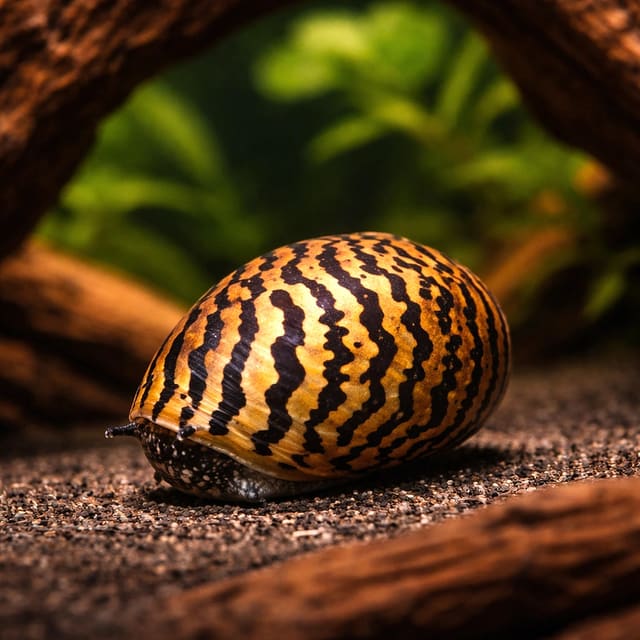
The gallery images are representative of this type of animal rather than photographs of the exact animal supplied, so colours can look slightly different from the live animal.
Do not use a larger dispatch band as evidence of sex, life stage or final size. If a different freshwater snail would suit the planned aquarium better, compare the wider aquarium snail collection before making the stocking decision.
Begin around 20 litres for one Australs Blue Aquarium Snail, then use a larger aquarium when fish are included or when observed growth and waste demand more capacity. OATA recommends at least 10 litres for a group of small freshwater shrimp or snails and approximately 20 litres for larger species; the cautious starting point here uses the larger group figure.
Volume is only the first check. The aquarium also needs a mature filter, stable temperature, suitable water chemistry and enough accessible surface for grazing. A larger body of water changes more slowly than a very small container, giving the keeper more time to notice and correct a developing water-quality problem.
This is an intermediate-care choice because the keeper must combine broad invertebrate guidance with direct observation of this snail. The important skill is not chasing a perfect reading; it is keeping all readings stable, recognising change early and adjusting the aquarium methodically.
Before livestock arrives, use our guide to preparing and maturing an invertebrate aquarium as a setup checklist. Record the aquarium’s normal readings before the snail is added so later tests can be compared with a real baseline.
Use a fully matured freshwater aquarium with a working filter before introducing the snail. Beneficial bacteria in biological filter media need time to establish, and their population must increase when livestock and feeding increase. Adding animals too quickly can leave the filter unable to process the added waste.
The RSPCA’s aquarium guidance explains that biological filtration converts toxic ammonia to nitrite and then to the safer nitrate. OATA applies the same practical principle to freshwater snails: ammonia and nitrite must remain at 0 mg/l, and stocking should increase gradually to reduce the risk of new tank syndrome.
A filter is essential regardless of aquarium volume. A larger aquarium can provide greater stability, but it still accumulates waste if feeding and maintenance are neglected. Likewise, a strong pump does not replace biological maturity; the useful bacteria must be established on the filter media.
Use plants and aquarium-safe ornaments to create structure while preserving access for cleaning. When live plants are not part of the design, plastic plants, plant pots or model caves can provide cover. Keep all furnishings stable and use materials intended for aquarium use.
During the first month, compare weekly readings with the baseline established before introduction. Any ammonia or nitrite reading above 0 mg/l requires prompt action: stop further stocking, check the filter and improve water quality with correctly treated replacement water.
Keep the stocking level unchanged during the first week and compare the first weekly test with the pre-introduction baseline. If ammonia and nitrite remain at 0 mg/l, continue the normal feeding and maintenance routine rather than adding more livestock immediately. If either value rises, remove uneaten food, check that the filter is running and carry out the planned partial water change with treated replacement water. Record what changed before making another stocking decision, because the useful comparison is between the aquarium before introduction and the aquarium after it begins processing the added waste.
Maintain 20–26°C, pH 7.0–8.2 and general hardness 8–20°dH. Keep ammonia and nitrite at 0 mg/l, while nitrate must not exceed 20 mg/l above the normal level in the tap water used for the aquarium.
Test the aquarium at least once every week. A single acceptable reading does not replace a routine because stocking, feeding, filter performance and replacement water can all change the result. Write down the date and each value so a gradual shift is visible before it becomes a larger problem.
| Reading | Decision |
|---|---|
| Ammonia above 0 mg/l | Treat it as a filter or stocking warning and correct water quality promptly. |
| Nitrite above 0 mg/l | Pause further livestock additions and check biological filtration. |
| Nitrate rising towards the limit | Review feeding, stocking and the water-change routine. |
| Temperature changing sharply | Stabilise the aquarium rather than repeatedly moving between the range limits. |
| pH, GH or KH drifting | Test the replacement water and identify what changed before making adjustments. |
Use treated replacement water. Tap-water conditioner must remove harmful chlorine or chloramine before the new water enters the aquarium. Match routine changes carefully so that maintenance improves water quality without creating an abrupt swing in temperature or chemistry.
The stated limits are not targets to alternate between. For example, an aquarium that remains consistently near one suitable temperature is easier to manage than one that moves repeatedly from 20°C to 26°C. The same principle applies to pH and hardness: steady readings inside the range provide a clearer baseline for judging the snail’s behaviour and condition.
Our aquarium water-chemistry guide explains what the main tests measure. After testing, use the water matcher to compare the measured aquarium values with the stated guidance.
Carry out a partial water change of 25% at least once every week. A siphon can remove solid waste from the gravel during the same task.
Check the filter for blockages during routine maintenance. If the media needs cleaning, do not run it under the tap. Rinse it lightly in aquarium water removed during the partial water change, which reduces the loss of established beneficial bacteria.
Do not replace all filter media together as a routine cleaning method. The biological filter depends on the bacteria living on that media, so maintenance should clear obstruction while retaining as much of the established population as possible.
If ammonia or nitrite appears after maintenance, check whether the media was over-cleaned, allowed to dry or replaced. Also review any recent increase in livestock or food, because the bacterial population needs to grow when the aquarium’s waste load rises.
A water change and filter check solve different parts of the maintenance task. The water change dilutes dissolved waste and removes debris; the filter supports biological processing between changes. Neither should be used as a reason to omit the other.
Keep the routine consistent for the first month after adding the snail. Stable test results over successive weeks show that the aquarium is coping with the added load, while a worsening trend calls for reduced feeding, closer testing and a pause in further stocking.
Allow the snail to graze algae in the aquarium and supplement that grazing with algae wafers. Commercial pellets made for freshwater shrimp can also be used for freshwater snails. Feed two or three times a week rather than adding food automatically every day.
Leave each pellet or wafer for at least 30 minutes so the snail has time to reach it and feed. Start with a small portion. If substantial food remains after the feeding period, remove the excess and reduce the next serving because decomposing leftovers release waste into the water.
| Observation | Next action |
|---|---|
| Food remains after the snail has had time to feed | Remove the remainder and offer less next time. |
| Other animals take the food first | Place a small portion where the snail can reach it and watch the feeding. |
| Ammonia, nitrite or nitrate begins to rise | Review portion size, remove leftovers and check filtration. |
| The snail shows less interest in food | Test water and compare its condition and activity with its normal pattern. |
Algae grazing does not make the snail a substitute for aquarium maintenance. Its role is that of a living aquarium animal with its own feeding and waste requirements. Continue cleaning the aquarium and managing the causes of excess algae rather than increasing stocking as a cleaning method.
Rotate an algae wafer at one feeding with a suitable commercial freshwater-shrimp pellet at another, rather than combining several full portions in one meal. This provides a straightforward routine while keeping the total amount controlled.
Link feeding decisions to the weekly test record. If uneaten food accumulates or nitrate rises faster than before, reduce the portion before increasing maintenance frequency. If fish compete for every serving, reassess compatibility and placement instead of repeatedly adding more food to the aquarium.
At the first feeding, place one small portion where the snail can reach it and allow at least 30 minutes before judging the result. Record whether the snail reached the food, whether another animal removed it and how much remained. At the next scheduled feeding, change only the portion or placement rather than both. This makes the result useful: food left behind points towards a smaller serving, while food repeatedly taken by tank mates calls for safer placement and closer compatibility observation. Continue testing the water at least weekly so a rising waste level is addressed through feeding control and filter checks before more food is offered.
Prepare the mature aquarium and confirm 0 mg/l ammonia and 0 mg/l nitrite before the parcel arrives. Receive the parcel in person because live animals must not be left unattended.
These steps follow Tropical Fish Co’s delivery and Live Arrival Guarantee policy. Keep the order number with the video. If anything has gone wrong, contact us the same day with the order number and the continuous recording showing the sealed parcel, opening and animal inside the sealed bag.
Before release, confirm that the aquarium is at 20–26°C and pH 7.0–8.2, with 0 mg/l ammonia and 0 mg/l nitrite. The aquarium must already be ready for the snail before the bag is floated.
After release, use the snail’s normal pattern in that aquarium as the comparison point for later checks. Avoid changing several husbandry factors together, because a stable introduction makes it easier to connect any developing problem with water quality, feeding or tank-mate behaviour.
Watch for changes in normal activity, colour, hiding, appearance, condition and feeding. A darker or paler appearance, unusual inactivity or restlessness, new discolouration, lesions, abnormal growths, swelling or reduced interest in food can signal that the aquarium or animal needs attention.
Test the water first whenever behaviour or appearance changes. Confirm ammonia and nitrite are 0 mg/l, compare nitrate with the normal tap-water baseline, and check temperature and pH against the aquarium’s recent record. A recorded baseline helps distinguish a real change from the snail’s ordinary routine.
| What you notice | What to do |
|---|---|
| Unusual inactivity or restlessness | Test all routine water values and inspect filter operation. |
| Reduced interest in food | Remove leftovers, test water and compare recent feeding portions. |
| New lesions, discolouration or abnormal growth | Separate it from harassment and investigate water and product exposure. |
| Repeated interference from a fish | Separate the animals rather than waiting for visible injury. |
| Ammonia or nitrite above 0 mg/l | Correct water quality promptly and pause further stocking. |
Freshwater snails are very sensitive to copper and will die if exposed even to low levels. Check every medication or treatment before it enters the aquarium and use it only when its instructions explicitly say it is safe for the invertebrates present.
Do not treat a change in appearance by adding several products speculatively. Test, identify the most likely husbandry cause and change one controlled factor at a time. This approach protects water stability and makes the outcome easier to assess.
Continue at least weekly testing even when the snail appears normal. Regular records are most useful when they begin before a problem, because they show the aquarium’s normal temperature, chemistry and waste pattern.
Use each weekly entry to compare water readings, feeding response and visible condition with the previous week. A stable sequence has ammonia and nitrite at 0 mg/l, nitrate within the stated limit and no progressive change in normal activity, colour, appearance or feeding. If one reading or observation changes, write down the change and address that issue before altering another part of the routine. If several warning signs appear together, prioritise water tests and filter operation, remove uneaten food and pause further stocking. This record turns separate observations into a practical trend and helps prevent repeated changes from obscuring the cause.
Avoid fish that can eat snails, including pufferfish and loaches. OATA specifically identifies those fish as unsuitable companions for freshwater snails. A fish that can consume or attack the snail is not made suitable by adding more cover or watching the aquarium more closely.
Freshwater snails are generally compatible with many aquarium animals, but common aquarium fish may eat them. Assess the actual fish species, mouth size, feeding behaviour and shared water requirements before combining them. Where the fish’s behaviour towards snails is uncertain, keep the animals apart until the combination has been assessed.
Do not treat a broad label such as community fish as a compatibility guarantee. The useful question is whether the individual fish can eat or harass a snail and whether both animals fit the same water and space plan.
Ask us for a stocking and compatibility assessment when the planned fish has not been screened. Give the aquarium volume, current temperature, pH and hardness, together with the names and numbers of animals already present.
Compatibility also includes medication. A fish may share the aquarium peacefully but later require a treatment that is unsafe for invertebrates. Check the treatment label before dosing the shared aquarium and include that risk in the original stocking decision.
Keep one Australs Blue Aquarium Snail without adding another solely for companionship. Snails are not social creatures, so there is no minimum social group. Additional snails should be added only when the aquarium has enough space, filtration and feeding capacity for the greater biological load.
Treat live-plant compatibility as an observation-based decision. Freshwater snails graze algae and can be fed algae wafers or commercial freshwater-shrimp pellets. Use established plants, provide the normal supplementary food and watch for repeated damage to healthy growth.
| Decision | Practical rule |
|---|---|
| Another snail | Add one for stocking reasons, not because this snail needs a social companion. |
| Fish | Reject pufferfish, loaches and any other fish known to eat snails. |
| Plants | Observe healthy leaves and move the snail if repeated grazing becomes unacceptable. |
| Shrimp | Assess shared water, feeding competition and treatment safety before mixing. |
| Medication | Use only products explicitly labelled safe for the invertebrates present. |
If more snails are added, increase the population slowly. The filter’s bacteria need time to adjust each time livestock and feeding increase. Test ammonia and nitrite after each stocking change rather than assuming that previous stable readings will remain unchanged.
Observe feeding before increasing portions. Competition can prevent the snail from reaching its food, but repeatedly adding extra wafers or pellets can create a waste problem. Place a controlled portion where the snail can access it and remove excess after it has had at least 30 minutes to feed.
A successful mixed aquarium is one in which every animal fits the same measured water, space and treatment plan. Colour, trade labels and general community descriptions do not replace that individual screening.
The Australs Blue Aquarium Snail is supplied in the selected 2–2.5 cm, 3–4 cm or 4–5 cm dispatch size; your selected size is the supplied size, not its adult size.
Begin around 20 litres for one and use a larger aquarium with fish or when growth and waste require it; OATA recommends approximately 20 litres for larger freshwater snails.
One can be kept without companions of its own kind because OATA states that snails are not social creatures; add further snails only as filtration, space and feeding capacity permit.
It is an intermediate-care choice for a keeper able to test water weekly, maintain a mature filter, screen tank mates and adapt the setup as the unidentified species grows.
OATA advises algae grazing supplemented with algae wafers or commercial freshwater-shrimp pellets, fed two or three times weekly and left for at least 30 minutes.
Keep it at 20–26°C, pH 7.0–8.2 and 8–20°dH general hardness.
The compatibility concern is the reverse: fish may eat freshwater snails, so screen every fish and separate any animal that repeatedly interferes with the snail.
It can be considered with aquarium animals that cannot eat it and share its water requirements, but avoid pufferfish, loaches and any fish known to eat snails.
Tropical Fish Co’s policy uses pure-oxygen bags, an insulated box and a heat pack when weather calls for it; receive the parcel in person, film it sealed before opening and float the bag for 20–30 minutes before release.
No reviews for this item yet. Bought one? Honest reviews only, good or bad.
What customers say about ordering from us
I have a small group of long finned mountain minnows. So was delighted to be able to order ten of this variety to increase the genetics in my tank . The ones I recieved are healthy but it’s to early to give a verdict on wether they are of a long finned type since they are small currently.
Gordon Walker · 23 Sept 2026
100% success travel and "installation". Pleased with quality of purchase. The Siamese fighter a bit "shy" so have not yet seen him at his best yet but looking good. Happy customer. GG
George E Garratt · 21 Sept 2026
Reviews of our shop, collected by Judge.me, an independent third-party review collector. Newest first.