Easy
Parallel Nerite Snail (Neritina sp.)
17–27°C · pH 6.5–8
£4.99
Granifera Trumpet Snail is the supplier trade identity for a freshwater thiarid accepted as Tarebia granifera. One purchase supplies one live snail at the 1 cm dispatch grade for a mature, filtered aquarium with non-predatory companions.
Melanoides granifera
Lives in groups: kept together they stay settled, active and show their best colour.
Minimum of 2 per order.
Granifera Trumpet Snail is the supplier trade identity for a freshwater thiarid accepted as Tarebia granifera. One purchase supplies one live snail at the 1 cm dispatch grade for a mature, filtered aquarium with non-predatory companions.
Maintain these water conditions for optimal health and vibrant colors
The Granifera Trumpet Snail is offered under the supplier identity Melanoides granifera. An authoritative taxonomy check resolves the accepted freshwater species as Tarebia granifera, a thiarid also called quilted melania in the USGS species profile. That bridge is important because the trade name remains useful for matching the exact supplier offer, while the accepted name connects the animal to dependable identity and distribution records.
This is a live freshwater snail for a mature, filtered aquarium. One purchase supplies one snail at the supplier's 1 cm dispatch grade. The product has one 1 cm dispatch grade, which is the supplied grade rather than an adult maximum. The USGS profile records the accepted species across a much broader shell-length range of 6–40 mm, with an average of 25 mm; those are shell measurements from species records, not a promise about the final size of every aquarium individual.
The species is associated with fresh water and a variety of habitats, including rivers, streams and springs with silty or sandy bottoms. It is often partly buried in the substrate. In an aquarium, that makes a sand or fine-gravel area useful for normal movement and means a healthy animal may not stay on display all day. Choose it because you want a small substrate-using snail and can offer stable water, not because any snail can replace filtration, feeding control or routine maintenance.
If you are comparing different shell shapes and aquarium roles, browse the freshwater snail collection. Other products are alternatives to research, not automatic tank mates or interchangeable versions of this animal.
Each purchase quantity supplies one live Granifera Trumpet Snail. The supplier dispatch grade is 1 cm, and that grade should not be confused with an adult shell-length claim. If several snails are wanted, choose the purchase quantity accordingly rather than looking for a hidden pack or group option.
Sex is guaranteed only when the selected option explicitly states male or female. This Granifera Trumpet Snail listing has no sex-guaranteed option. There is no need to infer sex from shell shape, body size or the gallery, and the offer does not promise a breeding pair or colony.
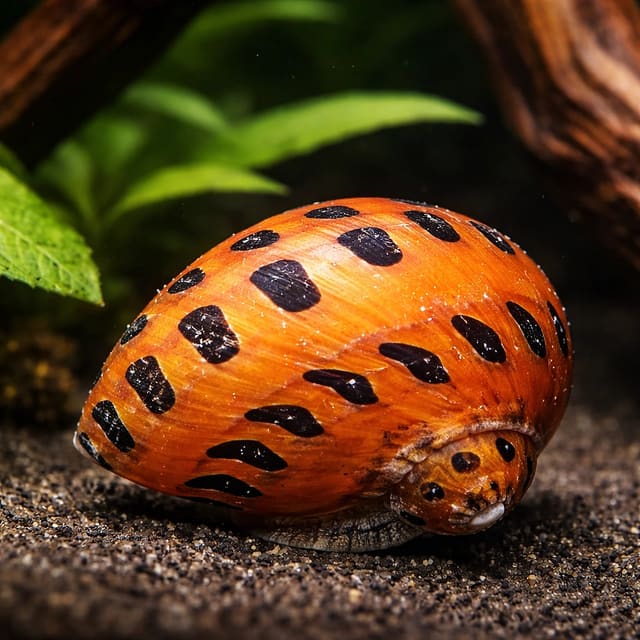
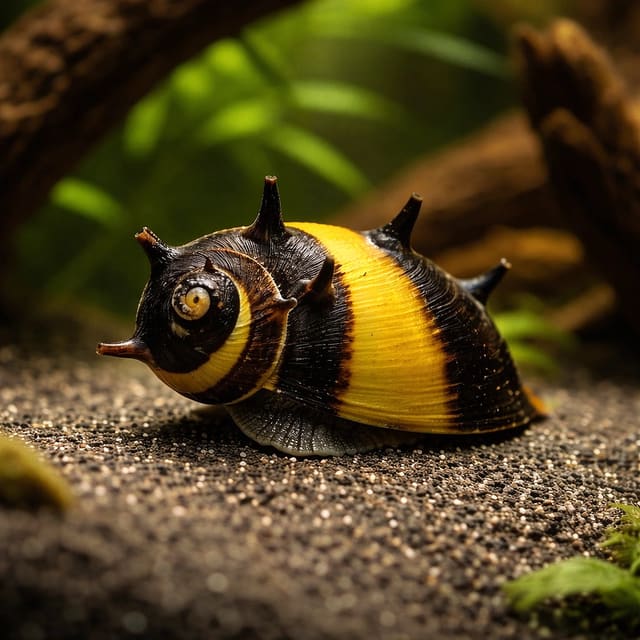
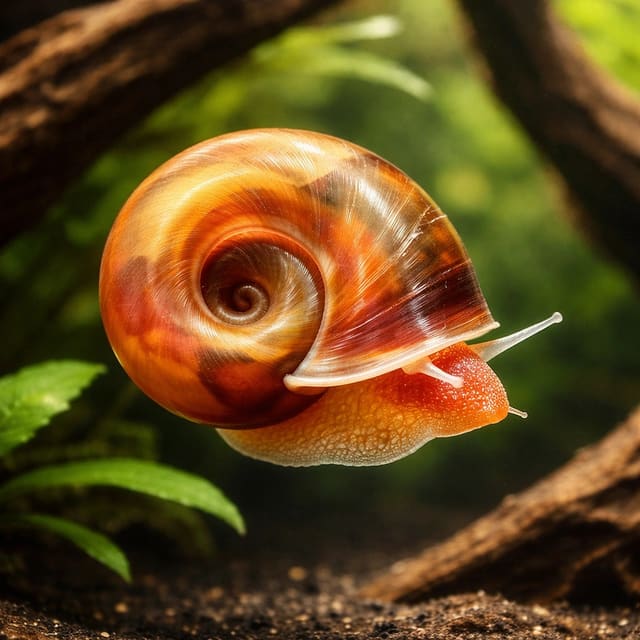
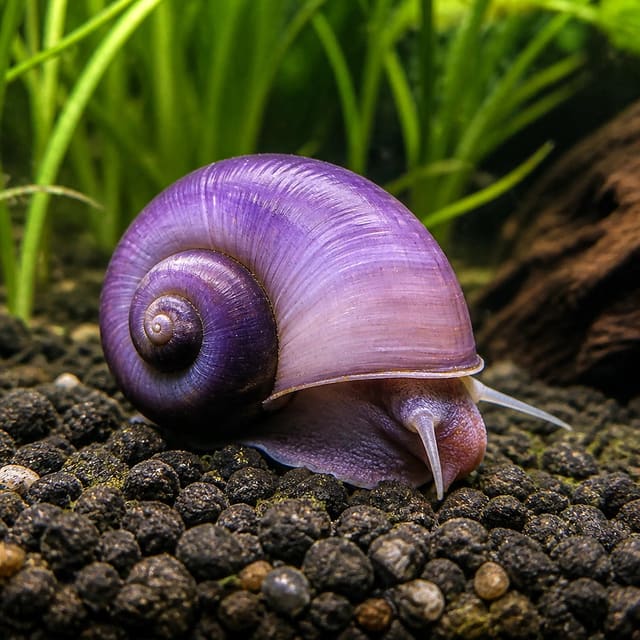
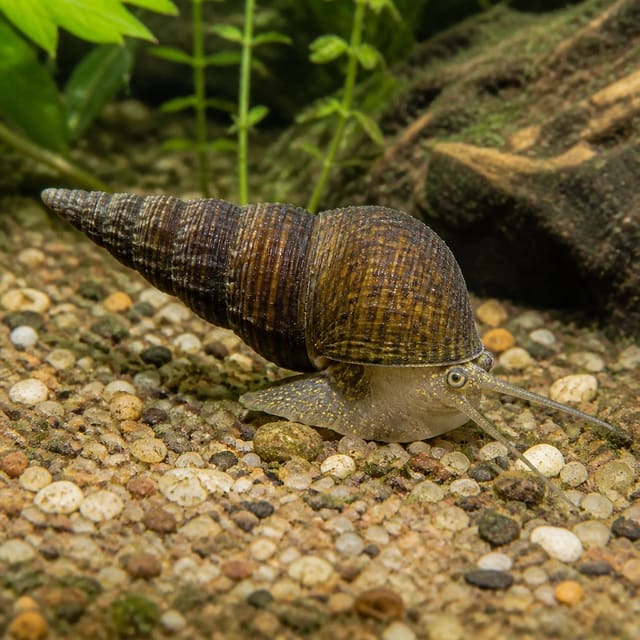
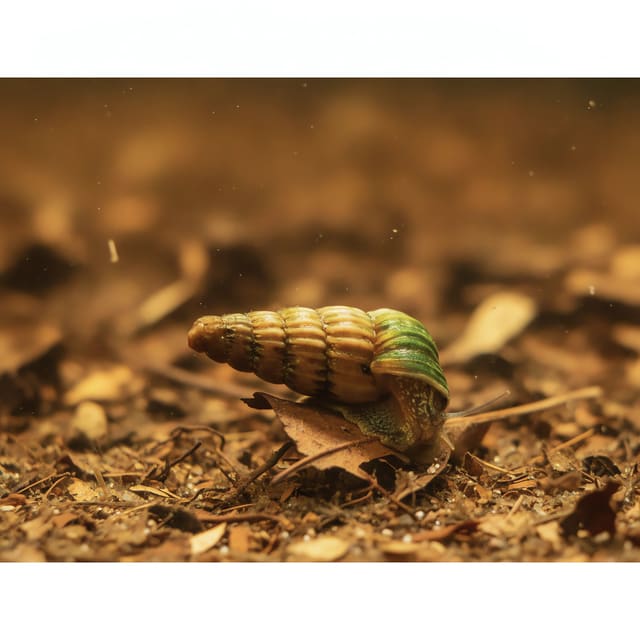
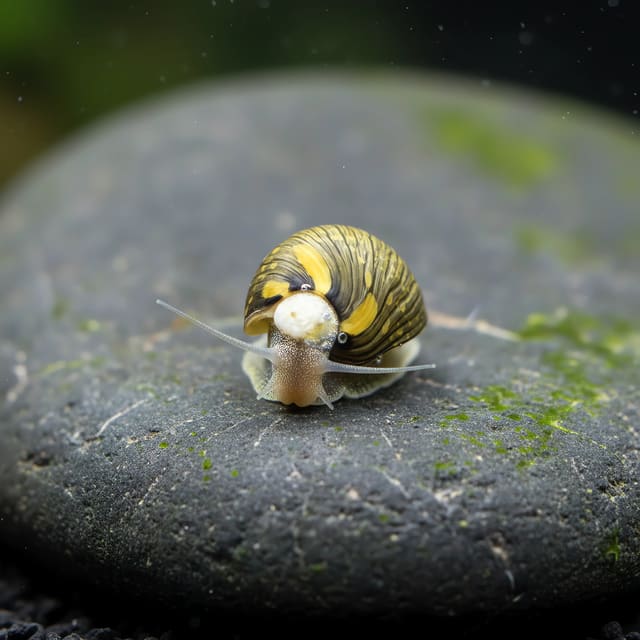
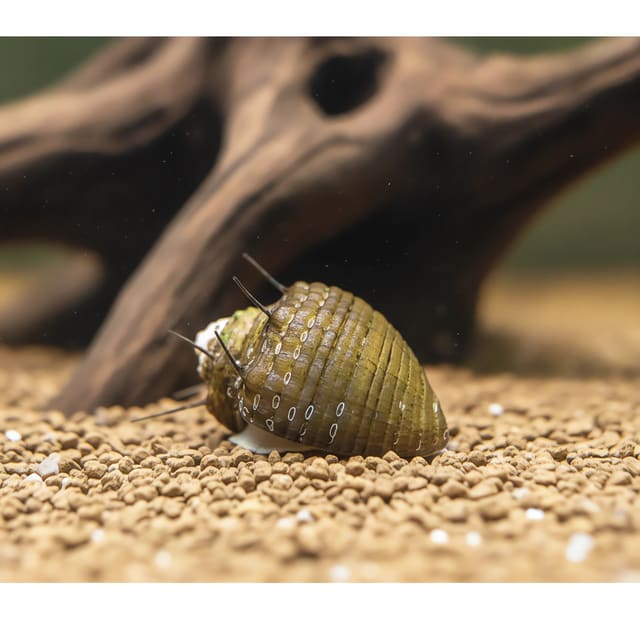
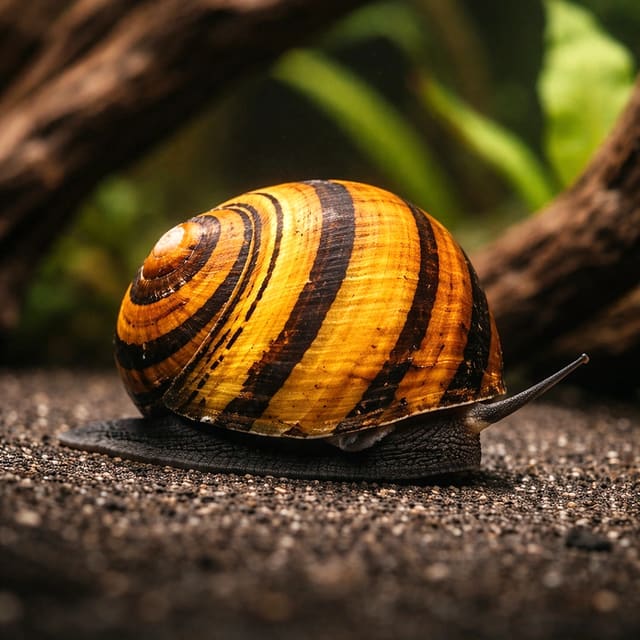
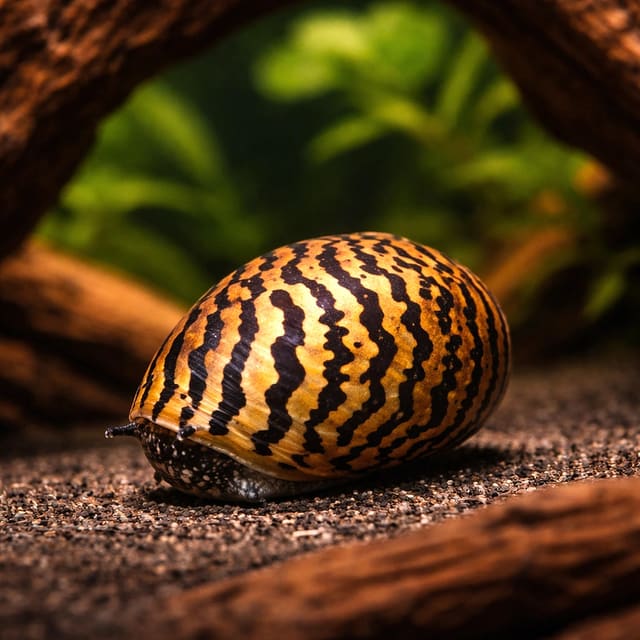
Gallery images have been digitally enhanced to improve image quality. Natural colour, pattern, size and maturity can vary between live animals. Direct inspection shows one or two brown, high-spired snails on dark or pale substrate in planted and plain-background scenes. Use the images for a general visual idea, not to estimate the supplied snail's precise size, sex or individual pattern.
The shop care assessment remains easy because the day-to-day routine is straightforward in a suitable aquarium. “Easy” does not mean safe in an uncycled bowl, compatible with every community, or unaffected by medication. The keeper still owns the important decisions about water quality, predators and food.
MolluscaBase accepts Tarebia granifera (Lamarck, 1816), places it in the family Thiaridae and records it as freshwater. Its synonym service maps Melanoides (Tarebia) granifera as a superseded combination to that accepted name. This product is sold under the trade name Melanoides granifera, while the accepted name is made clear in the care copy.
The USGS Nonindigenous Aquatic Species profile uses the common name quilted melania and describes a native range from India west to Japan, extending south through Southeast Asia. Its shell-length record runs from 6 to 40 mm, averaging 25 mm. These figures describe recorded species size; they do not alter the supplied 1 cm dispatch grade and should not be treated as exact growth promises.
The profile reports the species in varied freshwater settings, from large rivers to small springs, with silty or sandy bottoms and both riffles and pools. It also notes that much of the shell and body may remain buried in substrate in the field and in aquaria. That behaviour explains why the snail may be less visible for periods and why a suitable fine substrate offers more than decoration.
| Name | Use in this listing |
|---|---|
| Granifera Trumpet Snail | Customer-facing trade common name |
| Melanoides granifera | Scientific name used for this product |
| Tarebia granifera | Accepted name in MolluscaBase |
| Quilted melania | Common name in the USGS species profile |
Shell colour and texture can vary. Appearance alone is not sufficient to identify a freshwater snail, so the taxonomic bridge comes from MolluscaBase rather than the gallery.
Start with a mature aquarium, not a freshly filled container. Broad OATA guidance for freshwater shrimp and snails recommends a filter, aquarium gravel or sand and cover such as live plants or suitable ornaments. It gives at least 10 litres as a general starting point for a group of small freshwater shrimp or snails, while warning that a larger system is needed when fish are present. That figure is group-level guidance, not a species-specific minimum for Tarebia granifera, so choose the aquarium by total livestock, filter capacity and stability rather than treating 10 litres as a universal target.
Provide a sand or fine-gravel area where the snail can move and partly bury. The species record supports use of silty and sandy habitats, while OATA's aquarium guidance supports fine substrate for relevant burrowing invertebrates. Avoid sharp material that could make routine movement awkward. A mixture of open substrate, planted edges, wood and smooth stone gives feeding surfaces and cover without making every part of the bottom inaccessible for inspection.
The freshwater invertebrate setup guide is useful for planning a mature, stable small-animal aquarium, even though shrimp and snails are not identical. Use its cycling and preparation principles, then follow the snail-specific cautions here: allow substrate access, keep predatory fish out and confirm that every additive is safe for freshwater invertebrates.
Filtration should move and oxygenate the water without turning the substrate into a constant storm. Protect intakes so a small snail cannot be drawn against them, and make the intake easy to inspect. A snail remaining high on the glass or behaving differently can have several causes; check water quality and equipment before assuming it is merely exploring.
Cover openings that would allow livestock to leave the aquarium, but retain safe gas exchange. Keep electrical cables and pipe gaps tidy, inspect the rim during maintenance and return décor carefully after cleaning. A simple, observable layout is more useful than a complex aquascape that hides uneaten food and makes the animal impossible to monitor.
The OATA freshwater shrimp and snail care sheet gives a broad group range of 17–27 °C, pH 6.5–8.0, 4–18 dGH and 3–15 dKH. It explicitly calls those values a general guide for the group and advises checking species-specific needs. Use them as a broad screening range, then prioritise clean, stable water and the needs of the complete community.
| Measurement | Broad OATA freshwater shrimp-and-snail guidance |
|---|---|
| Temperature | 17–27 °C |
| pH | 6.5–8.0 |
| General hardness | 4–18 dGH |
| Carbonate hardness | 3–15 dKH |
| Ammonia | Zero mg/l |
| Nitrite | Zero mg/l |
| Nitrate | No more than 20 mg/l above the normal tap-water level |
Read the water-parameter guide before adjusting anything, and compare a real test result using the water matcher. Stable values within a compatible range are safer than repeatedly chasing a textbook centre point. Sudden shifts in temperature, pH or mineral content can be stressful even when both the starting and finishing number look acceptable on paper.
Hardness deserves attention because a shell is a mineral structure. Avoid improvising a calcium-dosing recipe. Test general and carbonate hardness, observe the shell over time and use only aquarium-safe products whose suitability for freshwater snails is clear. Do not add an arbitrary mineral dose simply because the water is described as soft; work from measurements and the requirements of the whole aquarium.
The RSPCA aquarium environment guidance explains why filtration must be mature: beneficial bacteria convert toxic ammonia to nitrite and then to safer nitrate. OATA likewise requires zero ammonia and nitrite. Clear water can still contain dangerous dissolved waste, so a visual glance cannot replace testing.
OATA states that freshwater shrimp and snails will die if exposed even to low levels of copper. Confirm that treatments are safe for invertebrates before they enter the aquarium. If fish require a product that is unsafe for snails, use a properly prepared alternative treatment plan rather than exposing the snail and hoping the dose is small enough.
OATA's broad freshwater shrimp-and-snail guidance describes these invertebrates as algae grazers and recommends supplementing that natural grazing with algae wafers. It also says commercial shrimp pellets can be used for both shrimp and snails. This is group-level husbandry rather than a species-specific feeding trial, but it gives a safe practical framework: provide an identifiable food source and do not assume a clean-looking aquarium produces enough edible growth.
Offer a small portion where the snail can reach it. Watch how much remains after the recommended feeding window and remove excess before it decays. OATA suggests feeding freshwater shrimp and snails two or three times a week and allowing at least 30 minutes for pellets or wafers. Fish can steal sinking food, so observation matters more than simply dropping a wafer after lights out and assuming the snail ate.
Do not buy any snail as a licence to overfeed fish. Excess food increases organic waste and can destabilise water quality. A useful aquarium resident still creates waste and still needs nutrition. The best result comes from modest deliberate feeding, routine testing and physical removal of debris where it accumulates.
Incidental grazing can contribute to the diet, but it is not a dependable ration on its own. Use the OATA wafer or pellet guidance as a controllable supplement. If the snail is not reaching food because of fish competition, alter placement or feeding timing rather than increasing the total amount blindly.
Copper safety belongs in the feeding cupboard too. Check trace-element products, plant supplements and combined treatments, not only medicines labelled for parasites. “Natural” or “plant safe” does not automatically mean safe for snails. The relevant question is whether the exact product and dose are explicitly suitable for freshwater invertebrates.
OATA broadly recommends a 25% partial water change at least once a week for freshwater shrimp and snails, along with weekly testing for ammonia and nitrite. Use that as a starting routine and adjust only from evidence such as nitrate trend, food residue and total stocking. Vacuum accessible waste without repeatedly stripping the whole substrate, and check hidden food around wood, plant bases and filter intakes.
Treat replacement tap water for chlorine or chloramine. If the filter needs cleaning, do not run it under the tap. Instead, rinse it lightly in water removed from the aquarium. Restore the filter promptly, check flow and confirm that no small snail has entered an intake or impeller area.
Before the parcel arrives, have the aquarium ready and know who will receive it. The current delivery and Live Arrival Guarantee policy says live animals are hand-bagged in oxygen, placed in an insulated poly box and supplied with a heat pack when weather calls for it. A licensed live-animal courier carries the parcel, and the confirmed Thursday or Friday delivery date and tracking are sent by email.
Someone must be at the delivery address. Inspect the parcel on the day it arrives and float the sealed bag for 20–30 minutes before release, following the shop policy. Do not pour the bag water into the aquarium. Introduce the snail gently to an accessible area, keep conditions calm and let it choose cover rather than repeatedly moving it to make it visible.
For a Live Arrival Guarantee claim, record a short continuous unboxing video. It needs to show the parcel still sealed, the outer box, the opening and the animal still inside the sealed bag before anything is disturbed. Contact Tropical Fish Co the same day with the order number and evidence so the issue can be assessed. The video is proof for a claim; it is not a routine care step for a healthy arrival.
When something looks wrong, begin with measurable basics: ammonia, nitrite, temperature, pH, hardness, filter flow and recent changes. Avoid guessing at a disease treatment: an unsuitable medicine may be more dangerous to a snail than the original symptom.
OATA says freshwater snails are generally compatible with many aquarium species, but it also gives the decisive exception: do not mix them with fish that eat snails, specifically naming pufferfish and loaches as examples. That warning is more useful than a long list of supposedly peaceful tank mates. A fish can be calm toward other fish and still investigate, bite or consume a snail.
Choose companions only after checking diet, mouth size, bottom-foraging behaviour, adult size and water overlap. Non-predatory community fishes may be suitable when they share the same stable conditions, but no named fish is universally safe. Observe introductions carefully and be prepared to separate the snail if a fish repeatedly pecks at the body, antennae or shell opening.
| Situation | Guidance |
|---|---|
| Pufferfish or loaches that eat snails | Avoid |
| Predatory or inquisitive fish that repeatedly attack the snail | Separate; a peaceful community label is not enough |
| Non-predatory fish with overlapping water needs | Potentially suitable after species-specific checks |
| Freshwater shrimp | Potentially compatible under broad OATA guidance when fish, water and feeding are suitable |
| Copper-treated aquarium | Avoid; OATA states freshwater snails will die if exposed even to low levels of copper |
The snail is not a guaranteed solution to algae or waste, so do not compromise compatibility just to add a “clean-up crew”. Filtration, feeding control, water changes and manual maintenance remain the keeper's responsibility. Add this animal only when its own needs are met and the existing community is safe.
OATA describes freshwater snails as not social, so one individual may be kept without a shoaling rule. If more are purchased, the aquarium still needs enough food, stable water and biological capacity for the total livestock.
Plants, wood and smooth décor can provide cover and grazing surfaces, while fine substrate allows the snail to use the lower part of the aquarium naturally. Do not promise that any snail will never touch a living plant. The sensible design is a healthy planted aquarium with deliberate snail food, stable water and routine observation.
In mixed invertebrate tanks, check that food reaches every animal and that mineral and treatment choices work for the whole group. Shrimp food may be suitable for snails under OATA's general guidance, but shrimp and snails can have different behaviour and competition. Place food where the snail can reach it and remove excess rather than adding large portions to compensate for uncertainty.
Burrowing can move a little loose substrate, but it does not aerate an entire tank or prevent anaerobic areas by itself. Substrate depth, grain size, planting and maintenance determine those outcomes. The species is recorded partly buried in silty or sandy substrate, and a fine aquarium substrate gives it the opportunity to express that behaviour.
The USGS profile for accepted Tarebia granifera records 6–40 mm shell length, with an average of 25 mm. Those are species records, not a promise for every aquarium individual; the snail supplied by this offer has a 1 cm dispatch grade.
OATA gives at least 10 litres as broad guidance for a group of small freshwater shrimp or snails and says a larger aquarium is needed when fish are included. Treat that as group-level starting guidance, not a species-specific minimum.
OATA describes freshwater snails as not social, so this animal does not require a shoal. This listing supplies one live snail per purchase, so choose the quantity according to aquarium capacity.
The shop care assessment is easy in a mature, filtered aquarium. A beginner still needs to test the water, avoid copper, provide supplemental food and keep the snail away from fish that eat snails.
Broad OATA snail guidance supports algae grazing supplemented with an algae wafer or suitable commercial invertebrate pellet. It suggests feeding two or three times weekly, allowing at least 30 minutes and controlling uneaten food.
OATA's broad freshwater shrimp-and-snail guidance is 17–27 °C, pH 6.5–8.0 and 4–18 dGH. These are not presented as a species-specific optimum, so keep measured values stable and maintain zero ammonia and nitrite.
The snail is not presented as an aggressive fish companion. The more important risk runs the other way: fish may attack or eat it, so avoid known snail predators and watch every introduction.
Non-predatory freshwater fish or shrimp may be suitable when their water needs overlap and they do not harass the snail. Avoid fish that eat snails; OATA specifically names pufferfish and loaches as examples.
Tropical Fish Co hand-packs live animals in oxygen in an insulated poly box, adding a heat pack when weather calls for it, and uses a licensed live-animal courier. Someone must be present on the confirmed day; for a Live Arrival Guarantee claim, record one short continuous video from the sealed parcel through opening to the snail still in the sealed bag, then contact the team the same day with the order number.
Broad husbandry values remain labelled as group guidance. Exact price, stock and delivery dates remain live commerce information rather than permanent copy.
Use these references alongside current test results and direct observation. A useful care decision joins the identified animal, measured aquarium conditions and the needs of every resident; no single table, photograph or behavioural label can replace that complete check.
No reviews for this item yet. Bought one? Honest reviews only, good or bad.
What customers say about ordering from us
Easy website plenty of info on fish your buying great to pick a time slot
TRACEY DURRANT · 7 Oct 2026
Got some lovely fish thank you
Kevin Mackie · 7 Oct 2026
Reviews of our shop, collected by Judge.me, an independent third-party review collector. Newest first.